Rufous-tailed Robin – another ramble through time and fortune - and who can ignore a beautiful Pallas’s Warbler
Chatting as birders do, in the car park at Stonebridge, Donna Nook after a successful morning watching my first Lincs Isabelline Wheatear and a few other attractive migrants https://www.grahamcatley.com/blog-1/isabelline-wheatear-at-donna-nook-and-the-usual-historical-ramblings news was broadcast of the appearance of a Rufous-tailed Robin at Flamborough; 6th British record and first accessible mainland bird if it stayed and showed. Initial news was not great and stories of huge melees of birders trying to look into a small part of a deep dark ravine for a bird that seemingly only showed every 3-4 hours did not tempt me to wander north-east. I had been fortunate enough to visit Beidaihe in China in May 1993 and had seen most of the expected Siberian vagrants with the notable exception of Pallas’s Grasshopper Warbler and a certain large swift so I dug out my trip report to see if there was any valuable information therein. My first is included in the day list from May 13th on Happy Island and we only saw one more in the Lotus Hills on 18th but both were feeding out in the open on burnt off grasslands. Calls not noted and plumage relied on my not-so-great slides. Below the accompanying birds on the 13th:
China May 13th 1993:
Up at 4am for the hours’ drive to Happy Island harbour where immediate success is had with 4 Relict Gulls, a full summer adult and 3 first-summers along with 2 Grey-tailed Tattler, 3 Saunder’s Gulls, 2 White- winged Blacks and a Whiskered Terns. So, onto the boat and off to Happy Island; Far Eastern Curlew and 10+ Saunder’s Gulls on arrival then in the first few yards ashore 3 Richard’s Pipits, male Siberian Rubythroat, juv Pied Harrier, male Pallas’s Reed, 2 Japanese Reed, and a flock of 30 Common Rosefinch drop in, 2 Yellow-breasted Buntings, 2 Hobby, Asian Short-toed Larks then an hour spent on our first Blyth’s Pipit. Twitch a male Daurian Redstart with Japanese Quail, cuckoo sp and reach the farm where no sign of Siberian Thrush so get down to some other birds; another male Daurian Redstart, 3 Chinese Bulbul, Blyth’s Leaf Warbler, Hair-crested Drongo and Dollarbird with female Bull-headed Shrike to name a few! Its hotting up weather and bird wise; 2 Dusky Thrush, another Blyth’s Leaf and Eastern Crowned near a Rufous-tailed Robin with 10+ Pallas’s, 30+ Yellow-browed, male White-throated Rock Thrush, Siberian Blue Robin, 21 OBP’s, 20 Yellow-breasted Buntings, 50+ Little Buntings, 10 Chestnut Buntings, 3 Chestnut-eared Buntings, male Siberian Rubythroat, Wryneck, 2 female Mugimaki Flycatchers, Eye-browed Thrush and 2 Japanese Grosbeaks plus an amazing minimum of 30+ Blyth’s Pipits in flocks of up to 15 with the odd Richard’s! Back to the boat and a total of 32 Tereks on shore, 85 Whiskered tern, 57 White-winged Blacks all going north, 5+ Asiatic Dowitcher, 800 Red Knot; an hours bumpy ride back to hotel for some cracking food! Sea slugs and pork fat, a couple of hours in bed and back again!
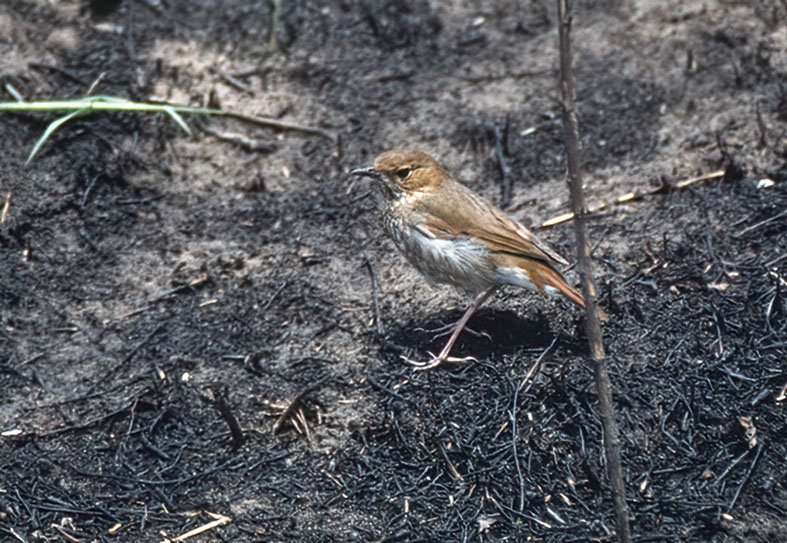
Rufous-tailed Robin Lotus Hills May 1993 - scanned from a slide
So back to Yorkshire and I was offered a lift on the first Saturday and was not keen but thought I ought to make the effort. Well, what a waste of time to be fair with a big, big crowd and very limited viewing space and a bird that only showed for a few seconds throughout the day down in the deep dark gully I saw a speckled front and an eye ring in my millisecond view then the rain came.
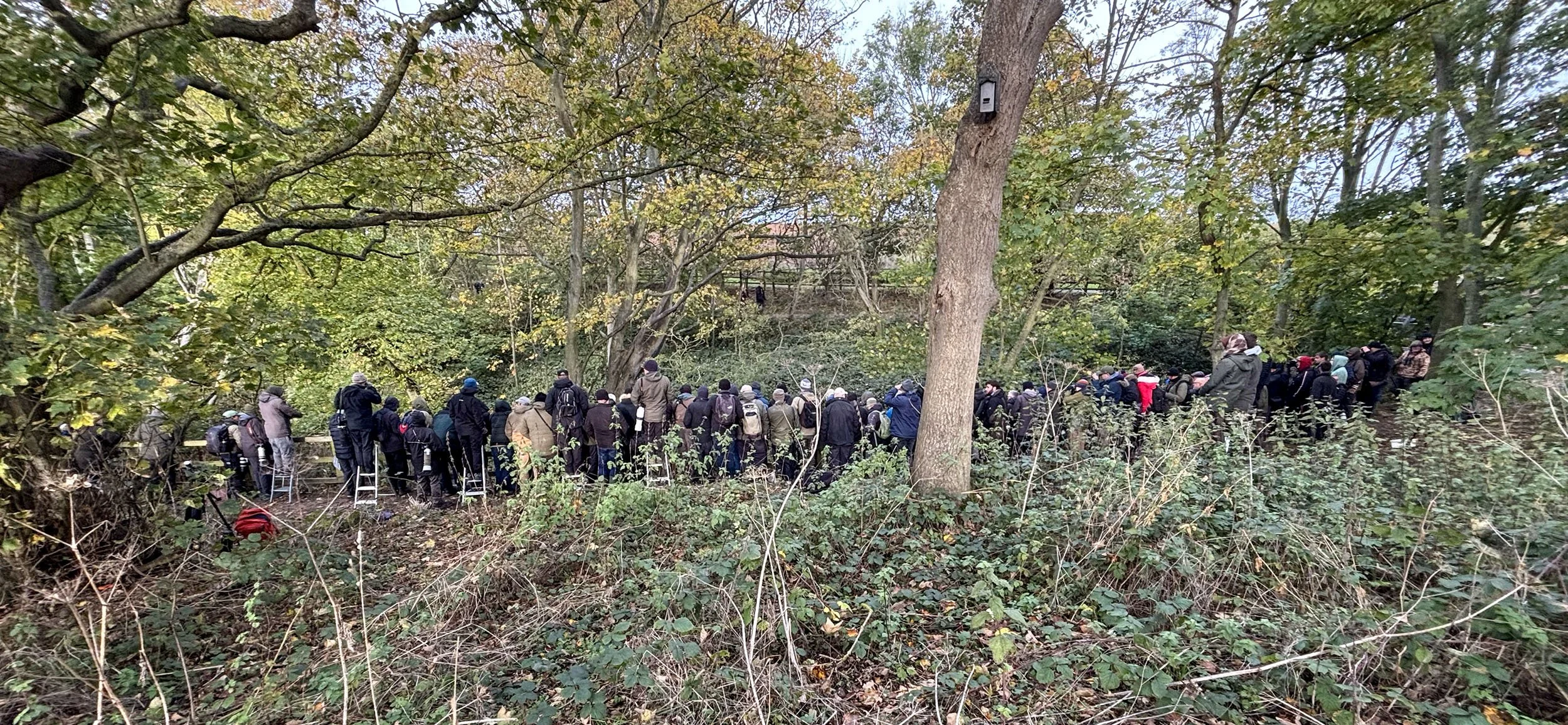
The scene on 24th step ladders in use staring into the dark gully
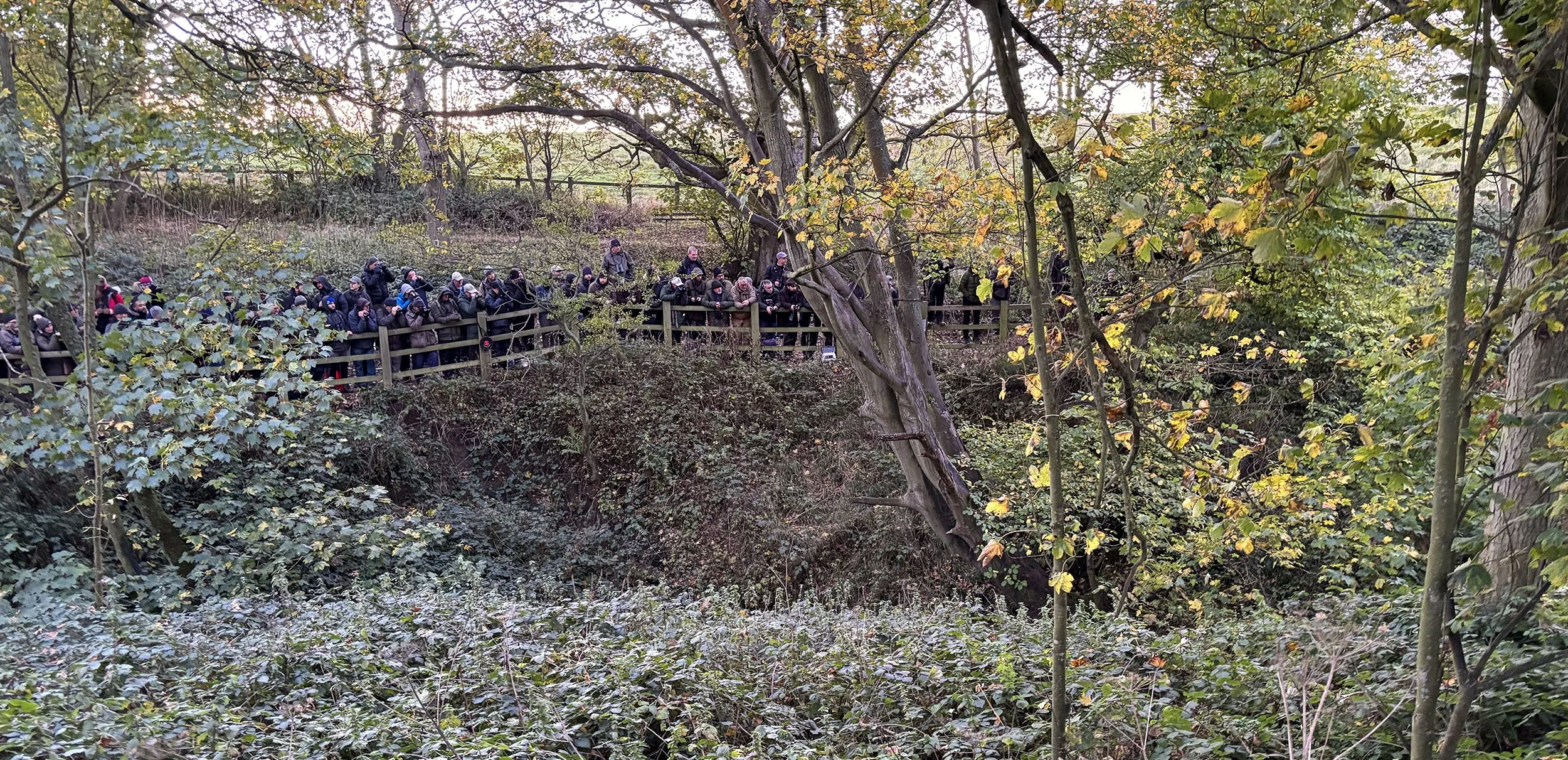
Some people apparently had good views - I suppose it depends on personal perception
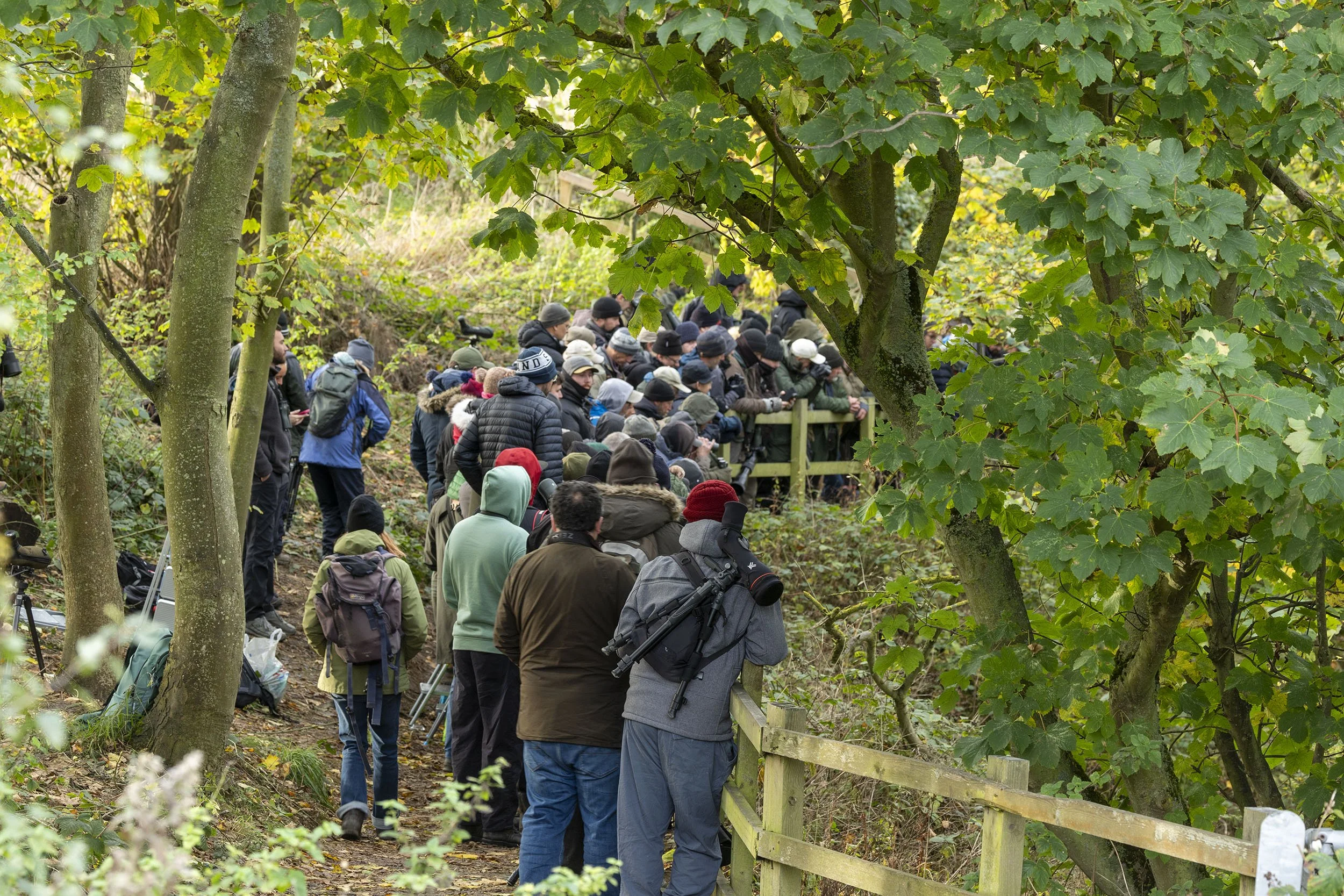
While the bird was not on view, most of the morning, I wandered up and down the ravine looking in other spots and I heard two different calls that I was convinced were the Rufous-tailed Robin; one quite Eurasian Robin like but distinct and another more chink like call that I heard when a Robin was chasing another bird around a sycamore tree but I just could not see the bird in question. No-one else mentioned hearing anything but there was maybe too much noise of frustration and people falling off step ladders.
Sunday reports sounded more promising with the bird seen out of the gully on a path early am but Monday I was busy. The weather looked better for Tuesday after some early rain was due to clear but with strong winds and mild temperatures. Alarm clock set for 04:00 as it seemed necessary to be there well before sunrise. Driving through some heavy rain it was fine upon arrival and I wended my way to the end of the ravine to find about 30 – 40 people already apparently looking at the bird on the path! But it had gone – had I been too late? After a few minutes it was back on the fence and path but it was still dark! Well ISO 25600 dark and the camera wouldn’t focus so I had to put it on manual focus and was still getting 1/13th second – excellent image below:
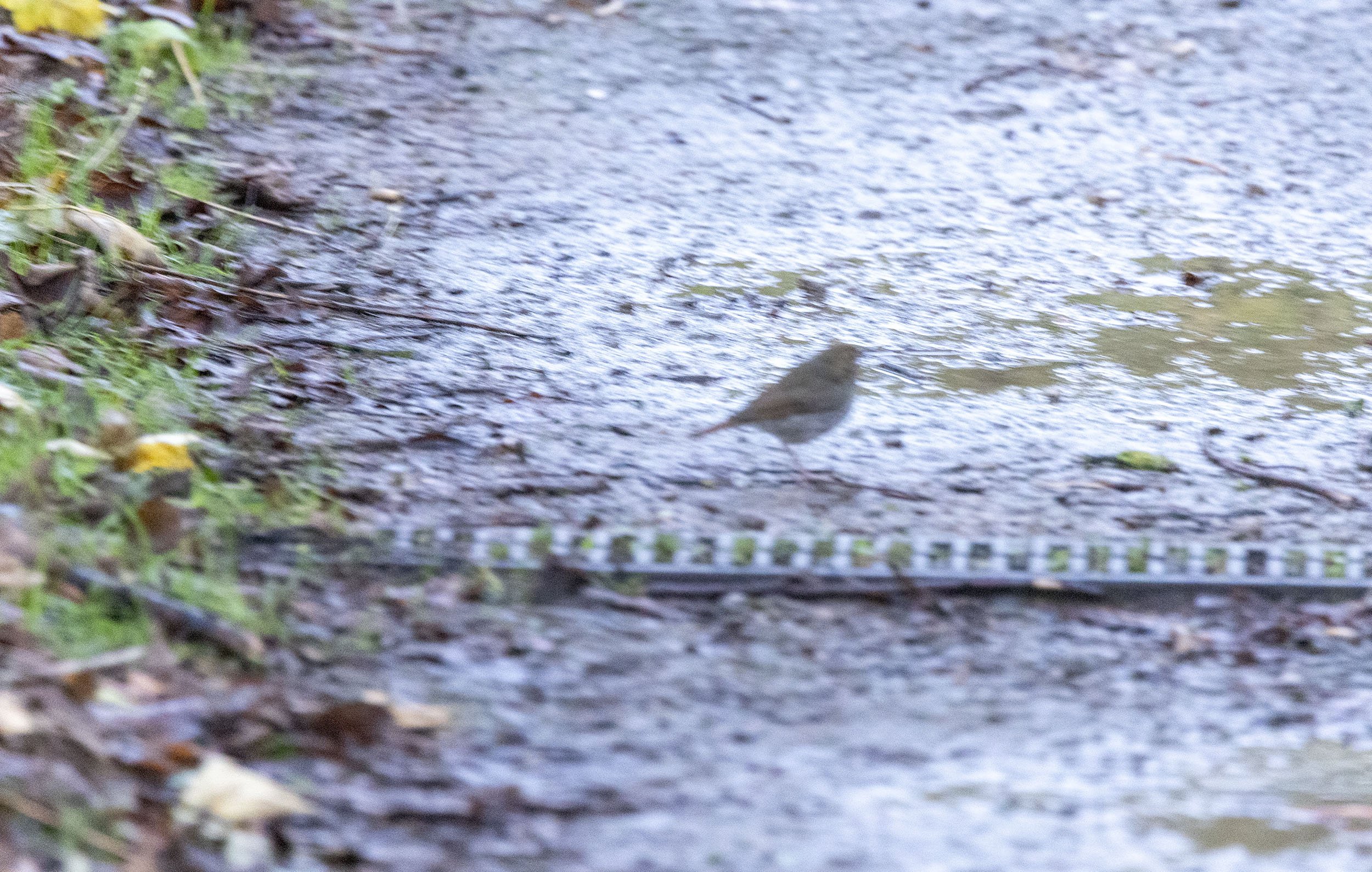
Rufous-tailed Robin at 06:37 ISO 25600 1/13th second manual focus - not quite the shot I was hoping for
Fortunately, although light levels remained low the bird was incredibly co-operative and spent the next 47 minutes feeding in and around some log piles and low brush on the sides of the paths. Fortunately, also no dog walkers appeared while it was there and it seemed totally disinterested in its appreciative audience. Its habit of sitting still for several seconds and being pretty close meant that I could drop the ISO and try and get away with 1/20 or 1/30th second on ISO 1600 and 3200.
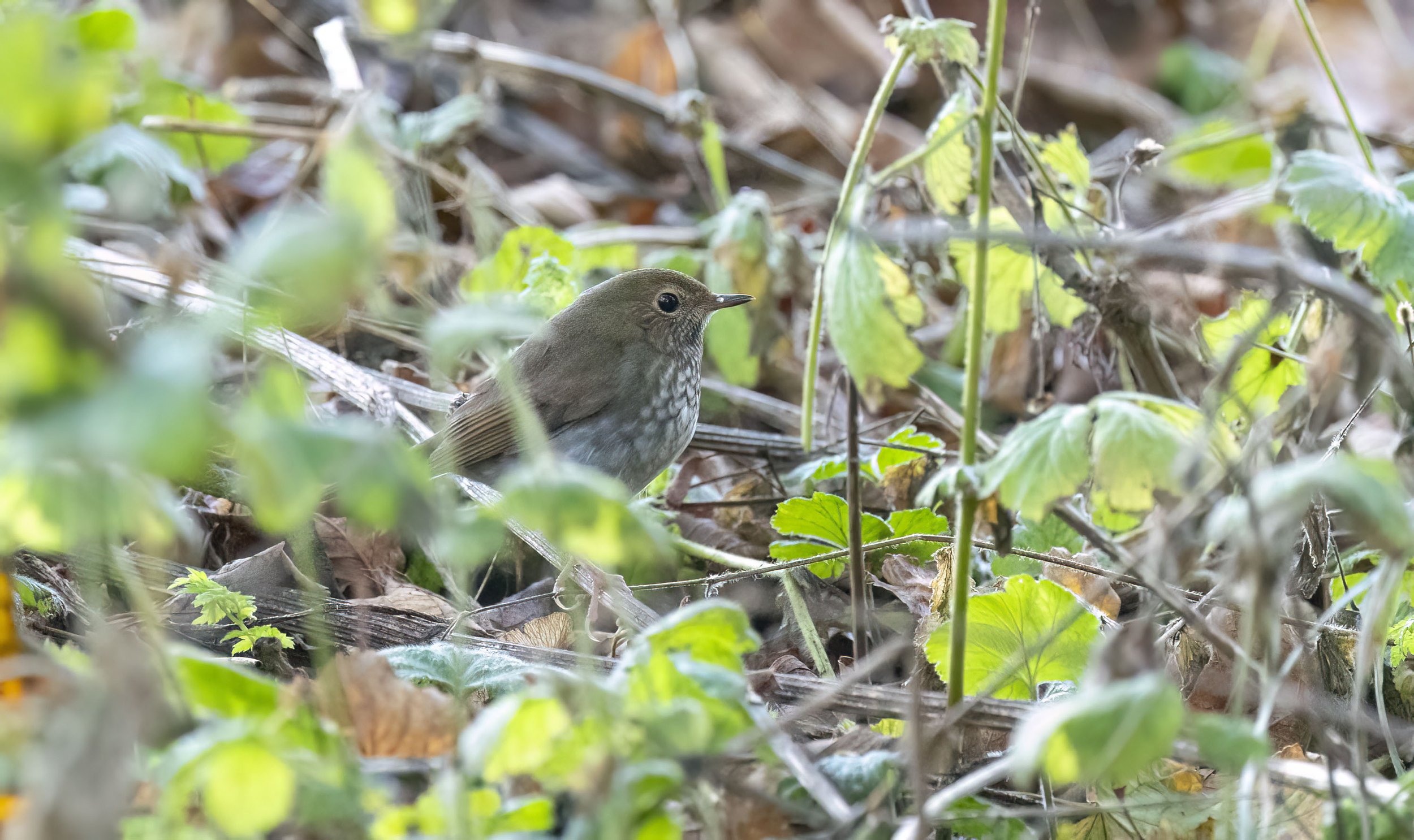
ISO down to 12800 and it was almost sharp at 1/20th second —
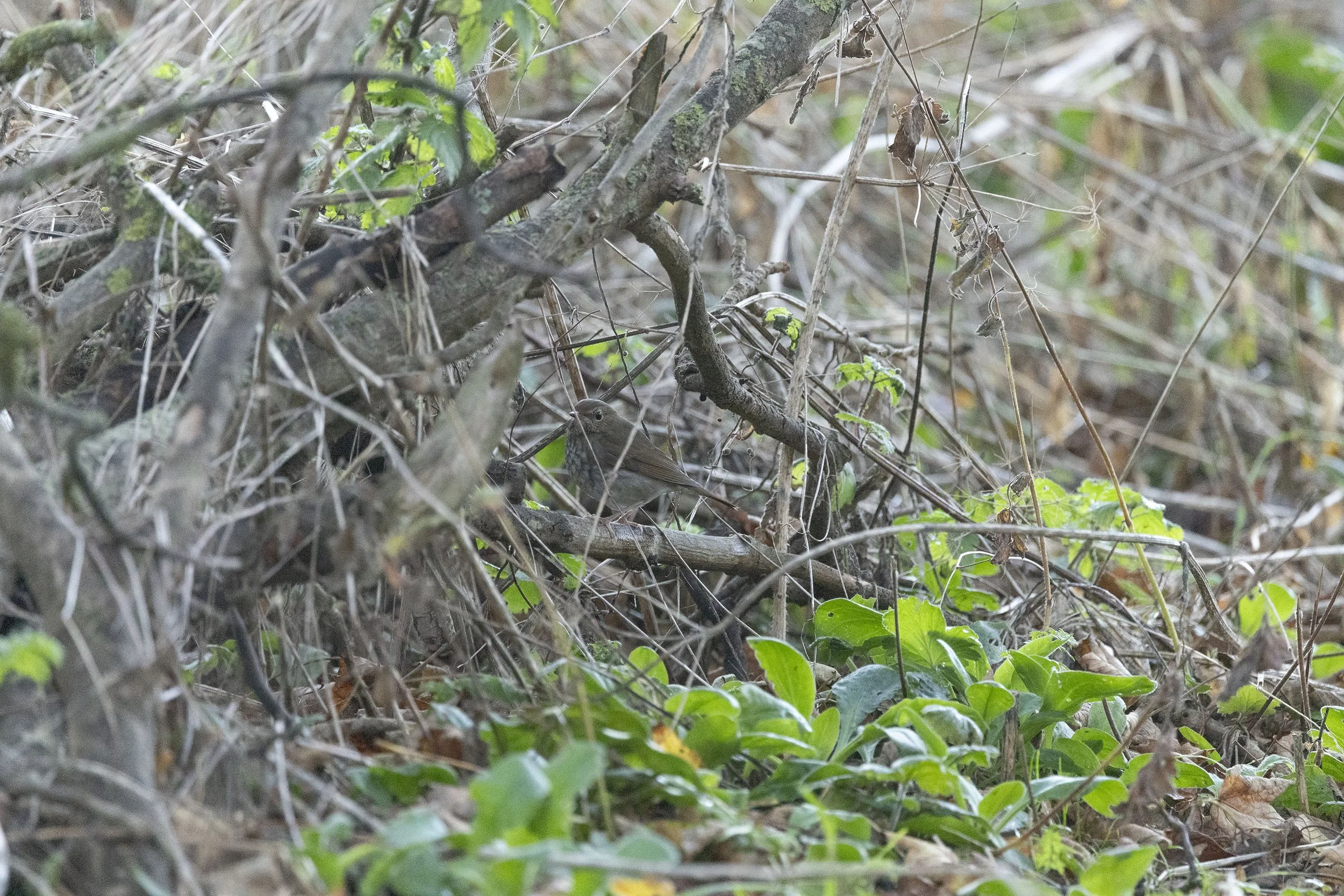
In one of its favoured wood piles - unobtrusive rather than skulking this morning and very easy to overlook — when it moved from the path to the woodpile it uttered the same call I had heard on the Saturday
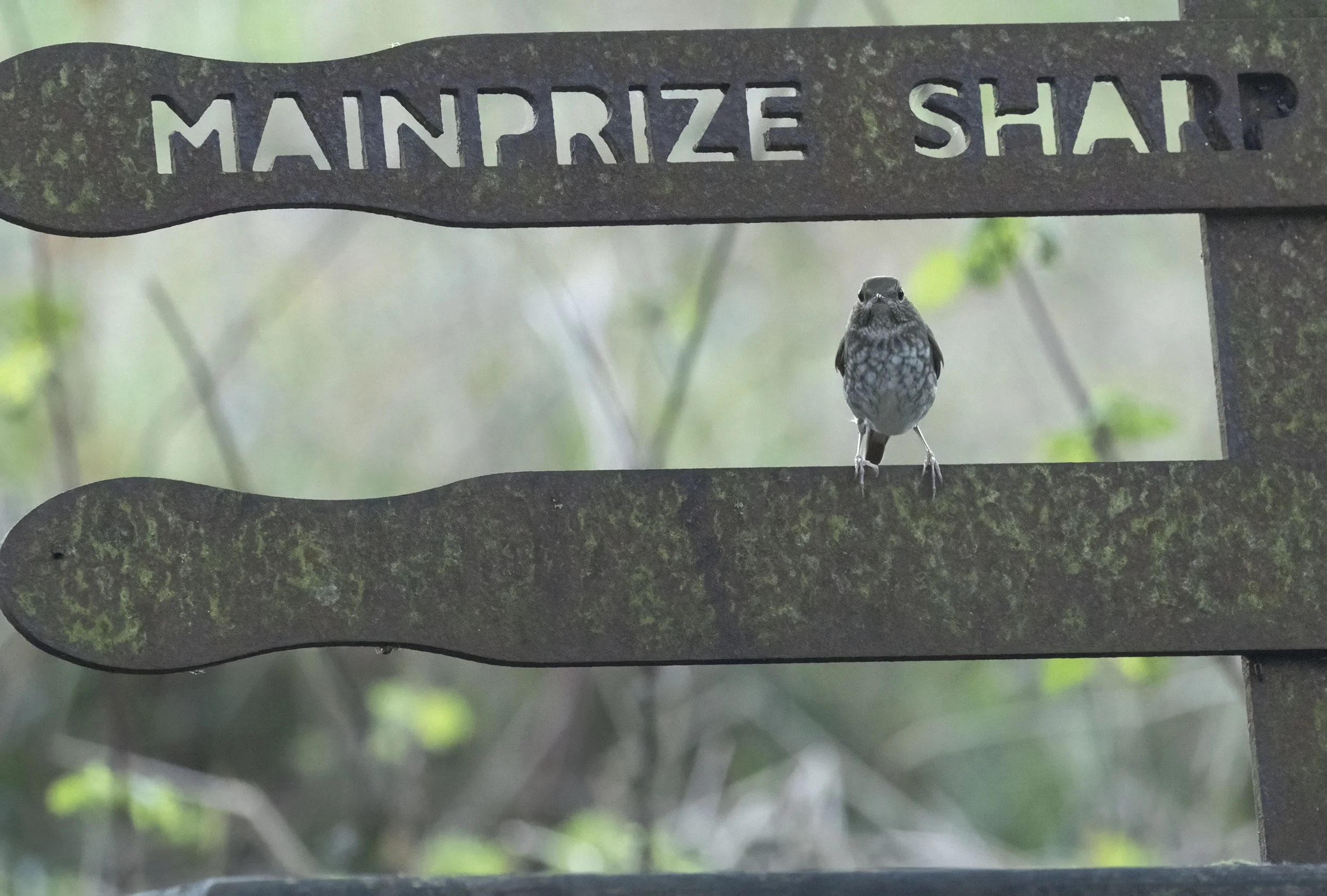
Views and images were more than I had dared to hope for and at times I wondered if I had in fact stayed in bed and was just dreaming
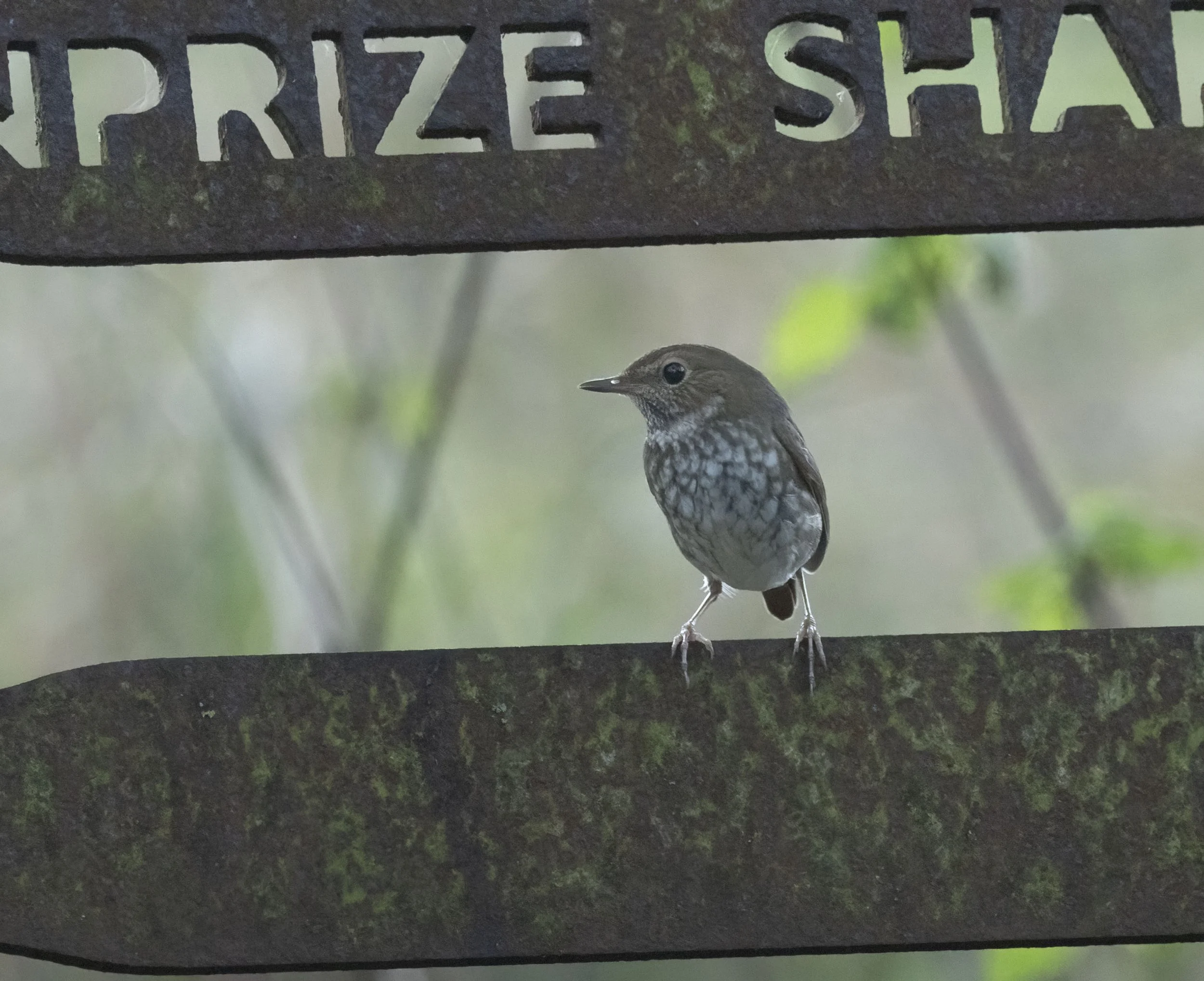
At 06:46 it was still pre-sunrise so ISO was still up
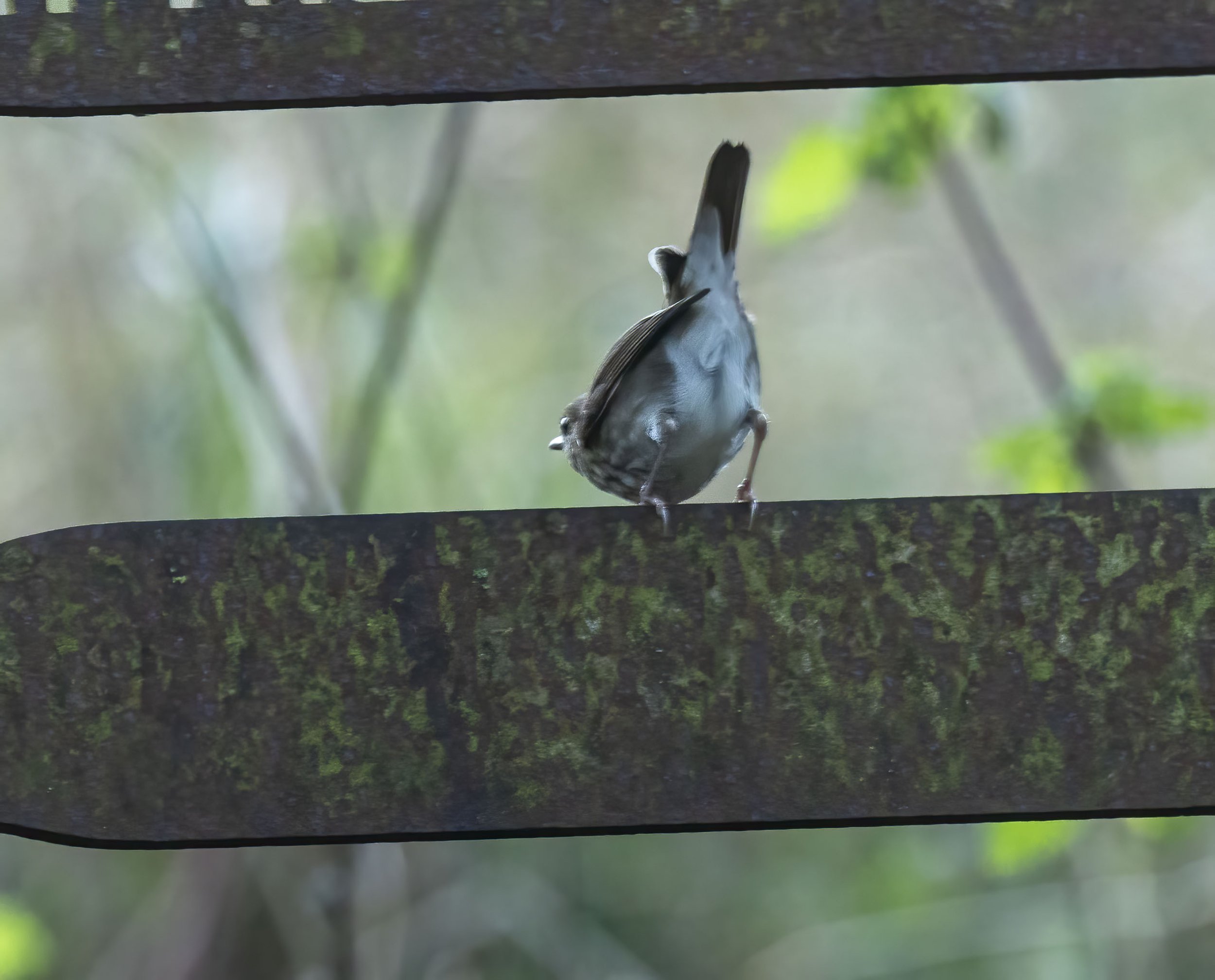
Not sharp but undertail coverts for the record
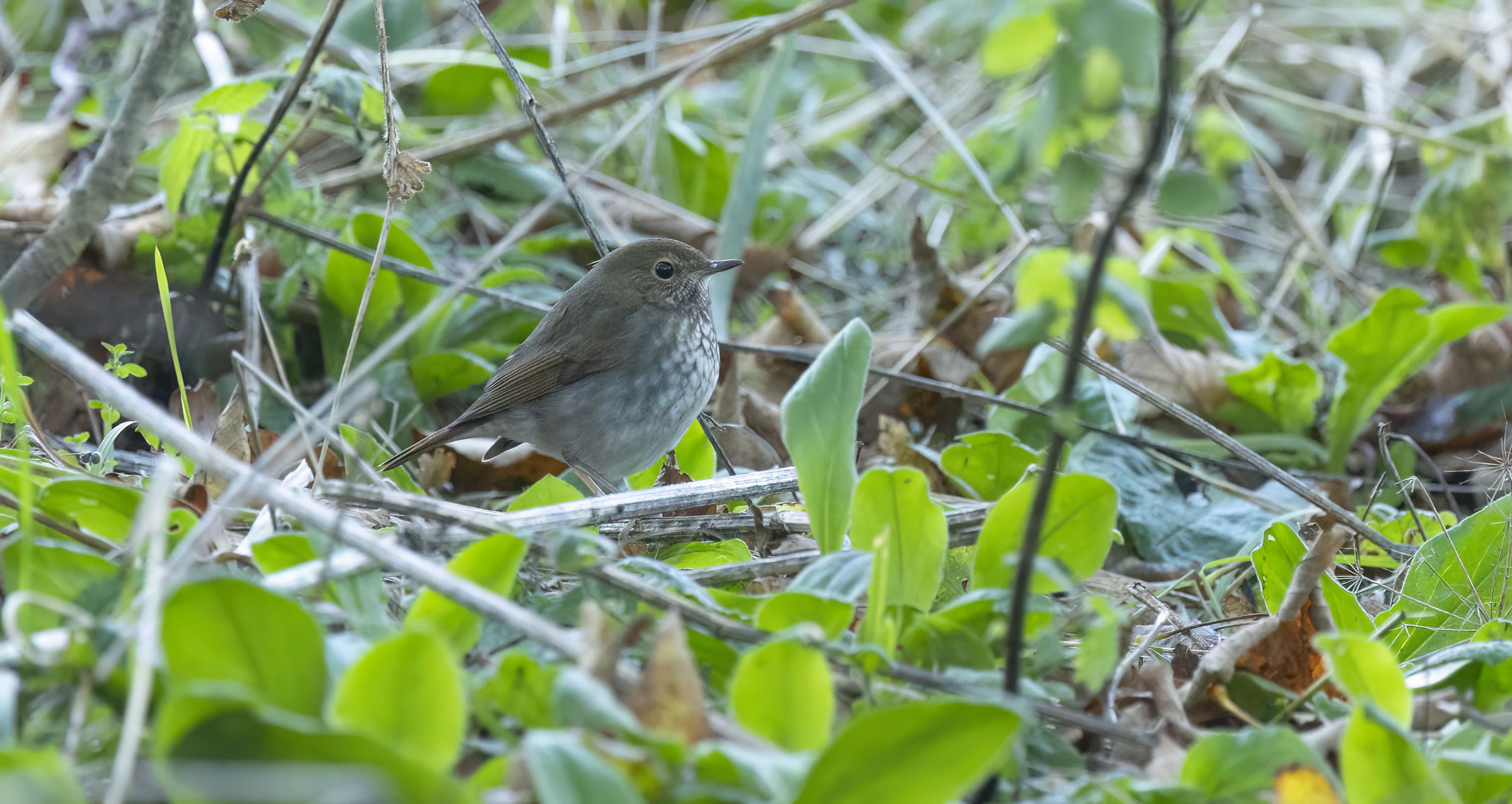
down to ISO 6400 and 1/50th second as it got a bit brighter
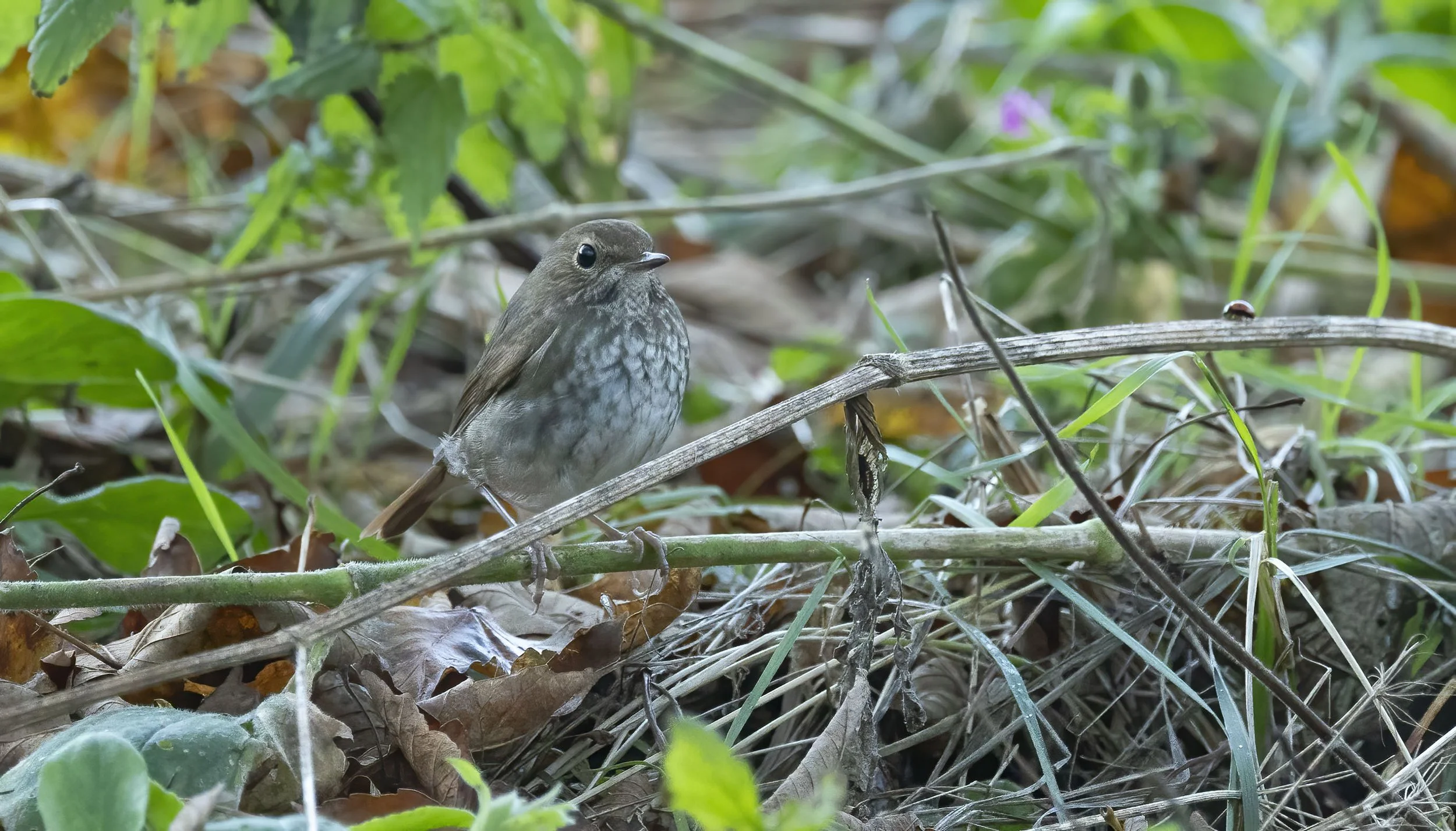
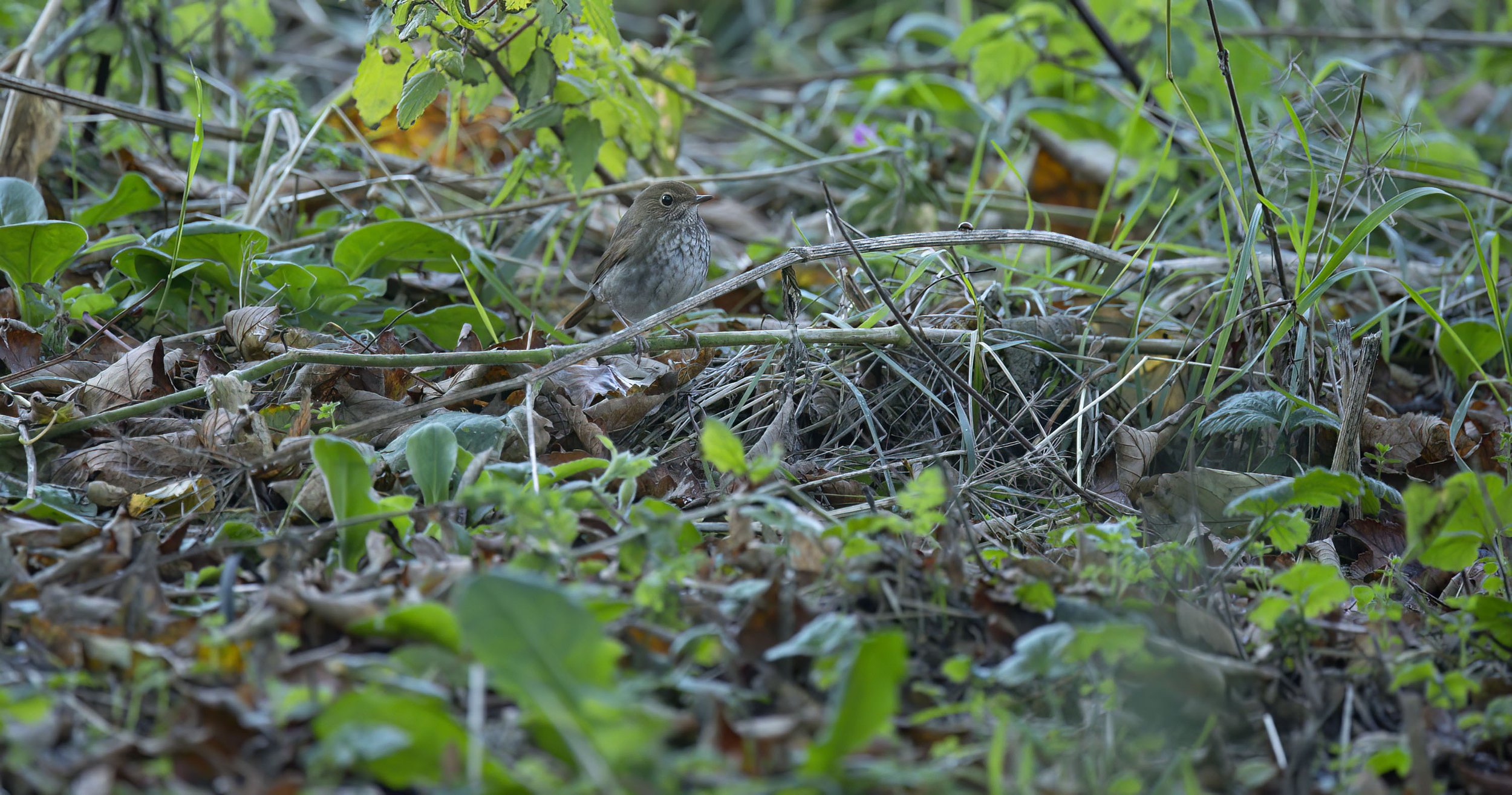
Bird in habitat - I would have been more than happy with this shot to be fair but as it came closer to us expectations rose of getting a decent image
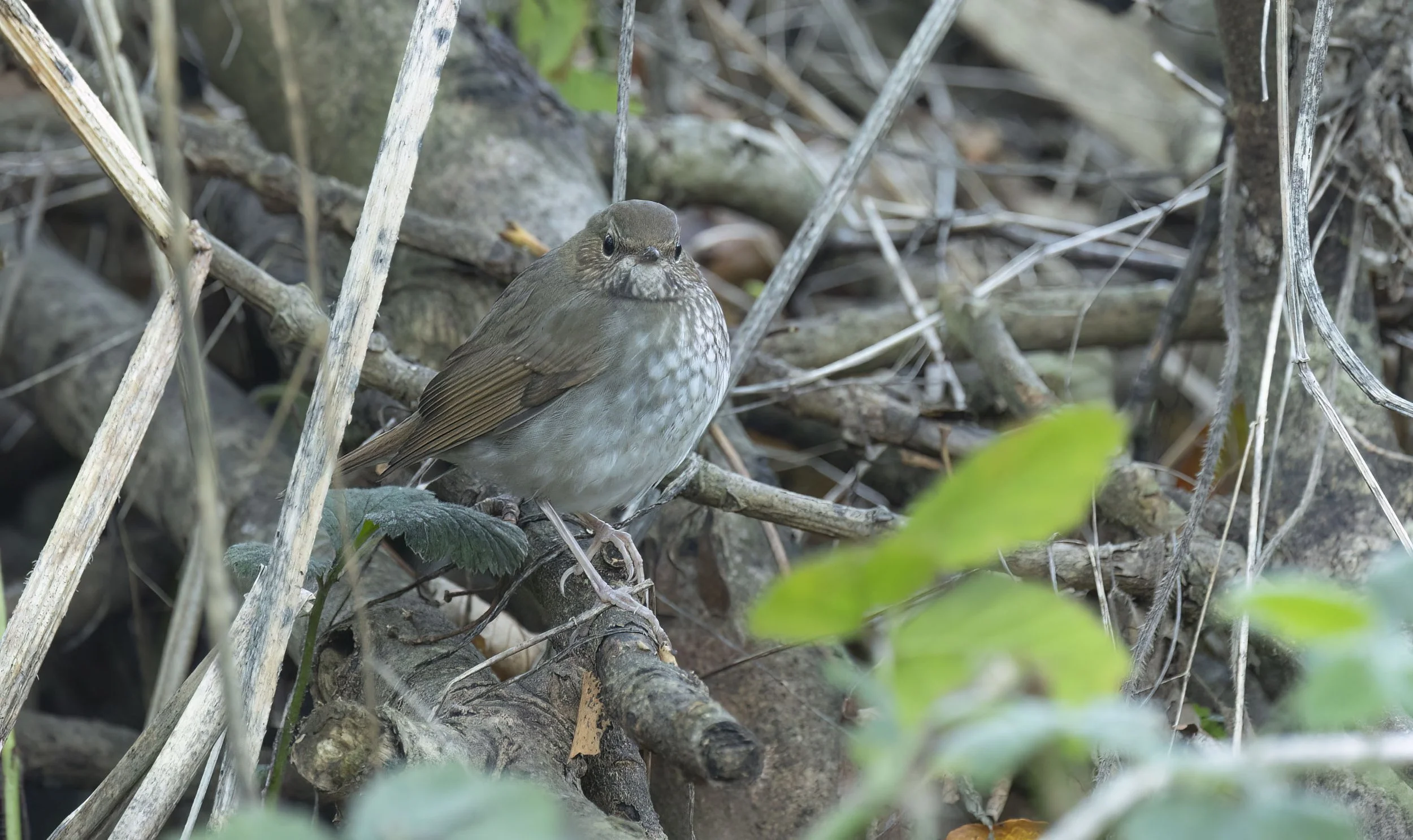
At times looked a bit like a Swainson’s Thrush and Thrush Nightingale
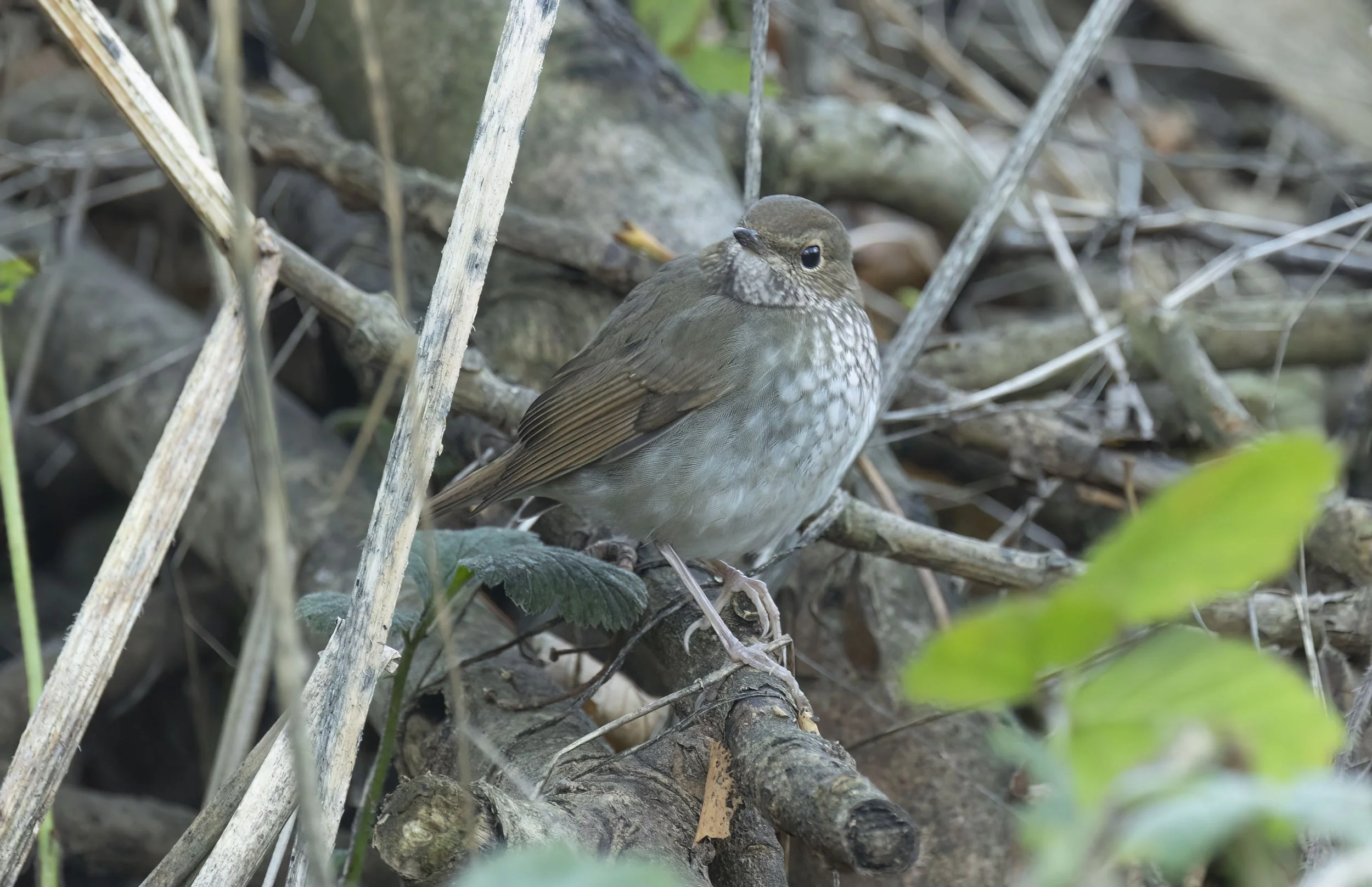
Apologies a bit of an image overload coming
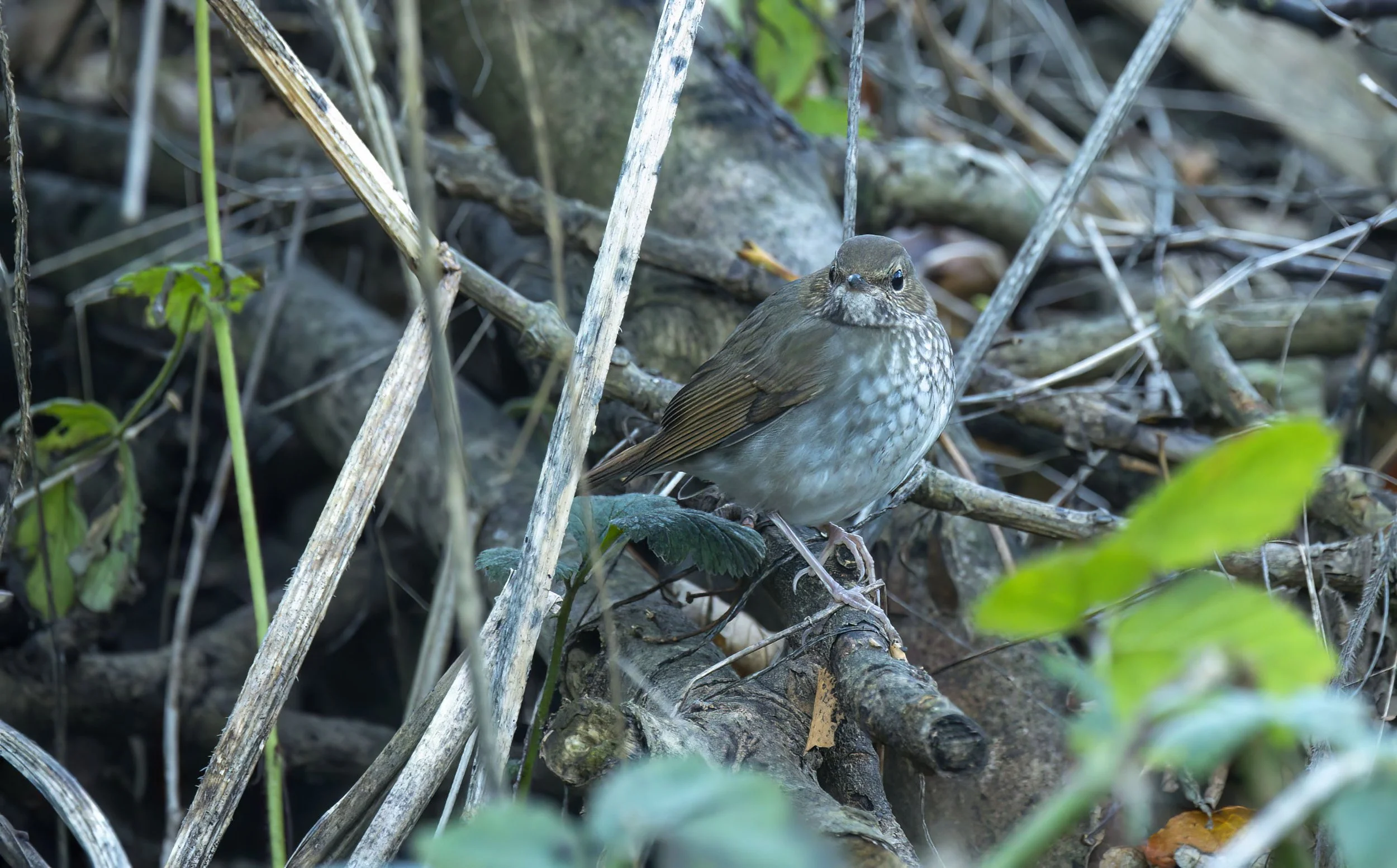
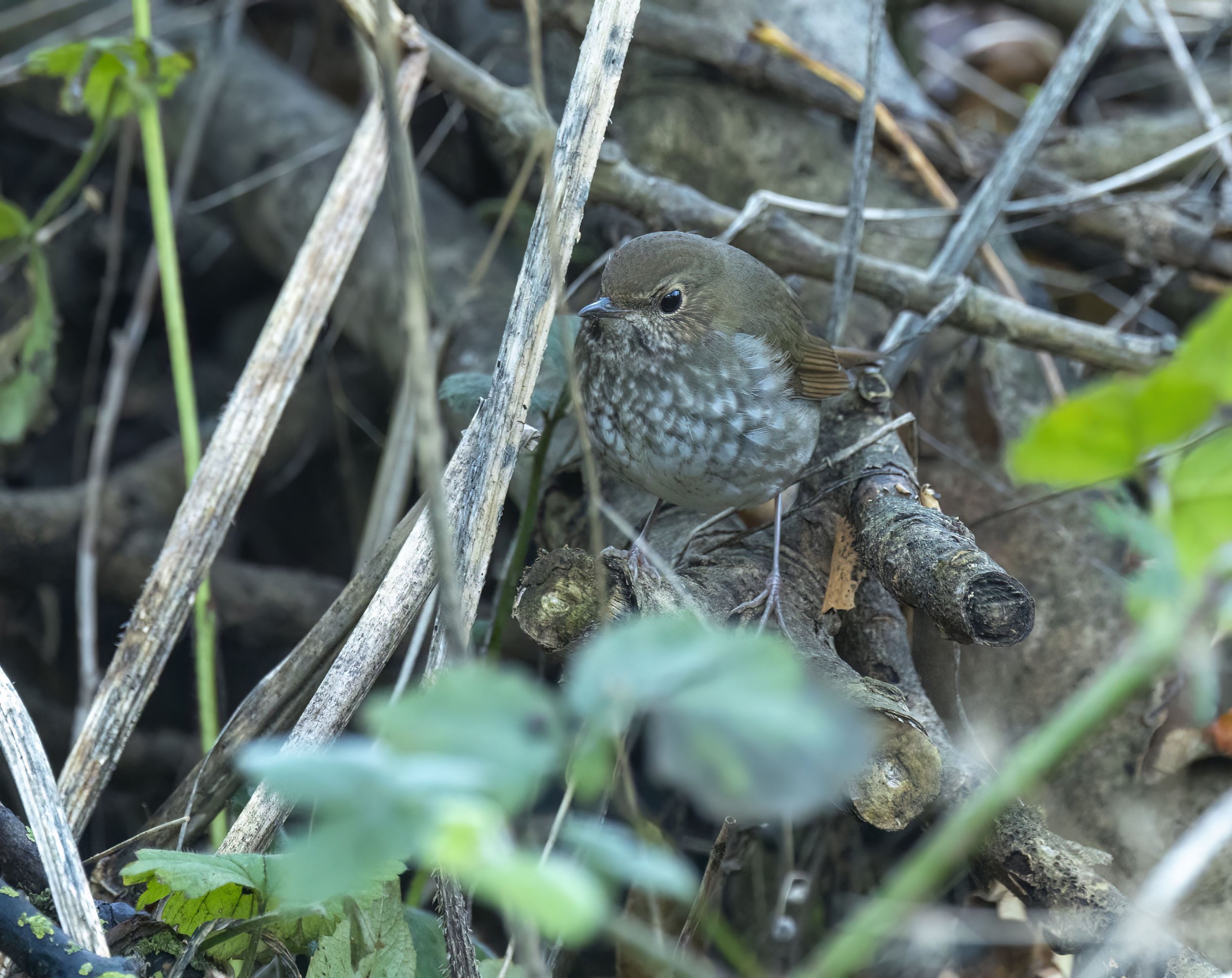
It was picking up food items by digging into the substrate and picking under leaves and small twigs
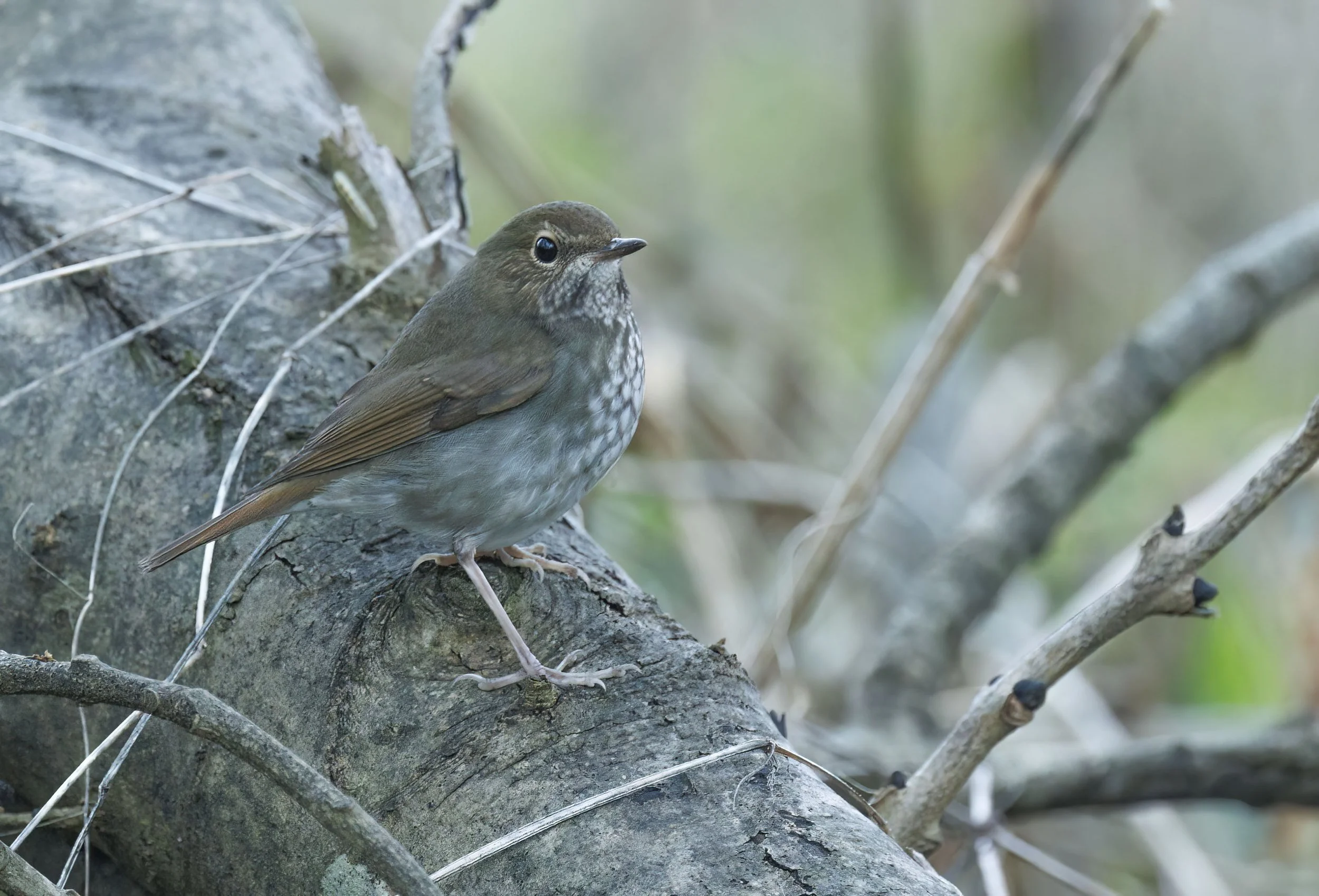
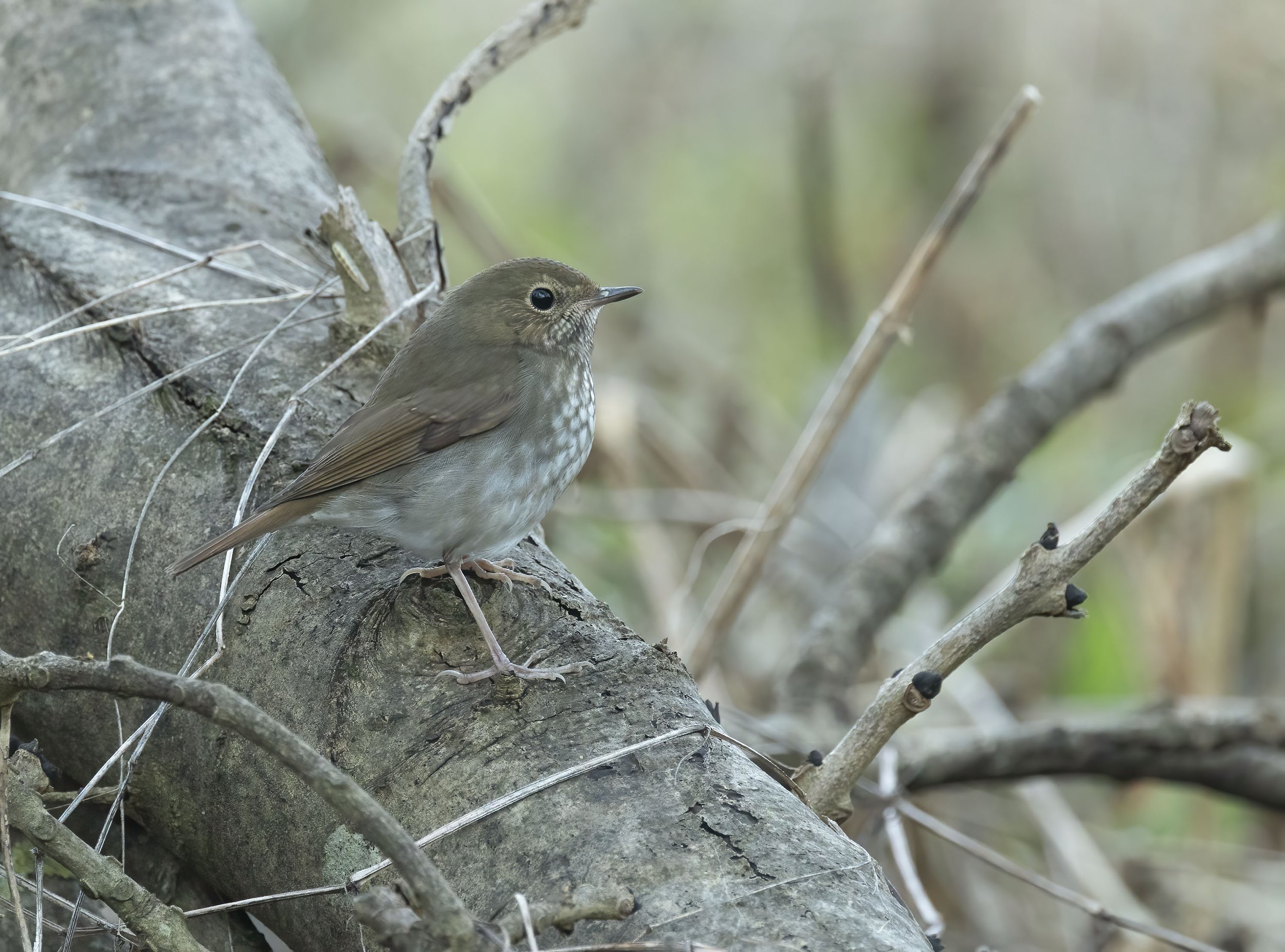
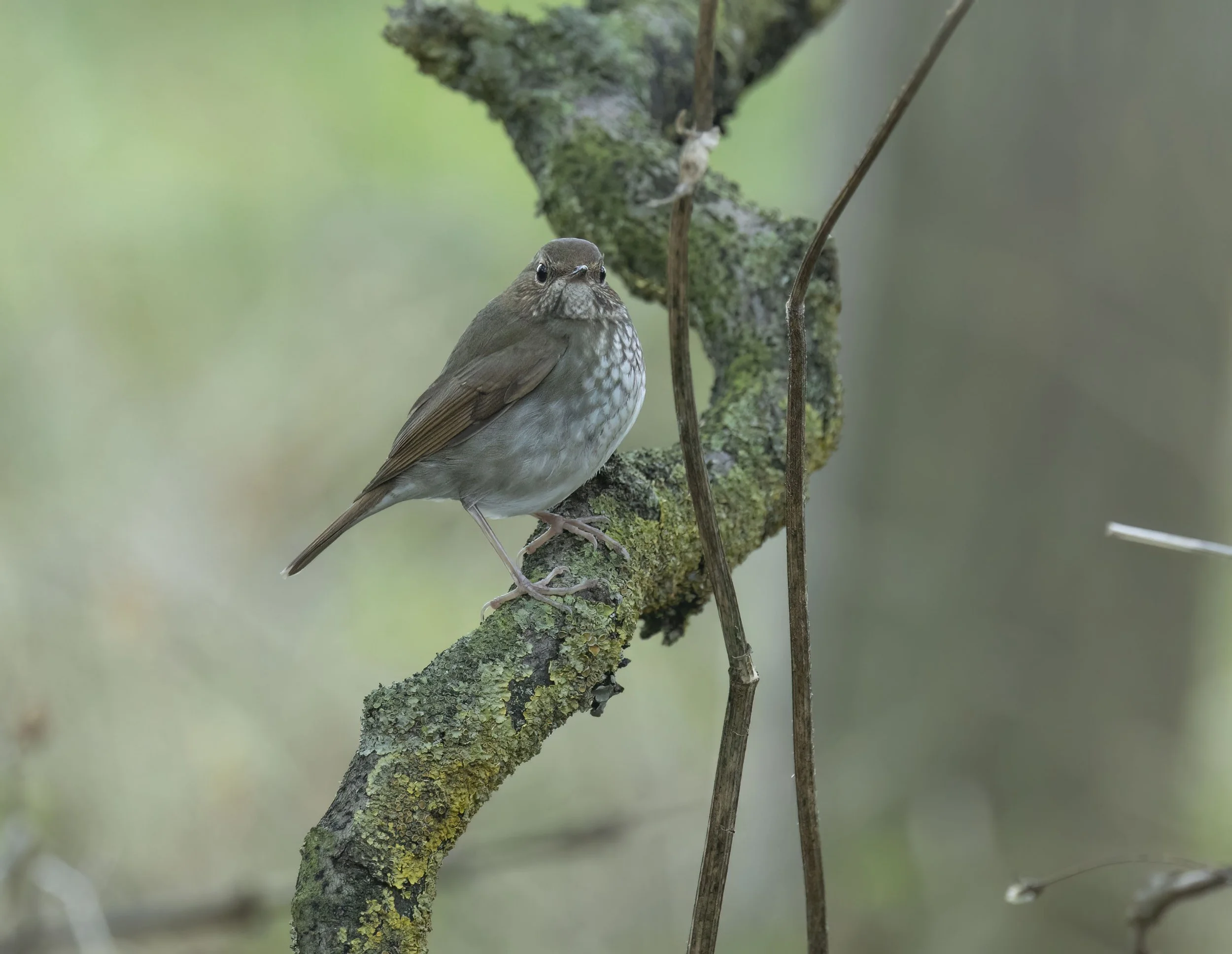
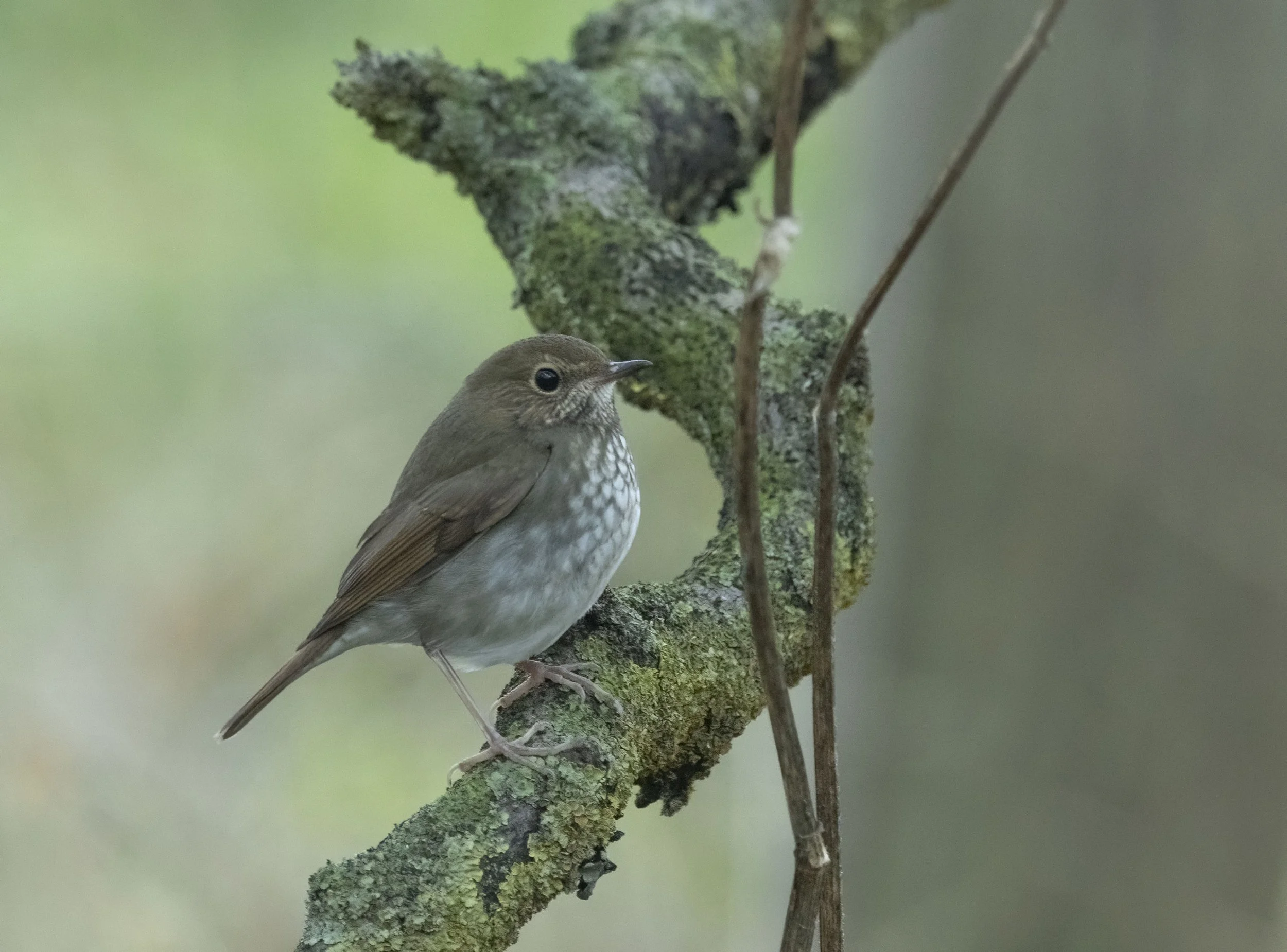
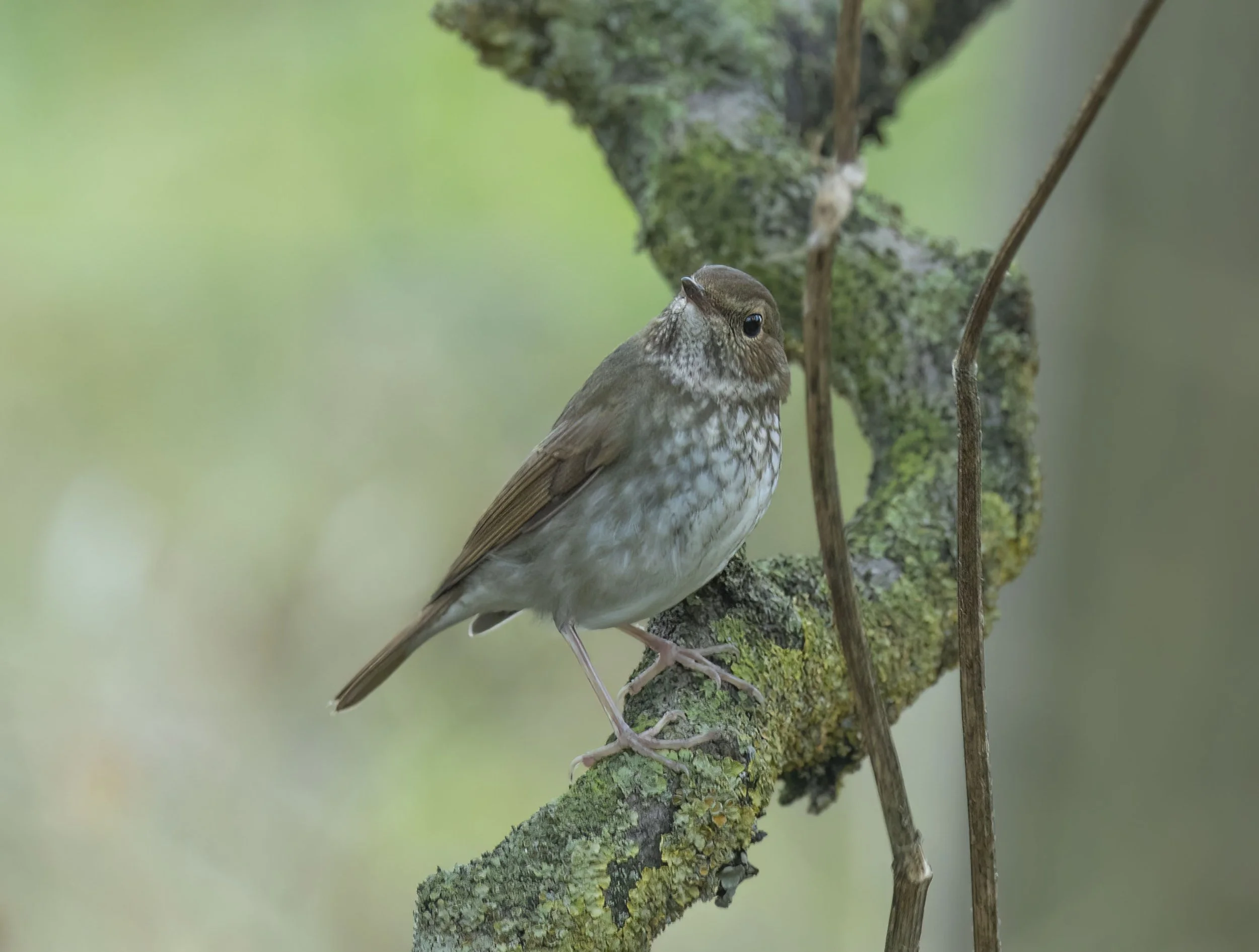
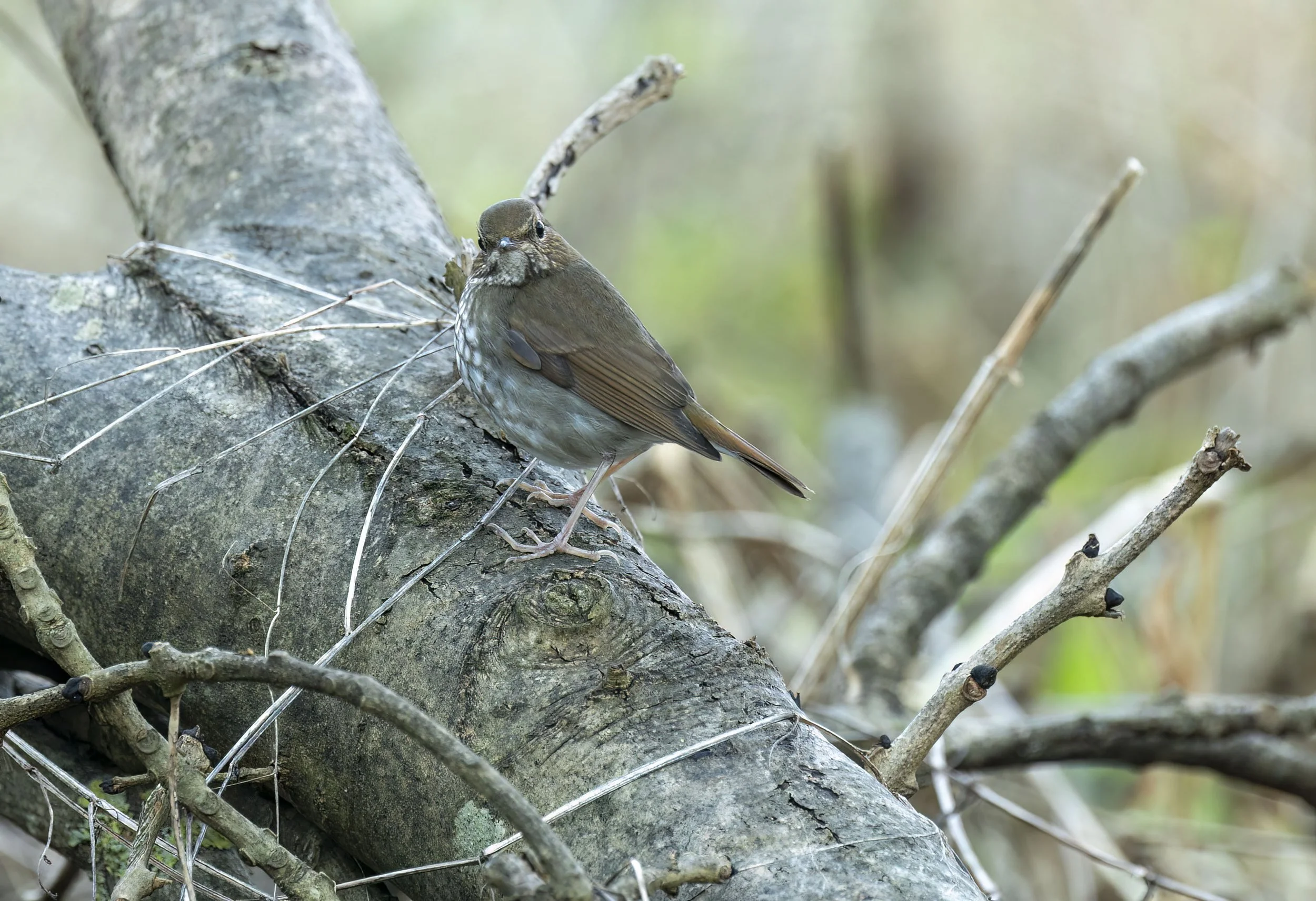
Always tempting to overcrop and miss out the habitat
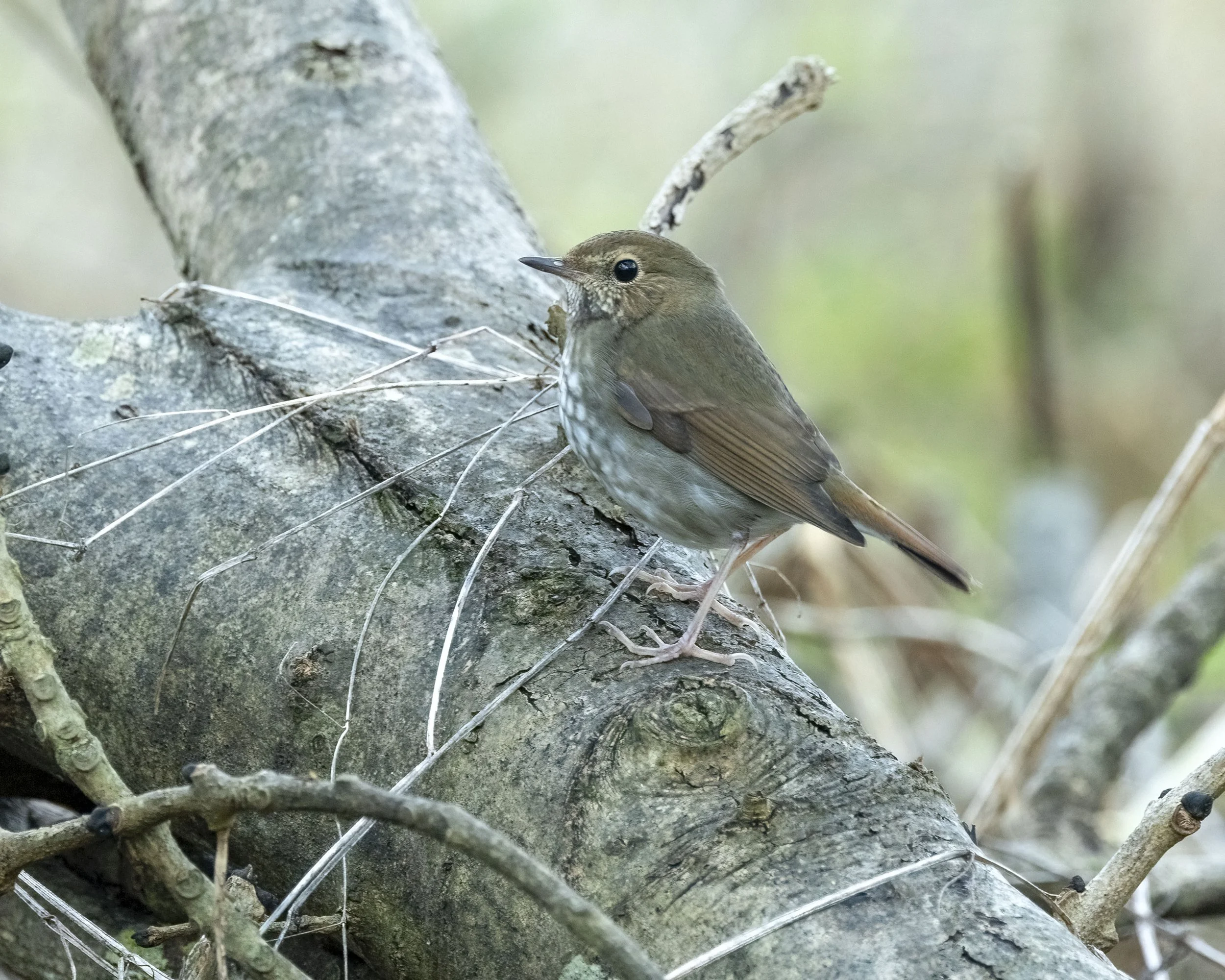
dropped the ISO to 800 but this gave a shutter speed of 1/13th second - IS in modern mirrorless is very good if you are not slipping down a muddy bank - Canon R6III and Canon RF 100-500 hand held
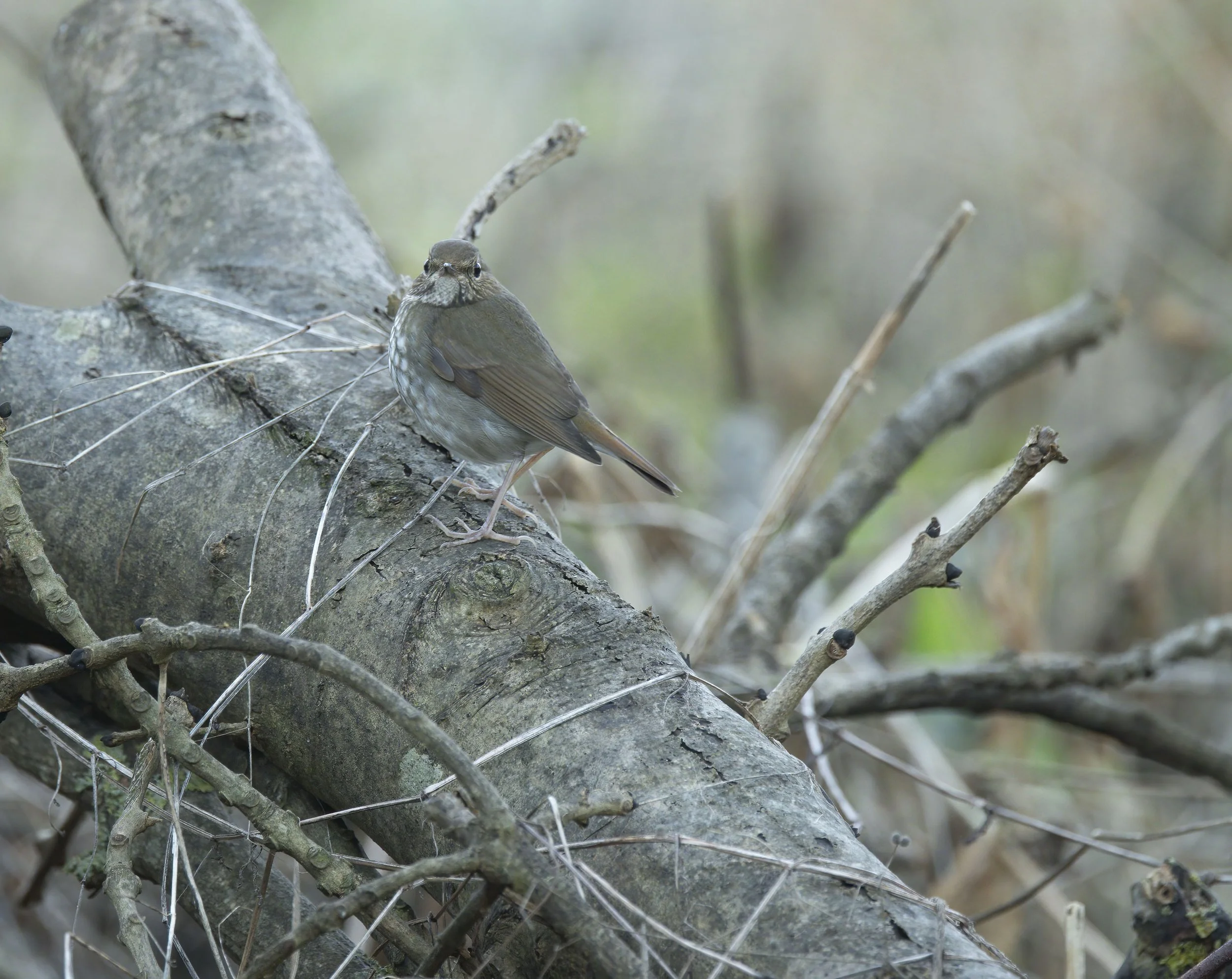
more log
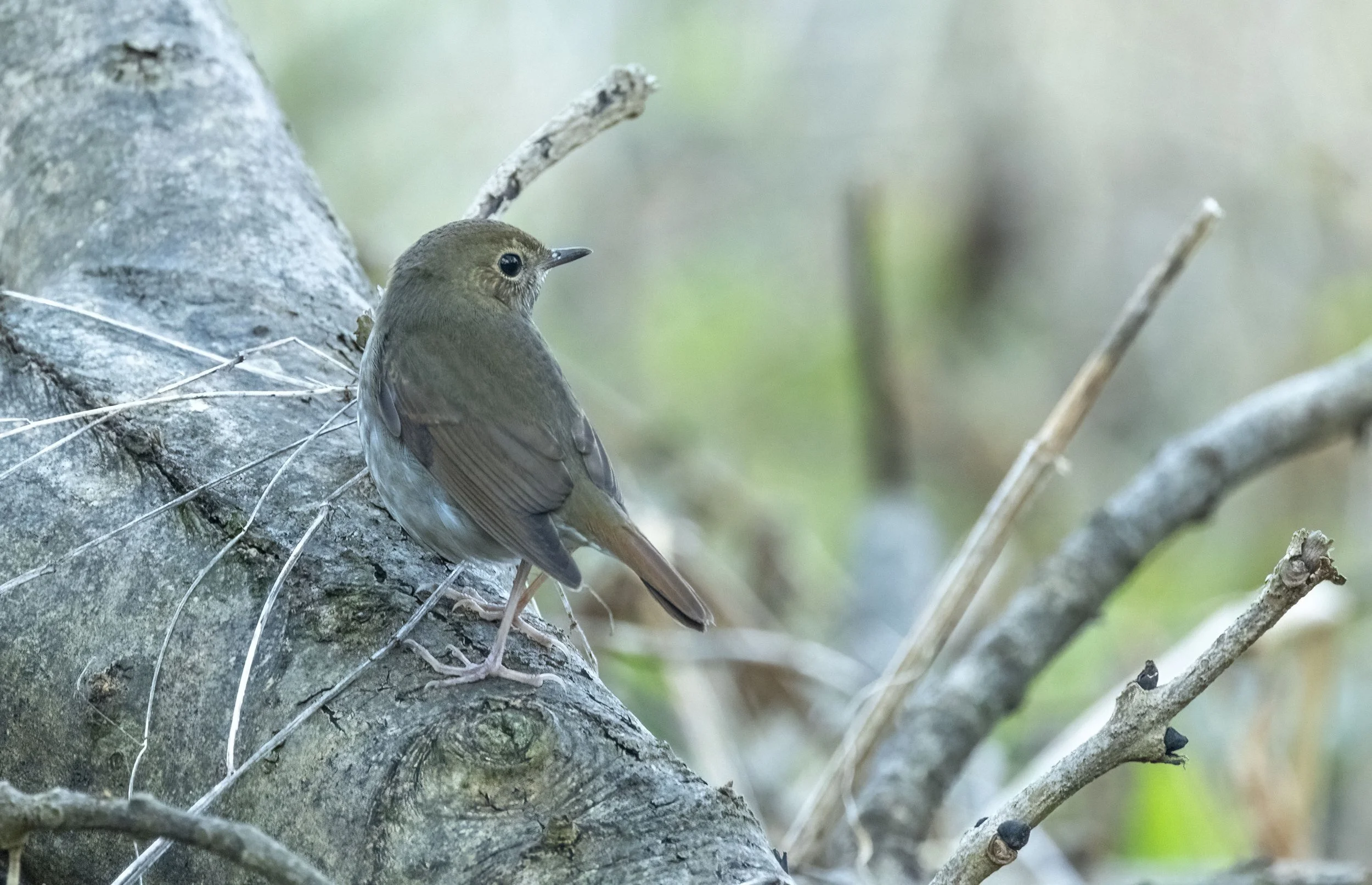
Something I never expected to see in the UK
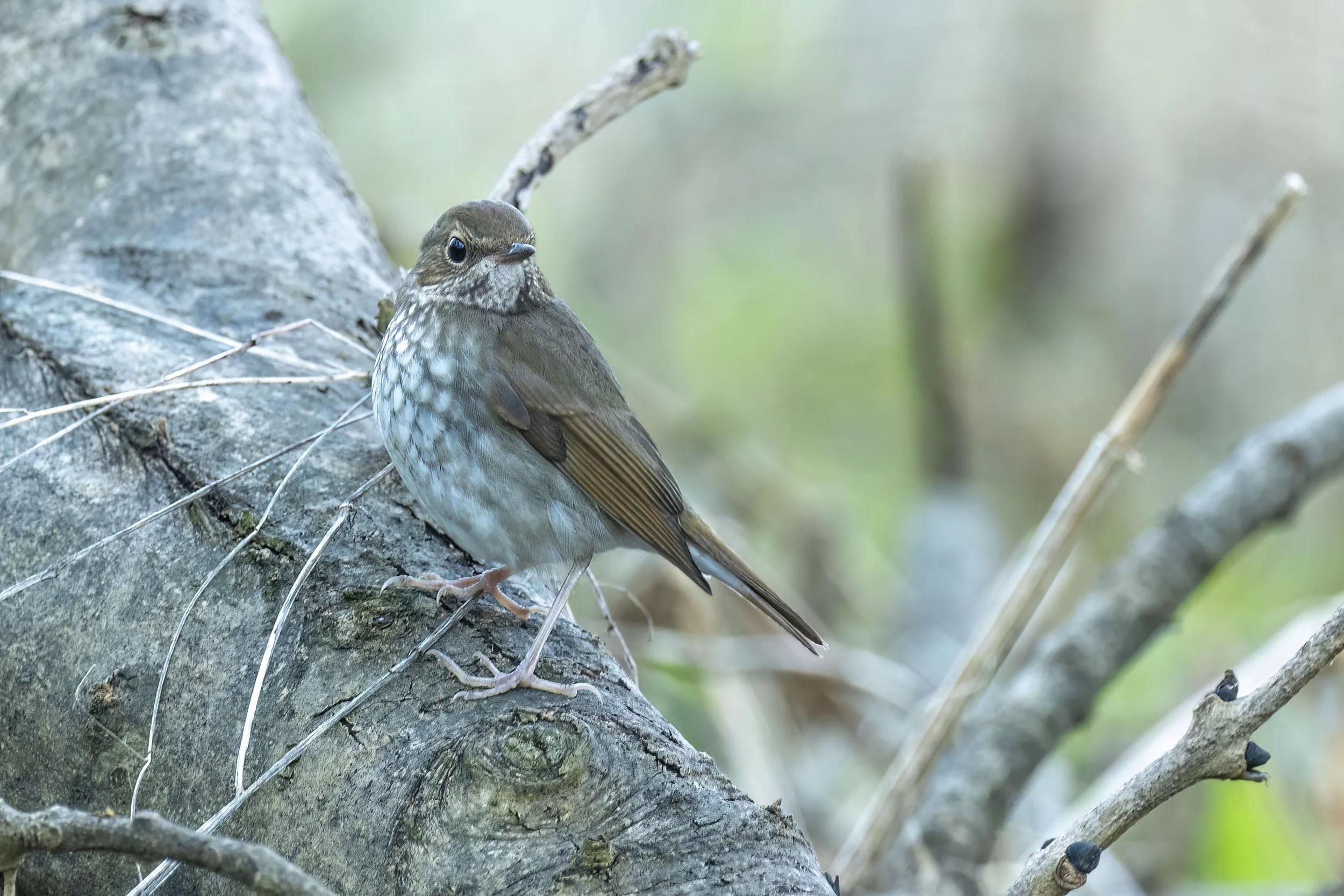
Nearly there down to the last 300 to sort
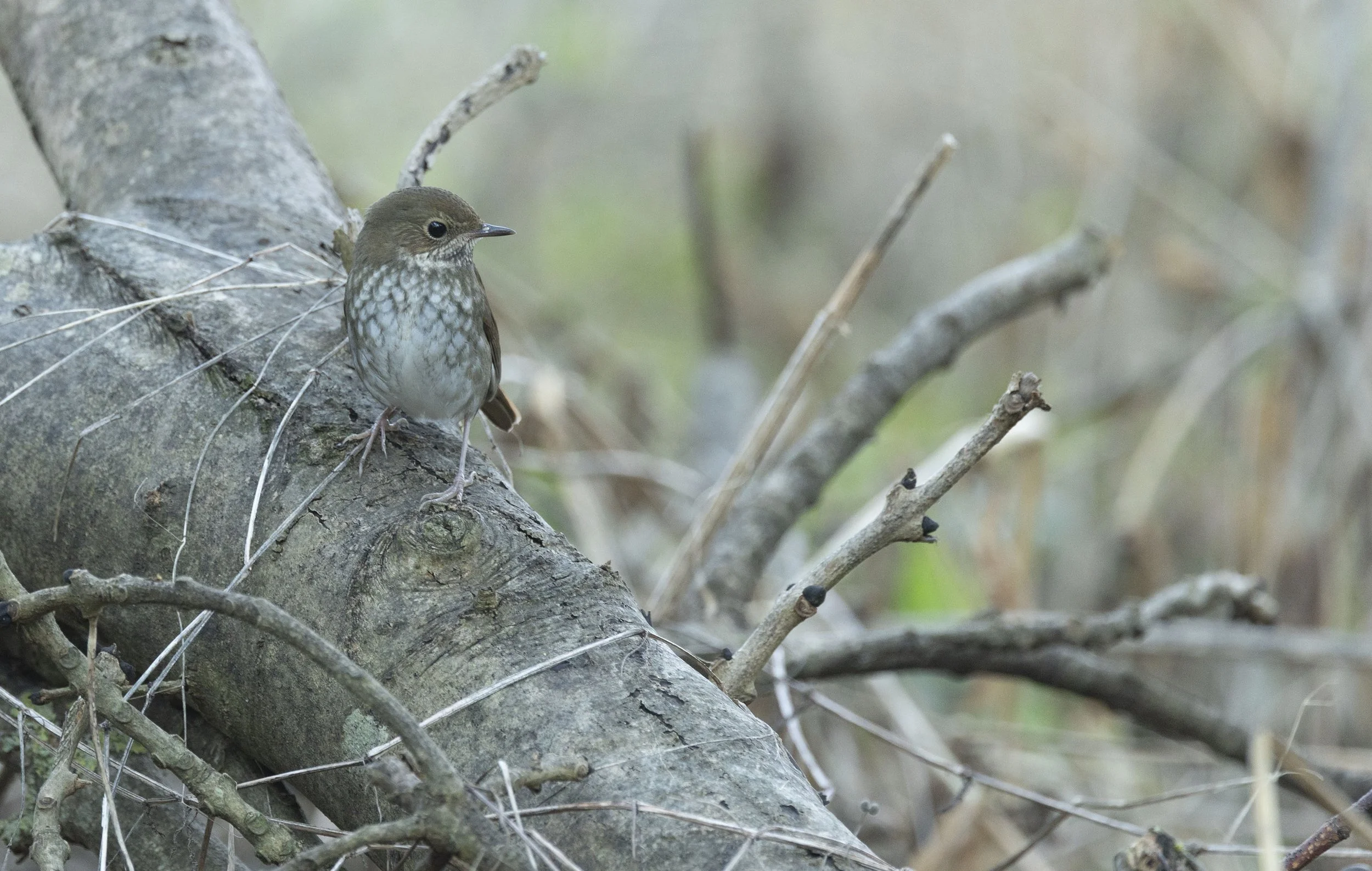
Subtle patterns on the breast and throat only really visible at close range
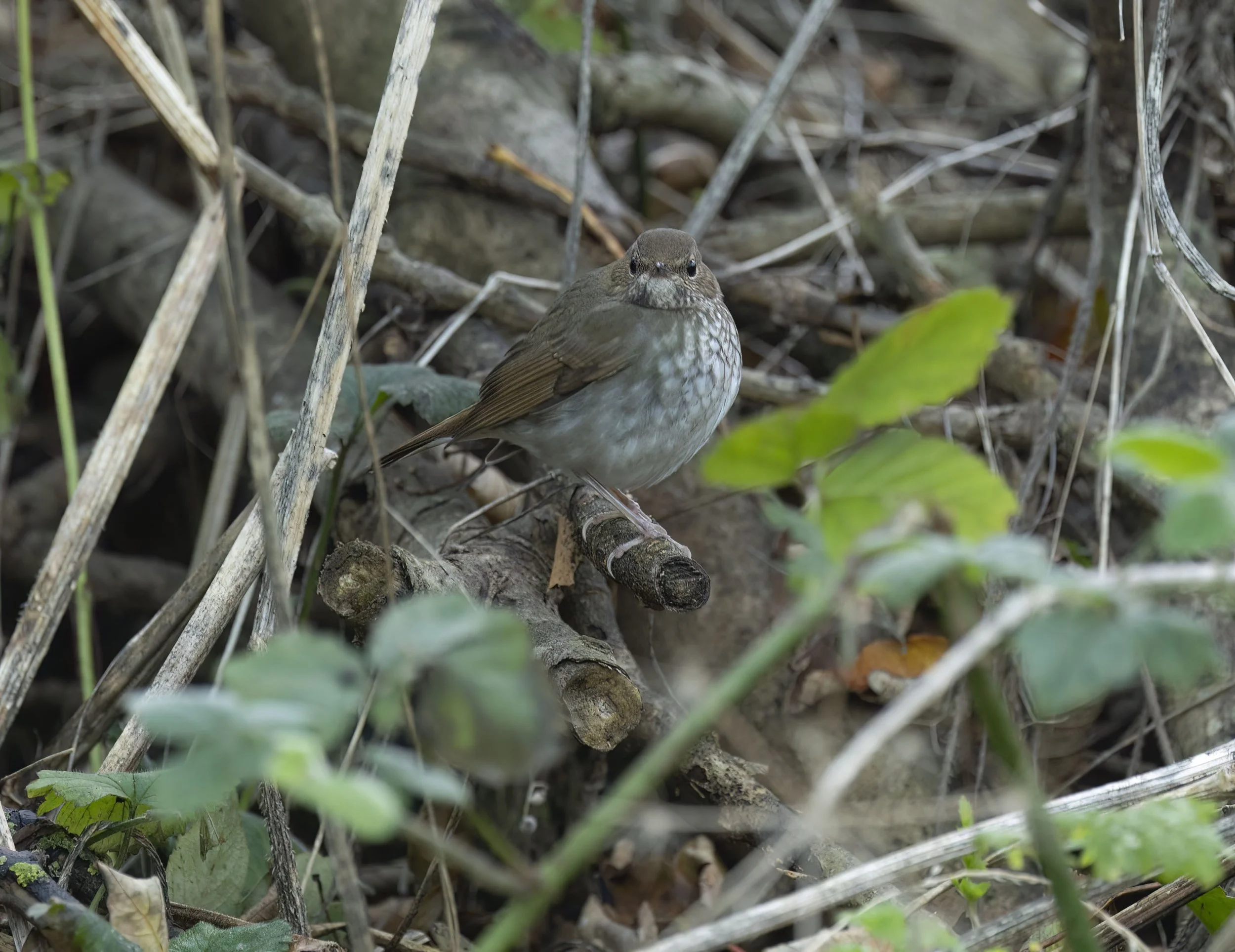
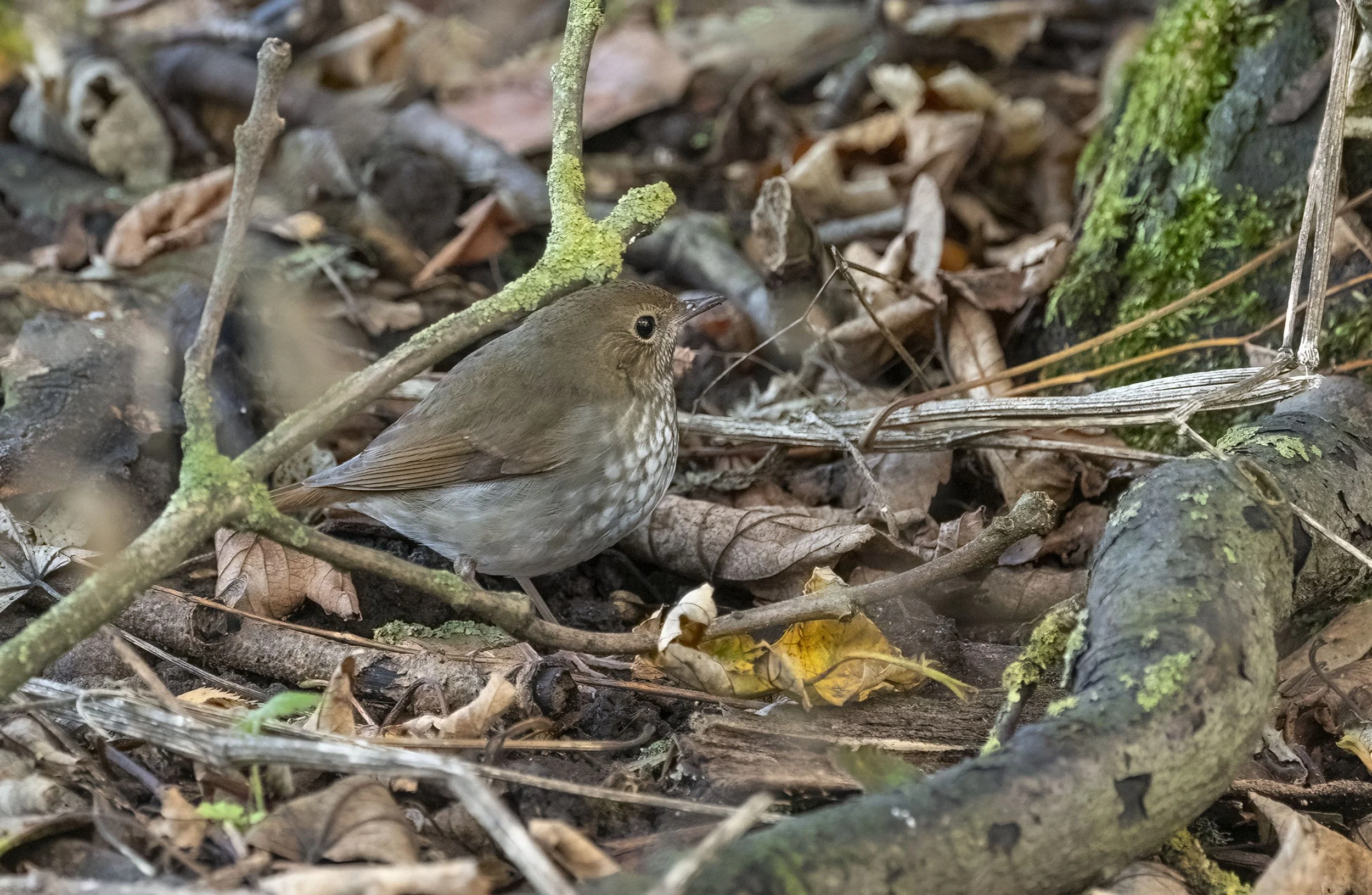
Really cryptic when sitting motionless in the brush
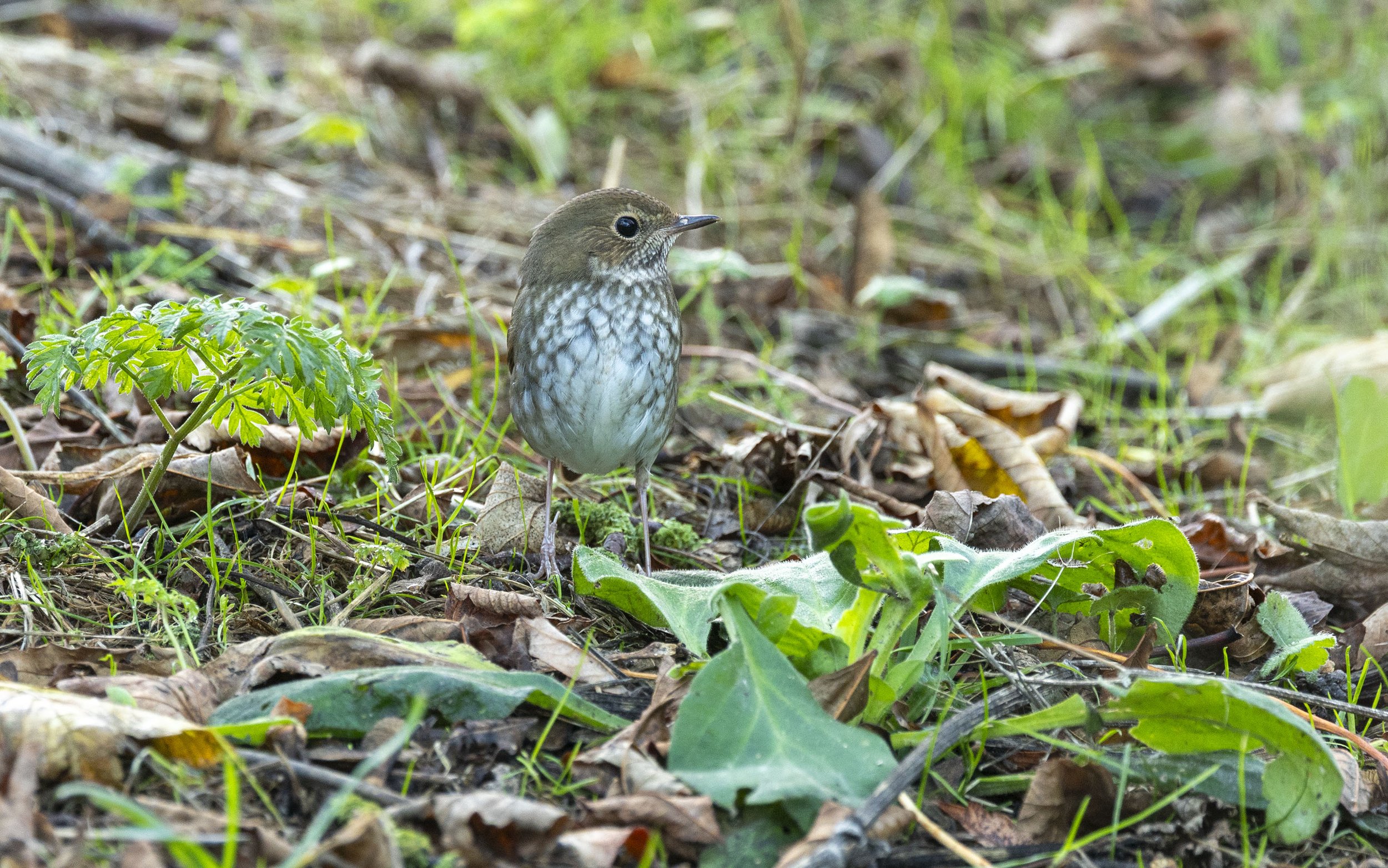
leaf litter
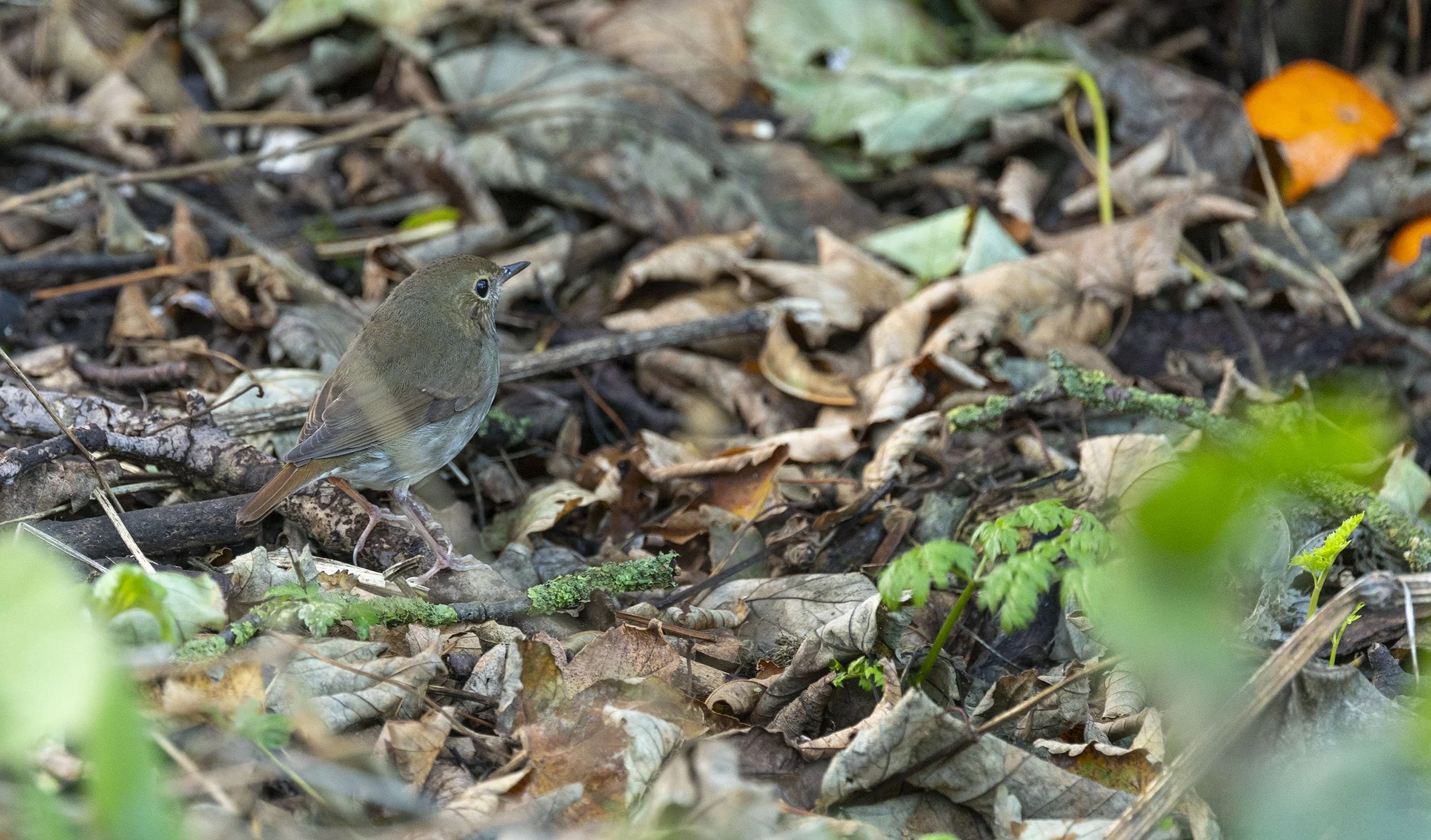
Where is it? by the orange peel
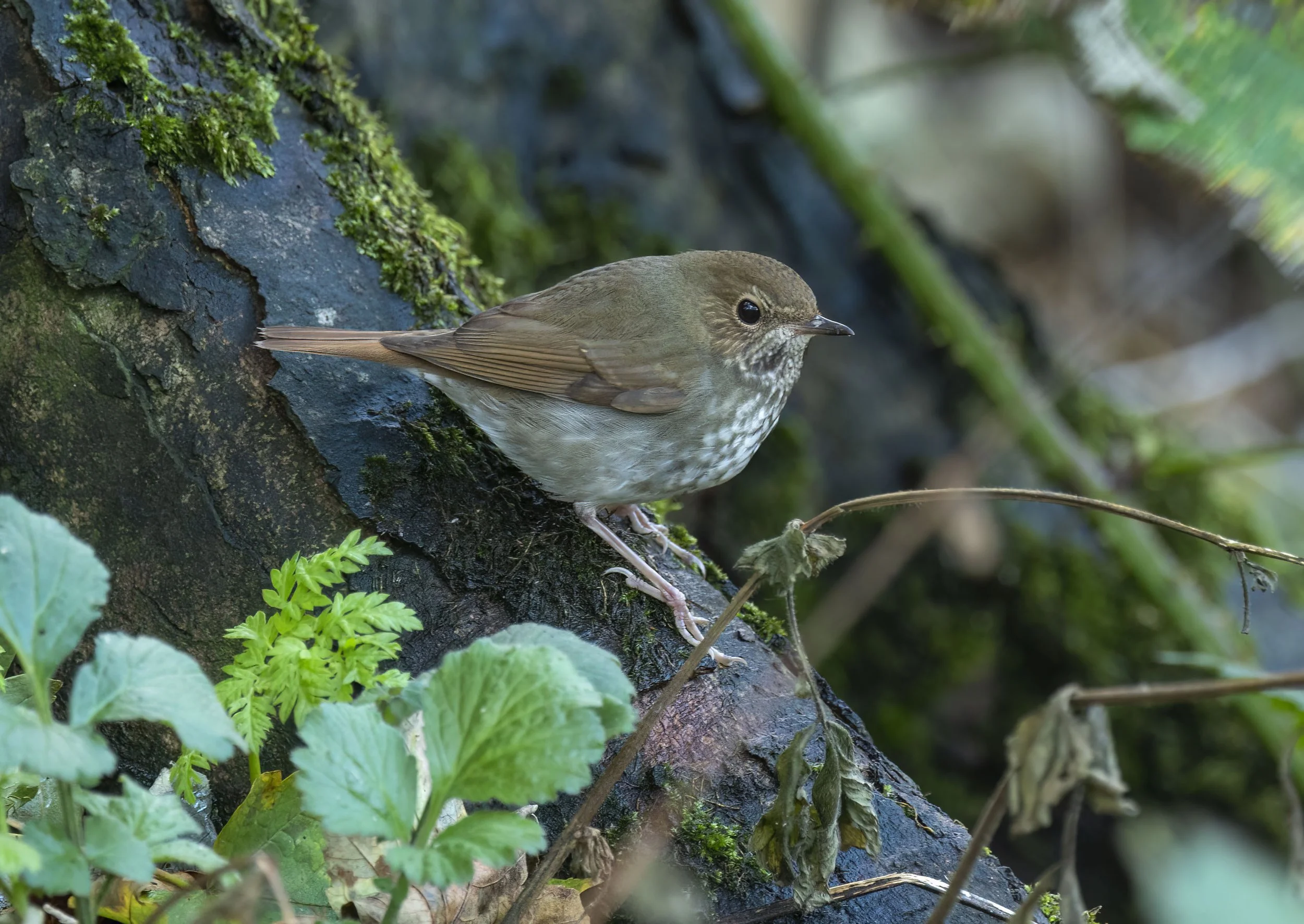
a classic pose on a nice tree root
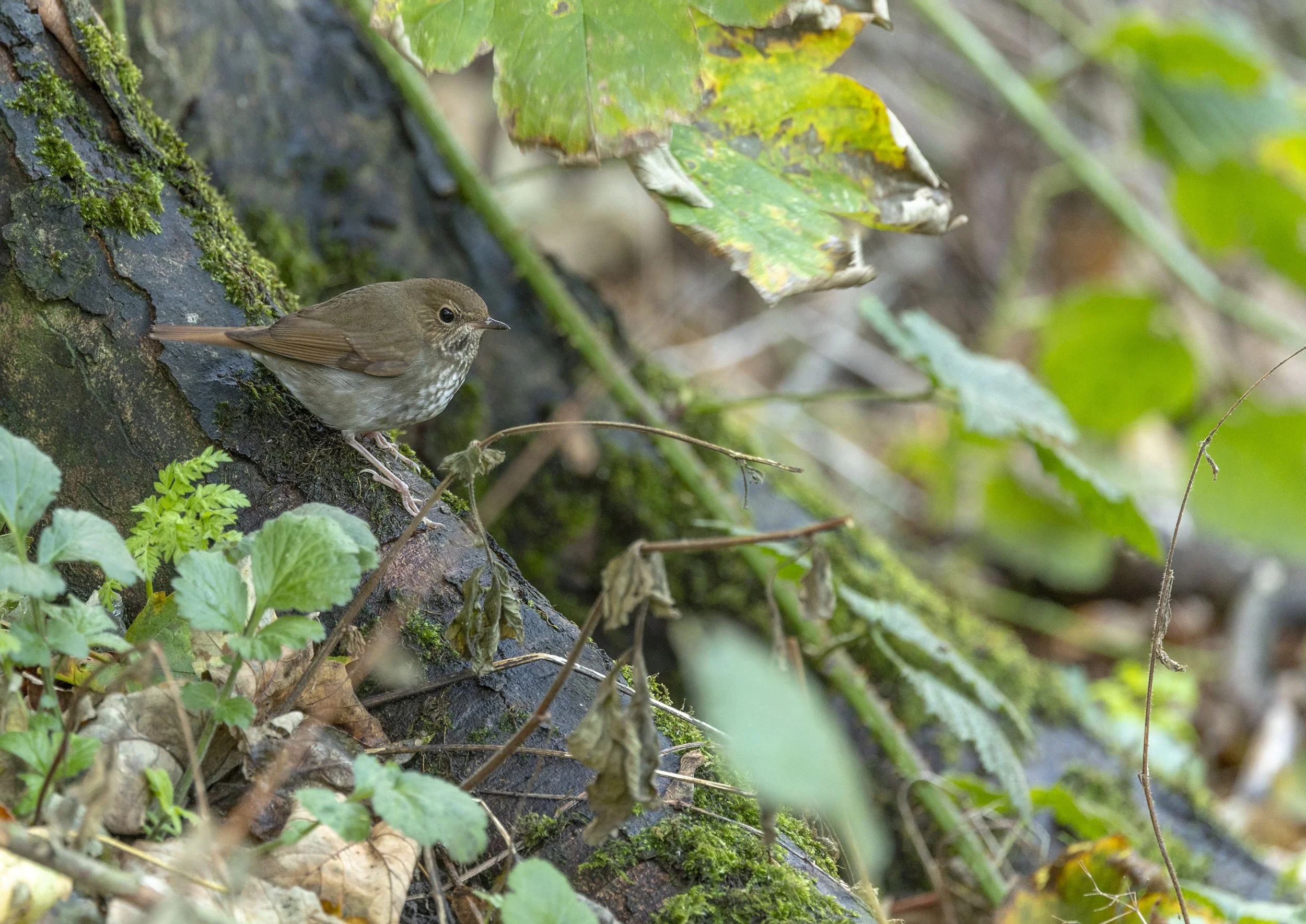
Roots
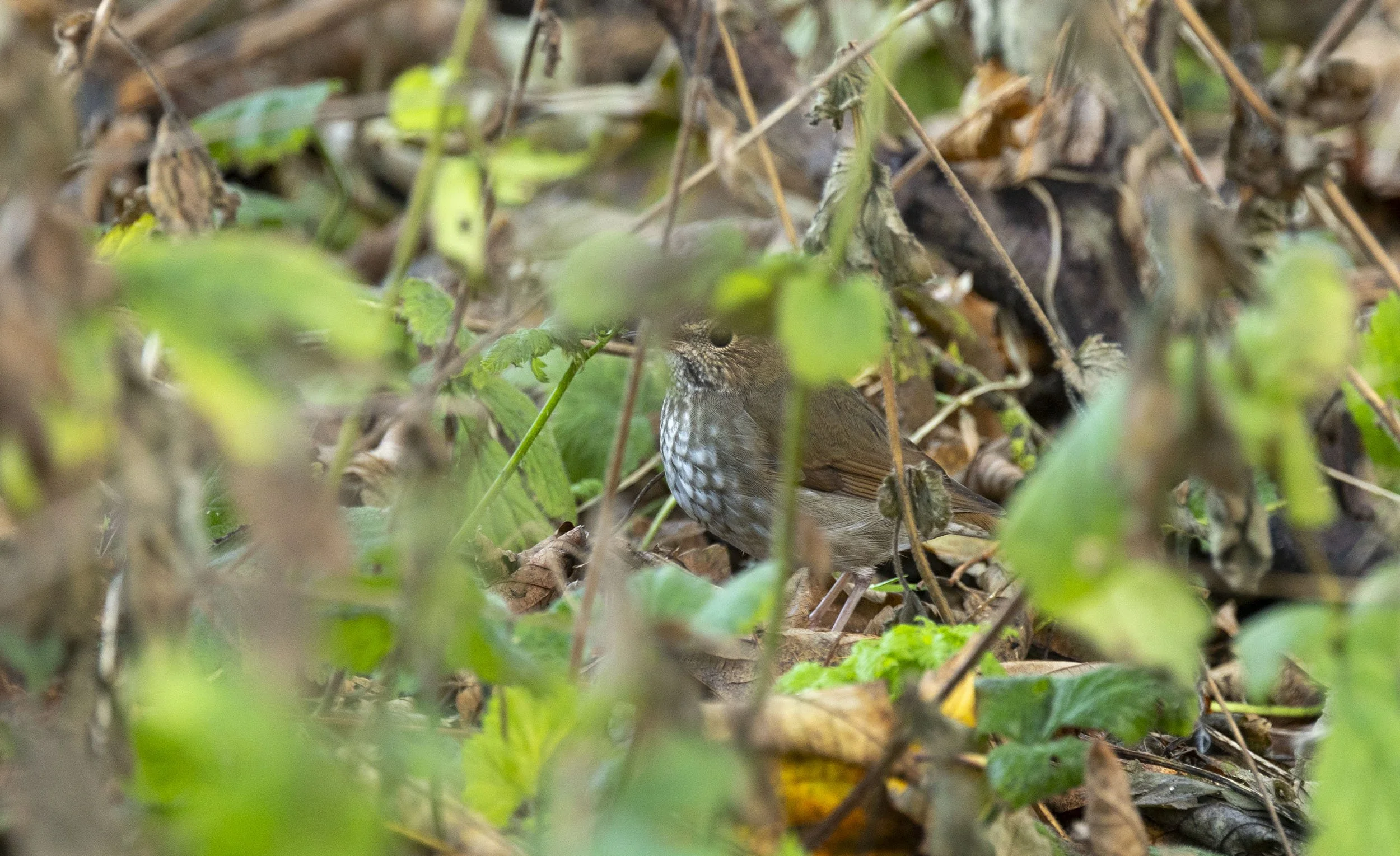
Imagine seeing a movement in the vegetation and looking in to see this scaly breast
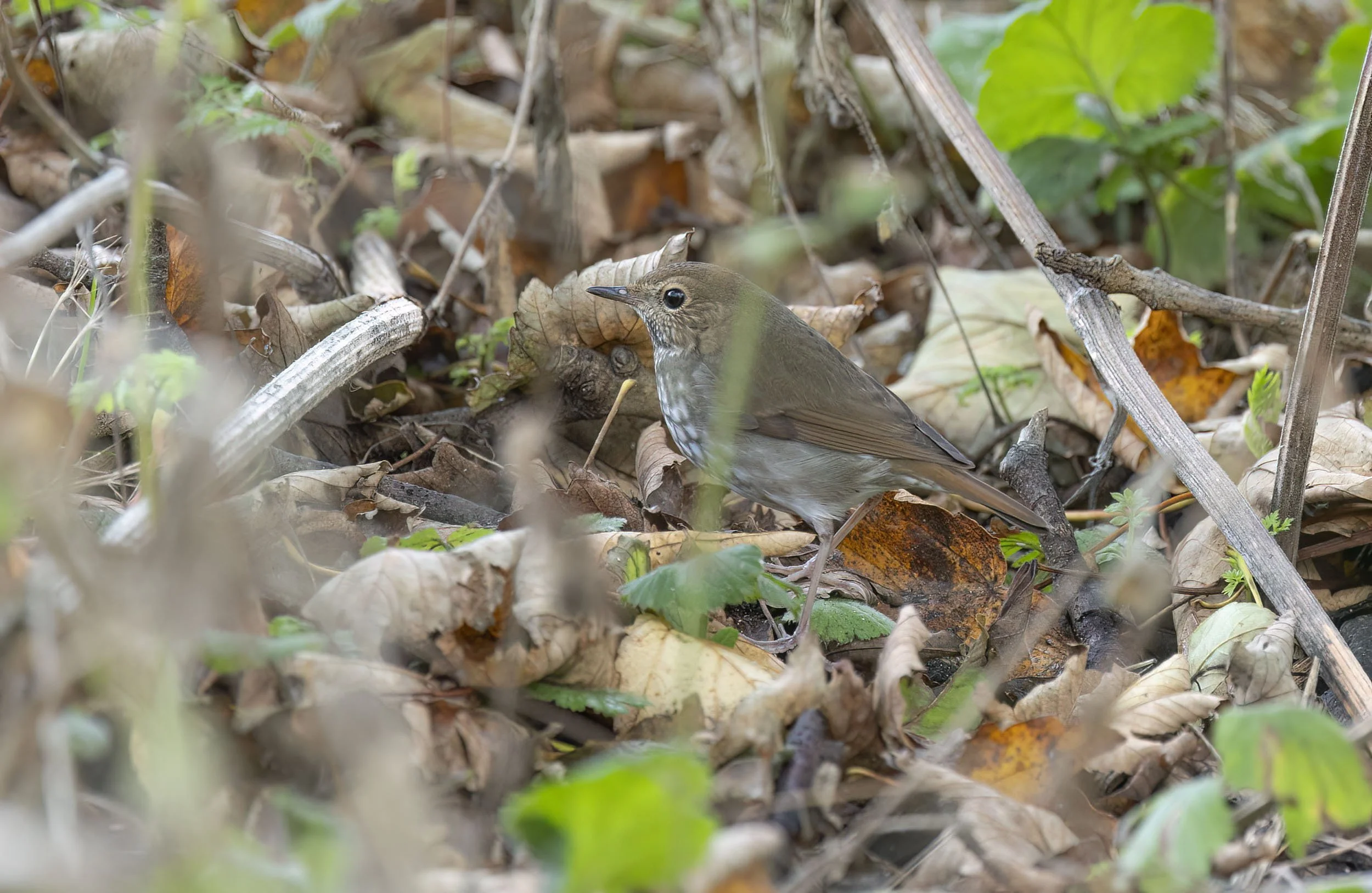
I have been very impressed by the image quality of the R6III thus far in testing conditions
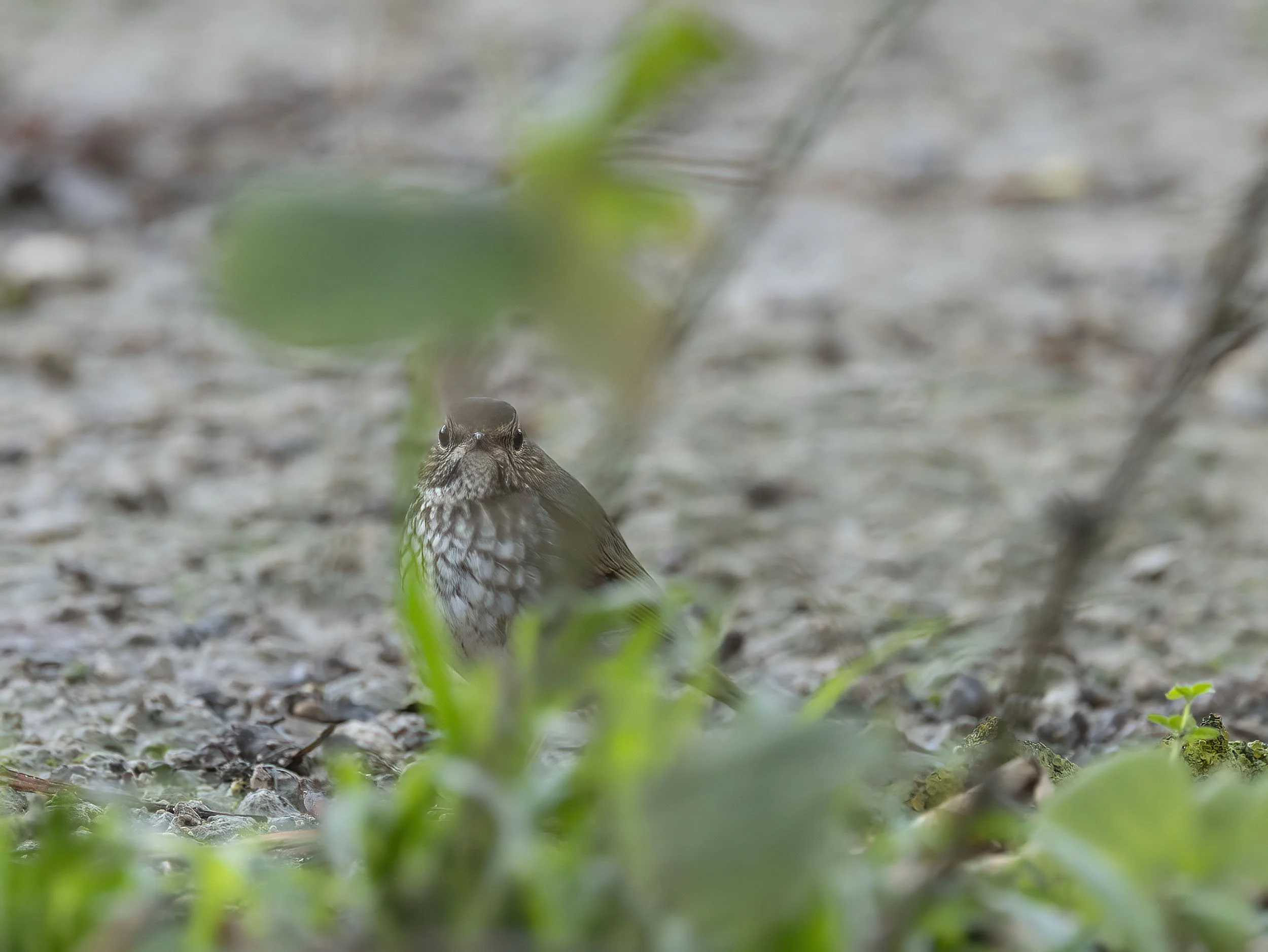
Hiding under a shamrock
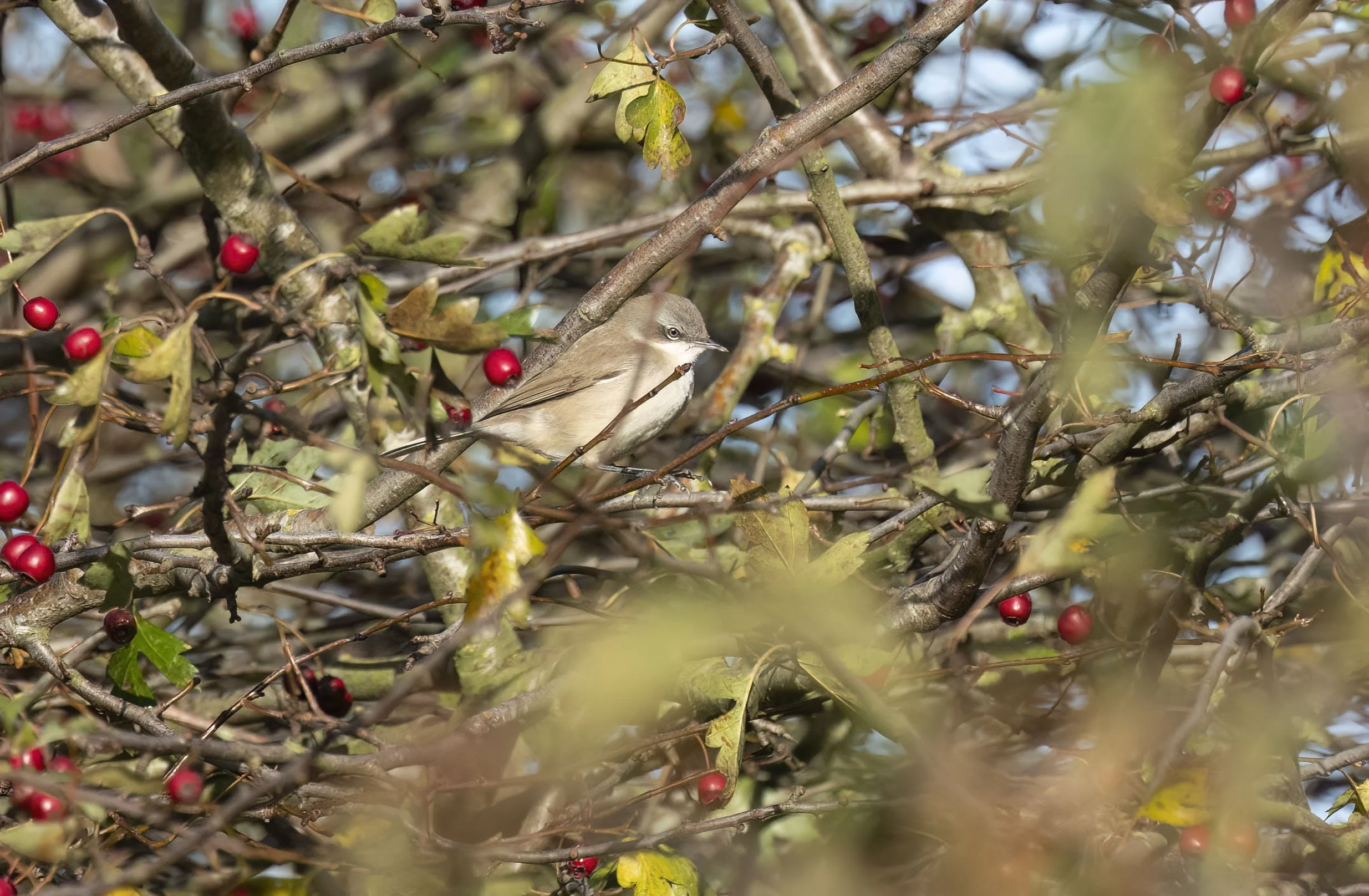
After such amazing views there seemed no point in waiting to see it again on the mossy log so it was up to Bempton to look for the Pallas’s Warbler jewel - a Ring Ouzel was my first of the year in what seems to have been a poor east coast year for them and while having the obligatory cheese scone and oat milk latte chatting to Trevor this late - sandy looking Lesser Whitethroat put in a very brief appearance
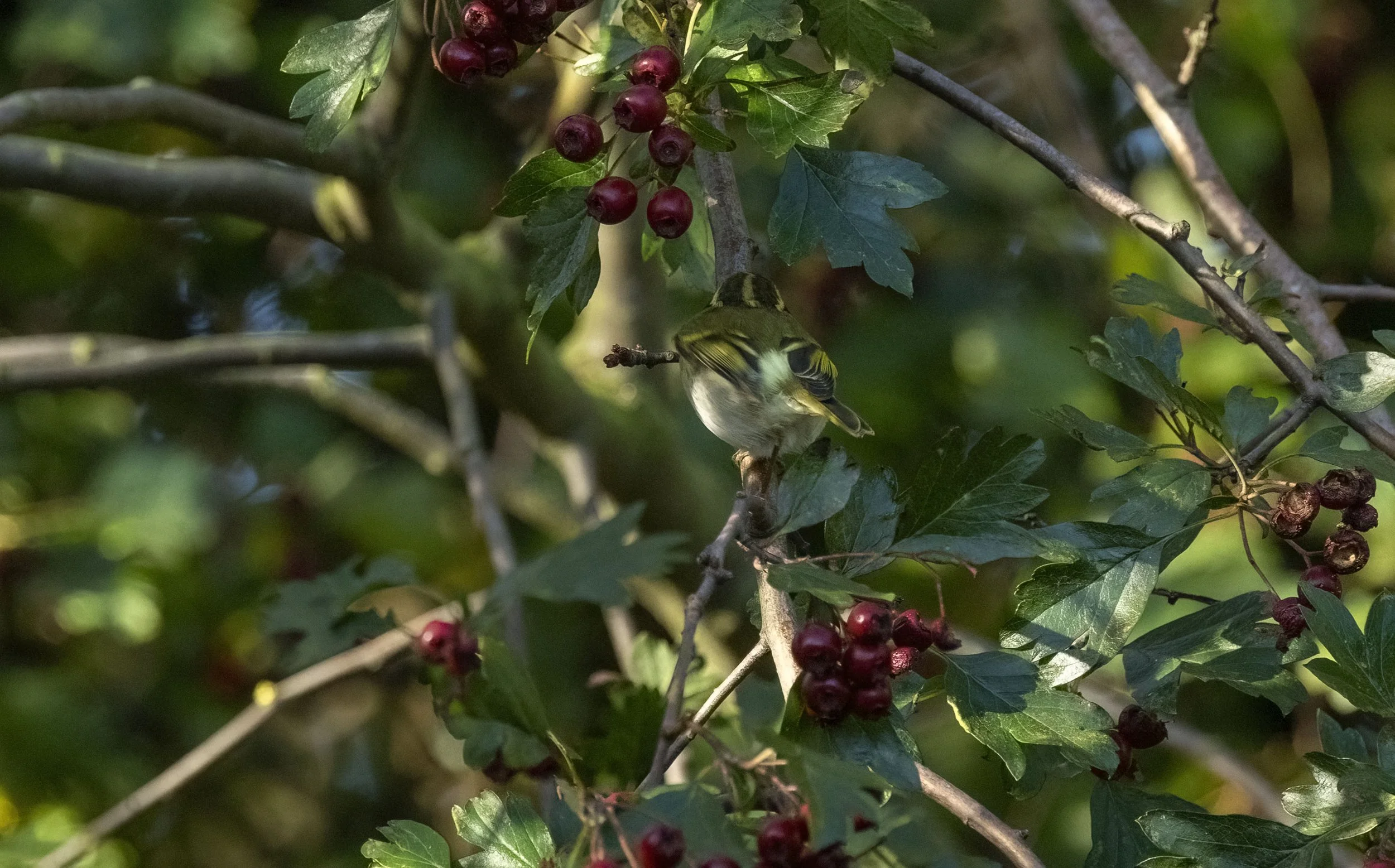
The strong south-west wind made the Pallas a bit tricky and it was never very close but as usual a real gem to watch
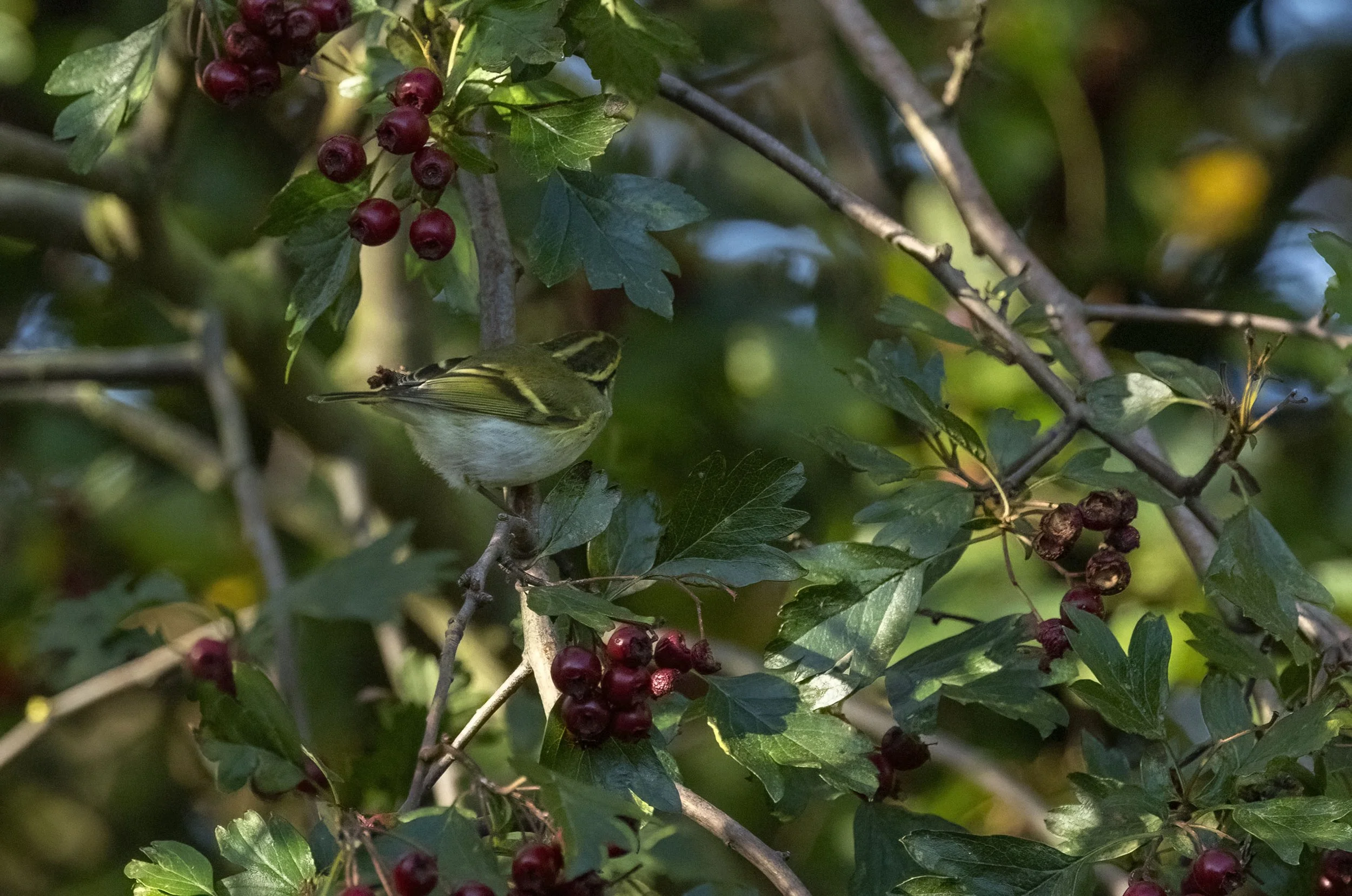
A notable 50 years since I saw my first at Saltfleet Haven on October 30th 1976
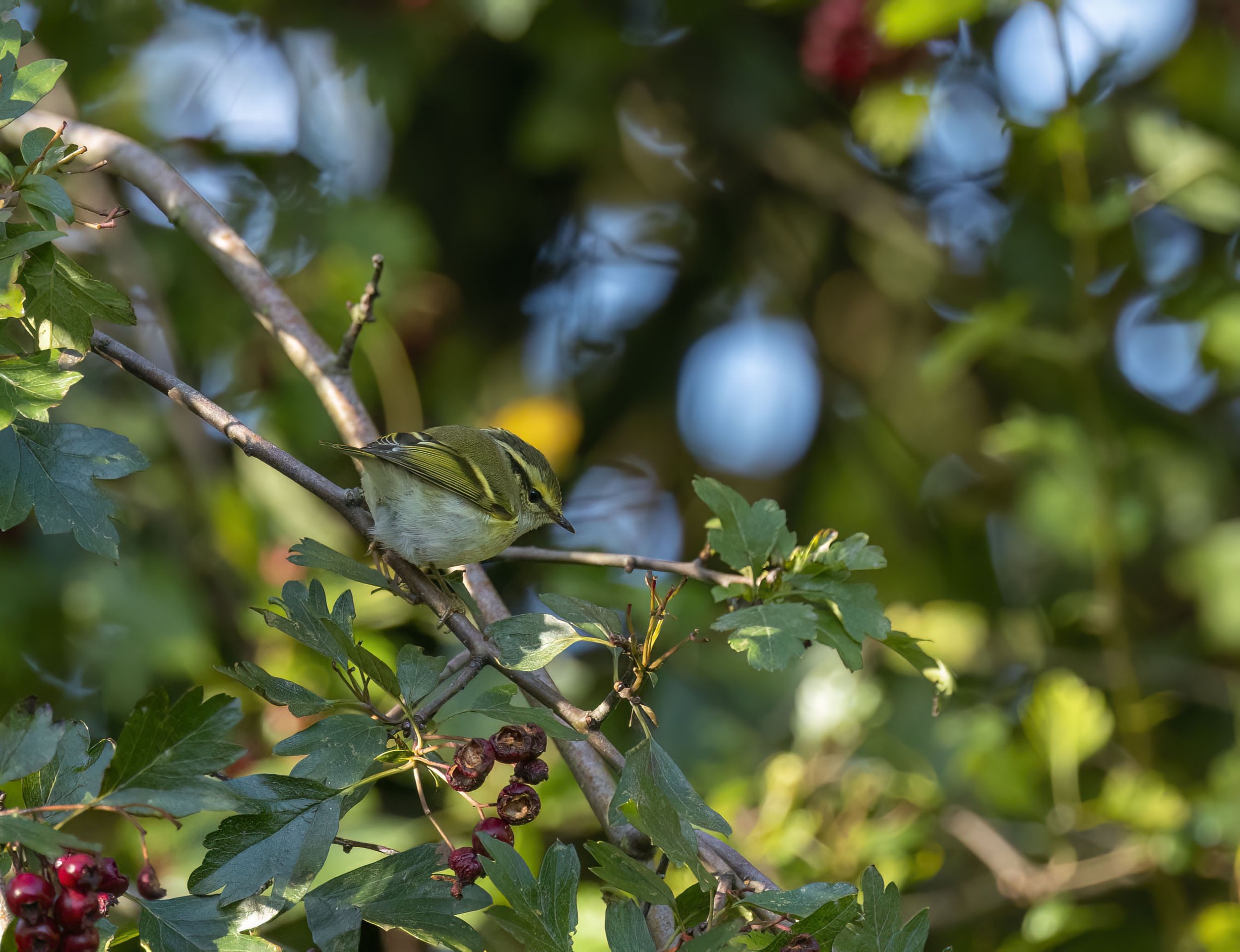
Late autumn jewel
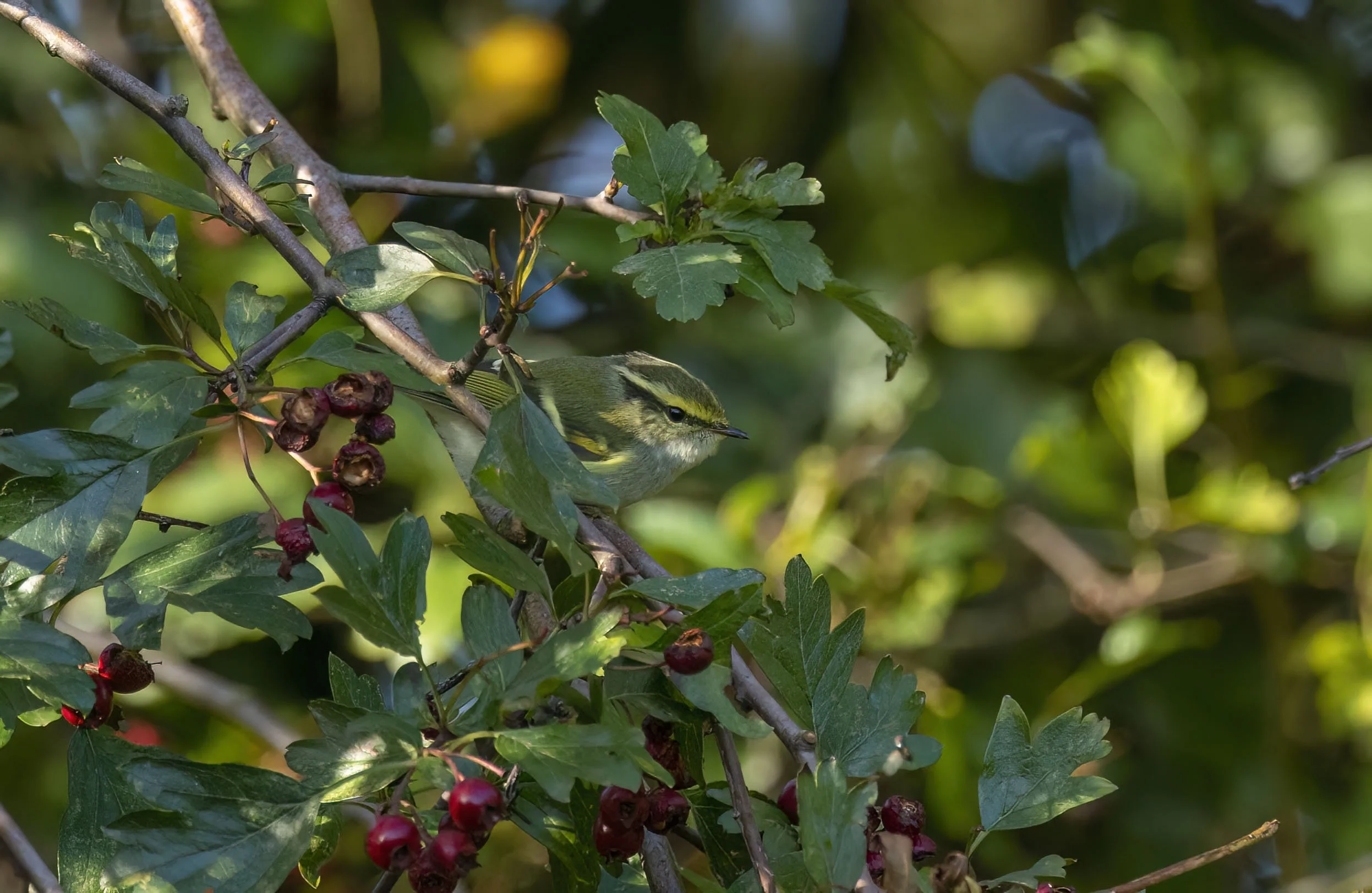
How many are missed in leafy cover inland
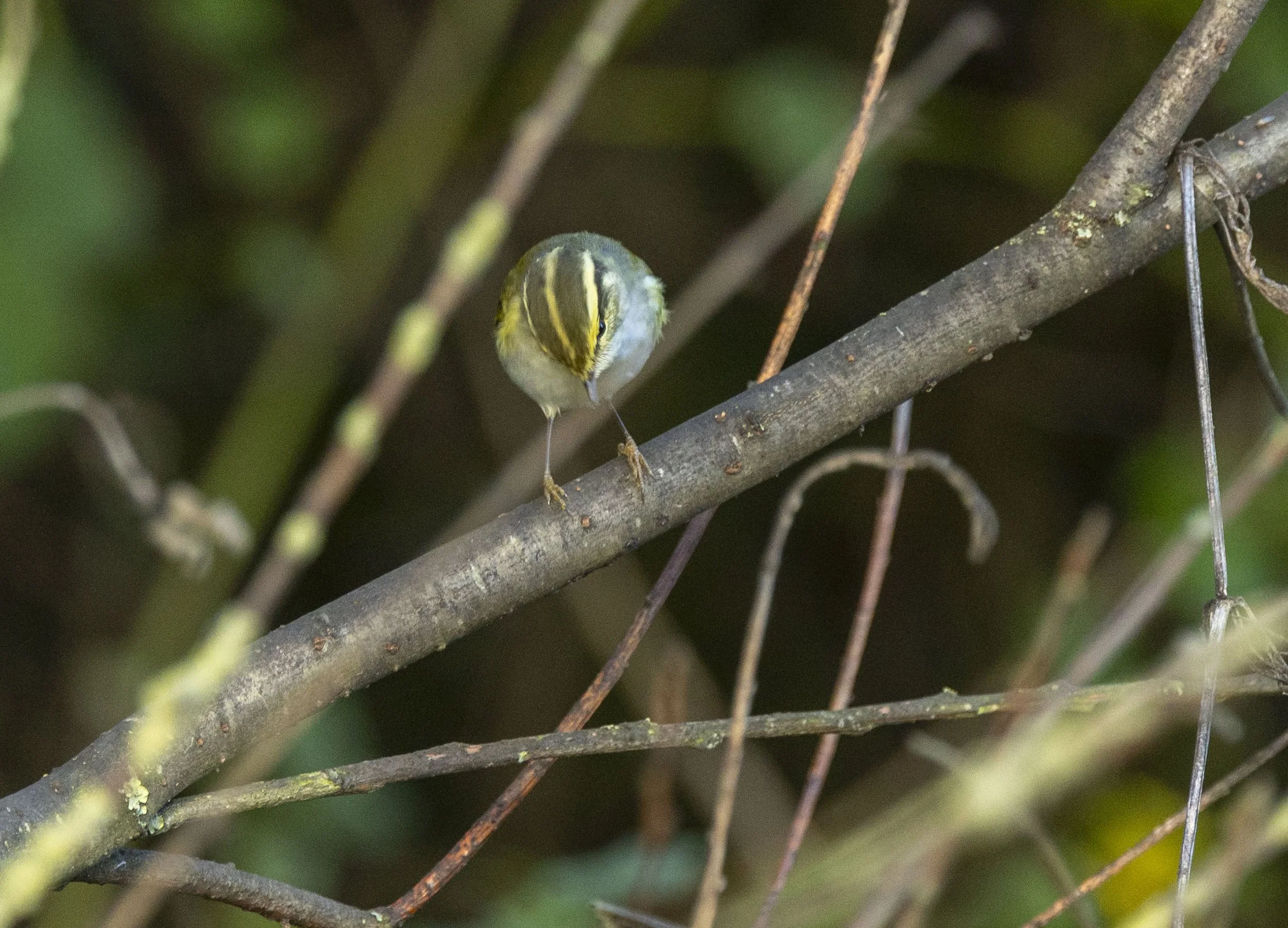
crown stripe
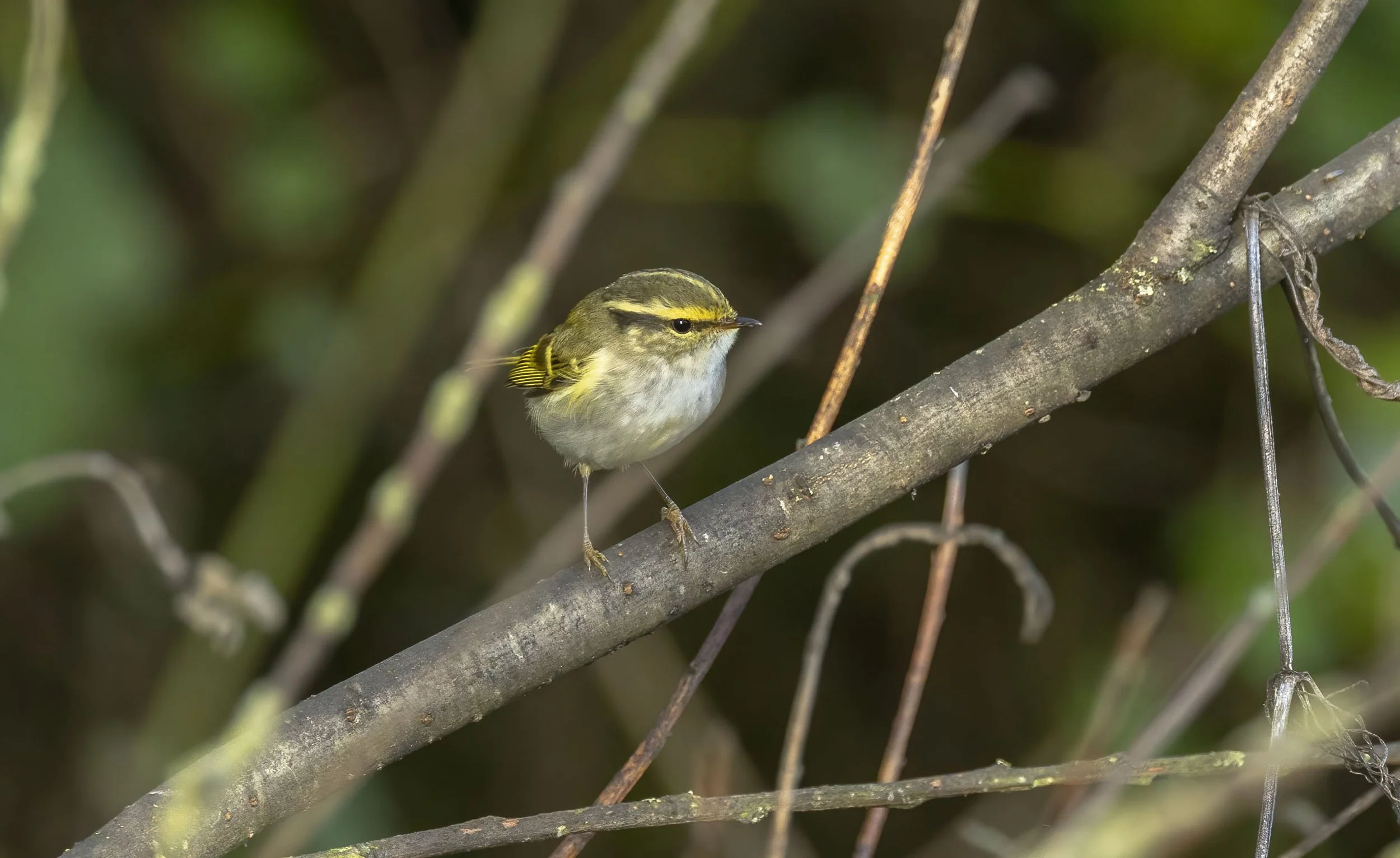
still amazing how far every one travels to grace us with its stripes
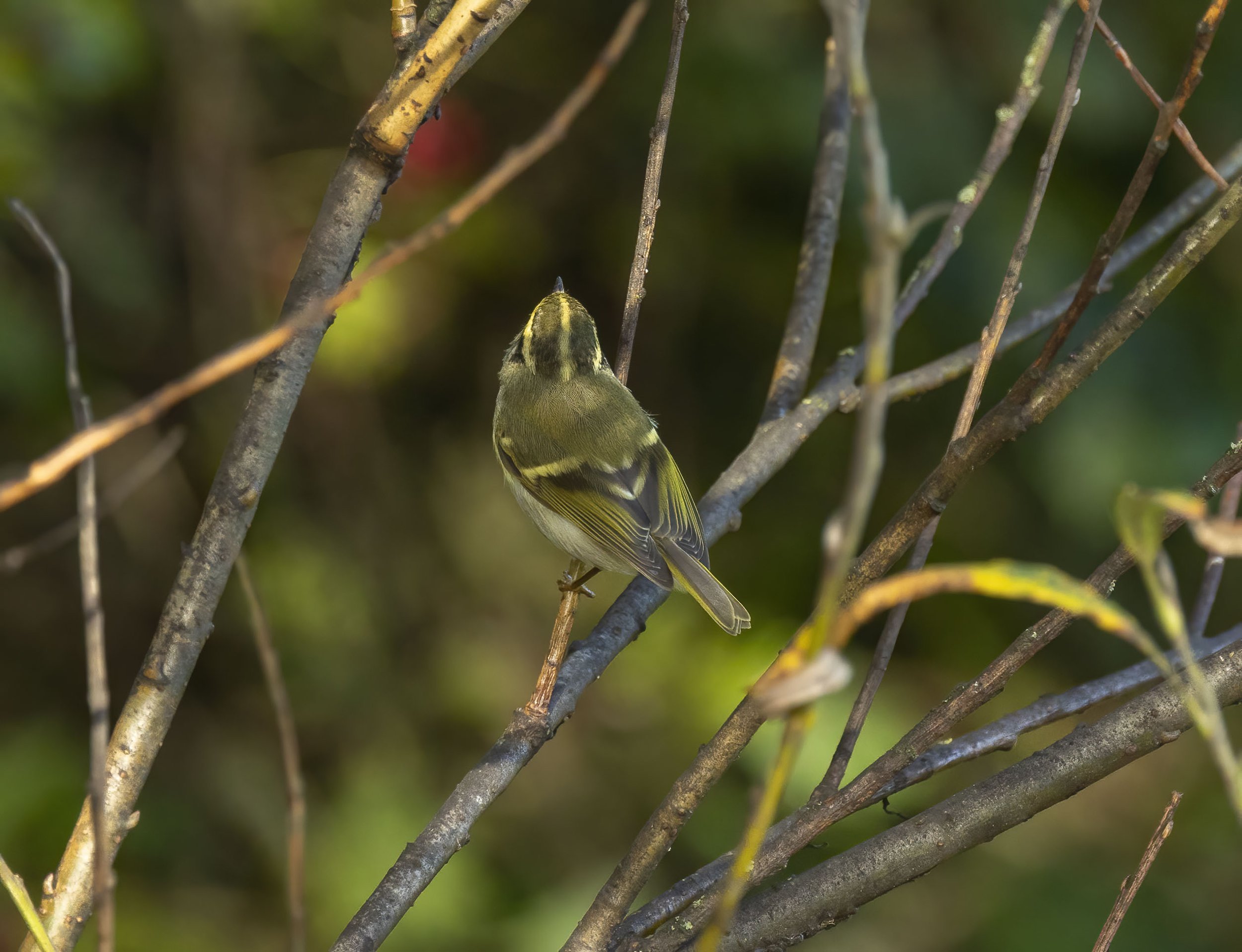
What a bird
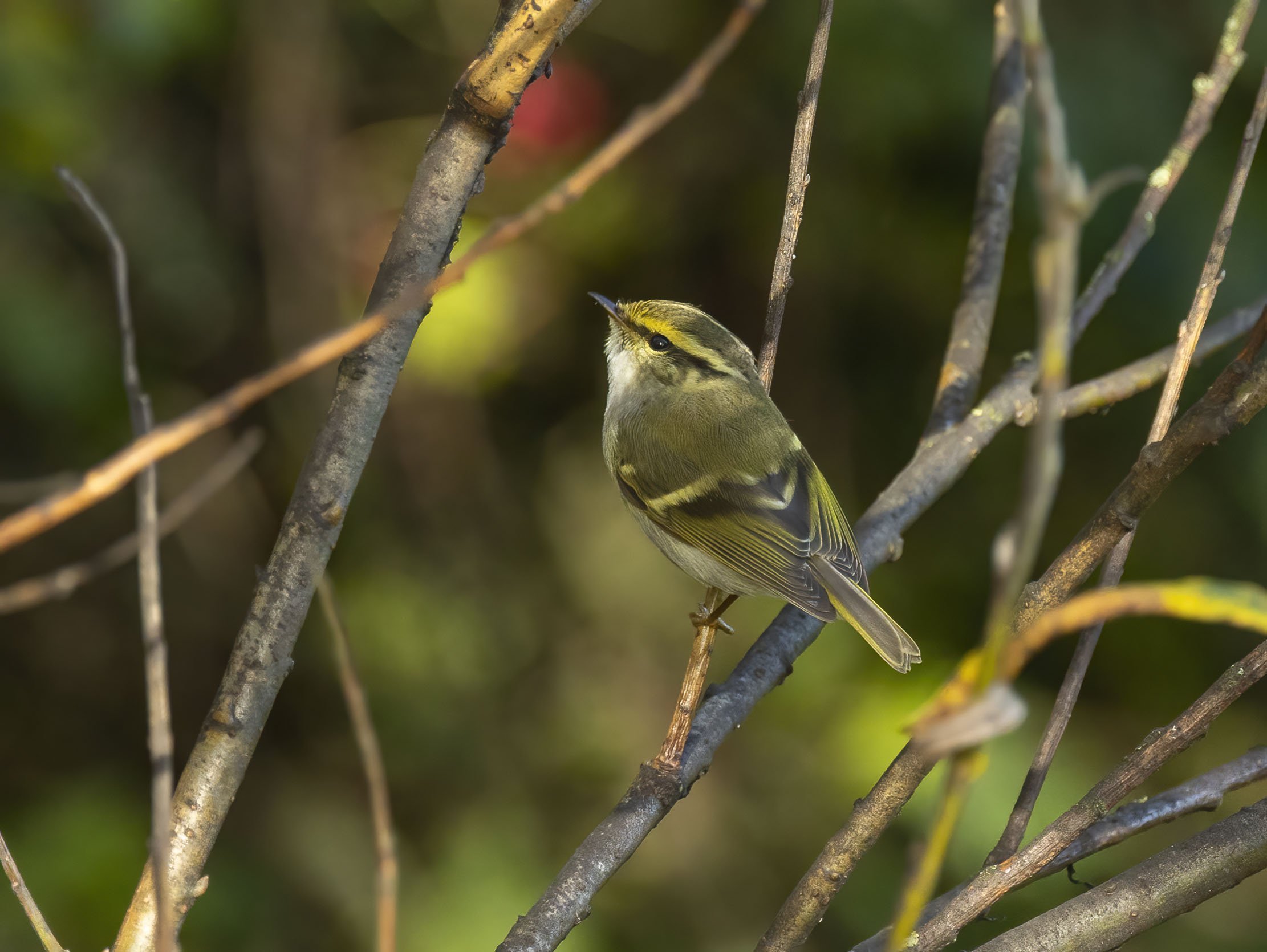
One of my favourite birds