Isabelline Wheatear at Donna Nook and the usual historical ramblings
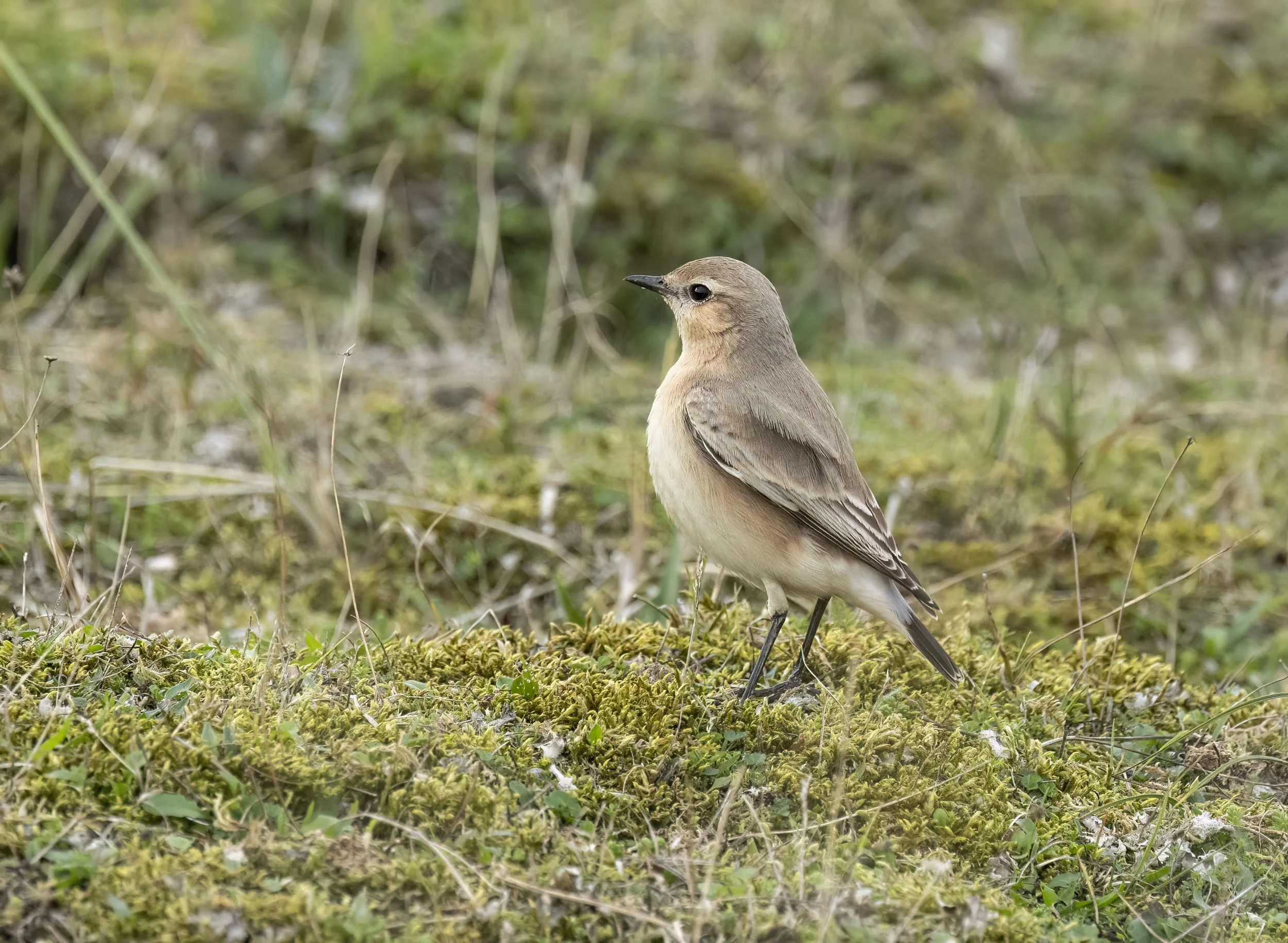
Isabelline Wheatear Donna Nook October 20th 2026 - a real poser
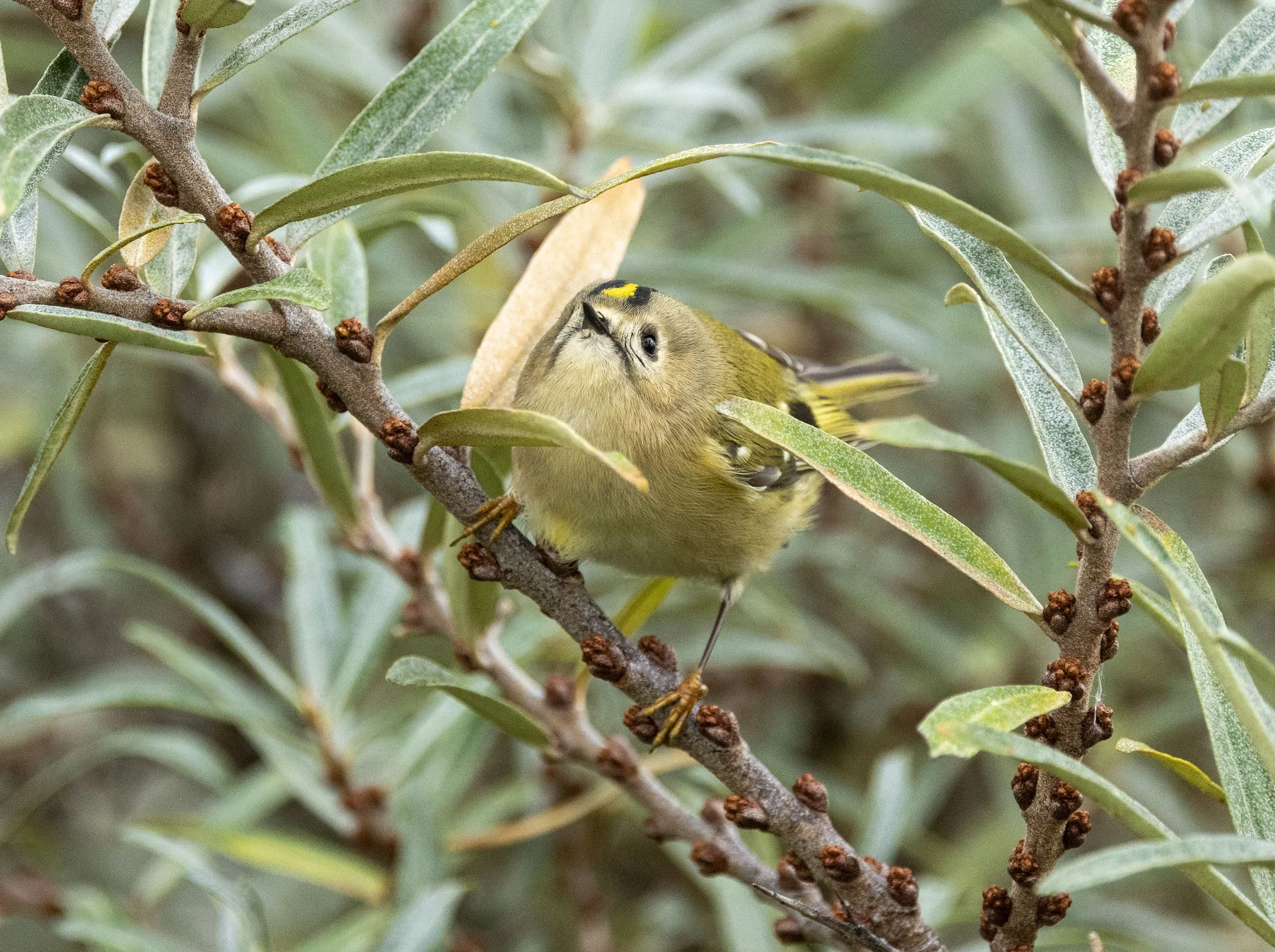
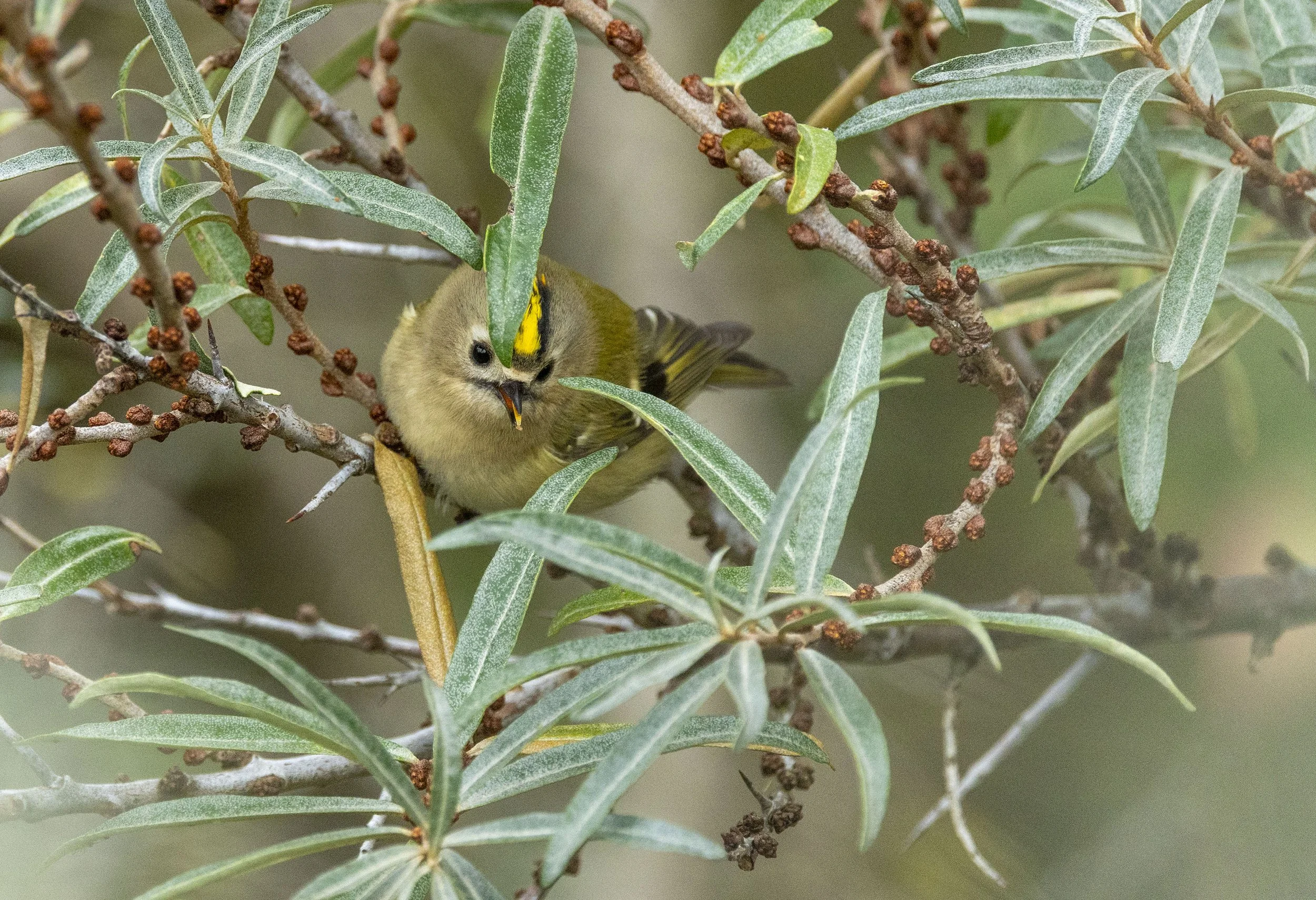
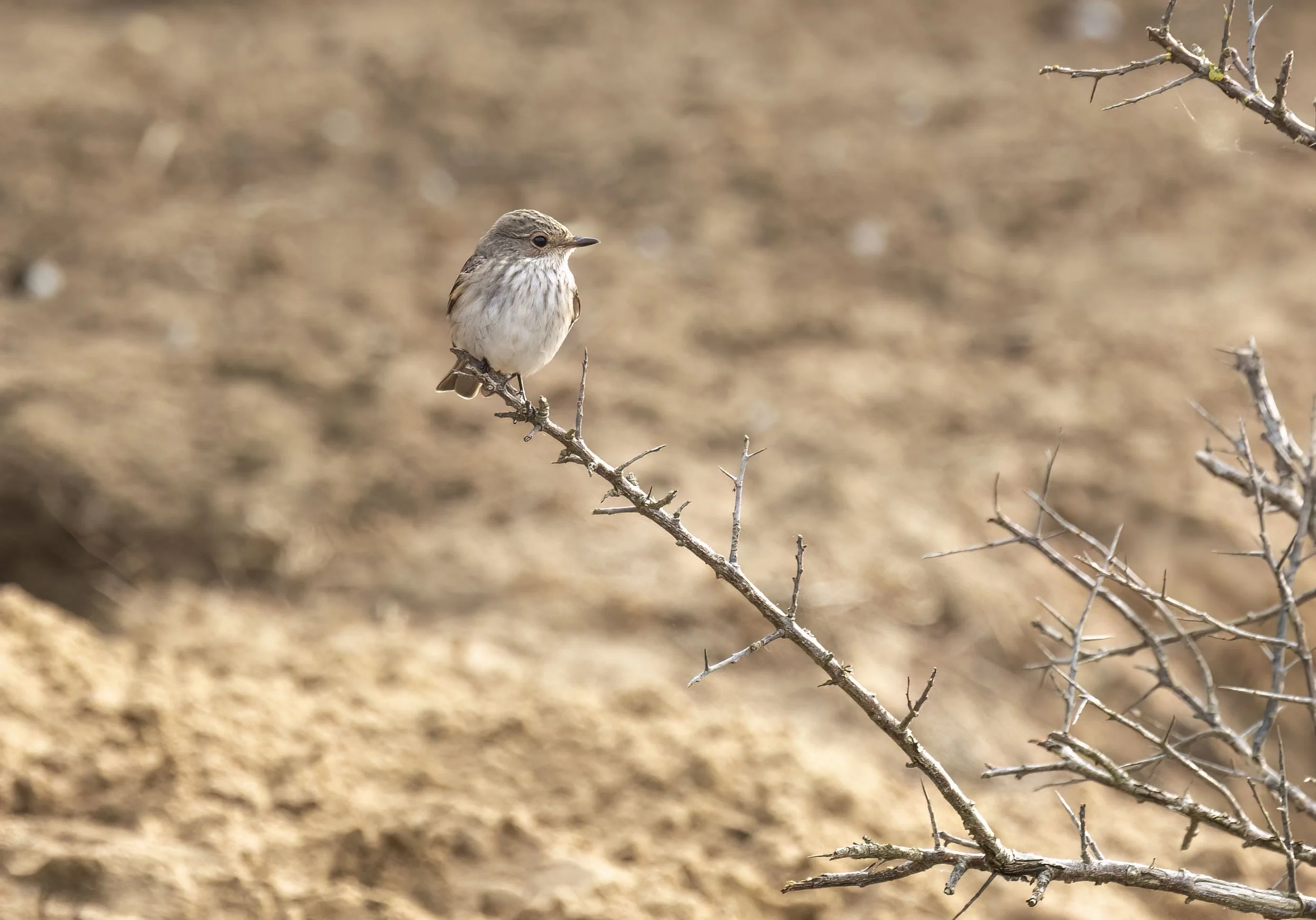
Late in the afternoon of October 19th 2026 Chris Atkin phoned me to deliver the news that he had found an Isabelline Wheatear at Donna Nook preceded by the word are you sitting down? We had of course mused on the chanced of finding an Issy on the Lincs coast in many autumns and it seemed particularly relevant given the spread of birds in near continental Europe and even more recently the Northern Isles and bang up to date Yorkshire. I should have been at Donna that day but circumstances beyond control deemed that all Chris’s hard work would leave him with the prize and BOC shots he WhatsApped showed what a stunner it was. Not having seen the species in Lincs, we were en route to Suffolk when the only previous bird appeared at Gib Point September 22nd – 23rd 2019 it was a somewhat tense night preparing for the following morning’s onslaught. Arriving at Stonebridge at 07:00 I was surprised to see only one other car in the car park and that was a dog walker. My first half an hour check of the bird’s favoured habitat from the previous evening revealed a lack of birds but at 07:40 it flew from the hollow in the dune edge and landed right in front of me. The light was dire but a few record shots were bagged before it flew into a patch of dense sea buckthorn! From then on it showed very well all day and is still present on 24th according to Birdguides. With all of the relevant identification featured logged in camera and extended close views albeit often in dull light with a strong SE wind we hammered the rest of the patch from Ponderosa to Pyes Hall logging a couple of beautiful Firecrests, four Woodcock, a lingering Spotted Flycatcher seen by Chris the previous day and two Black Redstarts plus a few Chiffchaffs, Blackcap and c20 Goldcrests with 11 White-fronted Geese flying south.
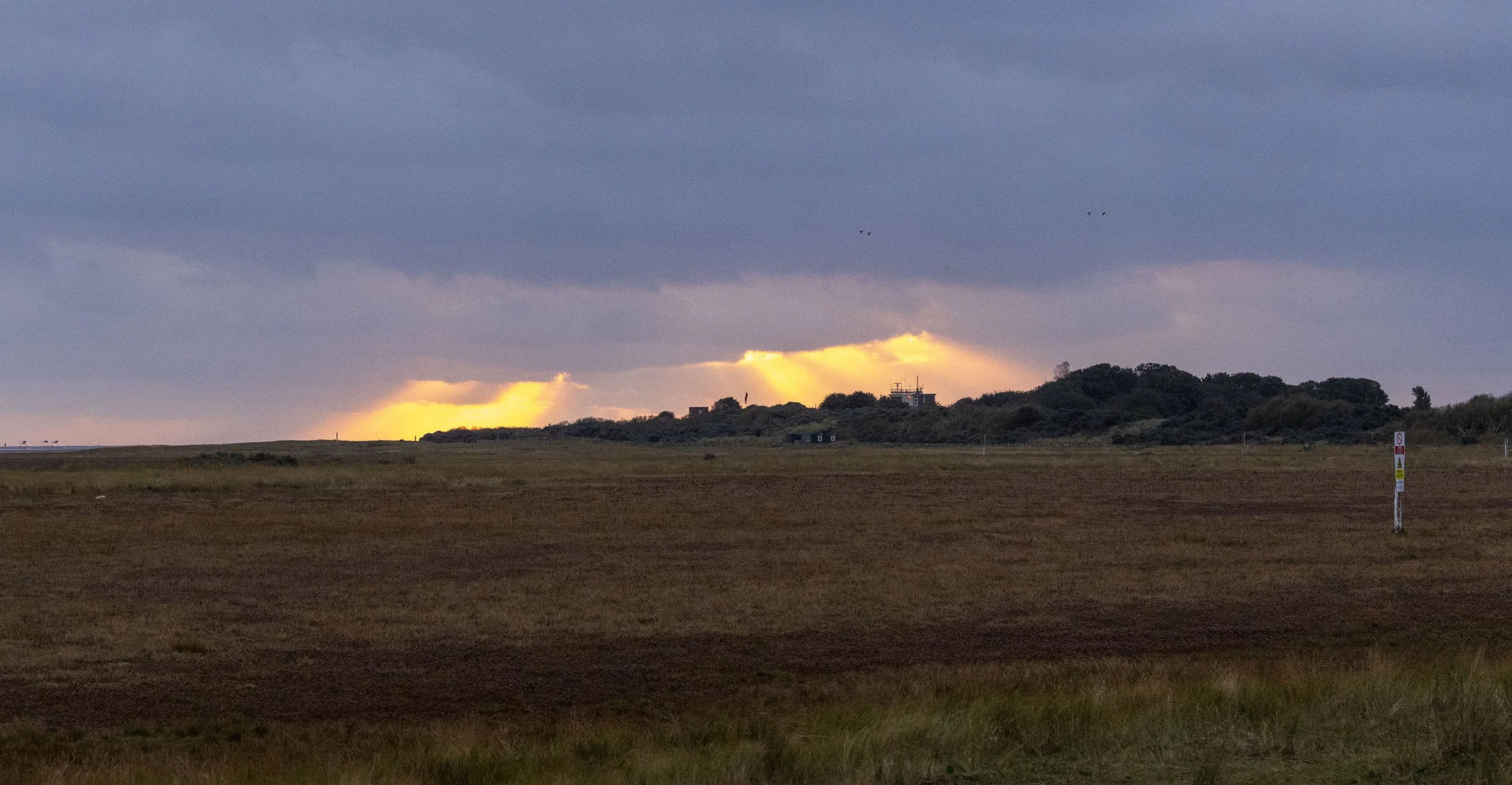
Sunrise at Donna Nook october 20th - the start of a good day by Lincs standards at least
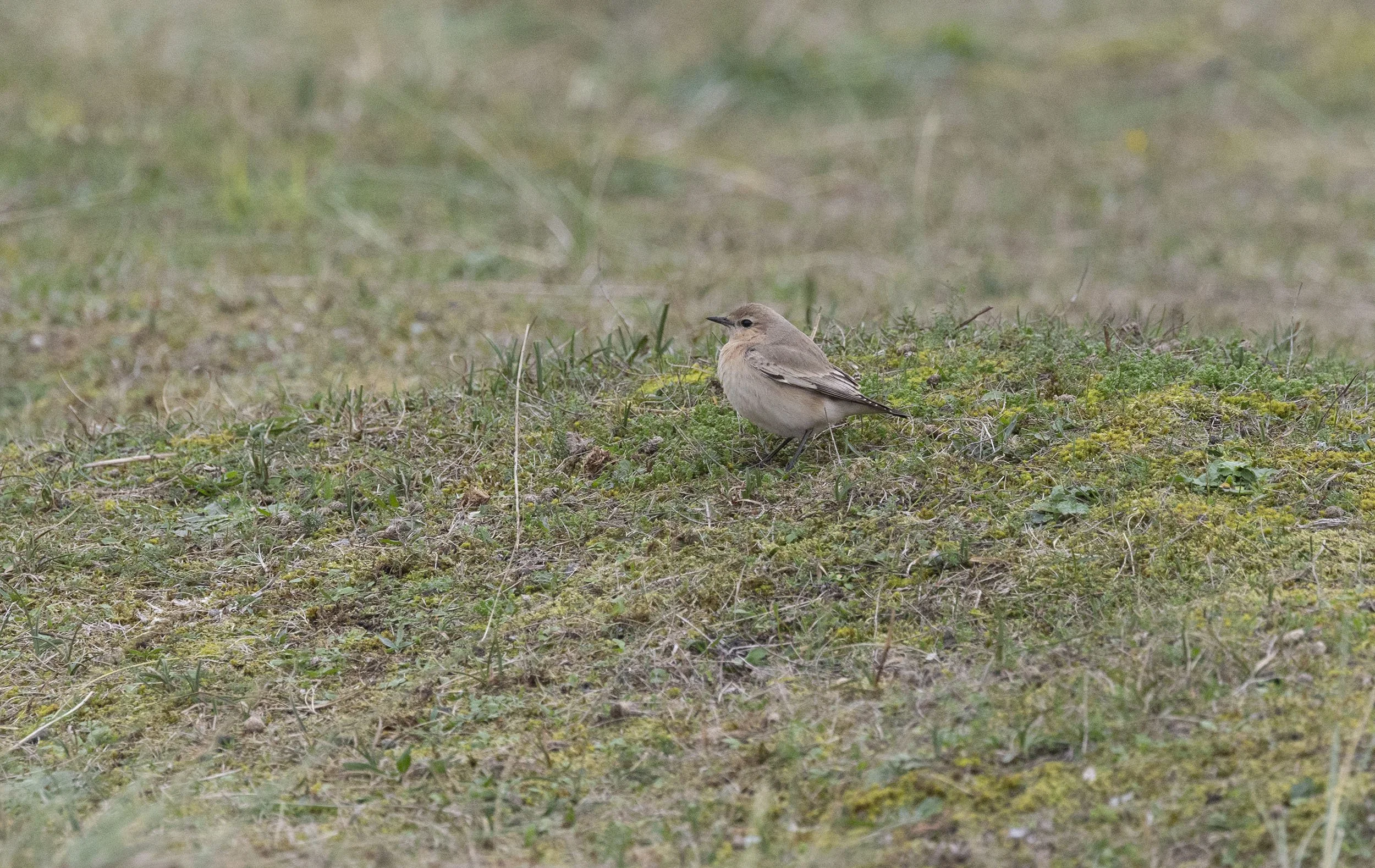
07:42 view - time to relax
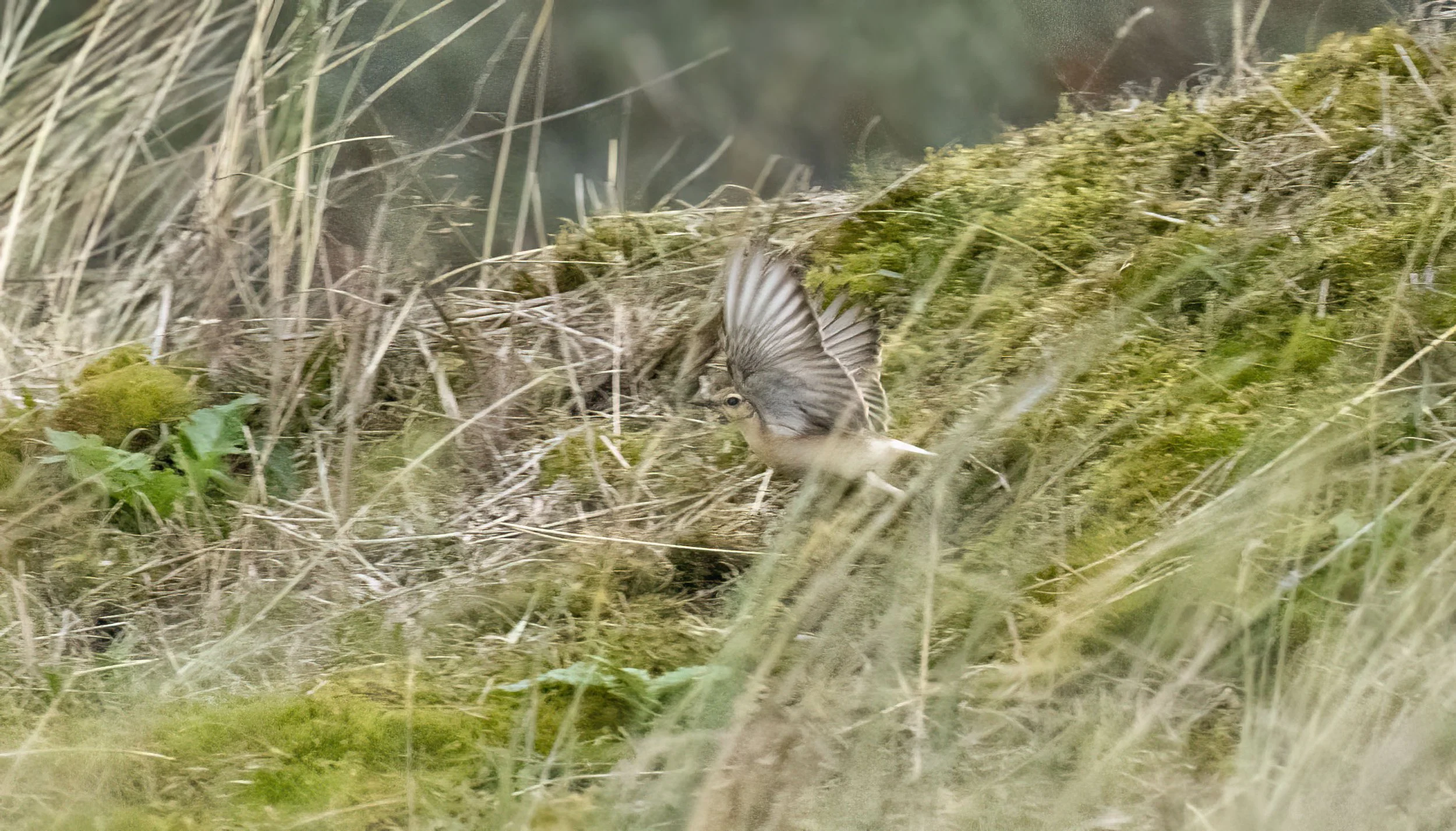
Diagnostic white underwing coverts but this was not a tricky individual
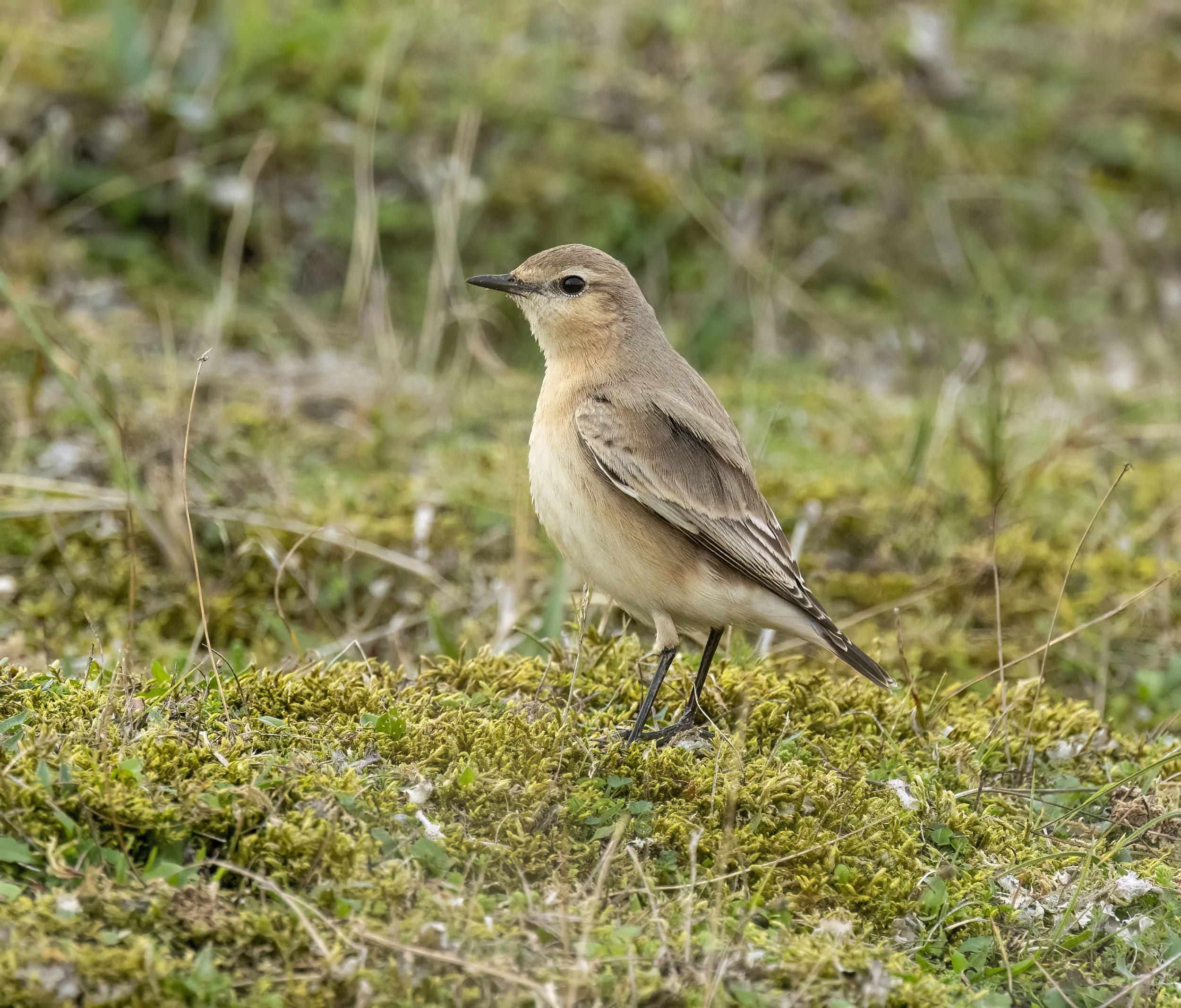
Flat light produces better plumage tonality than bright sun
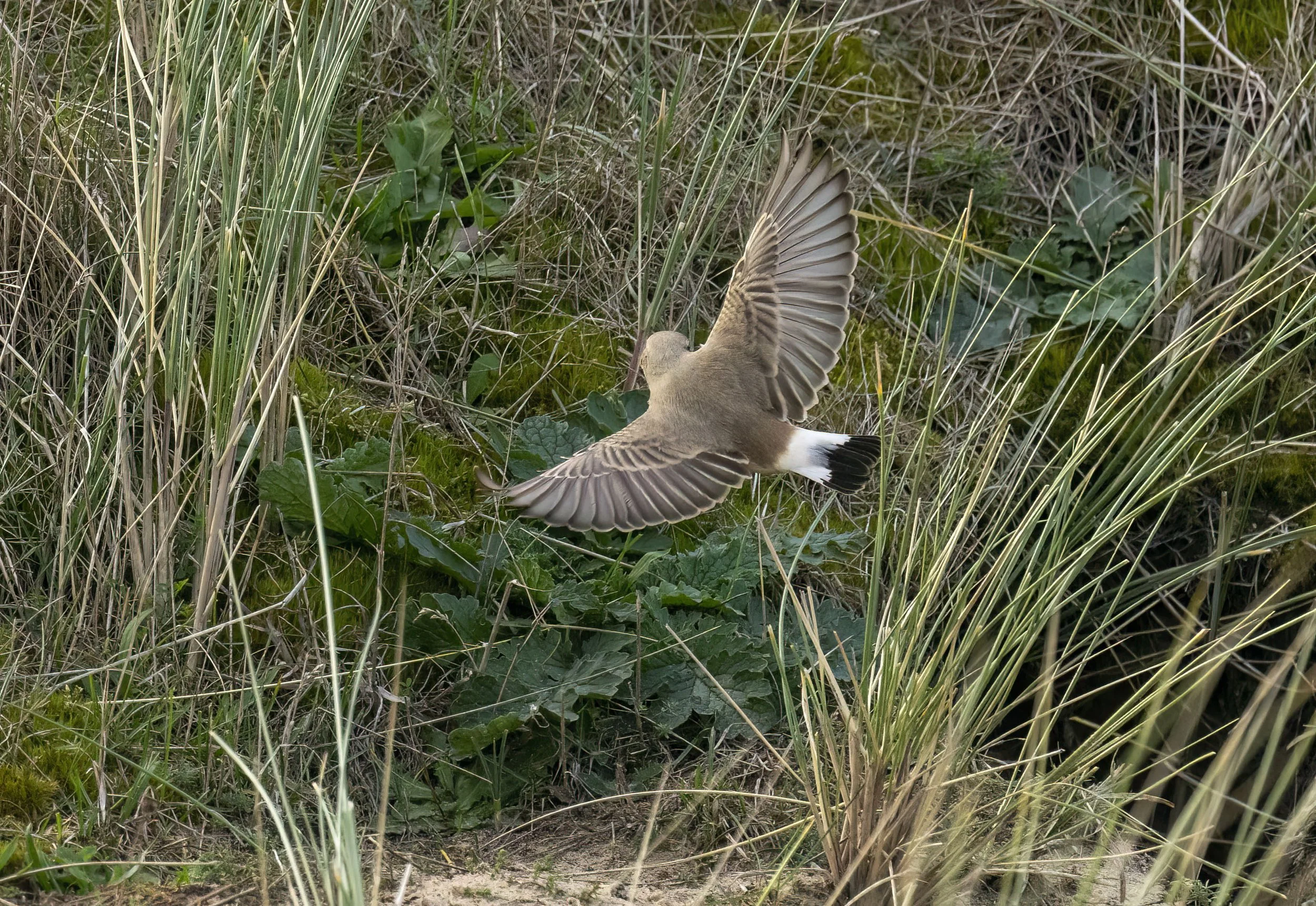
The tail pattern with very short T largely covered by the uppertail coverts
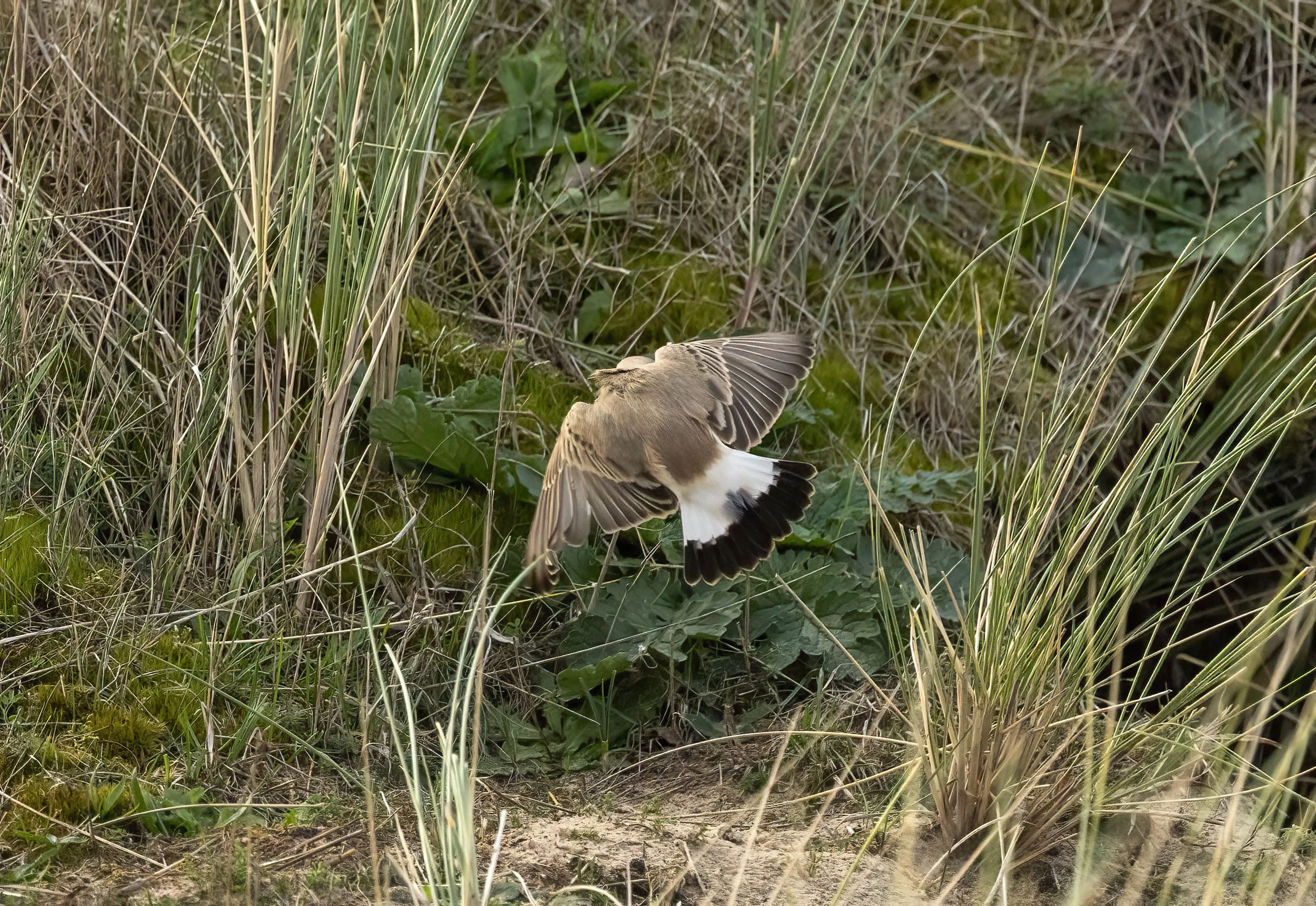
Pale tips to the tail feathers presumably a feature of first-winter
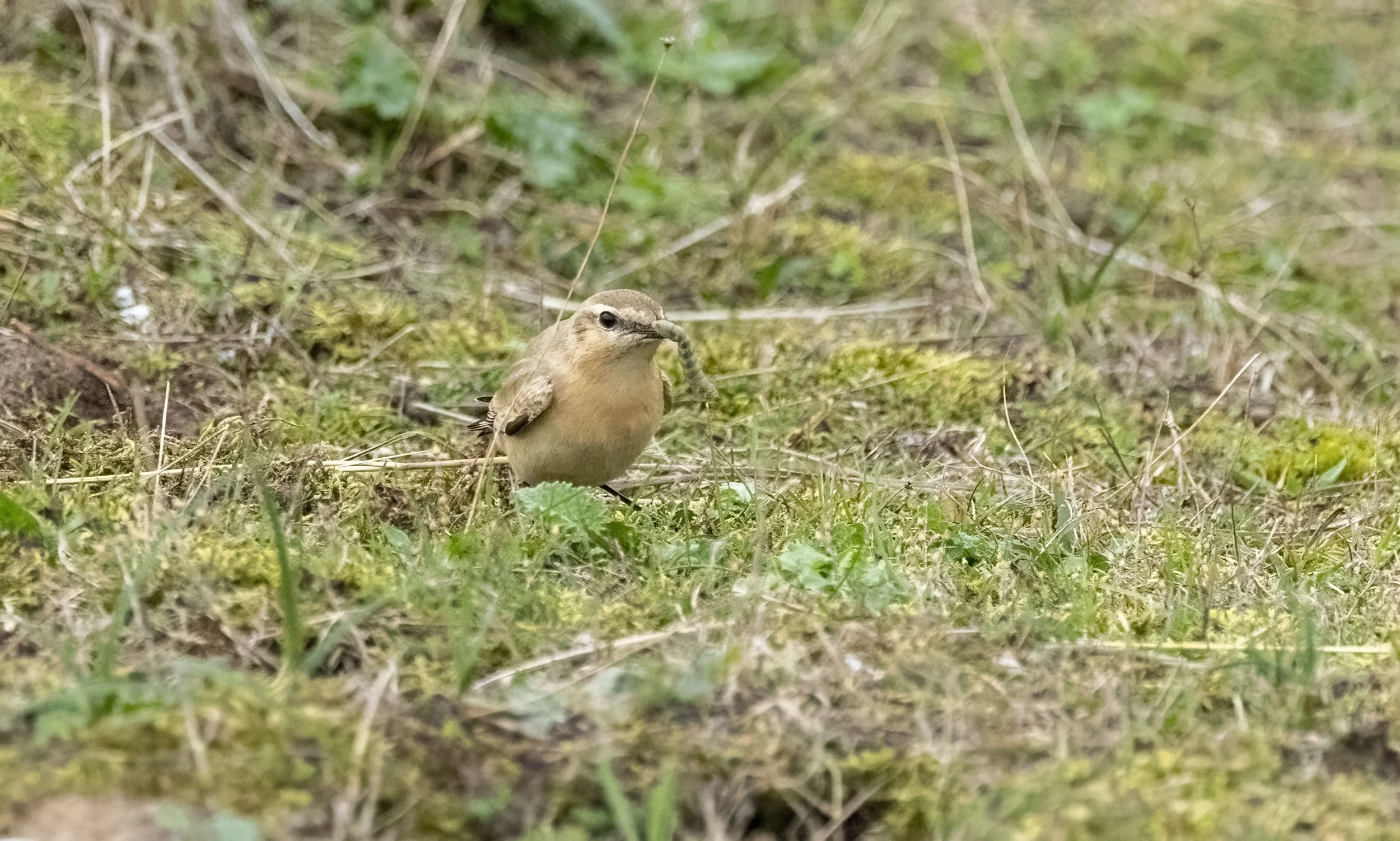
It was feasting on the seemingly abundant caterpillars of Large Yellow Underwing moths in the mossy turf on the dunes
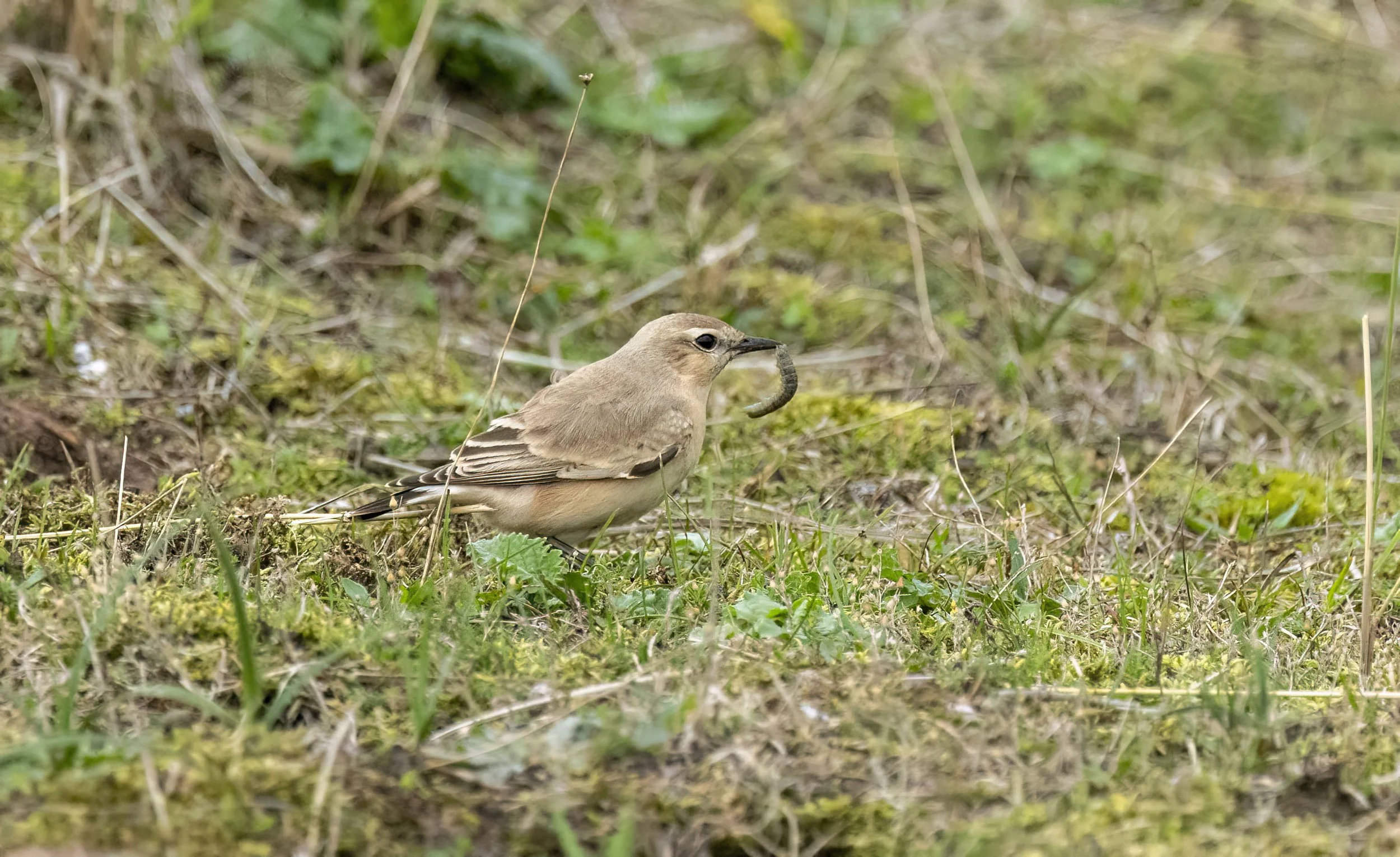
The striking black alula is very prominent in this pose
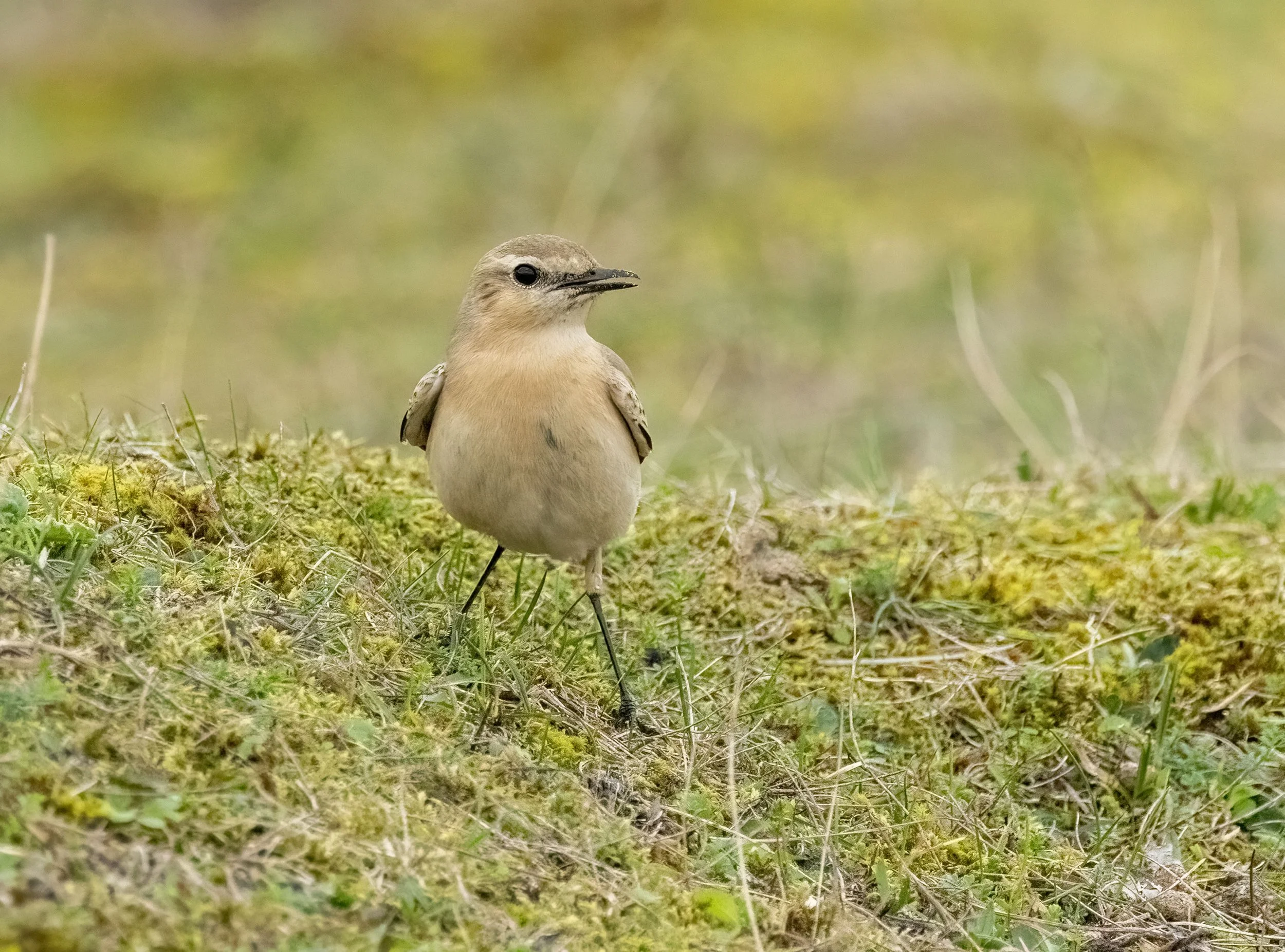
Standing still on the adjacent sandy track it would often land close to the few observers present totally unconcerned
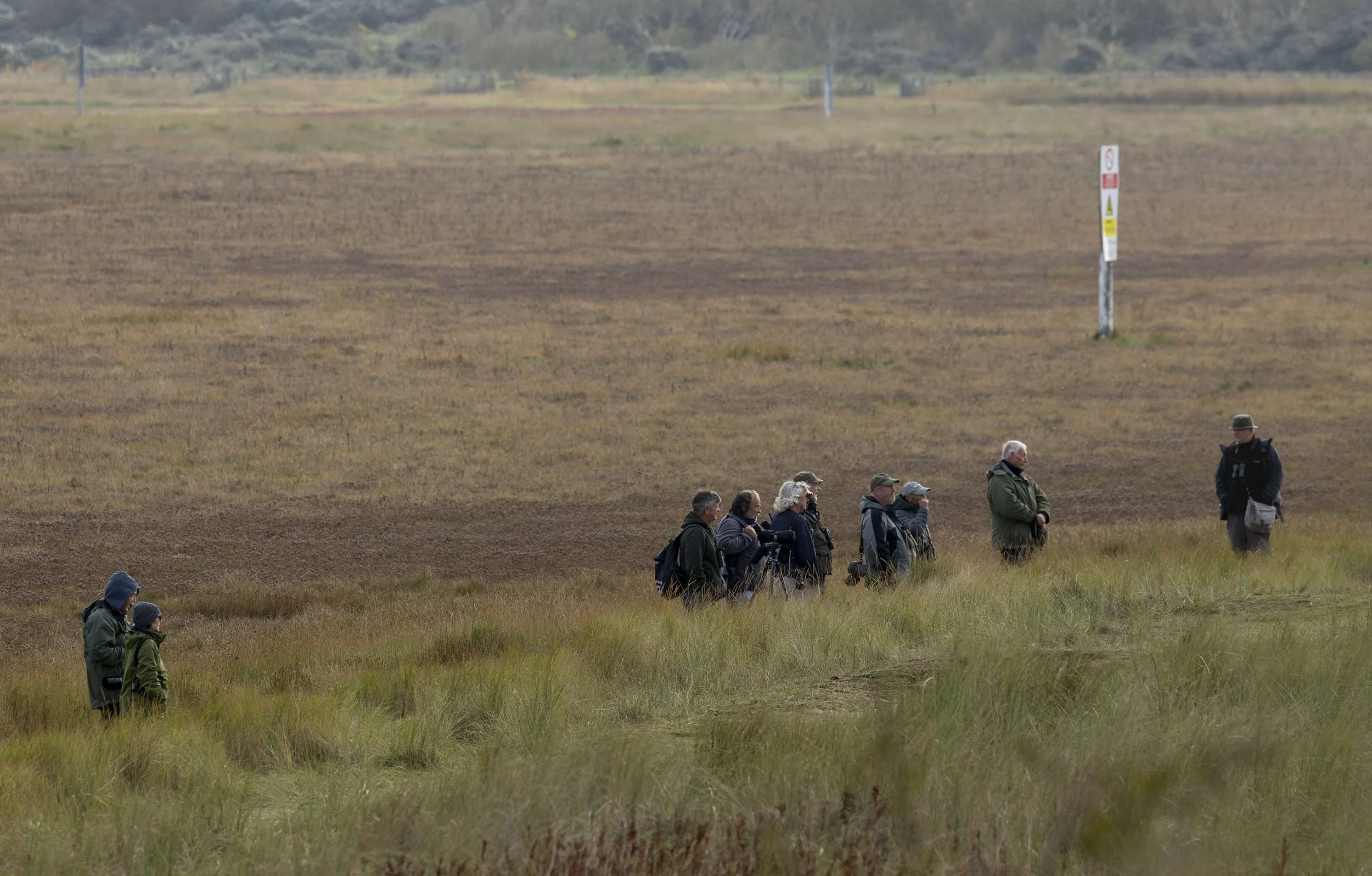
No big Yorkshire crowds here
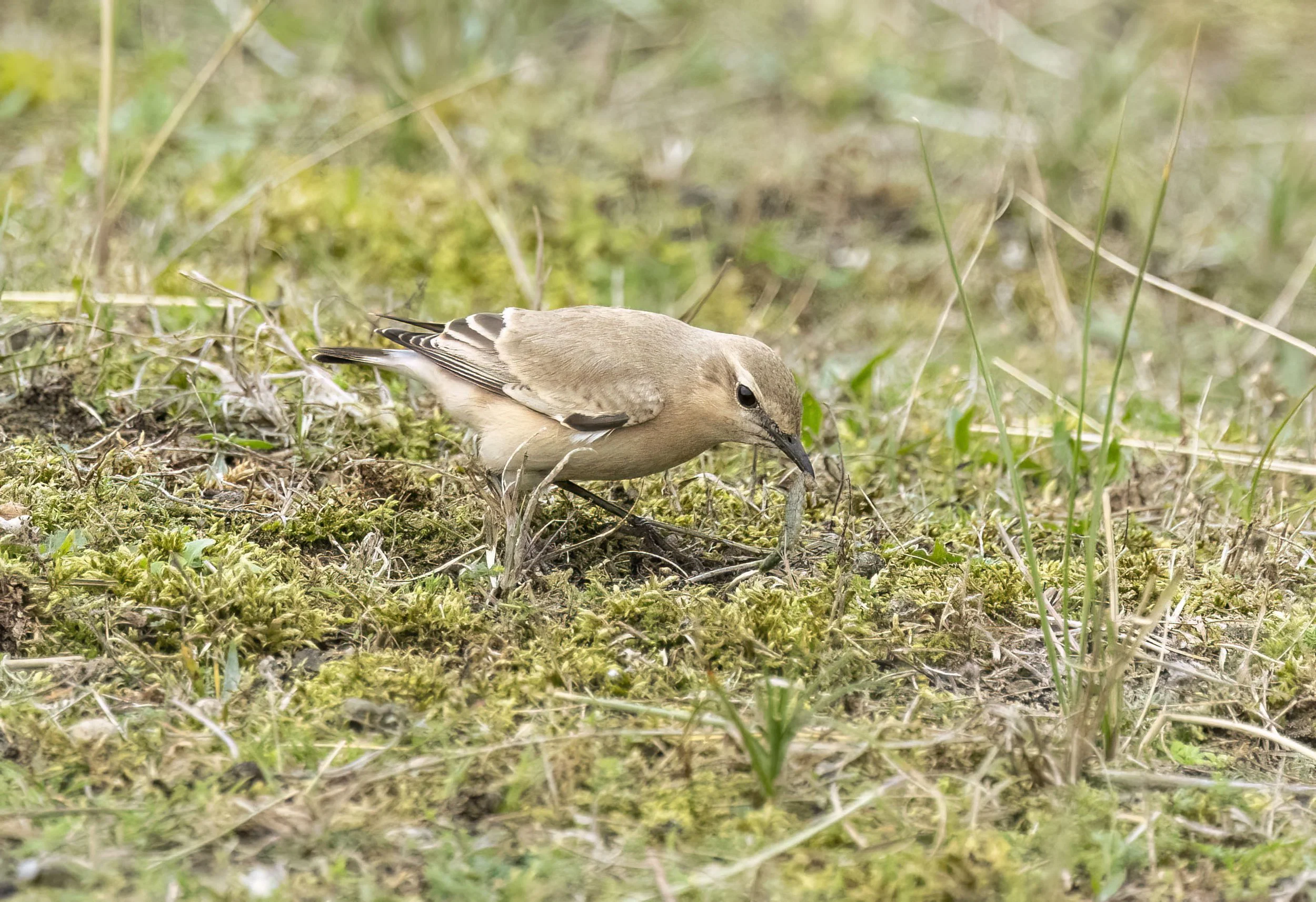
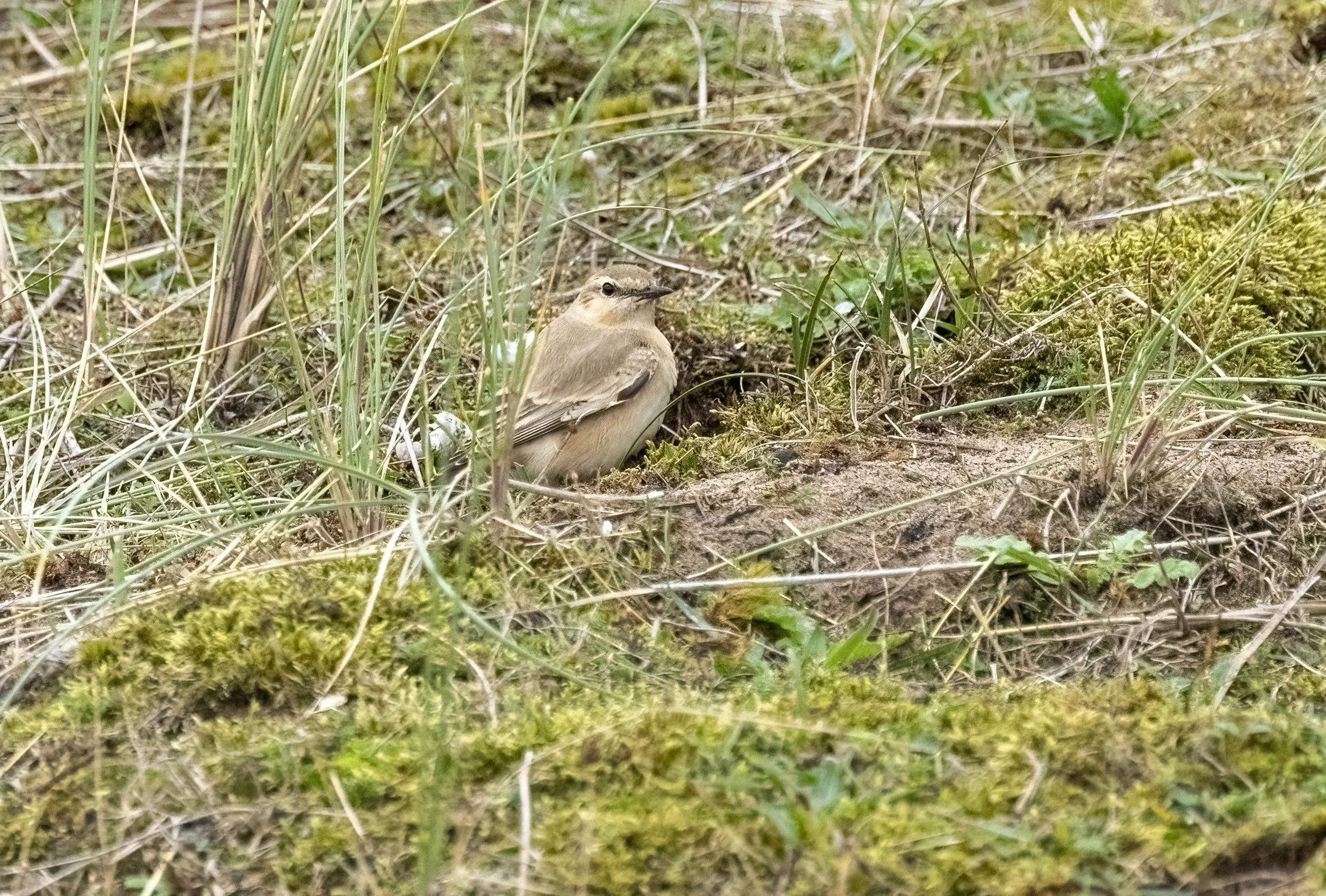
At times it disappeared into dune hollows
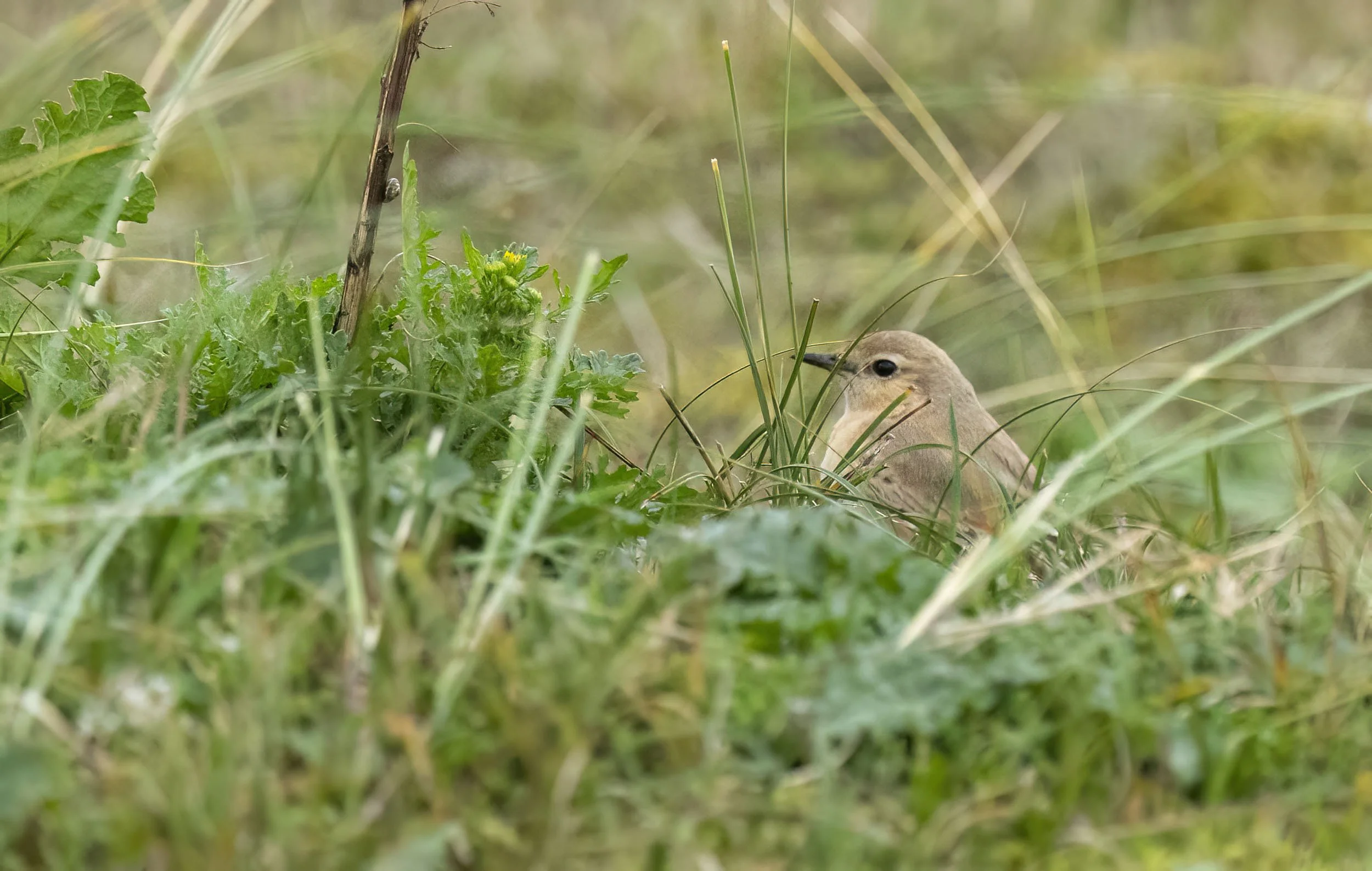
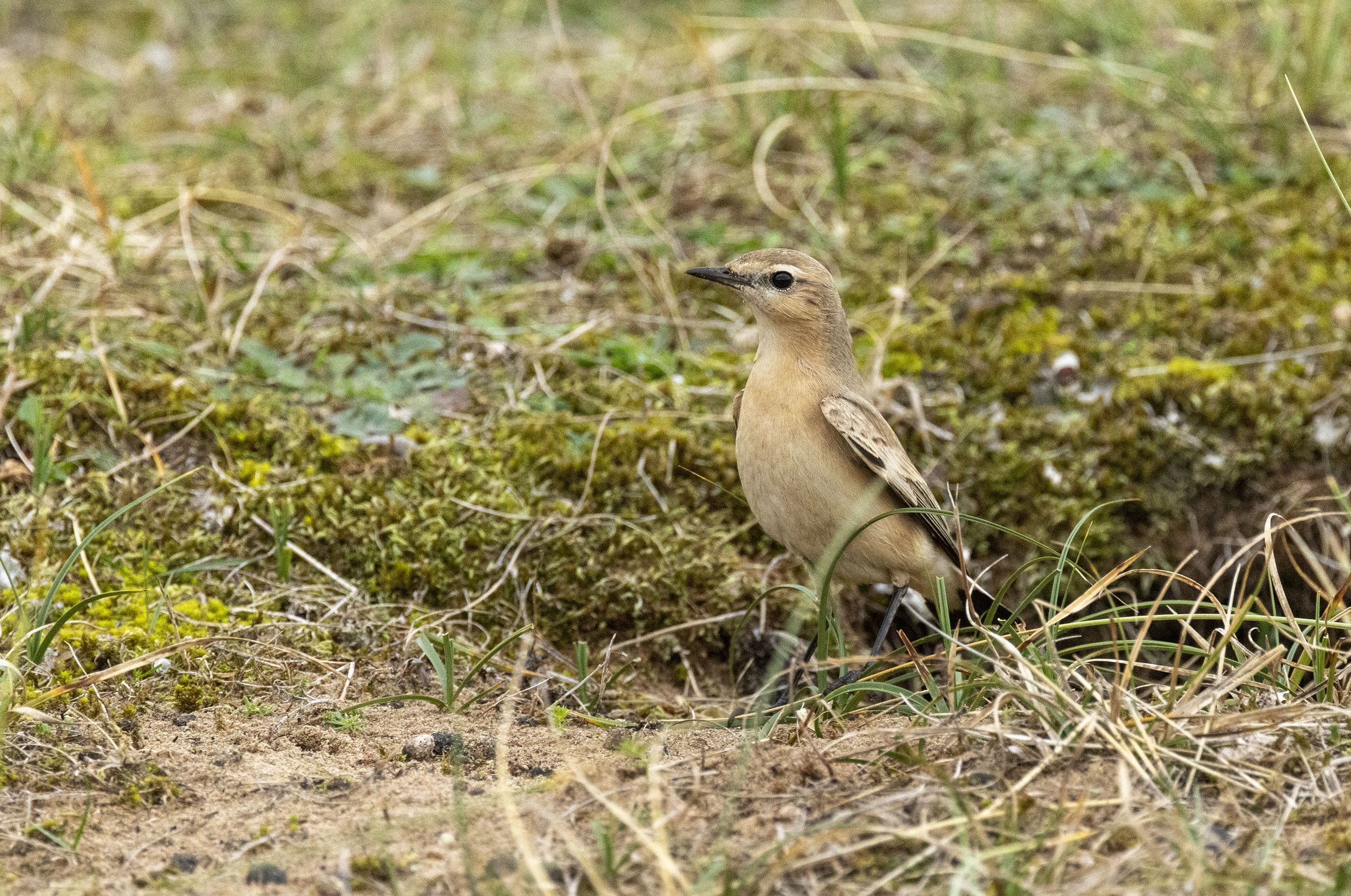
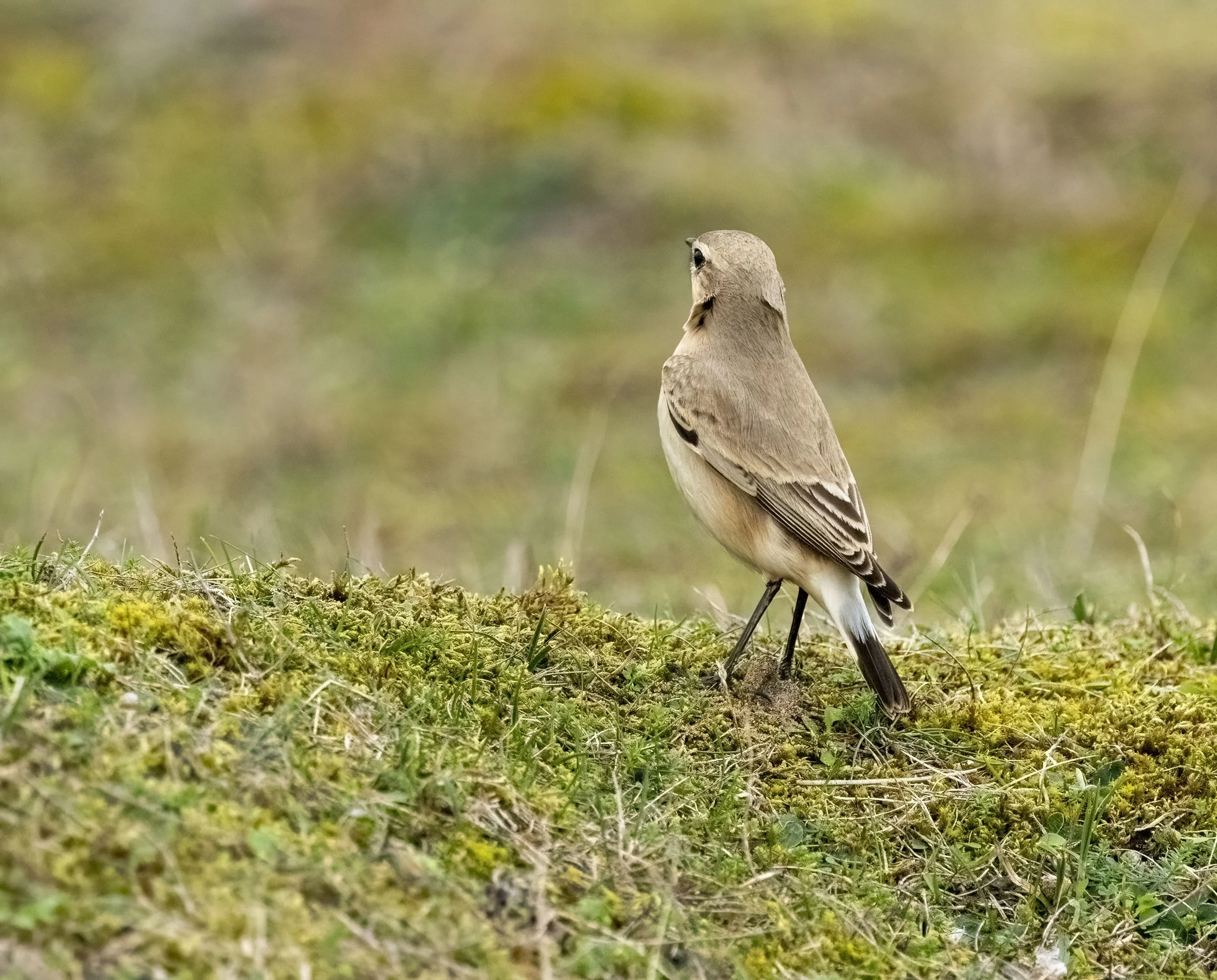
Constant flicking of the tail was a feature shown by the 40 fps camera - see below
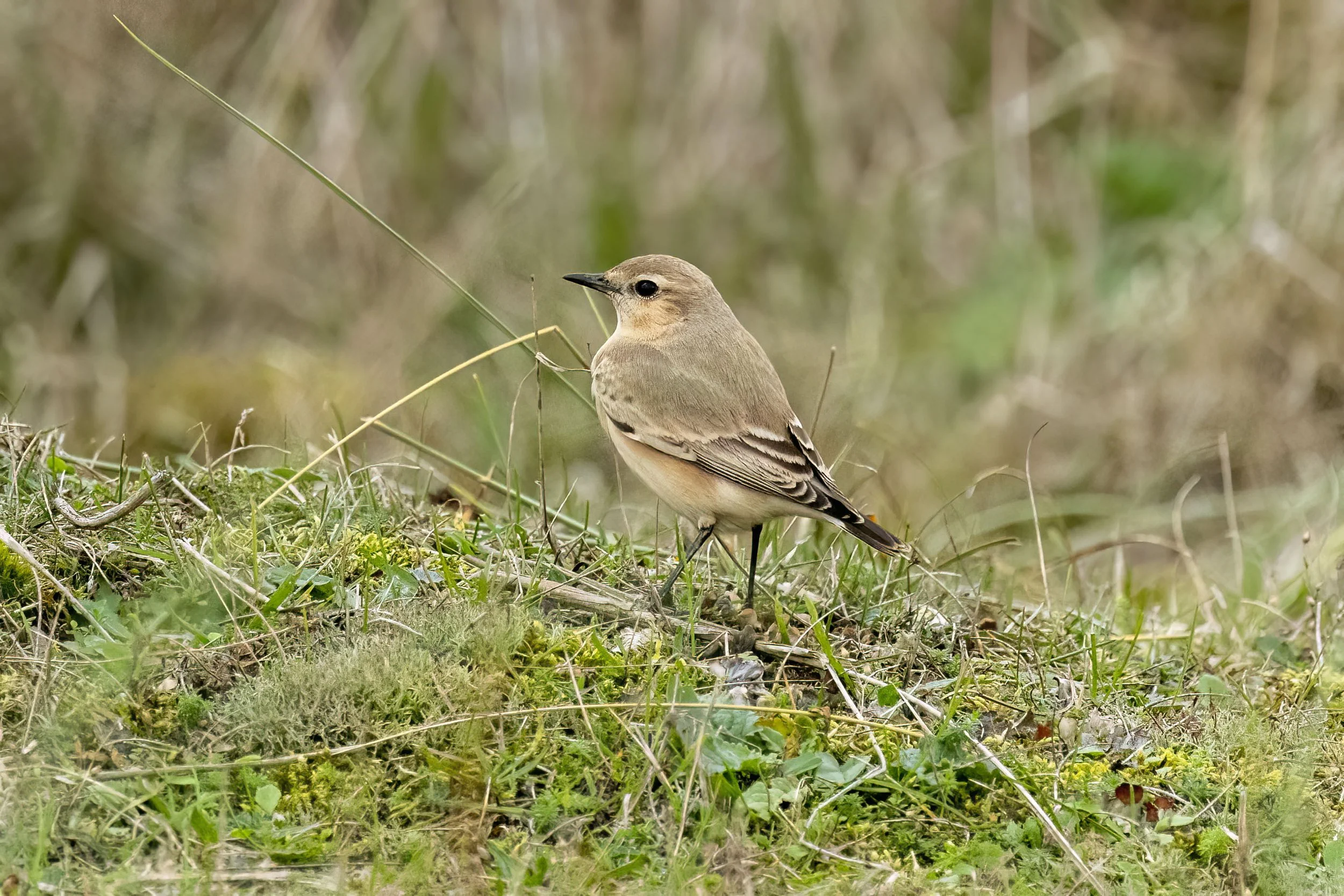
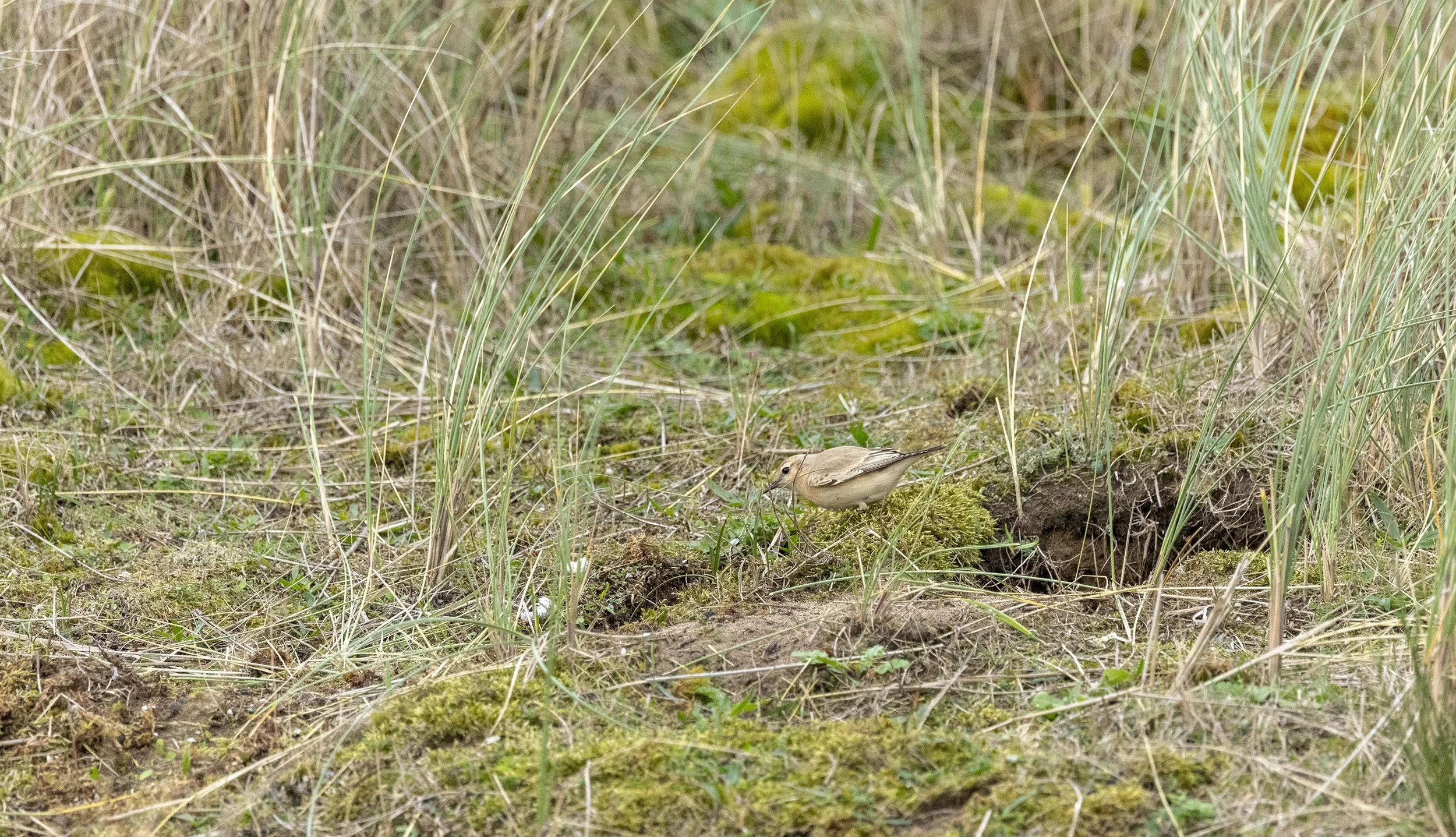
Habitat was short Rabbit grazed dune moss and turf amongst thin clumps of marram with open sandy hollows on the outer edge of the dunes where it bordered a sandy track and the saltmarsh
As usual this record got me thinking back over past encounters and British records. The first British occurrence and first for Western Europe is well documented in Historical rare Birds but surely it has big question marks over its provenance? Below is the account from https://www.historicalrarebirds.info
Isabelline Wheatear: The first British record:
1887 Cumbria Aigle Gill, Allonby, first-year female, shot, 11th November, now at Natural History Museum, Tring.
History W. H. Flower (1887) in the Proceedings of the Zoological Society, p. 579, at the meeting held on 6th December 1887, says: 'Mr. Howard Saunders, F.Z.S., exhibited, on behalf of the Rev. H. A. Macpherson, a specimen of Saxicola isabellina, shot on Nov. 11 near Allonby, in Cumberland, being the first recorded occurrence of this species in Great Britain or Western Europe.'
In an Editorial (1887) in The Field of 10th Dec., Vol. LXX. p. 907, under 'Zoological Society', they say: 'At the last meeting of this society on Dec. 6, Professor W. H. Flower in the chair, Mr. Howard Saunders exhibited (on behalf of the Rev. H. A. Macpherson) a specimen of the Isabelline Chat (Saxicola isabellina) shot in Cumberland, being its first recorded occurrence in Great Britain or Western Europe.'
H. A. Macpherson of London (1888) in The Ibis, 5th series, Vol. VI. pp. 149-150, undated, says: 'I have pleasure in stating that an example of the Isabelline Wheatear (Saxicola isabellina) was shot at Aigle Gill, near Allonby, Cumberland, on the 11th November, 1887. The bird was first observed on that day by Messrs. Thomas and Richard Mann, tenants of Aigle Gill Farm. The weather was fine but dull, with a slight wind from the north. The bird made its appearance in a field which Messrs. Mann were sowing with corn, and was quite alone. It perched upon clods of earth after the habits of S. oenanthe, but appeared to be less lively in its movements than that species. It was unsuspicious of danger and was easily approached. Having had a visit from Mr. Senhouse and myself only six days earlier, when I begged my friends to continue to search for doubtful Wheatears, and struck by the light colour of this late bird, Messrs. Mann decided to shoot it for me. It was therefore shot by Mr. Thomas Mann, and posted to me the same day. I received the bird the following day in fine condition, and took it to Mr. Howard Saunders, who kindly pointed out to me its identity with specimens of S. isabellina in his possession. The bird was also examined in the flesh by Mr. Sharpe, but especially by Mr. Seebohm, who compared it in my presence with his extensive series of Saxicolinae. Mr. Harting saw the specimen before skinning, so did Mr. G. E. Lodge, who made a coloured sketch of it. The bird was also exhibited on my behalf by Mr. Howard Saunders, at a meeting of the Zoological Society of London on Dec. 6th. It proved on dissection to be a female, and the retention of some delicate bars upon the lower breast seems to indicate that it is a bird of the year. The irides were dark hazel, legs and bill black. Total length 6½ in, wing 3¾ in. The stomach was empty. The Isabelline Wheatear is new to Western Europe.'
H. A. Macpherson (1888) in The Zoologist, 3rd series, Vol. XII. p. 329, undated, says: 'Saxicola isabellina, Isabelline Wheatear. - Female, shot at Allonby, November, 1887, by Mr. J. Mann. Sent in the flesh to me, and presented to the National Collection, as the first example detected in Western Europe. (Ibis, Jan. 1888).
Admitted nationally in their second List of British Birds as the first for Britain (BOU 1915).
So many of these 19th century records have been tainted by dishonest collectors but this record has apparently never been questioned. What strikes you as odd here is that the collector had asked the farmers to look out for odd wheatears just two weeks previously and then bang they find an Isablline on the west coast, not an unprecedented location but just seemingly too obvious a connection?
In a British context my first recollection of Isabelline Wheatear was seeing the 1977 Norfolk record documented below in the 1978 BBRC Report; a potential rare bird find but in spring.
British Birds Vol 73 p 534 report on Rare Birds in 1978
Isabelline Wheatear Oenanthe isabellina (1,1,0)
1977 Norfolk Winterton, 28th May (P. R. Allard, T. E. Boulton, A.J. Lawrie).
(Southeast Europe east to Mongolia) The sole previous record was at Allonby, Cumbria, on 11th November 1887. Clarification of the field characters of this species (Brit. Birds 72: 5-6) may lead to further successful identifications.
In the same Report details of Red-flanked Bluetail, Siberian Rubythroat , Isabelline Shrike and Eastern Stonechats from Lincolnshire in 1977 – 78 were also noteworthy!
My first Isabelline Wheatears were seen in Eilat, Israel during a two week trip from March 20th to April 3rd 1980 the 21st of 57 new birds seen, after which I had the audacity to write a short note on identification published in British Birds in 1981.
British Birds 1981 Vol 74 p 443
Tail-wagging by Isabelline Wheatear
During a two-week stay at Eilat, from late March to early April 1980, I observed 11 Isabelline Wheatears Oenanthe isabellinus, some on several occasions and for lengthy periods. As well as the characteristics of plumage and structure associated with this species, each bird had the habit of constantly wagging its tail, not just when alarmed, but when feeding and when perched. Of the other seven species of wheatear which I observed, all wagged and flicked their tails when alarmed or excited, but none was noted doing it as constantly as the Isabellines. Combined with the long legs and upright stance, tail wagging makes Isabellines obvious at some distance and could be a helpful pointer towards identification.
GRAHAM P. CATLEY
Southend, Goxhill, South Humberside
In contributions published since this note was submitted, M. J. Rogers, describing an Isabelline Wheatear in Norfolk (Brit. Birds 74: 181-182), and Mark Beaman and Dr Alan G. Knox, describing one in Grampian (74: 182-185), noted 'The rather short tail was constantly flicked up and down whether the bird was on the ground or perched' and 'The tail was regularly raised and lowered when the bird was at rest'.
EDS
My first UK Isabelline was the bird at Kilnsea on October 22nd 1990 a bird which was deemed a little tricky and led to the article in British Birds below:
British Birds 93: 488-492, October 2000
https://britishbirds.co.uk/journal/article/rarities-committees-files-0
Identification of autumn Isabelline Wheatears C Bradshaw
The Isabelline Wheatear Oenanthe isabellina is surely one of the most difficult of British rarities to identify. This is due partly to similarities with Northern Wheatear O. oenanthe in autumn plumage, partly to the variability of Isabelline and Northern Wheatears, and partly to varying and sometimes contradictory statements made in the identification literature.
Headline from the article above -
I dashed to Kilnsea after a 6-2 shift and being a Monday in 1990 I seem to recall there were three of us there! – I managed to get some decent slides and even some prints of the bird which were used in a few places subsequently.
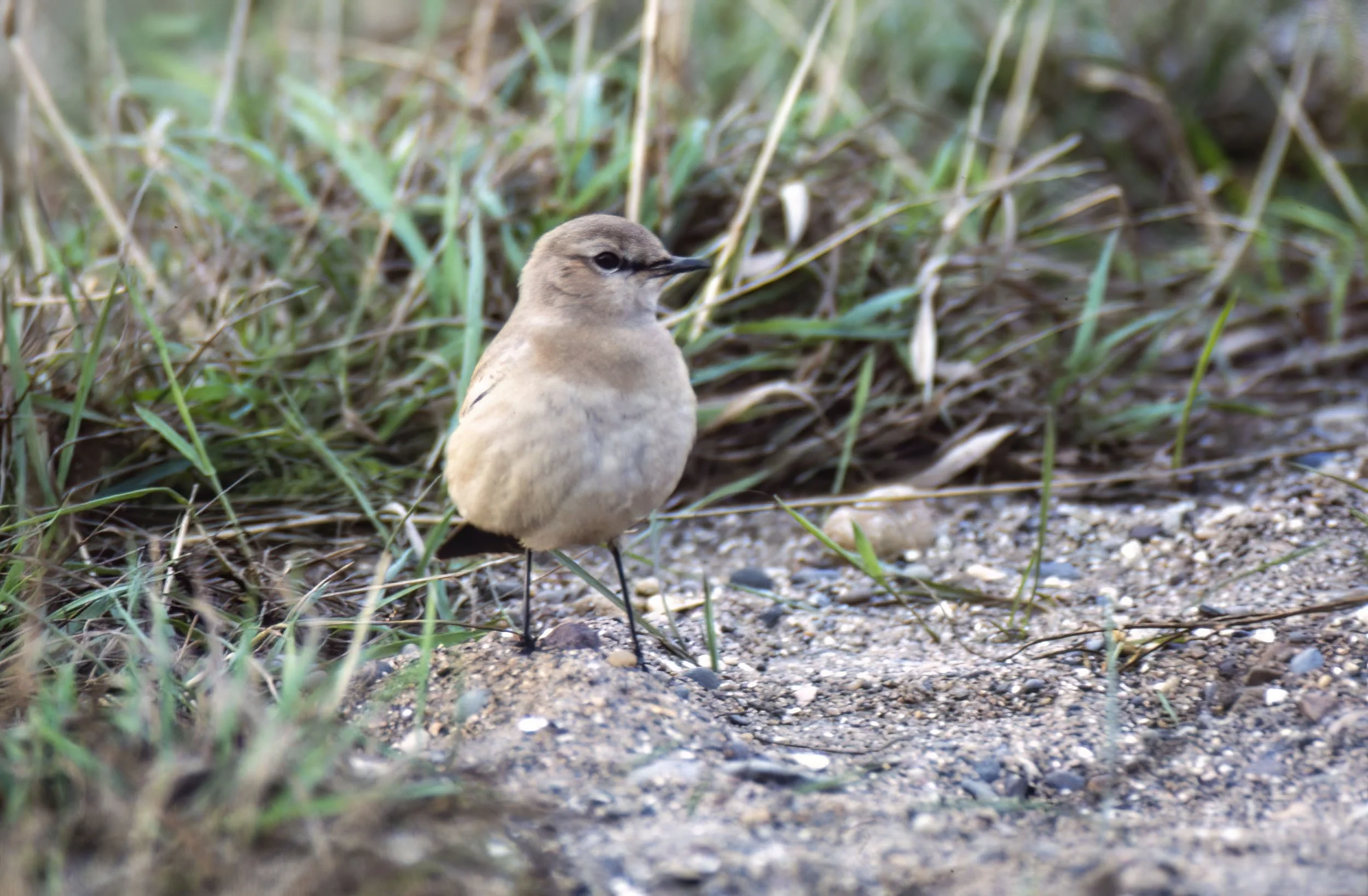
Isabelline Wheatear Kilnsea October 22nd 1990 scanned from Kchrme 64 slide
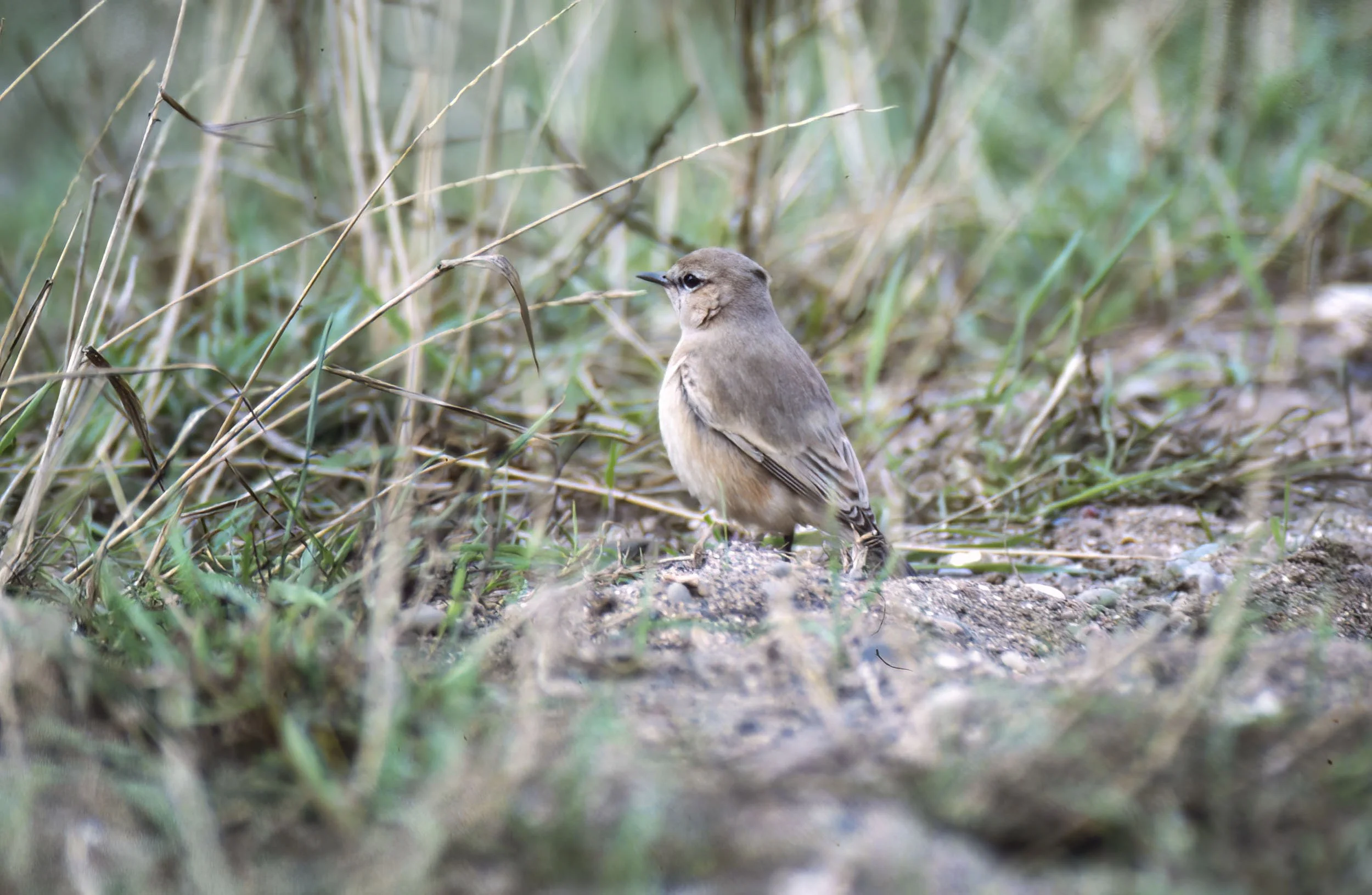
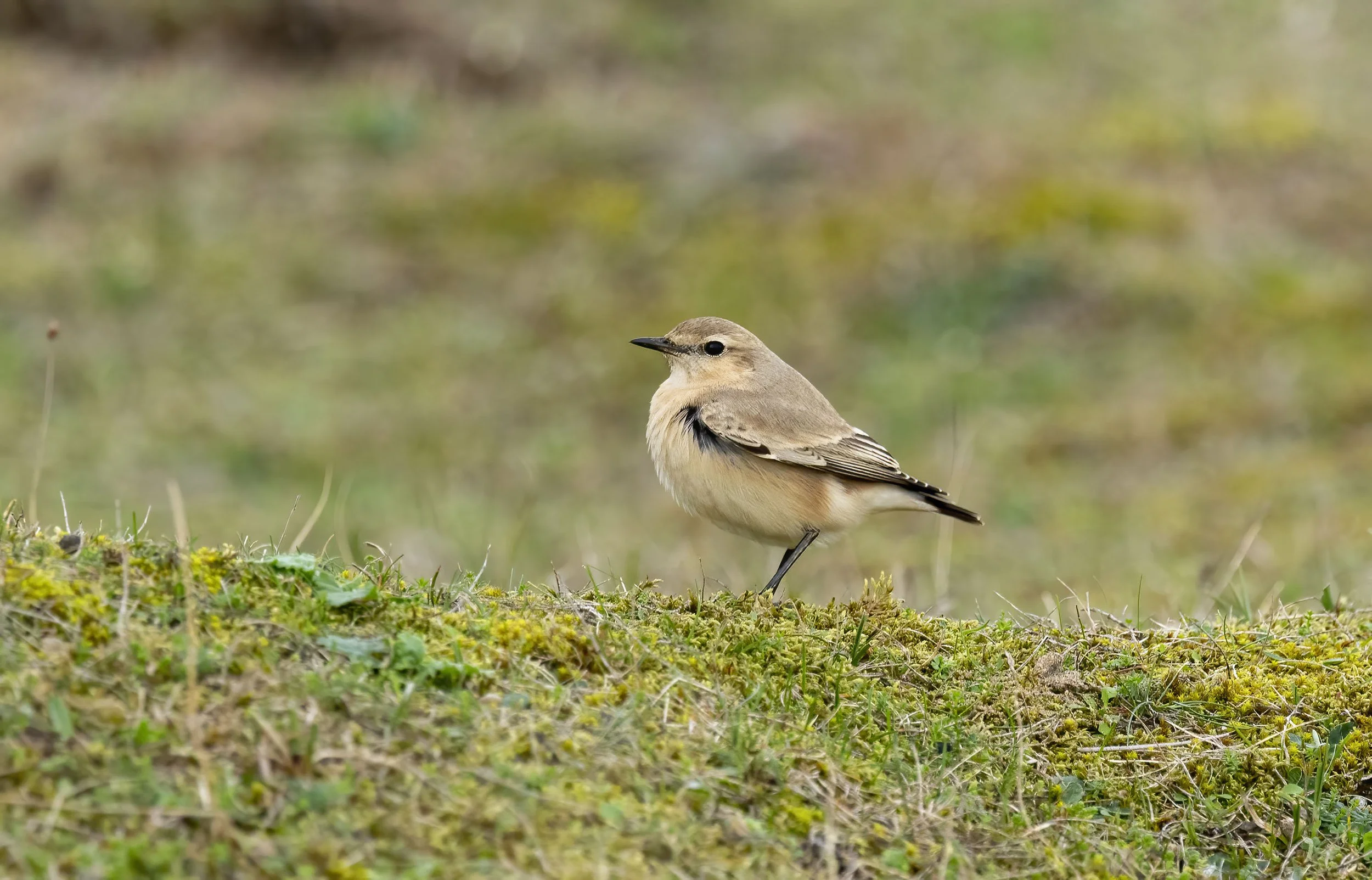
Back to the latest Donna Nook bird here looking very short tailed
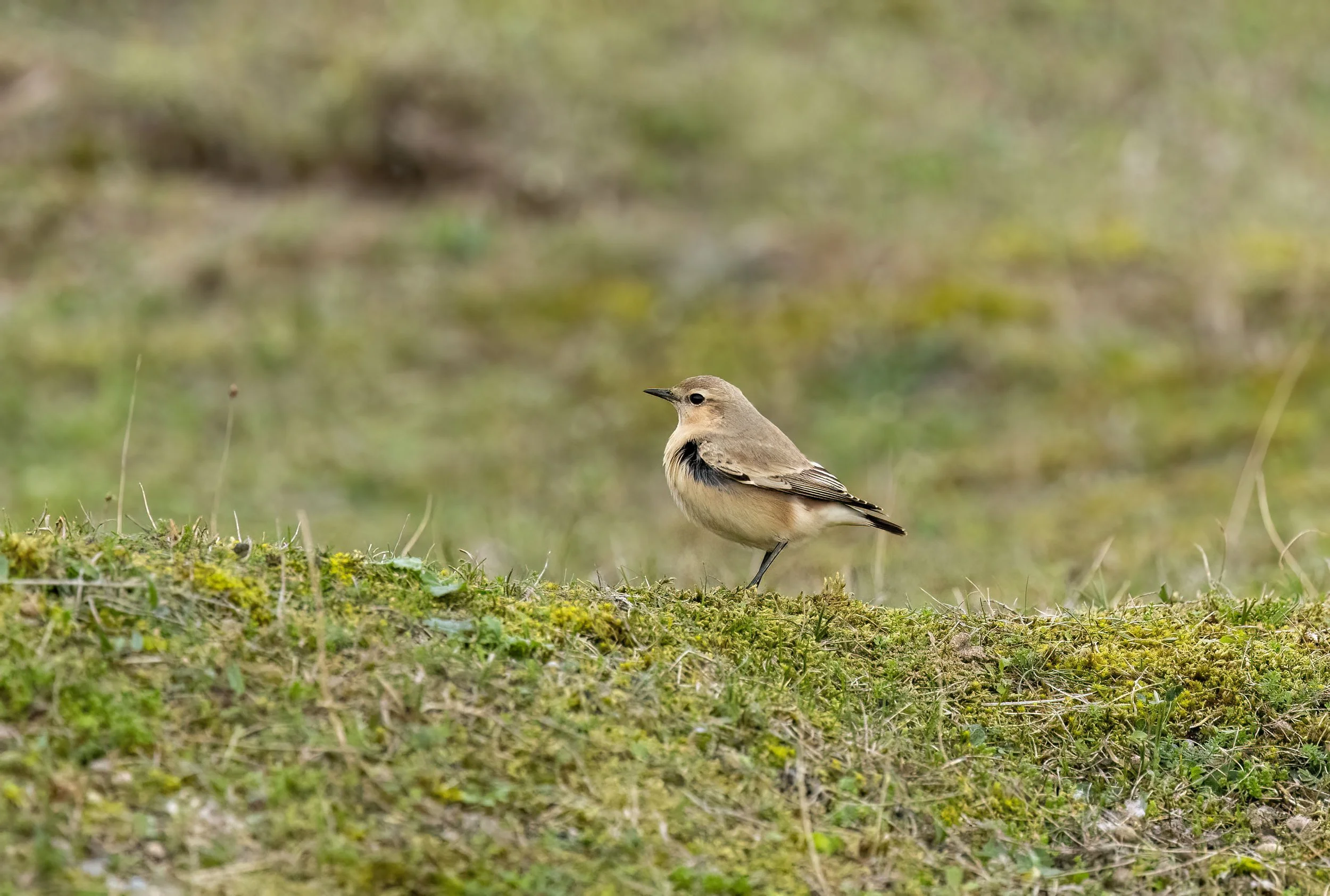
Colour tones varied with lighting often looking much paler than this
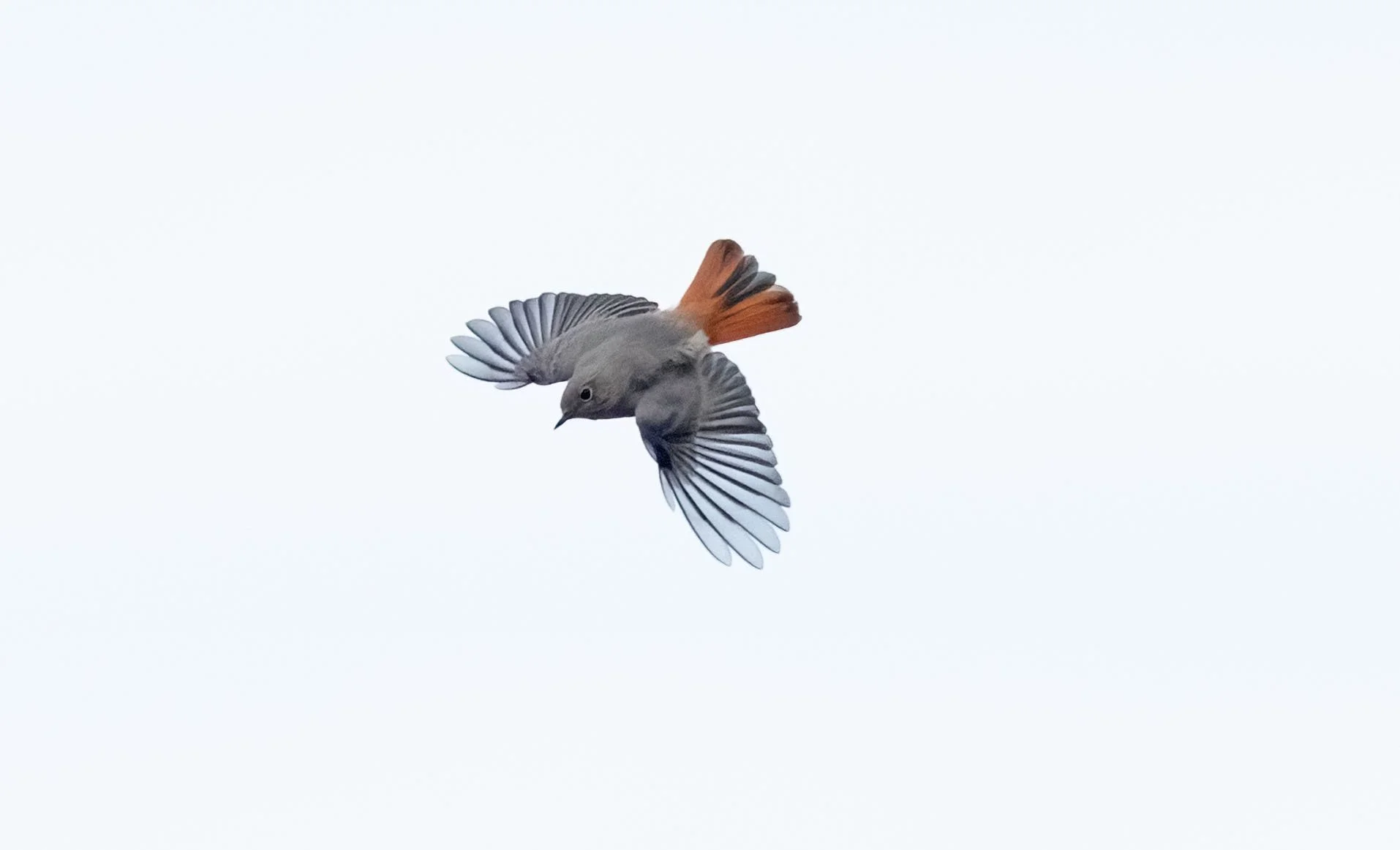
One of the day’s Black Redstarts - pre-capture on the Canon R6III - blog coming soon
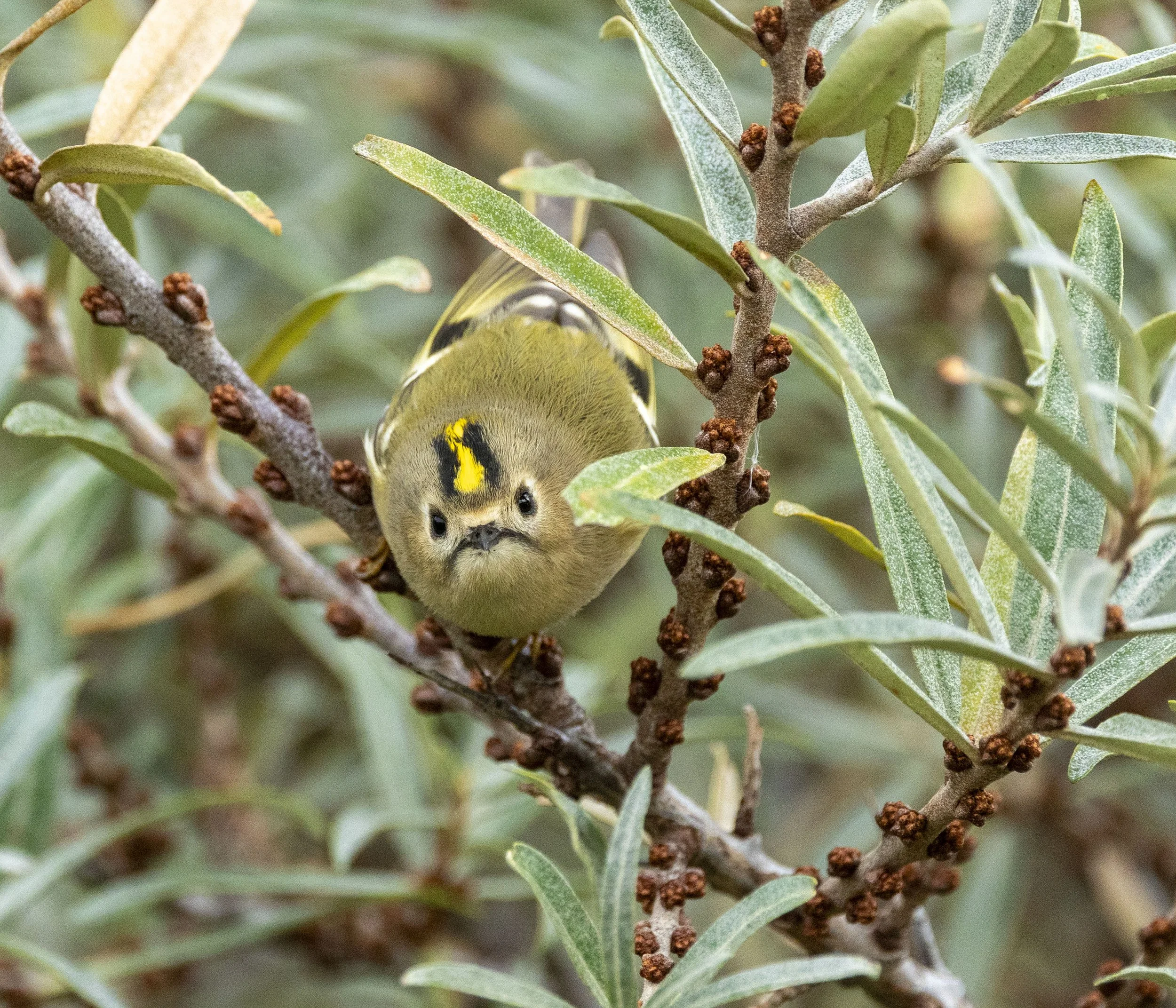
A confiding Goldcrest - I missed shots of the Firecrest sadly
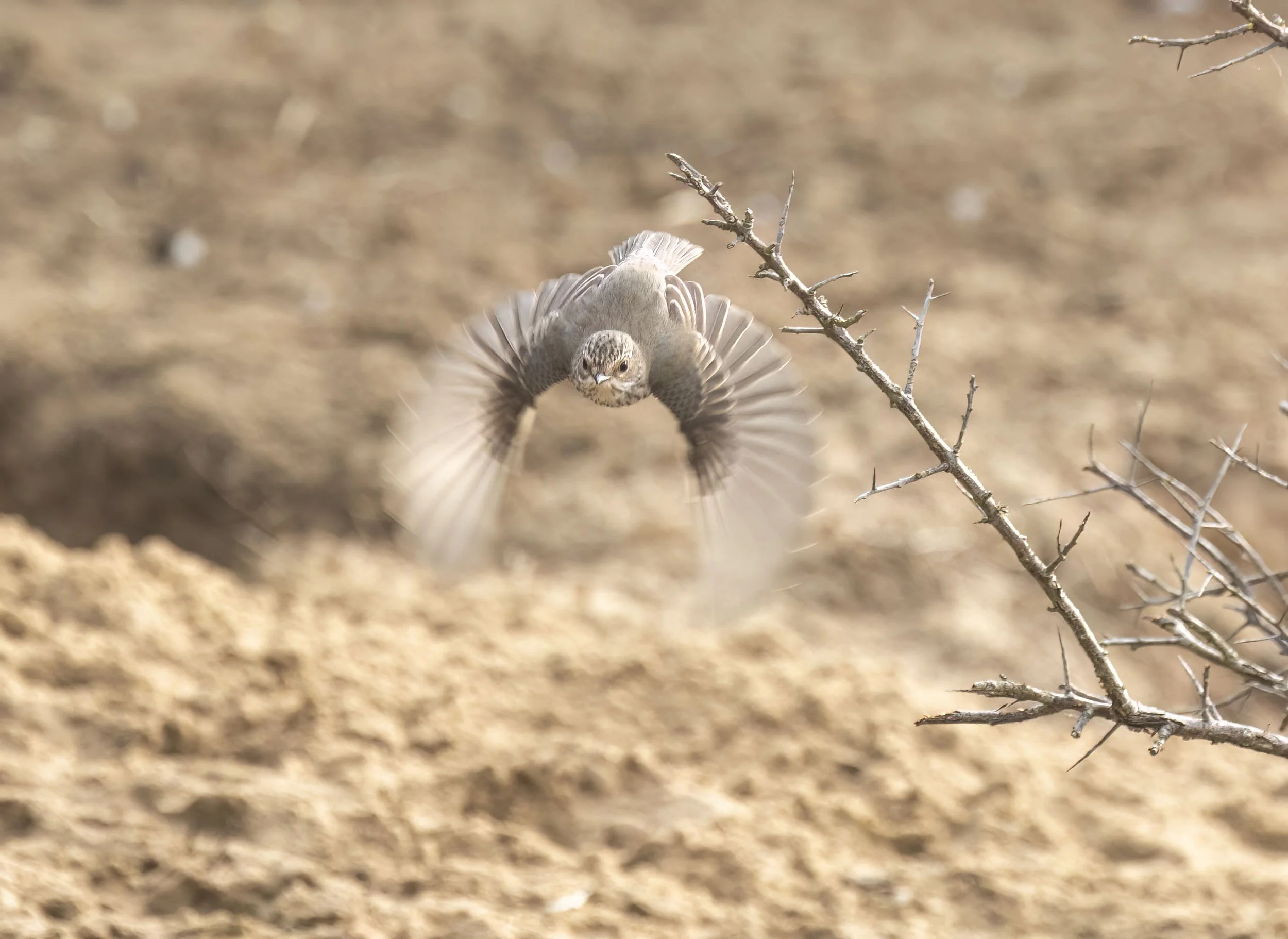
Spotted Flycatcher a late bird
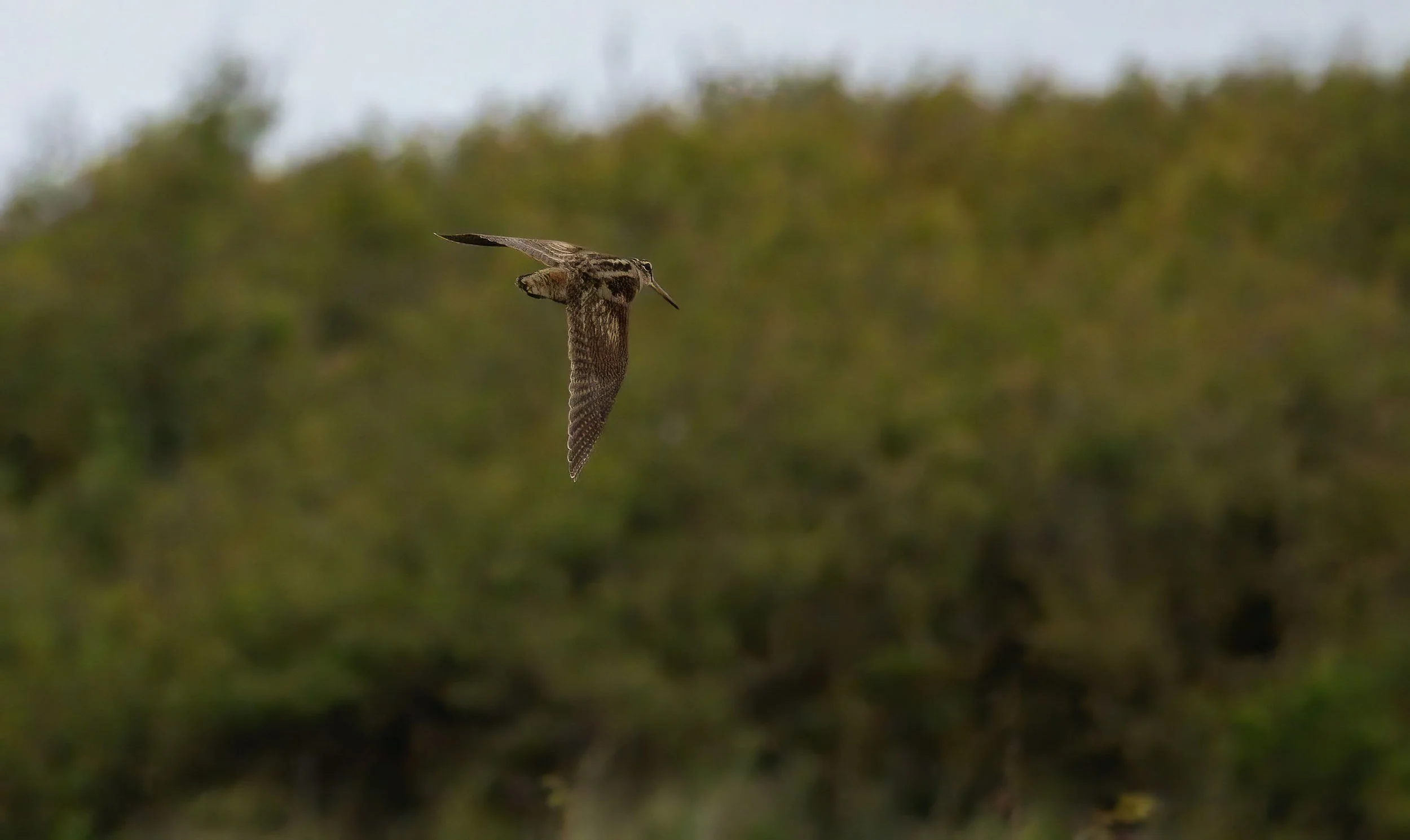
One of the day’s Woodcock beating a hasty retreat