Nutcrackers - keep your eyes peeled and if you see one in Lincolnshire let me know!
The invasion is on: autumn 2026 and Slender-billed Nutcrackers have hit Scandinavia in big numbers and have reached the Netherlands with a few in Belgium and France. The hoped for British first hit NE Norfolk at the weekend but will there be any more? With gale force westerlies currently established across the UK unless any others arrived last week it seems the door has closed for another week or so at least.
The ranges of the two sub-species cover a huge area from Europe to Japan:
From Birds of the World:
The Northern Nutcracker has a vast Palearctic range that covers much of the boreal zone from Norway to Korea and Japan, where it occupies coniferous and mixed forests and feeds mostly on pine cones, but it will also take diverse other food items, occasionally even killing and eating small birds and mammals. A few disjunct populations occur in montane regions south of the boreal zone in Europe (principally in the Alps and Balkans).
Although principally resident, subspecies macrorhynchos is famously prone to occasional irruptions caused by episodic failures in the pine seed crop, which can lead to the birds dispersing widely, exceptionally up to thousands of kilometres beyond their regular range, and becoming more catholic in their choice of habitat. The first report of such behaviour dates from the mid-1750s, and the most recent large-scale irruption in western Europe (and elsewhere) occurred as long ago as 1968 and involved the displacement of several thousands of birds, which included more than 300 individuals as far west as Britain.
The two sub-species are difficult to tell apart without very good views but the usual breeding range of the Slender-billed birds stretched East from the Urals with European birds being Thick-billed. Recently in connection with the recent invasion I read that Slender-billed birds cannot open Hazelnuts as their bills are not adapted whereas thick-billed birds routinely open the Hazelnut shells so if you find a Slender-billed bird and want to feed it remove the Hazelnut shells first!
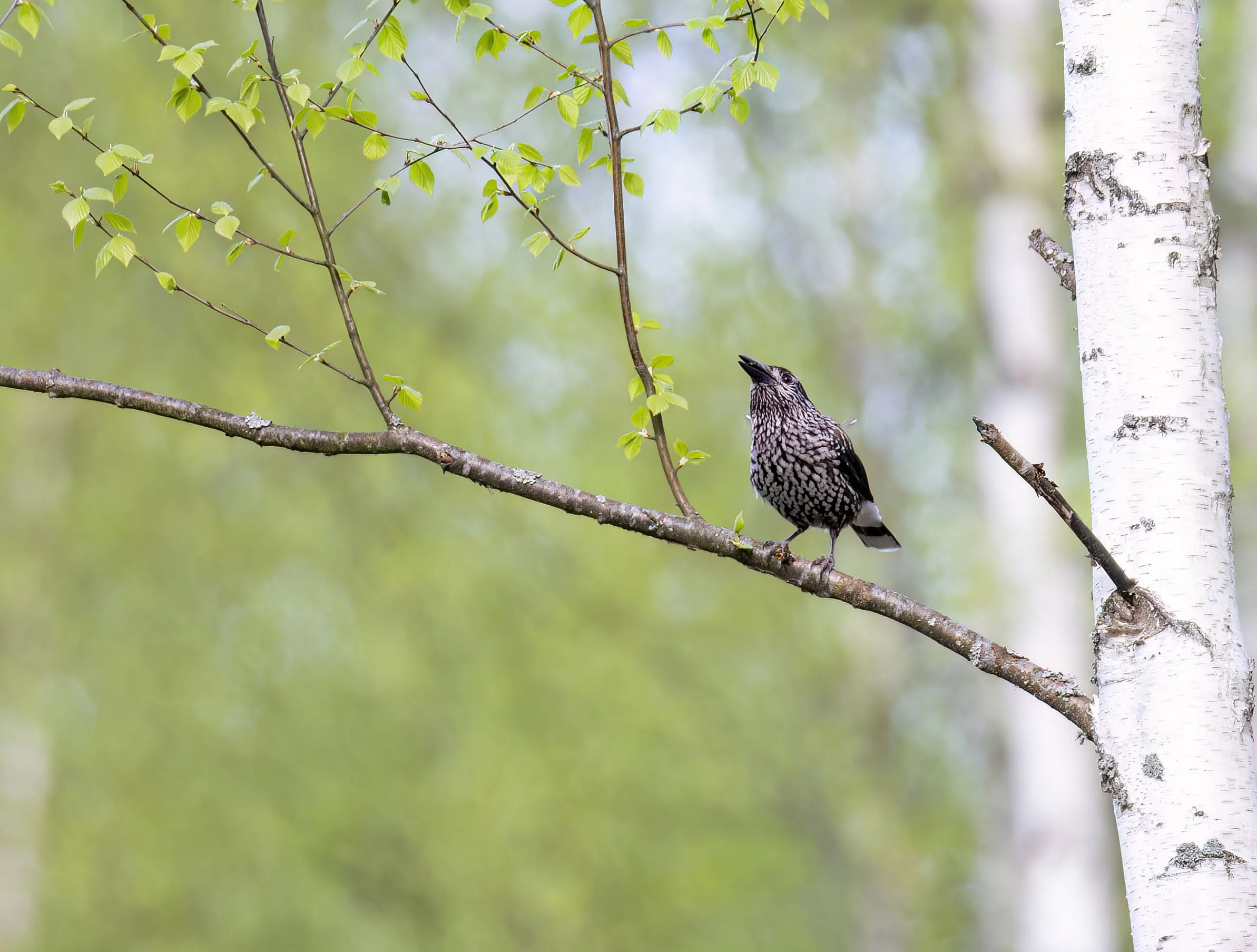
Thick-billed Nutcracker Estonia May 2015
The only well documented invasion into Britain, in 1968-1969, involved an estimated minimum of 315 individuals and was documented in British Birds https://britishbirds.co.uk/journal/article/invasion-nutcrackers-autumn-1968. Prior to this only c50 birds had ever been recorded. Whereas Norfolk recorded 104 birds in the influx Yorkshire only managed nine and Lincolnshire a paltry four and two of these on the coast on the same day could conceivably have been the same.
Lincolnshire: 1968: Theddlethorpe, 12th September (R. K. Norman). Gibraltar Point 17th September (R. B. Wilkinson). Sutton-on-Sea, 17th September (A. J. Raithby). 1969: Metheringham, 9th April (J. S. Mighell).
As a 15-year-old with my first pair of Prinzflex 8x30 binoculars I failed to find any Nutcrackers in 1968 indeed I guess I may well not even have heard of the species by this time and had certainly no knowledge of said invasion. Thus, my first encounter with Nutcrackers, were they Slender or Thick-billed? Came in October 1979 at the world-famous migratory centre that is Falsterbo, southern Sweden. Having a two-week trip there with my old Lincs birding buddy Mick Mellor I see from my notes that we first saw Nutcrackers on October 1st when two flew out of the woods east of the lighthouse and out towards the point. Big heavy bill held up in flight suggests they were probably local thick-billed birds? Three followed on the 5th flying out over the golf course before turning back and landing in the tops of small pines on the golf course.
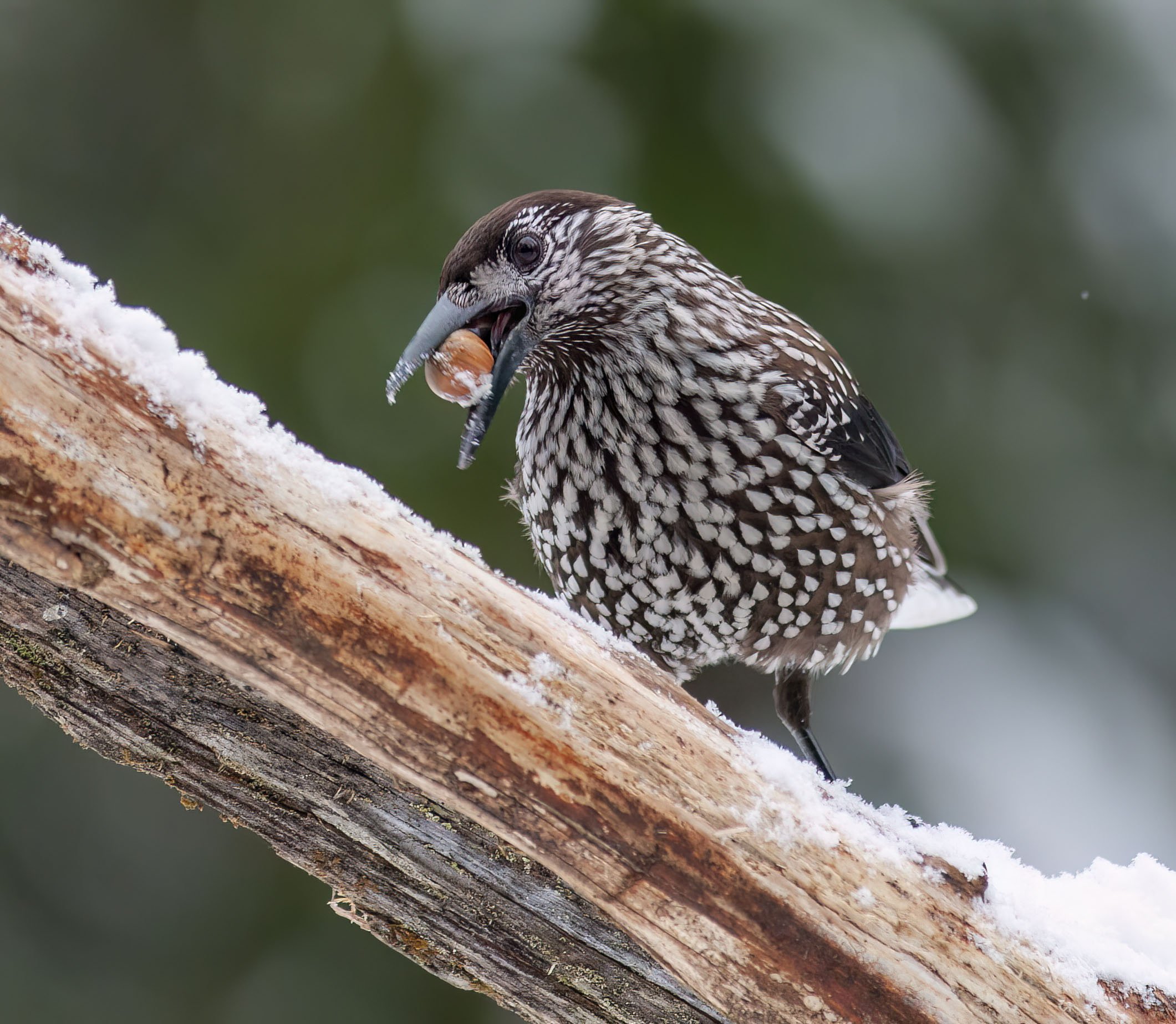
Thick-billed Nutcracker with Hazelnut Sweden February 2006 - image taken with the very old Canon 20D DSLR and 300f4 lens - amazing how some old images stand the test of time
Since that early encounter I added Nutcracker to my British list on November 8th 1985 with a visit to the apple eating bird at Westleton in east Suffolk; a bird that sadly died from eating the toxic apple seeds apparently begging the question why it didn’t know they were toxic but as a first-winter bird lost and alone I guess it was just eating whatever food resource was available. I took a few slides on some dodgy film scanned and added here.
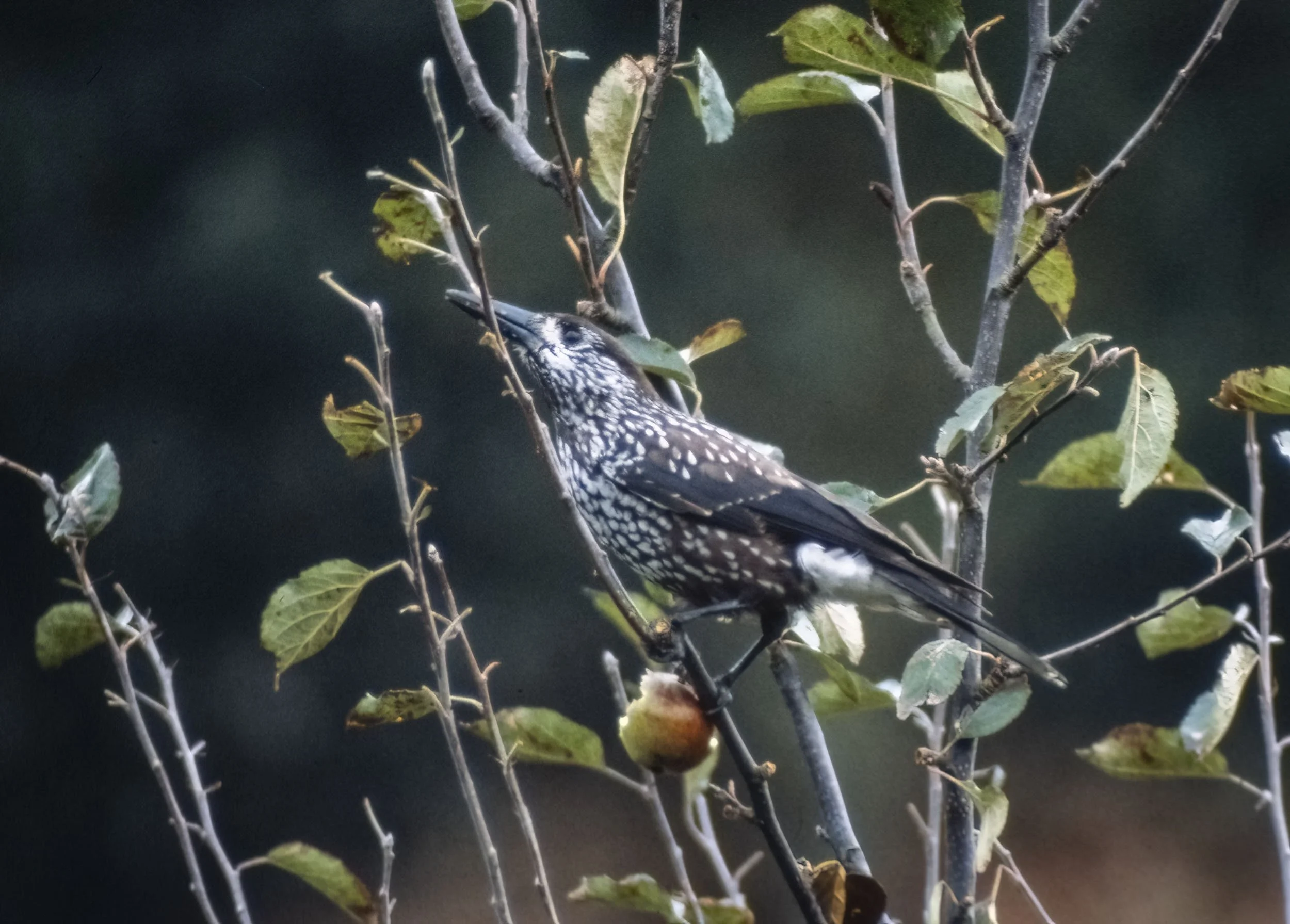
First-winter Slender-billed Nutcracker Westleton Suffolk November 8th 1985 - scanned from old slide
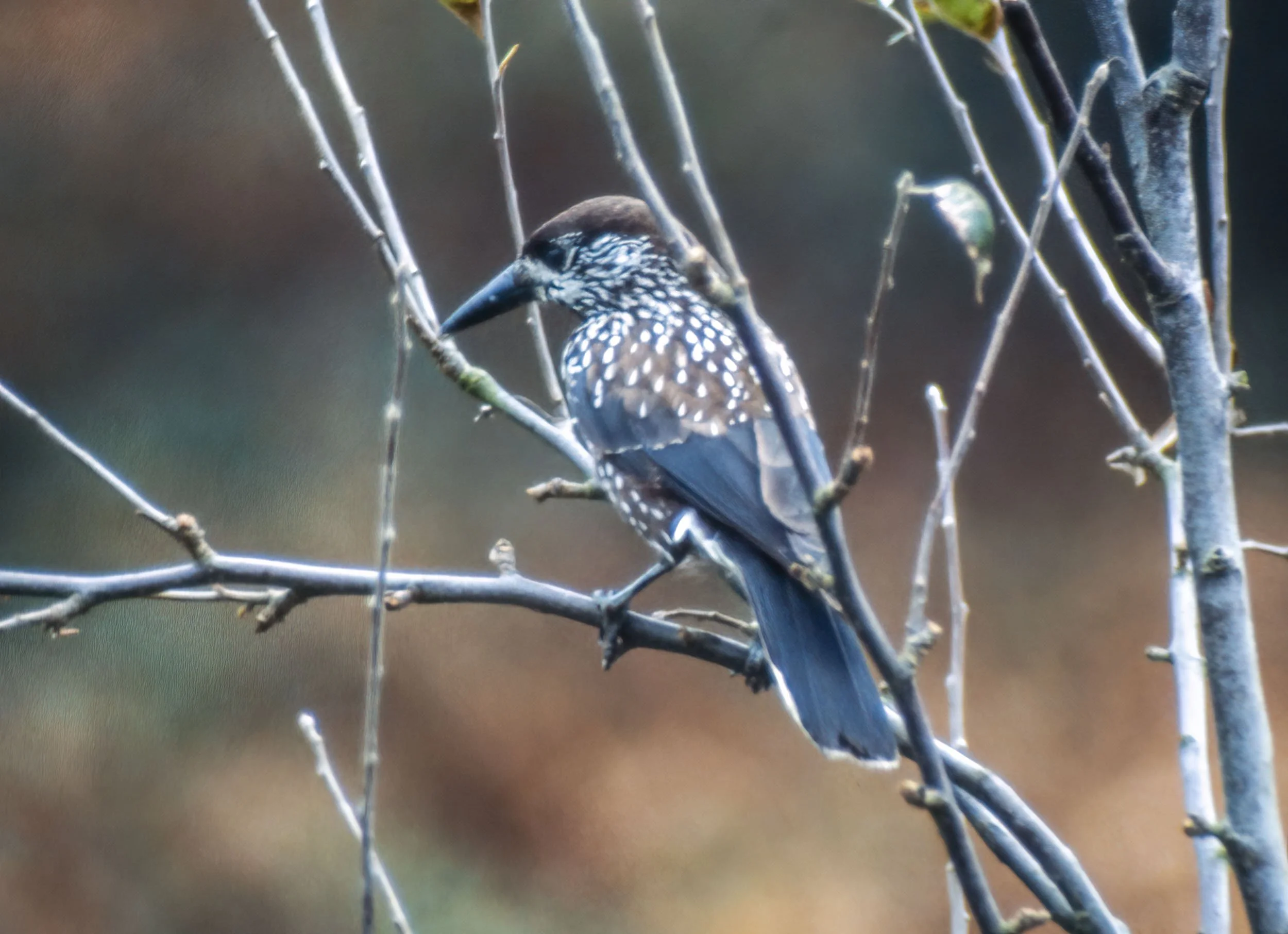
Same bird as above typically very tame
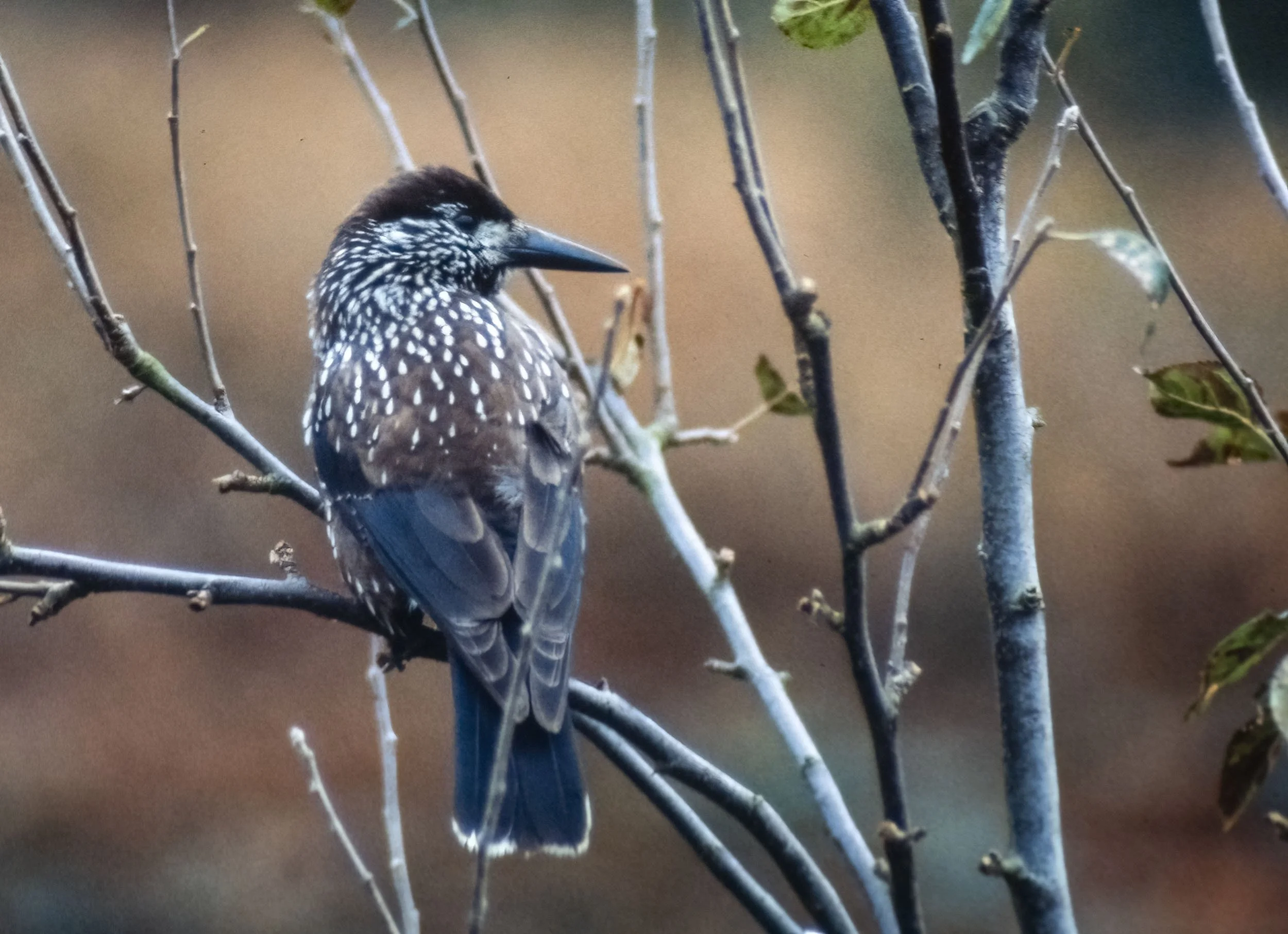
The 1985 Westleton bird November 8th taken with the Nikon F301 camera and Sigma 400 5.6 APO manual focus lens -
In 1991 while on an International ID meeting on Texel a couple of Nutcrackers were on the island and we were transported to see one of them, pictured here, which was the first time I had seen an angled scope put to proper use as Killian Mullarney sketched the bird in the field.
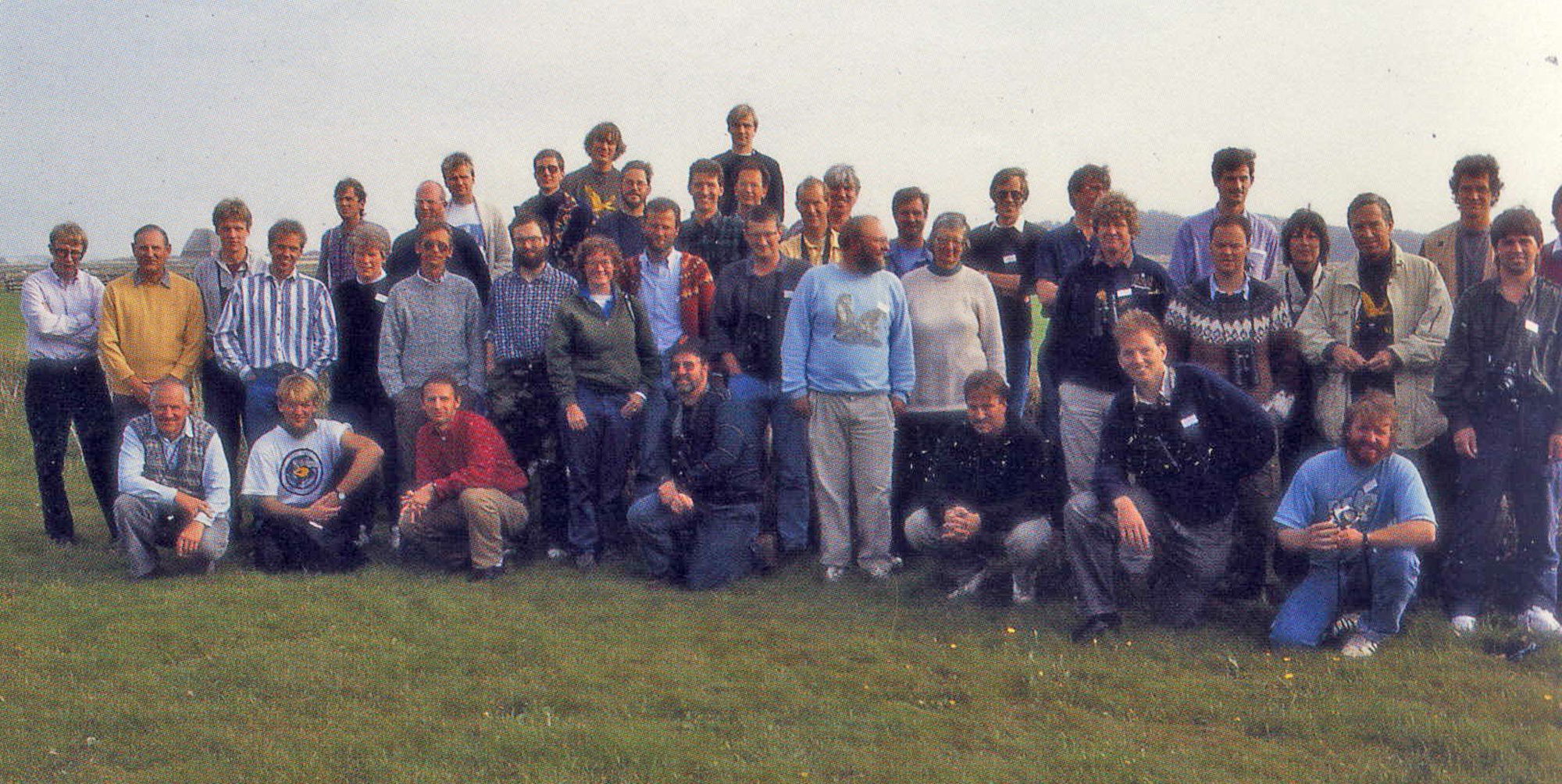
Texel October 1991 International ID meeting
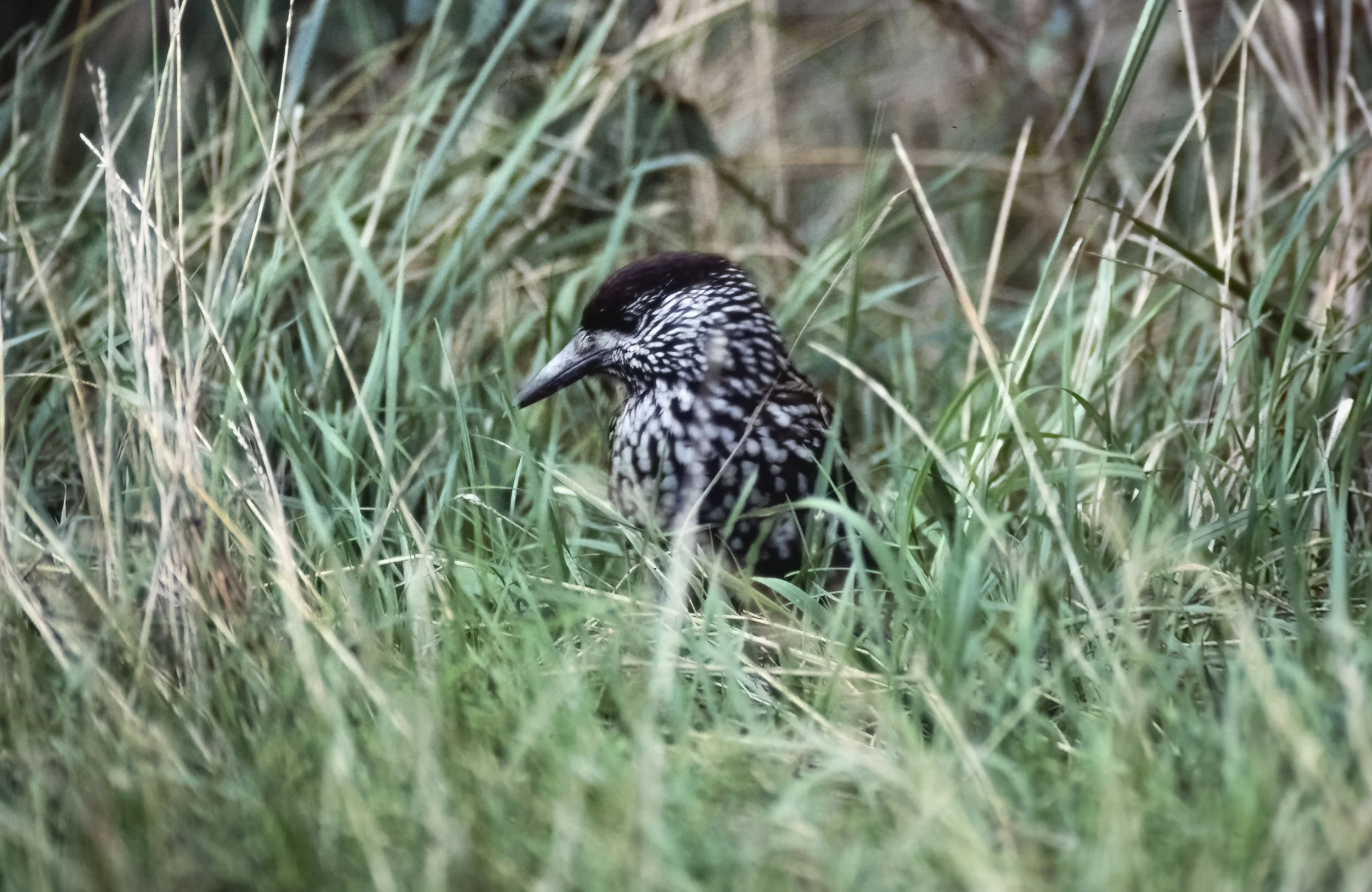
Presumed Slender-billed Nutcracker Texel Netherlands October 1991
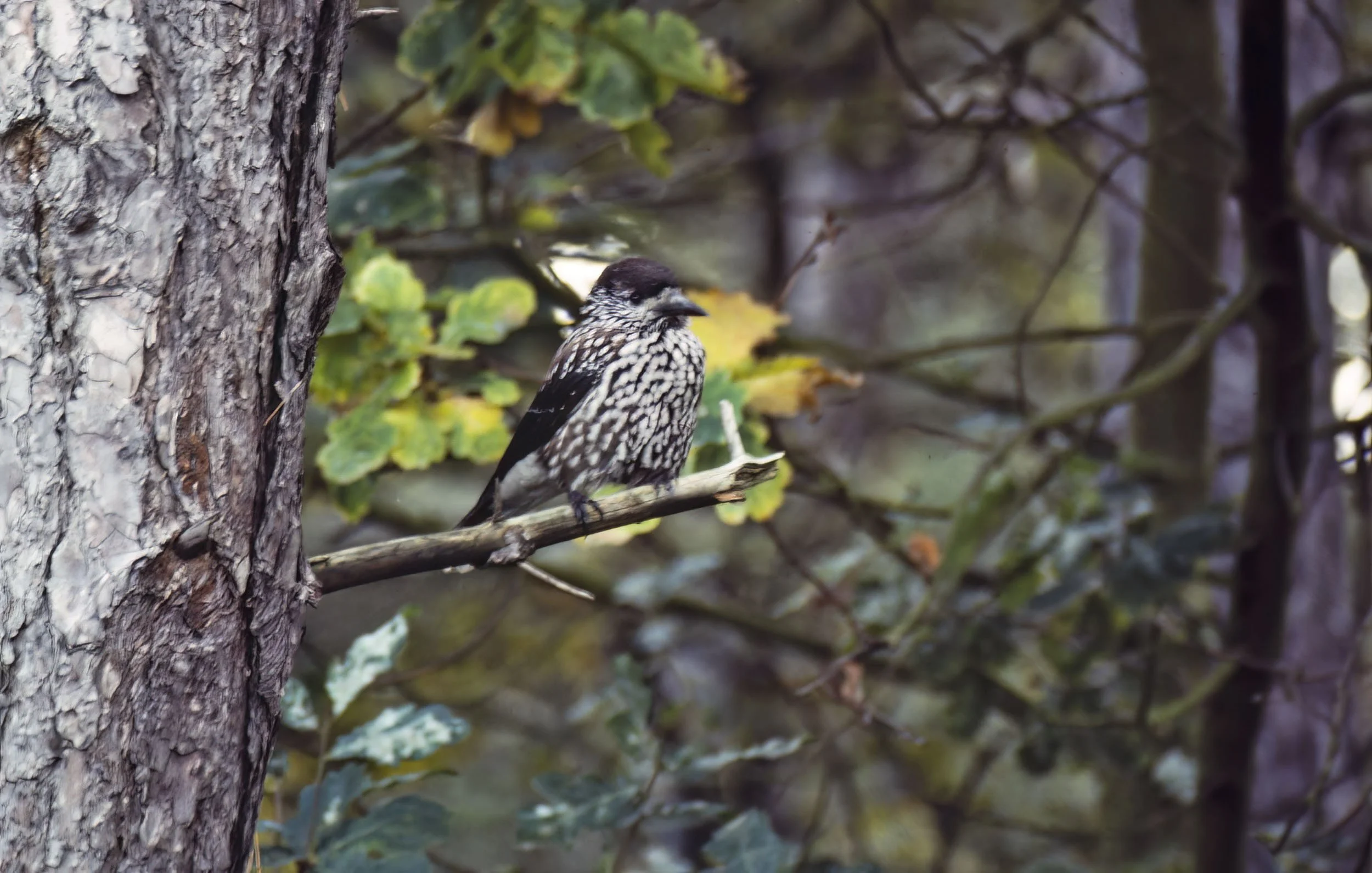
Same bird as above on Texel
My best photographic opportunities with Nutcrackers have been in Sweden on a Bird safari Sweden photo trip in February 2006 and most recently Estonia in May 2015 when we found a couple of birds in some beautiful forests while searching for woodpeckers and owls. A few images from these two encounters are presented below. 1985 is a long time ago and even 2015 11 years back so who knows if the Norfolk bird stays and I can bring myself to drive that far I may eventually go or just wait until I departs as I do with most distant rare birds nowadays!
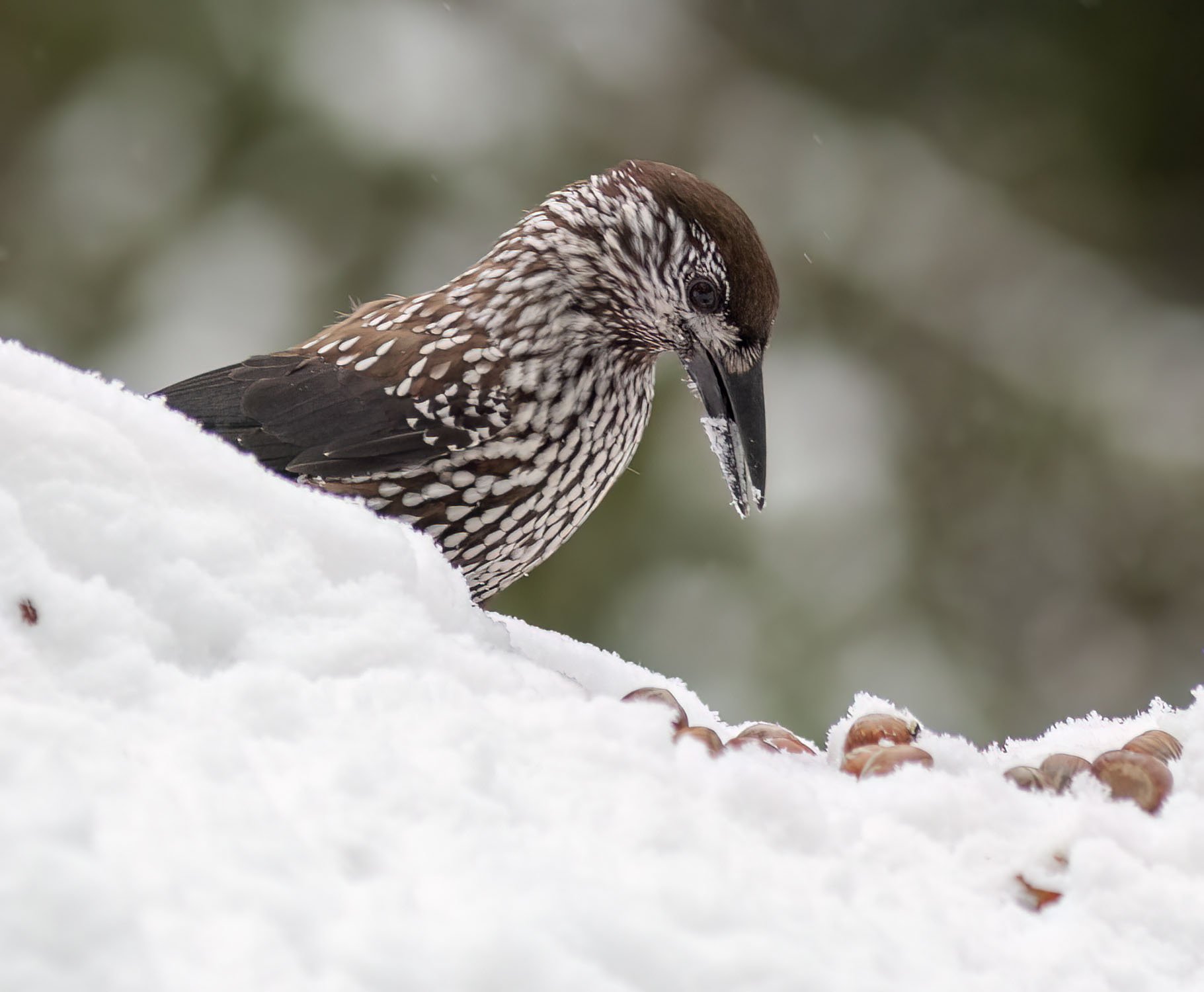
Nutcracker collecting Hazelnuts provided by our guide Daniel Sweden February 2006
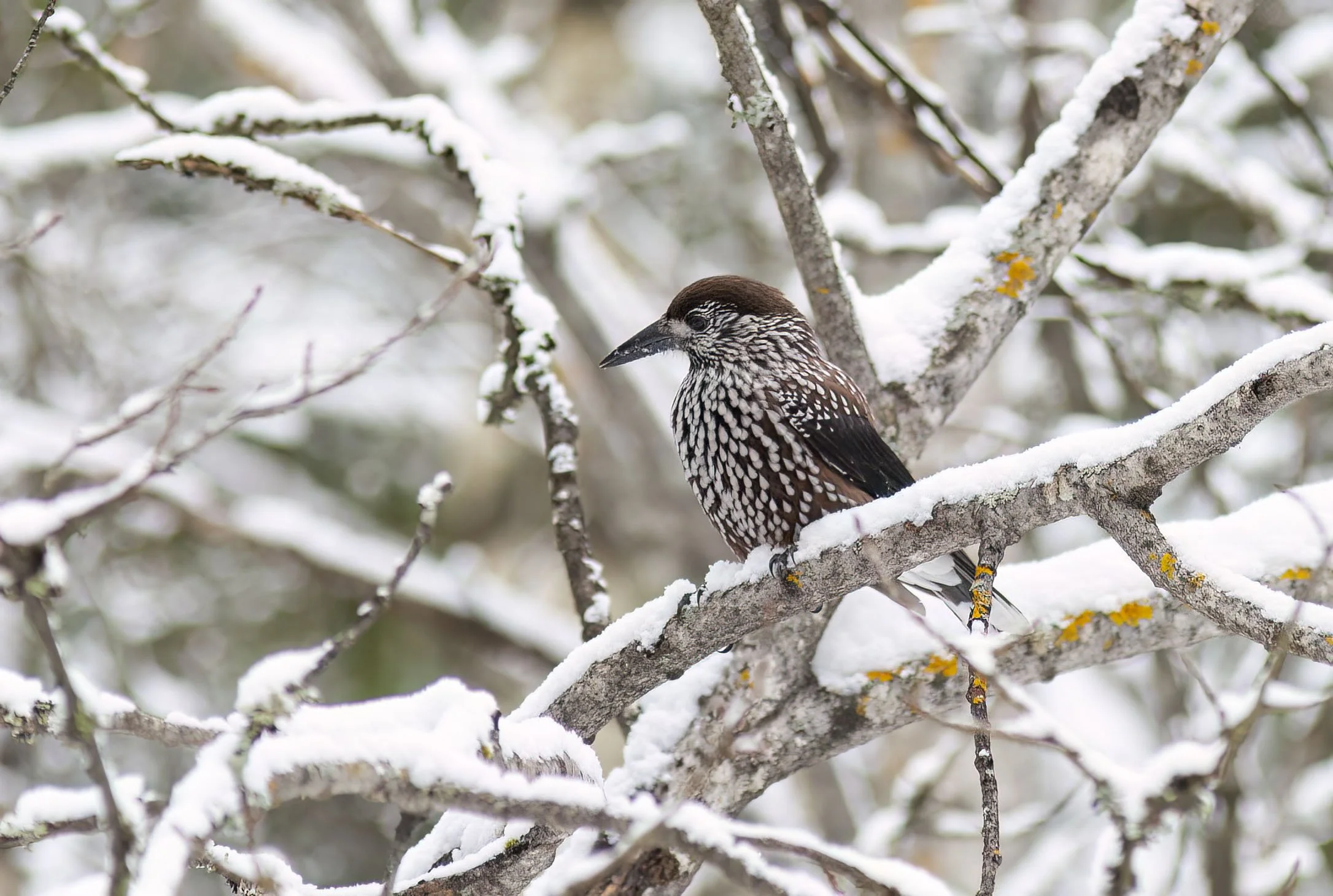
Local birds can be attracted to feeding stations in the woods with the provision of nuts - Sweden February 2006
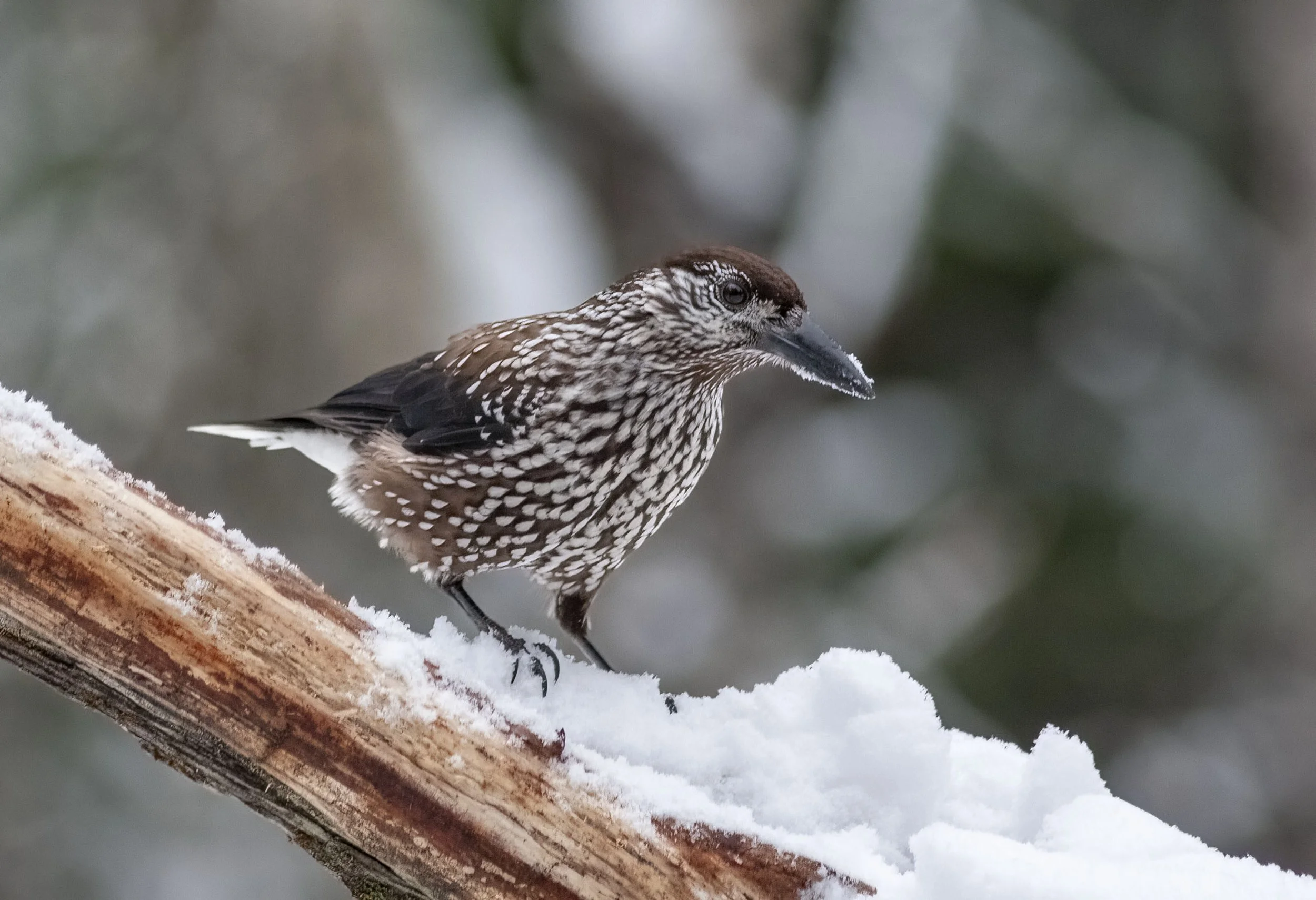
I also remember it was quite chilly standing about in the snow
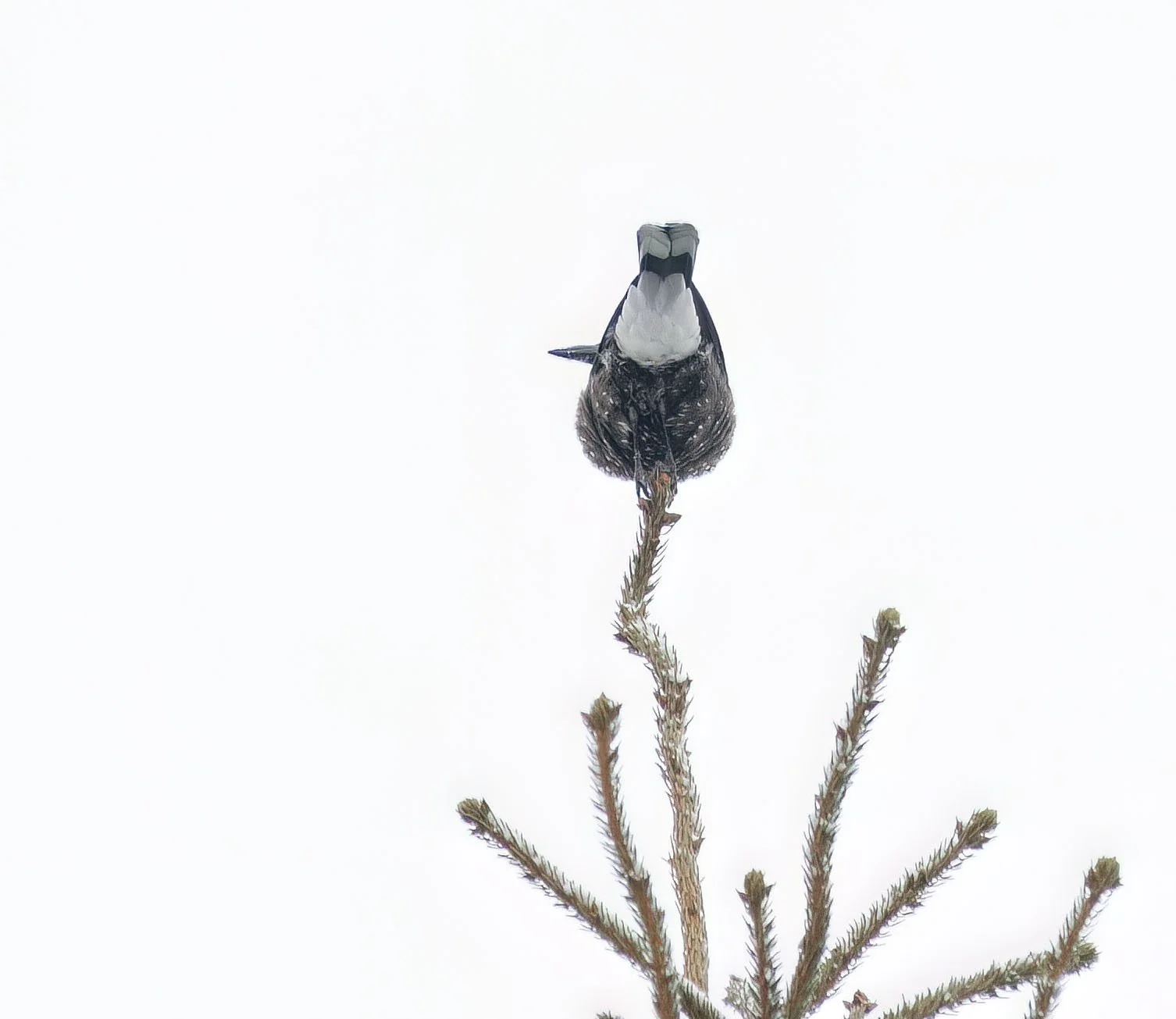
A sort of unmistakeable but shot
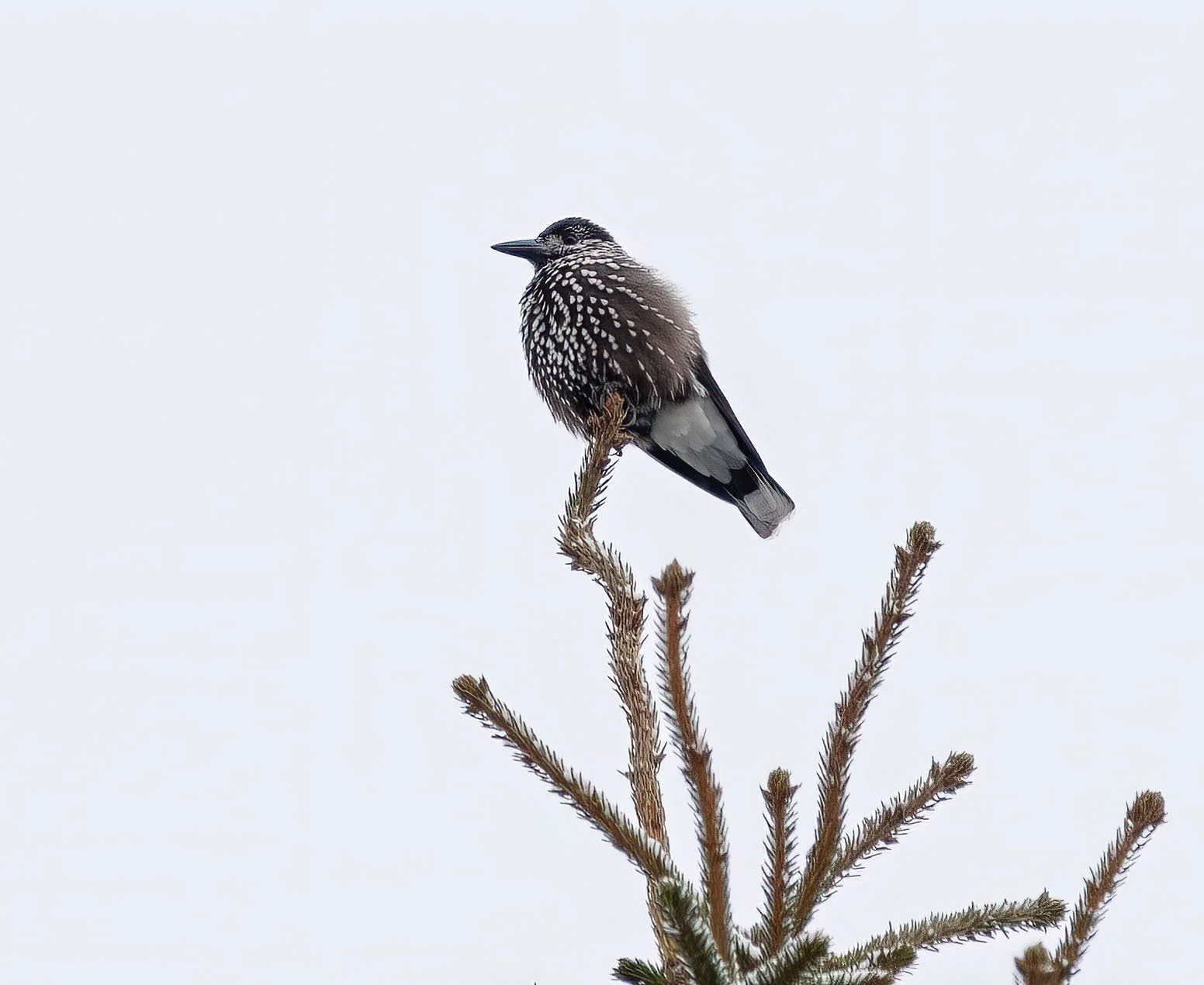
Nutcrackers often seem to perch on the tops of very thin conifers - Sweden February 2006
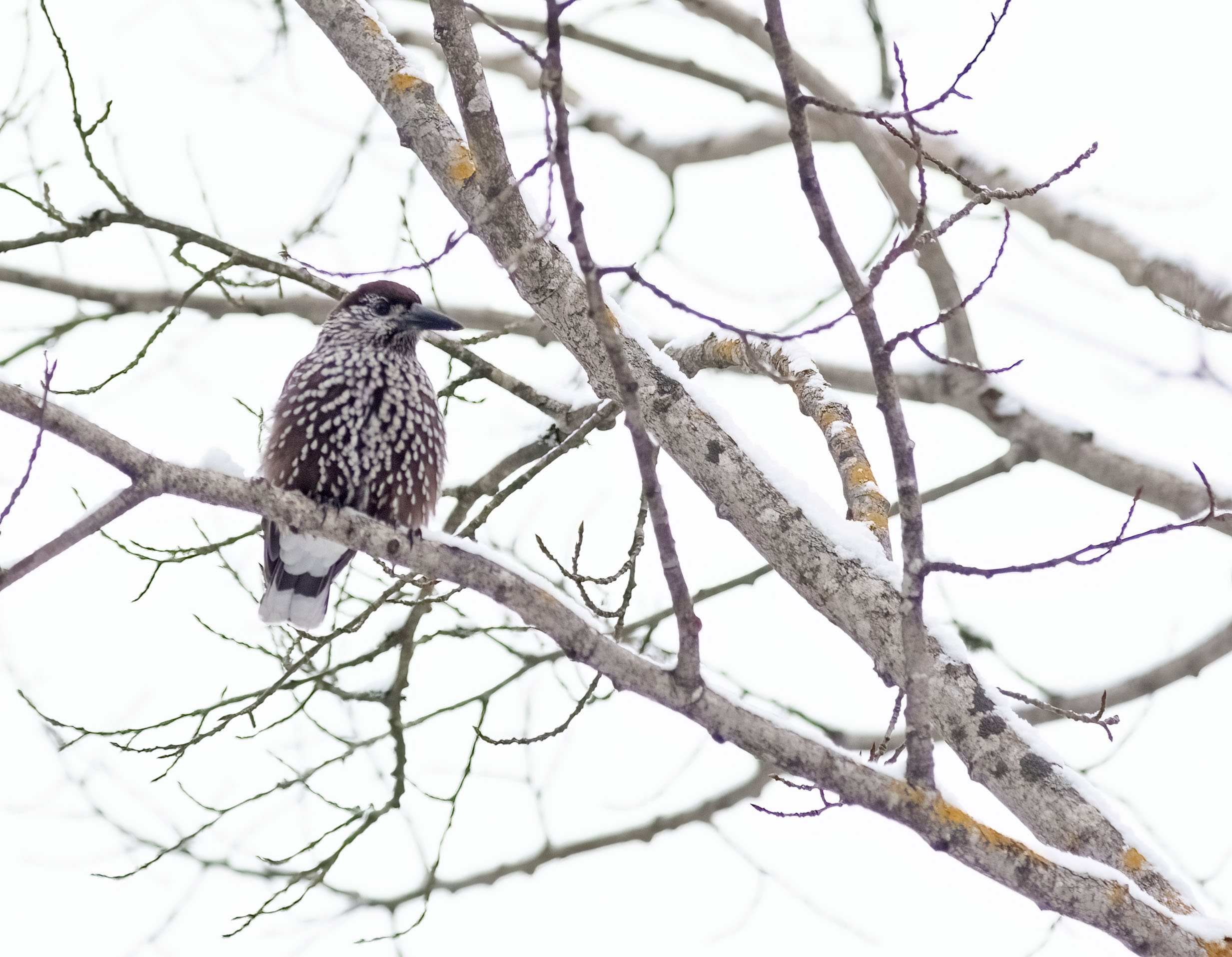
In a cold winter aspen
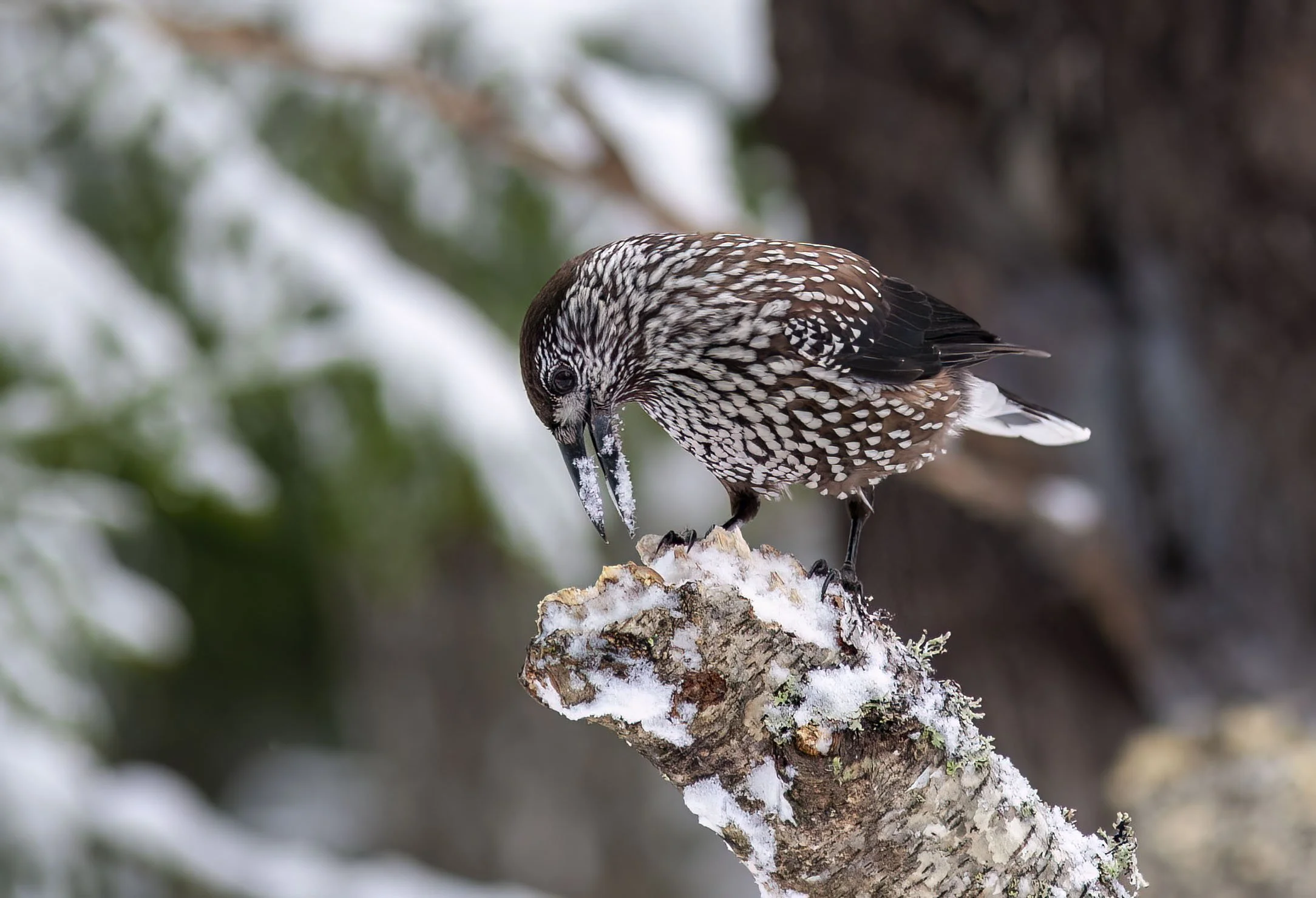
This bird appears to be an adult with solid black wings and no pale tips to the greater coverts
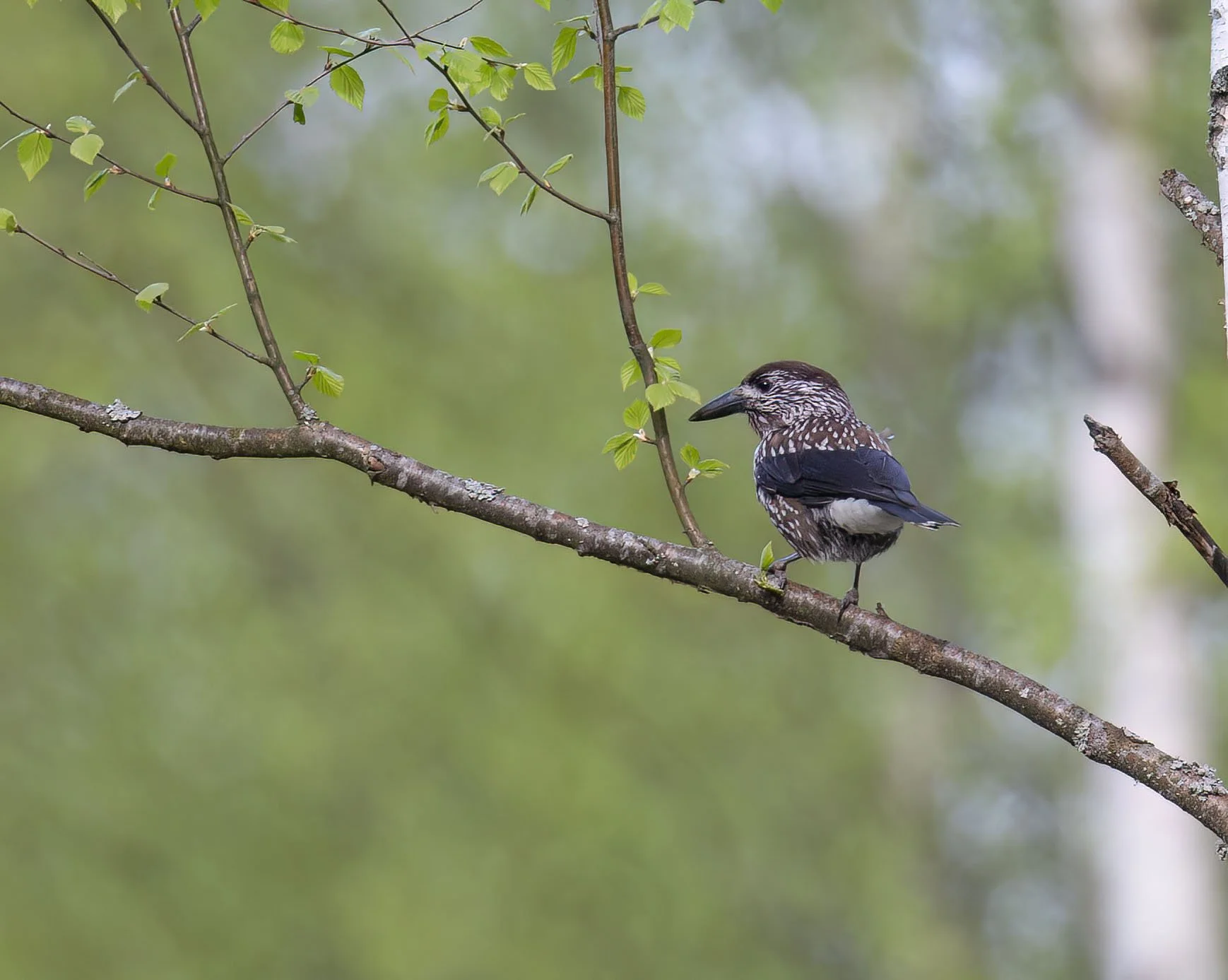
An obviously thick-billed Nutcracker Estonia May 2015
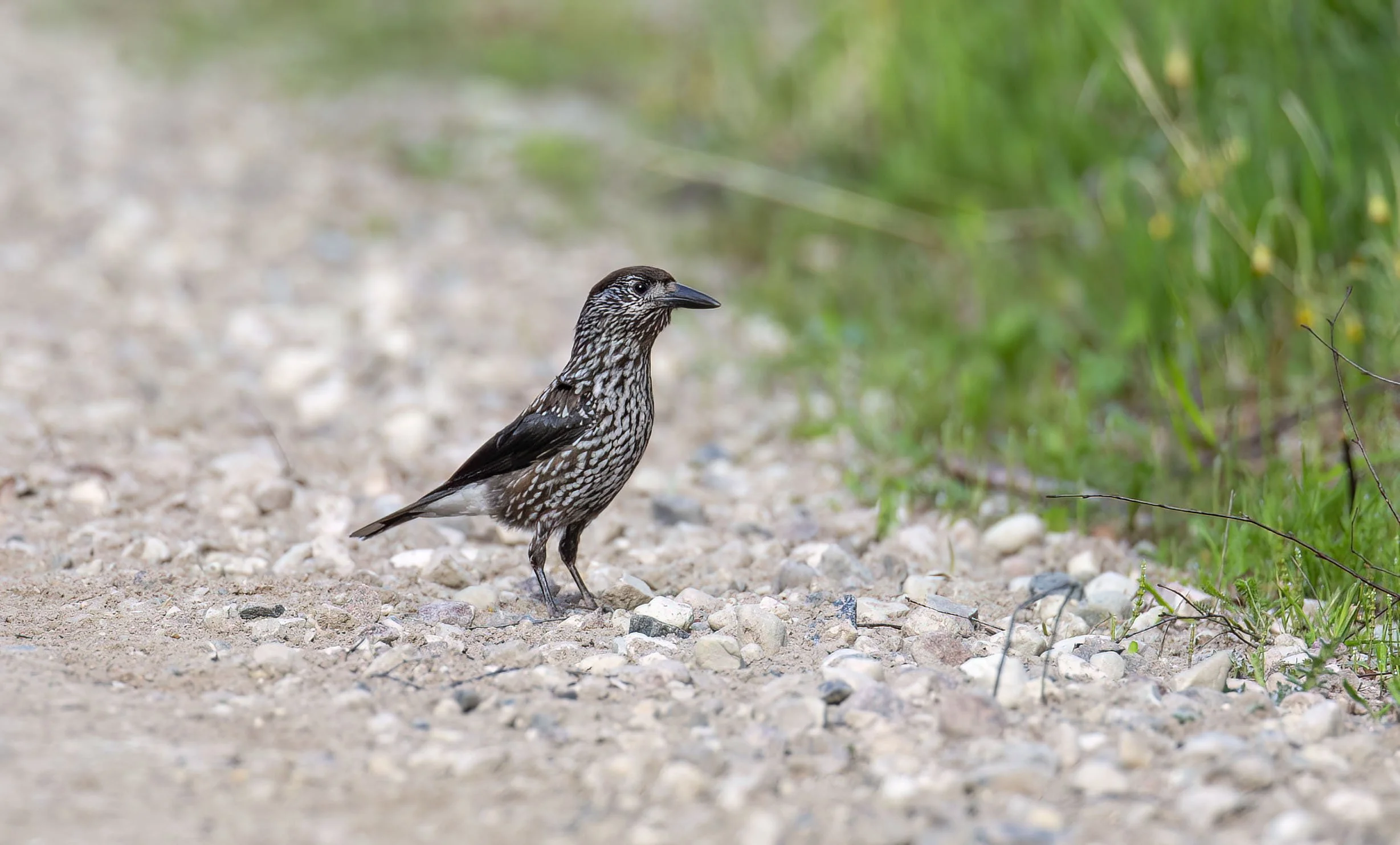
This pair were occasionally coming down to forage on the roadside - unlike vagrant Selnder-billed birds they were quite wary with images taken from the car
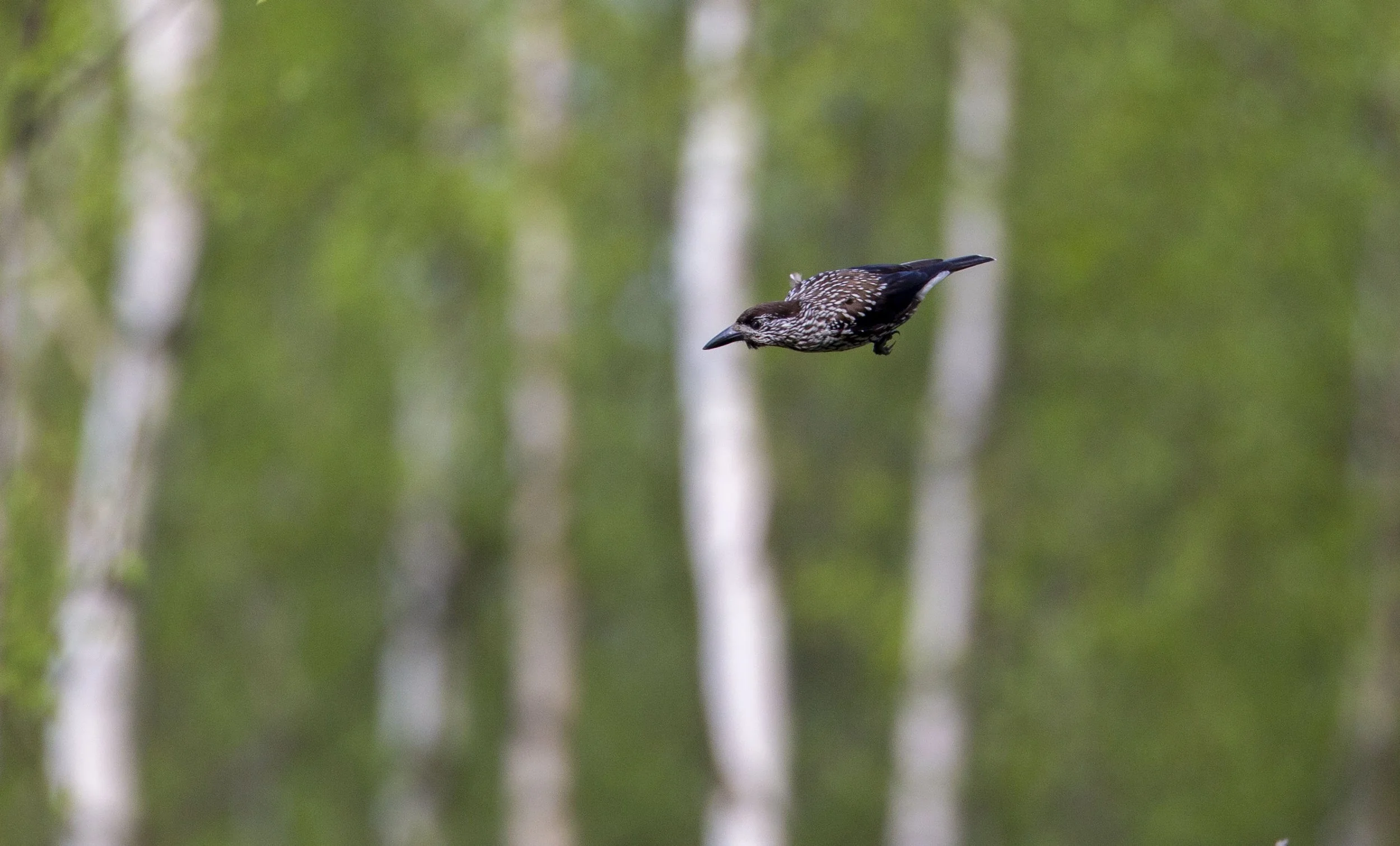
Descending flight shot - Estonia May 2015
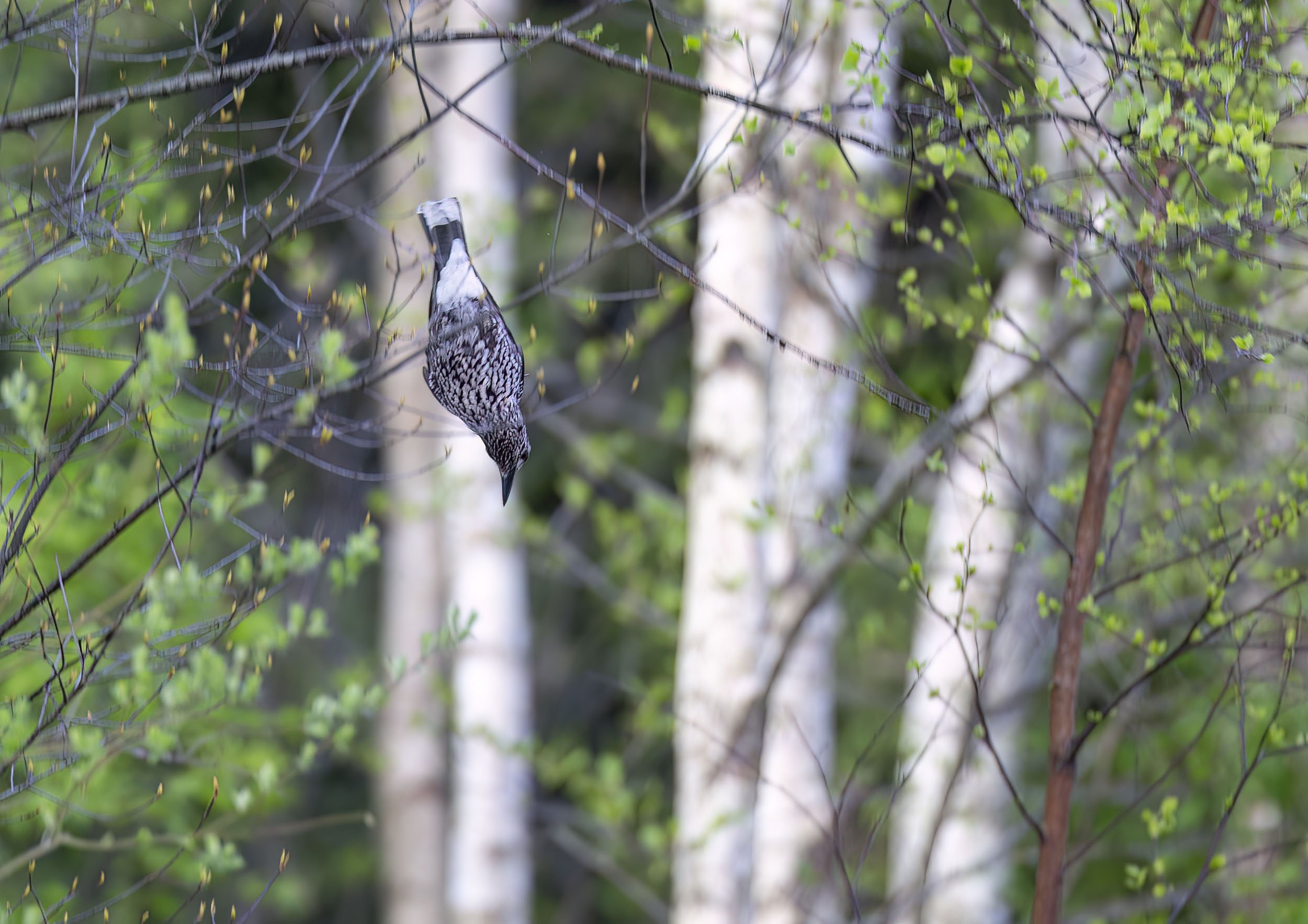
and another acrobatic dive pose
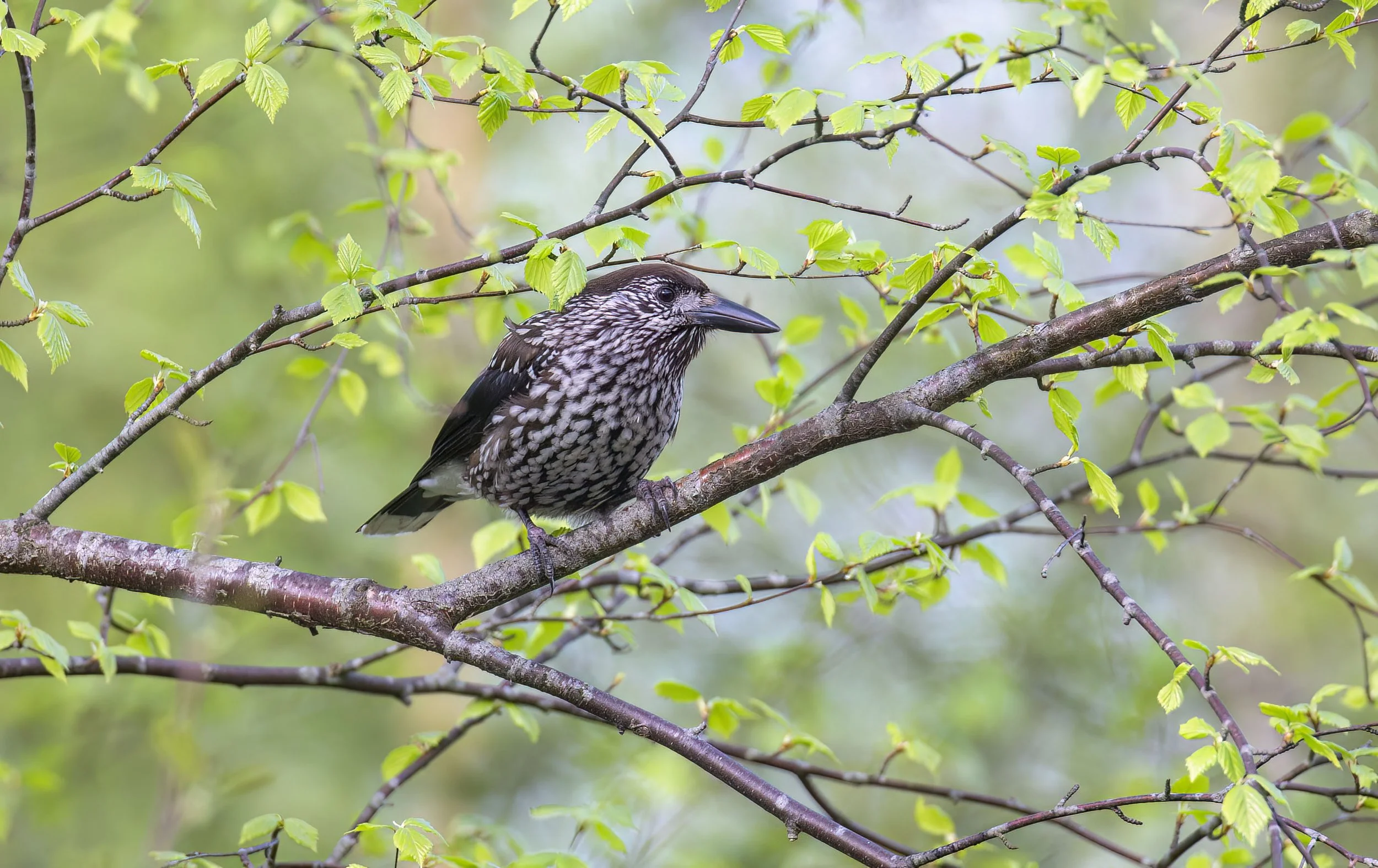
Thick-billed Nutcracker Estonia May 2015 in beech woodland