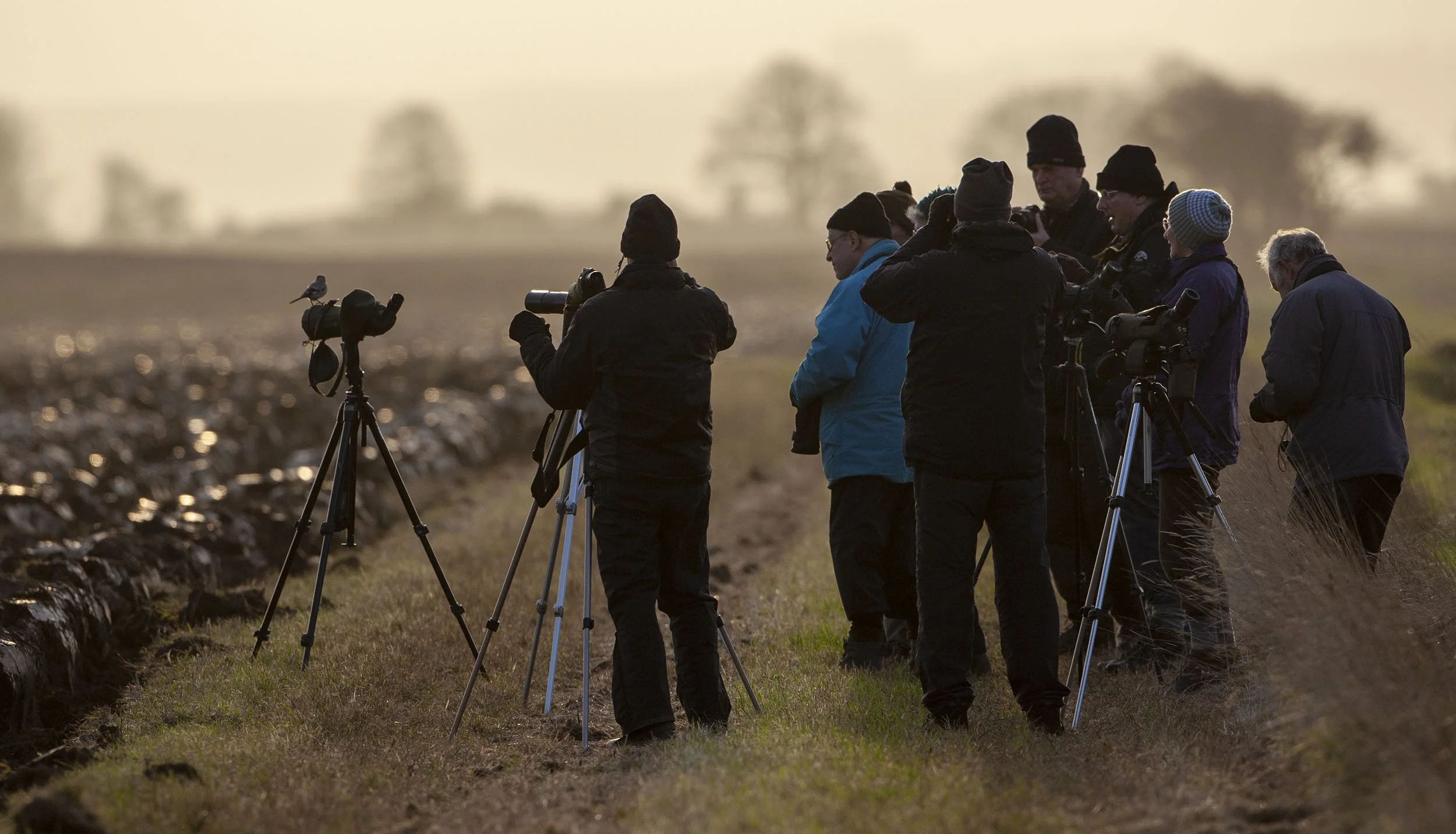
The Fillingham Great Grey Shrike and other large grey shrike conundrums including Steppe Grey Shrike a taxonomic bafflement
From my first retrospective bird at Klondike in Goxhill Marsh on April 2nd 1970 confirmed after vastly improved views of one along the same hedgerow on October 31st 1970, a bird that subsequently wintered last being seen flying east on January 16th 1971, I have managed to see c105- 110 Great Greys in Britain but in recent years they have become decidedly rare. In fact, the bird I twitched at Doddington near Lincoln on December 31st 2023 was the first bird I had seen since 2017 when one was at Alkborough Flats on October 10th. Hence when news broke of a bird near Fillingham, just 30 miles away, on January 10th I felt the need to reacquaint myself with what is such an iconic and always attractive bird. The bird was rather obliging and I managed some decent images with it even hovering over its favoured rough grass field for a full 4 – 5 minutes late afternoon. From very limited observations it has a fairly extensive territory based around this rough grass field bordered by tall thorn hedgerows but was seen up to 600m away from the favoured feeding site. Winter territories can of course be much bigger and several Lincolnshire wintering birds have disappeared for days or even weeks between sightings and have been seen up to 5kms between locations.
Watching the recent Lincolnshire Great Grey Shrike inspired me to look out old records and photos and even sketches and to ponder on a few conundrums - forgetting of course the vexed and seemingly balmy taxonomic decisions such as splitting Northern Shrike but still counting Steppe Grey Shrike, the most obvious species, as a race of Great Grey - personal opinions follow
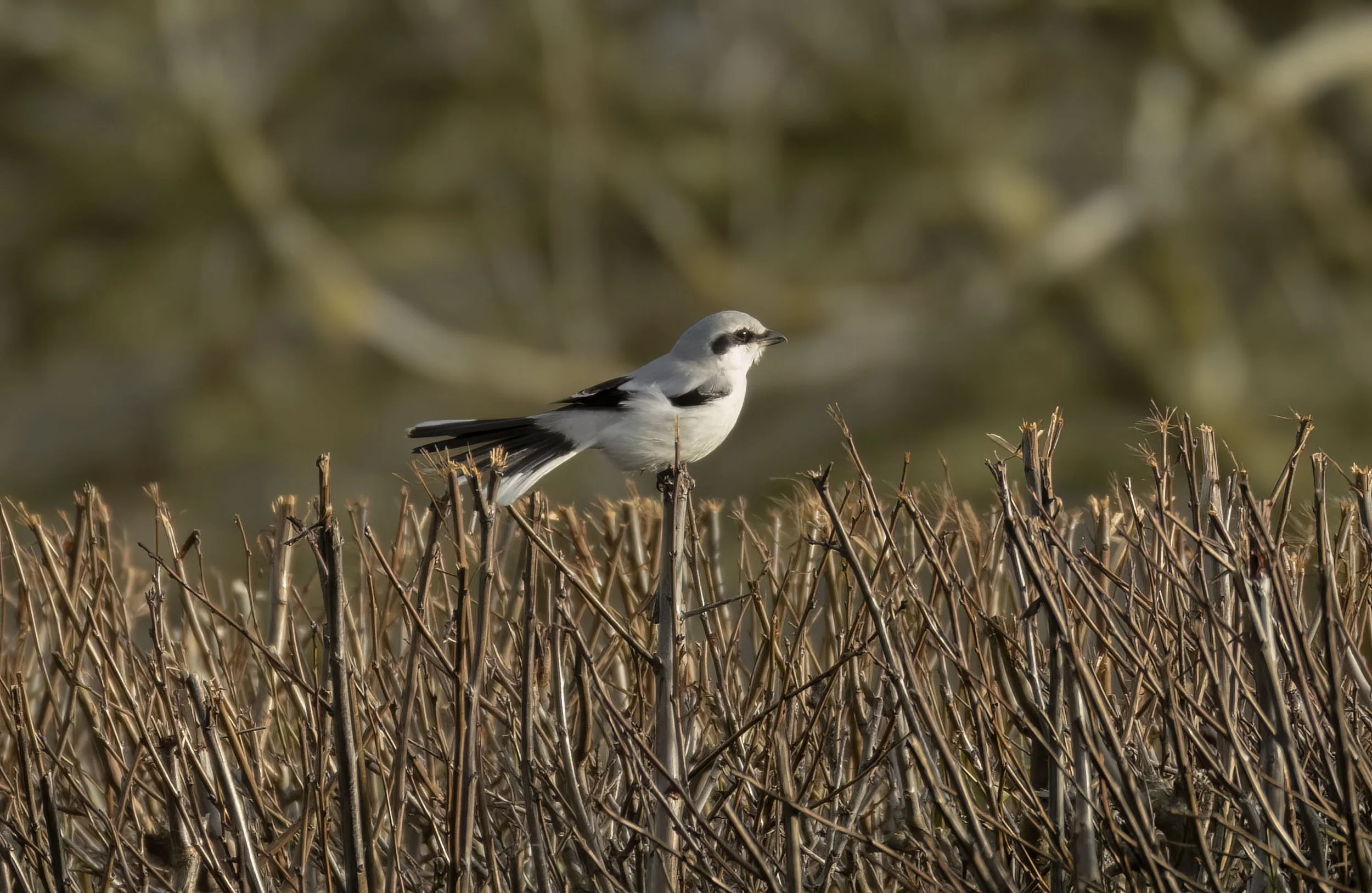
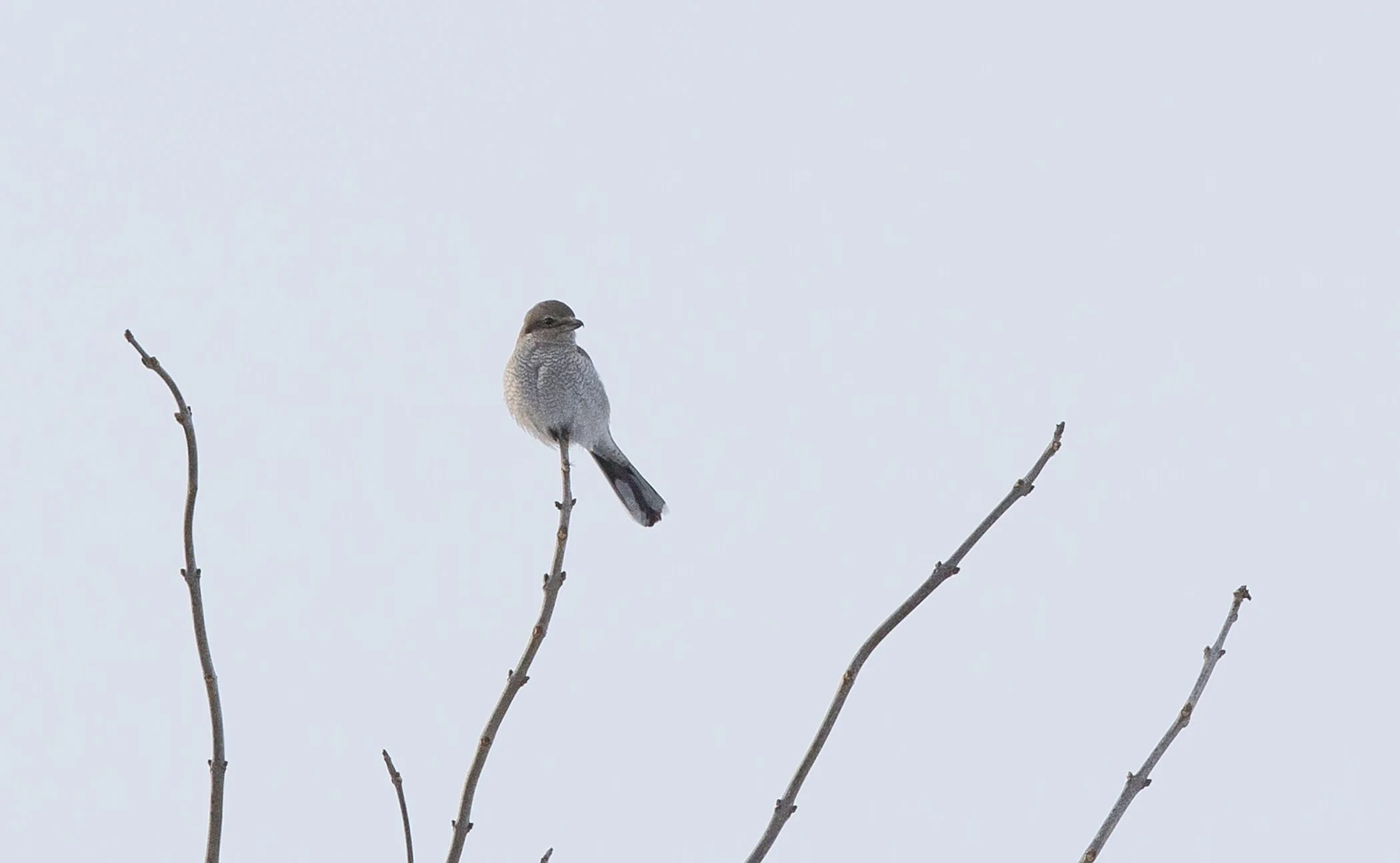
The Fillingham Great Grey Shrike January 2026 - a first winter with worn pale tips to the blackish juvenile feathers
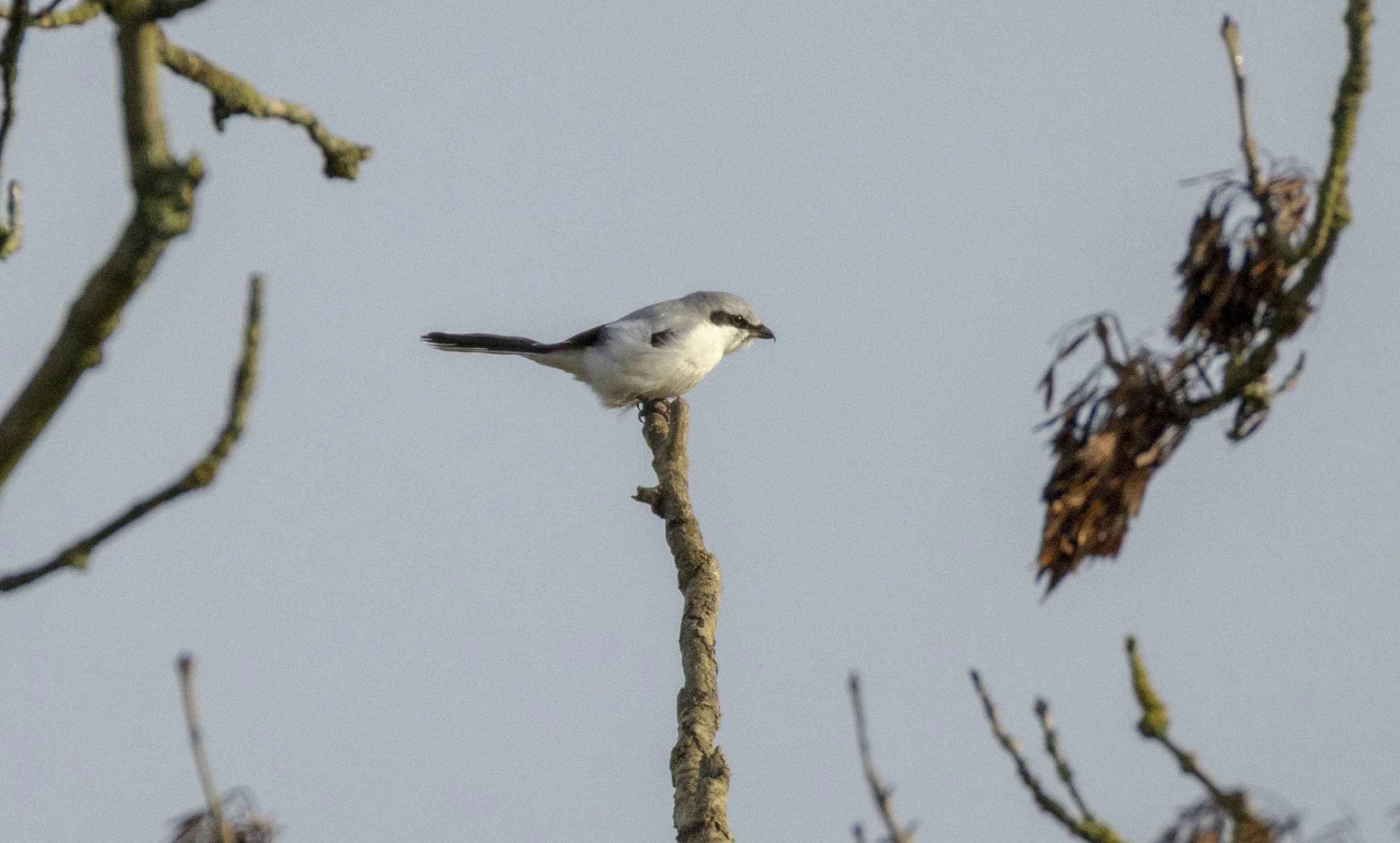
Although spending most of its hunting time in hedgerows round its favoured field the Fillingham bird did occasionally resort to the tops of tall hederow trees like this ash
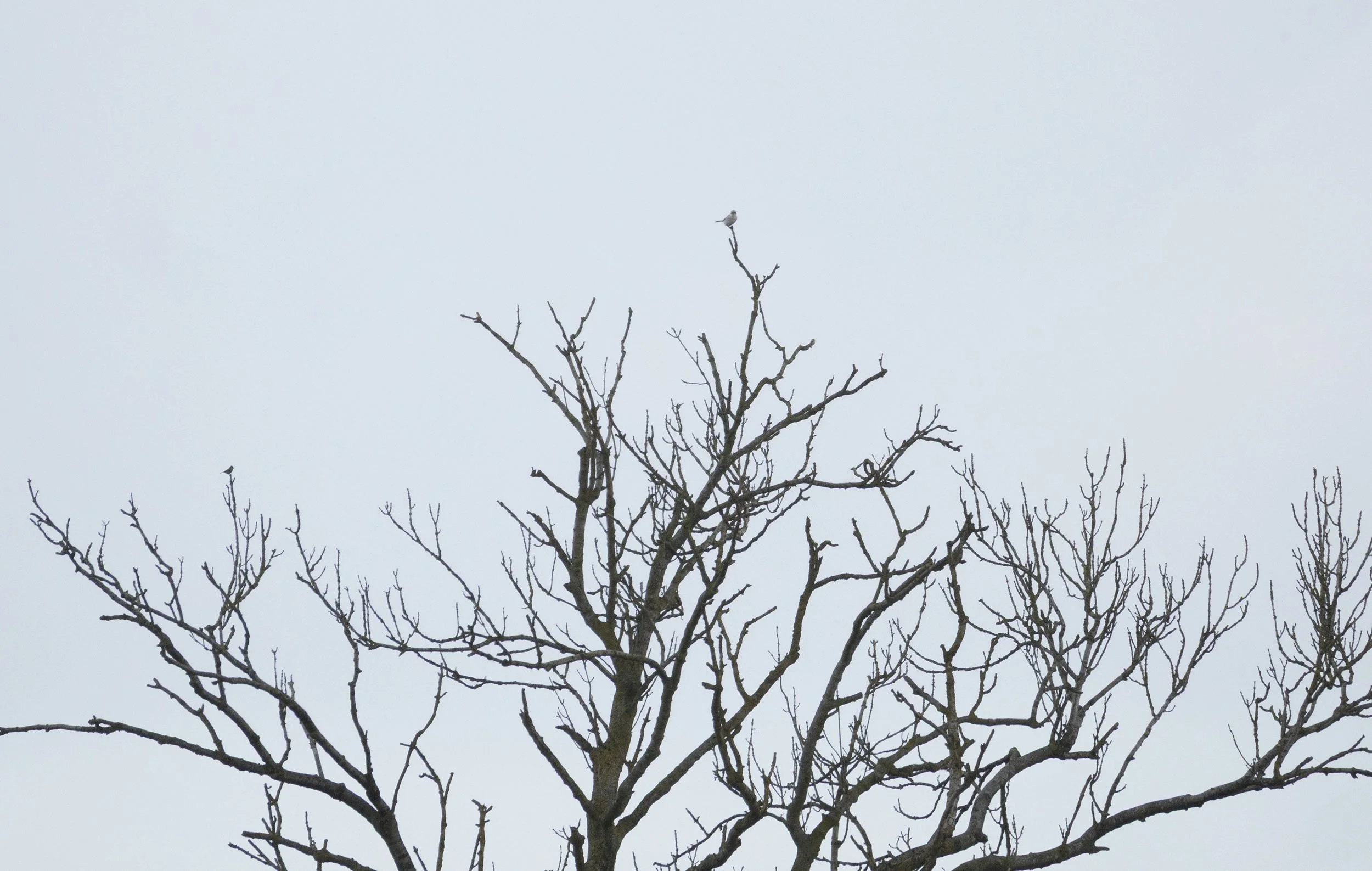
an extreme view
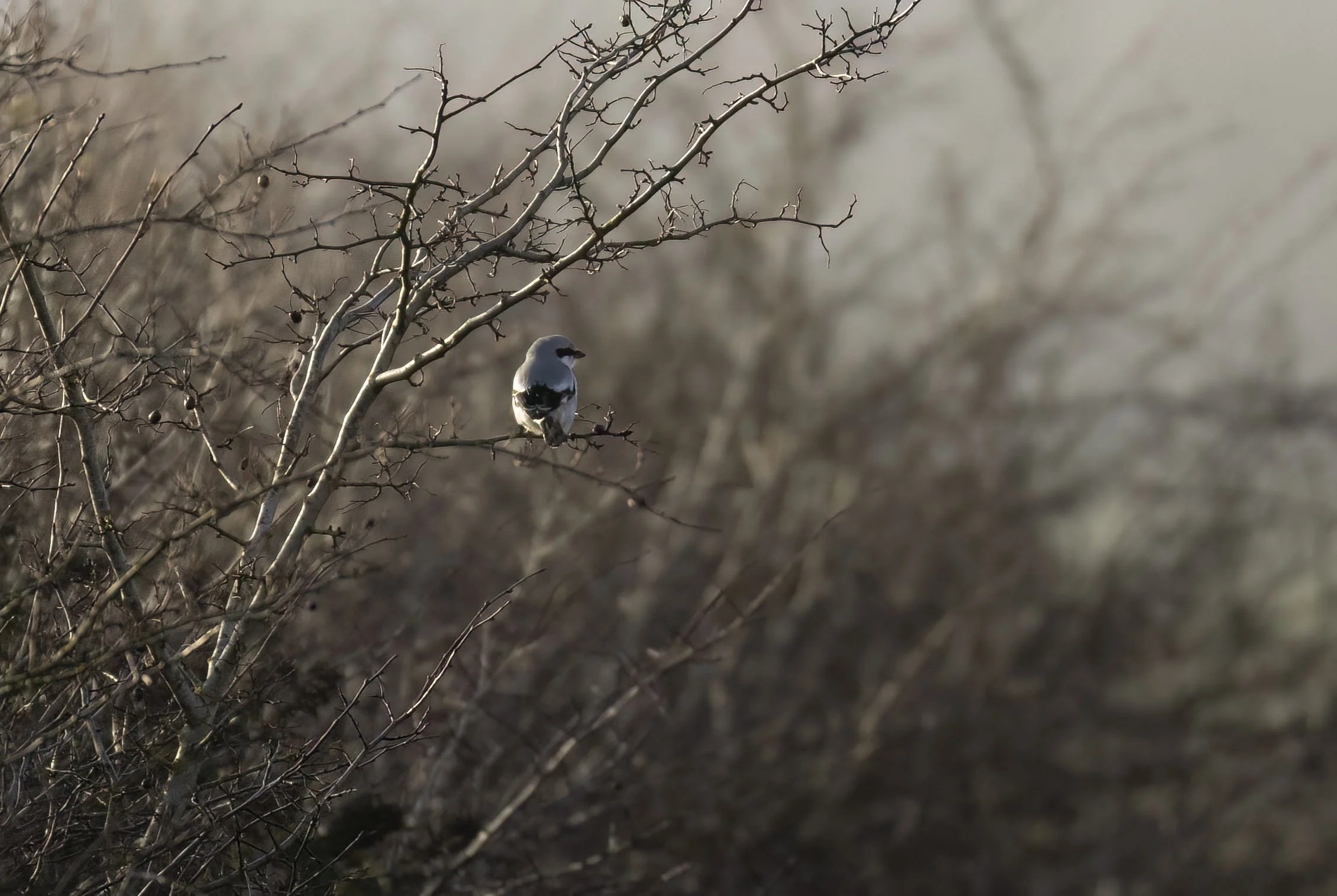
formerly a classic winter tick at some location or other now a really rare treat
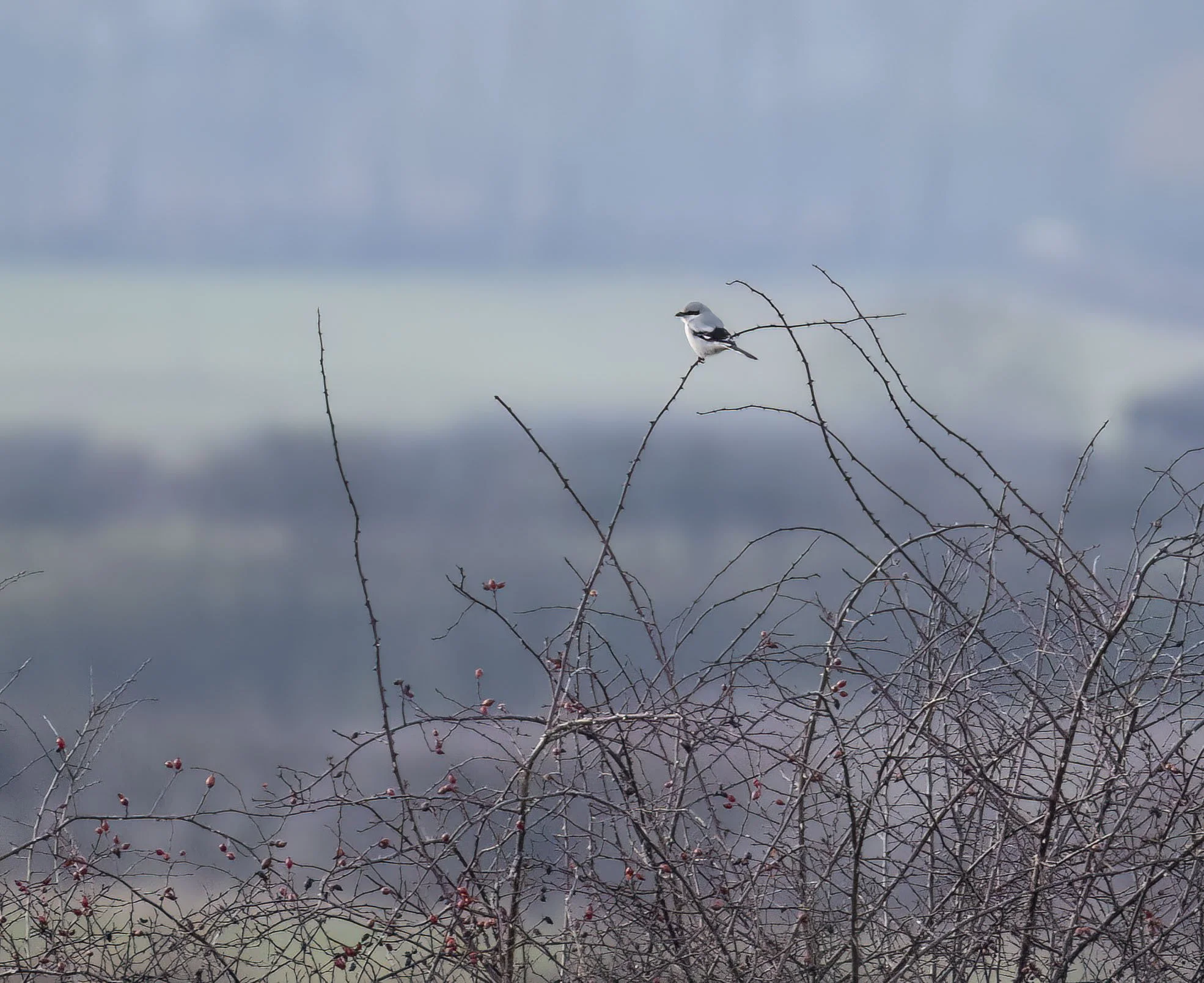
sentinel pose on wild rose stem
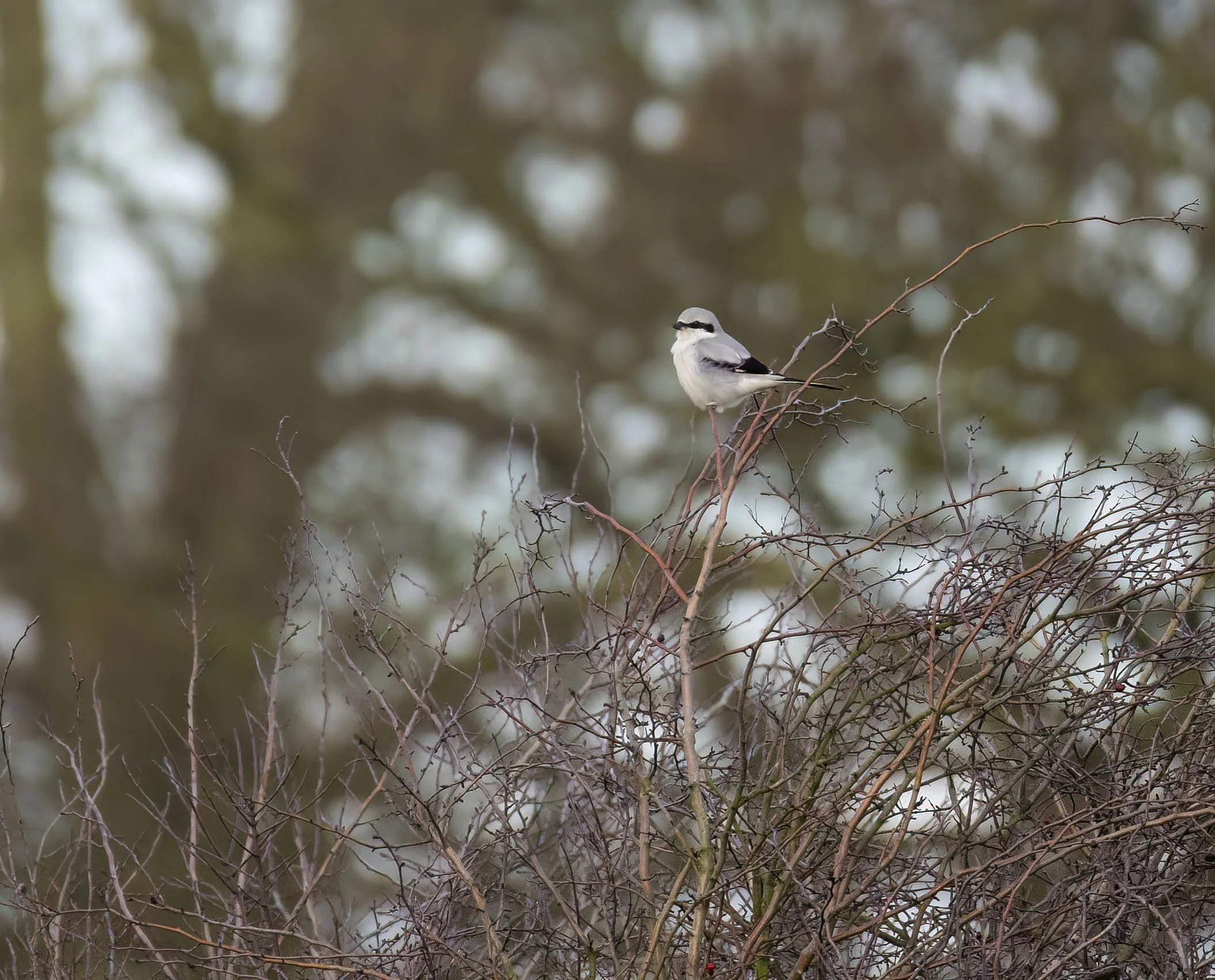
Beautiful pastel colours
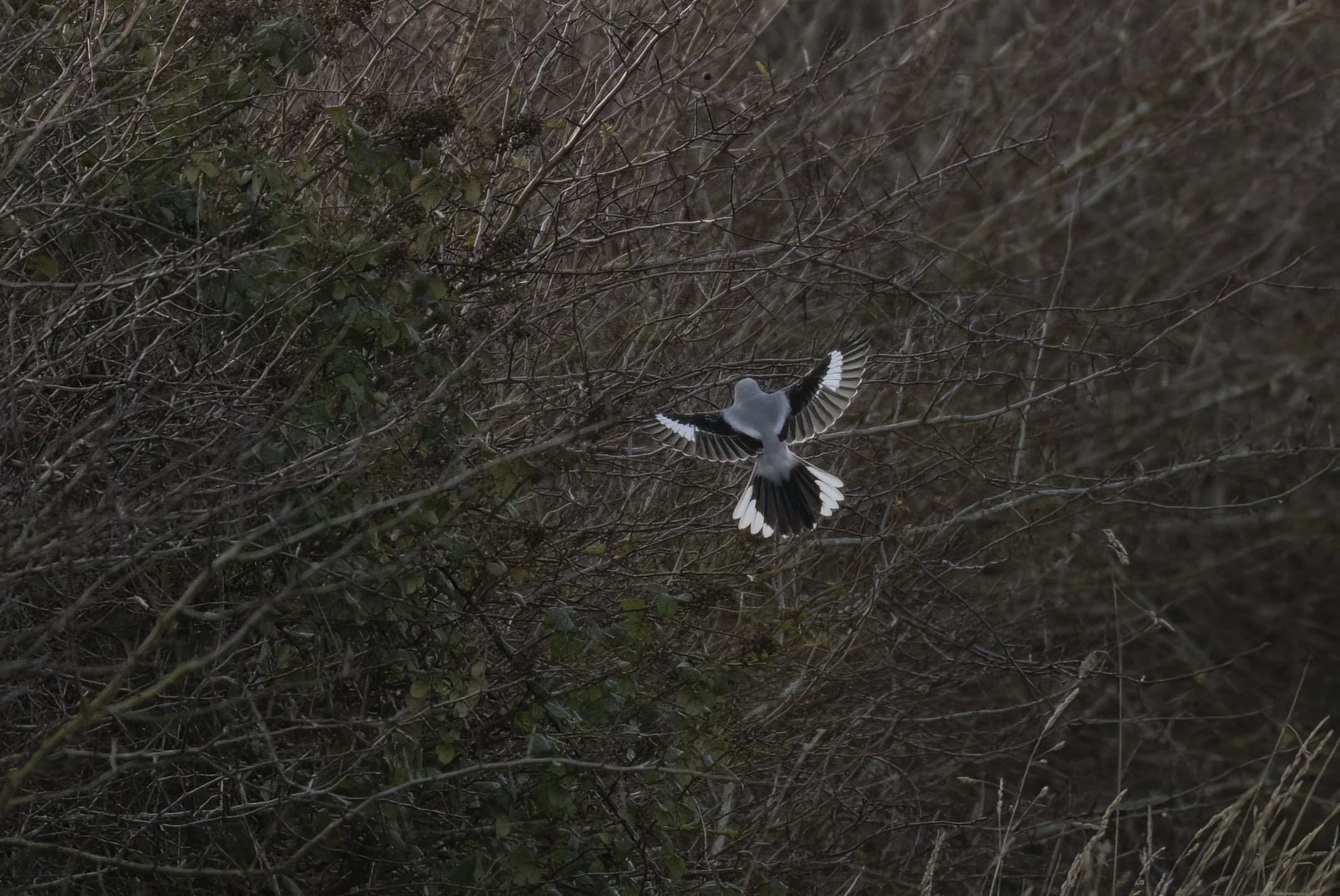
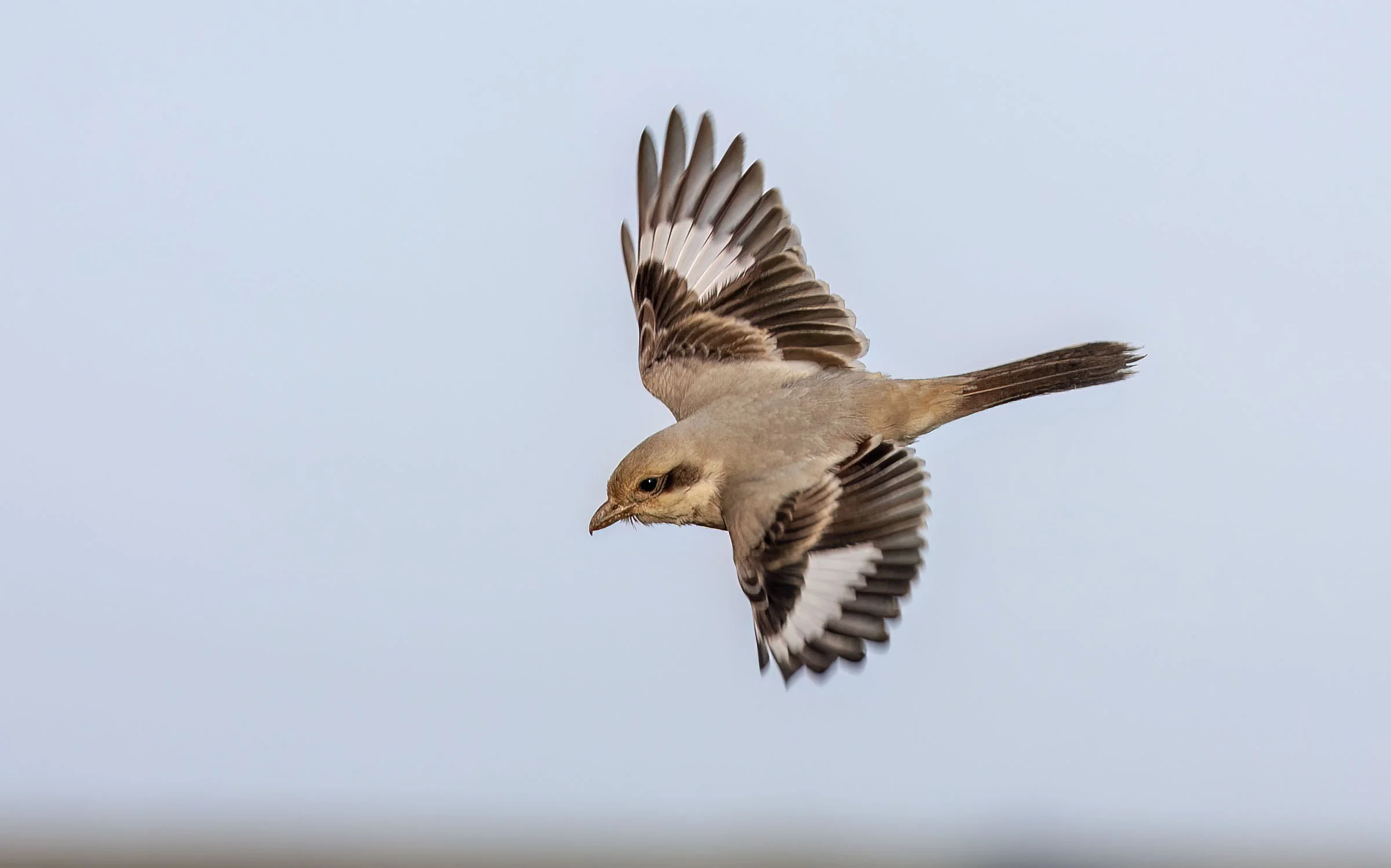
A typical Great Grey flight pattern - a sort of unmistakable bird discounting other grey shrikes - note tail pattern compared to homeyeri discussed later
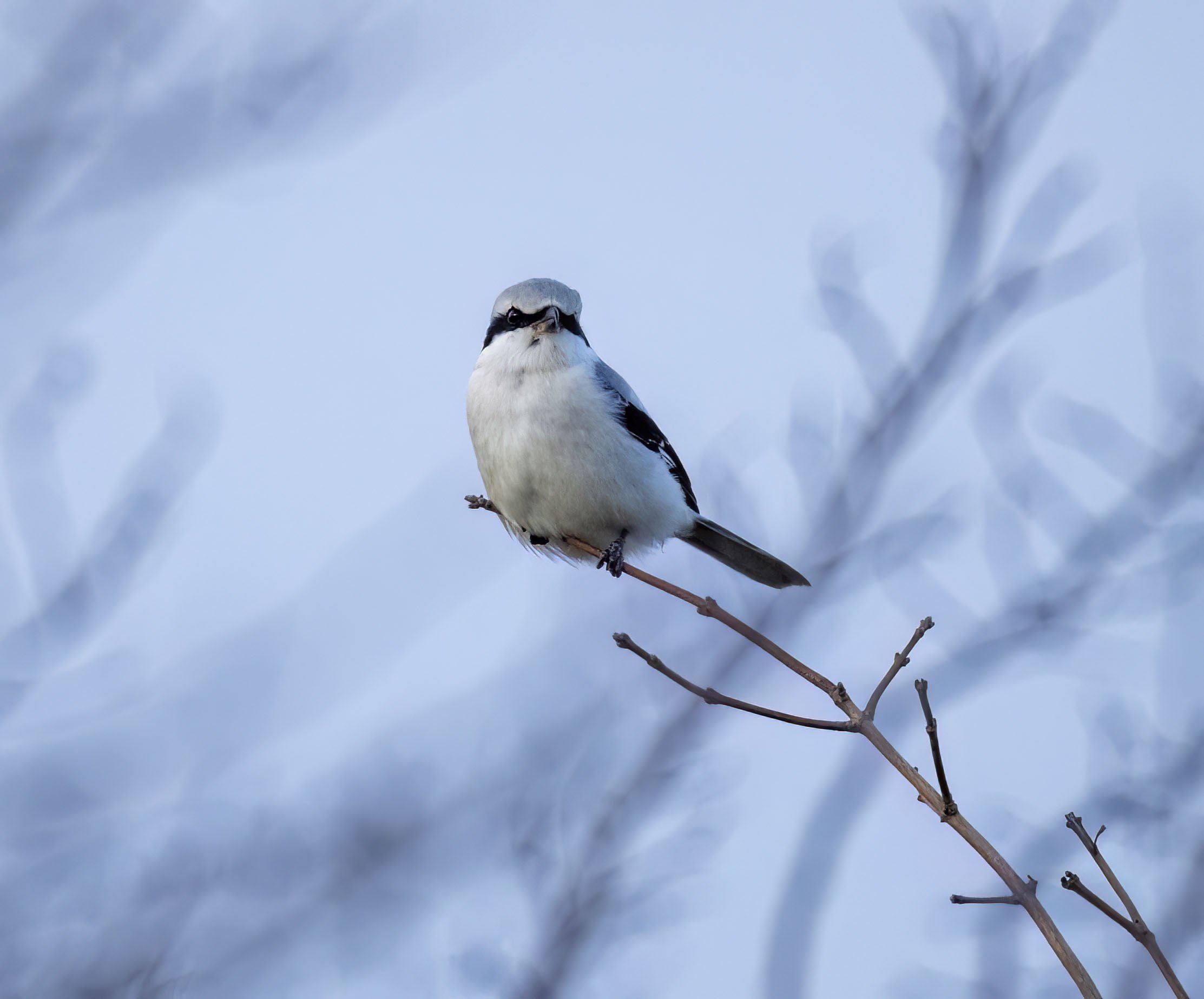
The worn pale tips to the greater coverts make this a first-winter bird while the rather solid black lores and the small pale area on the bill suggest a male according to the text in the latest tome by Nils van Duivendijk
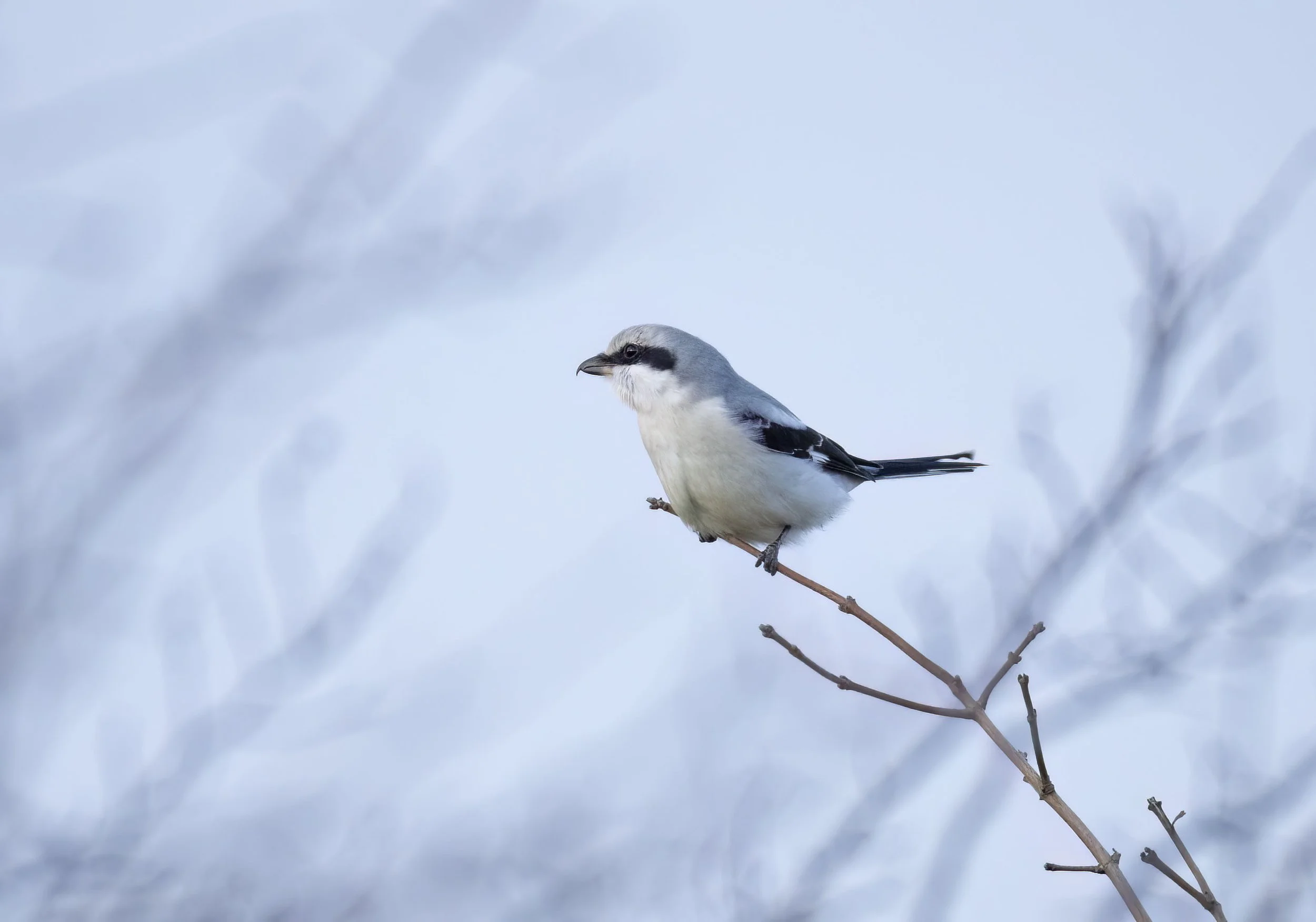
Pale tipped and fringed median coverts also a feature of juvenile plumage - the underparts of this bird are almost totally clean whitish with no obvious vermiculations
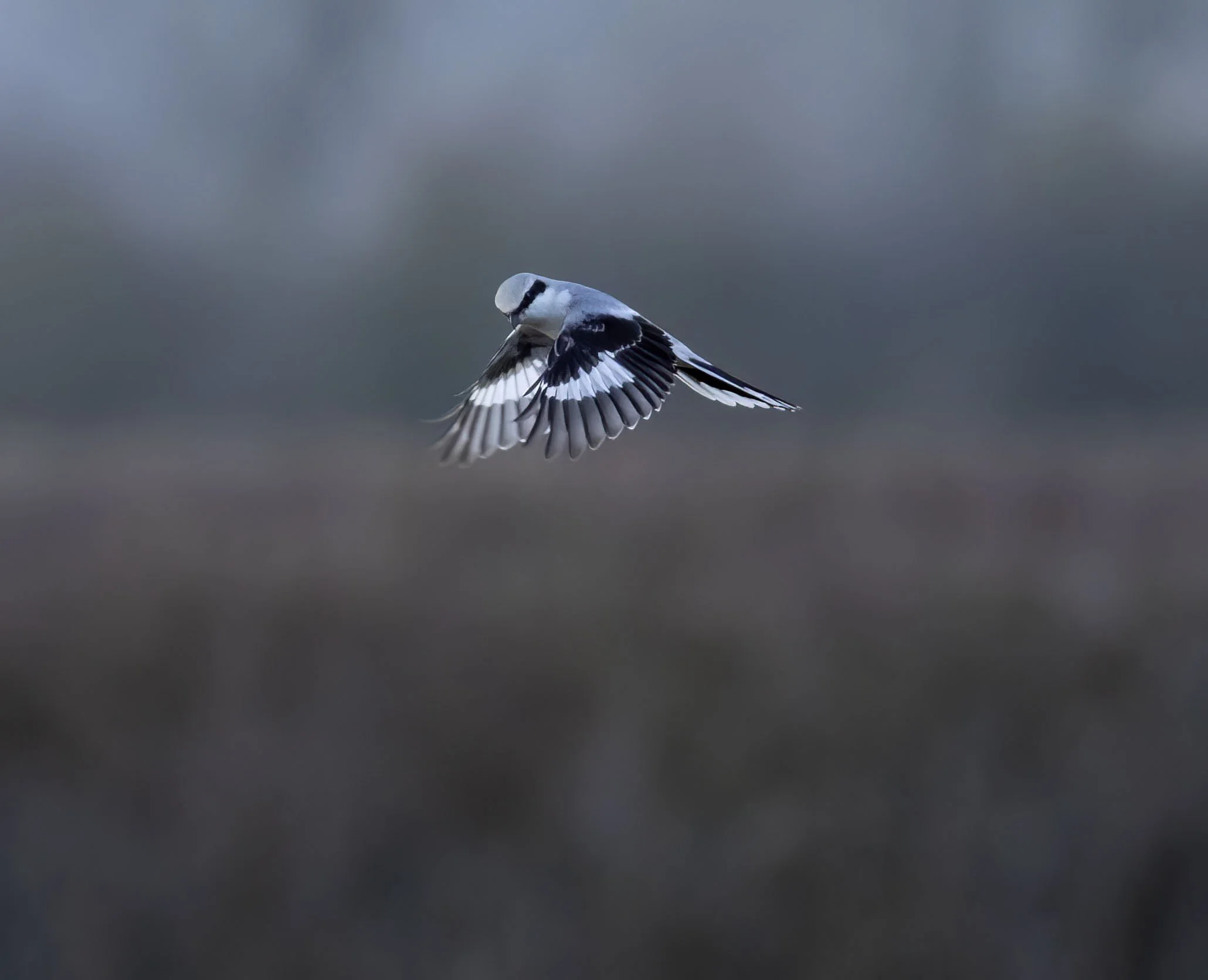
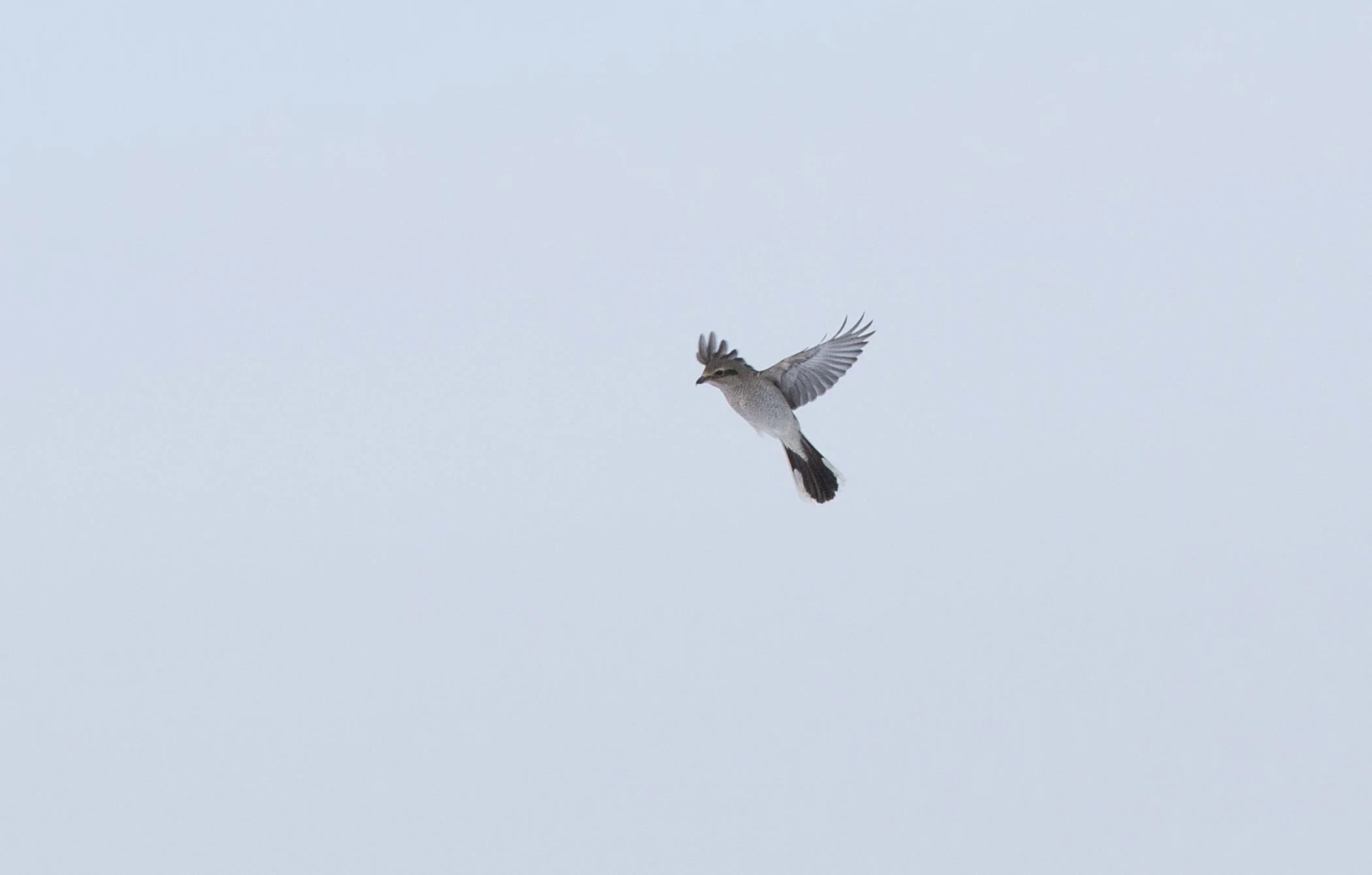
This bird does quite a lot of hovering over the rough grass field searching for food - the pale tipped greater and median coverts and pale fringed alula are obvious on this shot
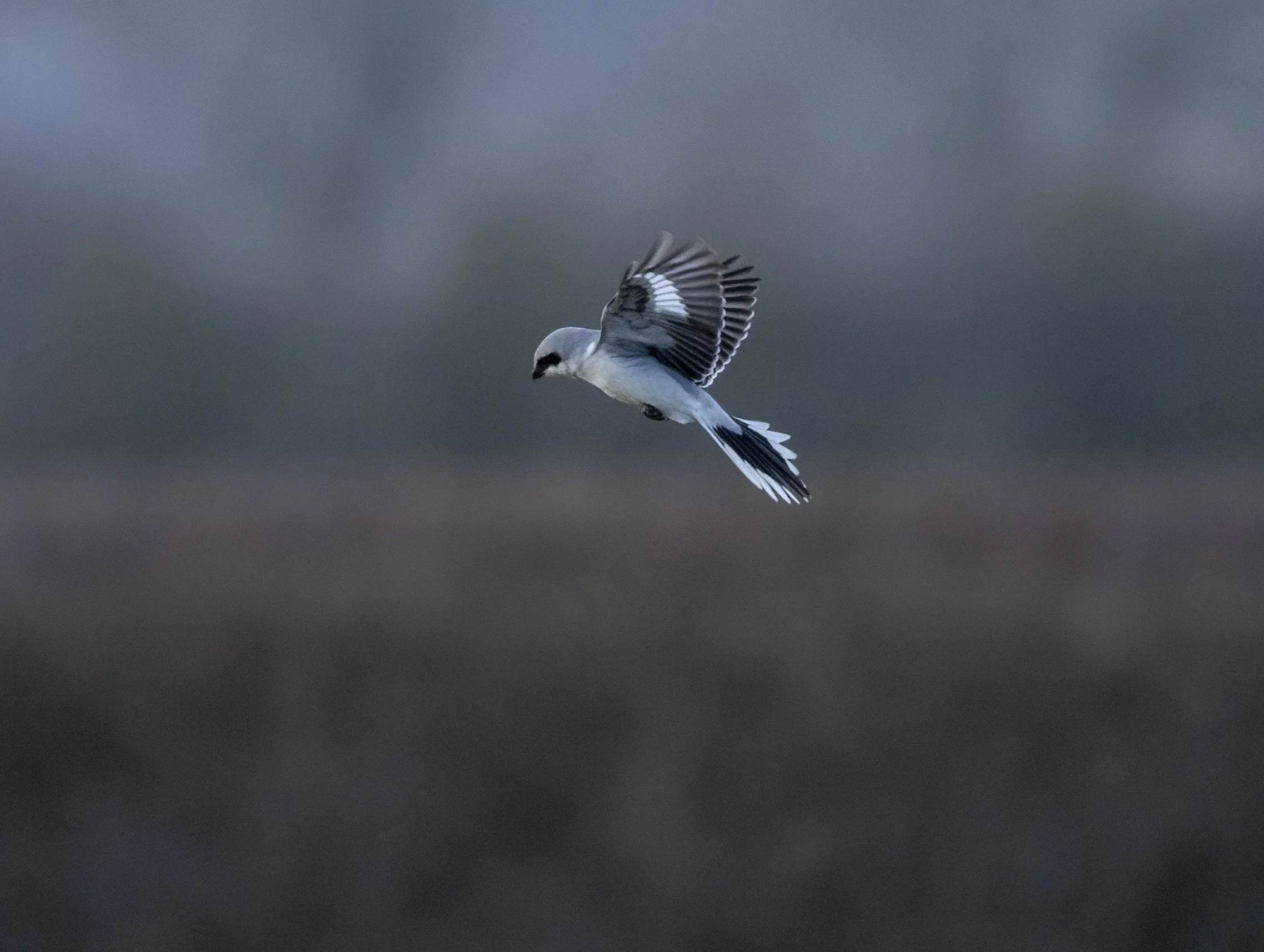
Like a mini Black-winged Kite in its behaviour - photos were taken at the end of a rather dull afternoon
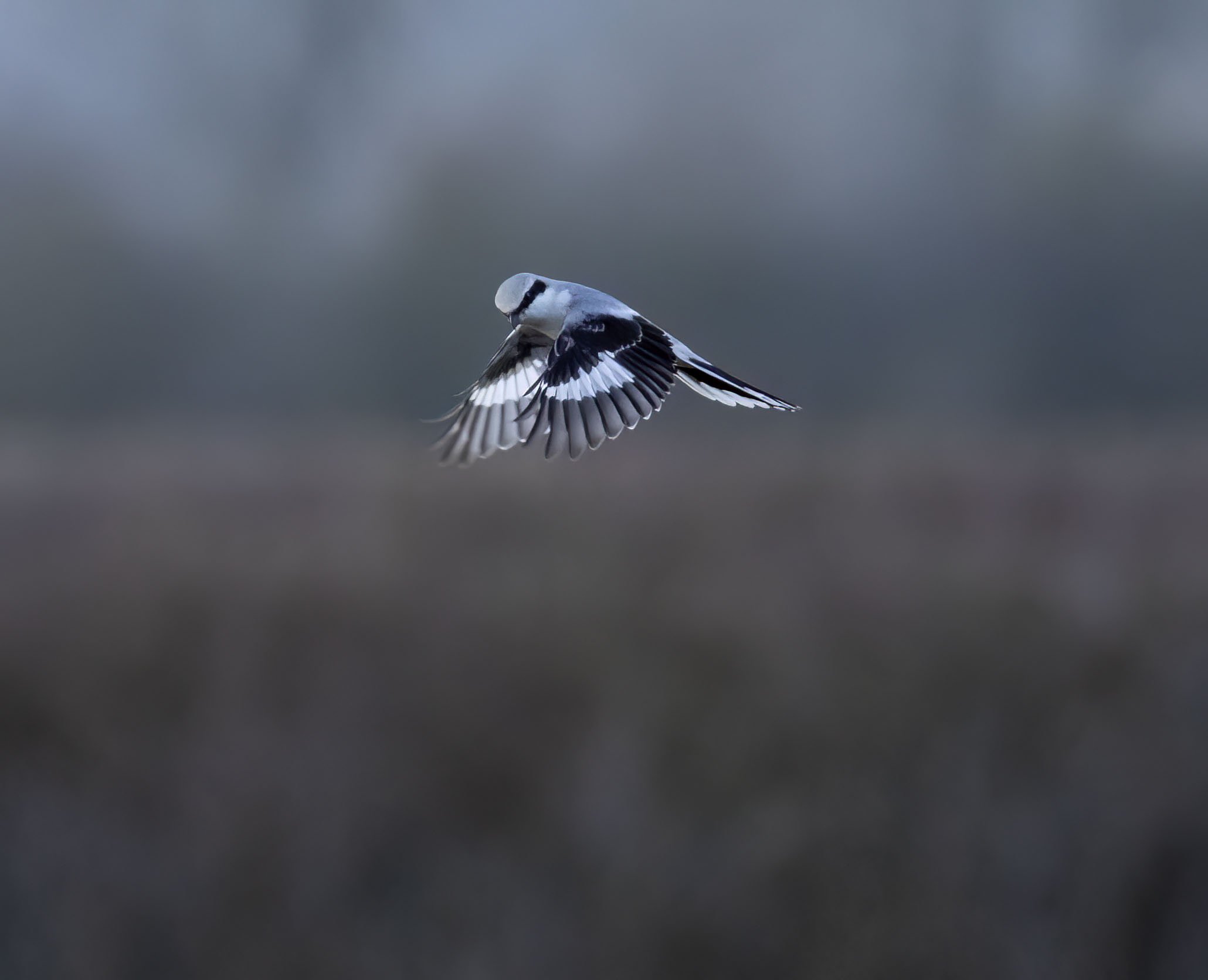
The 40 frames per second on the Canon R6II pick up different wing positions often missed at lower frame rates
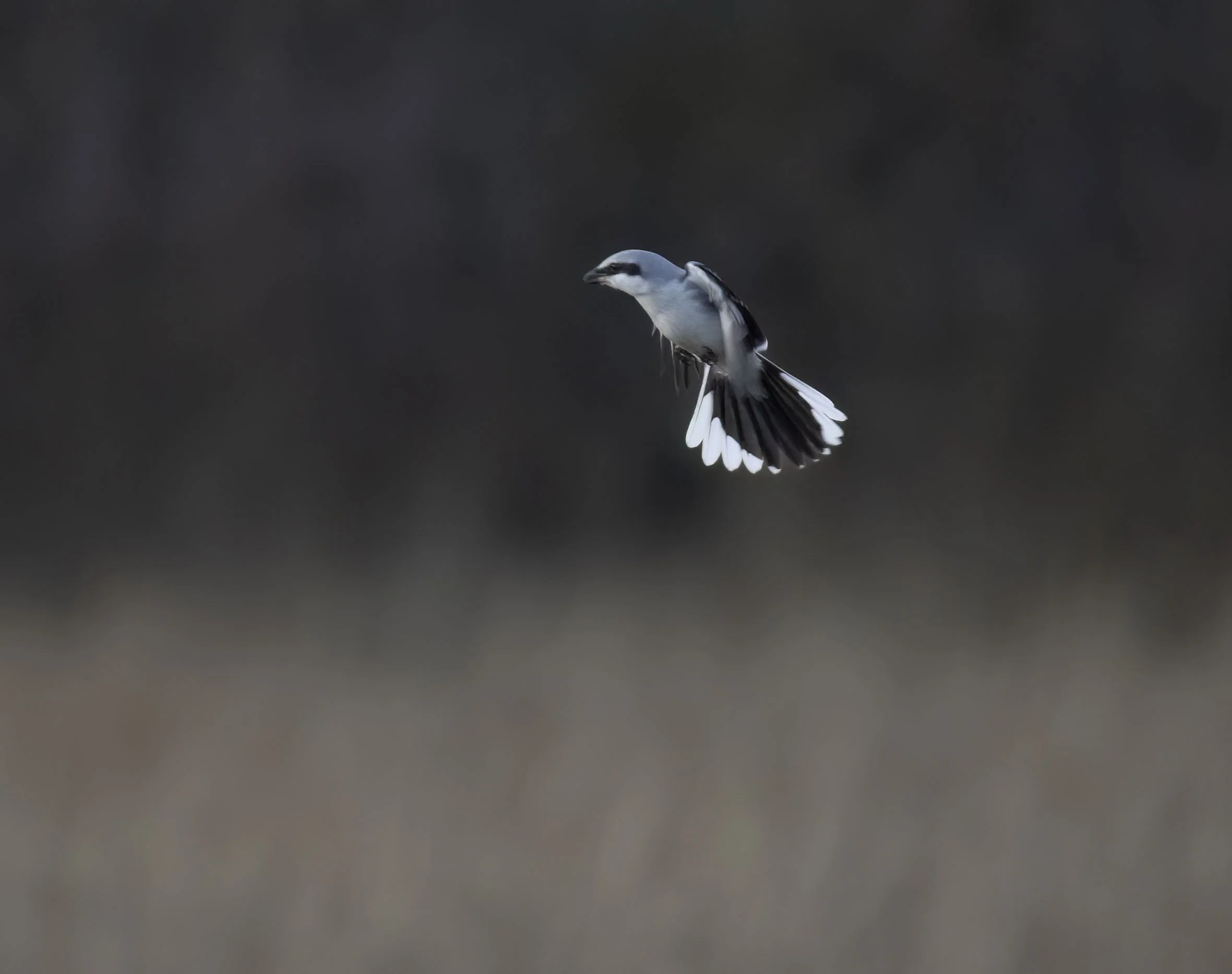
Note in the spread tail that the outermost feather t6 had black on the inner web at the base and more extensive black on the inner web of t5 compare with homeyeri where these feathers are all white
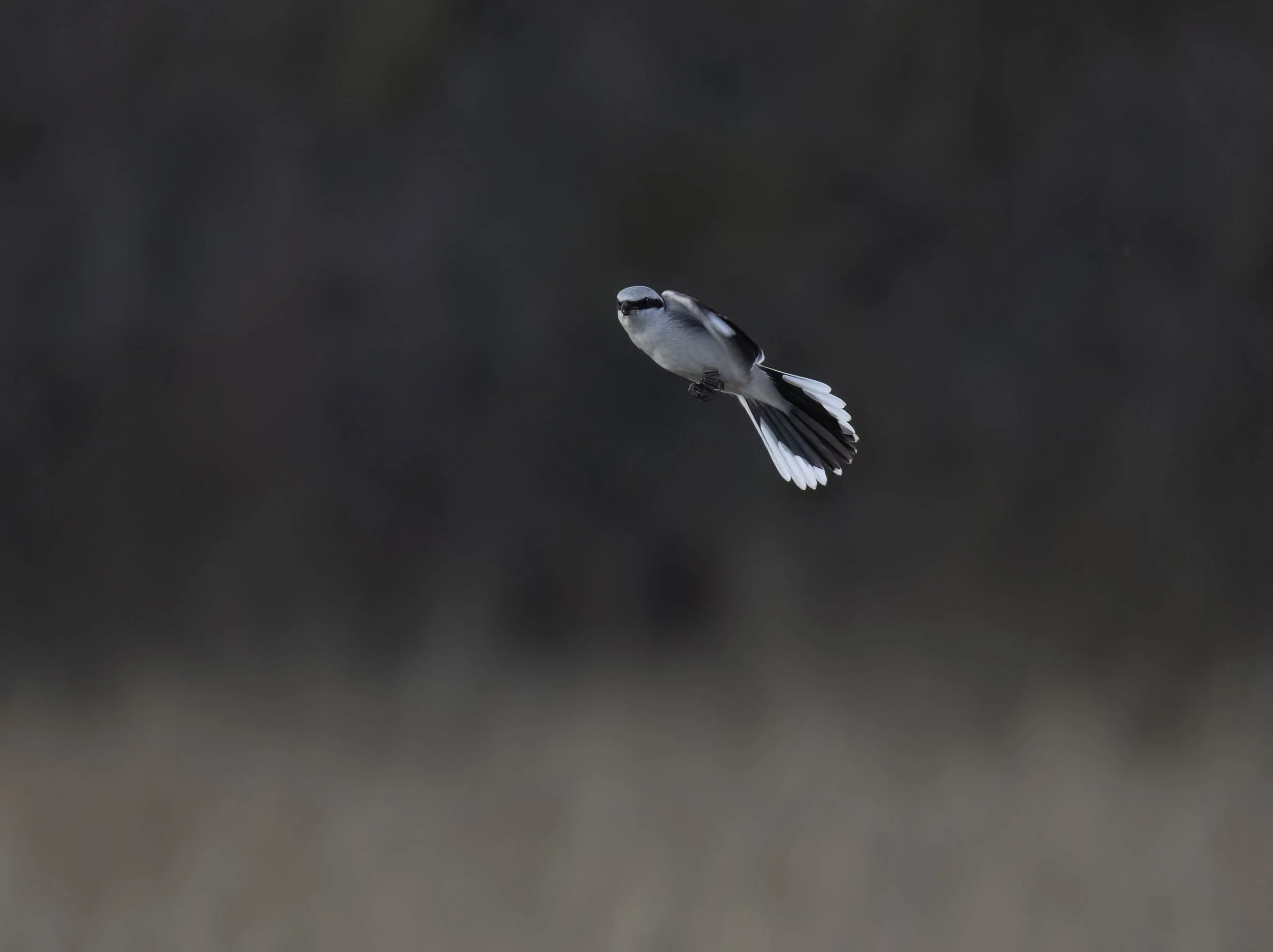
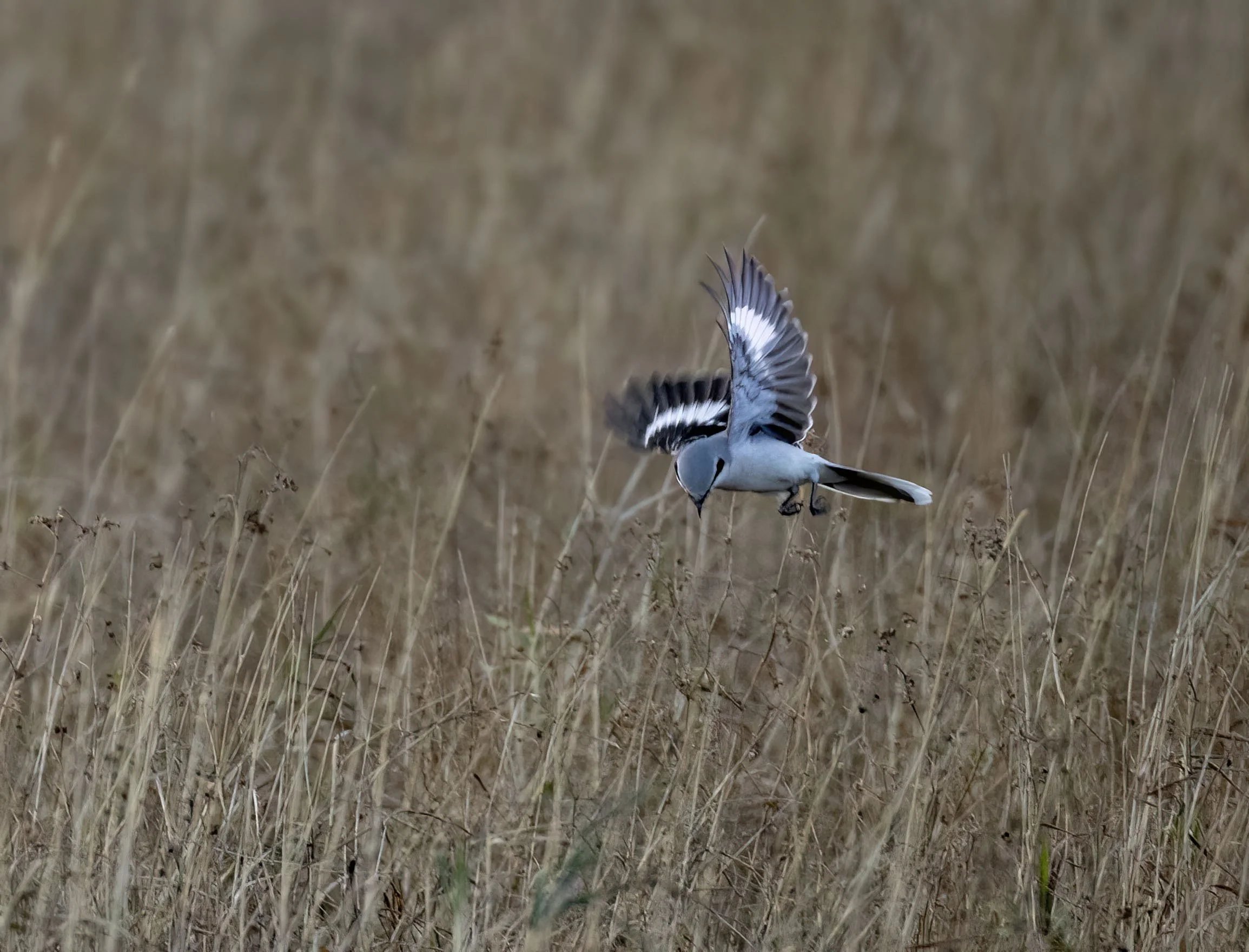
Dropping down into the long grass - it often came up with nothing but whether it was eating small prey items on the ground was not clear
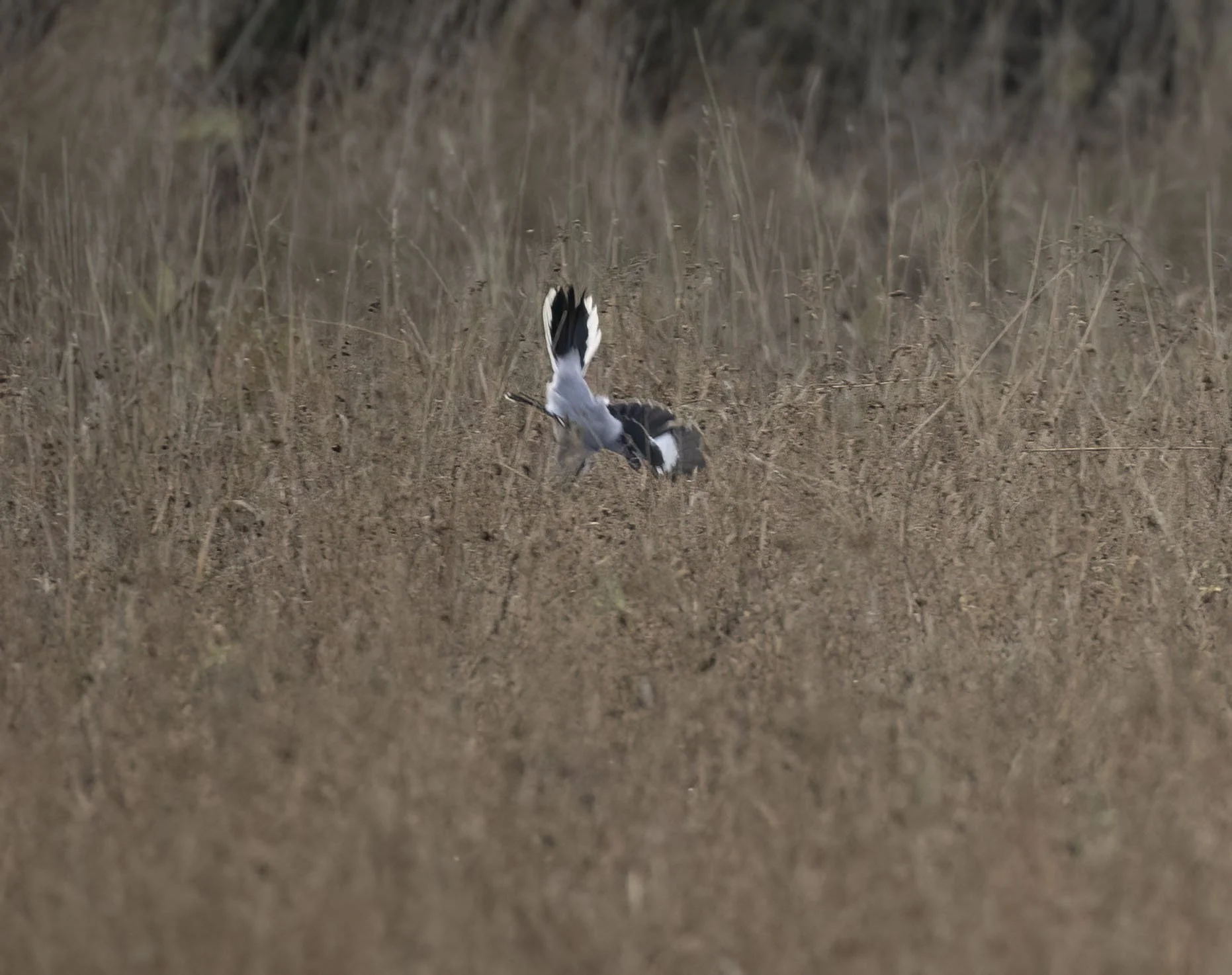
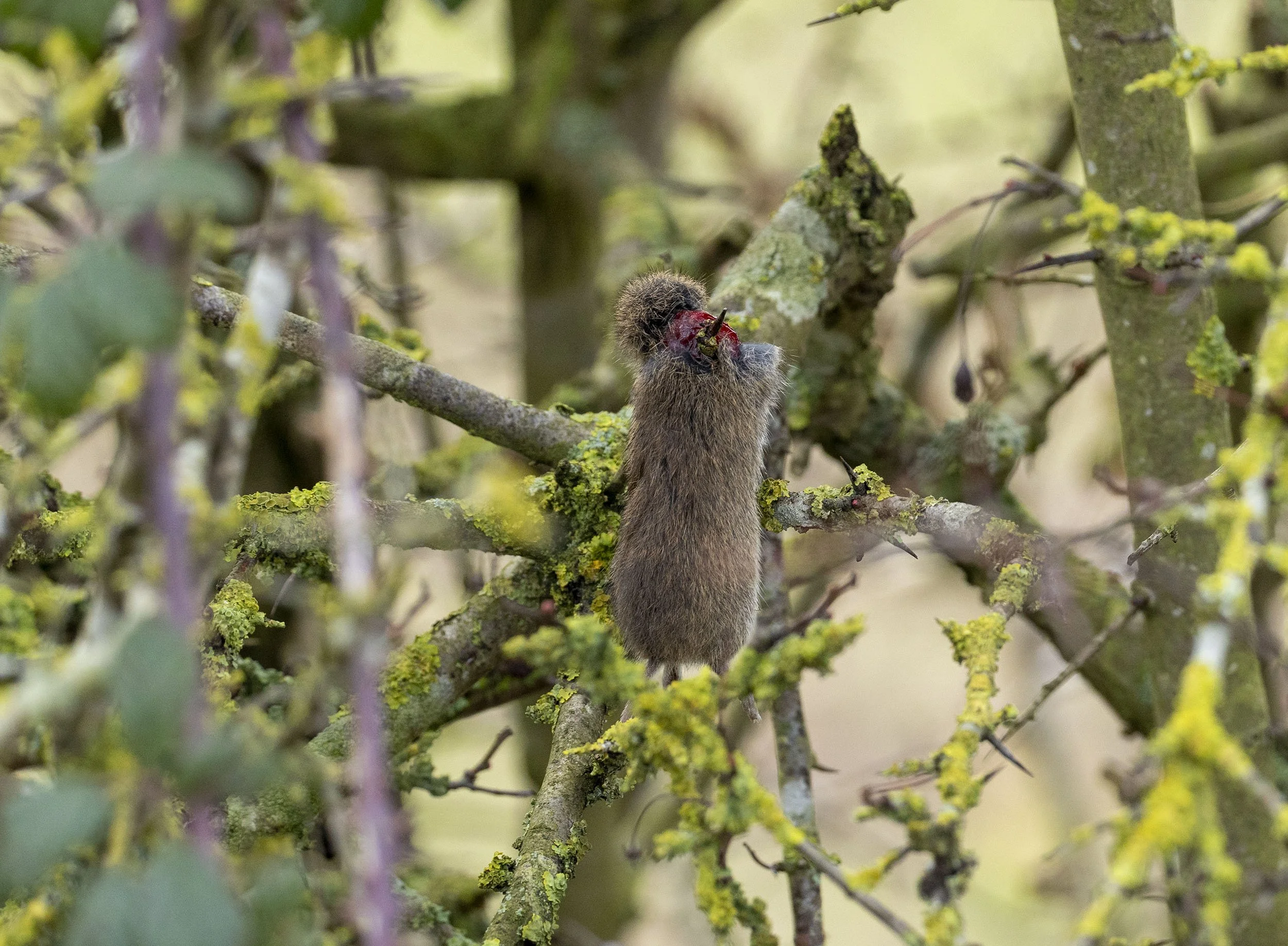
While watching it hunting on the 14th it dropped into the field and came up with a Short-tailed Field Vole in its bill which it passed to its feet in flight before diving into a part of the short but thicker thorn hedgerow; it then impaled the vole on a thorn and proceeded to pull off the vole’s head which it dropped into the bush dropping down top pick up bits that it then ate but leaving the bulk of the vole on the thorn. I took note of the location from about 250m away and waited until the bird left the spot and resumed hunting at the other end of the field. It stayed there over 800m away for over 20 minutes when I quickly went to the larder and located the vole image above — it caught somthing else later in the afternoon that it took to another larder at the other end of the field.
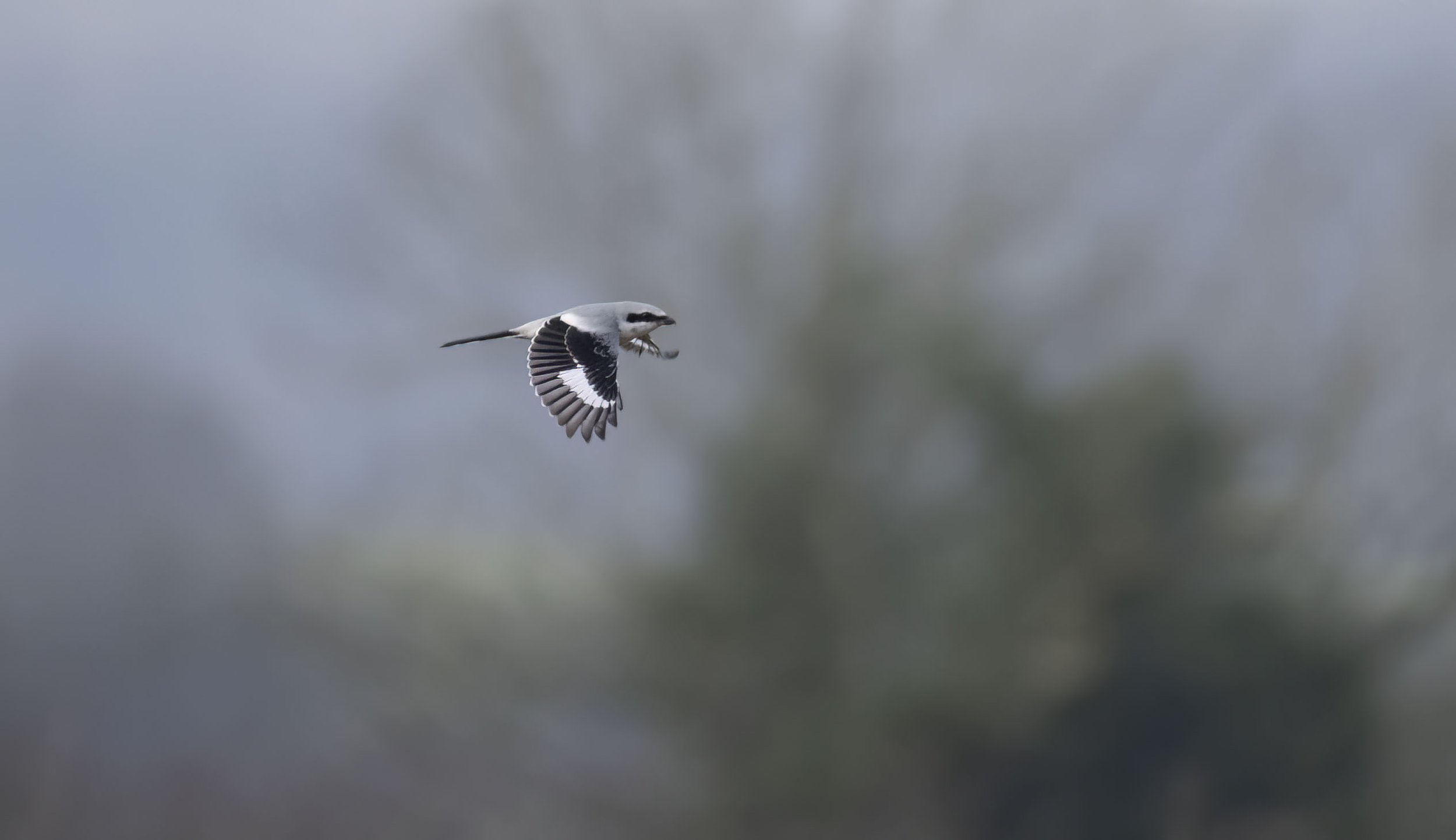
Most Great Greys have fairly extensive territories in winter and move between favoured araes that can be a few 100m apart or up to 5kms away - this bird seems fairly settled in a small area where there is presumably sufficient food
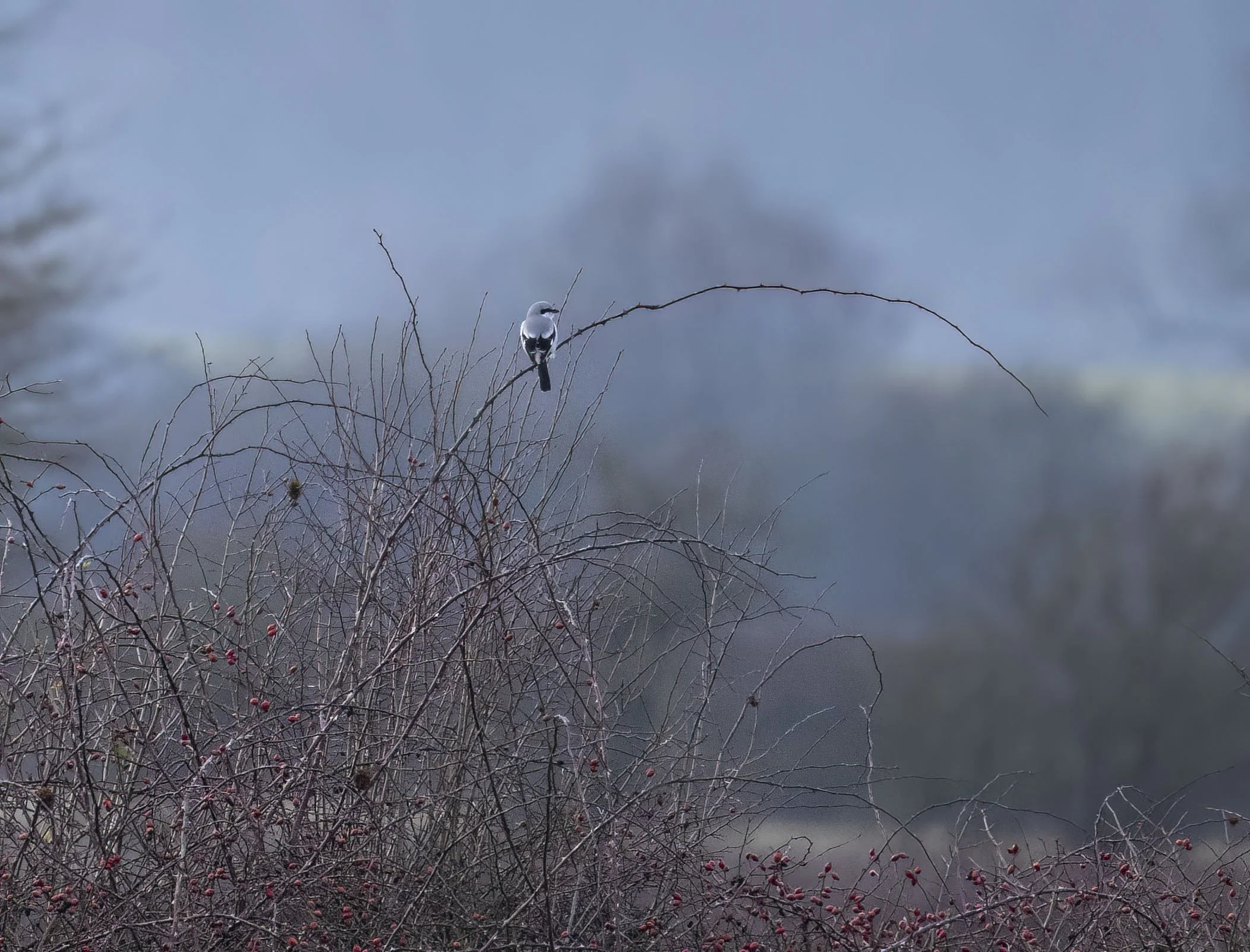
A winter scene that was formerly much more common in the UK
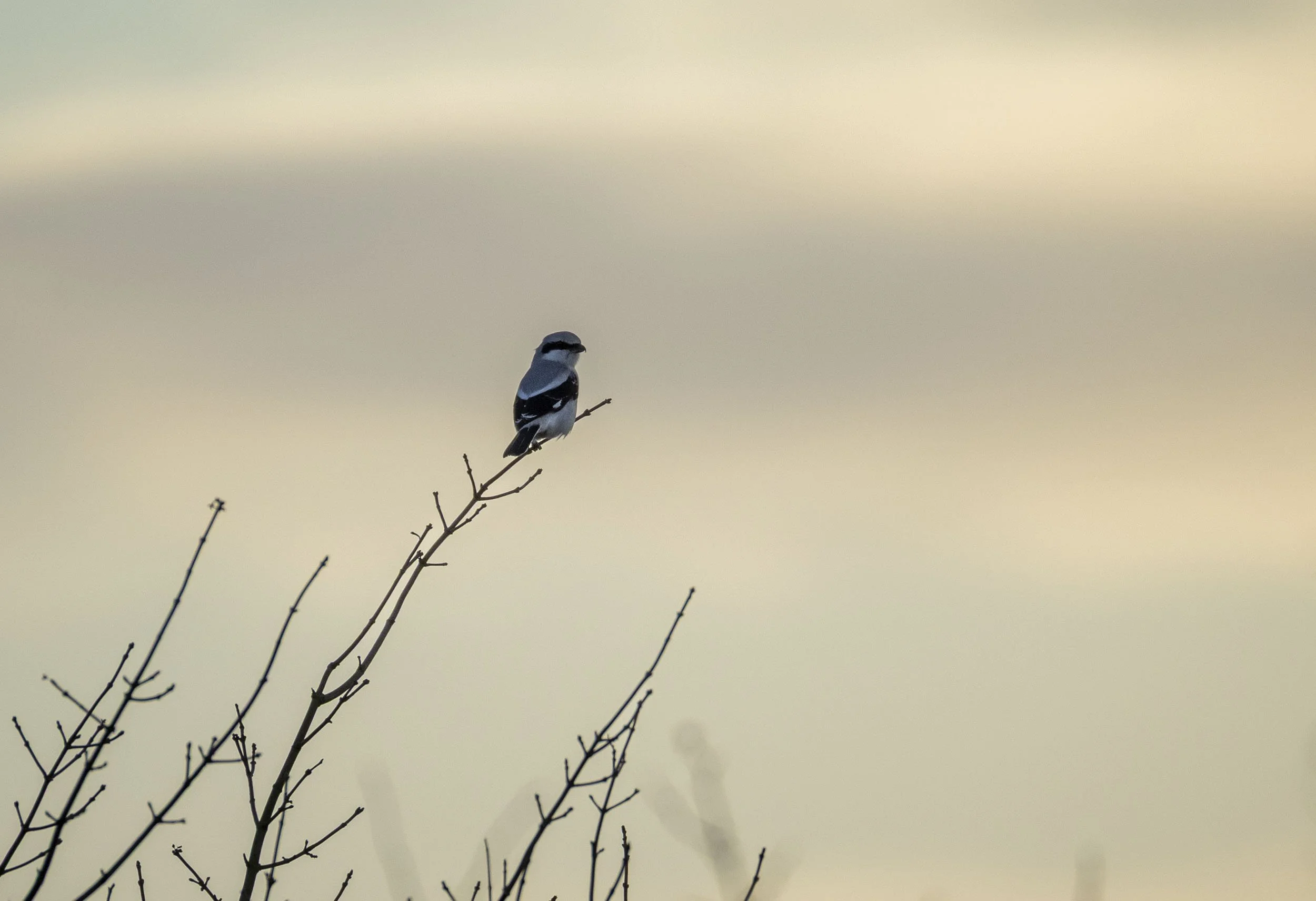
Late afternoon light
But back to the early birds: April 2nd 1970 – the usual walk from Goxhill Haven towards Dawson City and Klondike wind north-west force five total of 41 species seen and a mystery bird; Flew from a hawthorn bush out over Klondike pit and landed in a hawthorn hedge. Size estimated to be that of Mistle Thrush with a grey back and darker wings with a white wing stripe and some white obvious in the tail; flight low and undulating. Posture thrush like and bird very wary – possible Great Grey Shrike was what I wrote in my log; the possible was certainly not applied to the next encounter only about 300m away atop the hawthorn hedge that backed the sea embankment nearer Goxhill Haven on October 31st 1970. My notes stated: Excellent views obtained and all distinguishing features clearly visible. Apart from a detailed description I noted: sat on tops of bushes and on wild rose stems on the bank top and ate a shrew by hooking it on rose spikes. Flew across shingle and landed on post on the mudflats then back to its favourite corner near Haywood’s farm. Flew with low undulating flight and upward glide to reach perches; seen to hover over perches in wind. It was in the same area on November 7th when a search was made but no kills located and again on November 22nd. On December 5th it was 1500m away near Parker’s Plantation flying towards East Halton Skitter with one kill found being a Blackbird. The following day I saw my first ever Greylag Goose! This species was actually a rare bird on the Humber in those days. I continued searching for the shrike on my weekend visits and on December 20th it was again in the bank side hedgerow towards East Halton Skitter where the Short-eared Owl roost revealed five birds. The next sighting of the shrike on January 4th 1971 was of it flying over the grues, grazing saltmarsh, again near Parker’s plantation where it made a dash after a Reed Bunting. On January 16th what proved to be the last sighting of the winter saw the bird almost 2kms away to the west flying towards Syke’s Lane. This was 1970 and Goxhill Marsh the extremity of Lincolnshire! Apart from Derek Robinson who saw it on November 1st I don’t think anyone else saw the bird.
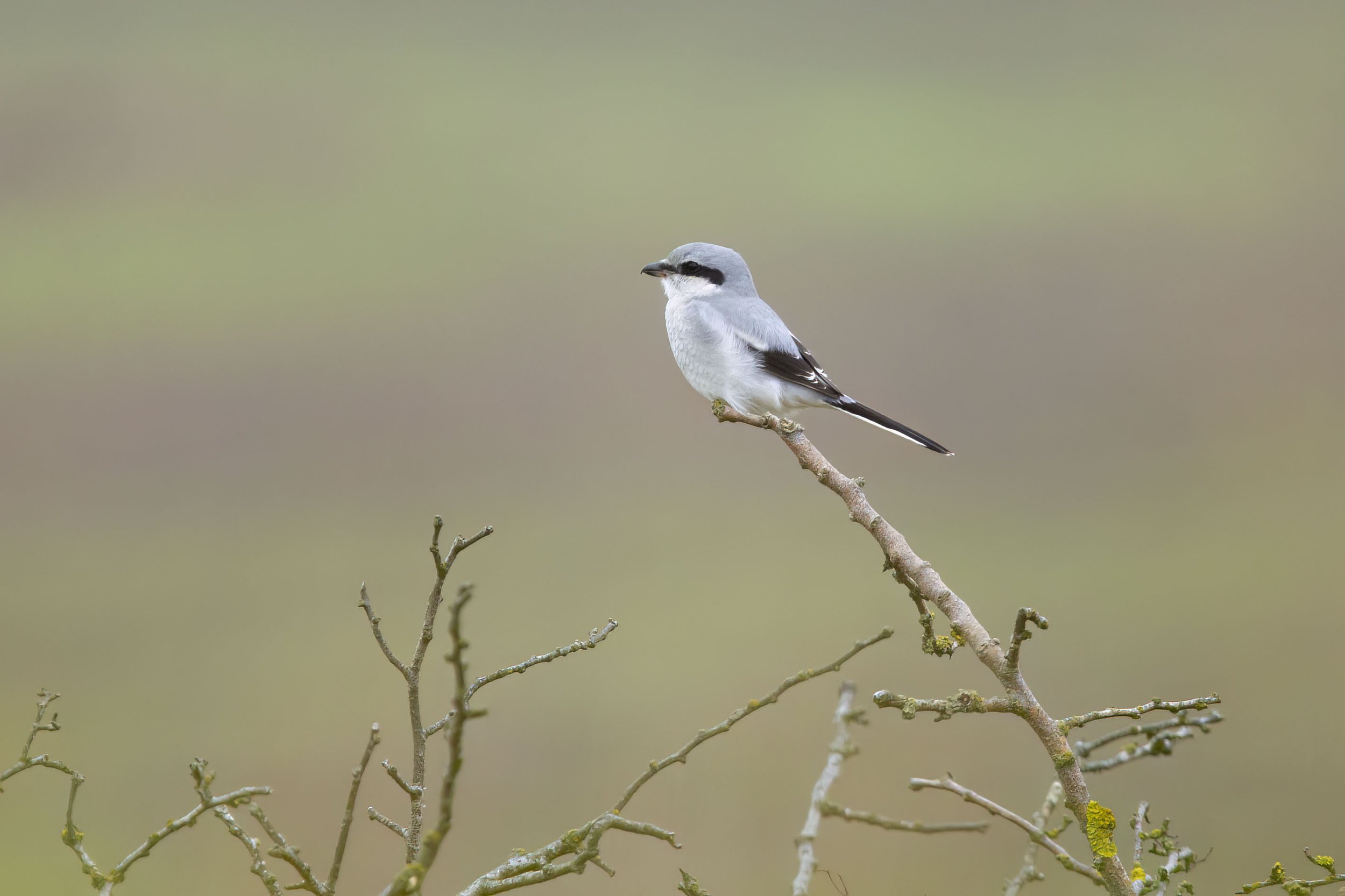
First winter Great Grey Shrike Pyes Hall Lincs October 2010 one of three in the area that day about the last autumn with a decent coastal arrival
Most of my sightings have been either autumn coastal birds or overwintering individuals with a few spring migrants. The best winter by far was 1974 – 75 when the UEA student union mini-bus was touring East Anglia’s finest shrike and Rough-legged Buzzard habitats. My personal tally for that winter was a minimum of 11 Great Grey Shrikes at the usual haunts of Minsmere, Walberswick, Horsey-Waxham and Cley but included off piste birds at East Wretham and Santon Downham in the Brecks, Salthouse Heath and Hardley Flood a place we went to for who knows what reason?
Great Grey Shrikes like tall hedgerows with scattered trees. They like to perch up high in exposed positions which makes them fairly easy to see. The species has a place in my record books for the most individuals of a scarce migrant seen from? Well from a moving train albeit slow moving trains. The first of the trio was west of Hull around North Ferriby on April 10th 1971 followed by one near Cheltenham Spa on April 16th 1973 en route to Bristol and finally one just outside Cromer on April 6th 1974 en route to Sheringham and the long walk to Cley. So why would Great Grey Shrikes have a predilection for being seen from trains? Well in those days before leaves apparently became slippery and tall thorn hedgerows formed a natural barrier to snow drifts the hedges were allowed to grow along the sides of railway tracks, particularly rural ones and these attracted flocks of birds and made a home for small mammals all of which were attractive to hungry shrikes. In more recent times of course most of the high hedges have been removed as trains cannot cope with a bit of slime on the rails. Seeing Great Greys along roadsides has been less productive for me but the bird that wintered by the M180 near East Butterwick in early 2014 must have been seen by many 100’s of drivers but I guess none of them actually registered its presence.
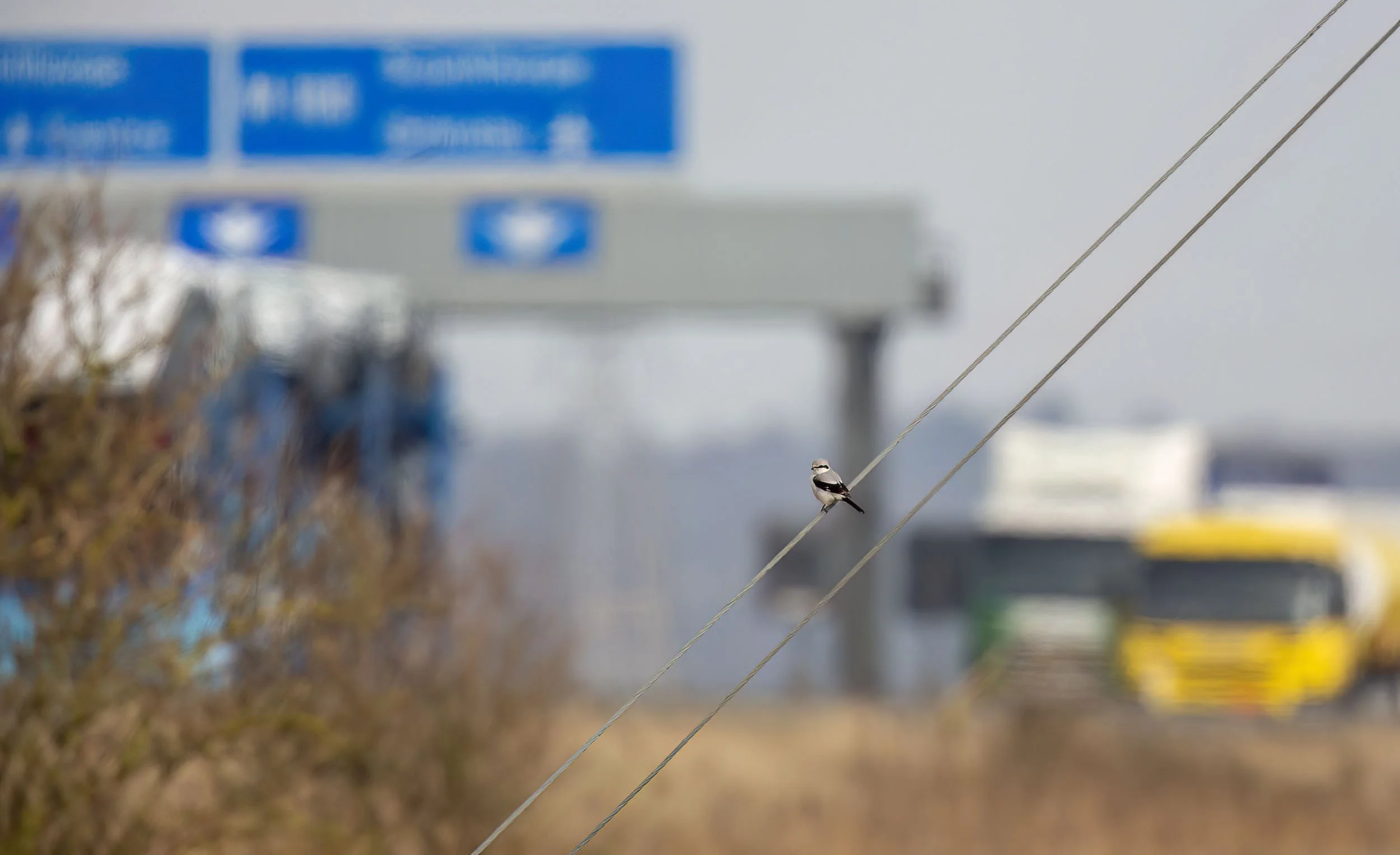
Feeding alongside the M180 near East Butterwick this bird was visible to 1000’s of people during its stay but I guess none registered its presence
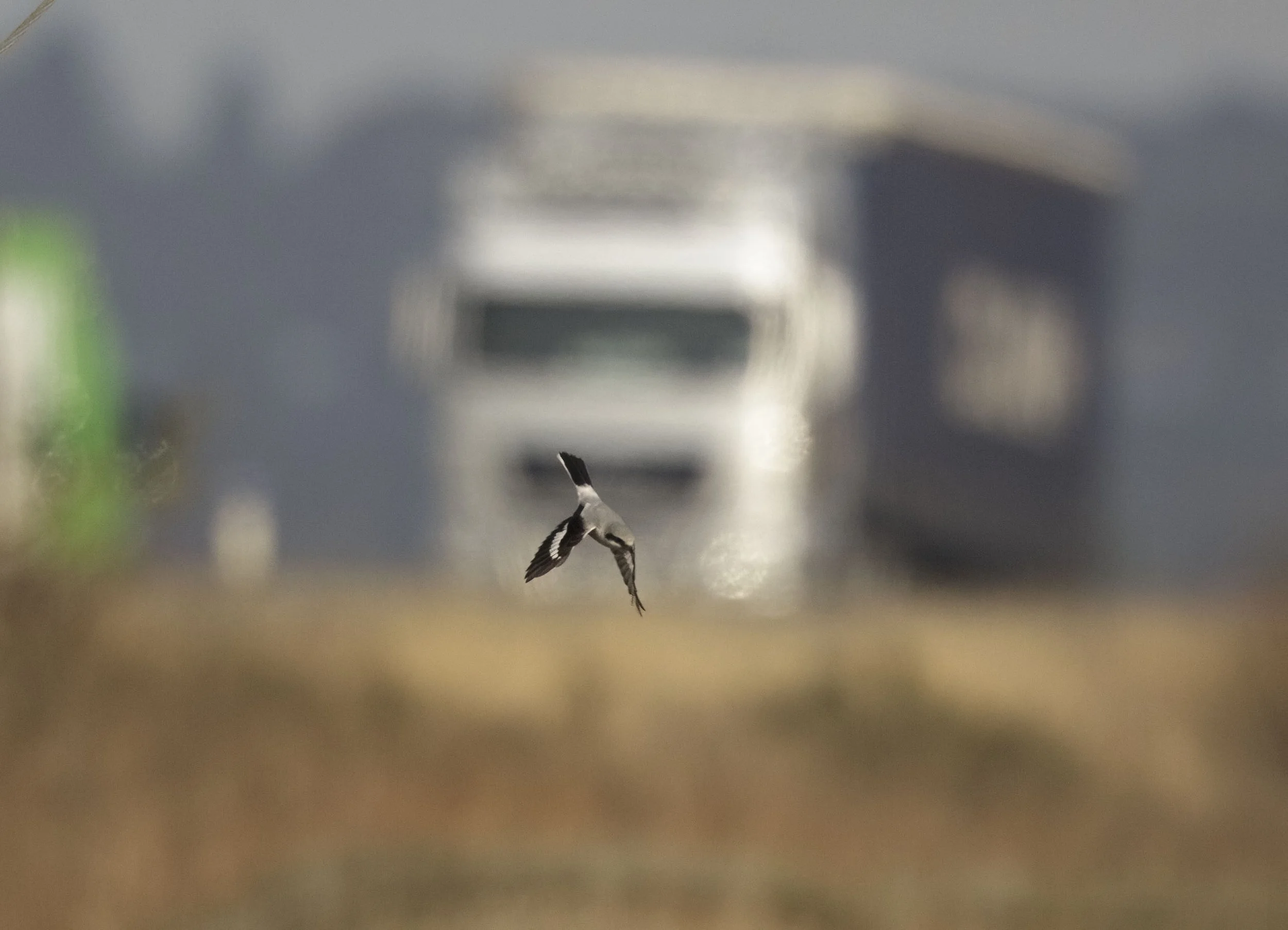
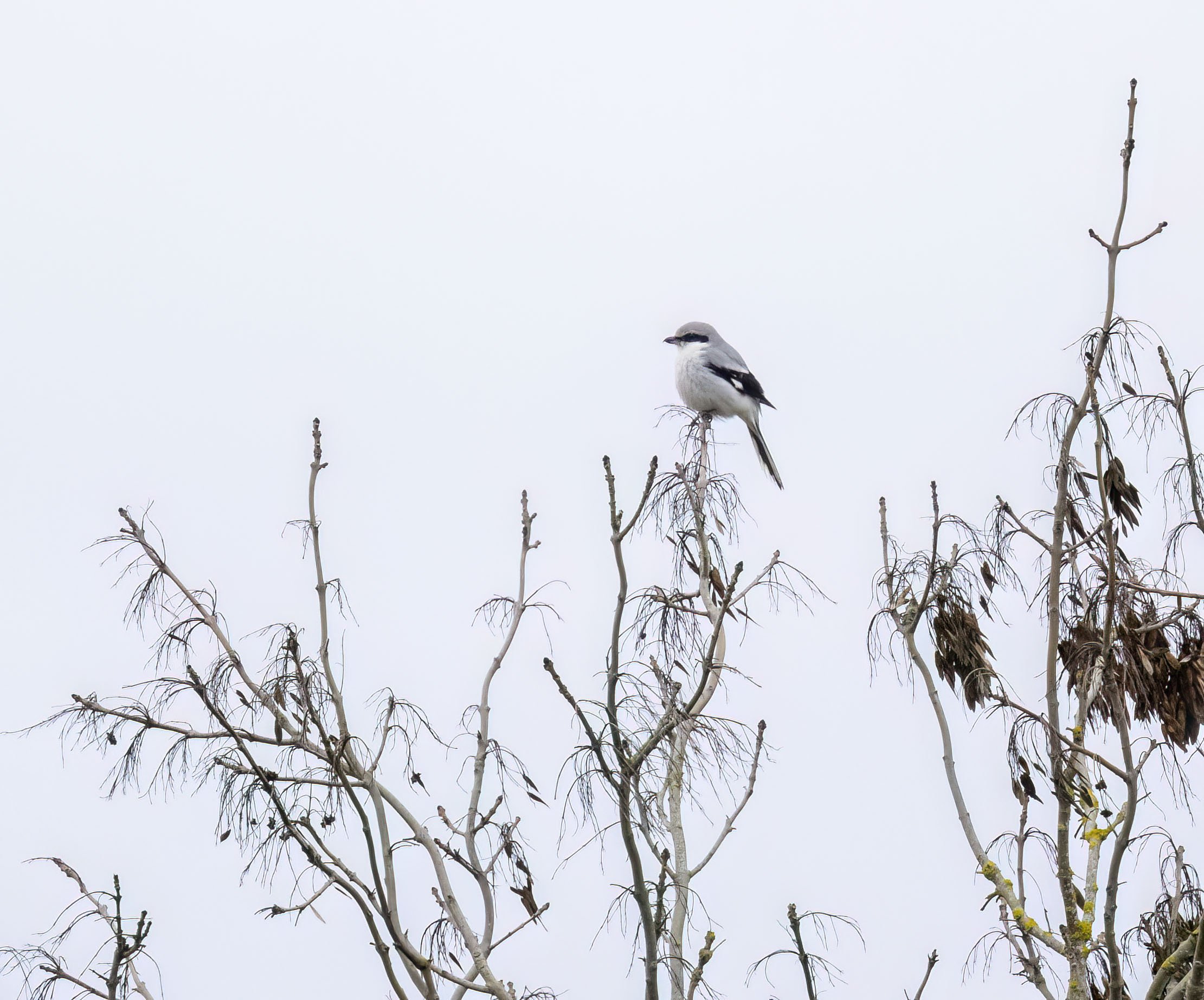
The Doddington bird December 2024
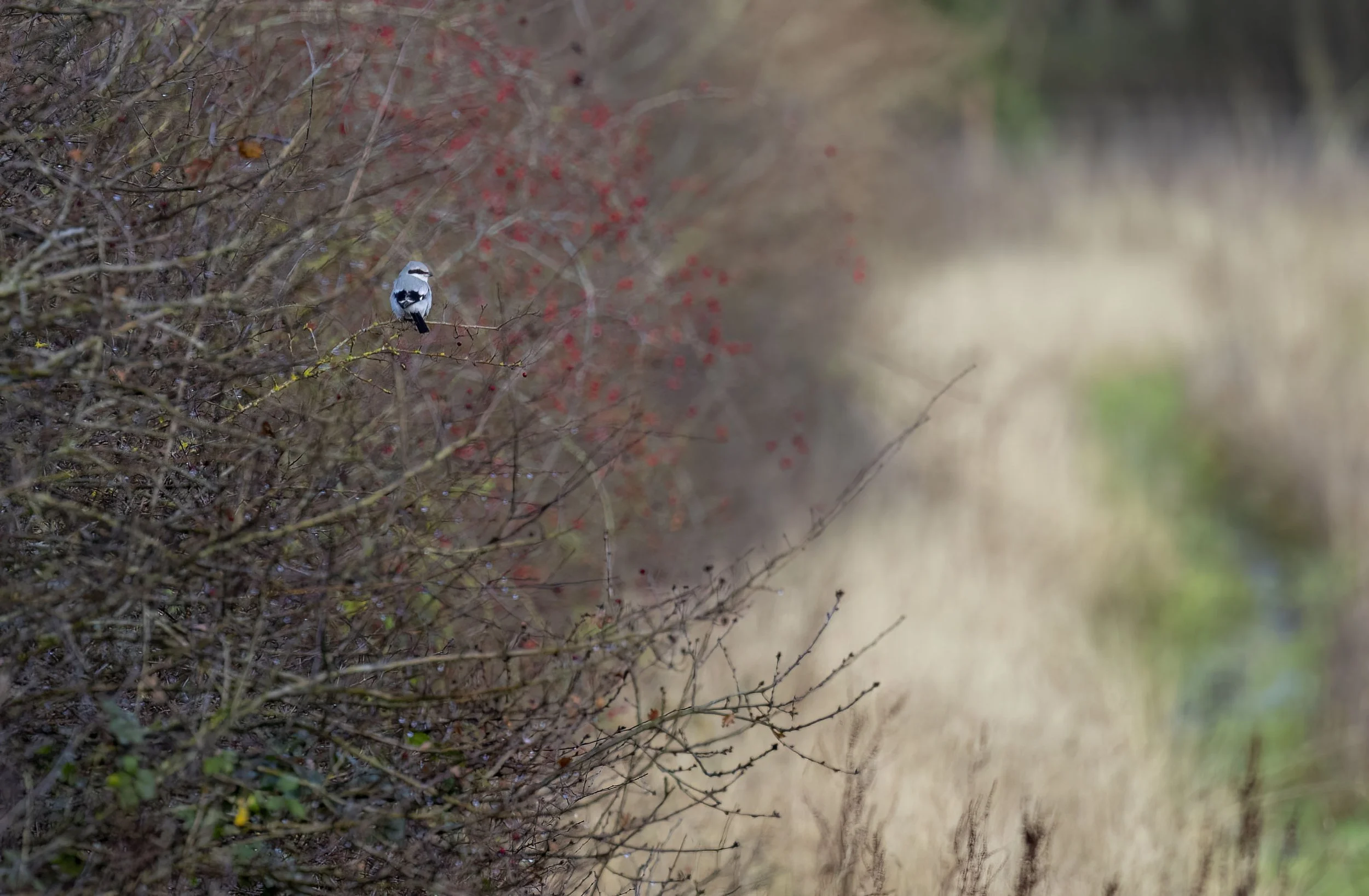
similarity of habitat choice to the present Fillingham bird Doddington December 2024
There are currently several accepted races of Great Grey Shrike, no point in putting a number as taxonomists change the totals every few weeks. A couple of individuals I have come across have raised questions over their sub-specific identity commencing with a bird Mick and I saw at Falsterbo back in autumn 1979. On a quiet raptor passage day we were wandering around north of Skanor when we picked up a Great Grey Shrike but it looked different to birds seen previously. Main features were it was very pale grey on the upperparts noted as much paler than usual wintering birds seen in UK. Bill smaller with yellowish base. Broader more obvious white bar in wing in flight and rump strikingly white. Throat white contrasting with very pale grey breast this being only slightly paler than the upperparts. A very tame bird but oddly I took no slides of it. Consulting Vaurie on our return to the UK is seemed to fit L e leucopterus the eastern race that occurs east of homeyeri - but this was clearly an identification that would not stand the test of time though the bird was clearly not a standard Great Grey and most possibly a homeyeri with that strking white rump and pale upperpart colouration
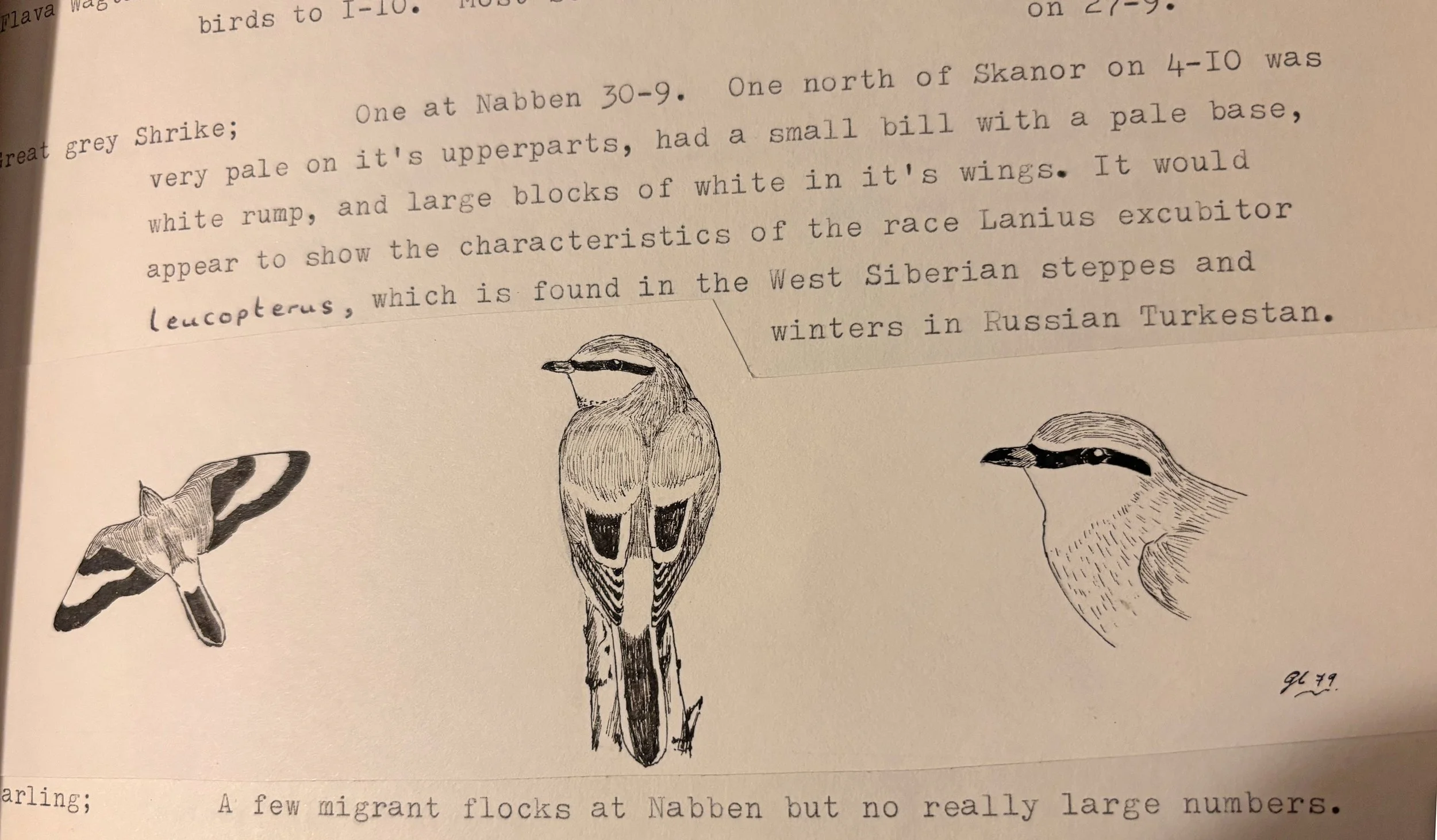
My less than adequate art work of the Skanor shrike October 4th 1979
The identification of homeyeri in a British context dealing with some potential candidates was addressed in several blog posts by Martin Garner on the Birding Frontiers site and in detail with regard to a wintering bird near Matlock by Andy Butler a post well worth reading linked here http://andybutlerdiaries.blogspot.com/2020/11/a-candidate-homeyers-grey-shrike.html
https://birdingfrontiers.wordpress.com/2010/12/15/sheffields-steppe-shrike-update/
In more recent times a bird found wintering near Wroot on the Lincolnshire border on November 20th 2011 was suggested as a homeyeri x excubitor intergrade. The bird was ringed on the right leg and proved to be the same individual trapped at Spurn on November 7th 2011. It remained in the area through to February 4th 2012. I visited the bird on December 31st and took some images shown below.
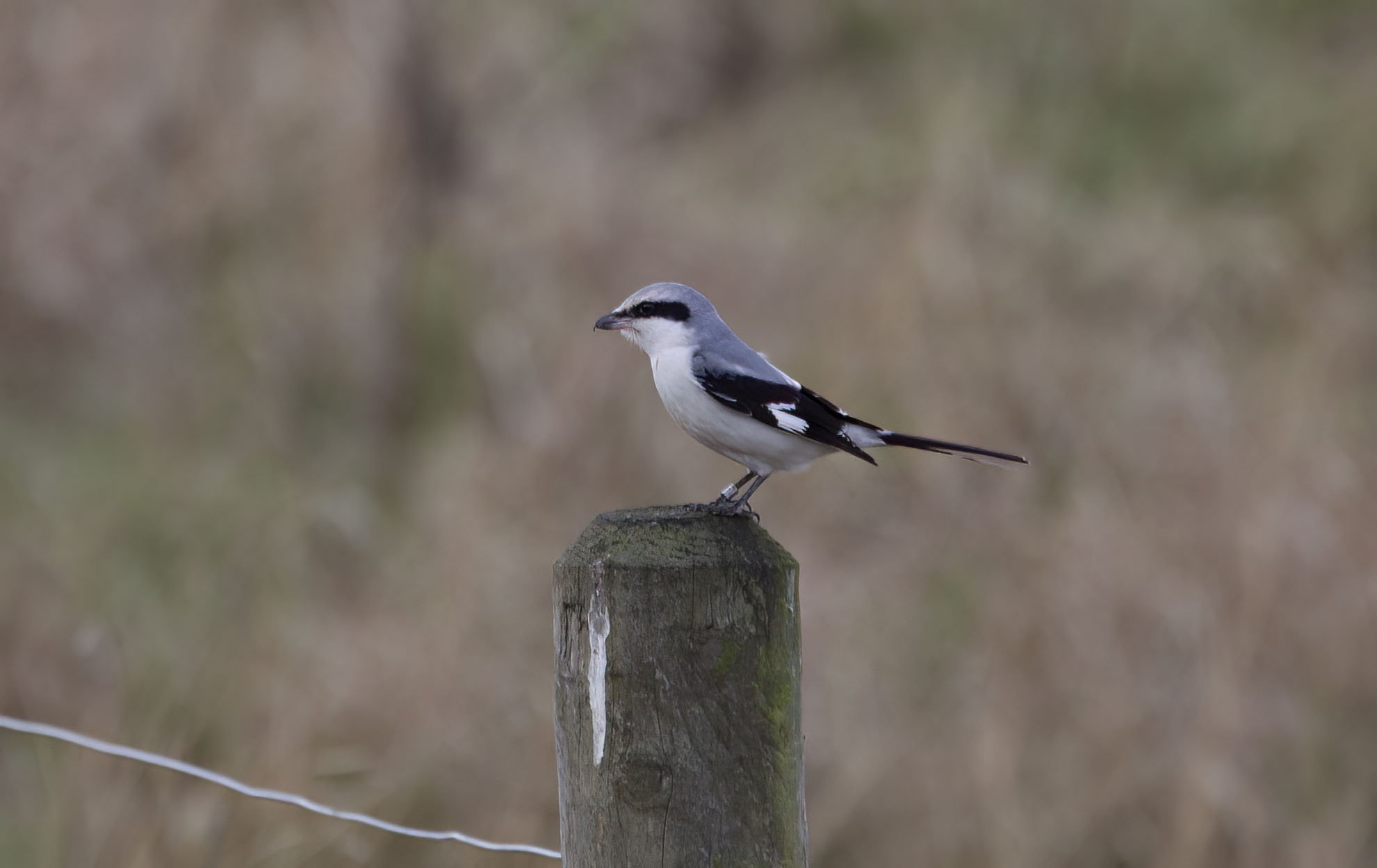
Great Grey Shrike Wroot December 2011 - the upperparts are quite dark but the white flash formed by the bases of the primaries is long compared to excubitor -
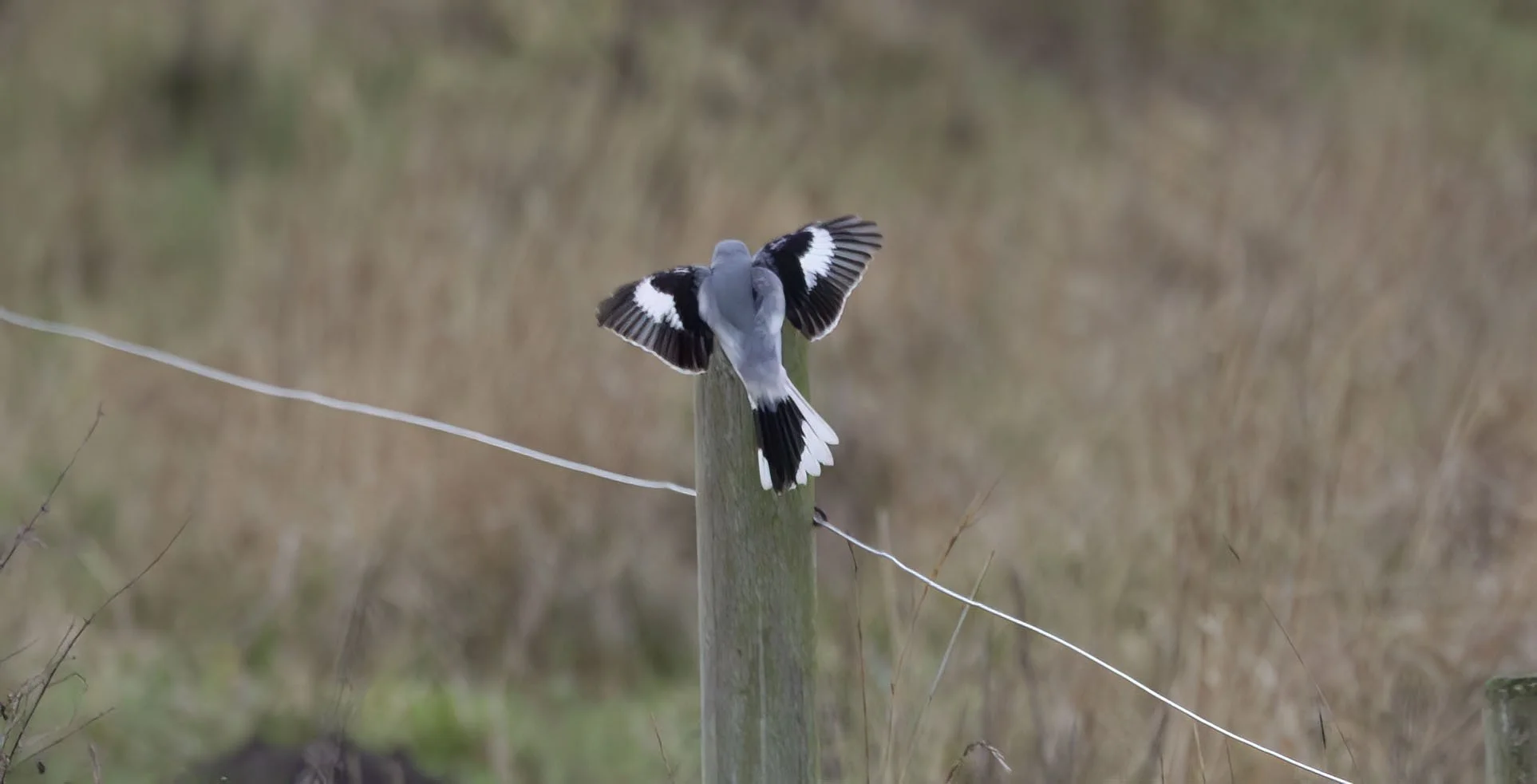
In this shot t6 appears to be all white but there is extensive black at the base of t5 - white at the bases of the outermost three secondaries is contiguous with the primary bases, not stepped, but could be within the range of variation of excubitor according to texts
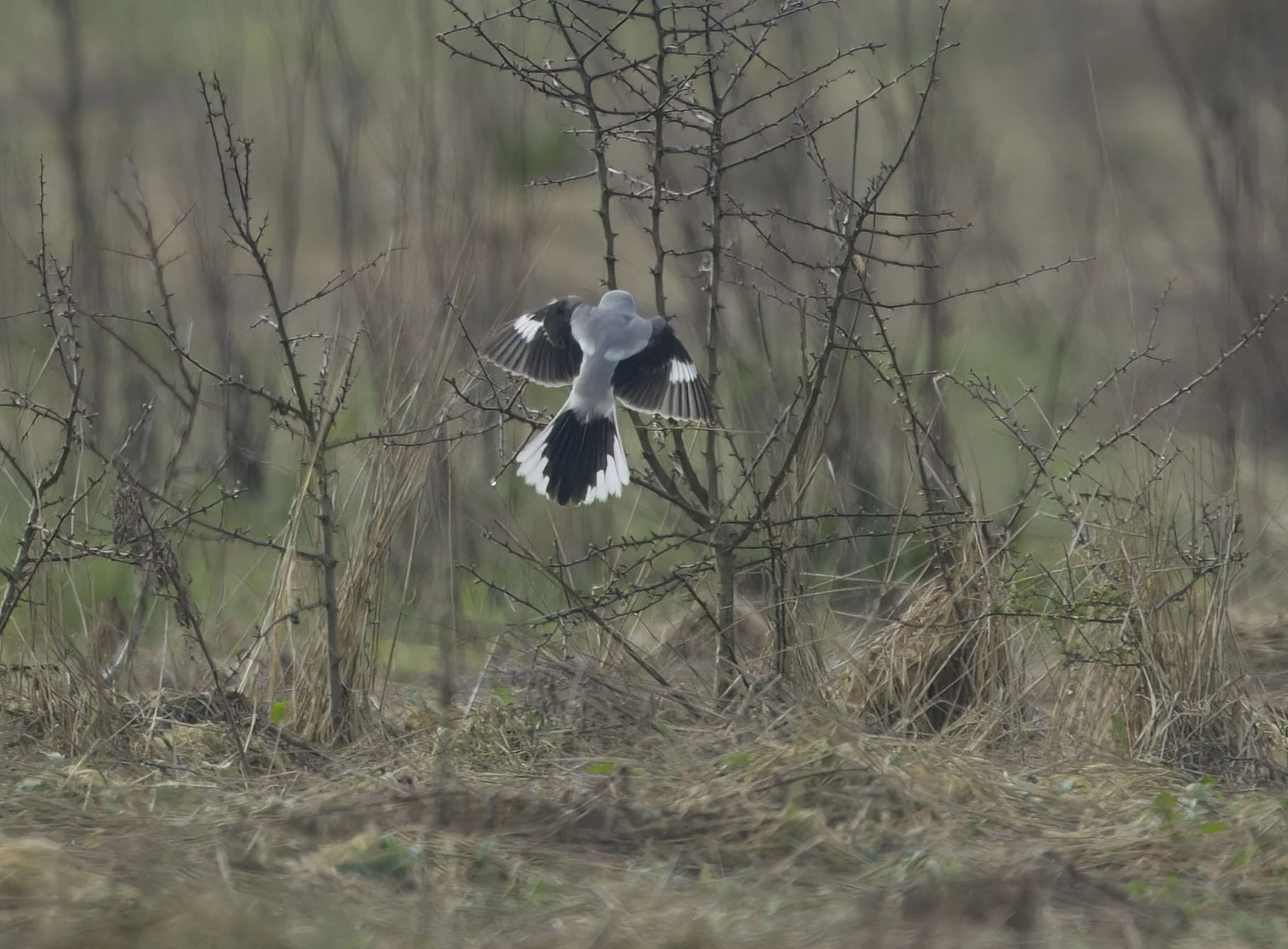
nominate Great Grey Shrike Worlaby Carrs March 2011 - note the tail pattern with black on the inner web of the base of t6 as well as the white restricted to the bases of the primaries - compare with the Wroot bird above
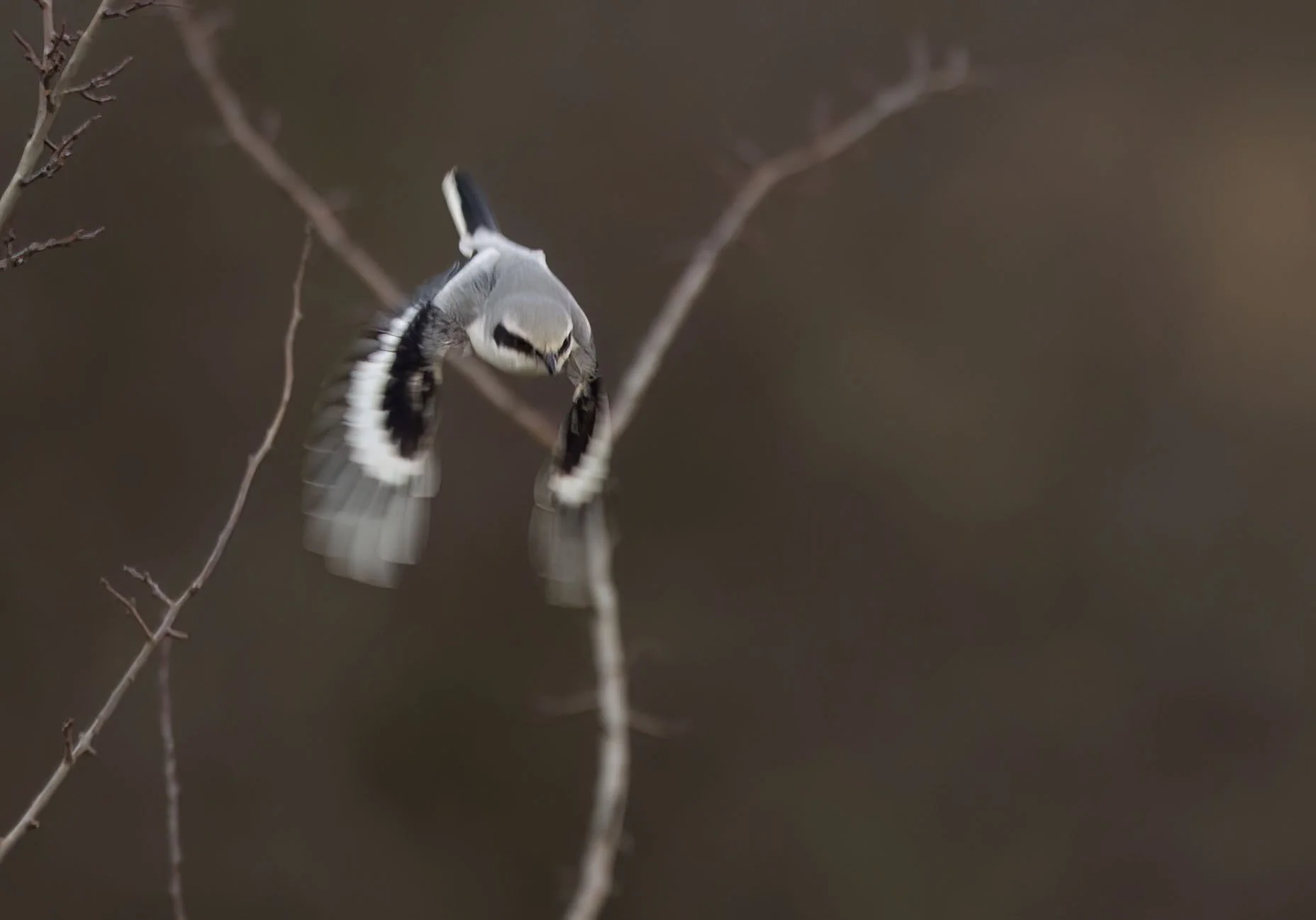
the effect of blur makes the white wing flash look longer and more prominent than in a still image - Wroot bird
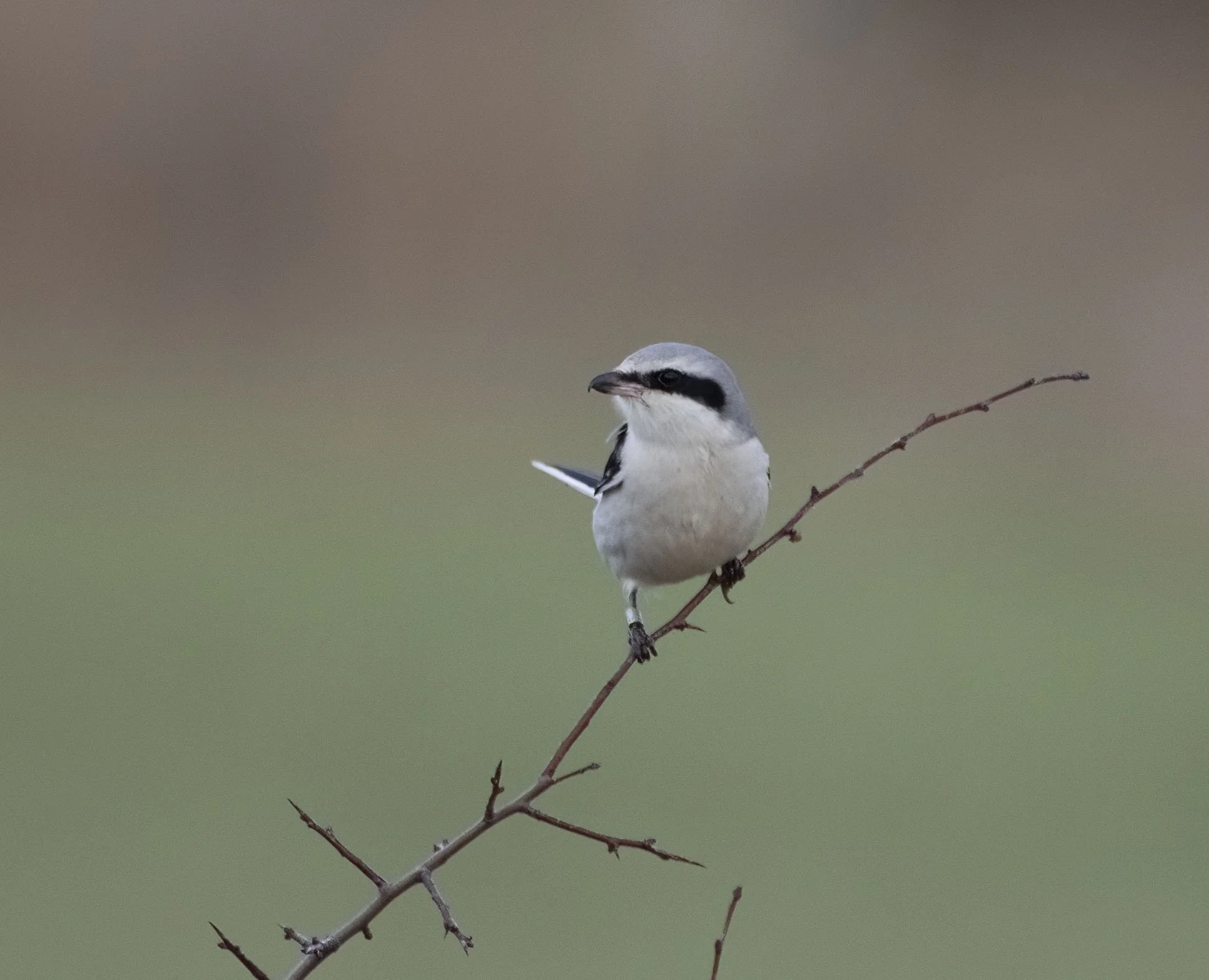
Pale bill base is a feature of first-winter birds - the ring details revealed a move from Spurn earlier in the month
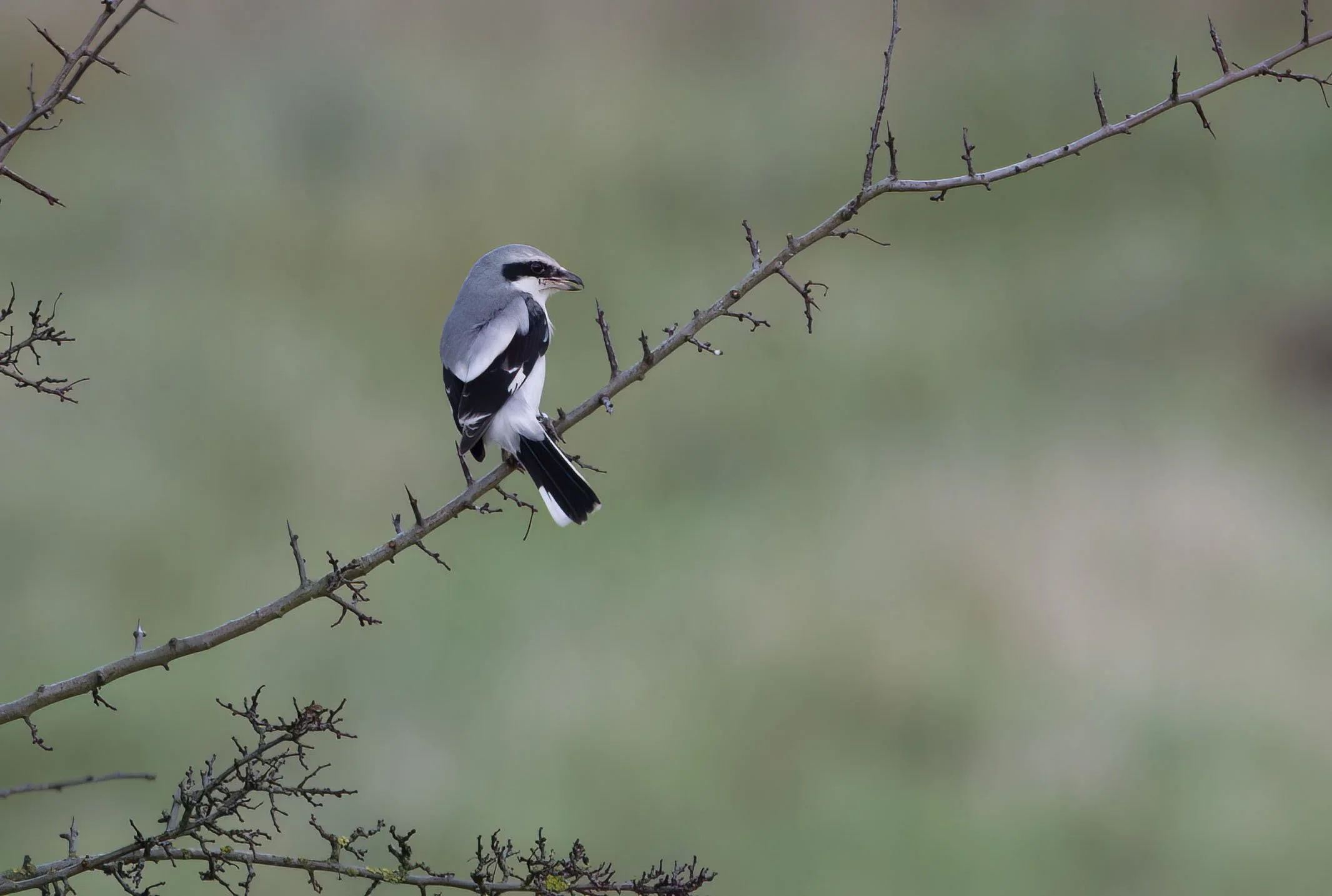
In this shot the larger than typical pale area in the scapulars is a feature suggestive of homeyeri and the uppertail coverts are also whitish
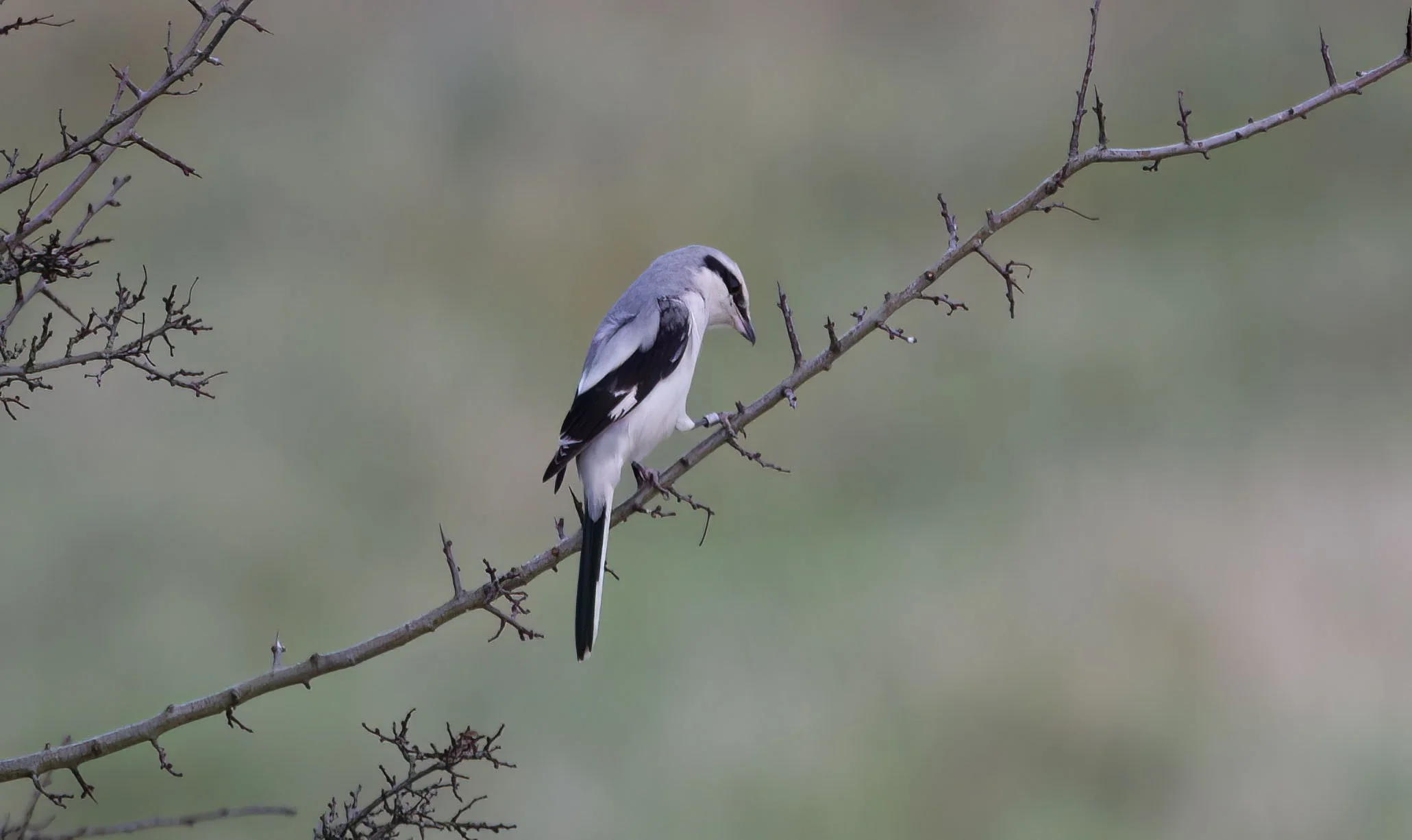
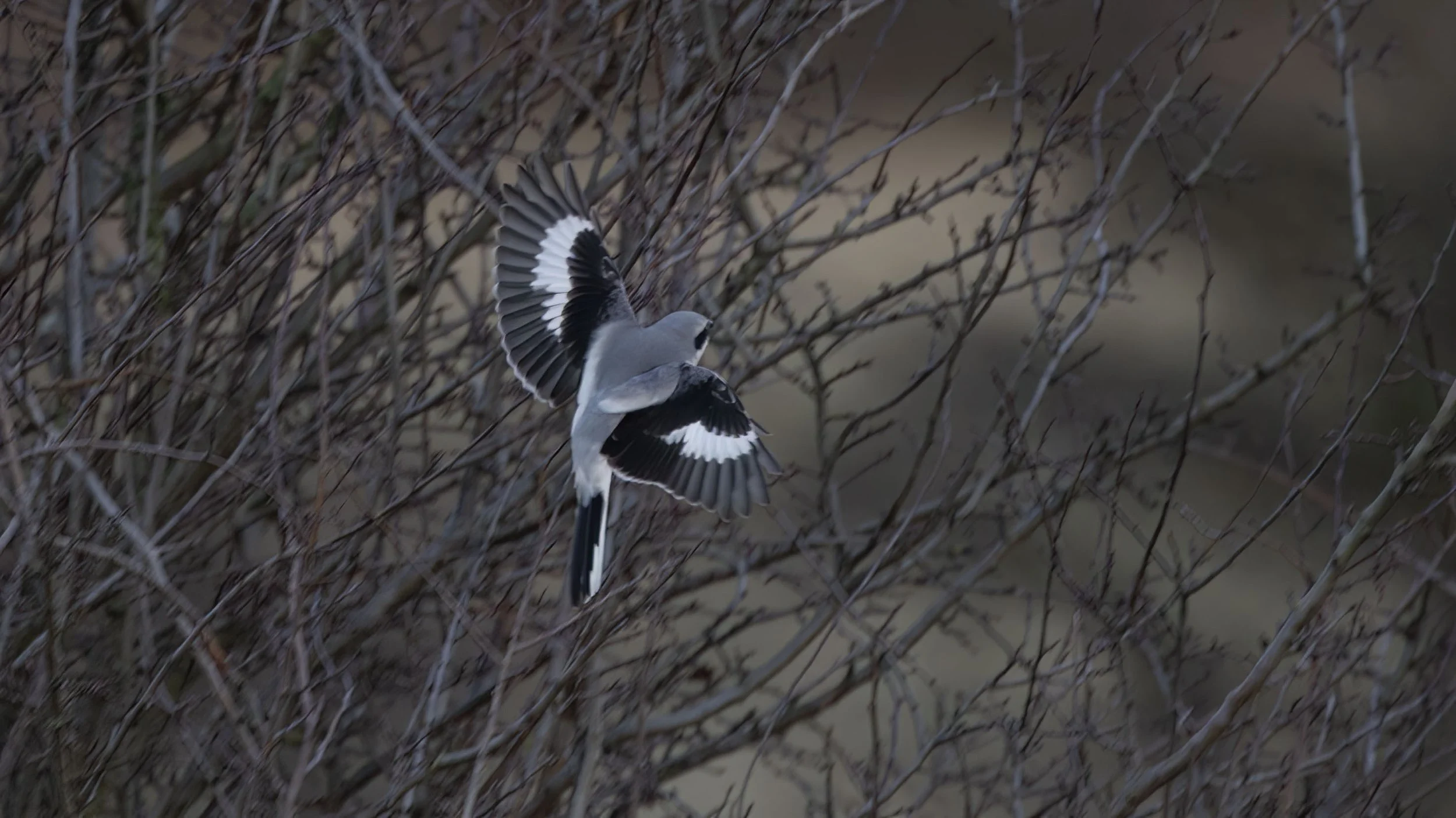
A better indication of the extent of white in the wing - the 3rd edition of the Collins Guide has limited text and illustrations of the Great Grey complex worth consulting
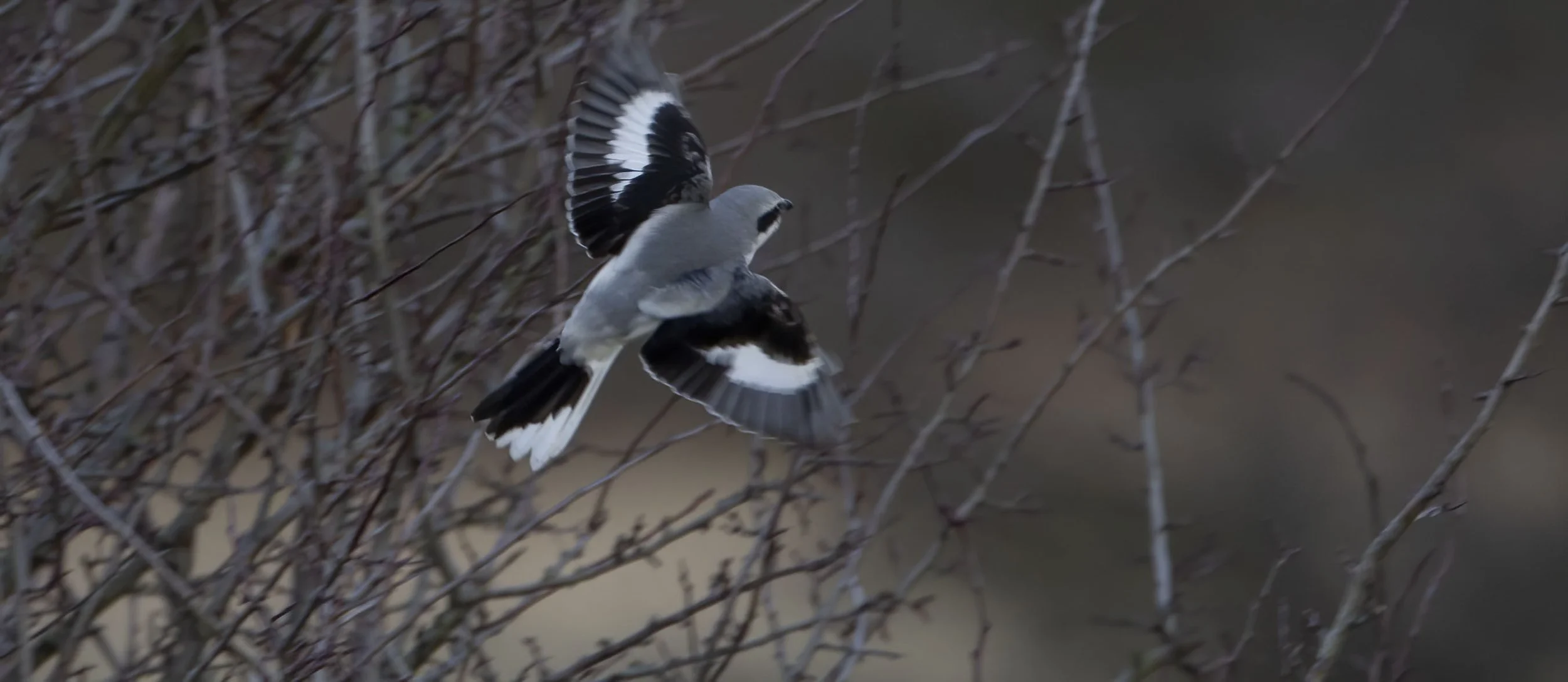
t6 appears all white in this image but is the inner web hidden?
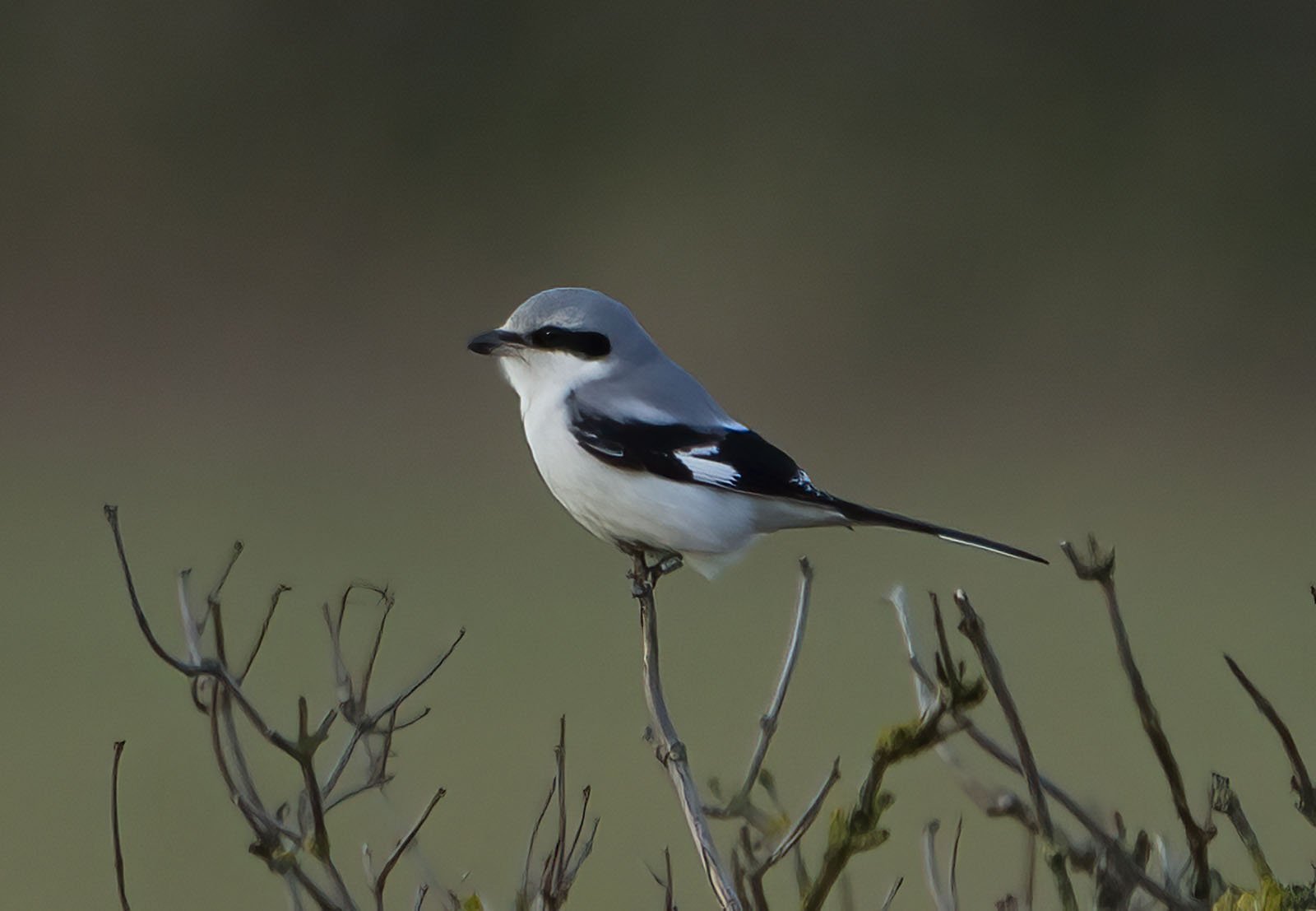
Great Grey Shrike Wroot December 2011
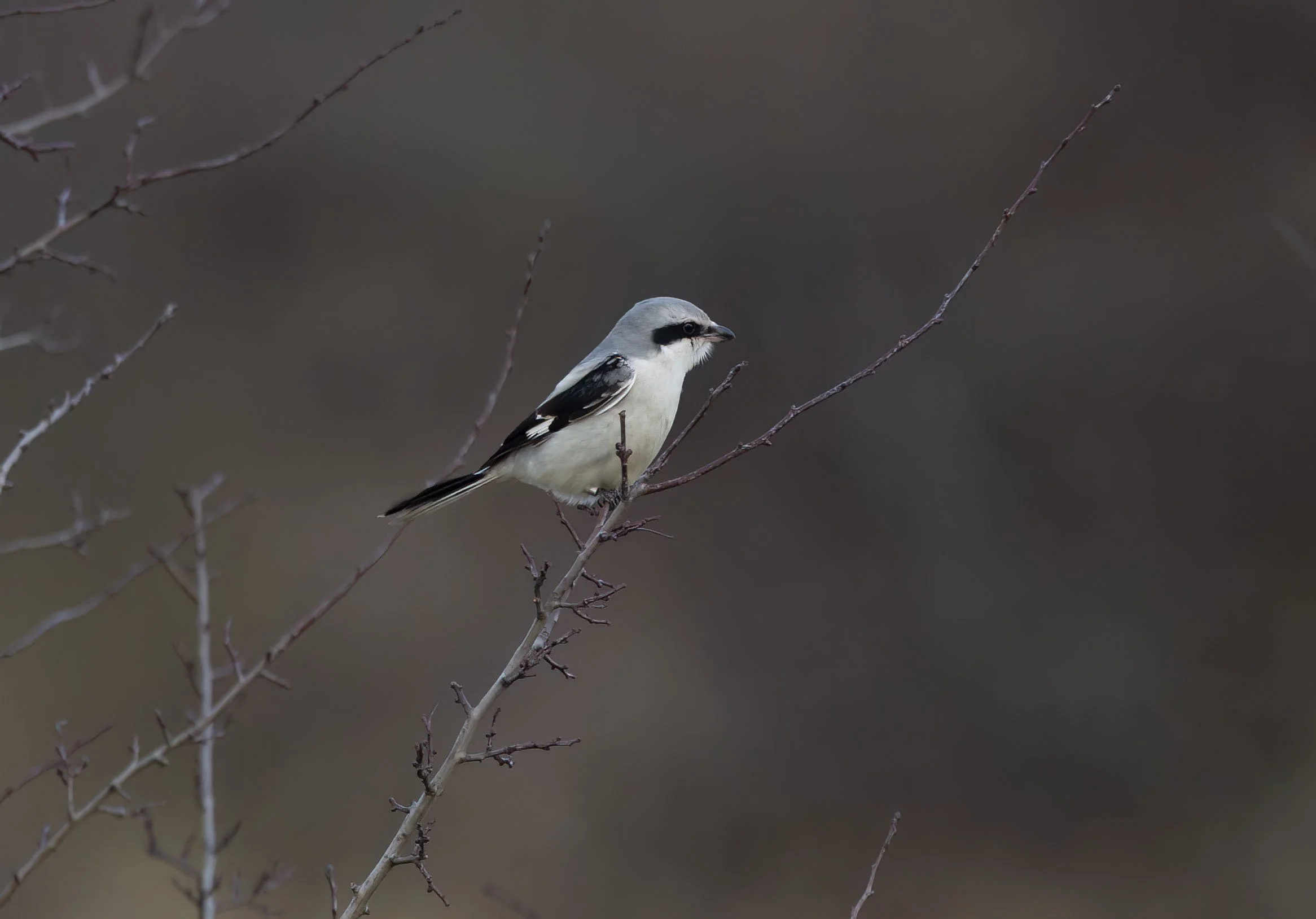
Wroot December 2011
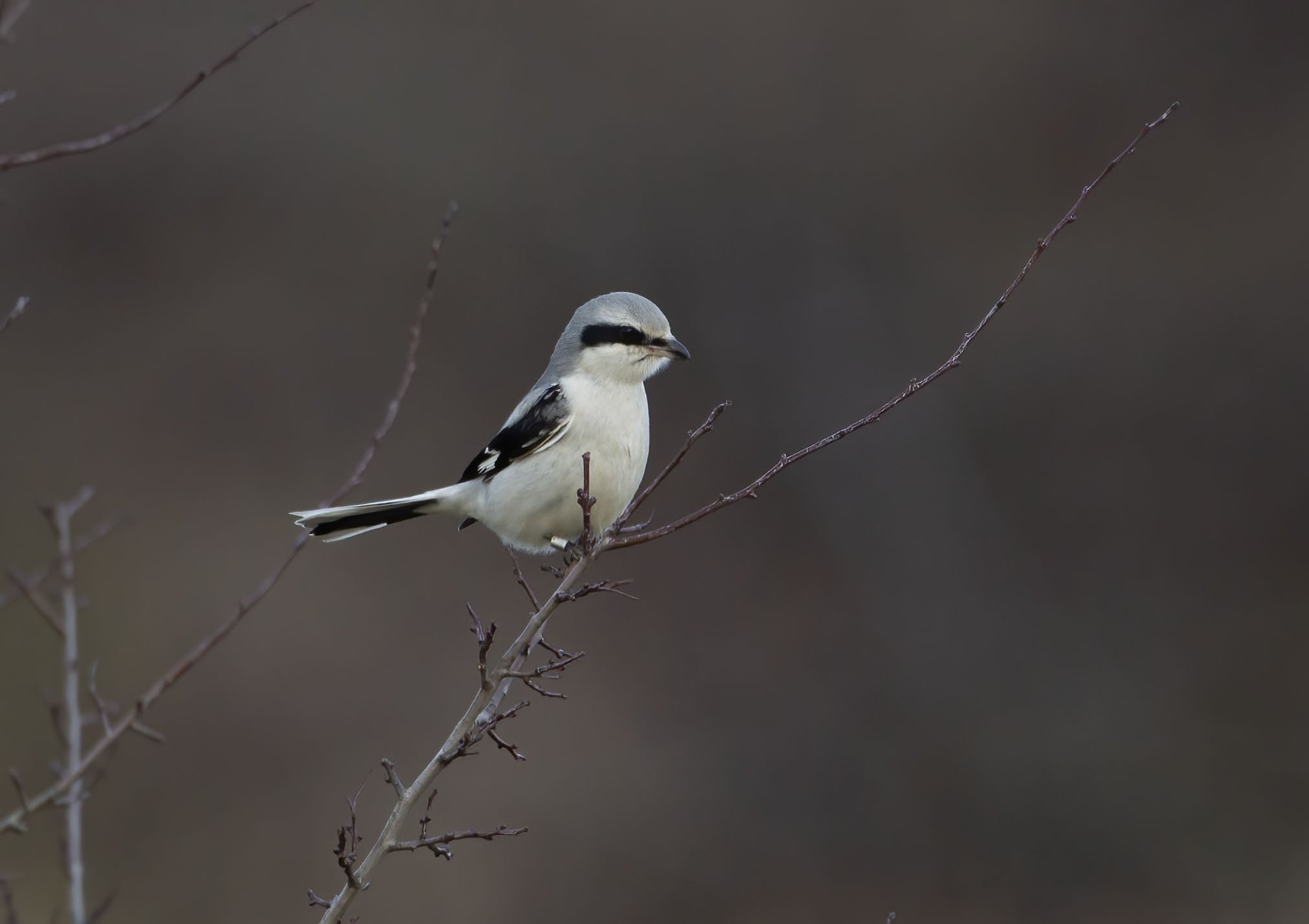
Within the range of variation of excubitor or with some homeyeri genes?
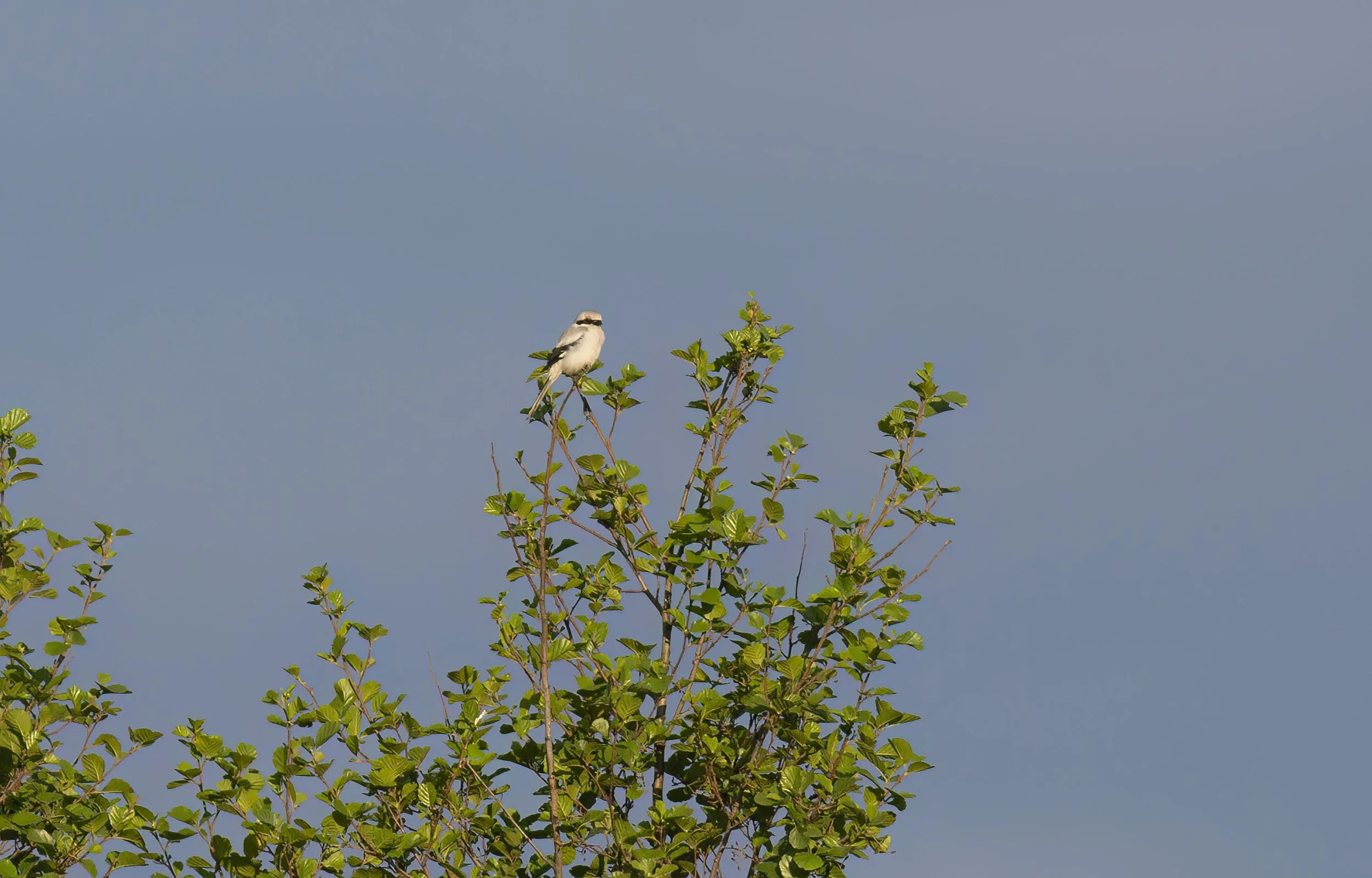
An incredibly distant Great Grey Shrike near Białowieska eastern Poland May 25th 2016 - a striking pale bird presumably breeding but only seen at extreme distance - recent studies suggest that homeyeri breed in eastern Poland regularly
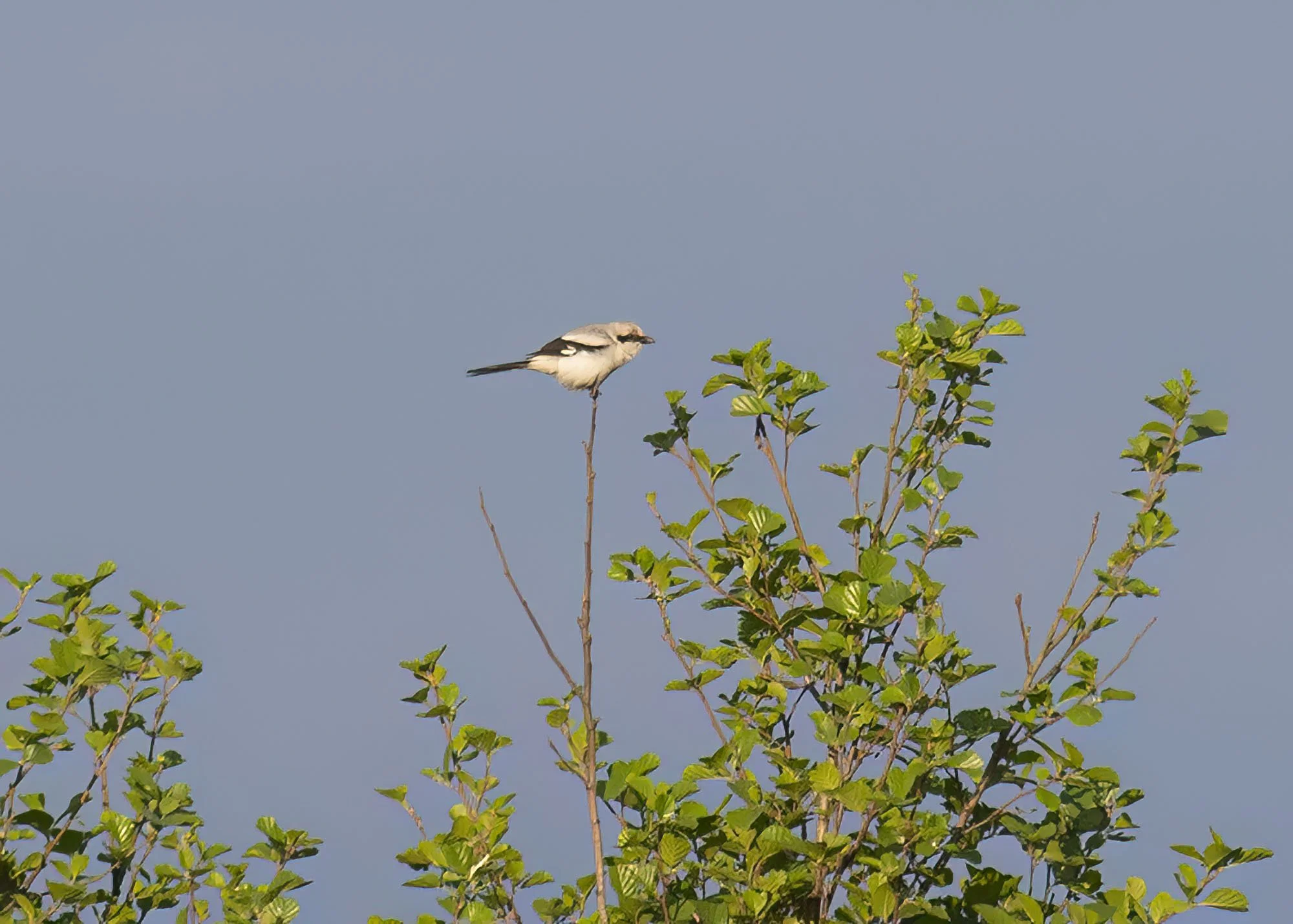
Same bird as above eastern Poland May 2016 note large white scapular patch as well as double white on wing and extremely pale upperparts
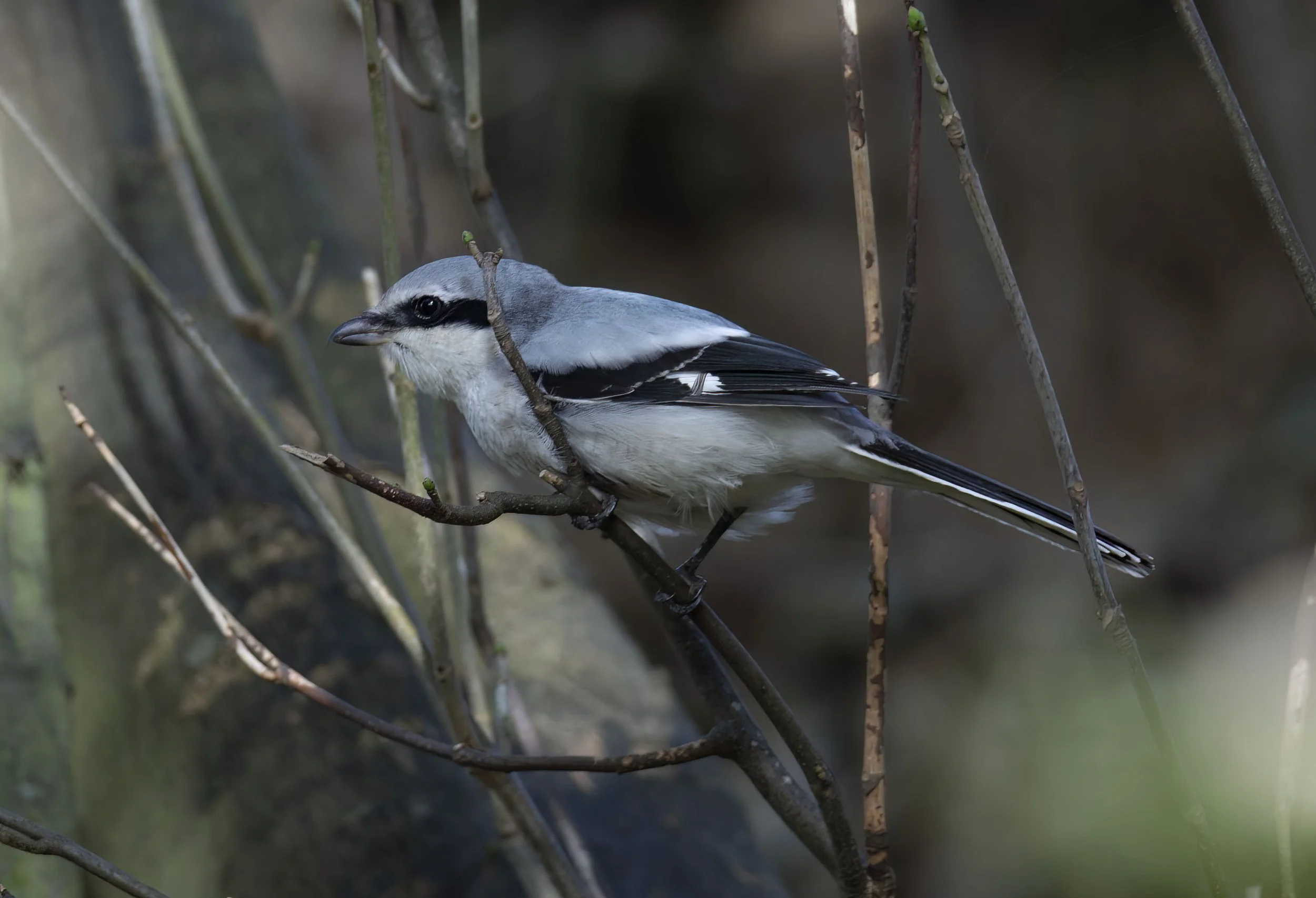
A few images of a first-winter excubitor at Saltfleet Haven October 2014 - an uncharacteristically tame bird skulking in dense cover - it had brown tinges to the crown and as shown here the nape remnanats of juvenile plumage perhaps suggesting it was a late fledged bird
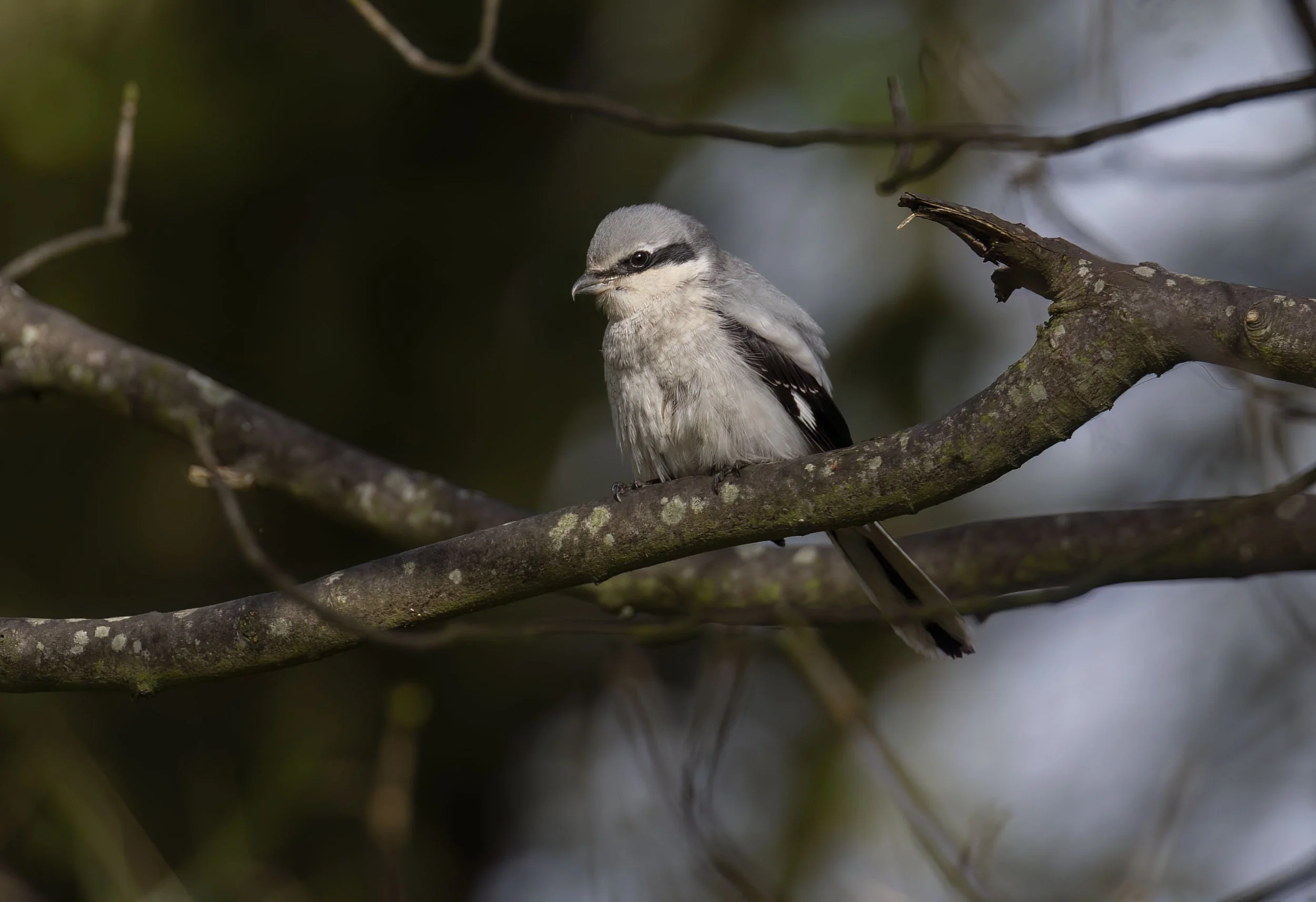
Underparts were finely vermicualted and the greater coverts had fairly fresh looking pale pointed tips
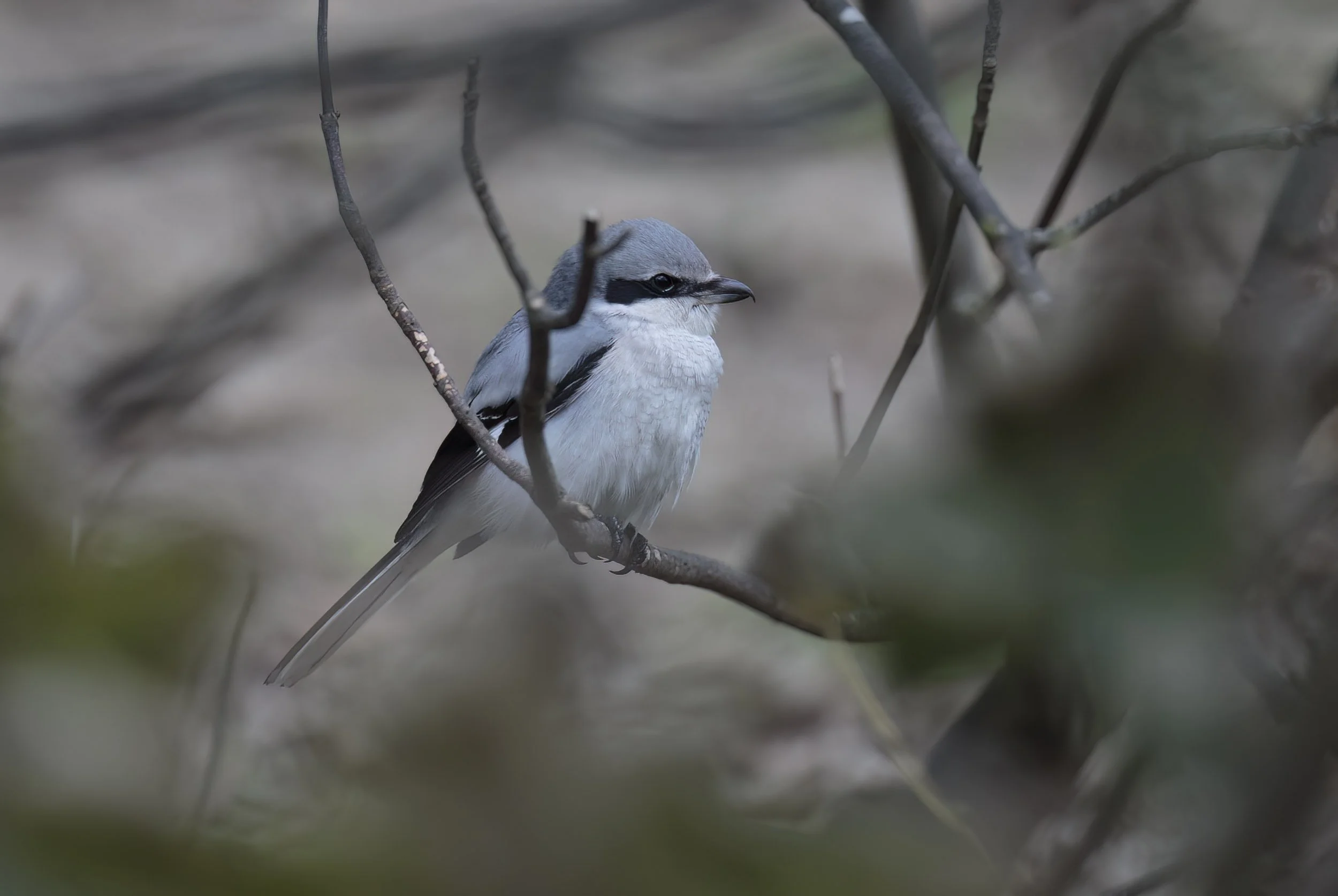
first-winter Great Grey Shrike Saltfleet Haven October 2014 - one of a small arrival of this species on the Lincs coast at the time
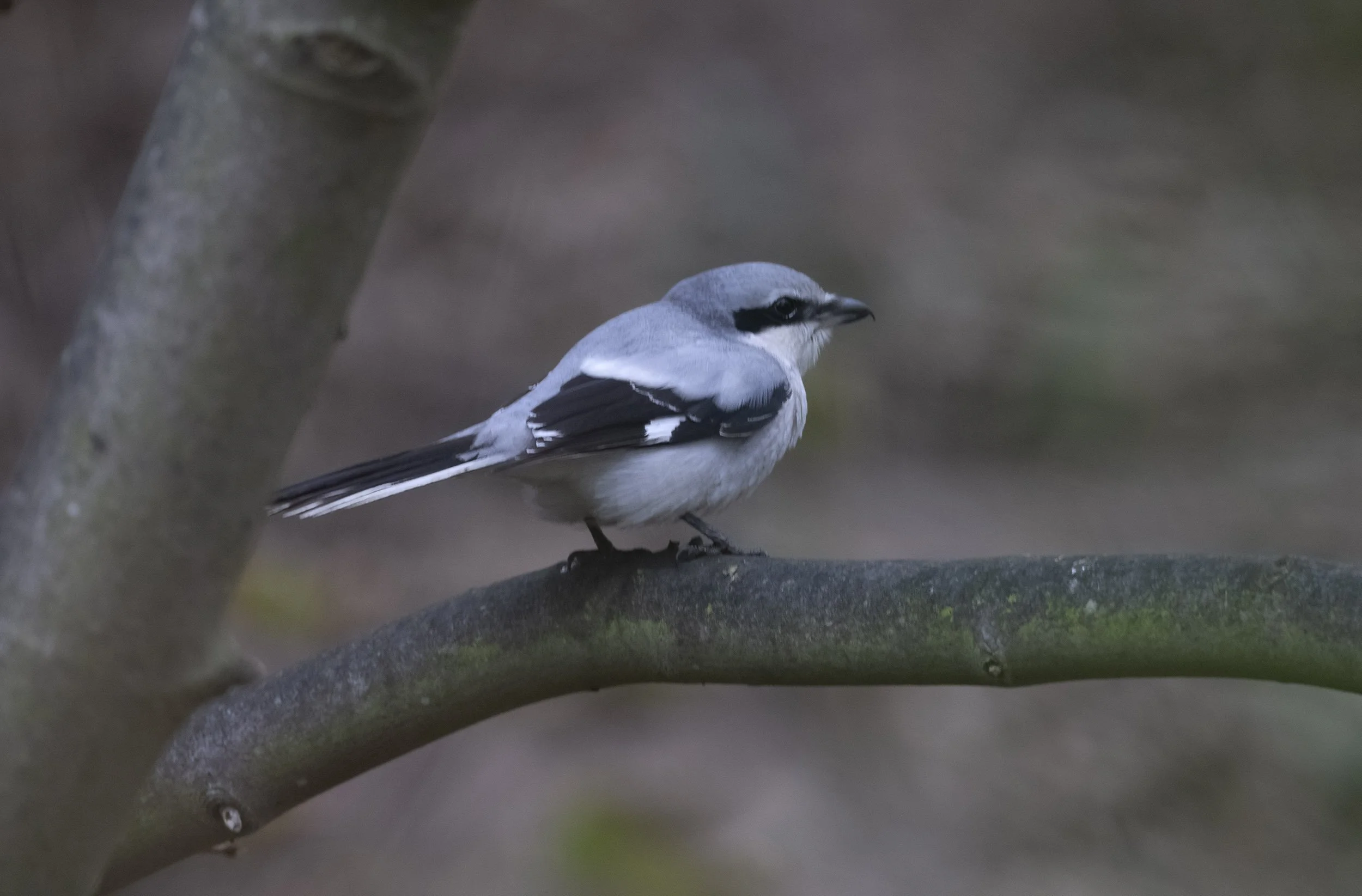
rump and uppertail coverts concolorous with back
A March 2021 paper in British Birds entitled: The identification of Northern Shrike in Europe attempted to set out what criteria to look for in this newly classified species. To my mind it was too full of caveats and images of stiff faded horrible museum skins plus the seemingly inevitable down the DNA needed to obtain proof route and a much better idea of the species characteristics can be gained from looking at images in the Macaulay library linked below albeit mainly of the Nearctic borealis and not L b sibiricus the most likely taxon to reach Britain.
https://search.macaulaylibrary.org/catalog?taxonCode=norshr4&mediaType=photo&sort=rating_rank_desc
First-winter birds are particularly striking in borealis at least as we saw a couple in Ontario in February 2014 along with a couple of adults unfortunately all birds were distant or inaccessible due to snow depth hence the images were poor.
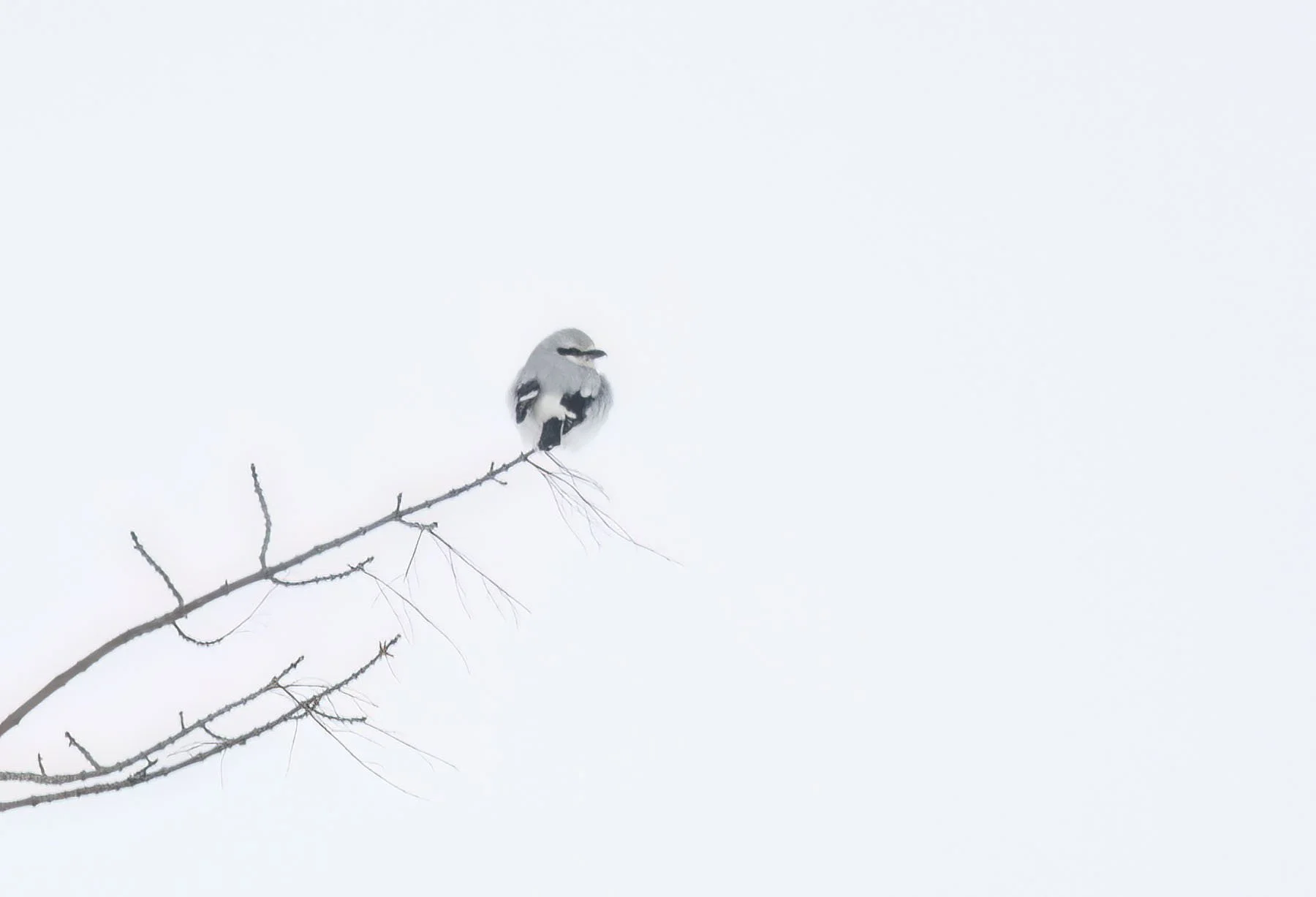
Adult Northern Shrike Ontario February 2014 - even at this distance note the large contrasting white rump - uppertail coverts
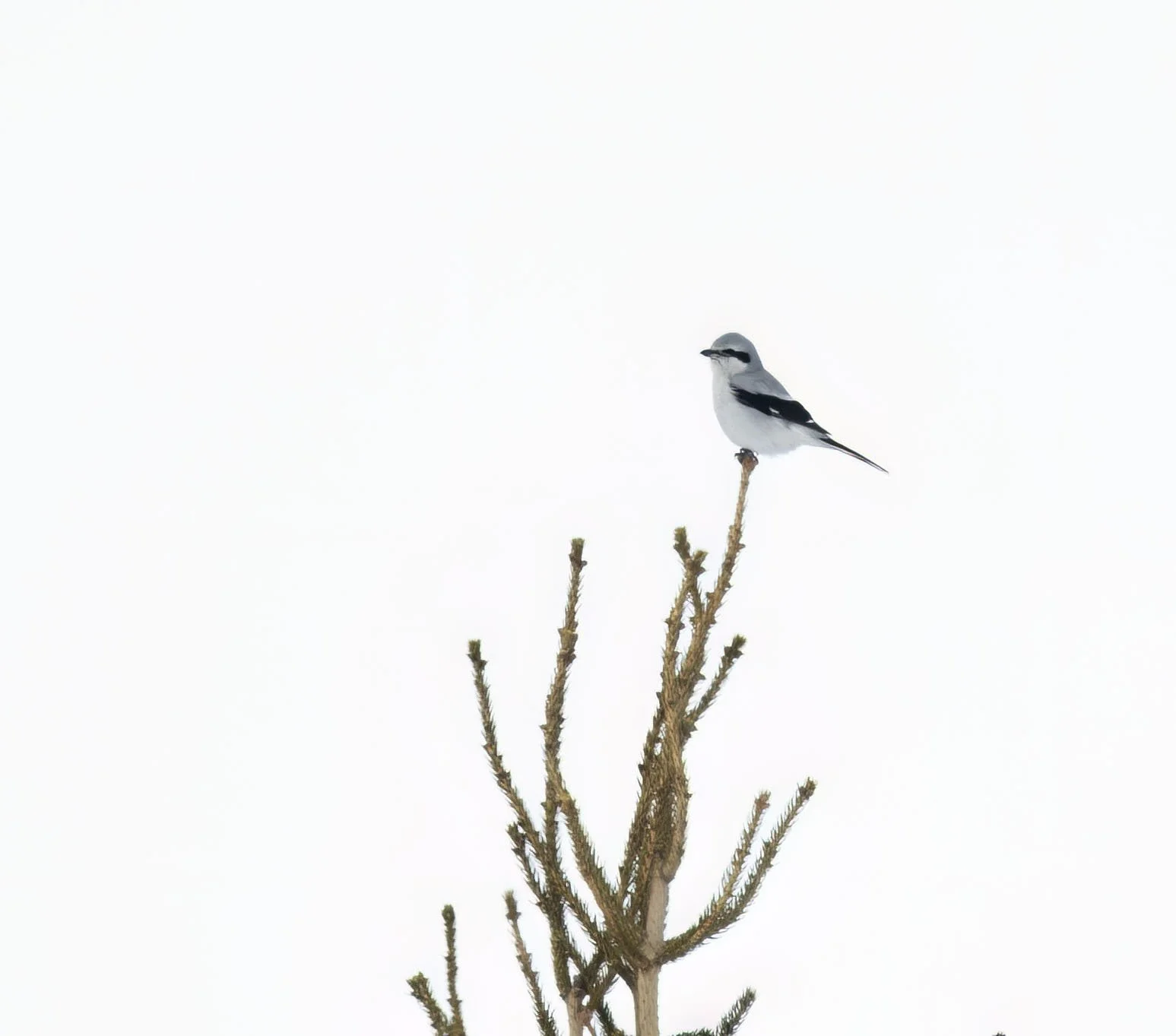
Northern Shrike Ontario February 2014 only small white area in closed flight feathers
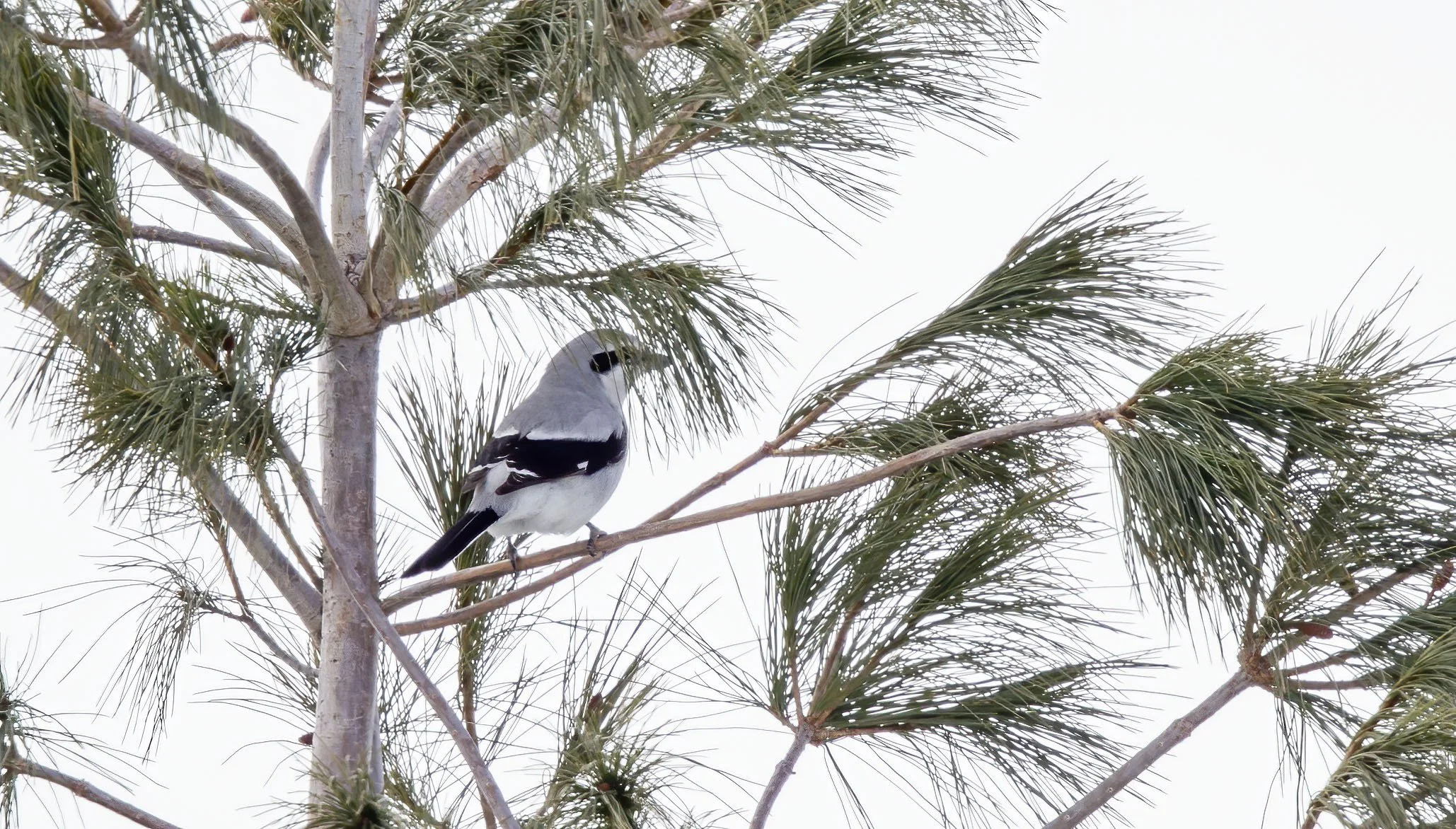
adult Northern Shrike borealis Ontario February 2014 - the white rump and small white primary patch obvious features with little white in the tail
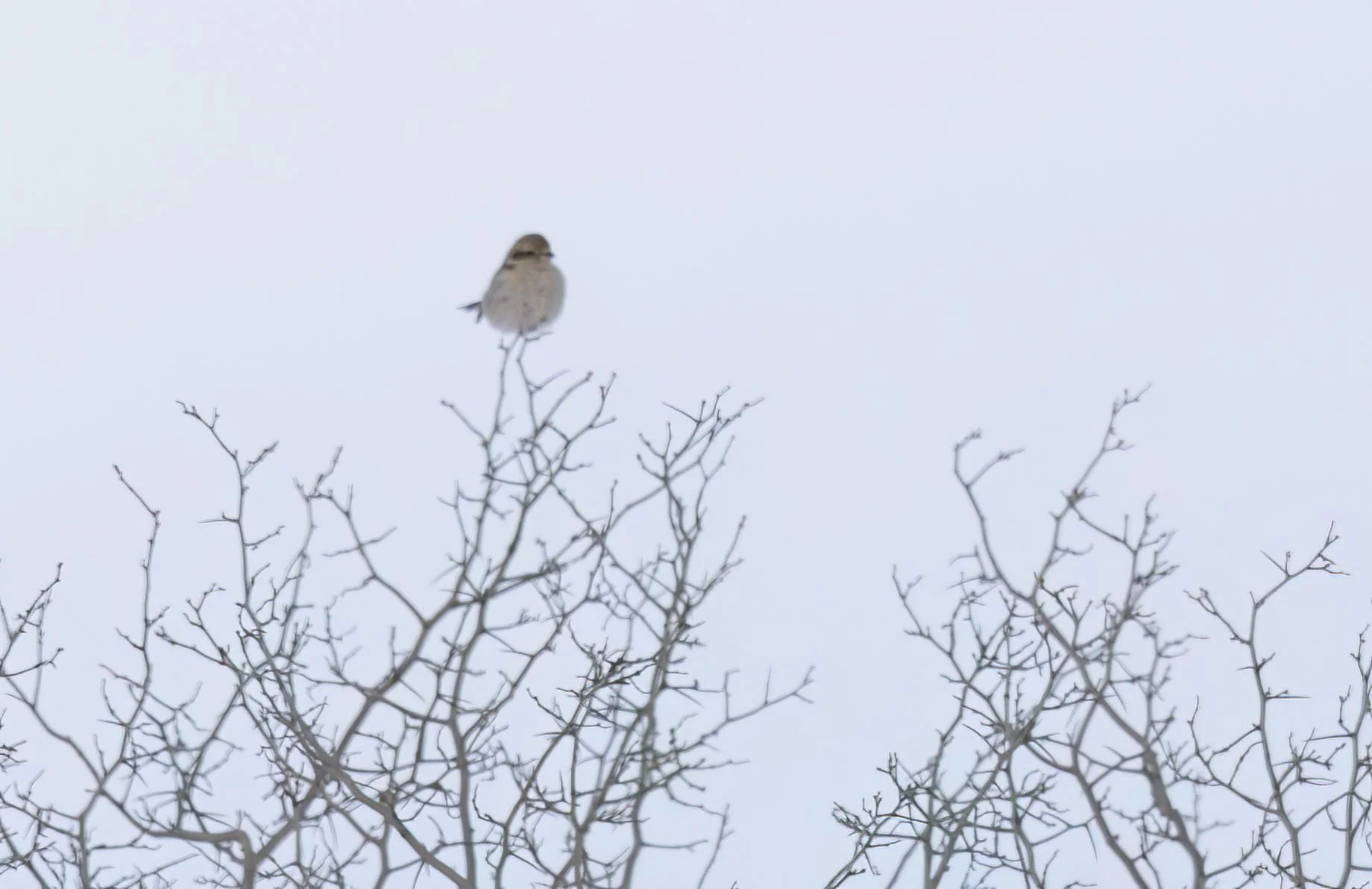
Distant and out of focus but a first-winter Northern Shrike appears as brown as grey even in bright winter light reflecting off snow
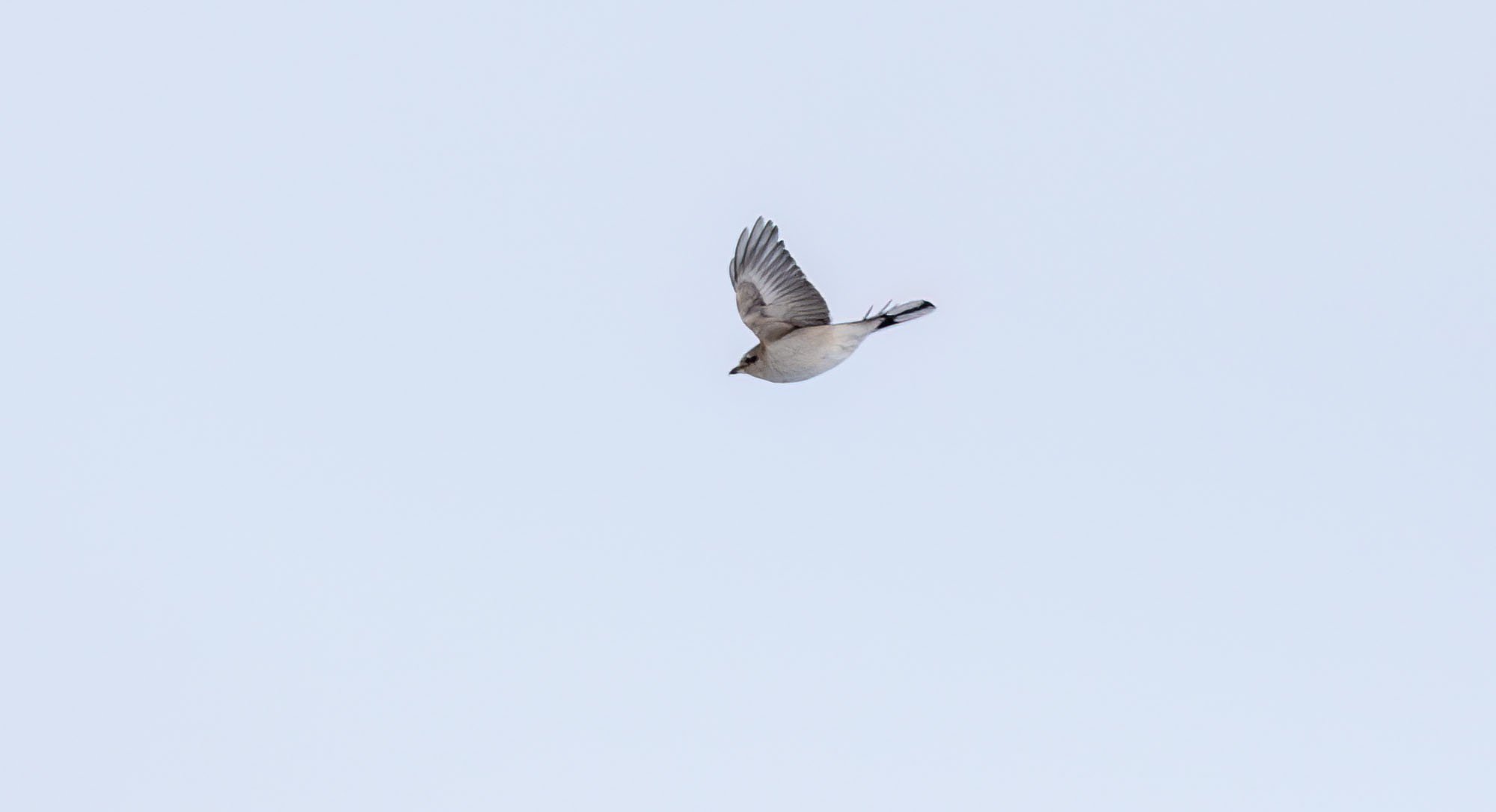
Underwing coverts tinged brownish and similar wash on underparts of first winter Northern Shrike in flight
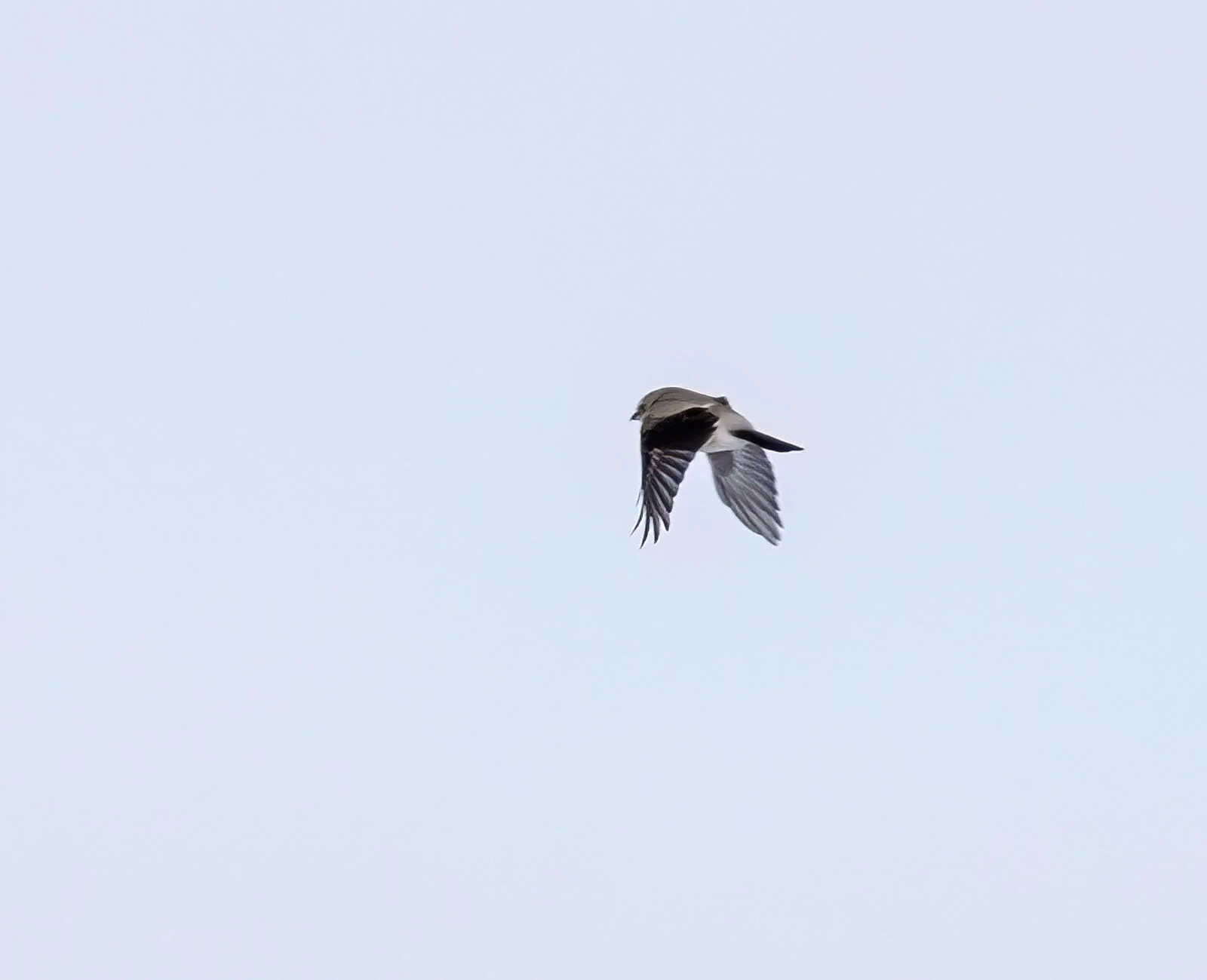
lack of obvious white in the upperwing and tail along with the brownish wash to the upperparts - first-winter Northern Shrike Ontario February 2024
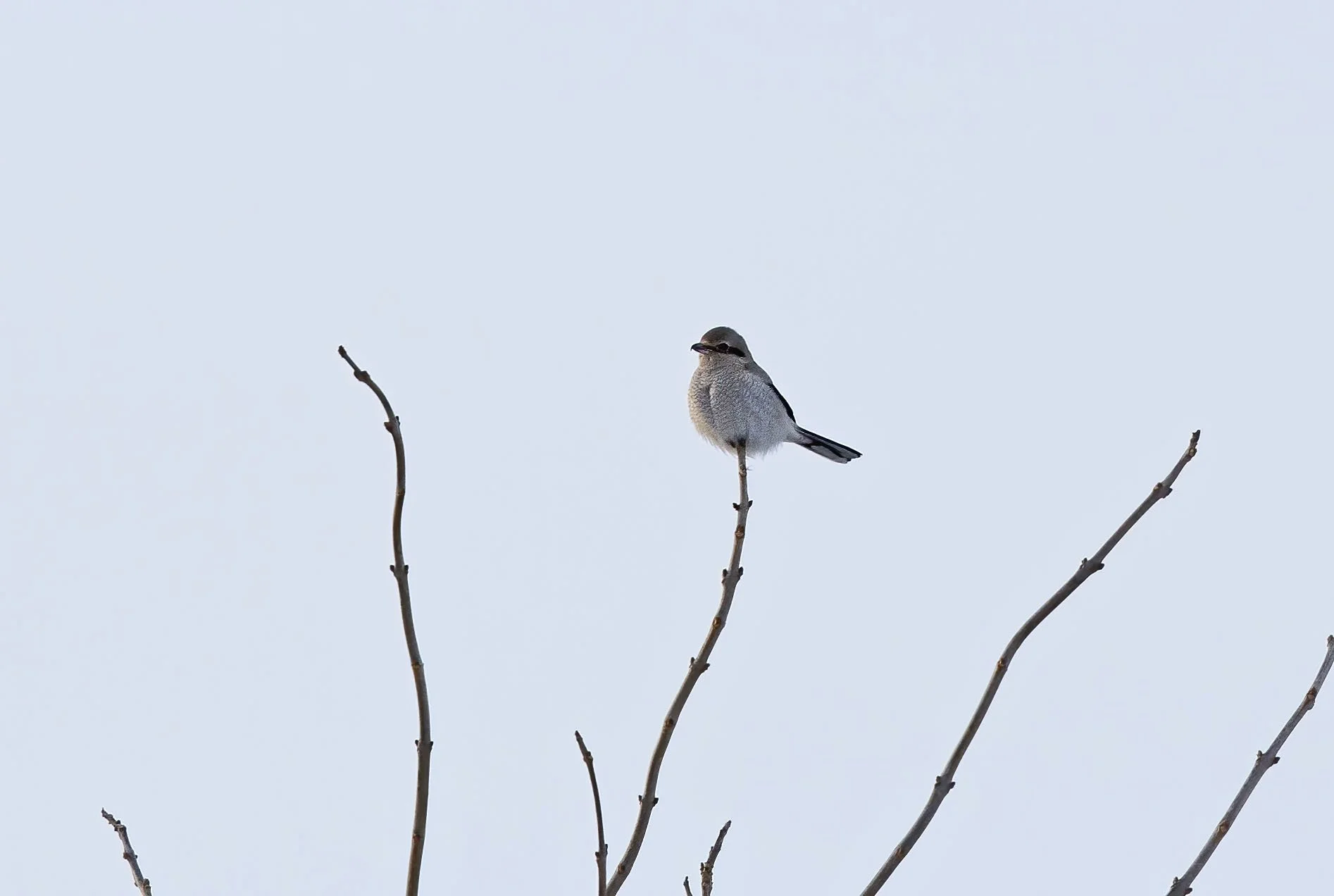
even at long range the strong underpart barring is clearly obvious in this partly backlit bird
first-winter Northern Shrike Ontario February 2014

over cropped! first-winter Northern Shrike Ontario February 2014
And then there is Steppe Grey Shrike pallidirostris: according to the excellent Historical rare Birds website: https://www.historicalrarebirds.info/cat-ac/steppe-grey-shrike
Formerly known as Bogdanoff's Shrike, Grimm's Grey Shrike and Steppe Shrike. It was split from Great Grey Shrike in 1996, but during 2019, the IOC demoted it back to subspecies level pending further examination of Great Grey Shrike which has 12 forms.
I remember well seeing the images and reading the write up on the first British Bird on fair Isle in my trawl through old British Birds Magazines in the 70’s. British Birds 50: 246-249, plate 41;
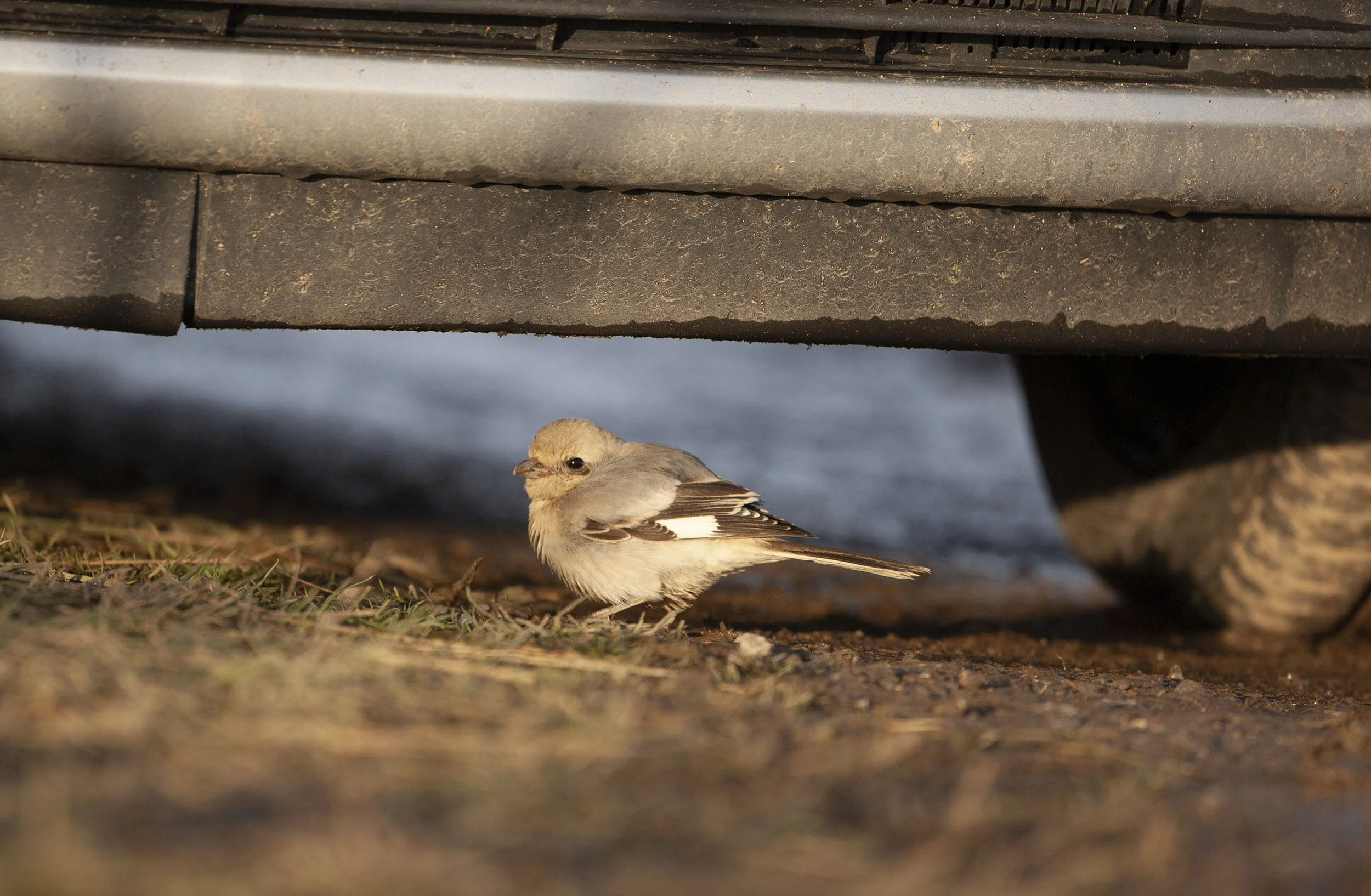
Steppe Grey Shrike Grainthopre Haven November 200-8 - getting close to the bird was not a problem
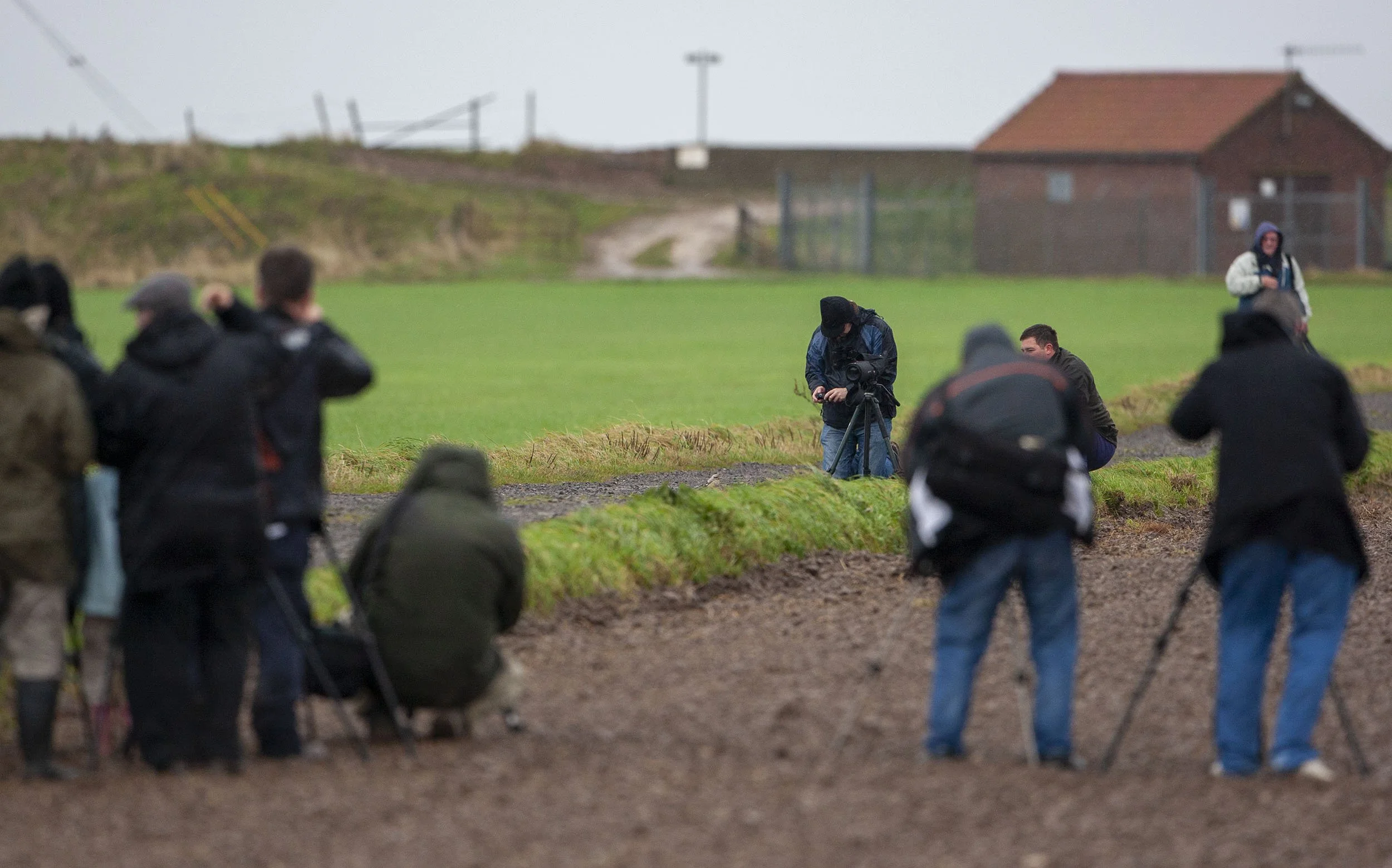
Being very tame, easily accessible and only the 20th British occurrence it attracted a daily audience that over its stay was estaimated to have exceed 2000 people
As far as we were aware the first Lincolnshire record came in November 2008 only to be demoted to second place by an earlier record that surfaced in 2005.
The Lincs Bird Club website text flows:
Steppe Grey Shrike Lanius excubitor pallidirostris
Very rare vagrant. Breeds in semi-desert regions of C Asia from lower Volga E to Gobi Desert in S Mongolia, and S to NE Iran, Afghanistan and N Pakistan. Winters NE Africa, Arabian Peninsula, and S Iran to Baluchistan, Pakistan.
Steppe Grey Shrike L.e. pallidirostris has had a chequered history over the last 20 years. Originally treated as a Central Asian race of L. excubitor it was split by BOU as a race of the “Southern Grey Shrike” complex L. meridionalis pallidirostris and it was thought likely it would be elevated to full species status. When BOU decided to follow IOC taxonomy it was lumped with L. excubitor again from January 2019. If and when IOC and other authorities carry out a detailed review of the complex it may well be split again! There have been two Lincolnshire records of this vagrant Shrike. The first occurred at Nene Mouth in November 2005 and the second at Grainthorpe Marsh November 2008. It was one of the most twitched British birds of all times, as it followed the BOU split that made it “tickable” for the first time. These two records are not included in the Great Grey Shrike archive at present.
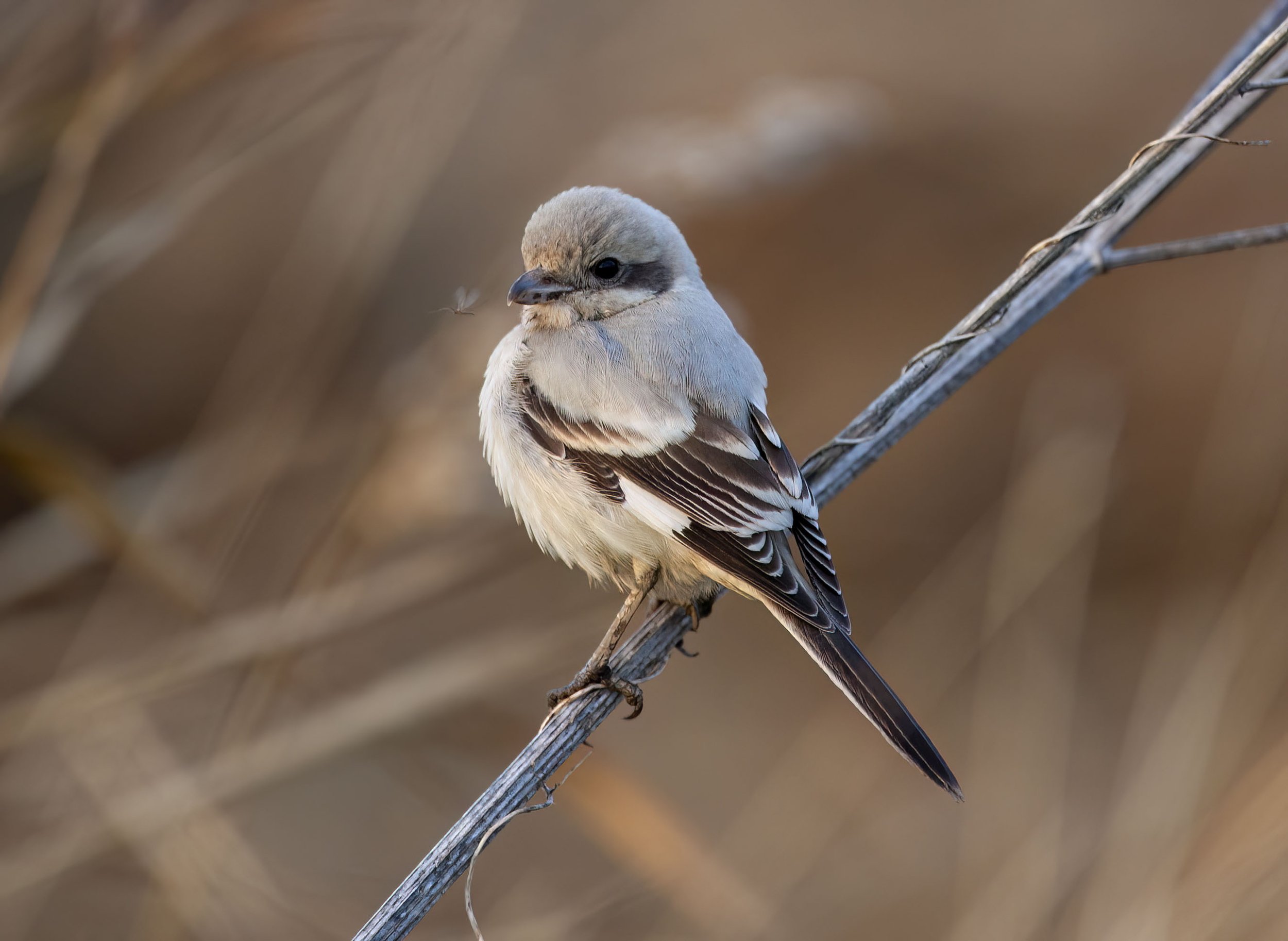
Steppe Grey Shrike Grainthorpe Haven November 2008 contemplating a small snack
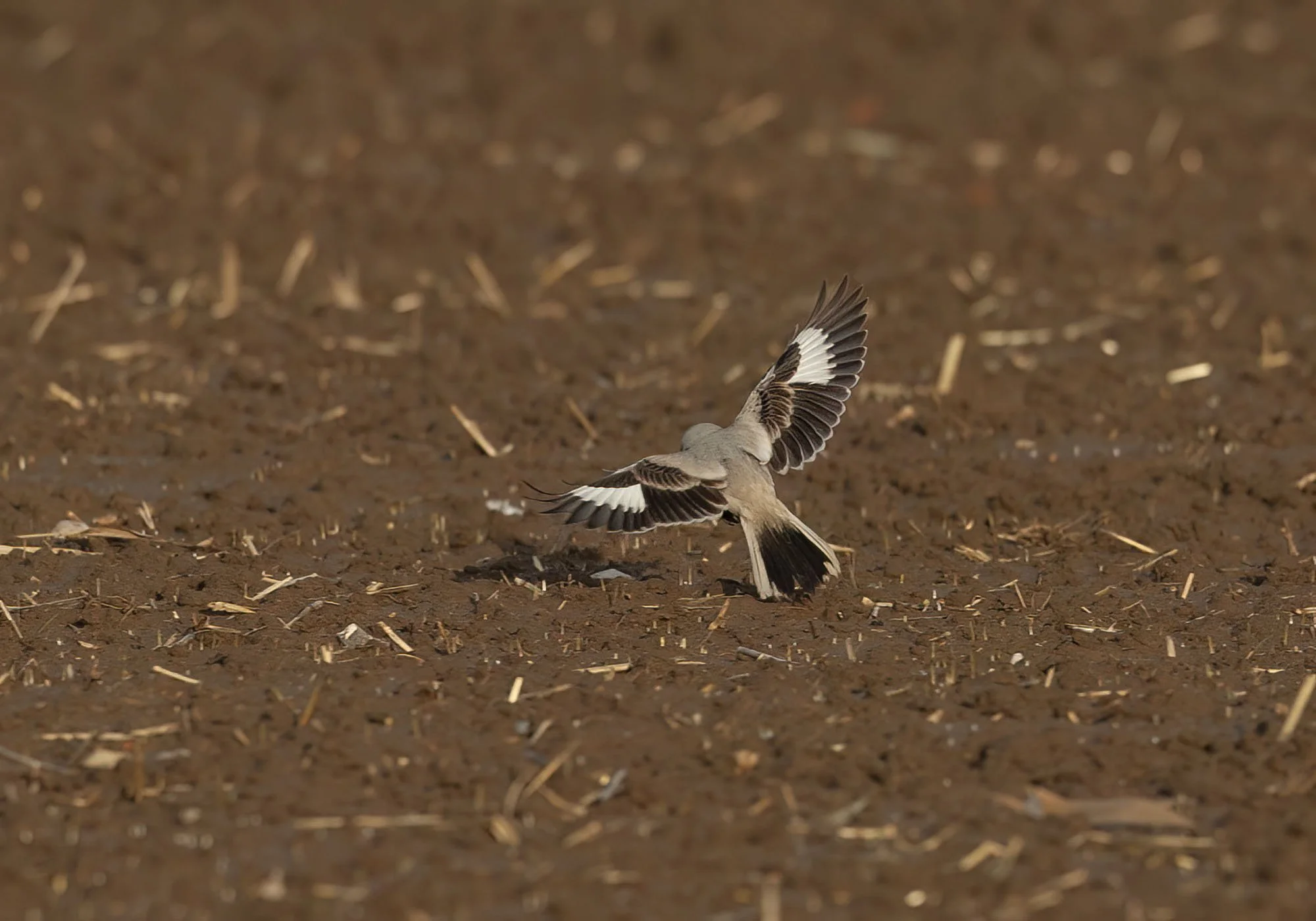
The multitude of plumage differences to Great Grey Shrike are blatantly obvious in flight
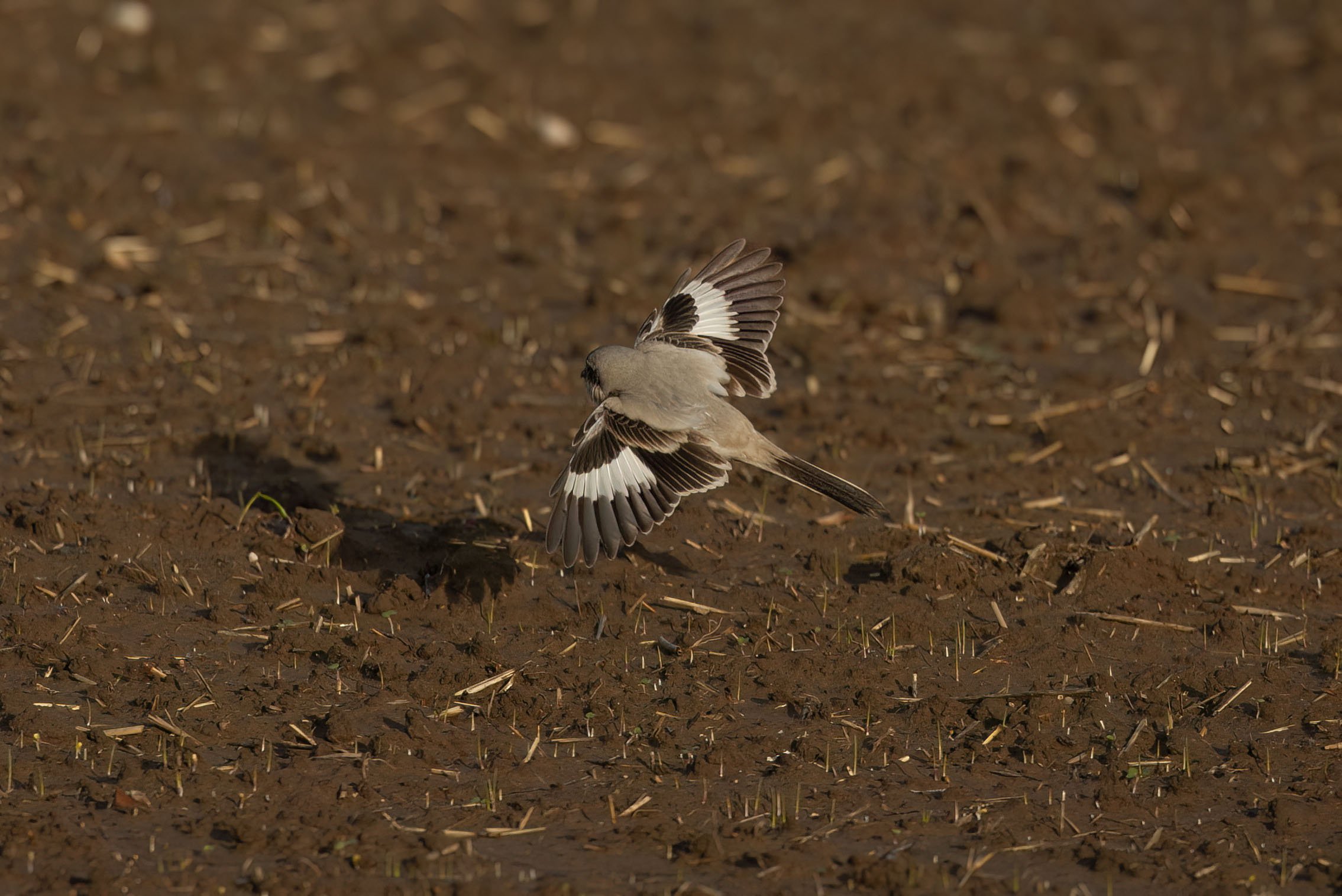
Extensive white bases to the primaries, buff fringed and tipped greater coverts, buff tinge to grey lower back and rump - uppertail coverts; little white in tail
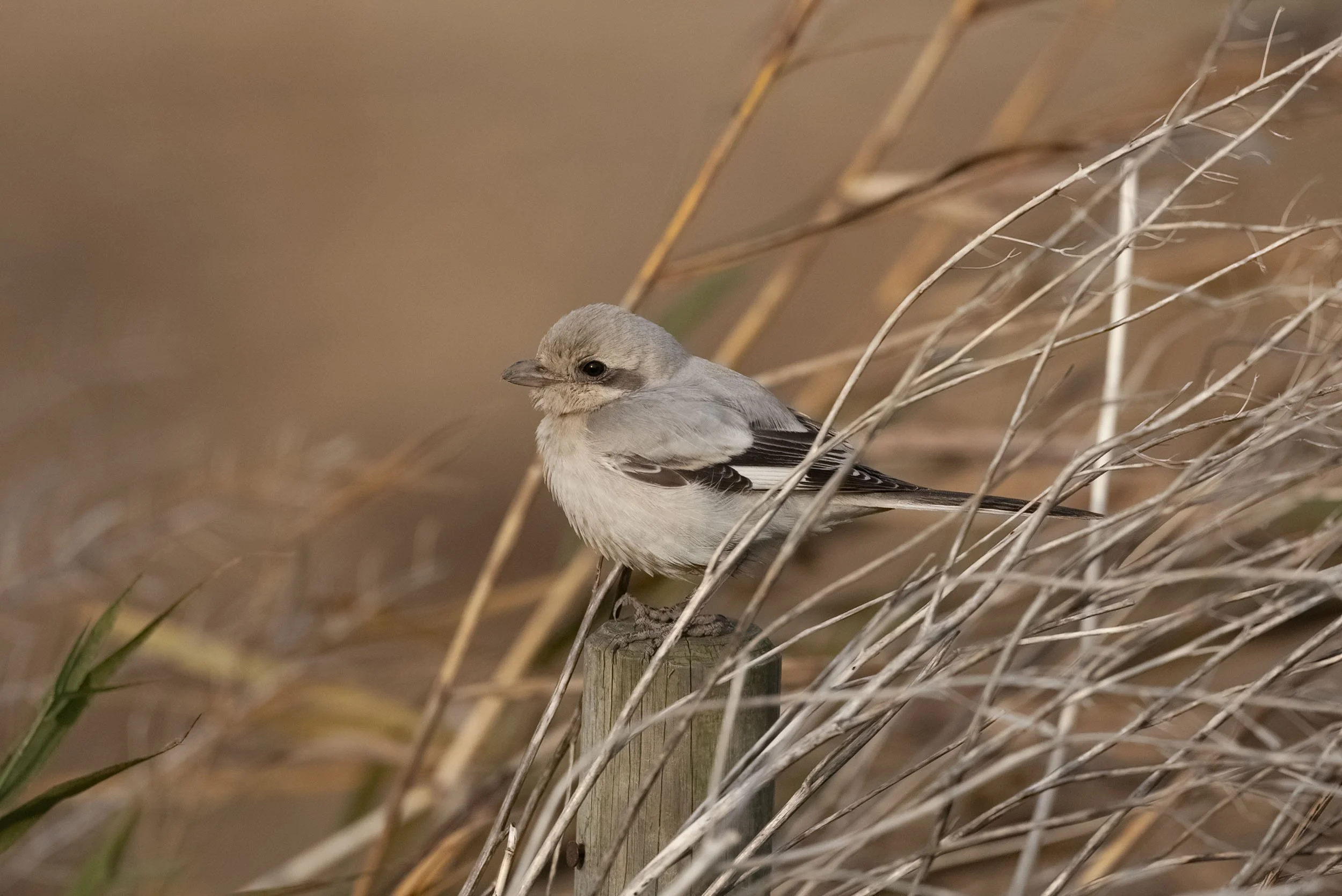
pallid as in pallidirostris upperparts with plain lores and indistinct ear covert patch
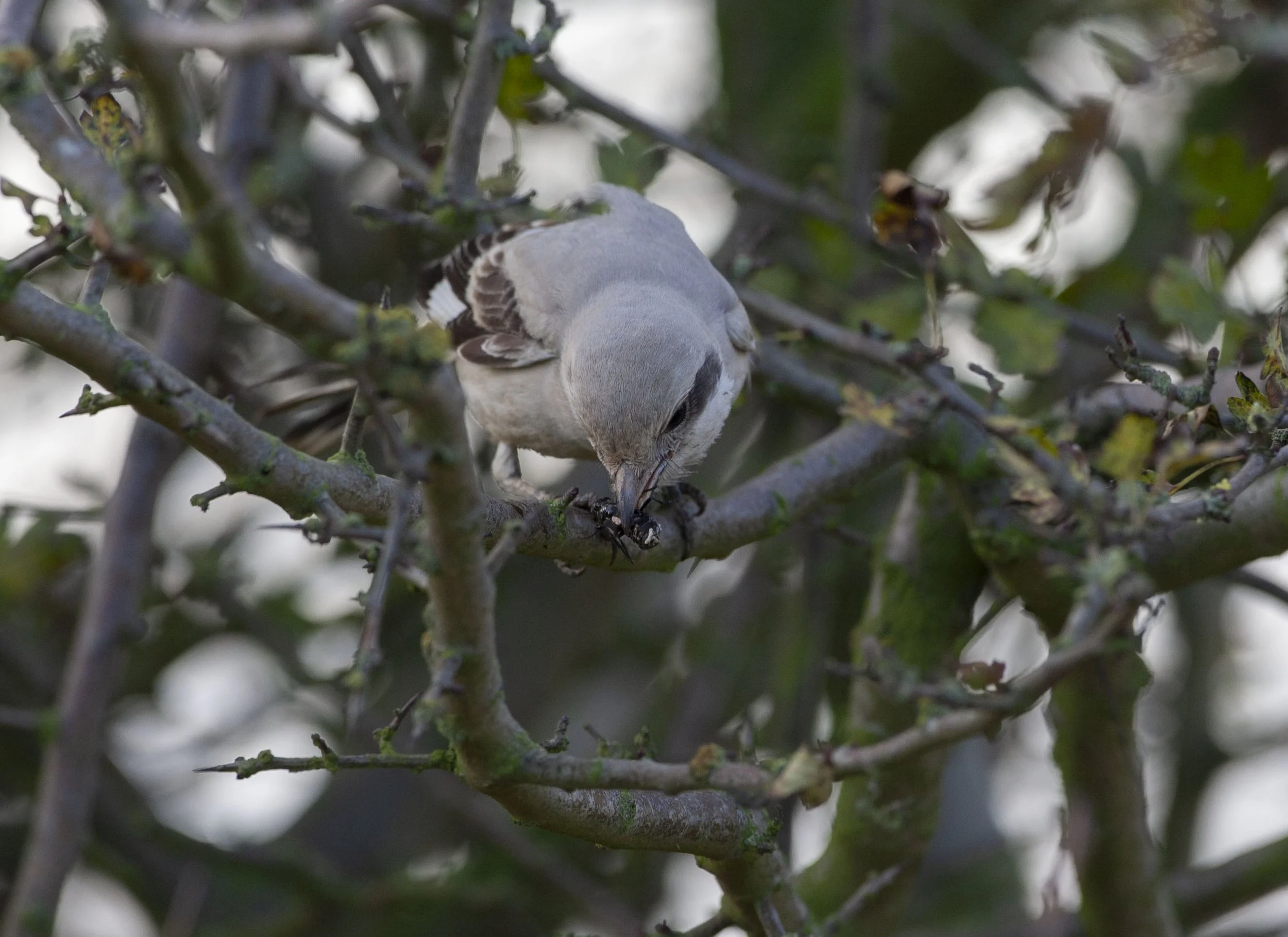
in a mild November it seemed to have little trouble fidning insect food but also regularly took worms from the arable fields
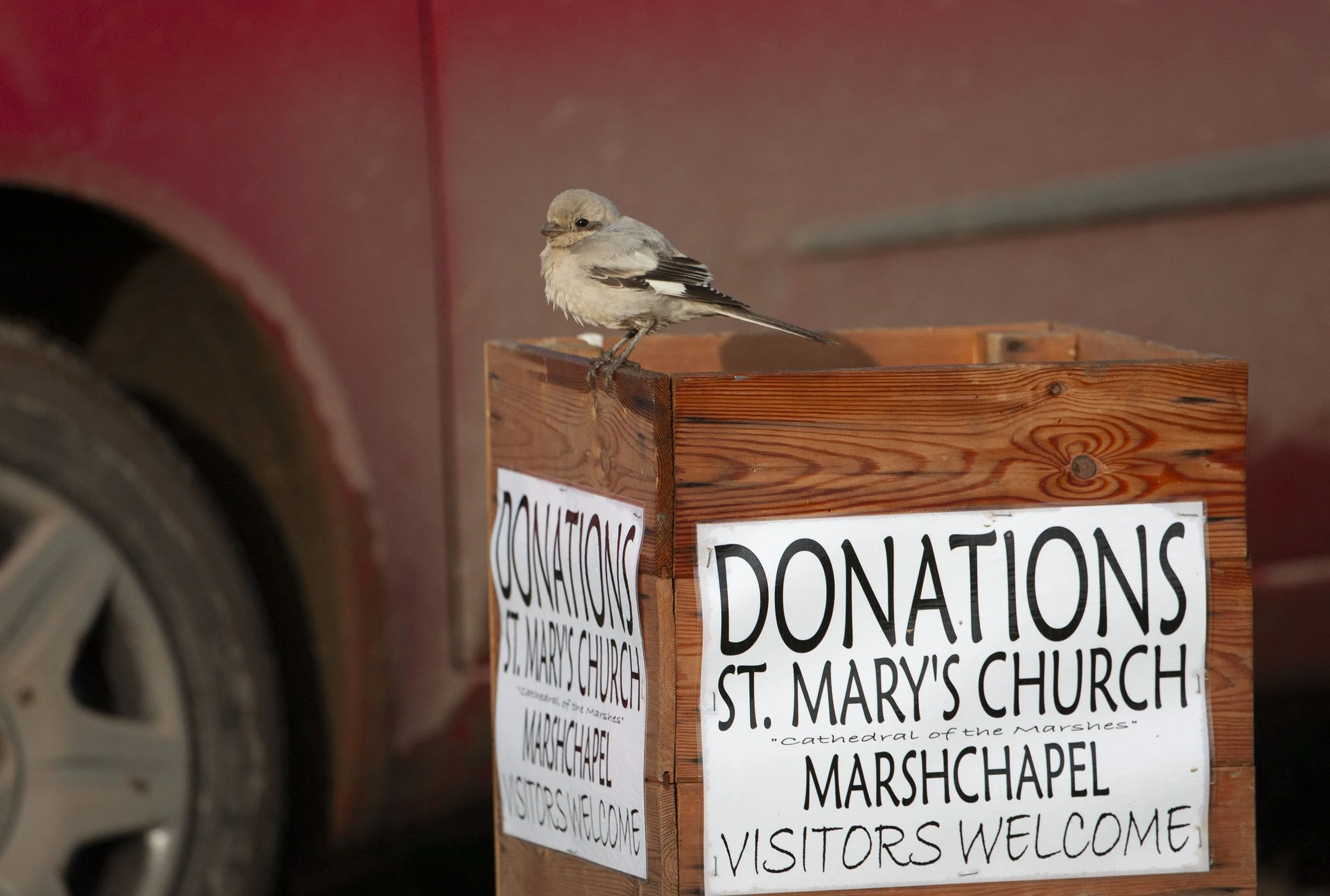
After taking lots of similar images this individual offered other opportunities -
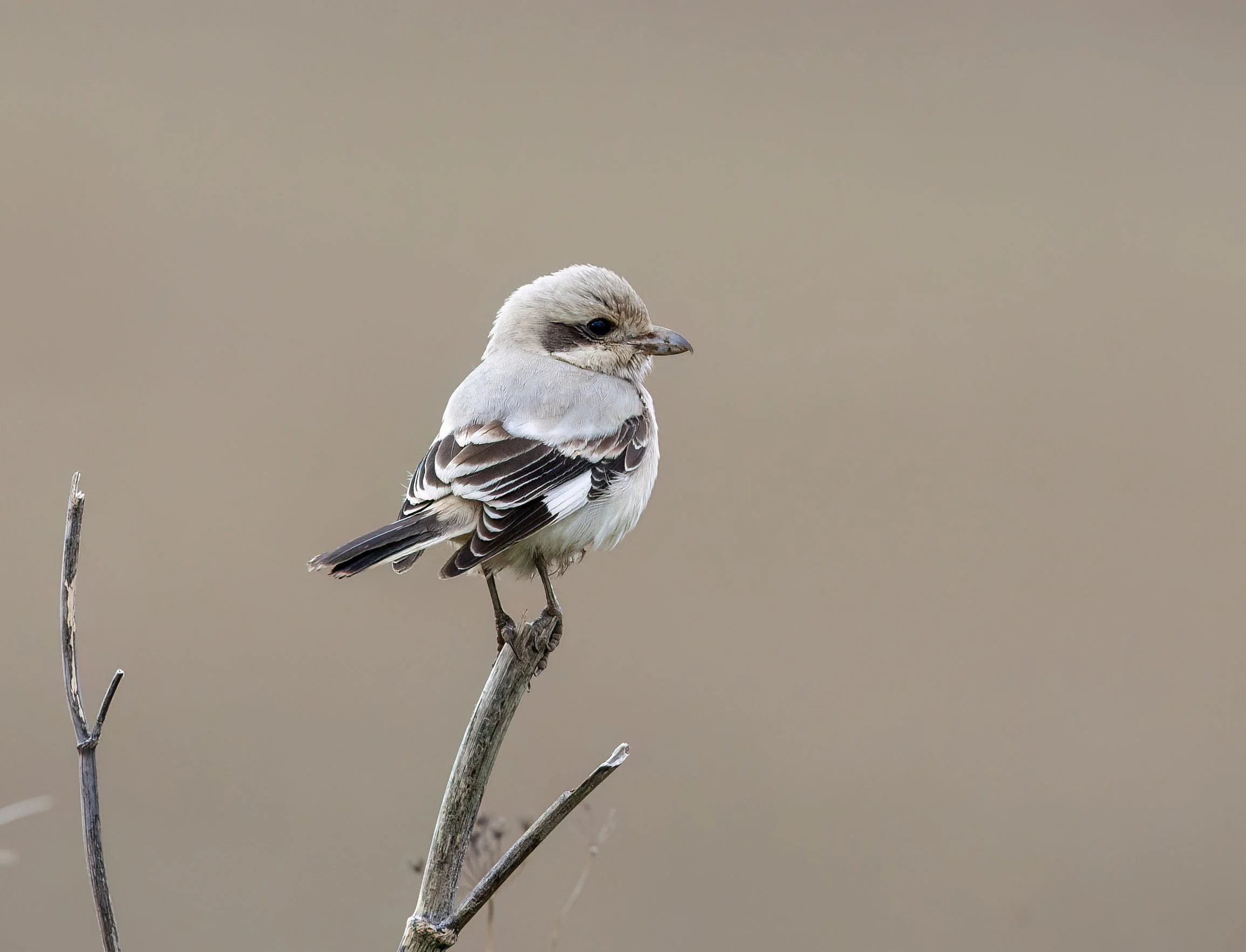
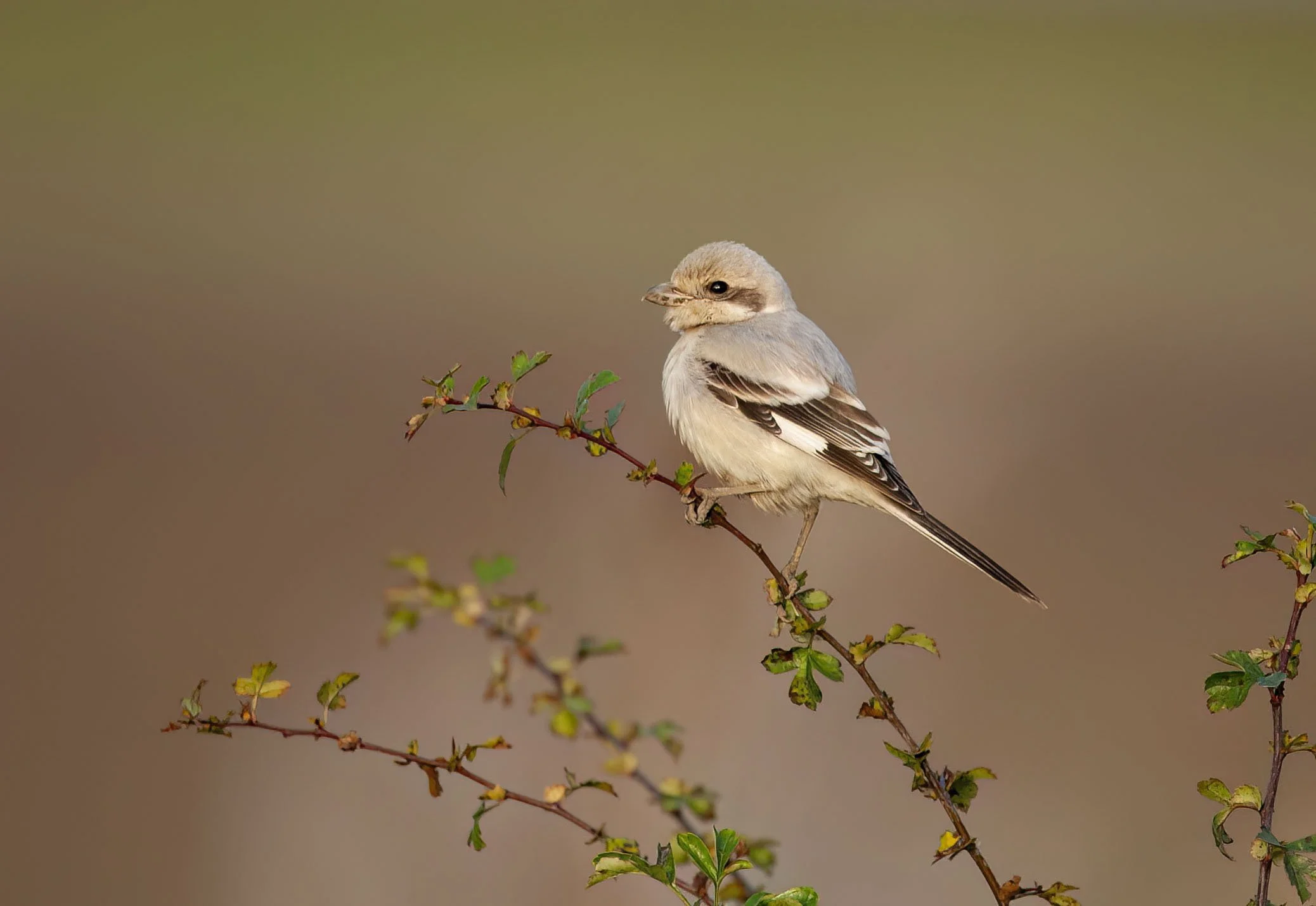
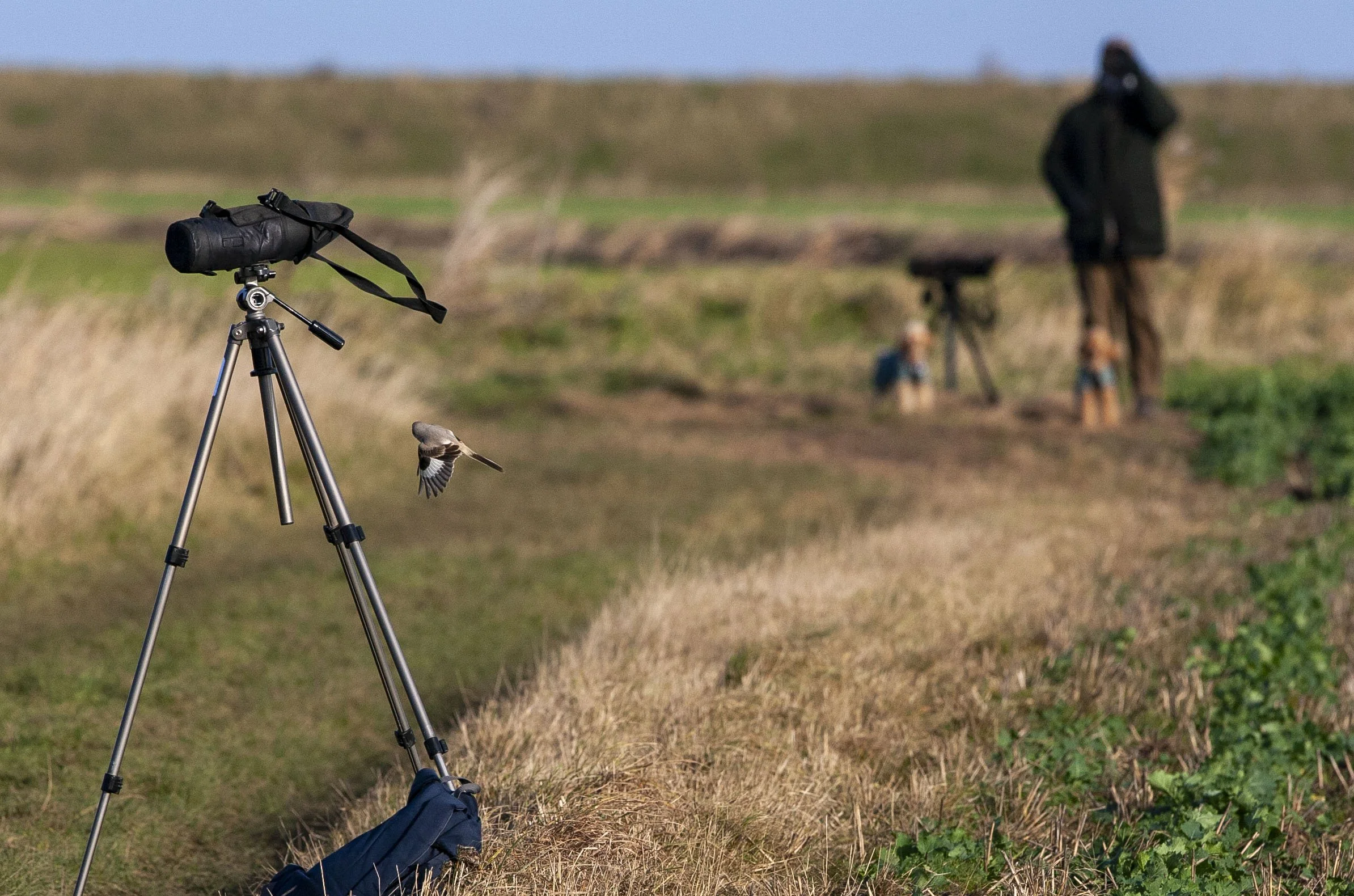
On two dogs’ Lincs bird lists
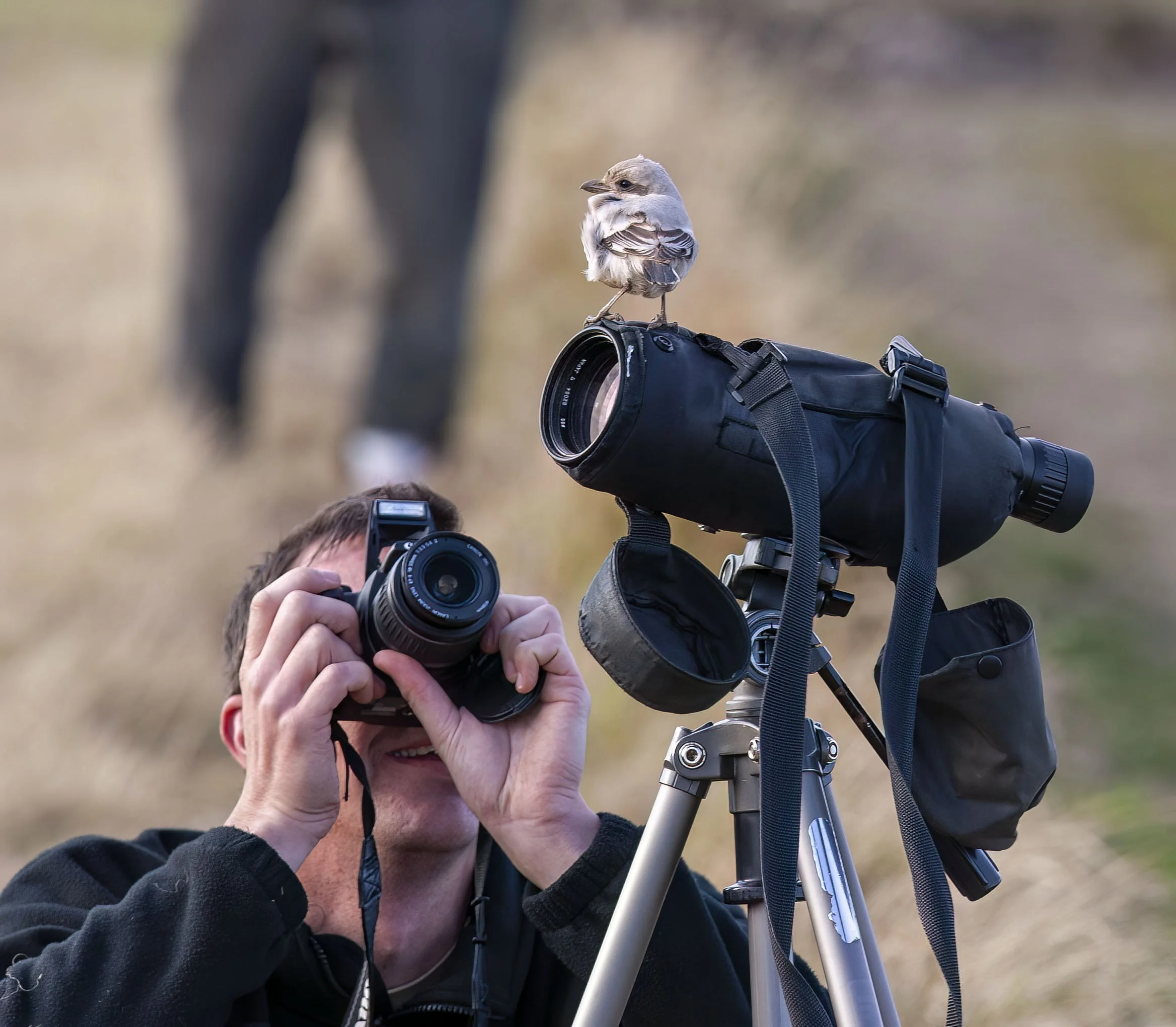
with prograssivly cheaper digital photo gear it was heavily captured but not exactly a difficult subject