February 13th –the rise and rise of the Cetti’s Warbler on my local patch and more historical ramblings:
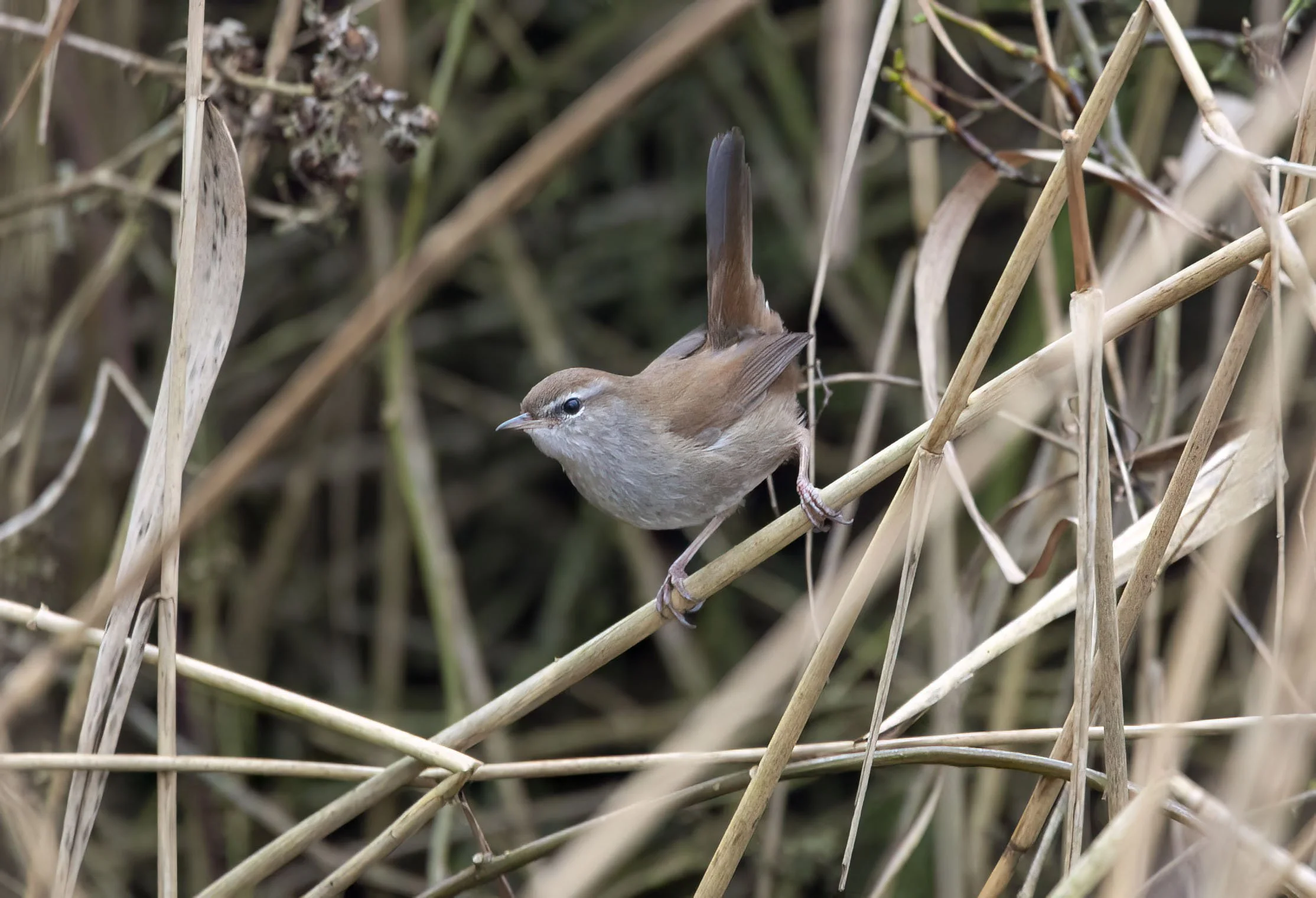
Cetti’s Warbler Barton Pits North Lincolnshire January 2010 an uncharacteristically open view in a very very cold winter
Wandering around my local patch nowadays you tend to almost ignore the strident explosions from male Cetti’s Warblers but twas not long ago that such renditions would have been a source of serious excitement. But let us first ramble back in time to first encounters and a few historical ramblings.
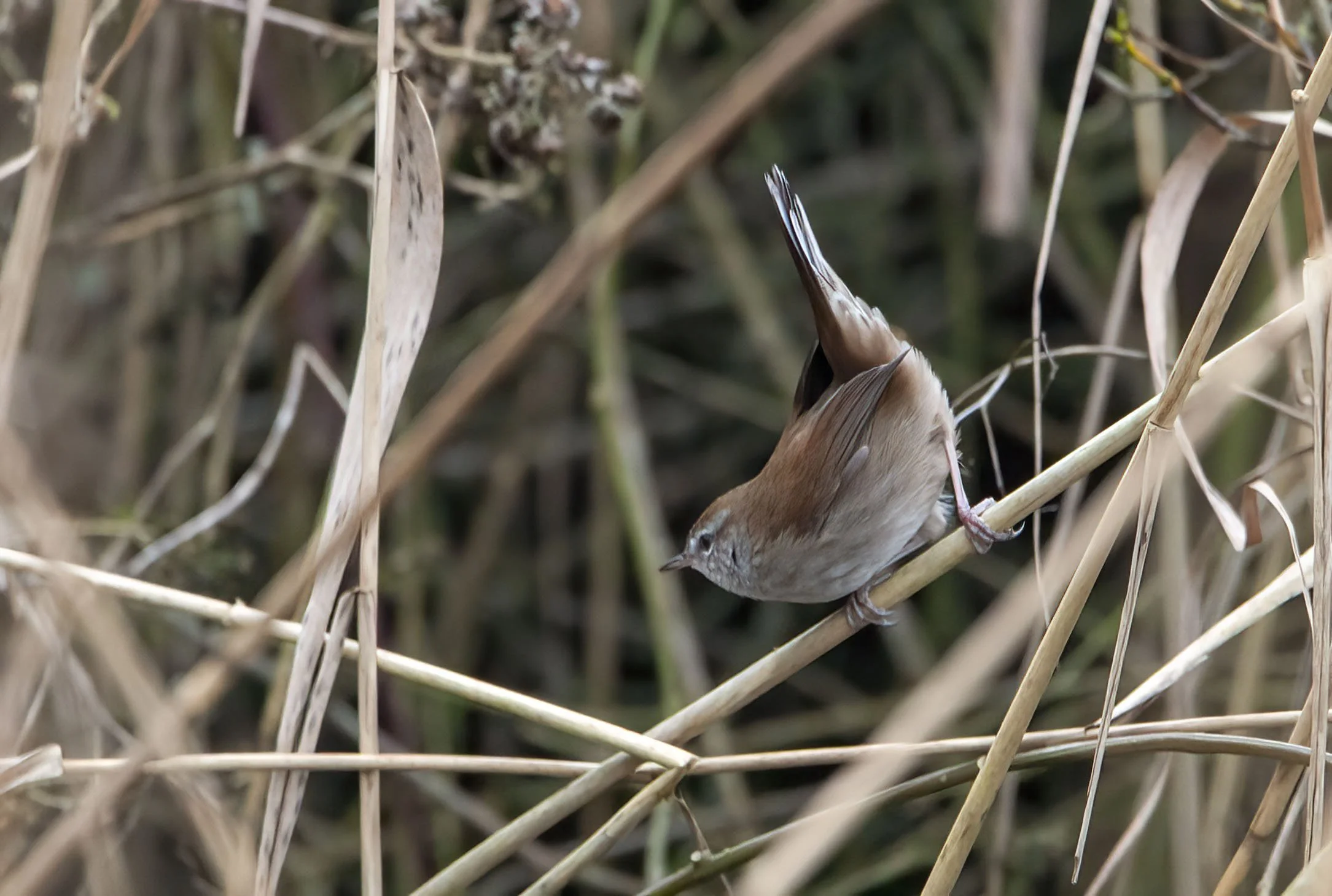
Now firmly established as a resident on my local patch views do not generally get much better particularly in winter when they skulk in the low reed and associated wetland fringe vegetation
Back in the annals of time Cetti’s Warbler was only added to the British List in 1961 when one was heard, seen and trapped at Tichfield Haven Hampshire. Prior to the 1920’s the species had been essentially restricted to the Mediterranean but a north-westward expansion in range occurred through France from then onwards with first records for Belgium, the Netherlands and Germany in the 1960’s but it was not until 1967 and 1968 when further birds reached England’s south coast with breeding first suspected in Kent in 1972 and proved in 1973 when 14 other singing males were present in the same area. Residing in Norwich at UEA in the early 70’s the stories of the first Norfolk birds were unerringly close to home. The first for Norfolk was a bird found dead in Norwich city centre on June 28th 1973 which proved to have been ringed at the first Belgian breeding site on August 23rd 1970.
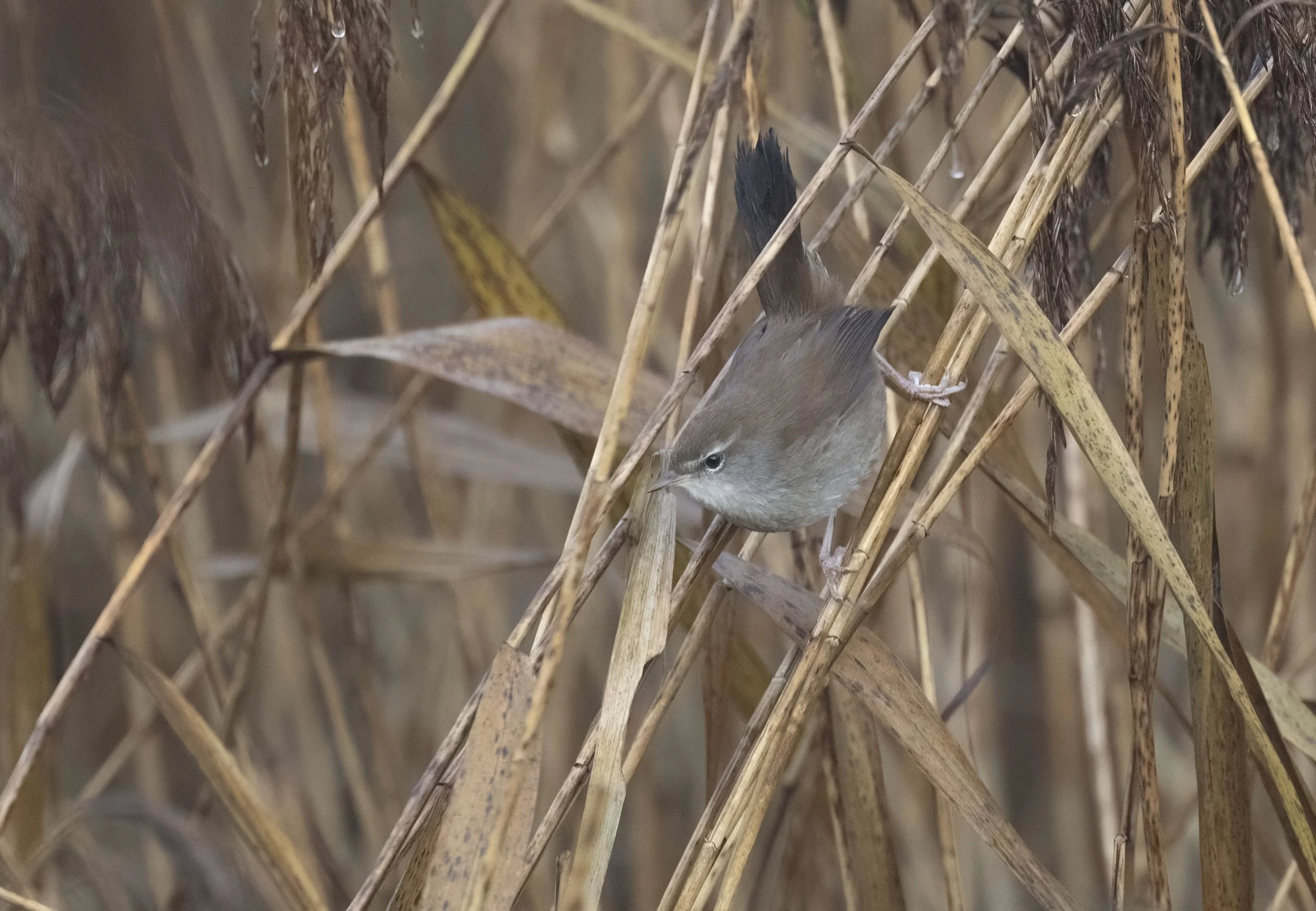
Perfectly designed to disappear in a winter bed of phragmites
On June 18th 1974 we had been ensconced on the east Bank at Cley with Richard Richardson, RAR as most knew him, and enjoyed three lifers in a day! Spoonbill, female Red-necked Phalarope and female Kentish Plover all on the East Pool. Under somewhat hushed tones Richard kindly imparted knowledge of the presence of Cetti’s Warblers in the Broads even providing a hastily sketched map of the access route. He also told us of a pair of breeding Honey-buzzards but that was for another day. Hence on June 20th 1974 armed with said map of which I still have a copy, I arrived at the Ferry House Pub at Surlingham and duly walked past the vegetable patch through the nettle bed to a large dead tree from where the Cetti’s could be heard singing. In a reflection of the species status at the time my brief views compared the warbler to a Nightingale which of course were then commonplace. Apparently five males were present in the Broads that spring with breeding proven for the first time in the county.
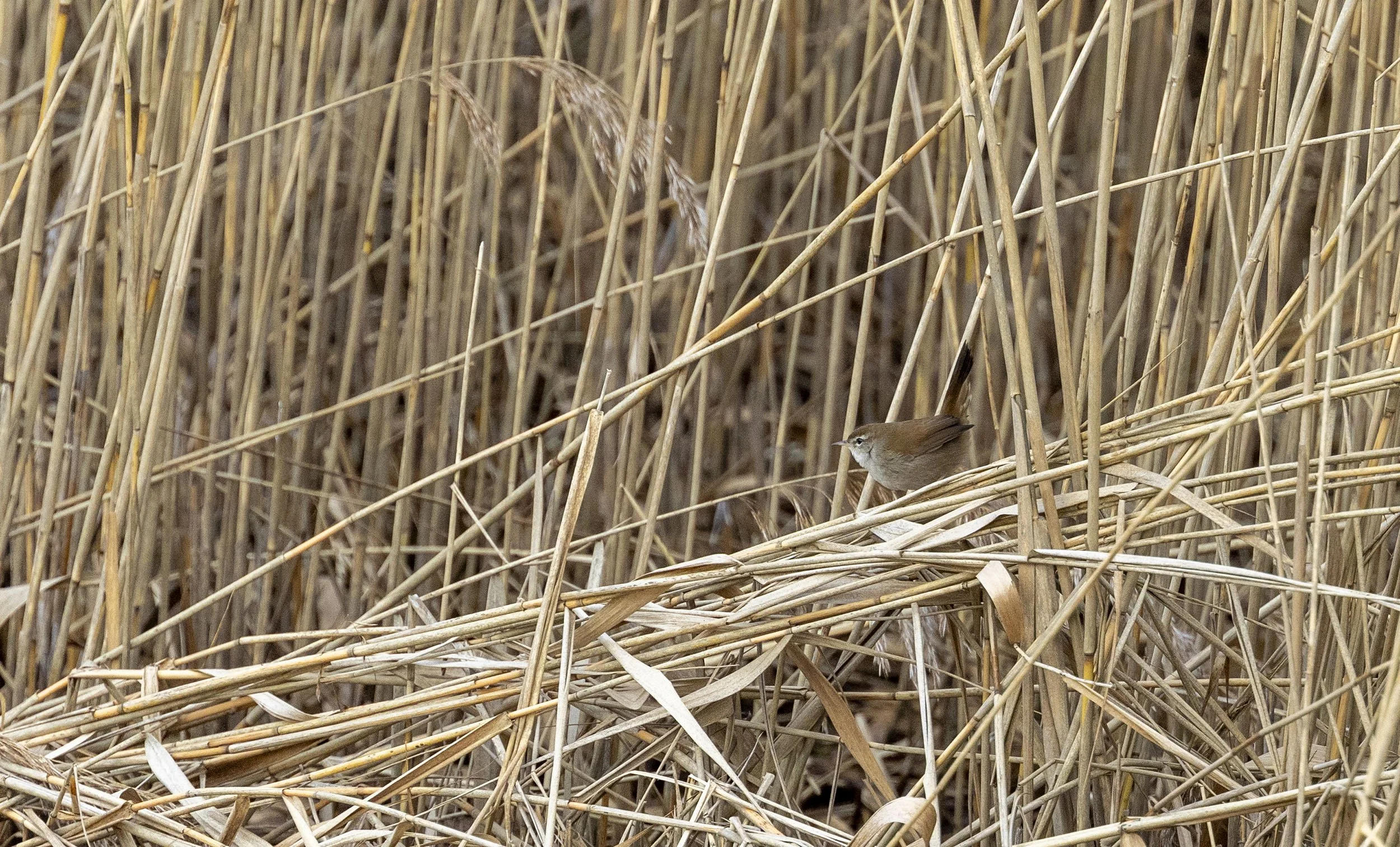
Small birds in big reedbeds only give themselves away by call
So, I had learnt what Cetti’s Warbler song was like but it was the seemingly odd connection between East Anglia, a Nearctic Gull, some thick freezing fog, a three-bar electric fire, Ring-necked Ducks and a Sociable Lapwing that brought about another nugget in the avian sound memory banks that located my first for the local patch. On November 13th 1977 a first-winter Franklin’s Gull was found at Lowestoft fish docks. Needless to say, Mick and I were keen to see it and a trip was arranged on November 27th but our only reward was three Glaucous Gulls, six Shags and six Purple Sandpipers; do they still winter there? With the gull seemingly absent in the late afternoon we headed to Walberswick one of my old UEA stamping grounds and while walking along the edge of the reedbed we heard an unknown call which materialised into a Cetti’s Warbler. The familiar chink call, heard mainly in winter is of course now familiar to most people or maybe not most? The call was so distinct that it immediately impaled itself in my brain one to remember and use in the future.
The Franklin’s Gull was being reported again in early January 1978 in addition to which a pair of Ring-necked Ducks were at Alton Water and a Sociable Lapwing at Little Cornard, both Suffolk surely allowing a nice triple twitch. The winter of 1977 - 78 was colder than normal, point one, with temperatures down to -17C in January. Undeterred Mick and I planned a second assault on Suffolk for January 8th. The start of the journey was not auspicious as I wended my way to Fulstow through thick freezing fog. On arrival at Mick’s I saw an electric cable extending from the kitchen window into his car: this was pre -electric car days. A quick explanation revealed that Mick’s car heater had failed so he was warming the car up for our onwards journey an obvious solution. Needless to say, the journey was interesting as the front window froze up and we shuddered fully clothed in mid-winter attire inside. At one point the fog was so thick we missed the cones on a set of roadworks on the A17 and ended up driving towards oncoming, albeit slow traffic but eventually we arrived at Alton Water – well we arrived at what on the map looked like a lake somewhere near a village called Alton but the lake was more like a garden pond and you couldn’t see across it anyway and there were no obvious ducks other than Mallard so we moved on to Lowestoft where the fog was thin enough to reveal views of the Franklin’s Gull on the factory roof and a British tick was in the bag. We then headed off to look for the Sociable Lapwing which we had been informed was in a field near a pub with a flock of Lapwings. We found the field or at least we found a field and then spent an hour stalking the flock of Lapwings in the ever-thickening fog eventually coming to the realisation that the Lapwings were in fact mole hills. I forget the return journey but it was certainly no warmer than the outward one.
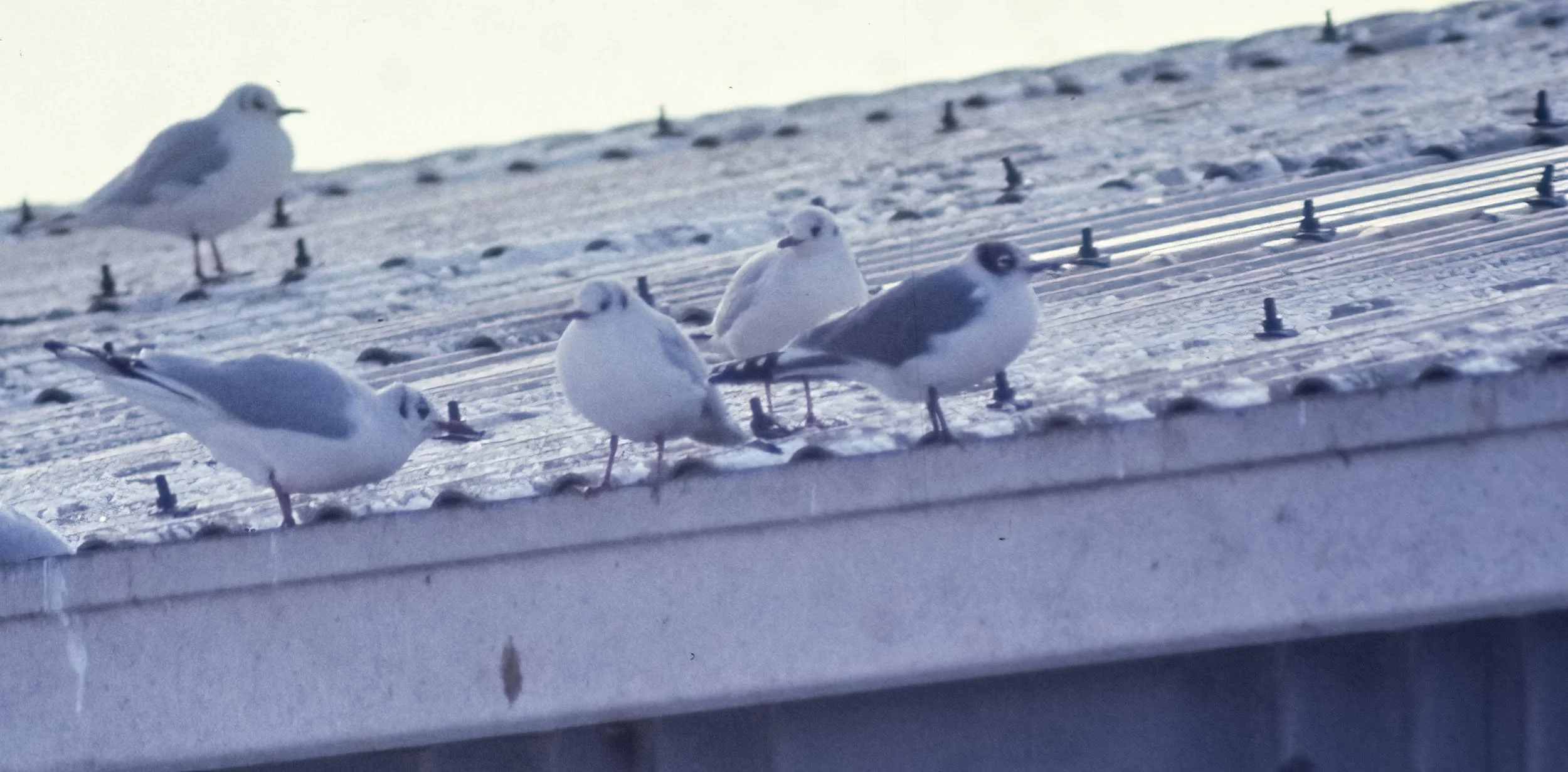
Franklin’s Gull Lowestoft January 1978 - the old slides have not survived well in the intervening 47 years
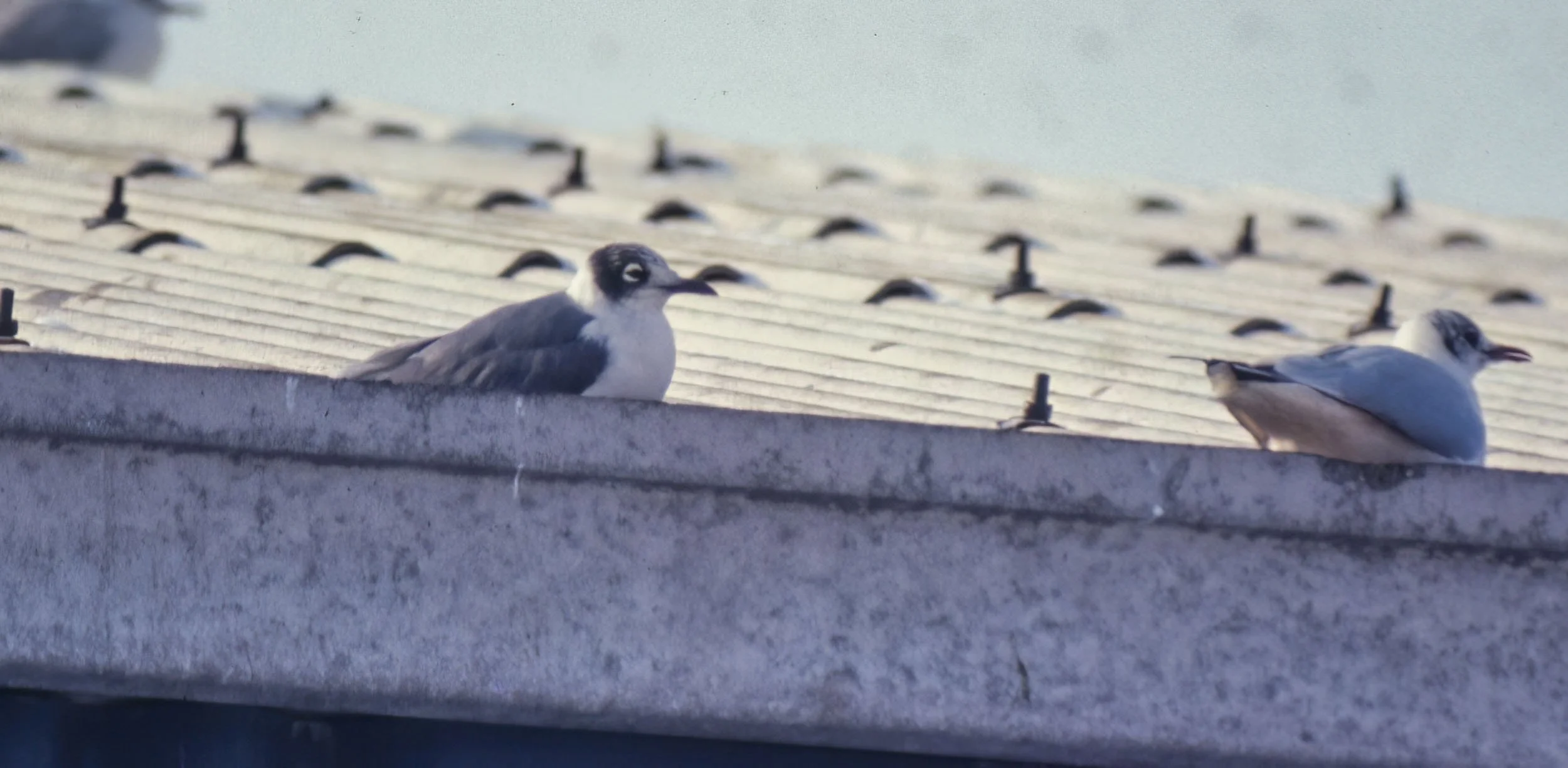
Really did not ever expect to see 100’s on the prairies of Alberta in later years back in 1978
Earlier in 1977 a Cetti’s Warbler had been recorded at Barrow Haven on March 6th forming the first record for Lincolnshire when it was accepted by BBRC. I was a little sceptical due to several reasons. The observer had arrived in the local area in 1976 and upon meeting him at BH where I worked and spent up to 40 hours a week birding, he immediately informed me that the site looked spot on for Cetti’s Warbler and wondered why I hadn’t recorded any as he had come from Radipole where they were of course common by then. To be fair I knew the habitat looked right but that didn’t mean one would suddenly appear but apparently it did though he saw it when I was not there and it did not call and didn’t sing – I have tried to think how many times in the last 13 years I have ever seen a Cetti’s without hearing it call or sing but I guess anything is possible. Personally, I didn’t believe the record and still don’t but in the greater scheme of things it really doesn’t matter one way or another. The next for Lincs was a bird trapped at Theddlethorpe on October 1st 1983 when the northward push started but it was 1995 before a singing male held a breeding territory in the far south at Langtoft but such is the nature of the skulker that it was 2008 before breeding was first proven in the county in the north at Bagmoor.
Harping back to a very different time but less than 50 years ago the spring of 1977 at Barrow Haven produced a list of migrants rarely seen today in North Lincolnshire never mind at one location, including: Glaucous Gull, Black Redstart, Redstart, Nightingale, Tree Pipit, Whinchat, a peak of 172 Turtle Doves moving west in four hours on May 15th and Hooded Crow.
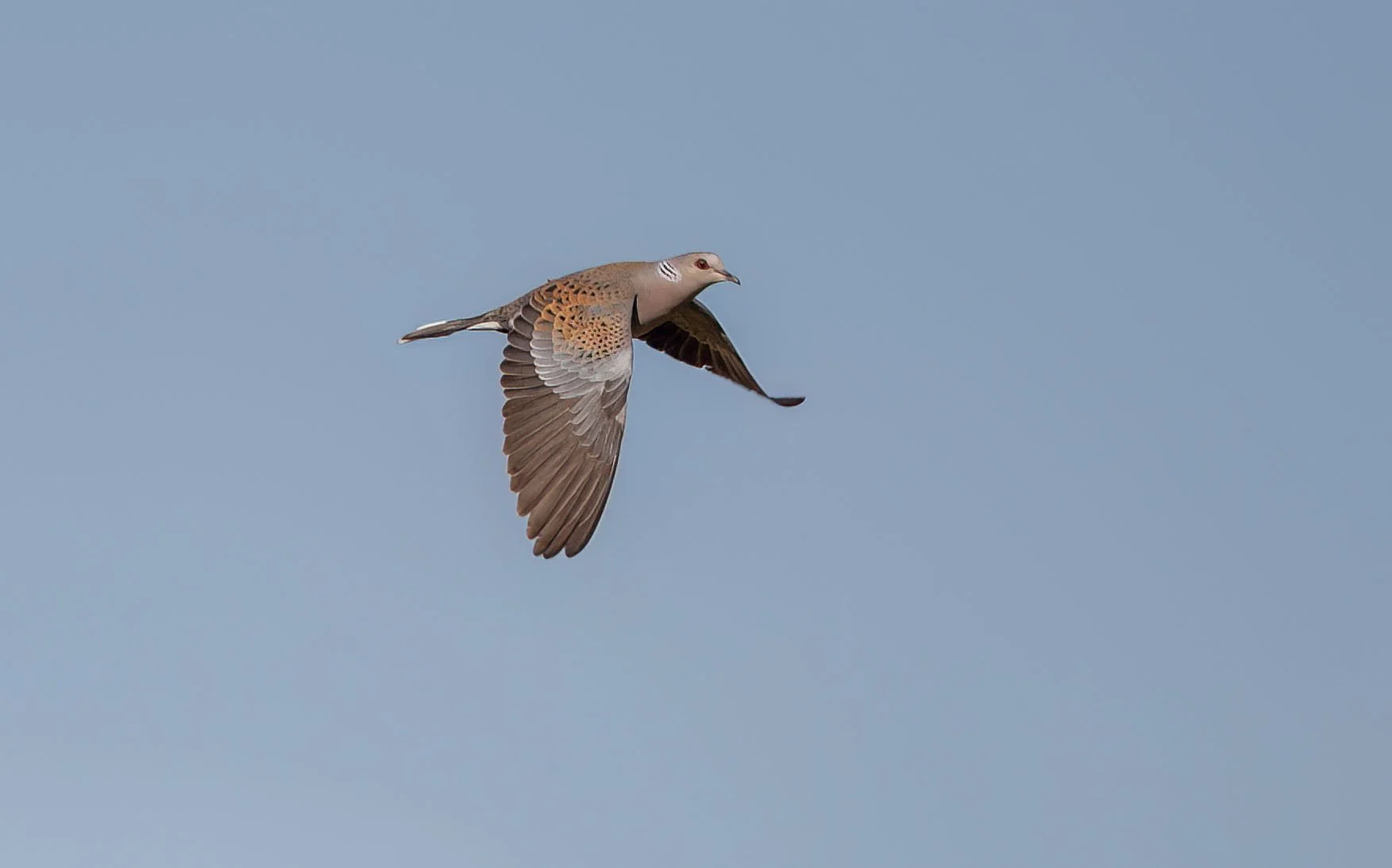
Turtle Dove Barton Pits May 2009 - up to 34 pairs bred in the 70’s and 80’s but the last was seen in 2016 - thoughts of 172 flying west in a few hours seem unimaginable now but that was only 48 years ago a blink in time - another sad loss
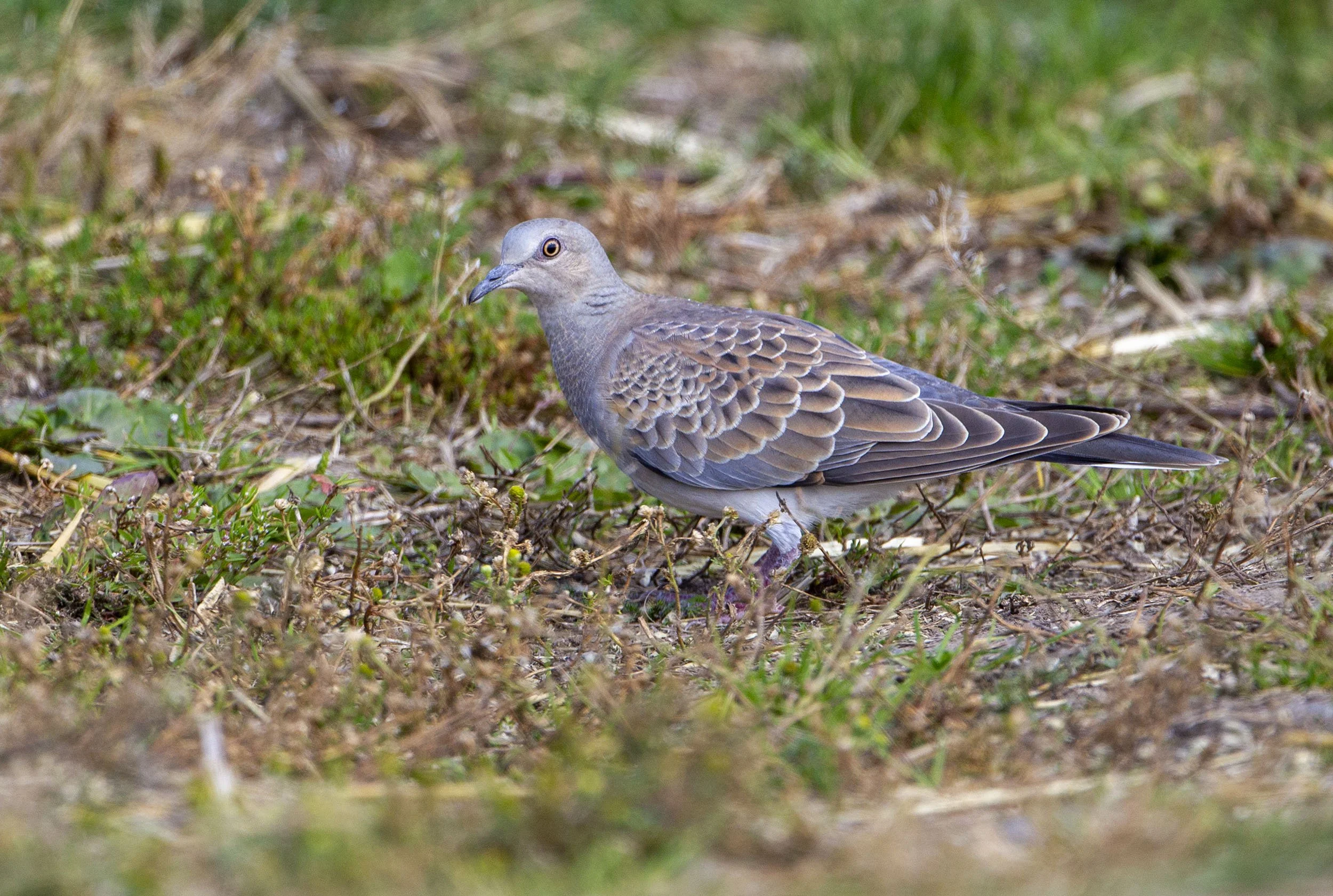
This was the last locally fledged juvenile Turtle Dove I recorded back in 2011 when with hindsight the writing was on the wall for this beautiful bird
I twitched the 1995 Langtoft Cetti’s Warbler for the county but was always open eared for a local bird though it took until February 2003 to find one. On the afternoon of 13th in earnest preparation for Valentine’s Day I was out birding my patch: my extensive notes follow:
Having finished work at 14:00 I took a walk around Waters’ Edge counting the roosting waders of which 120 Dunlin were the high point then I picked up a first-summer Mediterranean Gull among the roosting gulls, my first of the year, but it flew off while I was setting up the scope. The remainder of the circuit was pretty uneventful but with some nice evening light available I decided to go down the west of the bridge to look for Bitterns. Parking the car at the pursuits centre gate my attention was drawn by a large number of gulls following the plough on the field south of the new ponds in Blow Wells fields. Hoping that the Mediterranean Gull may have joined them I walked down the road to the bottom of the hill but most of the gulls were drifting off to roost as it was by now 16:50hrs. A Barn Owl appeared flying along Far Ings drain so I set up the scope to try and digi it when it perched up on the dyke side. The light was poor at 16:55 but as I moved to try and get a better angle on the owl I heard a quiet but distinctive chink chink call from the edge of Bridge pit about 10m away! Not really believing that this could actually be a Cetti’s Warbler, although I was newly reacquainted with the call after hearing the Huttoft bird in November and December 2002, I was still amazed to see a bird moving through the dead willow-herb and reeds at the edge of the pit---a quick view with binoculars and I was at last watching my first Barton Cetti’s Warbler after 30 odd years of searching. It then showed quite well for a Cetti’s as it moved along the edge of the dead willow-herb and the reed fringe on the southern side of the pit calling regularly and giving the rattle call once. By 17:30 it was almost dark and although it could still be heard calling further along the hedge to the west it was not seen again.
The 14th dawned bright and clear but with a severe frost. I was on site by 07:30 and soon heard the Cetti’s call in the same area of Bridge pit. It appeared just above the water and ice working its way along the thinner reed fringe. After some frustrating calling and hiding it moved across the road into pursuits pit where I had my best views as it fed in very open reed just above the water and worked its way in full view past my position. Later it showed briefly but quite well in the edge of the thorn hedge and again in the reed fringe and called frequently but only gave the rattle call twice. It was last seen in the presumed roosting area at 17:35 that evening but there was no sign of it the following morning after another very sharp frost. In spite of extensive searching, it was back in the same location on the 20th when SR re-found it calling from the base of the bramble and reeds. I managed to see it well as it fed in the base of the wet bramble on the edge of the reeds in the same spot at 13:00hrs but it was only calling infrequently. There is no doubt though that it would have been picked up if it had been in the same area during the intervening period.
Over the next few days I watched the Cetti’s on several occasions but had best views on the morning of the 22nd when the weather was very cold with a light south-easterly and sunny breaks in overcast conditions. The bird showed almost continuously for 20 minutes in the top of the brambles for the first time and came to within 10 feet of me calling frequently but only gave the rattle call once. A new note was heard which I noted down as chiss ickkk almost broken into two syllables.
This bird stayed to March 30th. I found a second bird on Waters’ Edge on March 19th with a third bird in a new location on 25th writing extensive notes on each encounter.
March 25th 2003
About 18:20 walking from the car on Pasture Road down the track to Hoe Hill house when only 20m down heard a chink chink---surely NOT! But then again the same call from the low bramble on the bank on the left of the road----it moved down the track as I followed getting some views of a shape moving in the thick bramble---it then crossed the track into the base of the reed and bramble on the right and continued to call---brief view in the reed before it flew to the southern edge of the open water on Pasture Wharf where landed in the reed and called again---positioned myself opposite the thinner edge of the reed to the north and waited—it called again and again and eventually came through the reeds into an open area where I got full views before it moved into the brambles calling still at 18:45----then did several rattle calls in the same area where it appeared to be at dusk----amazing could this be a third bird????
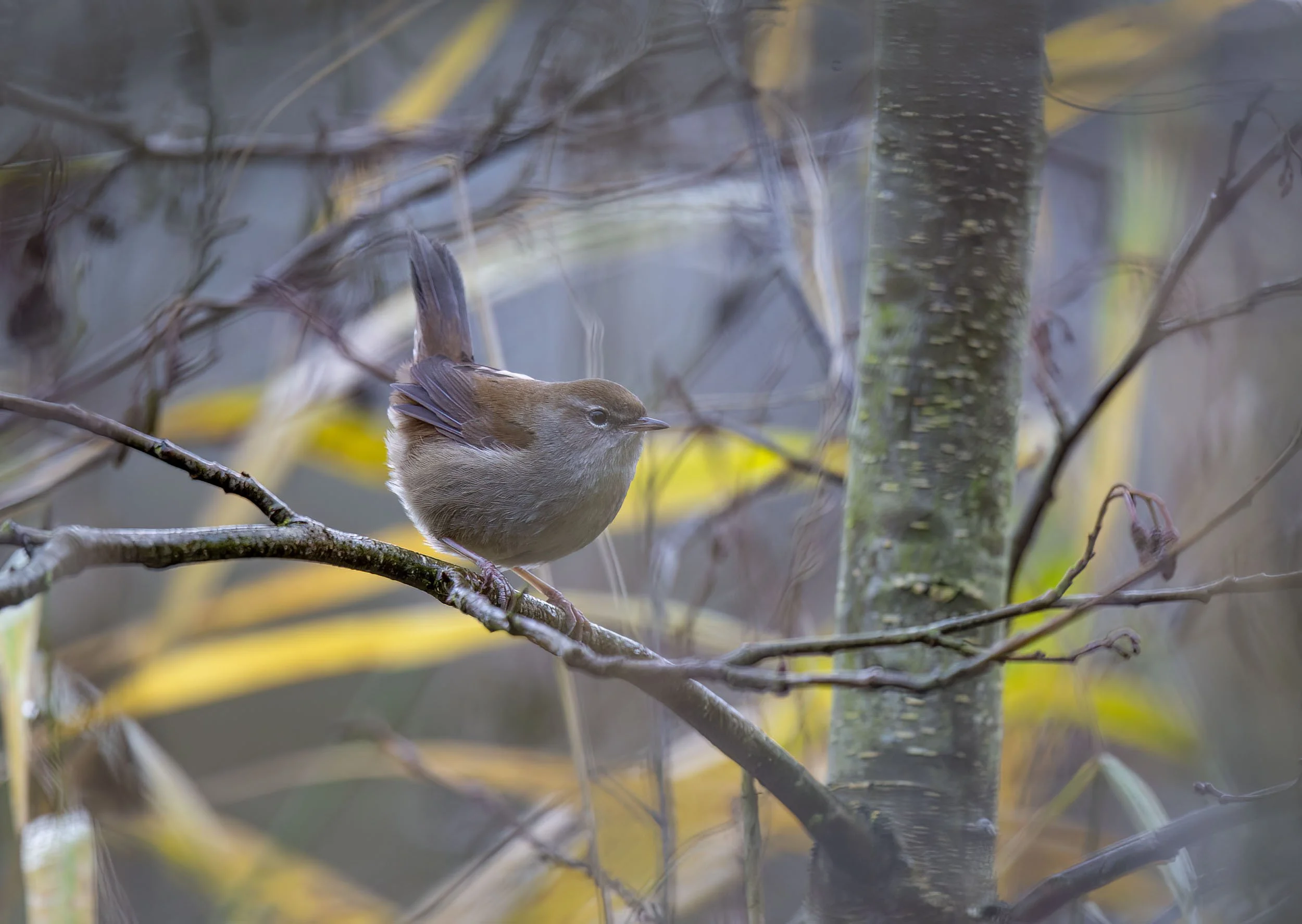
Cetti’s Warbler Waters’ Edge Barton December 2015 as the species really took off locally
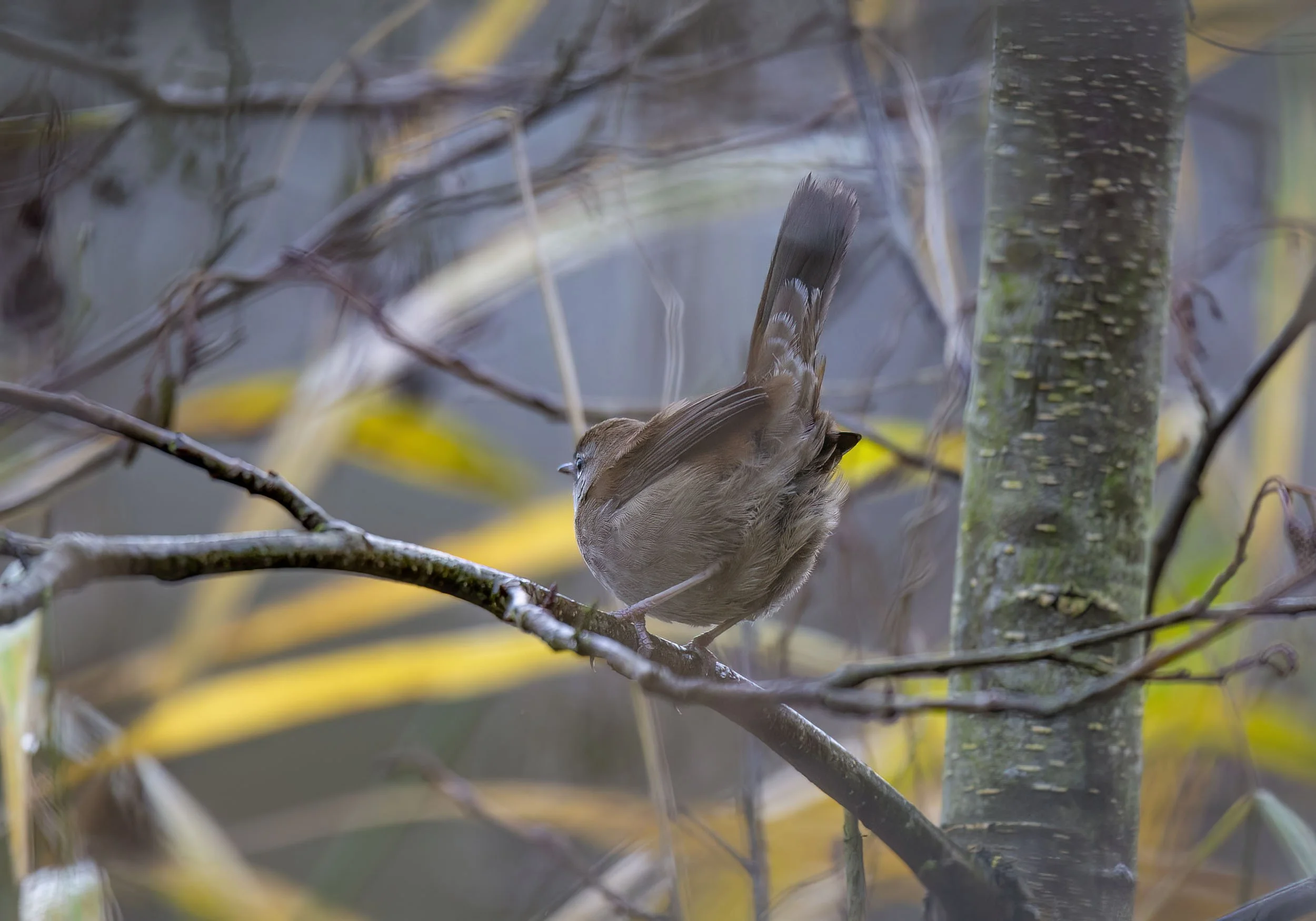
Never ignore the undertail coverts
Only one bird could be found in 2004 and one in 2005 with no records in 2006 but 2007 saw the first singing male holding a territory though no singing birds were noted again in 2008 in what was seeming like a sporadic spread northwards with knock backs in some cases in hard weather but in others seemingly inexplicable. A singing male in 2009 with eight birds between Barton and Barrow Haven marked the start of the real colonisation with singing males increasing to six in 2010 but then two exceptionally hard winters knocked them right back with only one male in song in 2011 but three by 2012 since when there has been no inroad into the expanding population. The total of 12 singing males in 2014 with an estimated 26 birds in the following winter was the start of the infilling stage with new areas of habitat being colonised annually. The area of available habitat along the Humber bank is quite restricted formed by worked out tile and brick works that developed into open water pits and latterly more scrub but only it only stretched c700m – 800m inland before reverting to built up areas or arable desert. Infilling and reduction in territory size with more overlapping edges has seen the total number of breeding territories rise to 65 by 2023 when I last surveyed the whole area. The increase from the first record in 2003 to the first territory holding in 2007 and 65 occupied territories just 14 years later is truly staggering. Birds are much more difficult to census in the winter when they are quieter but with up to two broods per year fledging the total winter population must be considerable though clearly dispersion does occur. A singing male wandered to within 500m of my house in the spring of 2025 along a strip of damp woodland that abuts a housing estate and elsewhere in North Lincs odd birds are starting to occupy drier and seemingly less suitable areas of habitat as the population increase continues but I doubt a garden bird is on the cards though a flock of Bearded Tits did fly over back in the 80’s.
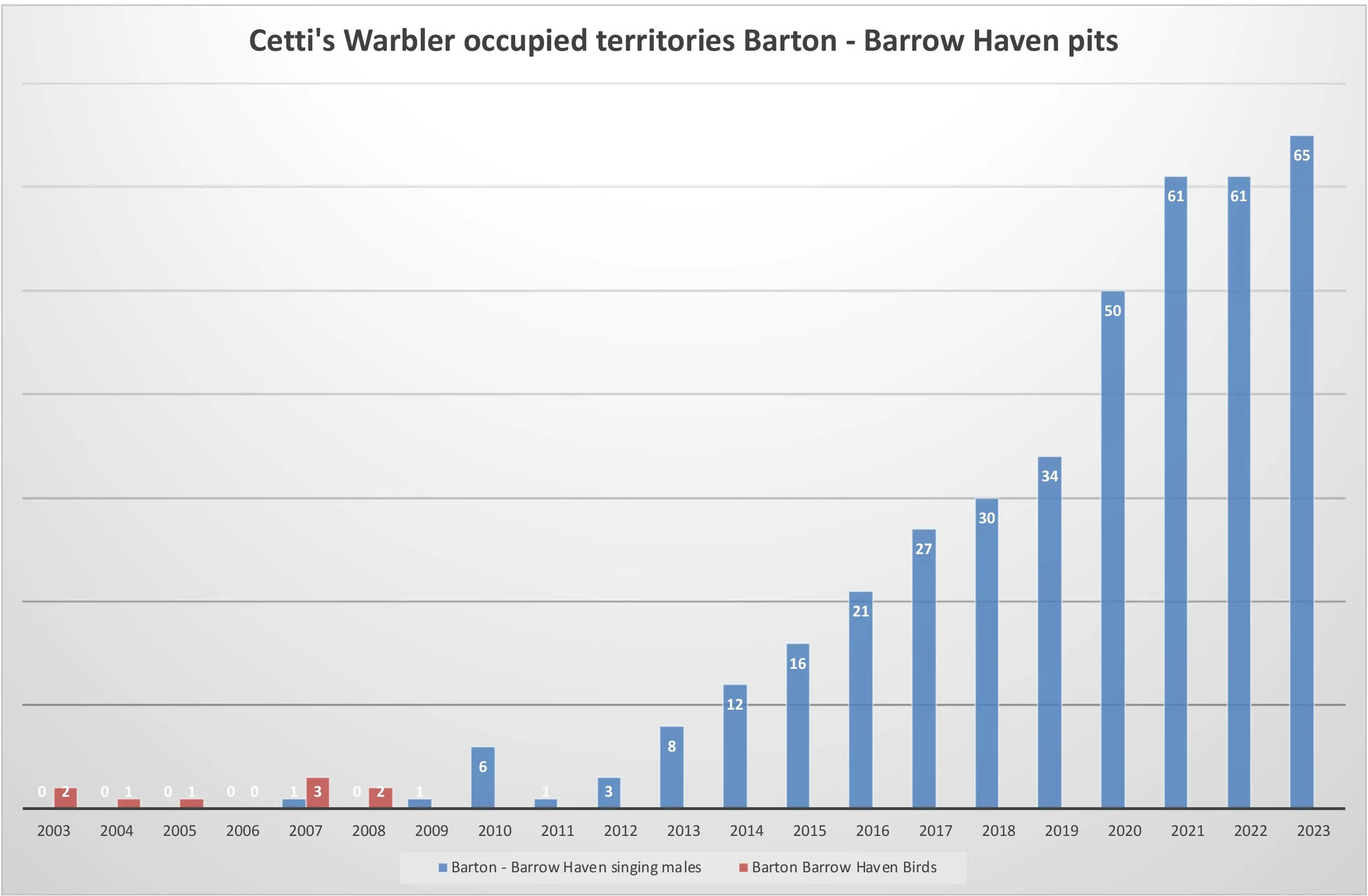
The exponential rise to 2020 with suitable unoccupied habitats clearly becoming more restricted from 2020 onwards
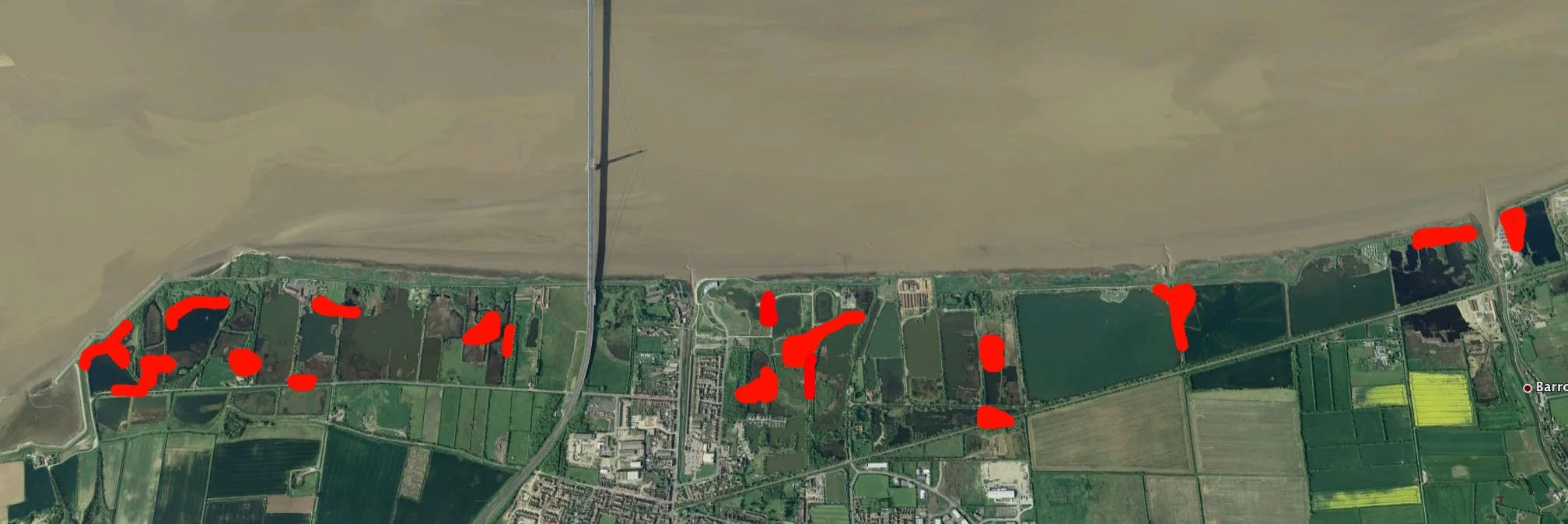
2015 a total of 16 occupied territories
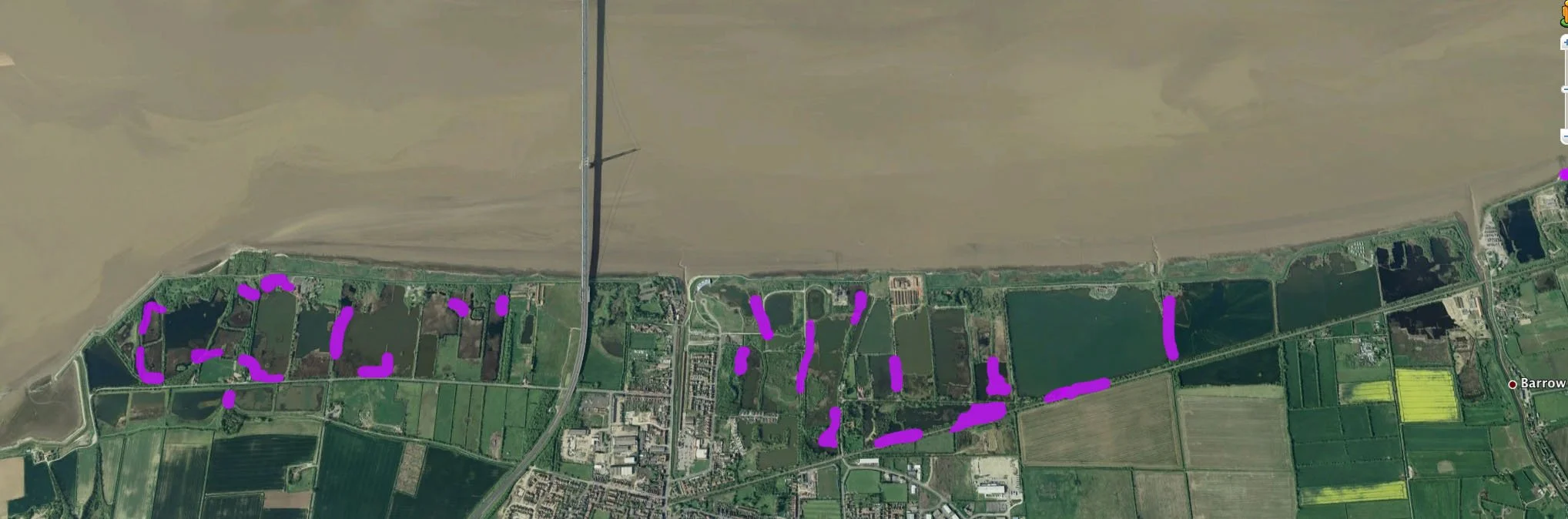
Cetti’s Warbler 22 territories in 2017

and 65 territories in 2023 - an increase facilitated by smaller territories but also some expansion from core areas
And an additional bit of vocal observation: Cetti’s Warbler song is abrupt, loud and generally unexpected – it demands attention for all nearby and hence over many years I have noticed that on most occasions where Water Rails are present in the vicinity it evokes an immediate response from the squealer almost as if the two are intricately linked in the wetland audiobook. Is this universal or just something related to the recent appearance of the warbler in habitats already occupied over many years by Water Rails? The latter could be the case locally as Water Rails have bred in the clay pits for over 70 years but at Alkborough Flats where reedbeds are a fairly recent habitat Water Rails only arrived in 2012 with a quick increase to 40 territories by 2017; the first Cetti’s Warbler was noted in 2012 with 11 territories by 2017 so the two species increased in line with habitat abundance but the response calling is just as frequent there as locally.
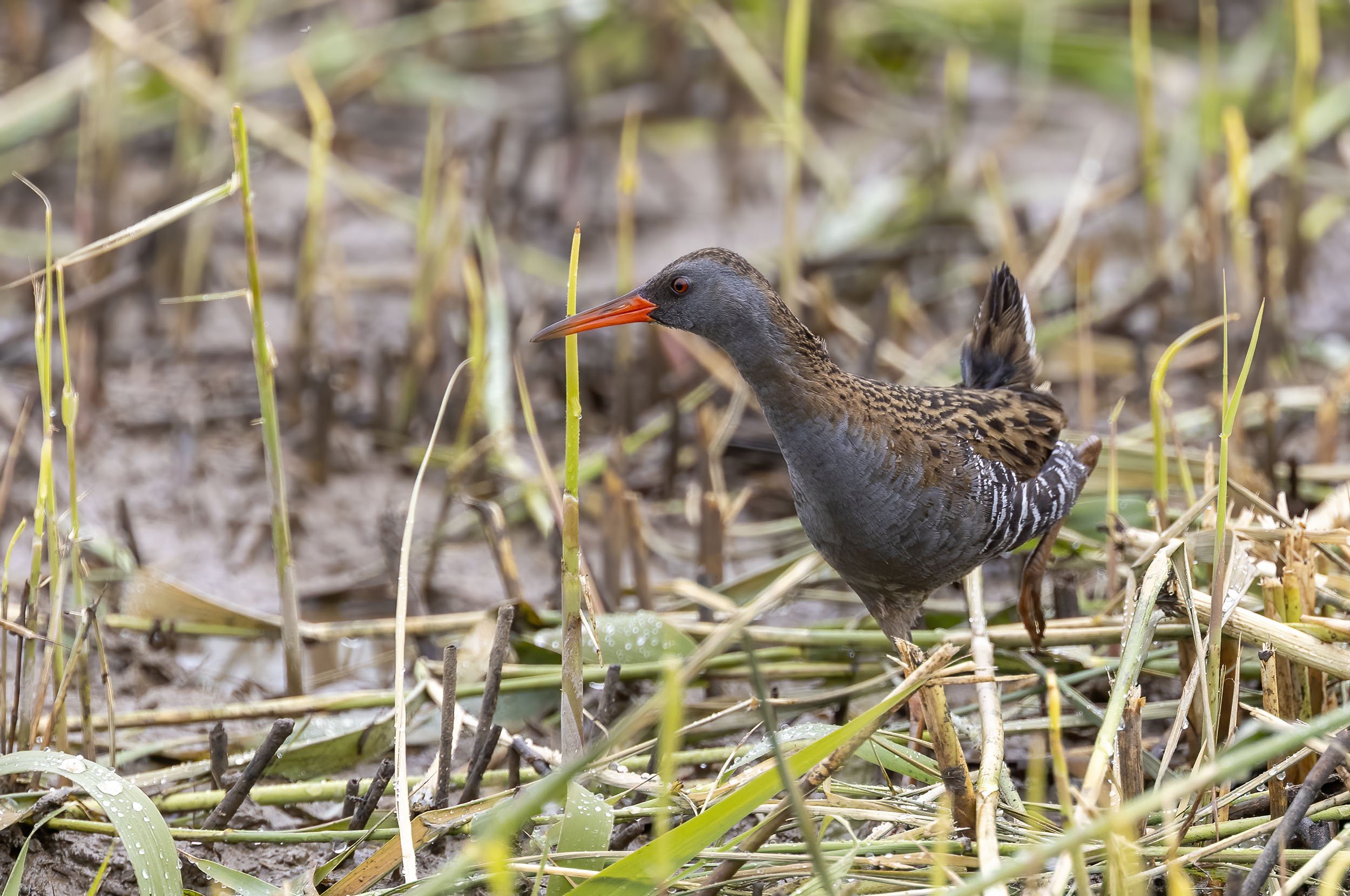
Why do Water Rails call immediately after a male Cetti’s blasts out? Assume they do not think it is a competitor - occurs in the breeding season but also in winter
As an addenda February 13th 2026 a Cetti’s Warbler sang from within 10m of where I heard that first one on the same date in 2003.
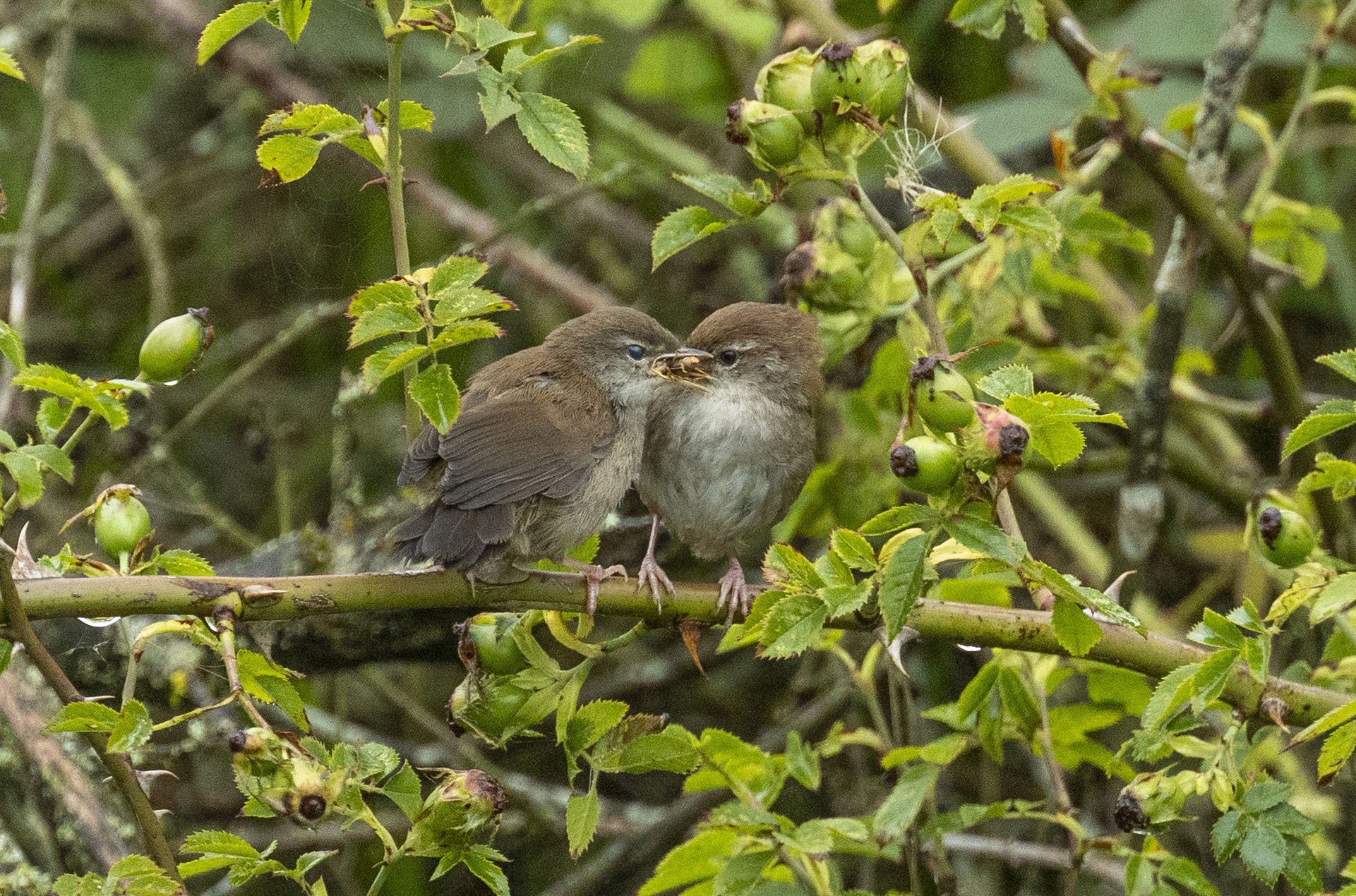
Cetti’s Warbler feeding a newly fledged brood August - proving breeding it not easy but the calls of newly fledged young are typically a give away
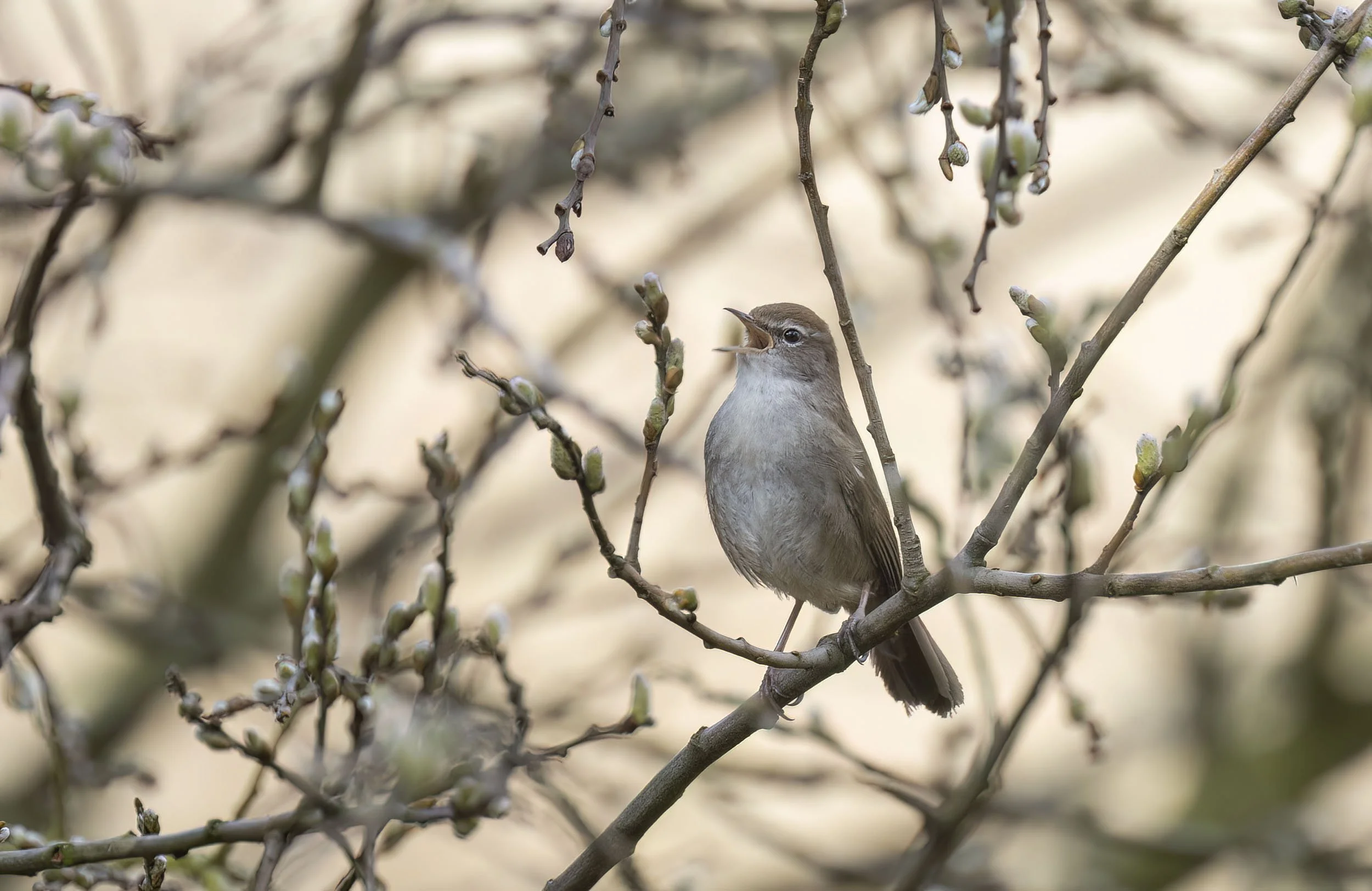
Singing male Cetti’s Warbler - males in spring can be a bit more visible and it seems the higher the density of birds the more willing they are to perch in the open to sing albeit often only briefly
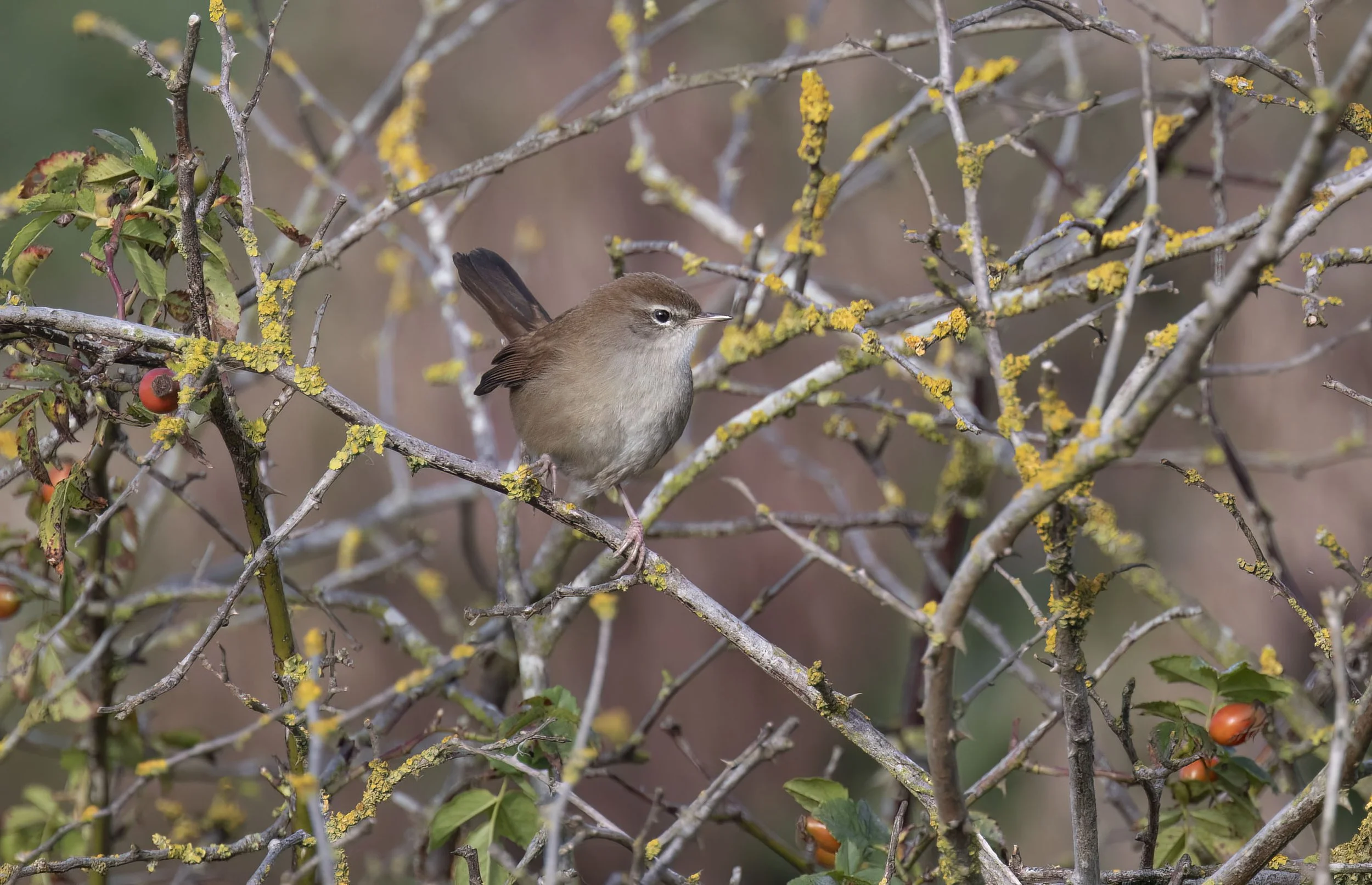
With so many birds disappearing Cetti’s has been a welcome addition to the local wetlands
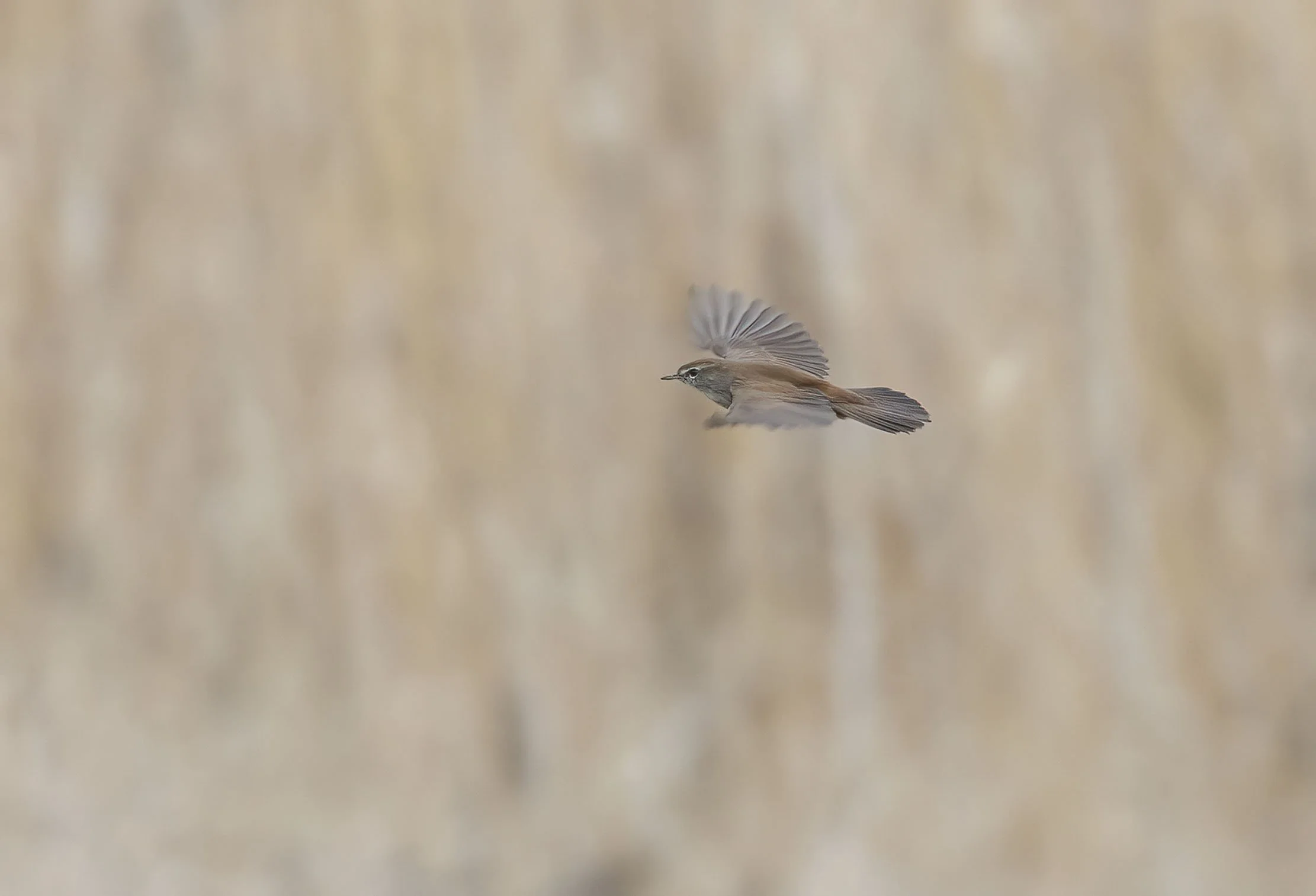
Flight shots are at a premium