The Manton Collared (Turtle) Dove — 73 years on it is time to set right a miscarriage of justice
In mid-May 1952 Britain’s first Collared Dove, then known as the Collared Turtle Dove, was found feeding in a chicken run at Manton North Lincolnshire. As noted in the article in British Birds linked below a description reached Reg May one of the best bird observers in the county and possibly England, at that time, presumably from F H Davey of Greetwell Hall as Reg had permission to search for birds on the Manton estate owned by Davey at that time and made annual trips to search for nesting Woodlarks, Curlew and other heathland species.
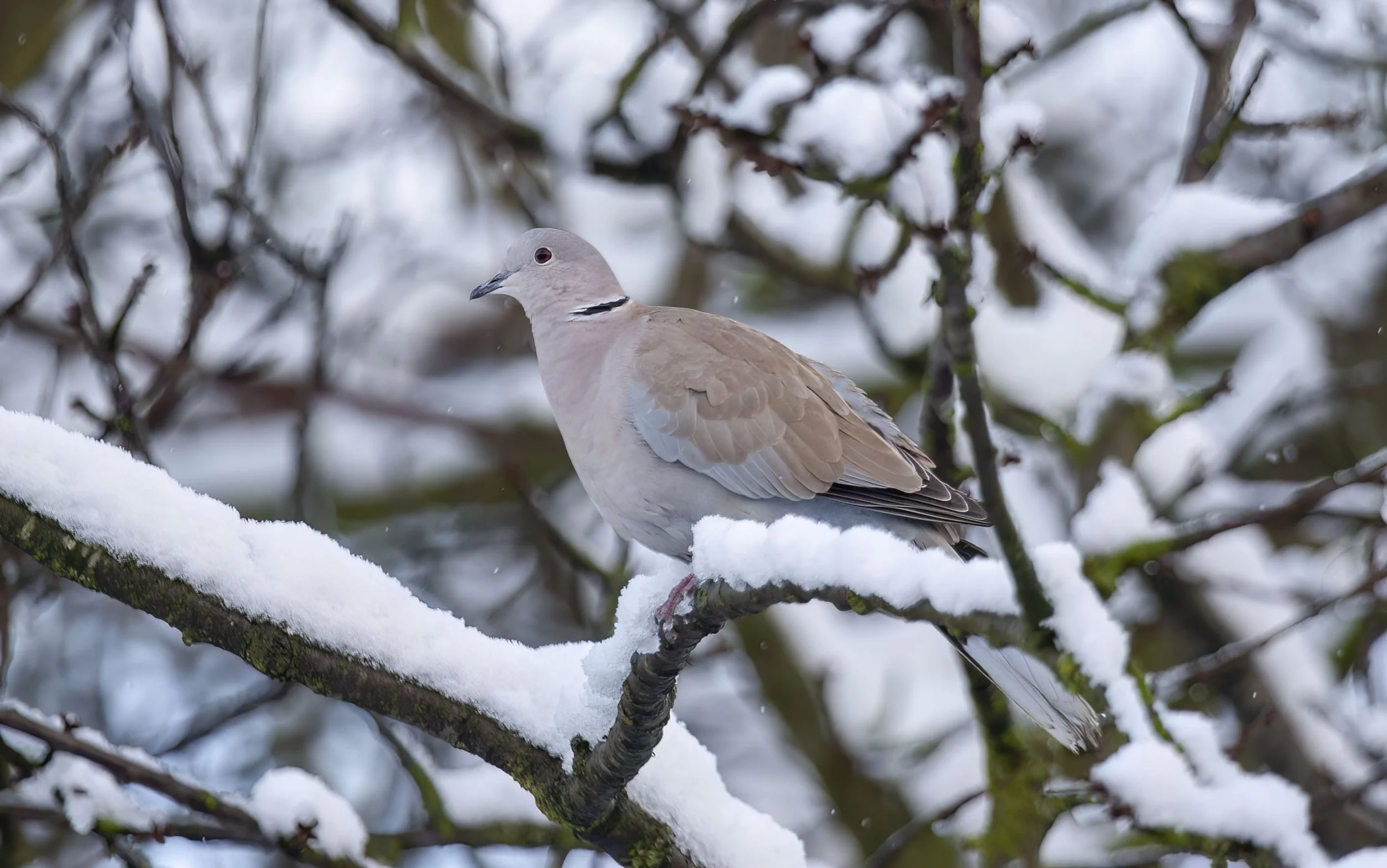
Collared Dove Barton December 2005 just prior to their recent decline
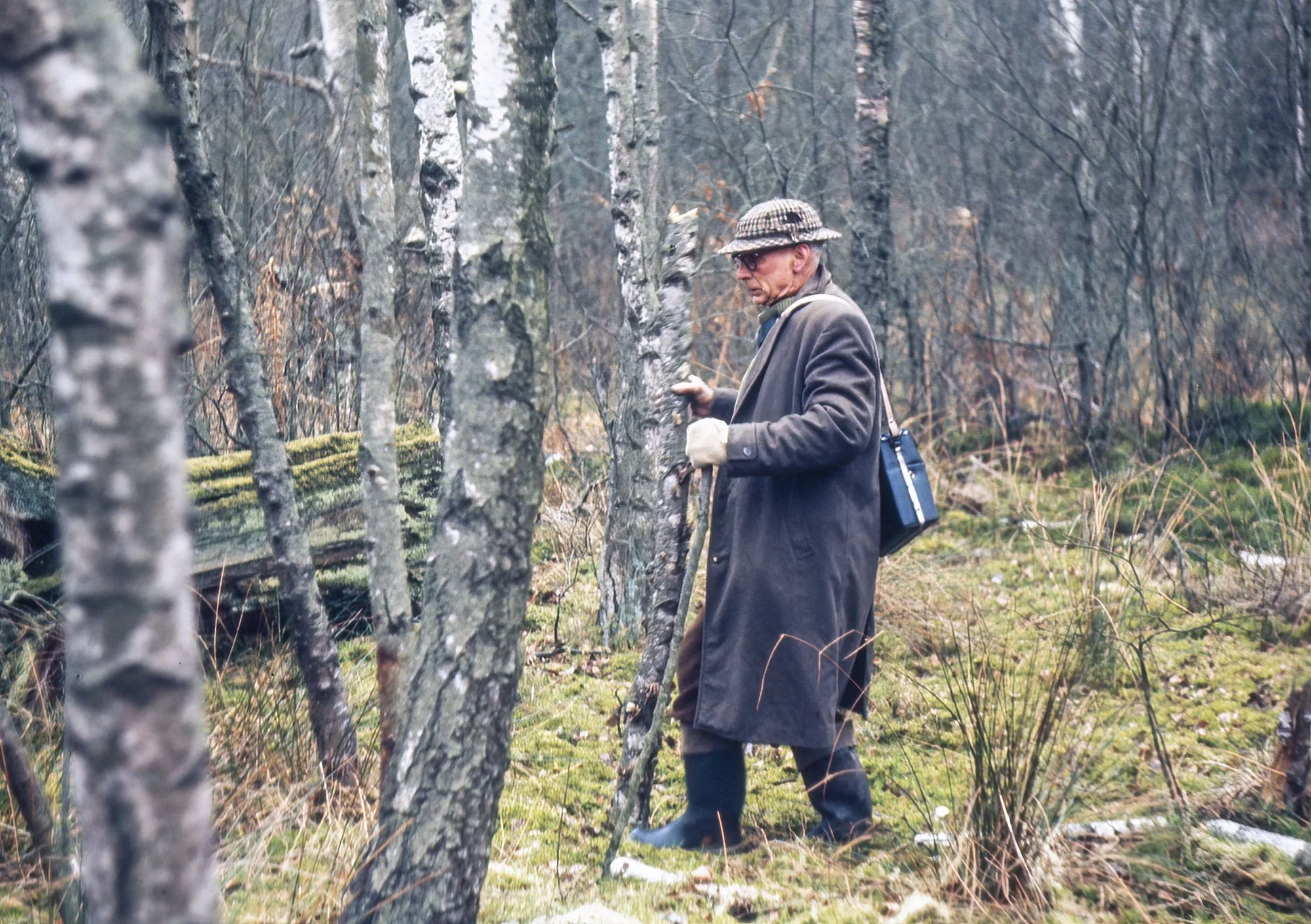
Reg May at Greetwell in c1980 with the trusty deerstalker and his cine camera - already in his 80’s but still enthusiastic — born in 1903 his first records in the Lincolnshire Naturalist’s Union Bird Reports were in 1929 from his home village of Limber wheer he was a the postman for most of his life - the failure of the then authorities to admit the Collared Dove to the British List had little effect upon him as he knew it was wild!
I first met Reg in 1969 and during visits to Greetwell searching out nests of Nightingale, Curlew, Snipe and Long-eared Owls amongst other birds that still bred there at the time Reg would recount tales of past exploits including the sad loss of all the Woodlarks that were found dead from poisoned seed dressing in the early spring of 1959. I also recall him mentioning the Collared Dove of 1952 and spending many hours watching and listening to the bird culminating in it attracting a mate and nesting in 1957 which he confirmed as he was under the nest when the first egg was laid! The fact that the bird was not accepted to the British List for spurious details listed in the paper below and noted again in an excellent post by Anthony McGeehan, also linked, were pretty irrelevant to Reg who was a true bird lover if that is a good term; someone who appreciated all birds and simply took enjoyment from watching them closely but his greatest skill was patience. When we would site for three or four hours to watch a Tree Pipit wend its way back to its nest Red would hardly move a muscle while we were anxious to move on. His nest finding skills were legendary and were of course a feature of the era, not to take eggs, but to marvel at the contents and the skill of the birds involved. A seventy-foot tree was not a problem if a Grey Heron’s nest was in the top and I also recall being told of his exploits in searching for a Wood Sandpiper’s nest in Sutherland rowing himself across a floating bog on his front to reach an island all the while not being able to swim. But back to that Collared Dove in 1952. What surprised me in reading the BB article for the first time was the roll call of the great birdwatchers of the time who went to see the bird including James Fisher who also authored a paper in BB in 1953 detailing the species’ spread across Europe and the editors of BB at the time W.B.Alexander., P.A.D.Hollom and I.J.F.-Lees.
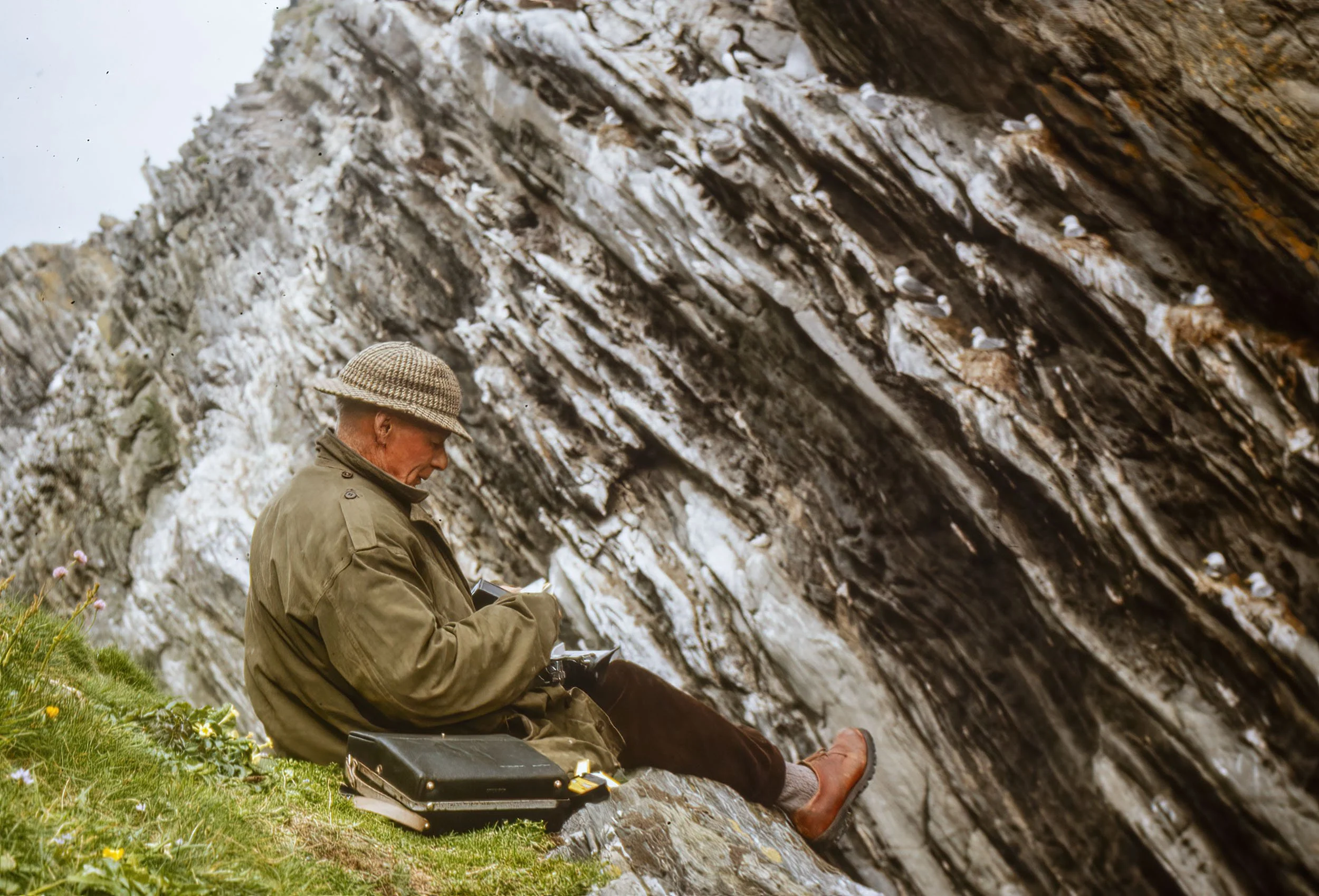
Reg on Colonsay June 1974 with his trusty Cine camera enjoying the breeding seabirds
https://www.britishbirds.co.uk/journal/article/collared-turtle-dove-britain
https://www.britishbirds.co.uk/journal/article/collared-turtle-dove-europe
https://anthonymcgeehan.medium.com/the-all-conquering-collared-dove-fedc654e72dc
By 1955 Collared Doves were found breeding in Norfolk and these were subsequently admitted to the British List so why was the Lincolnshire bird and its followers, there were four at Manton in 1958 and several breeding pairs in the county by the early 1960’s, not acknowledged as the first British occurrence. The suggestion that the first male may have been an escape from captivity seems at best spurious as checks revealed that none of the birds imported in 1947 had escaped and the territorial behaviour of the Manton male and its subsequent stay and survival in the wild surely all point to a pioneering wild bird for more detailed analysis of behaviour of colonists see A McGeehan’s paper linked above.
So come on BOURC its been a long wait but the Lincolnshire Collared Turtle Dove needs its due upgrade.
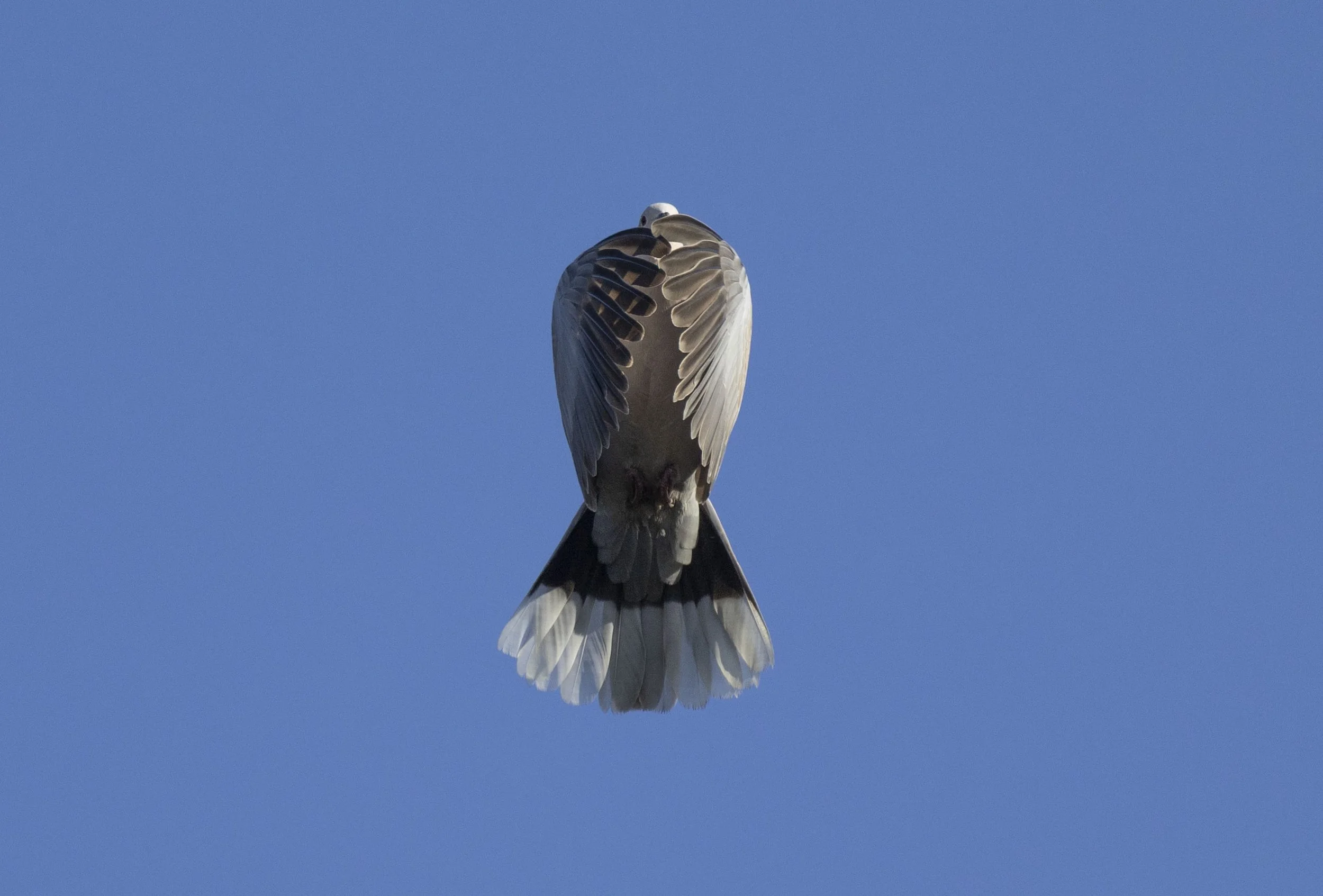
Collared Dove in display May 2024 - after their boom numbers are now much lower and breeding pairs more3 scattered
An excellent summary of the status of this species in Lincolnshire was provided by Andrew Henderson in the 2021 Lincolnshire Bird Report.
Pigeons and Doves in Lincolnshire
Andrew Henderson Photographs © Graham Catley
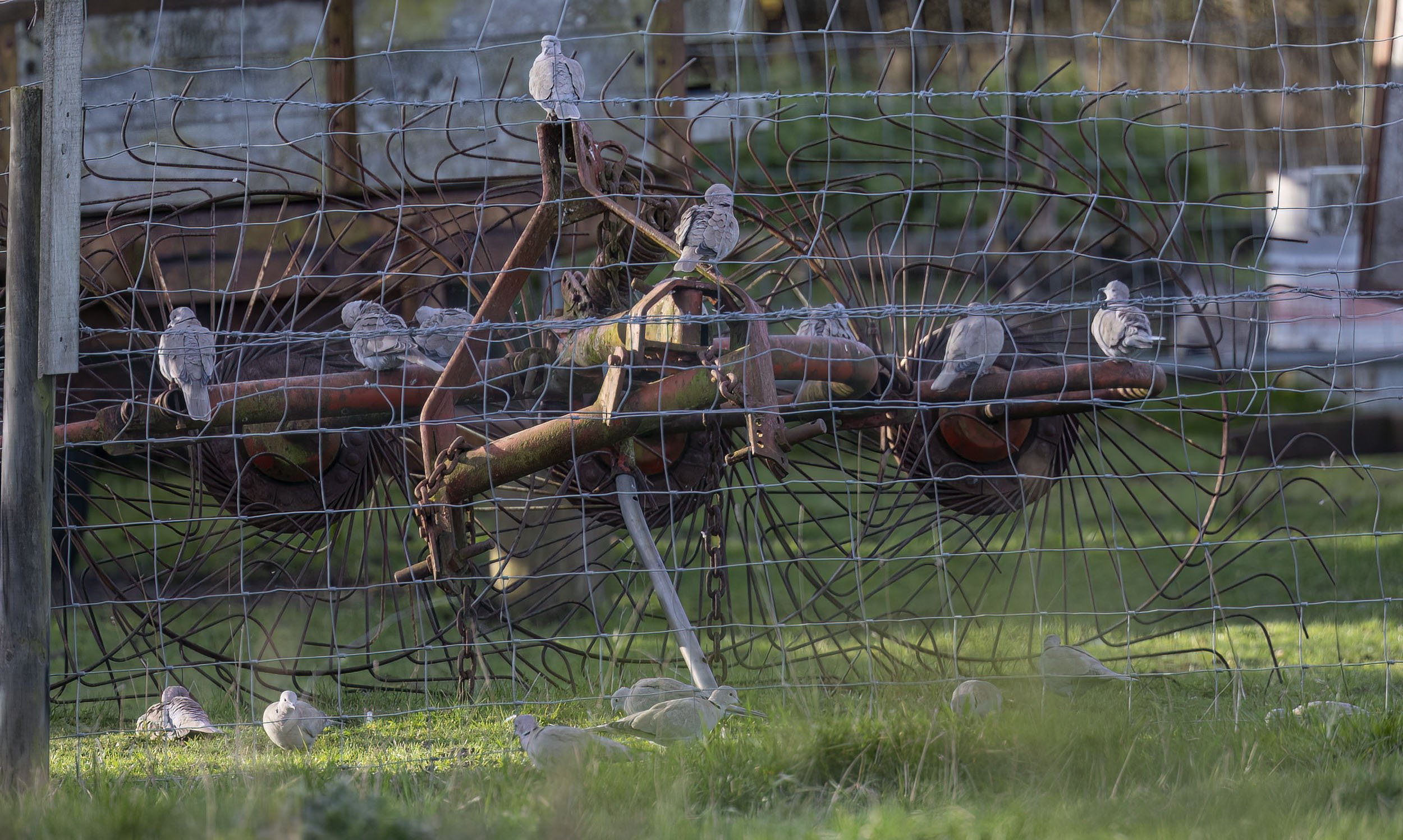
A winter concentration of Collared Doves on a small holding in Goxhill Marsh - available winter food still draws small flocks but nothing compared to the 500 - 600 strong flocks recorded in the late 1980’s to mid 1990’s