Shore Larks
This week I travelled to Theddlethorpe to take in the three Shore Larks located earlier and although the day was usually dull there were some epic skies and the birds were a joy as usual. I have taken to forcing myself to go and see declining species as you never know which birds may be the last in the county of even Britain; Lesser Spotted Woodpecker, Willow Tit, Nightingale gone from Lincolnshire and Marsh Tit, Turtle Dove, Tree Sparrow and Corn Bunting only hanging on as breeding birds while formerly regular wintering birds like Great Grey Shrike and Rough-legged Buzzard have moved to true rarity status in the latter of 20 years.
But back to Shore Larks; even the name conjures up encounters with a striking most un-British bird usually made during the depths of winter often in dull and dismal weather when the yellow facial feathering shines like a jewel. The East coast has always been their main winter stronghold in Britain and Lincolnshire with its wide-open beaches and ample cover of Salicornia was one the key regions followed by Norfolk and to a lesser extent Yorkshire and Suffolk. The BTO website quotes an estimated European breeding population of seven million pairs presumably including Russia but this seems incredible given the recent status of the species in Britain in winter and reports of large declines in Scandinavia.
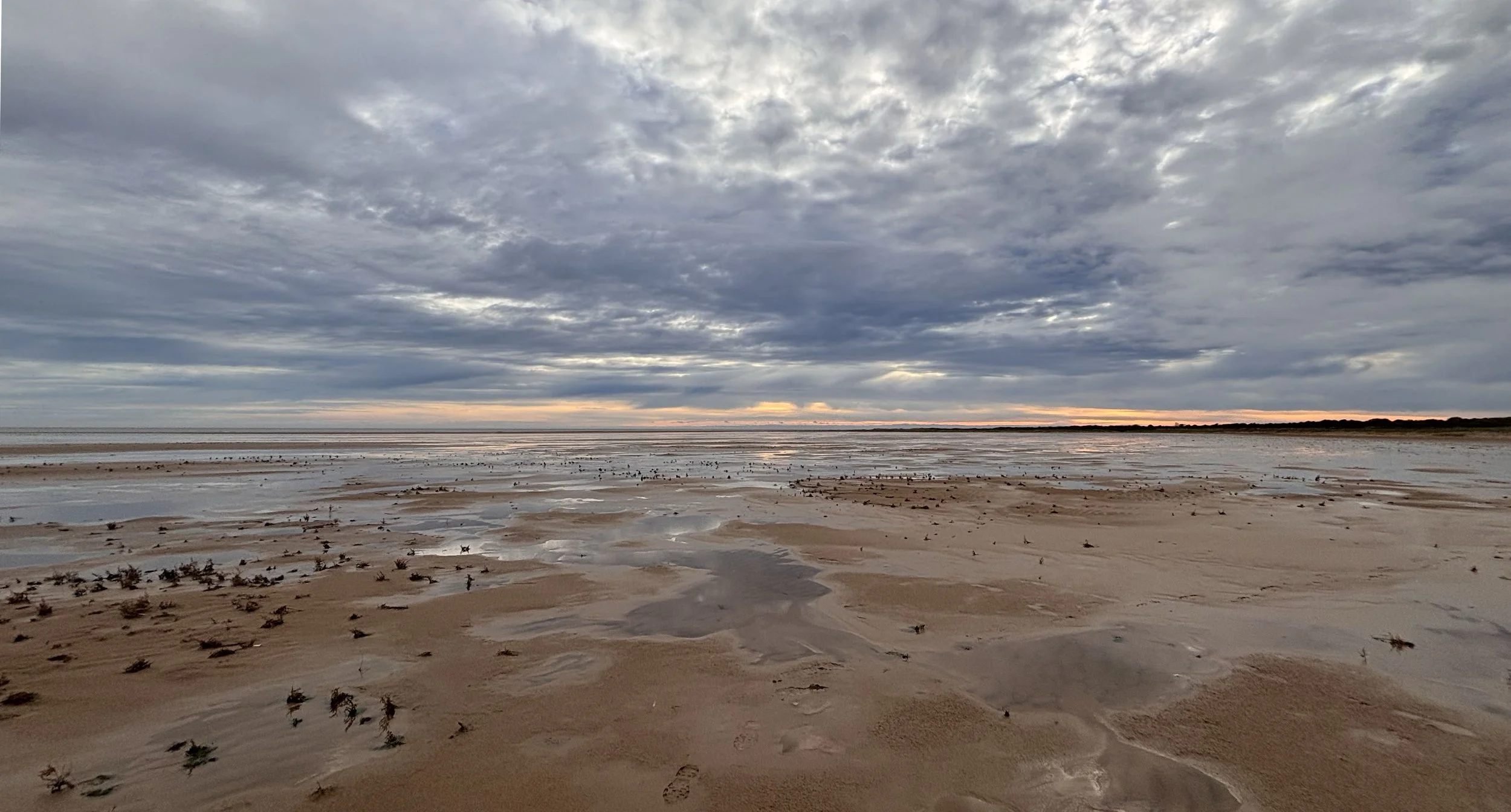
Shore Lark habitat Lincolnshire at dawn
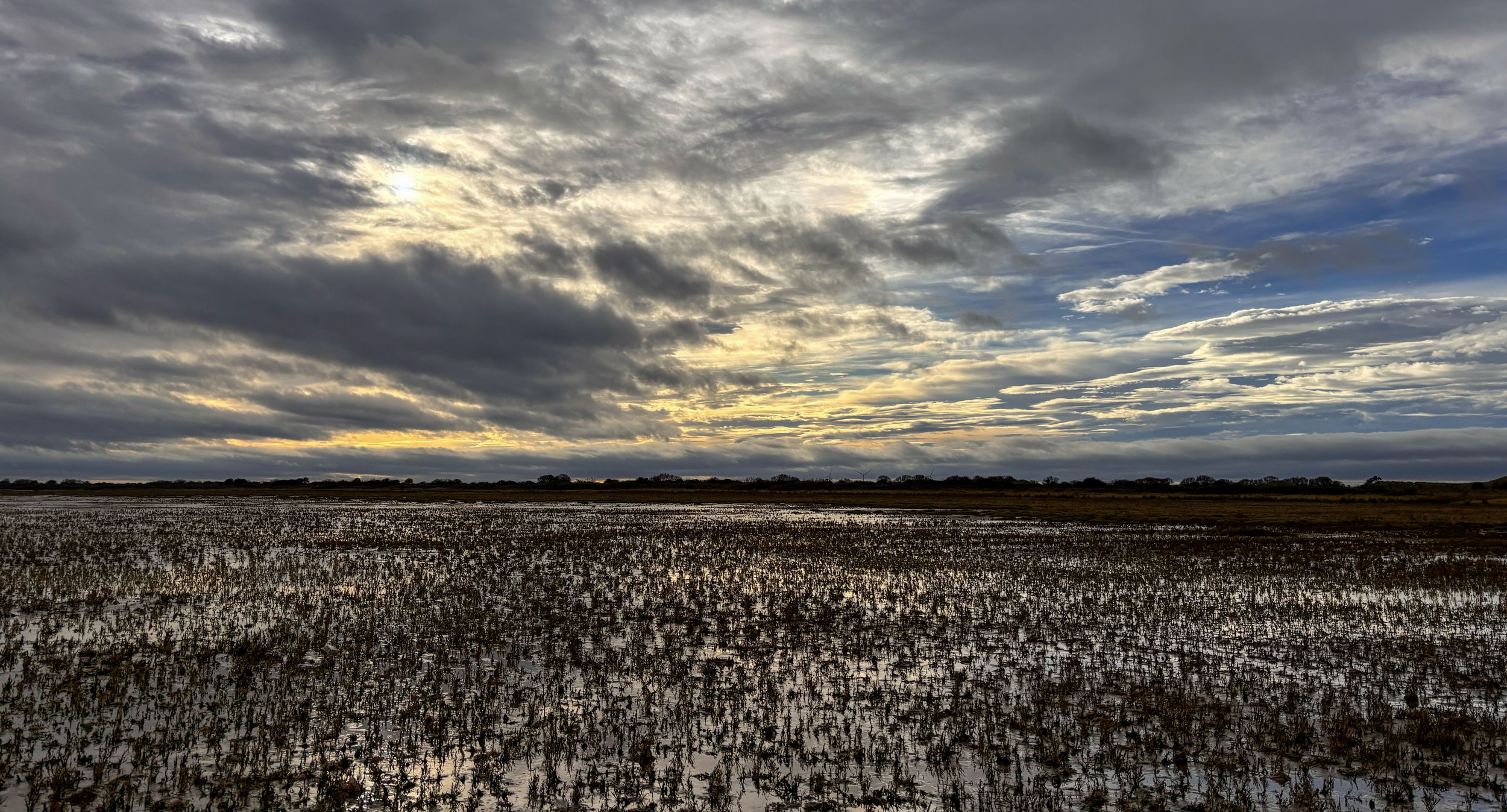
seemingly plenty of habitat available but Shore Lark numbers along with Snow and Lapland Buntings continue to decline in Lincs
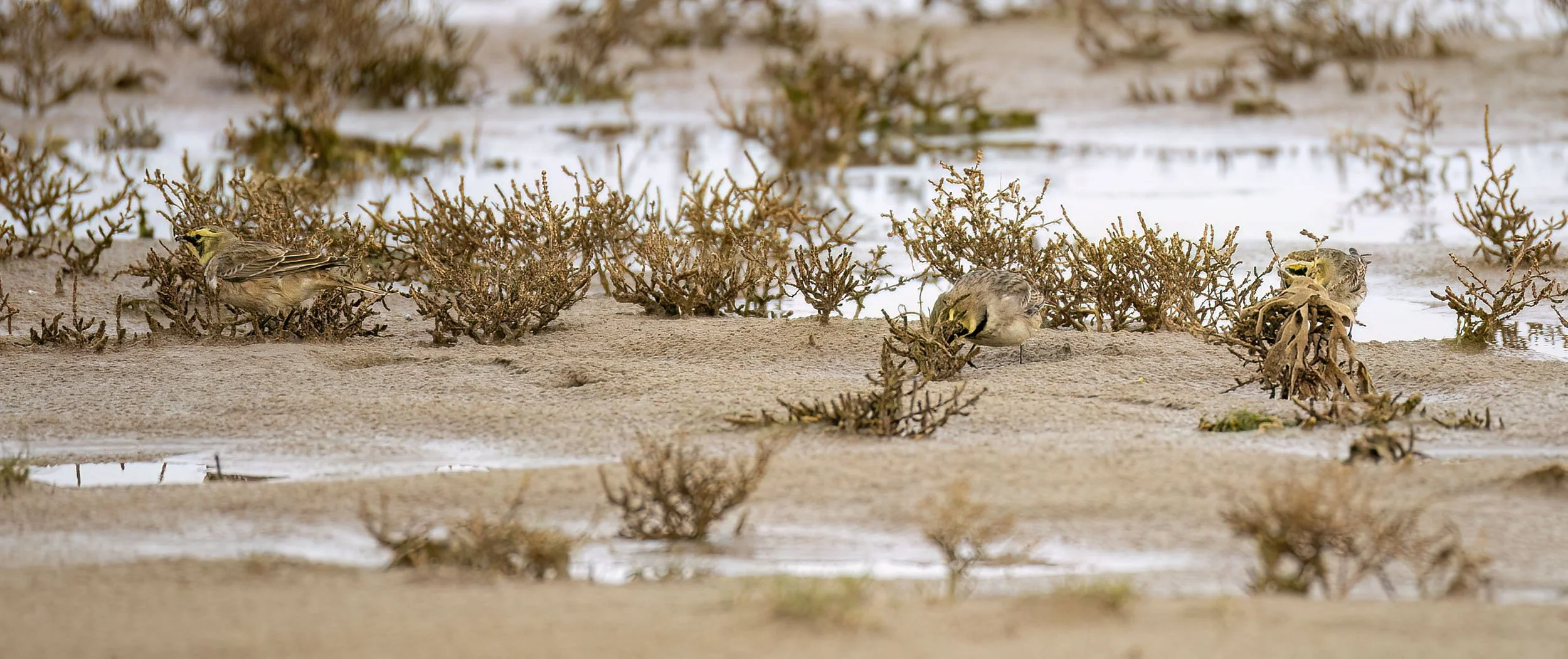
Even on an open beach with little vegetation Shore Larks can be hard to find
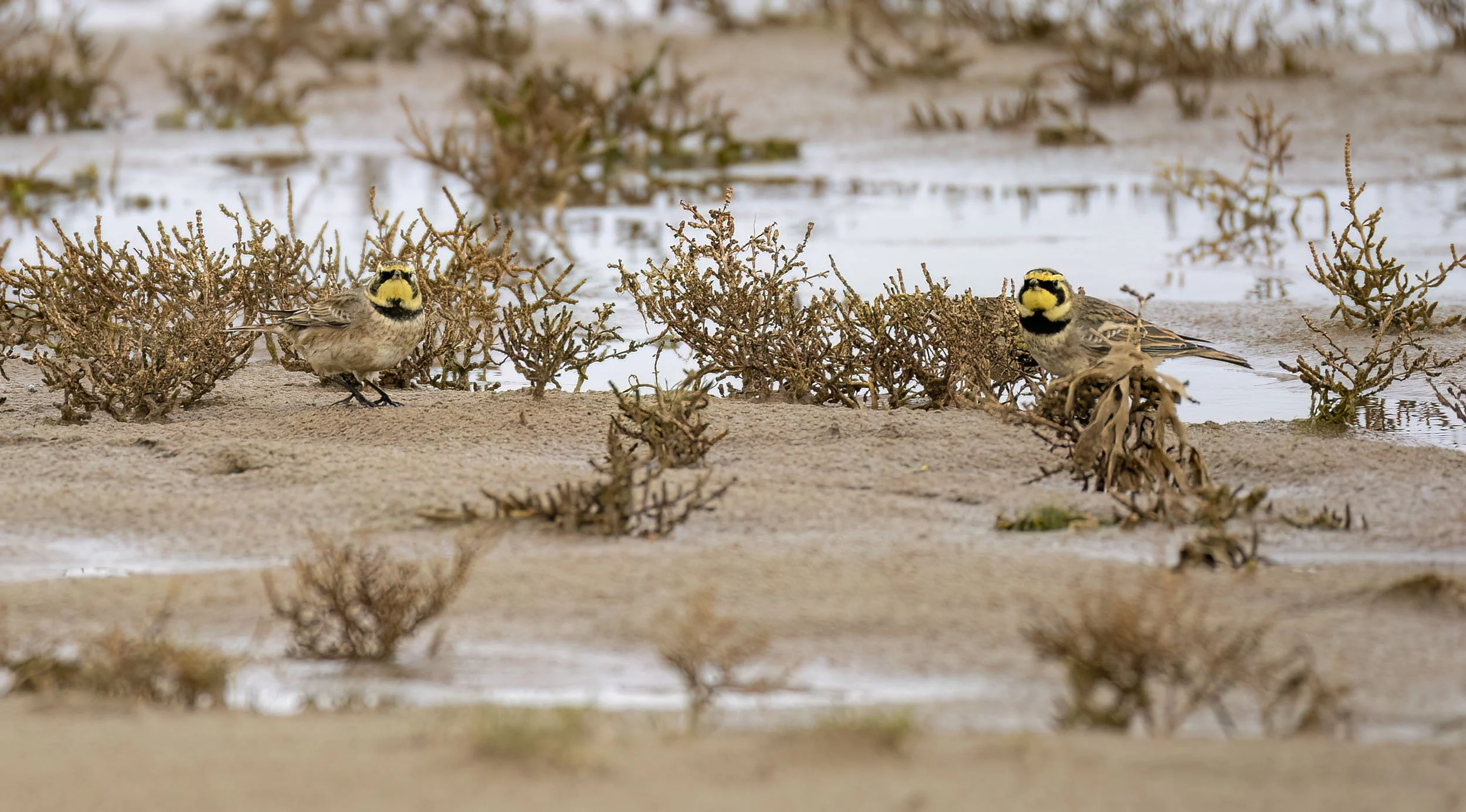
Two of the three Shore Larks this week in Lincolnshire
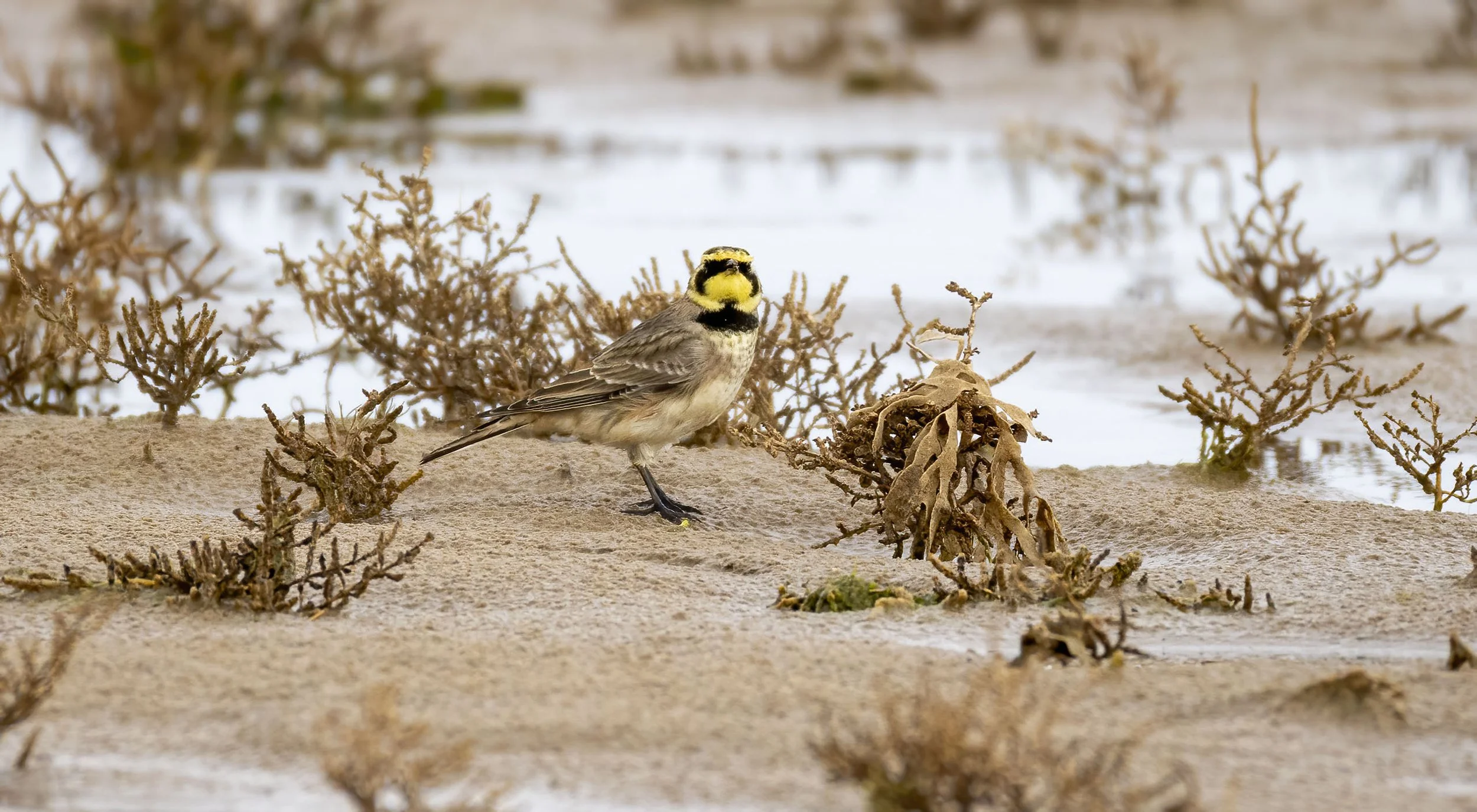
This looks like an adult a much brighter bird than the other two
In Lincolnshire quoting from Lorand and Atkin and Casey, Clarkson, Espin and Hyde the species was rare until the late 1940’s when they began wintering regularly in the county; from the mid 1960’s – mid 1970’s a peak saw flocks of over 100 in several winters followed by a steep decline to the late 1980’s when some years saw no records; there was then a slight resurgence with a total of 56 in 2016 when the highest recent total of 28 was at Theddlethorpe on October 24th with 24 on November 11th 2018. Pairs even bred in the Cairngorms in 1977 and 2003 with signs of breeding behaviour 1972-76 and 1997 and seven years up to 2003. In winter the BTO Atlas estimated a maximum of 300 birds in Britain during 1981 – 1984. A co-ordinated survey in Norfolk on December 5th 1998 found a total of 591 birds in the county double the previous peak in the 1970’s. Evidence to support winter site fidelity has been recorded from colour ringed birds including a male ringed at Gibraltar Point in December 1996 that was seen there again in April 1998. Other birds colour ringed in Britain have moved north in spring prior to departures to Scandinavia with one ringed at Holkham, Norfolk on December 31st 1998 being seen at Gibraltar Point on April 29th 1999.A male from the same Norfolk catch was seen on Fair Isle on May 14th 1999. Colour ringing has also shown that birds wintering in Britain in one year may move to the Wadden Zee area in subsequent years. This is the major wintering site for Scandinavian breeding birds.
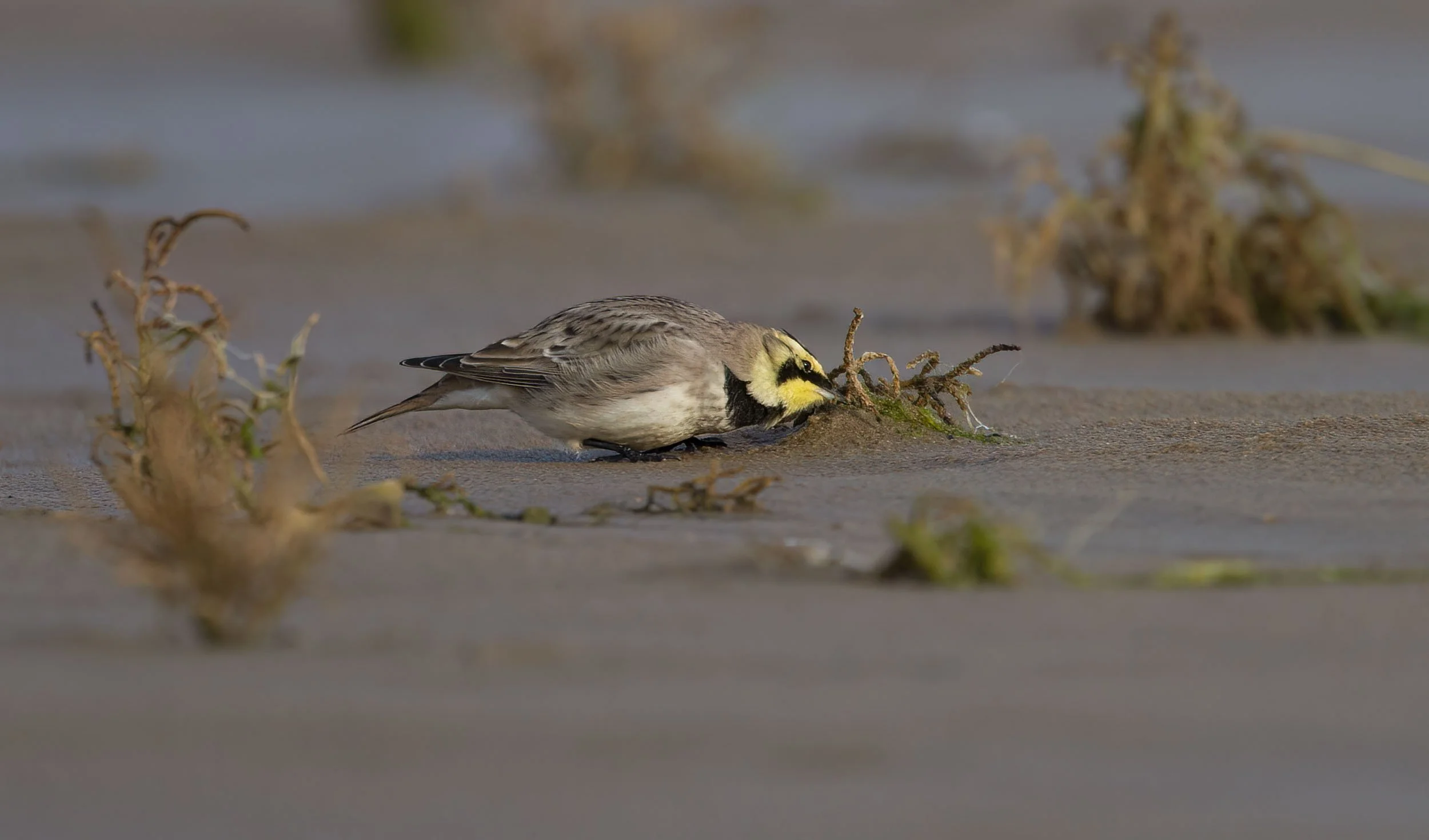
Shore Lark Theddlethorpe December 2009
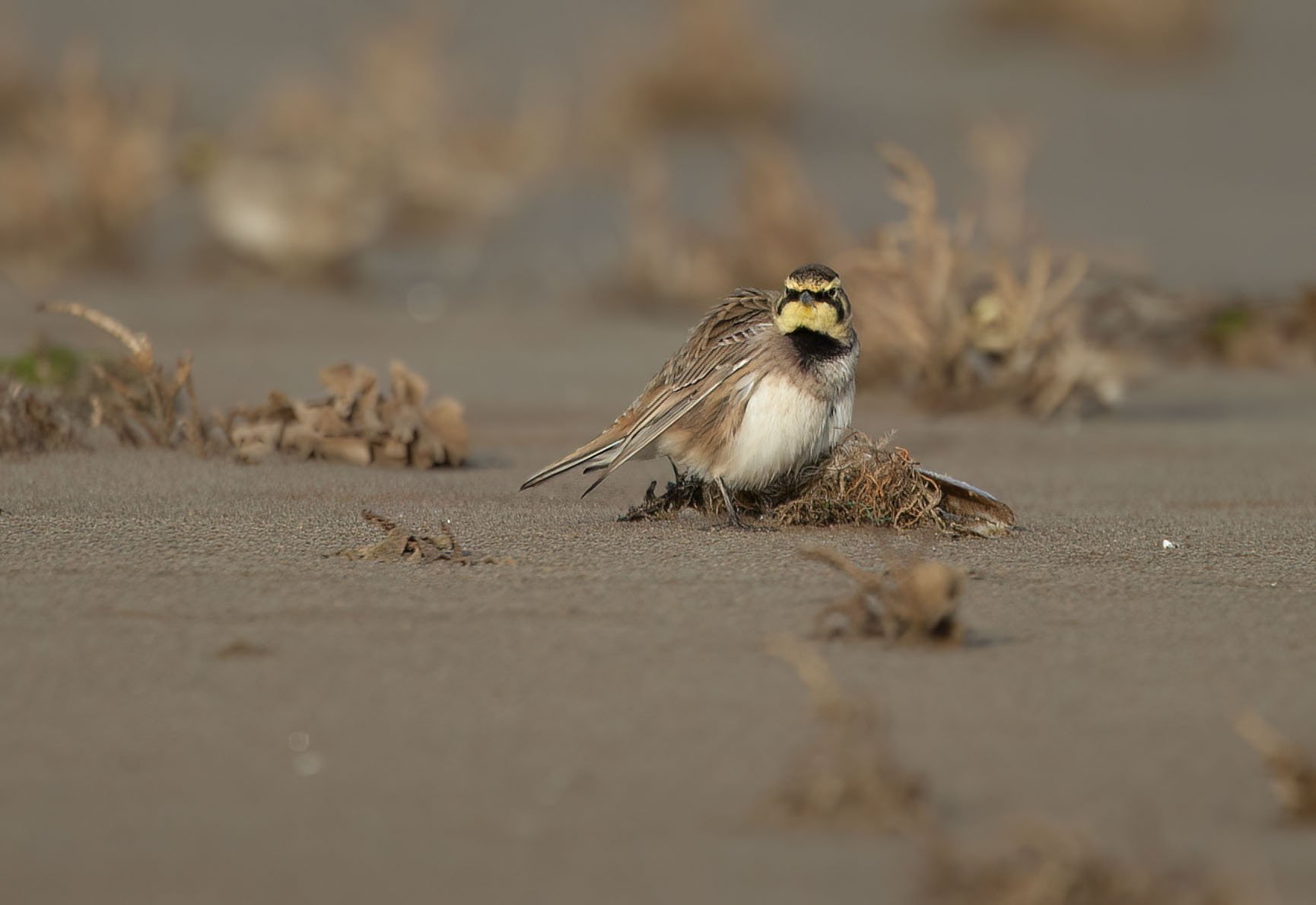
Lincolnshire beaches offer a decent chance of finding a Shore Lark - December 2009
My first Shore Larks were four at Gibraltar Point on November 23rd 1969 with the first double figure total being 50 at Rimac on December 5th 1971. Ensconced at UEA in the early 1970’s we enjoyed a flock of 40 at Cley from October 28th 1972 to March 22nd 1973 with 30 at Minsmere on December 9th 1972. Two in beautiful summer finery were at Donna Nook on April 25th 1973 in a day that had 25+ Wheatears, at least 50 continental Robins in a large fall, three Ring Ouzels, two Black Redstarts a Firecrest and a Wryneck. Thereafter I only saw small numbers but locally one, picked up on call, flew south-west over the Humber over my head and inland between New Holland and Goxhill on November 18th 1993 – the first local record for my Humber wanderings. A flock of 41 at Gibraltar Point on December 15th 1996 and 73 there on March 3rd 1999 were my last flocks to exceed 25 birds.
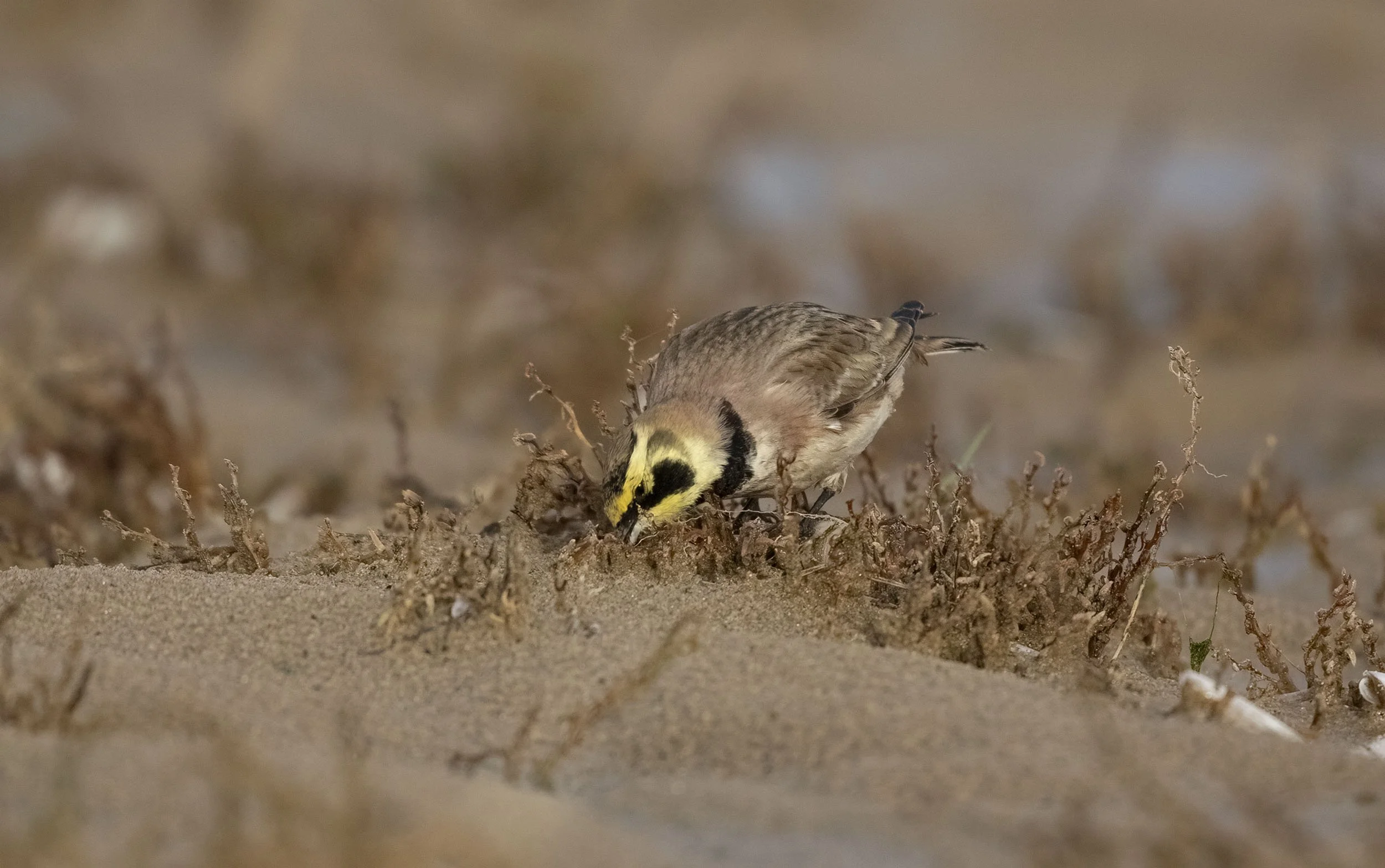
Shore Lark Theddlethorpe January 2014
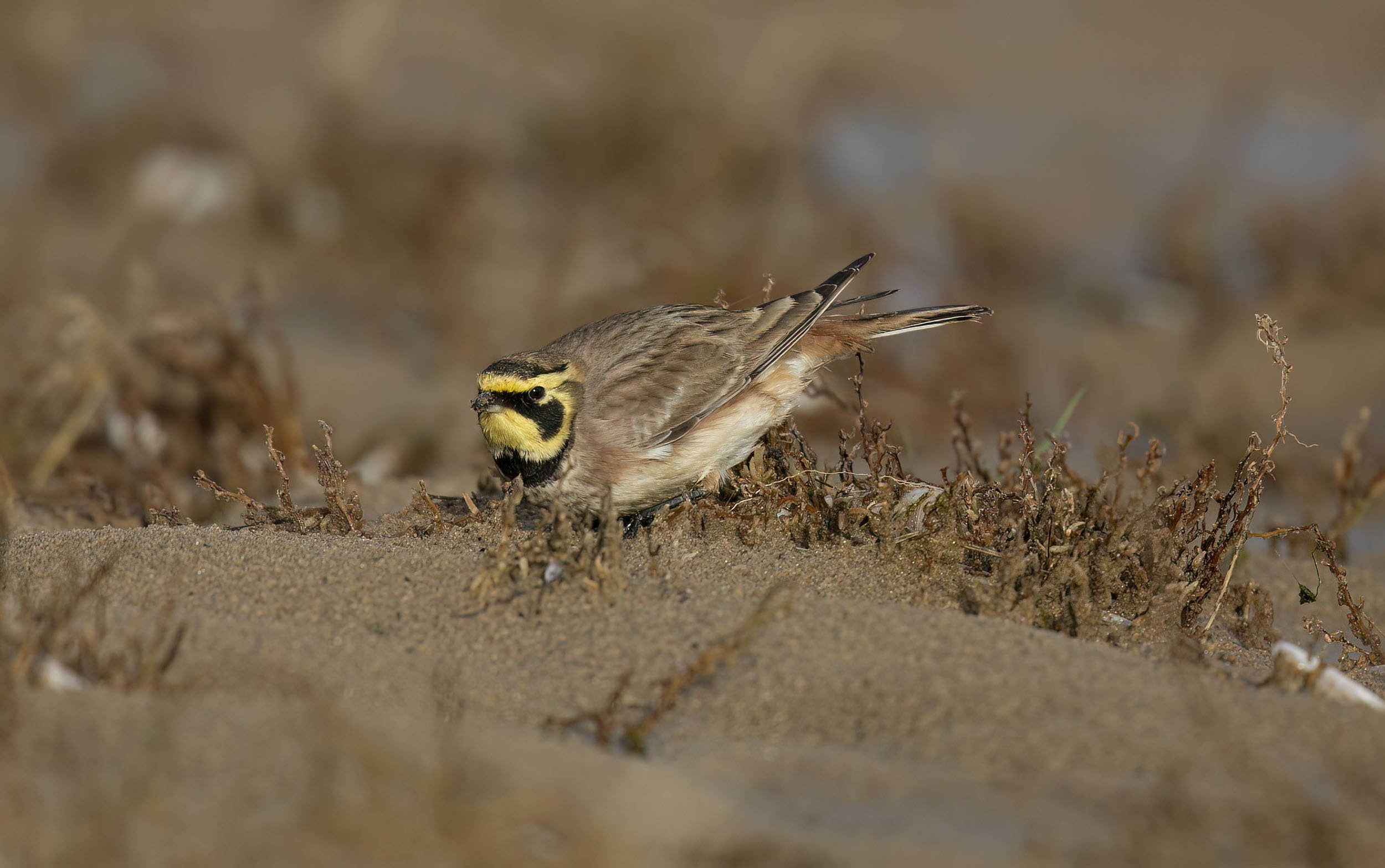
Same bird as above 2014
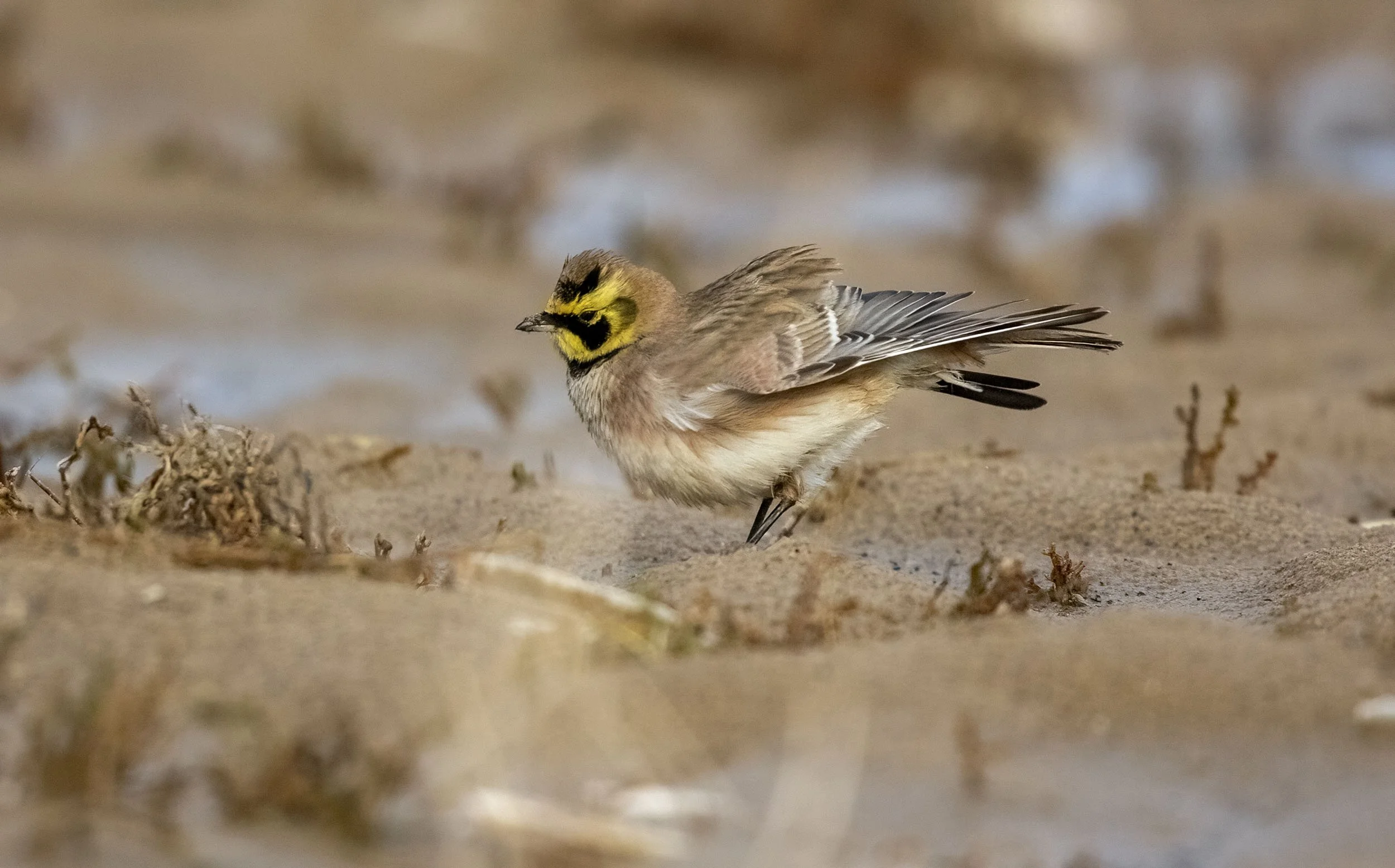
Close up in good light Shore Larks have so many subtle colours in their plumage
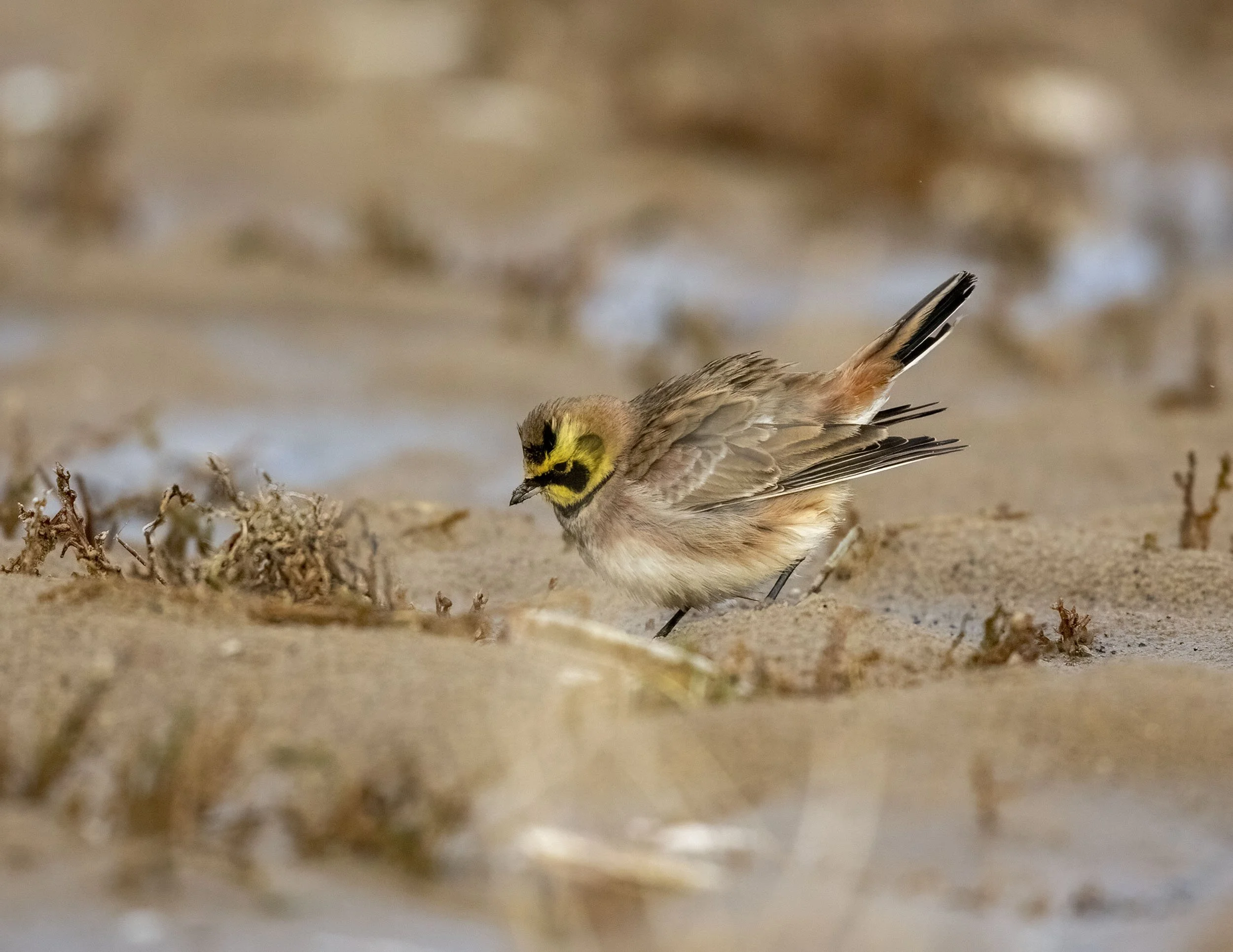
Without delving deep into politics, a local “entrepreneur” began importing coal on a very old disused jetty at Barton in the mid-1980’s – a truly pointless exercise in terms of bulk and carriage but the localised effect was that he stored coal on an extensive part of the local foreshore, SSSI etc being ignored. The venture was of course very short-lived and the residue of the coal was gradually colonised by saltmarsh plants including Salicornia a plant never recorded in the area before and this amazingly attracted some unexpected avian visitors starting with a fine male Lapland Bunting in October 1996 but culminating in the presence of three Shore Larks on December 13th 1997 with one remaining on 14th. What was even more incredible and you would suggest must have involved one of the same birds was a single Shore Lark in the same spot on December 5th 1998. How do birds find small areas of suitable habitat so far from regular wintering grounds and just how often are birds flying over looking for suitable feeding areas but passing unnoticed by observers on the ground? The area has now reverted to rough grass and reed and there has never been a repeat occurrence.
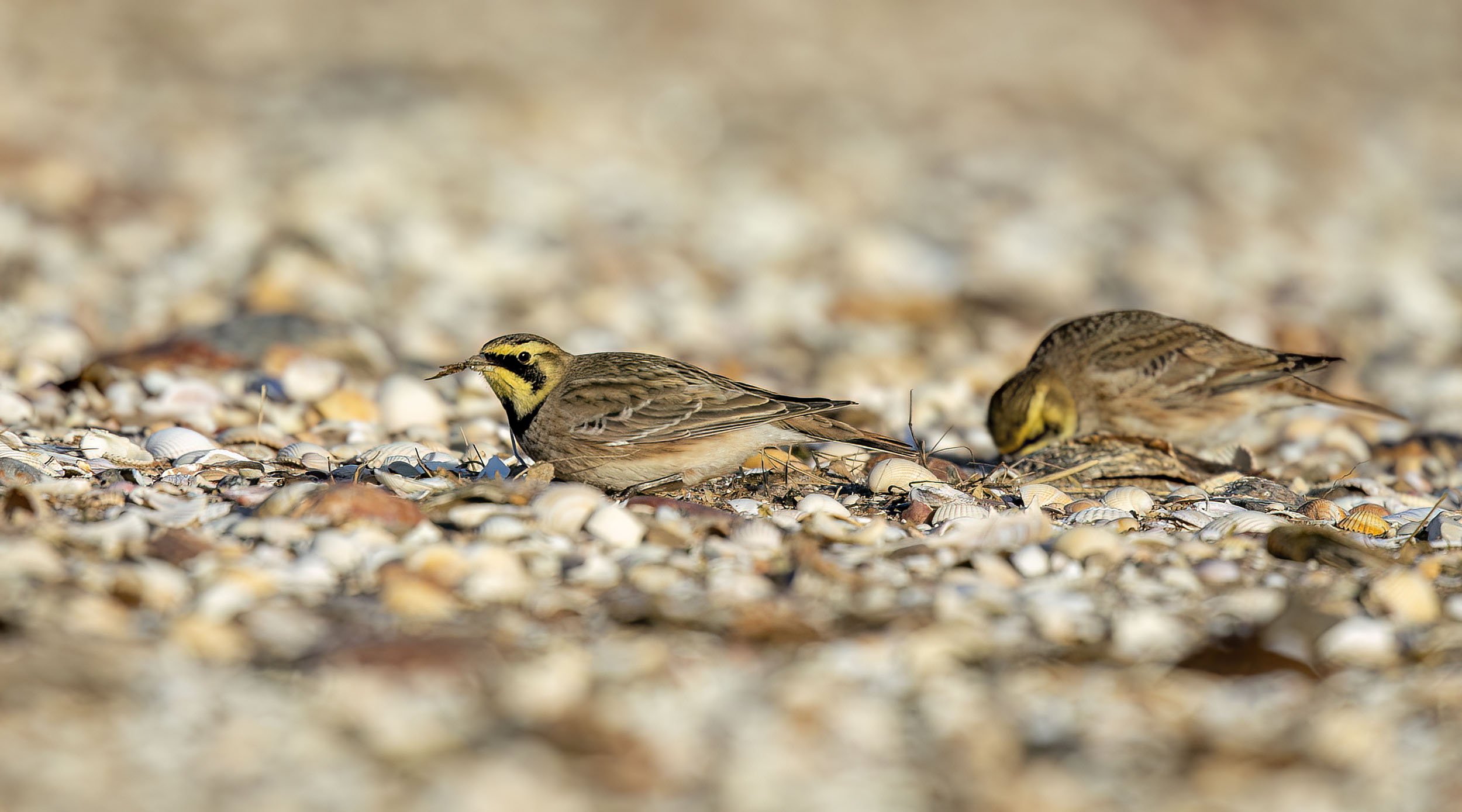
Shore Larks Cleethorpes December 2014 - birds foraging in tide wrack on the shingle beach
A beautiful adult male at Cleethorpes on March 2nd 2016, resplendent with full horns was singing occasionally and I have been fortunate to see and hear breeding birds in their tundra habitat at Varanger in Northern Norway. In June 2006 and June 2009 we even stumbled across a two nests built on the side of the road that runs across to Batsfjord. The roads are raised up above the tundra for drainage and the sloping south facing sides comprised of small gravel with clumps of low grasses form an ideal nest site as these areas are snow free early in the season when most of the tundra is still under deep snow.
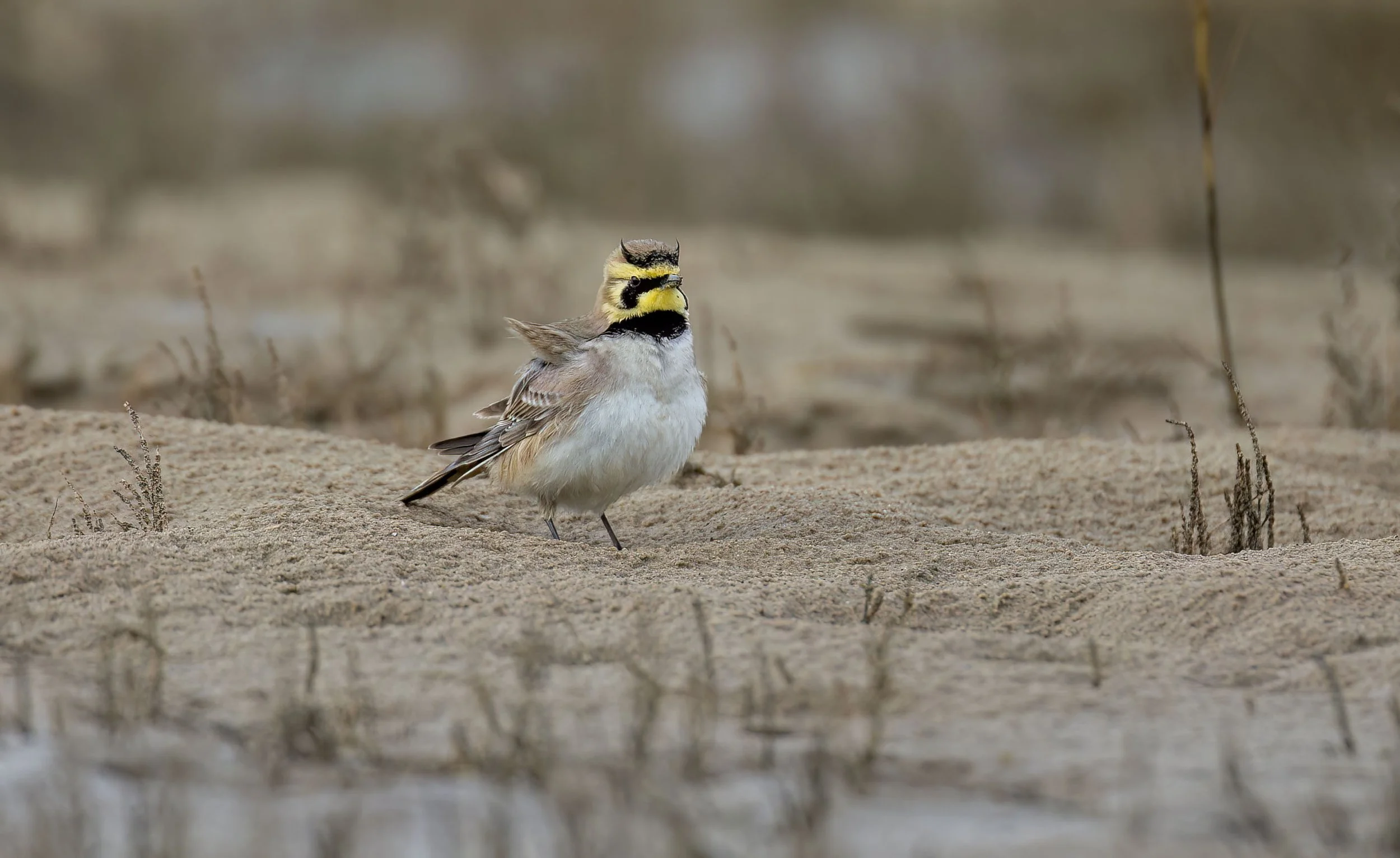
Male Shore Lark Cleethorpes March 2016
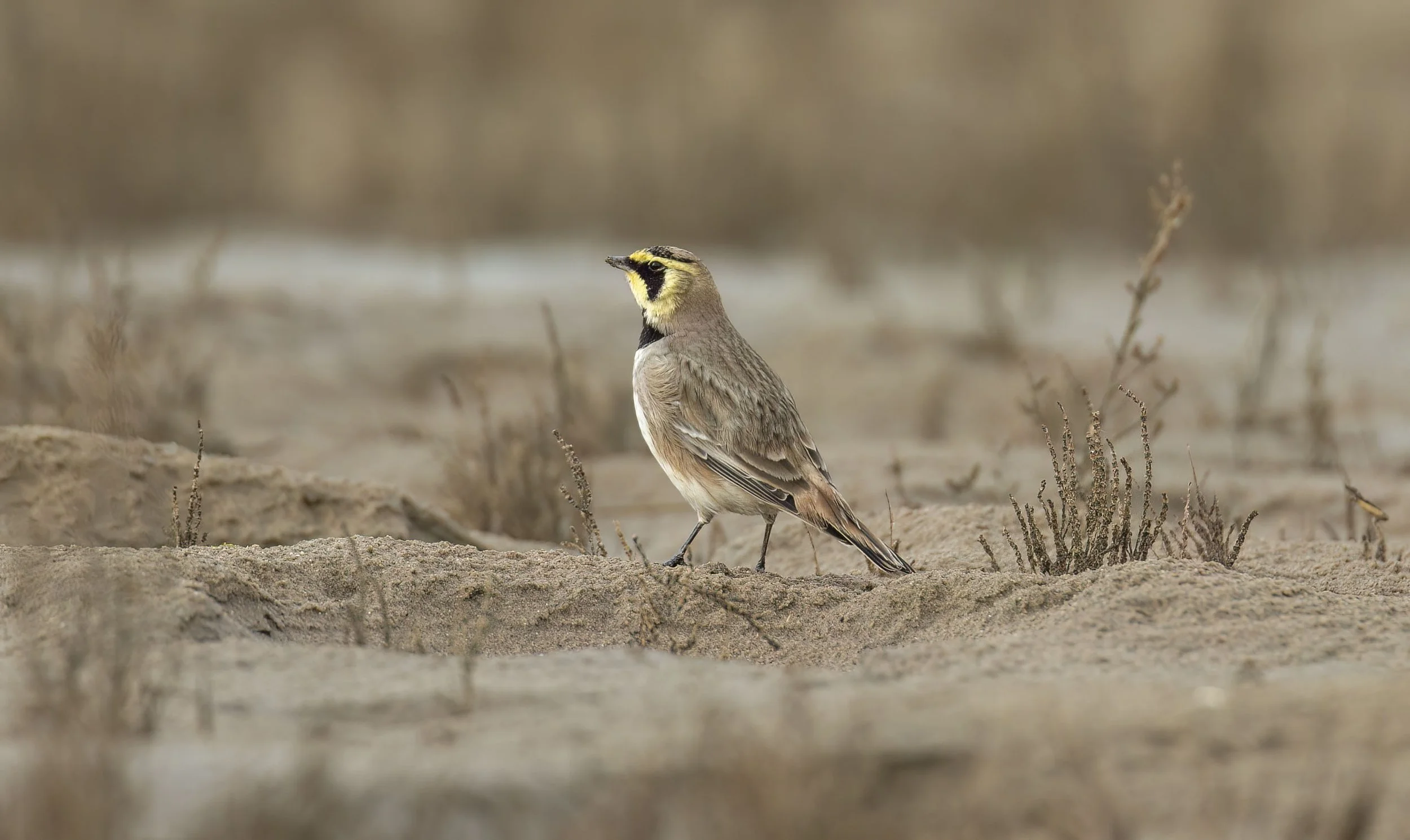
This bird would occasionally burst into a bout of song
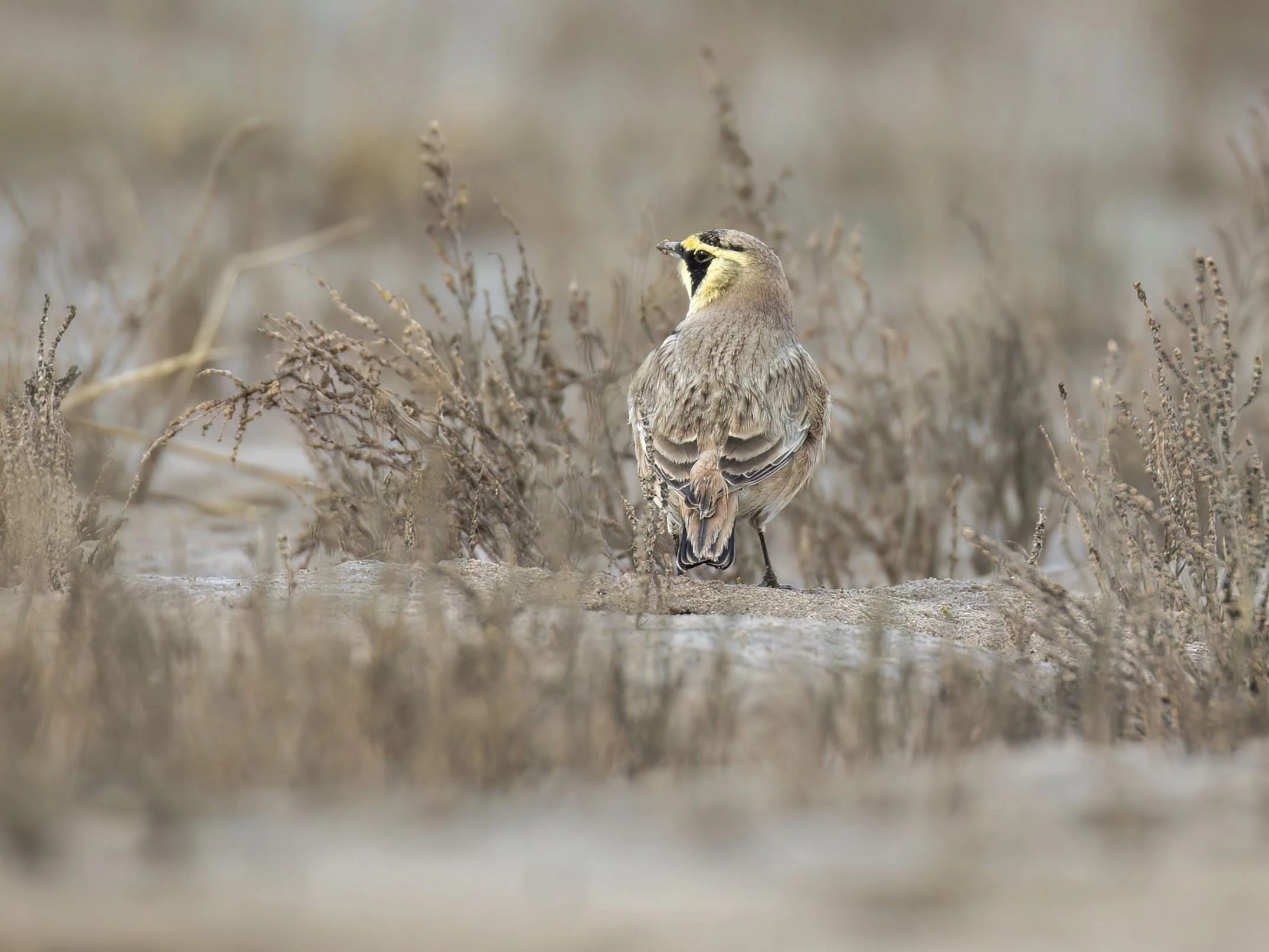
Subtle plumage tones blending in perfectly with its habitat
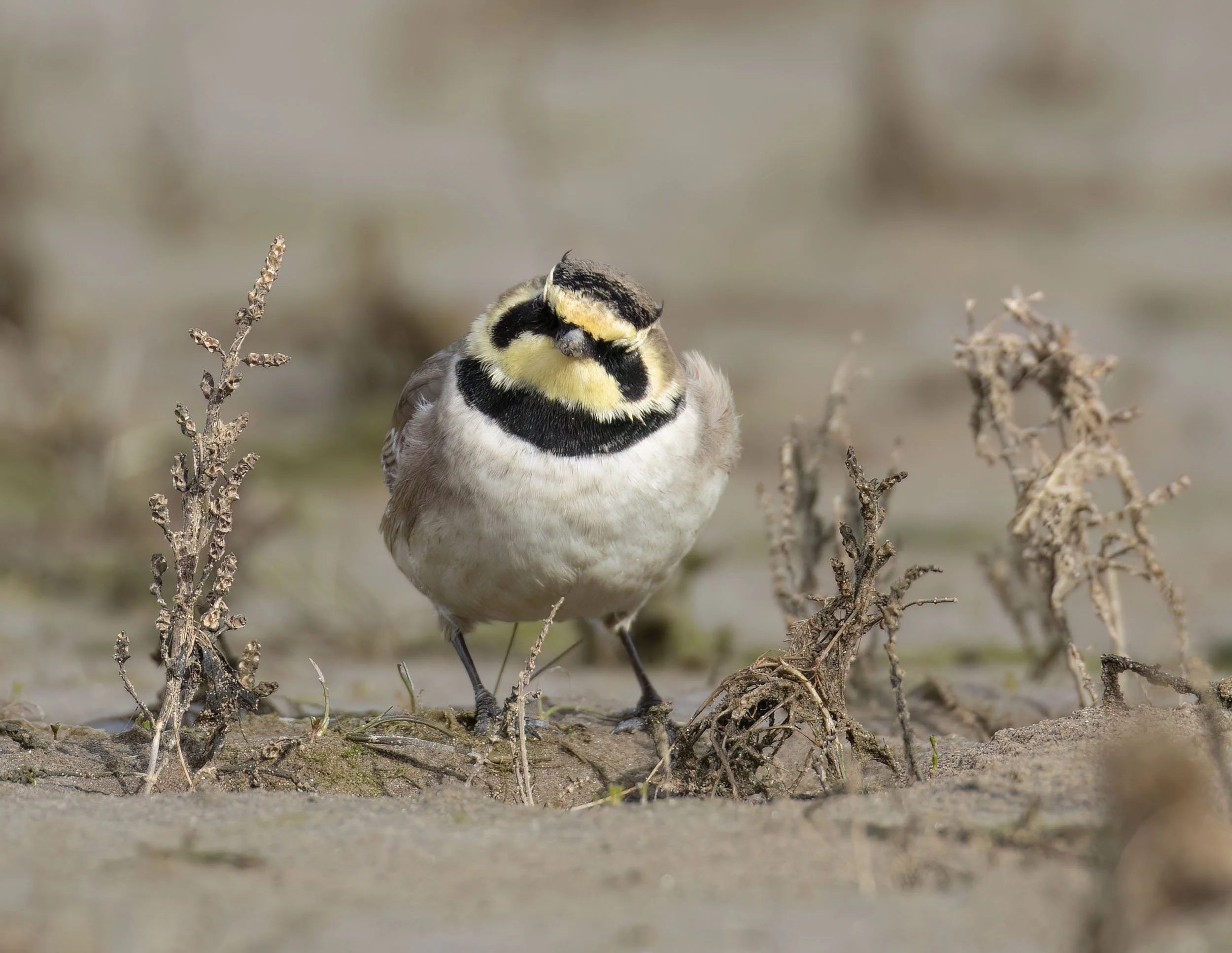
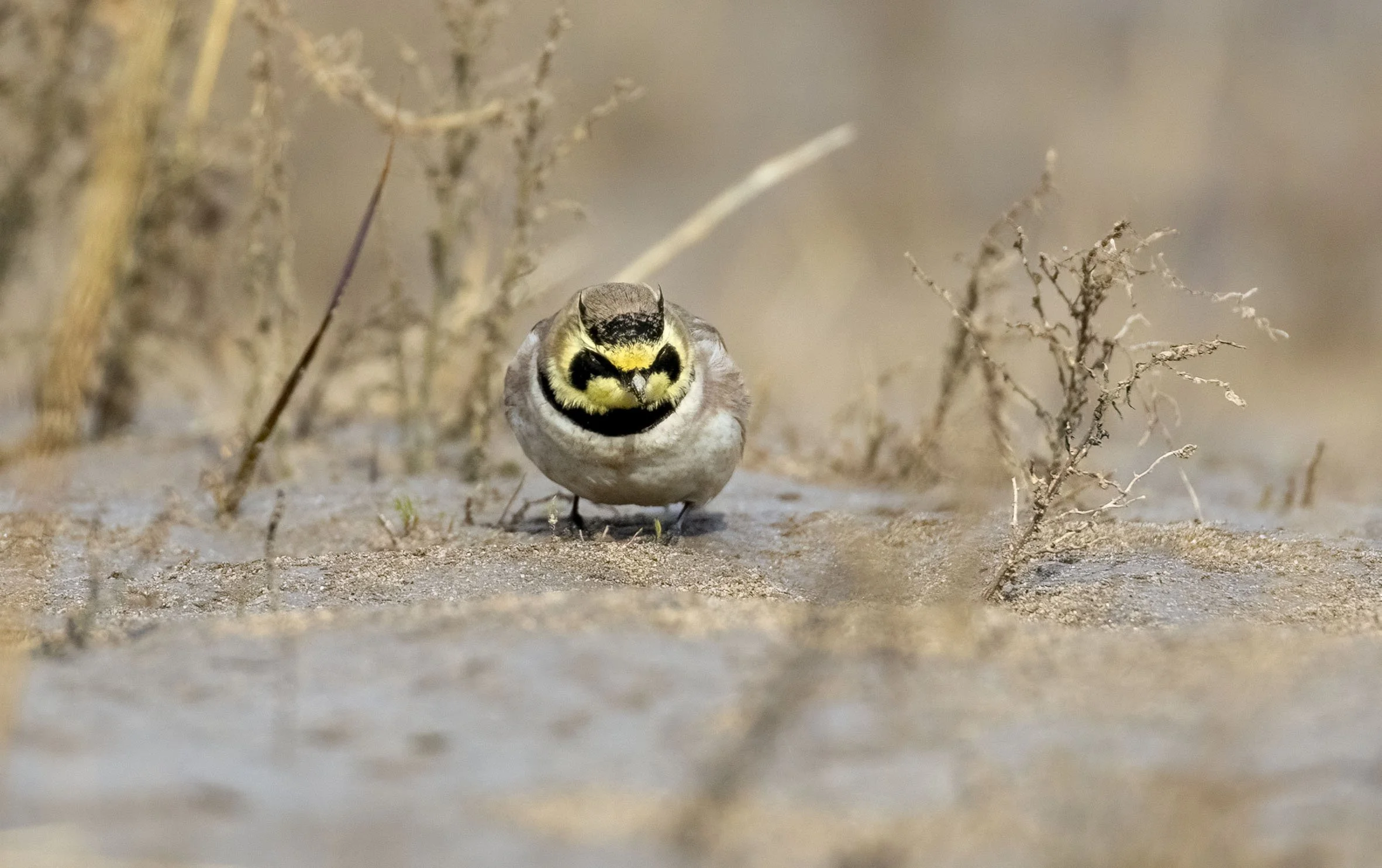
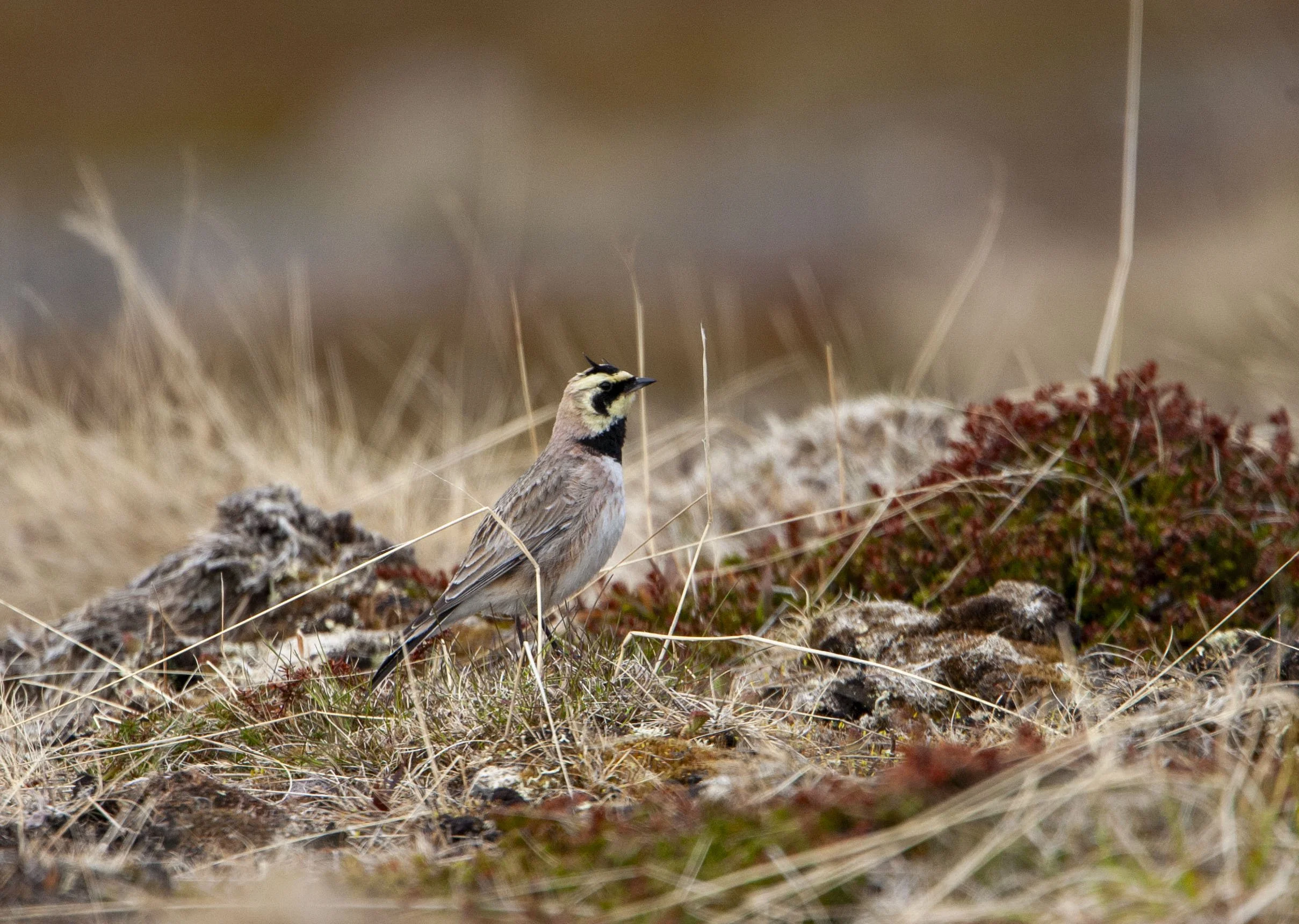
Shore Lark on Arctic Tundra Varanger
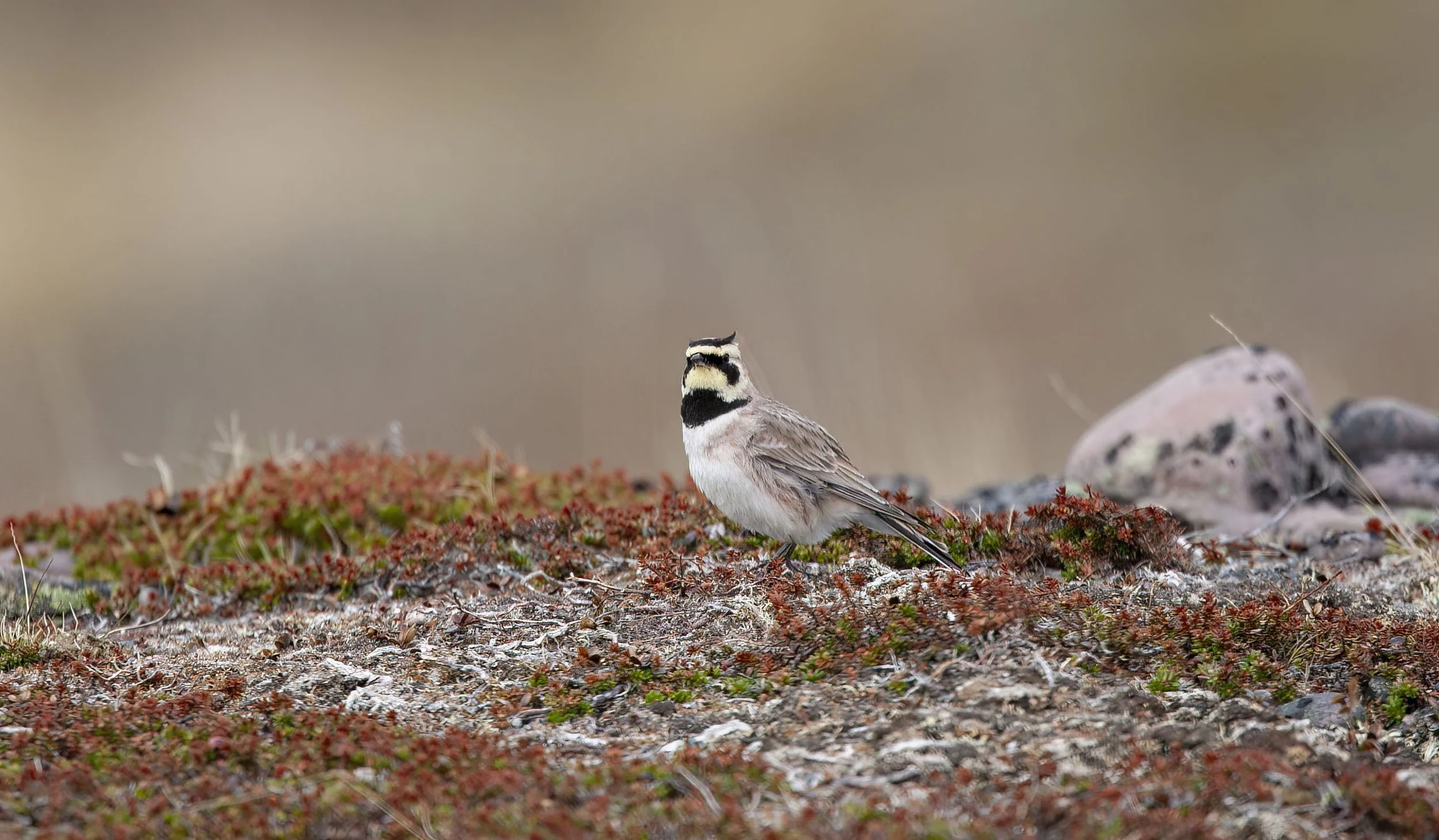
Blending with the Artic vegetation
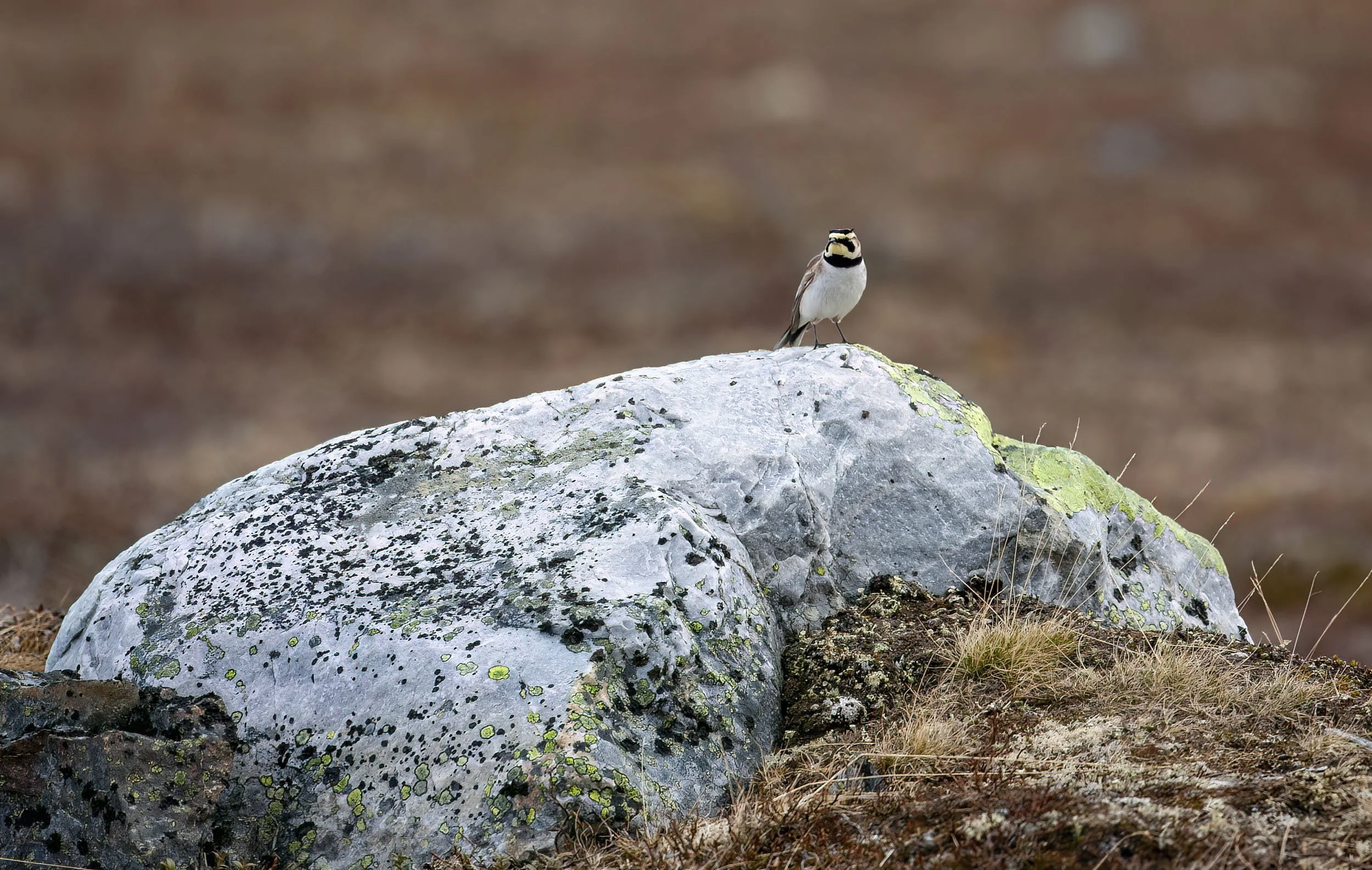
Male on a song rock
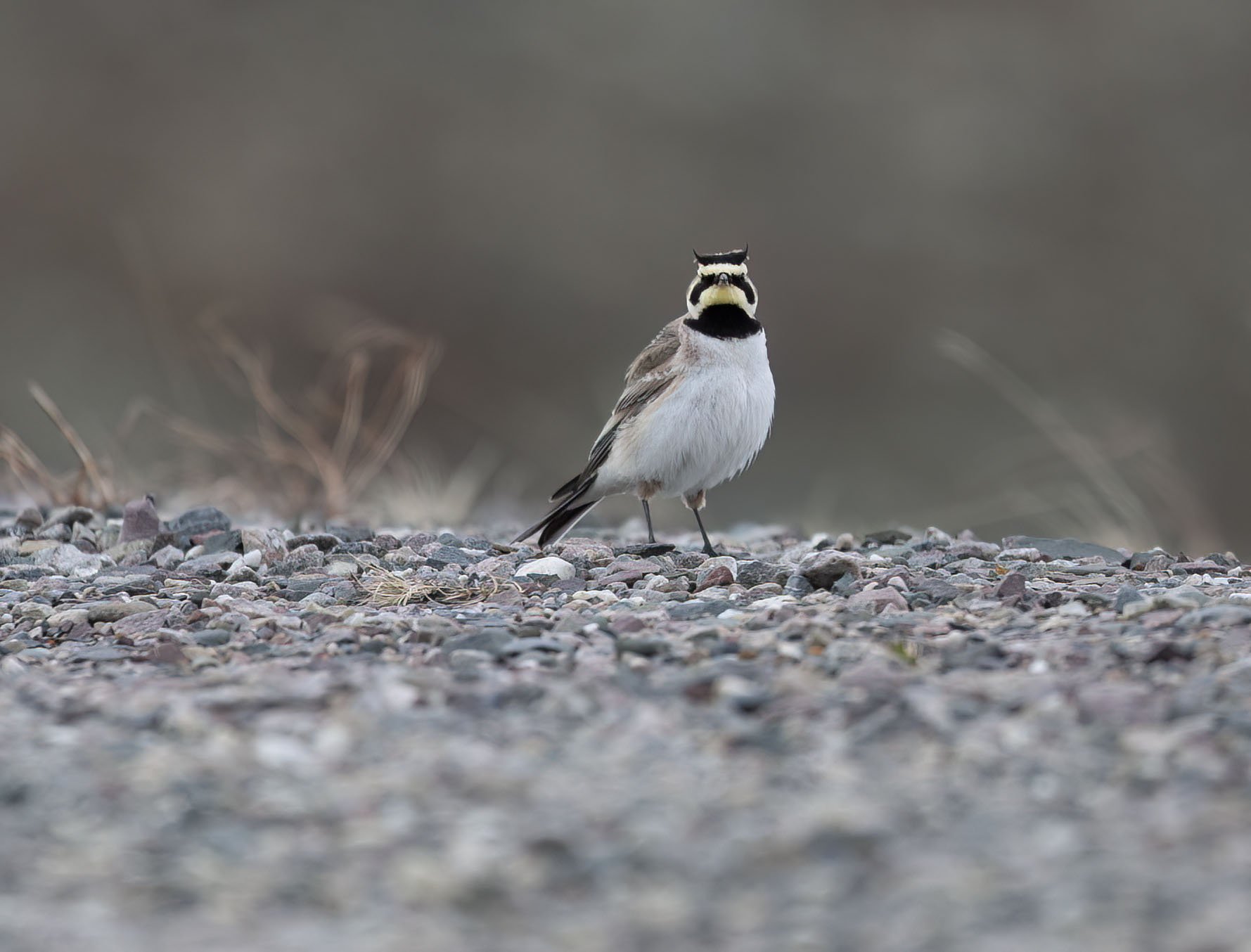
Male in breeding plumage on a roadside Varanger
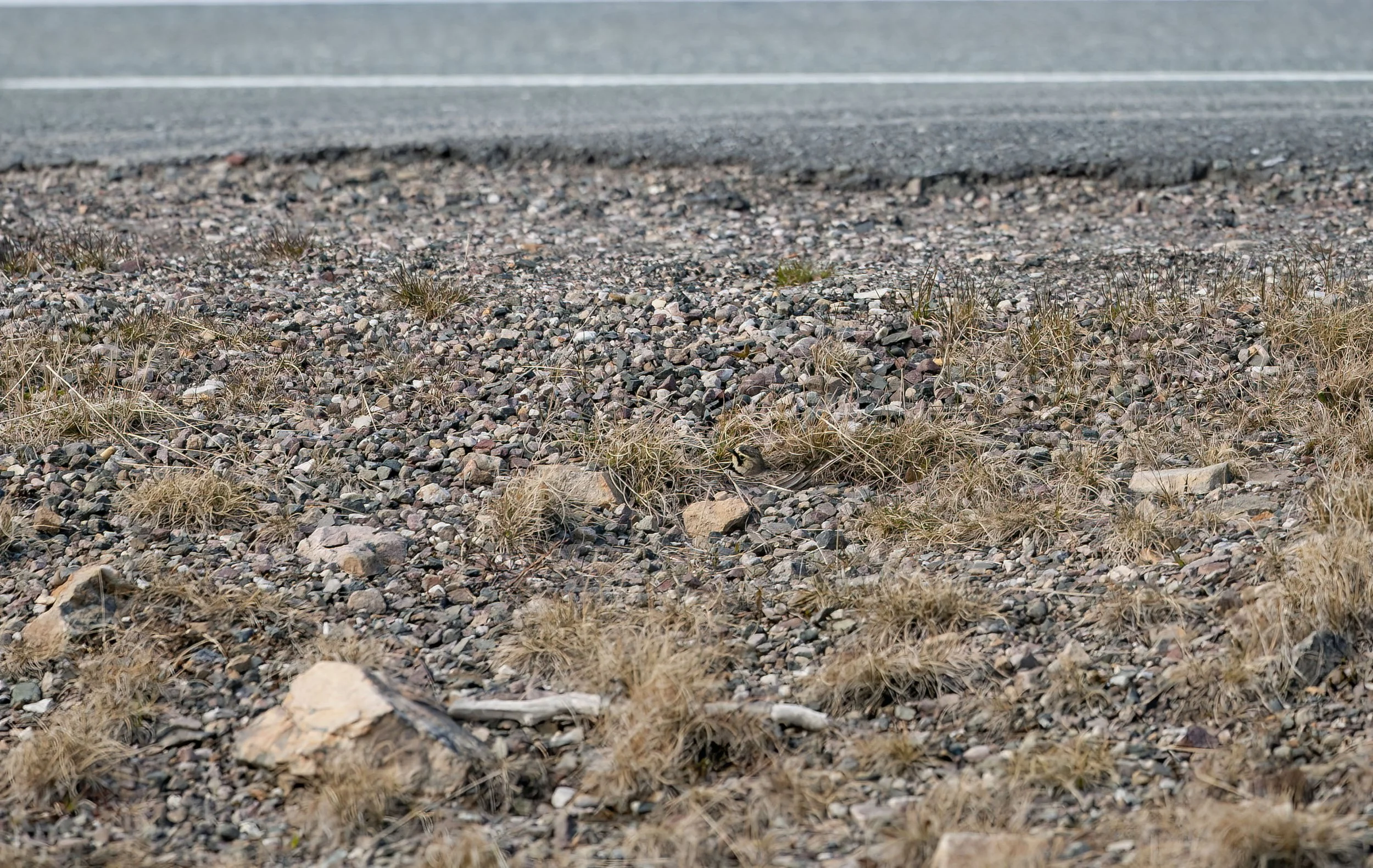
Shore Lark on nest by side of road Varanger Norway
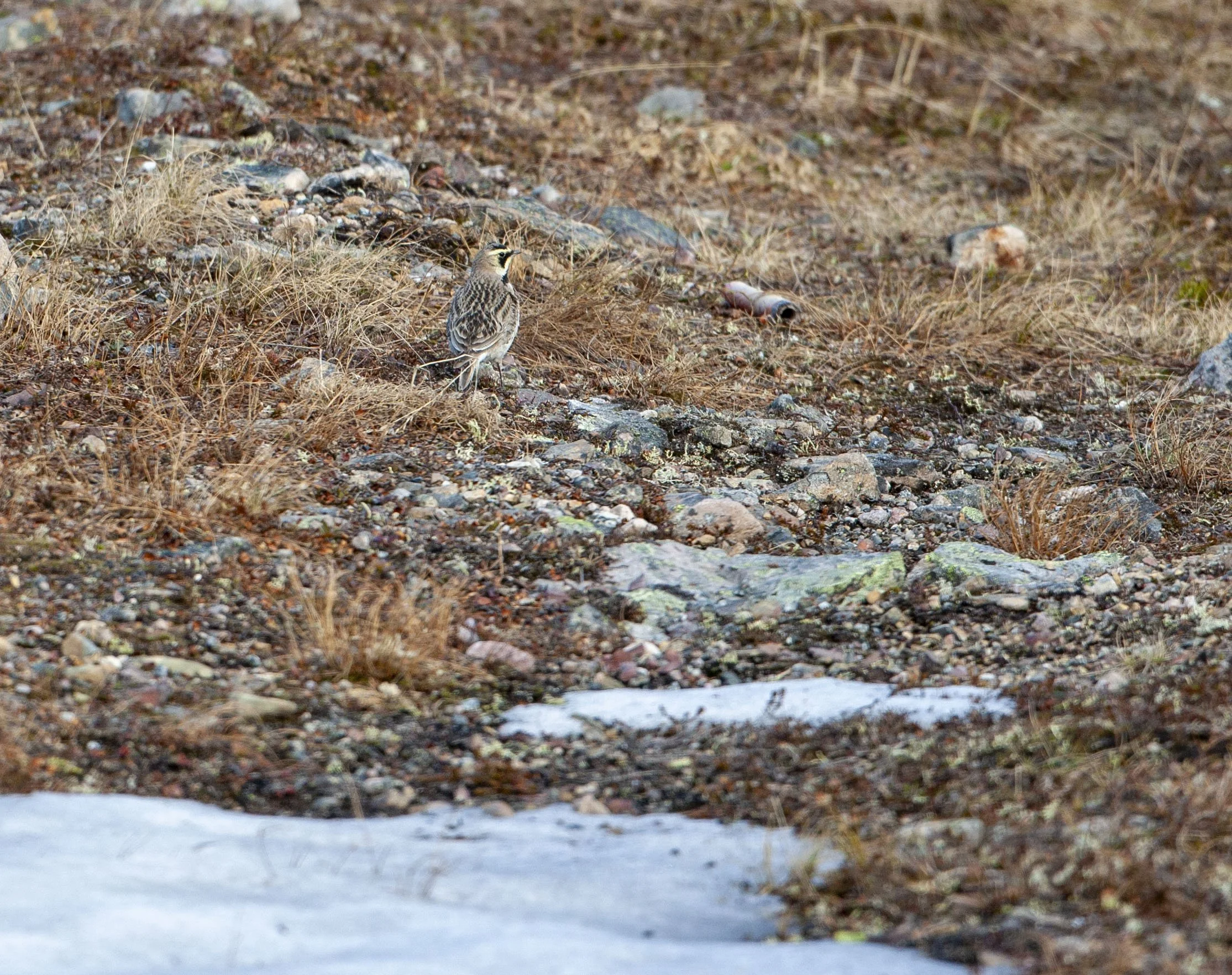
In late springs snow cover restricts where birds can nest
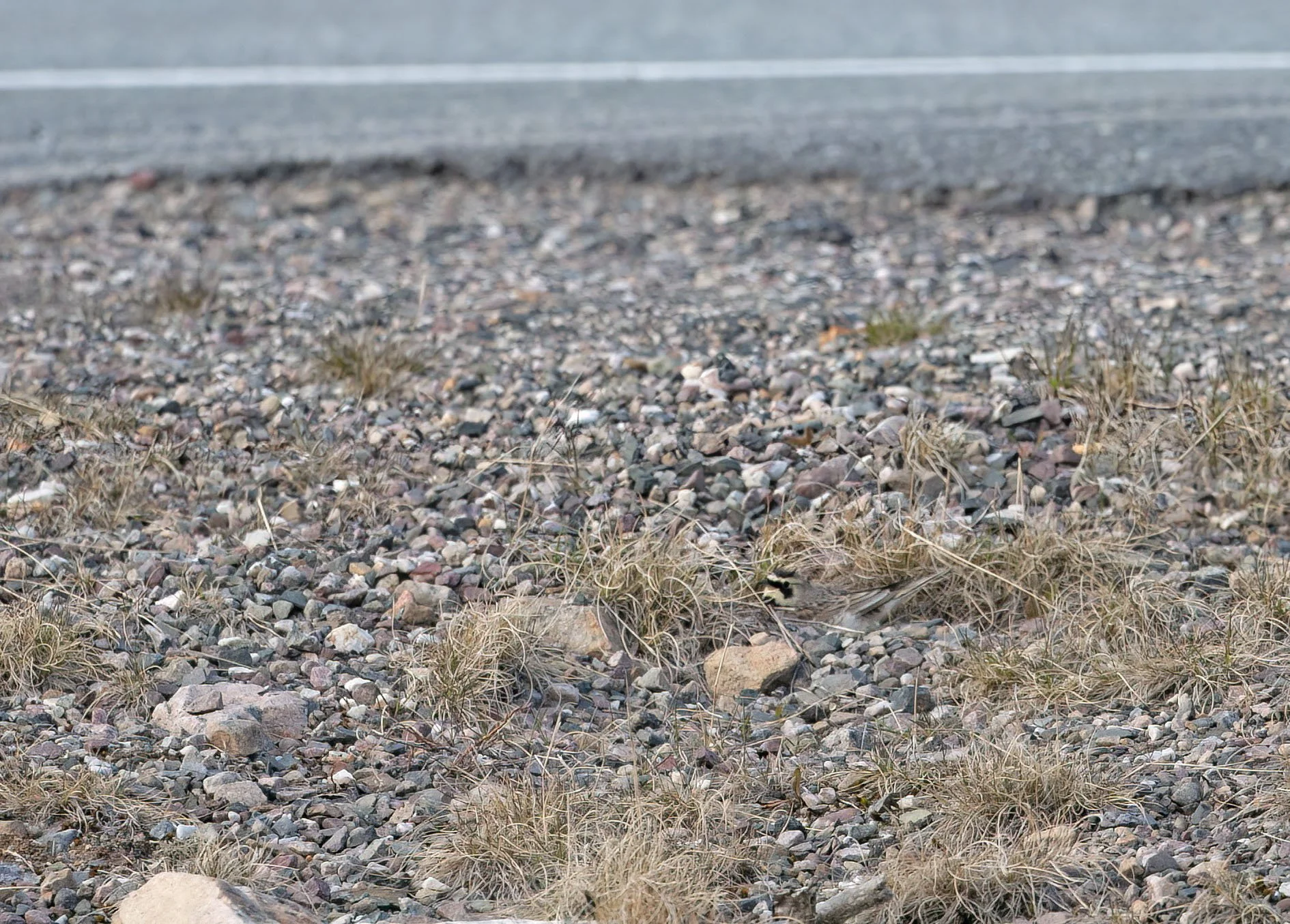
Shore Lark on nest Varanger June 2009
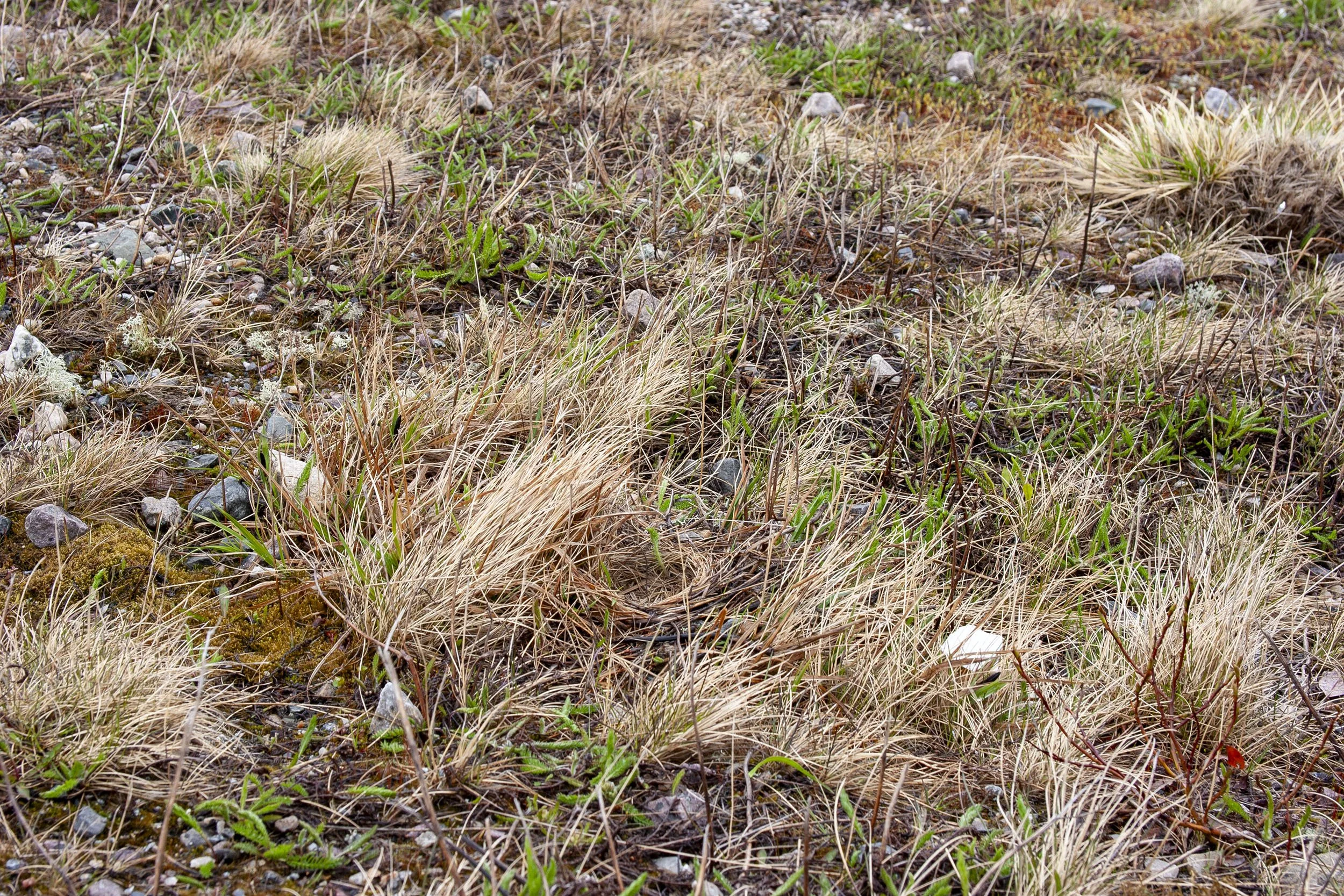
Shore Lark nest Varanger June 2006
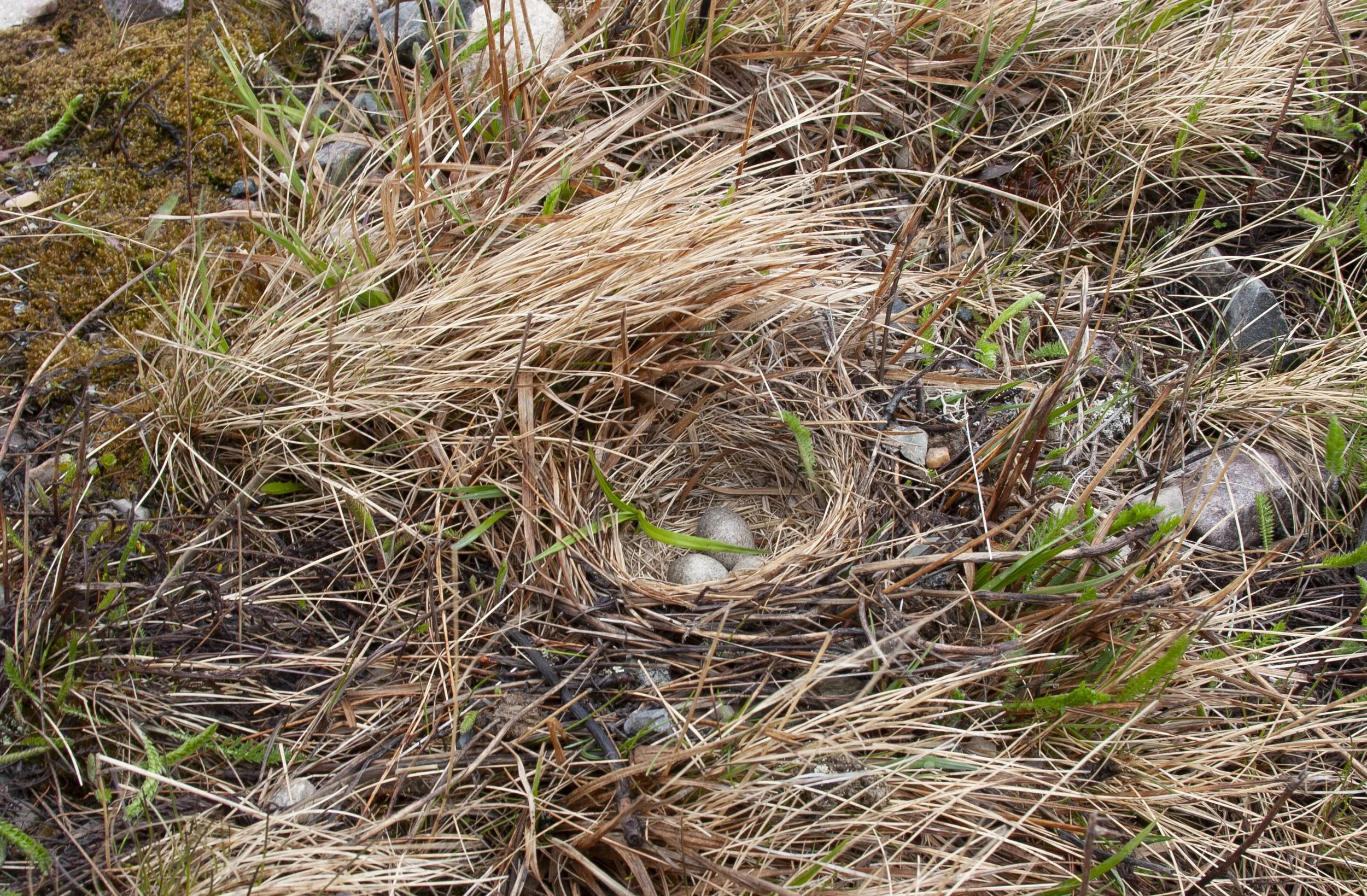
Clutch of eggs in early June Varanger
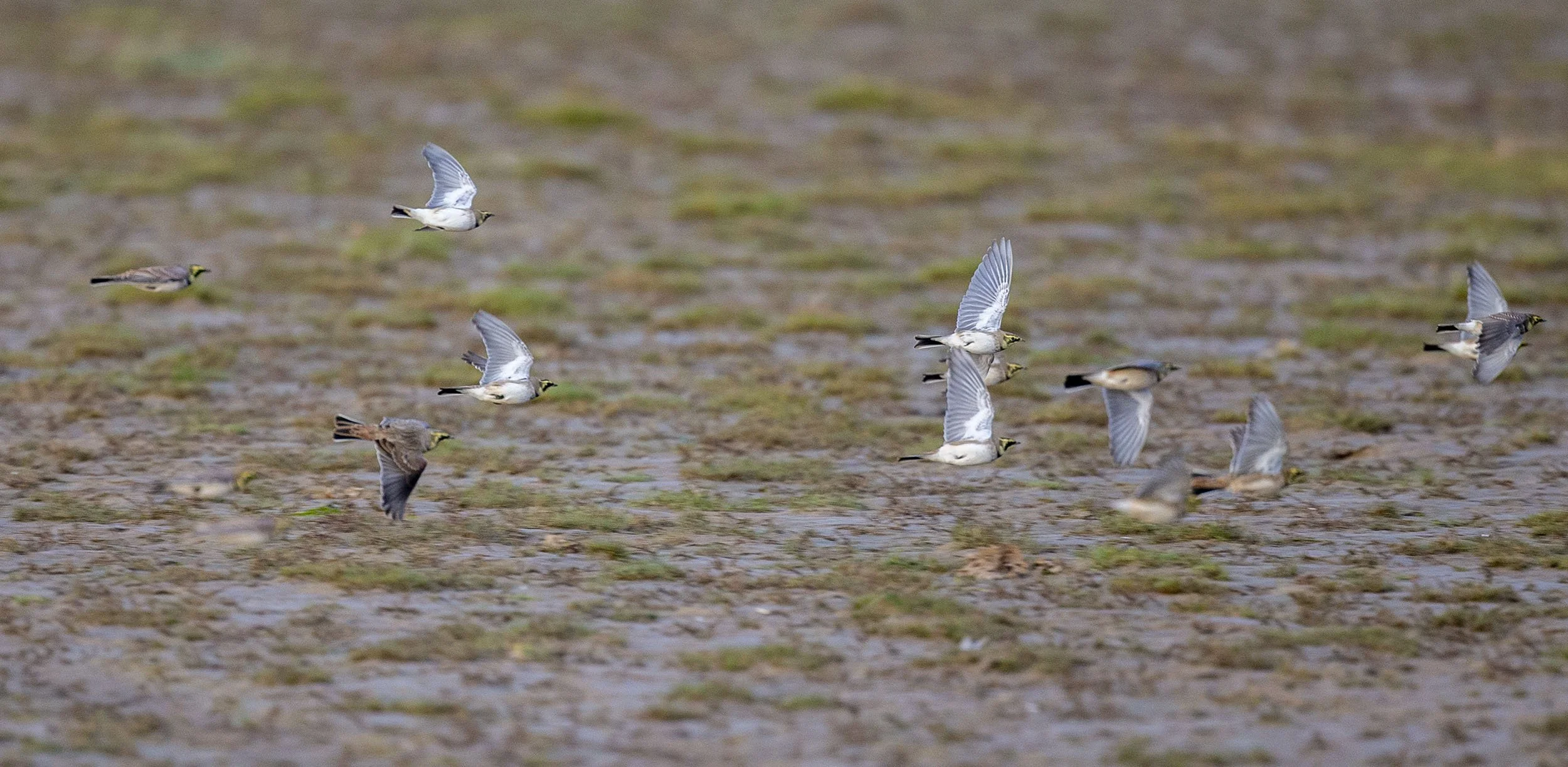
Shore Larks Theddlethorpe October 2016
Make the most of every Shore Lark they are a true winter treat but with ever declining numbers pressure from birders increases on the few that remain and disturbance of open coastal beaches where they forage on the seeds of saltmarsh plants in situ and along the tide wrack by an ever-growing human population often accompanied by free roaming dogs has even led to areas being fenced in North Norfolk in recent years to give the birds some peace. With climate change inevitably impacting breeding areas and increasing pressure on coastal wintering habitats the prospects for Shore Larks in Britain are not good but for now we are still privileged to see a few each winter.
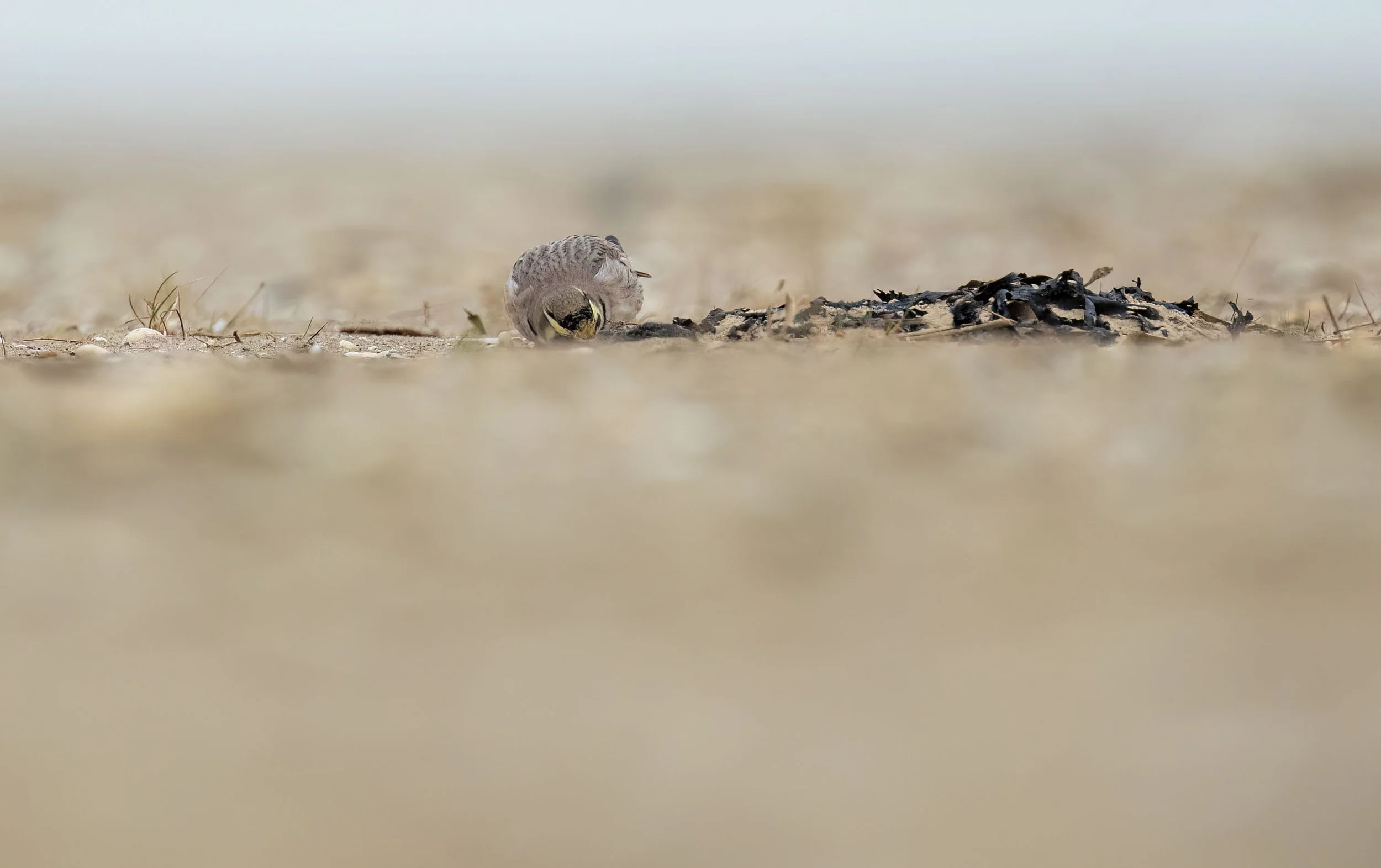
Shore Lark Cleethorpes January 2019
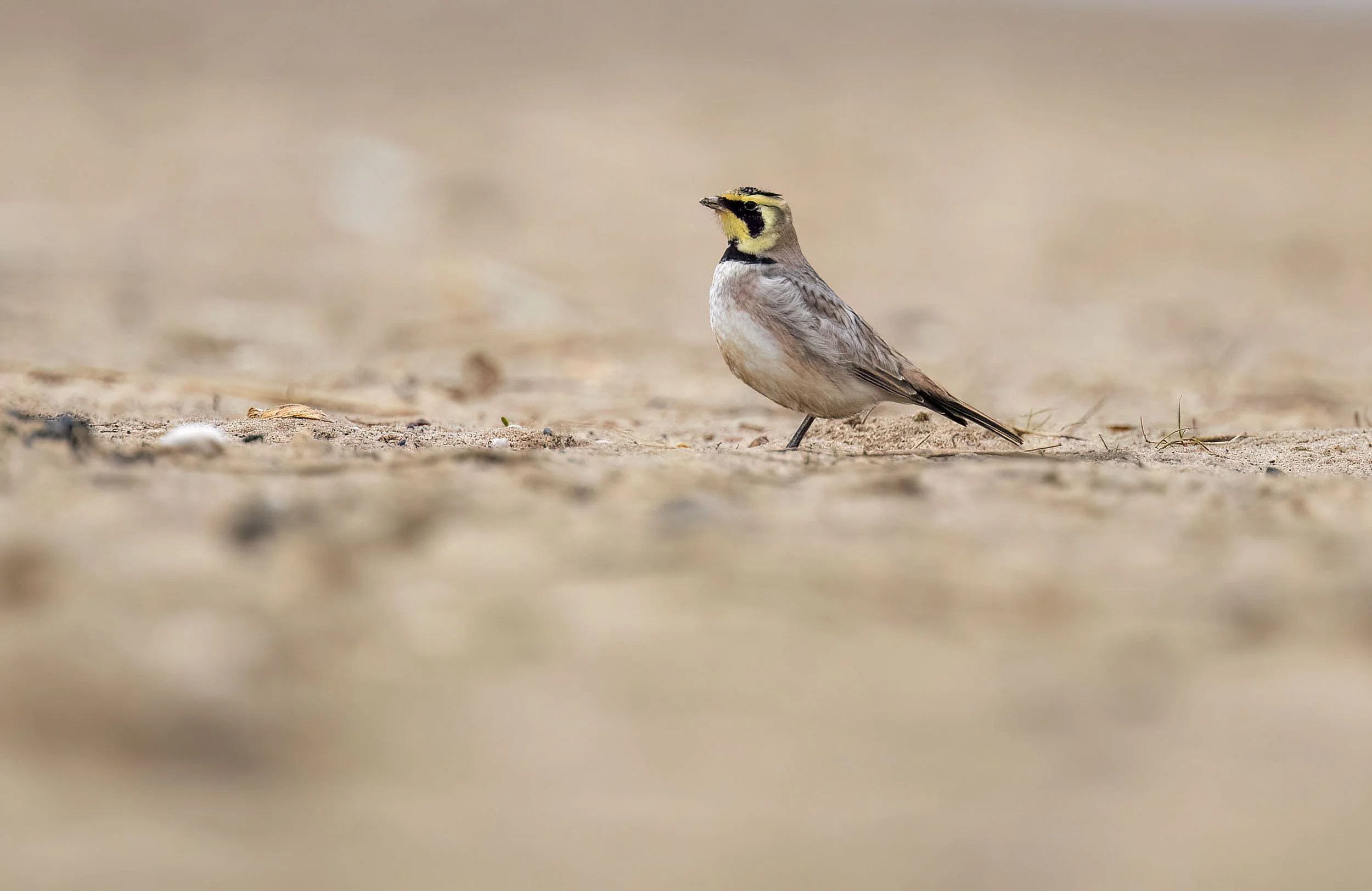
Single birds always tend to be more approachable than flocks - Cleethorpes January 2019
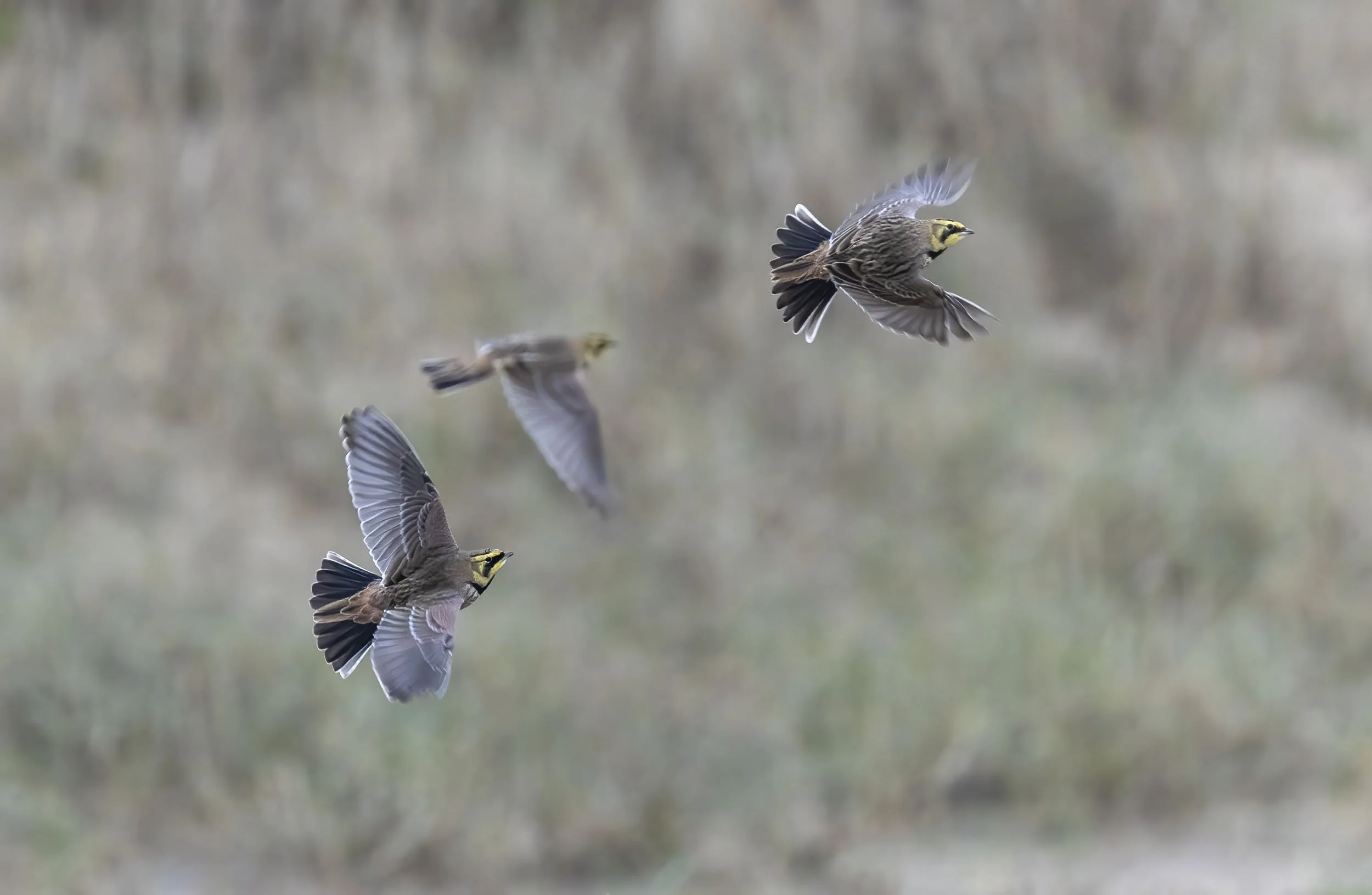
Shorelarks Skegness January 2024