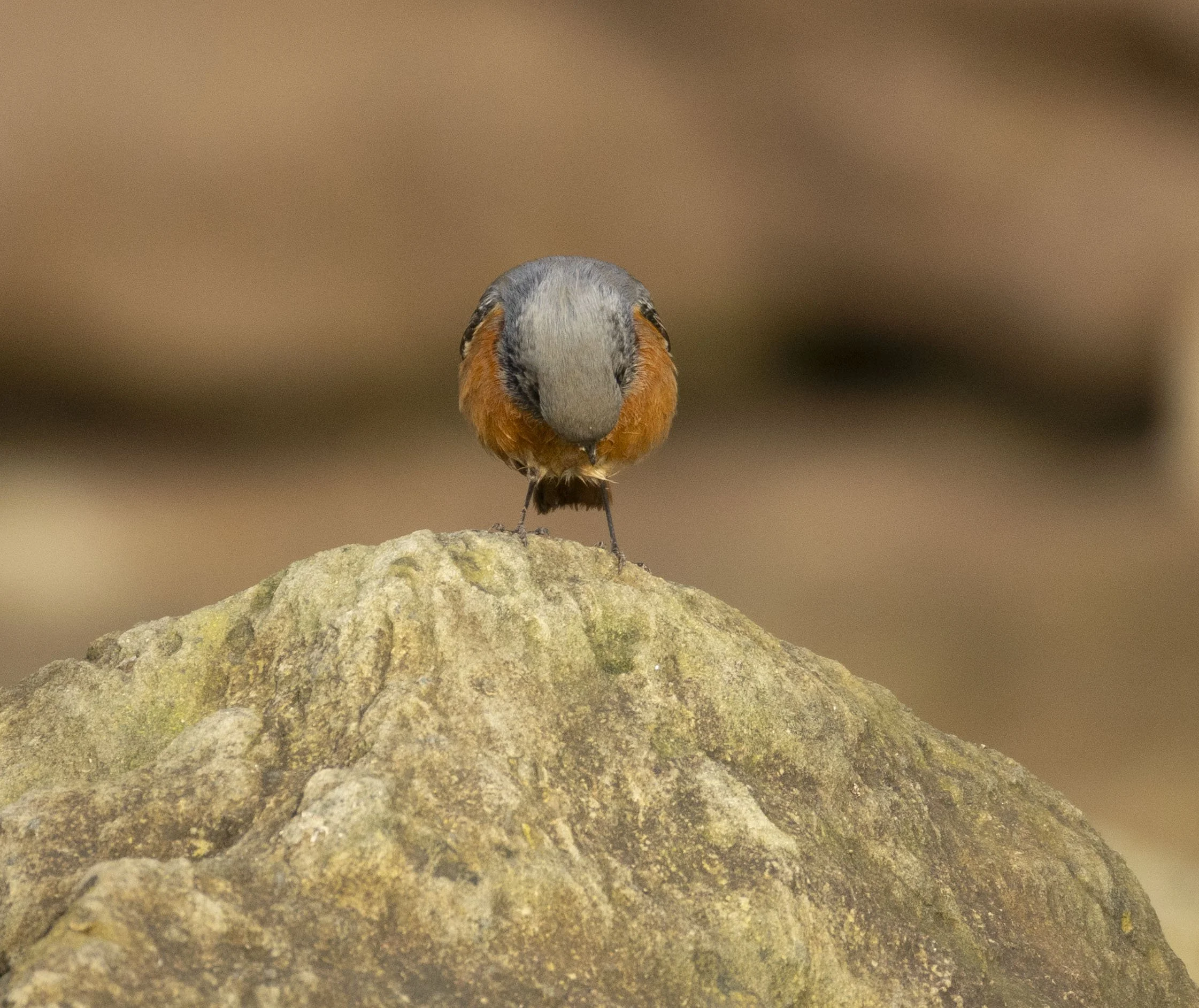
Eastern Black Redstarts and the Lincolnshire connections
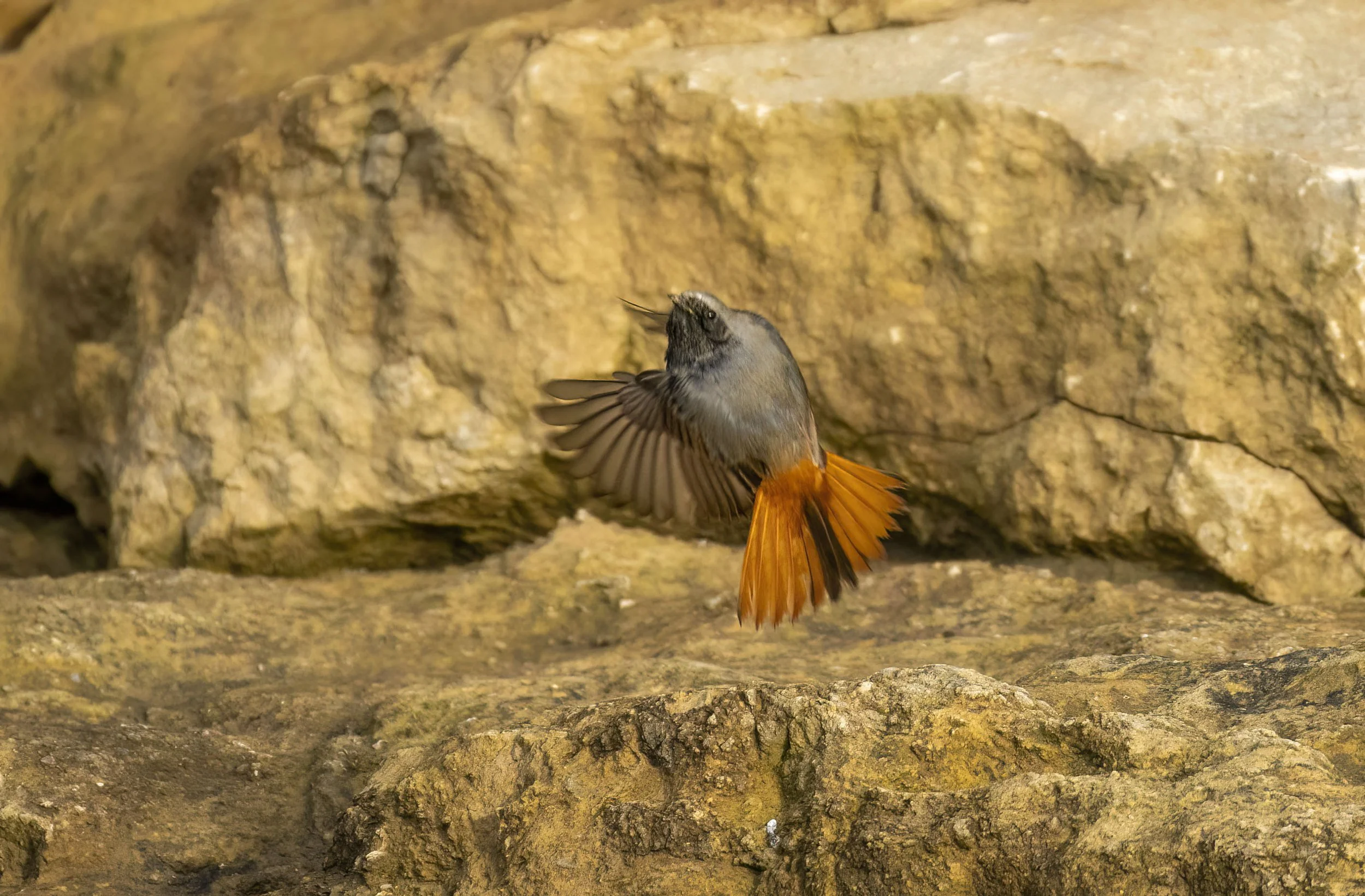
Eastern Black Redstart Filey N Yorks December 2025 - appears to be the same bird as Scarborough late November
On November 28th 2025 I went to Scarborough not for fish and chips, ice cream or a Walrus but to try and see a first winter male Eastern Black Redstart found by exported Lincs’ birder Ben Ward. Arriving in lovely sunshine the bird was missing then appeared distantly then it was relocated close in a tree in the graveyard but literally as I clapped eyes on it the heavens opened and a seeming torrent descended on North Yorkshire. Camera gear and self very wet I abandoned the watch and dried off returning to see the bird at about 3m range but looking very wet and sorry for itself – about as happy as I felt; images taken obviously looked pretty dire and the bird was so happy with the weather that it loafed under a fallen grave stone for a while. I had already seen two 1cy male Eastern Black Redstarts in Britain, just up the road at Scalby December 3rd 2014 at that time only the 5th British record and at Skinningrove, also North Yorkshire October 31st 2016 so why go see another? Well to quote the late Martin Garner: It’s a brilliant looking bird and its very rare and has undertaken the remarkable (to me seemingly miraculous) feat of flying here from somewhere in Central Asia. What’s not to like?!

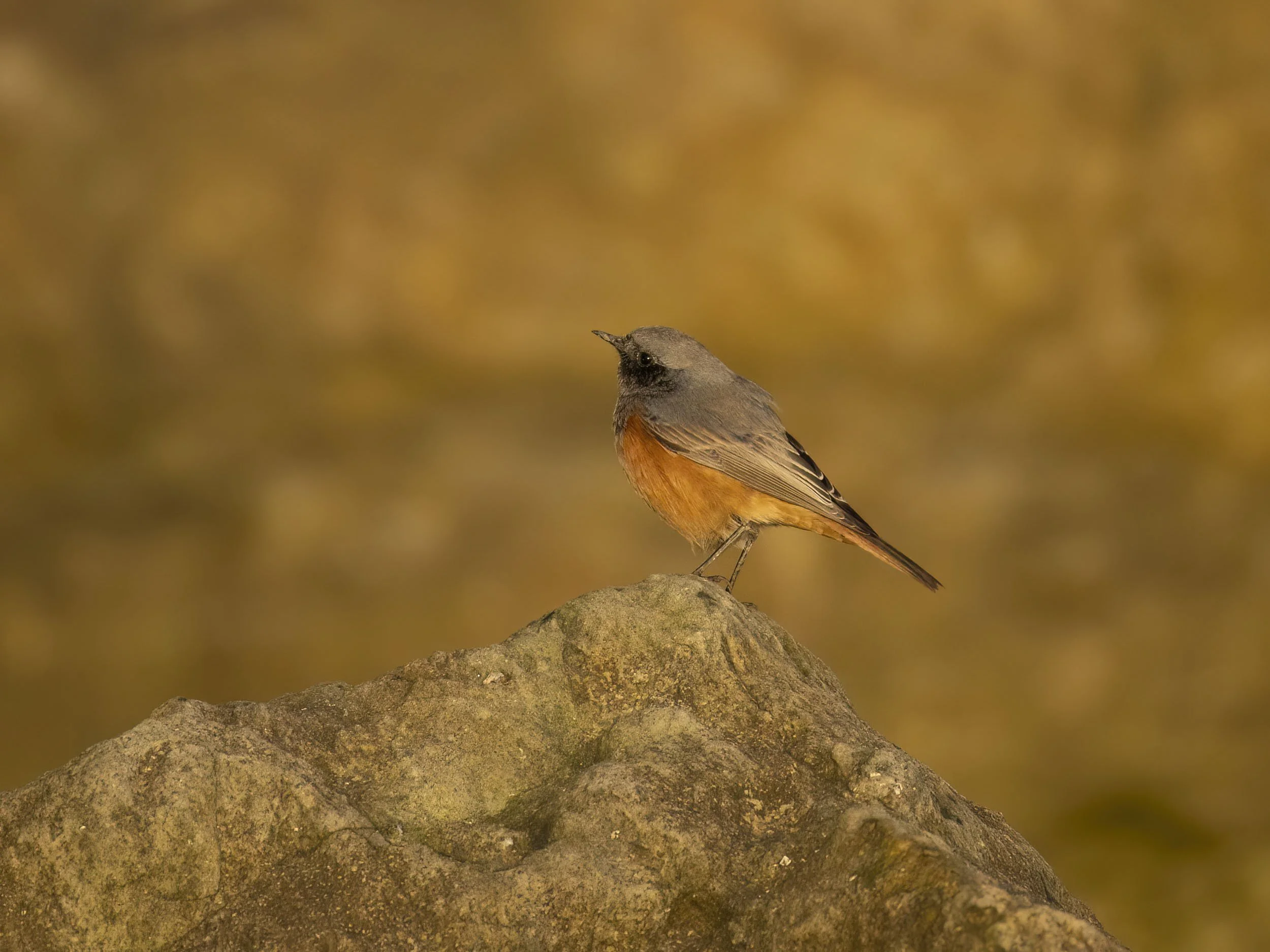
First winter male Eastern Black Redstart Filey North Yorkshire December 2025 - a stunning little bird and for once in recent weeks in sunshine
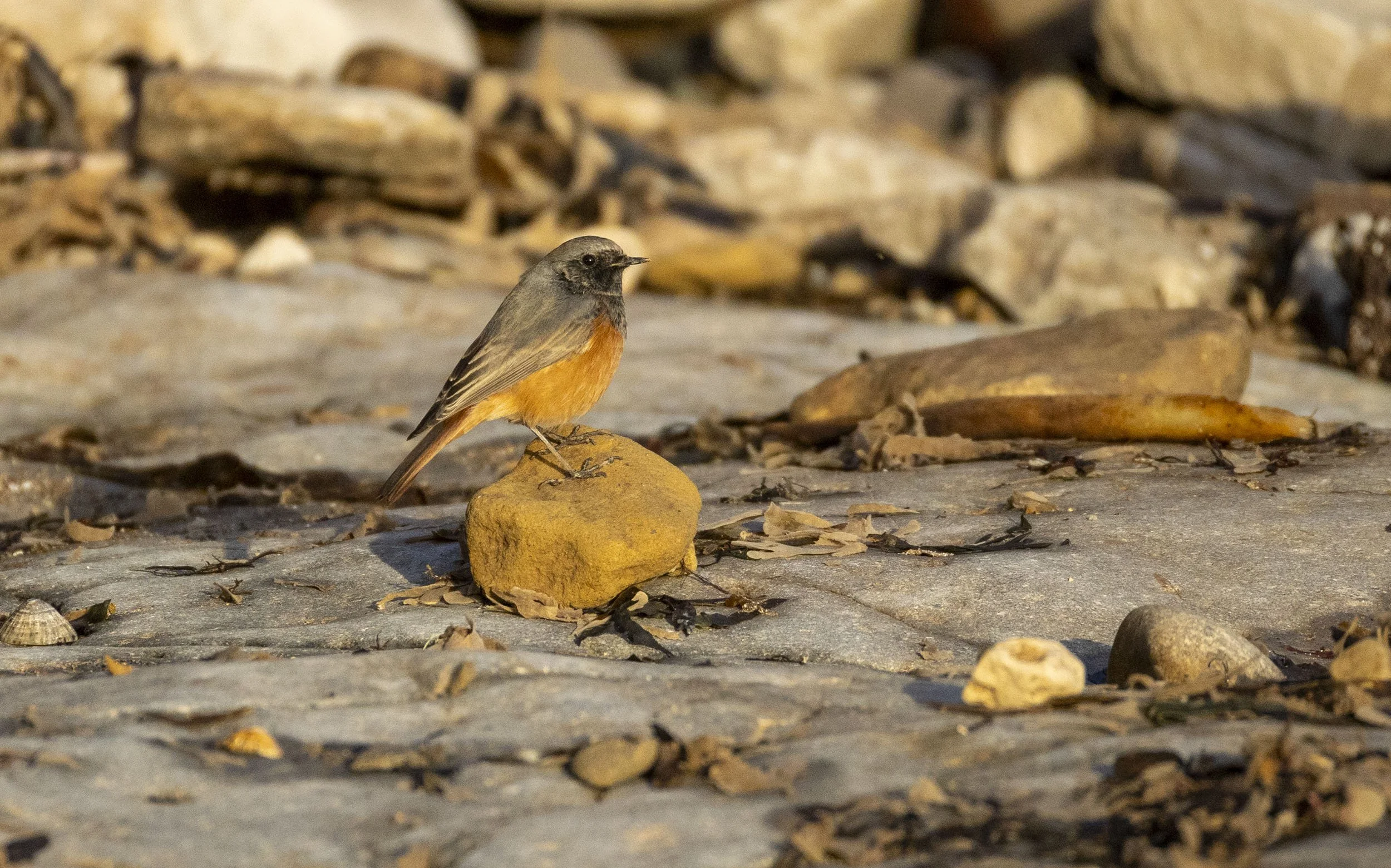
It’s not a species tick apparently but read on, and that is just a human thought by a few taxonomists not reality and thus after the soggy venture when it moved to Filey, or another appeared at Filey in early December I had to have another look but picked a decent day with intermittent hazy sunshine. The bird performed brilliantly and there were very few birders there, as it’s not a tick presumably, so I was able to take 6000 images! Why is a question I often ask myself when sitting for hours looking for the one or two good ones
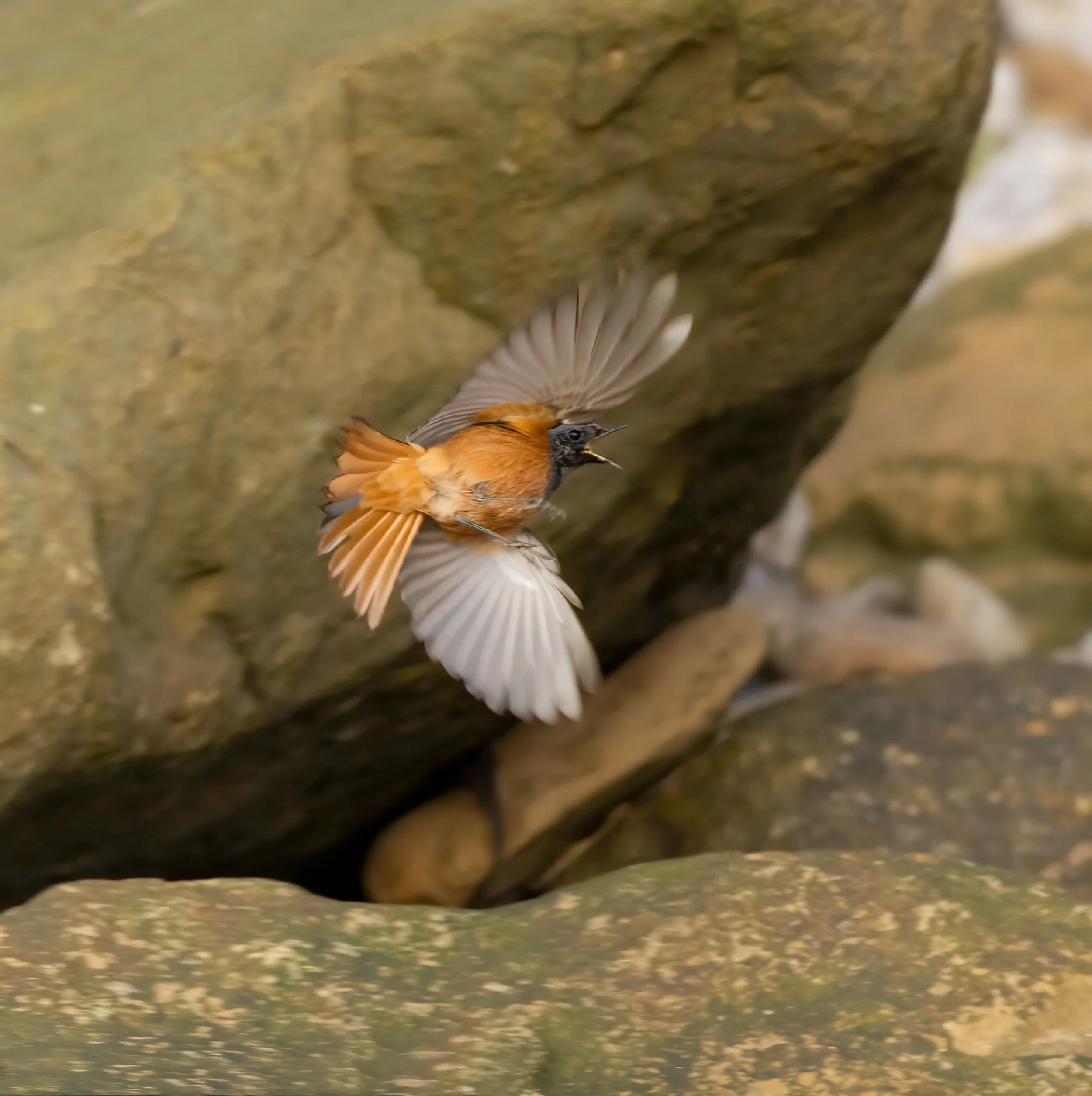
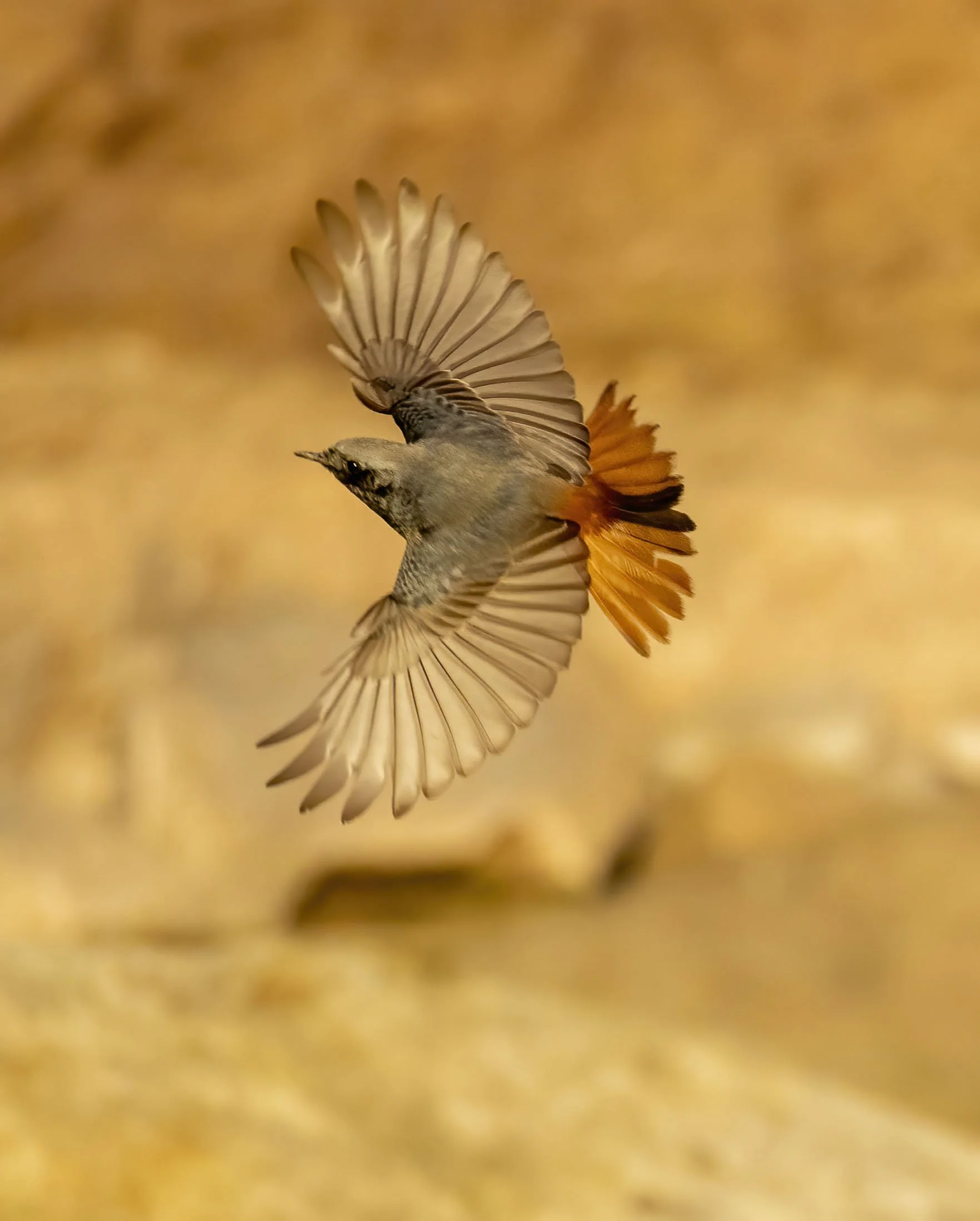
Eastern Black Redstart flycatching Filey December 2025 - mirrorless cameras with their improved AF systems make action photography easier but its still hard work with fast moving passerines
So, what was the point of this long ramble? Well, it’s given me the impetus to put all of my Eastern Black Redstart images in one place and also to reminisce about some old Lincolnshire records that initially made it to the British list only to be removed, quite rightly, at a later date.
https://www.britishbirds.co.uk/system/files/2025-11/2016_V109_N04_P211-219_EBlackRedstart.pdf
It has also forced me to dig out all the papers and references on EBR in Britain and Europe – no bad thing as you never know when you may just stumble across one and need to exclude the dreaded hybrids.
But back in time to autumn 1978: September had produced a good list of seabirds up the Humber but the Lincolnshire coast had been decidedly quiet in persistent westerlies until October 8th when Lincolnshire’s first Siberian Stonechat appeared at Donna Nook hot on the heels of the publication in British Birds of a paper telling us how to identify a race / species most of us had never heard of and listing its European status:
https://britishbirds.co.uk/system/files/2025-11/V70_N06_P237-245_A061.pdf
Black and white images and a pen and ink drawing came to life on a dull October afternoon and the autumn had been saved but was there better to come?
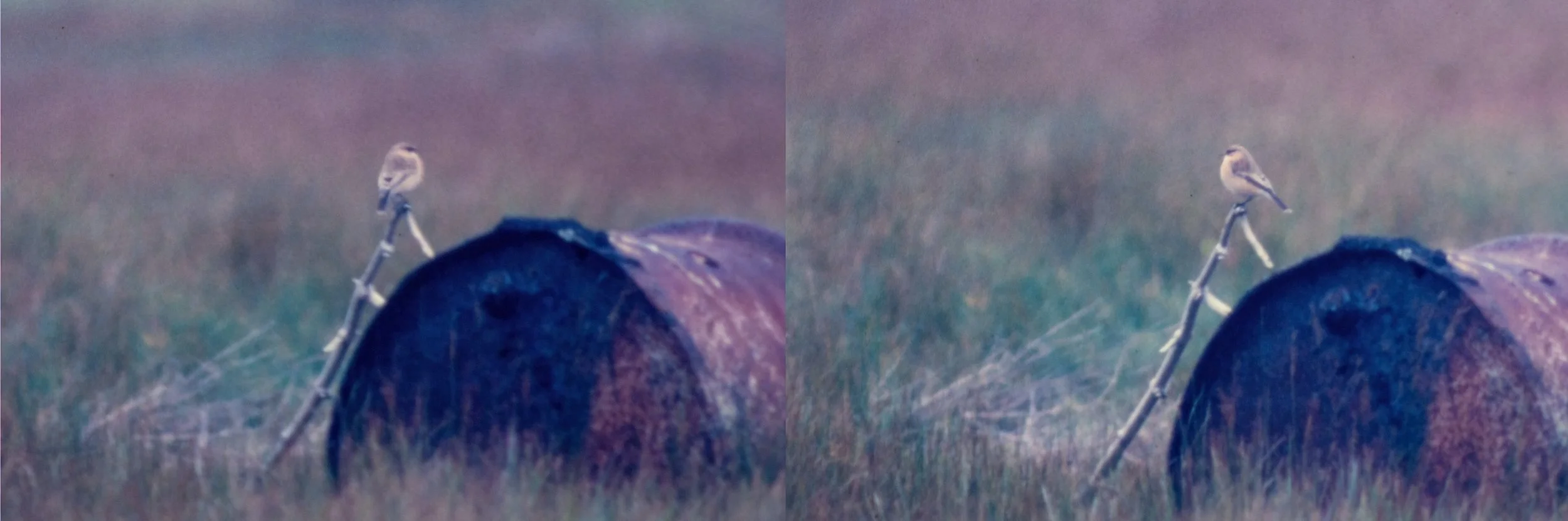
Siberian Stonechat Donna Nook october 8th 1978 the first
Two days later one of life’s great dilemmas faced me. The weather forecast for several days had said SW so no danger of any coastal arrivals. After three years of putting up with my birding obsession Jude had decided that a bit of precious metal needed to be purchased. I put it down to the exotic holidays I had taken her on; camping in Wales in June, not too bad, sleeping in a cowshed in Wales in March maybe less exotic, a four-star caravan on North Uist for Steller’s Eider and passage Pom Skuas and then foreign trips camping in the Camargue and at Lake Neusiedl: it was in the Gooders Guide where to watch birds in Europe or similar, and included a cold war encounter with soviet border guards on the Hungarian border. Back to October 10th and it seemed as good a day as any to make the dreaded purchase no risk of missing any good birds and a few hours spent in jewellery shops would stand me in good stead for the next twitch. Leaving for work at 06:00 oddly the wind seemed to be SE but clearly it wasn’t. By mid-morning it was strong SE and I had a few hours to make a decision; cancel the shopping expedition and risk divorce or make a cunning plan. I had from 13:00 to darkness to buy that ring and somehow get to the coast. I think it is fair to say that Jude was somewhat perplexed with my speed of ring choice and handing over a week’s wages but by 14:00 we were heading for the delights of Humberston Fitties the closest bit of coast to Grimsby albeit overshadowed by the dreaded Spurn. Leaving Julia in the mini I set off and in the first willow the first bird I clapped eyes was an Arctic Warbler my first selfie! What a result. Chuffed to bits I headed to the phone box by the entrance to the Fitties to ring my old birding mate Mick Mellor. The response from the other end of the old landline from Mick’s mother however, sort of took the edge off the day. His mother replied that Mick wasn’t there as he had gone to Donna Nook to look for a Red-flanked Bluetail found by Steve Lorand that morning!
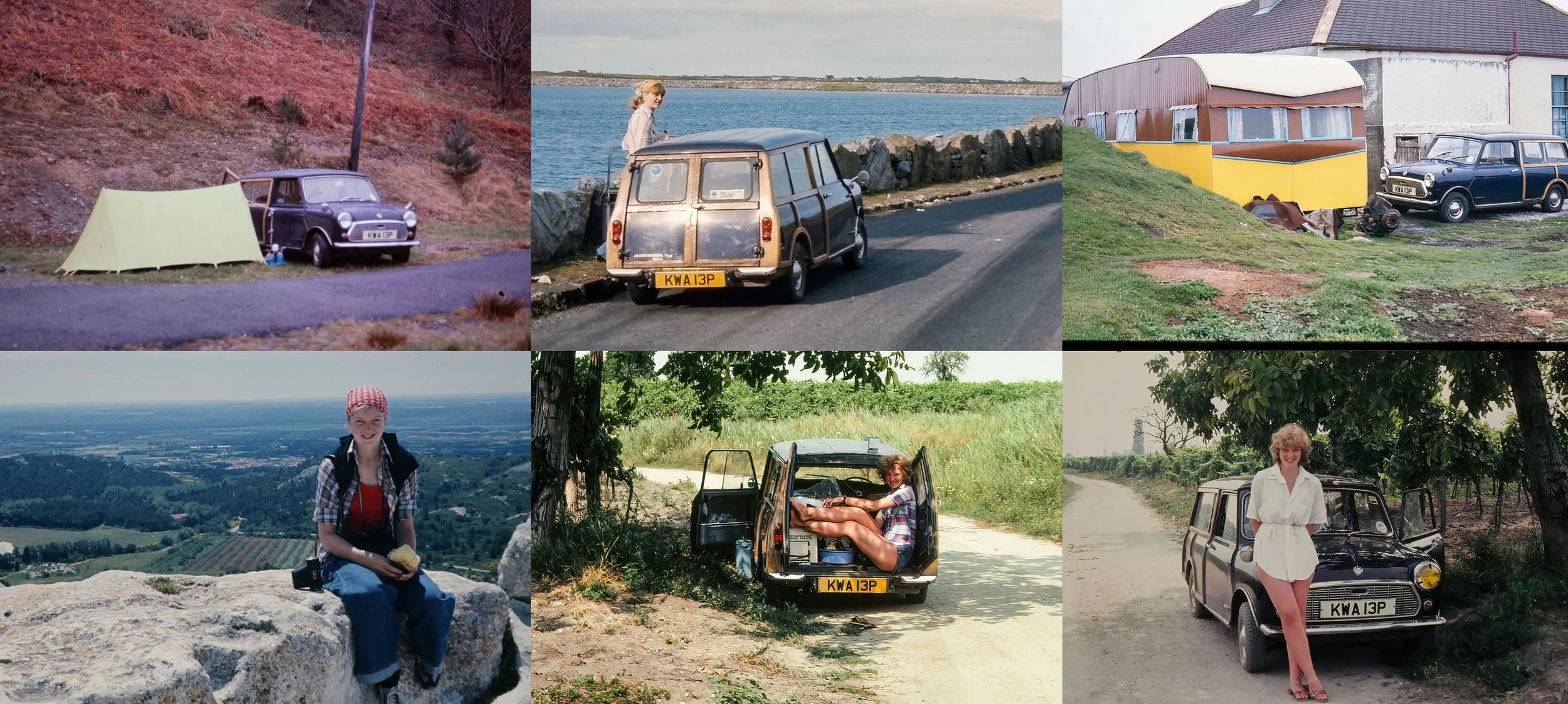
Exotic trips - top left Wales March, top middle and right accomodation North Uist May 1978; bottom left Les Baux de Provemce June 1977 and bottom right two Lake Neusiedl Austria July 1978 the mini clubman got about
On the positive side Julia was happy though I doubt she remembers the Arctic Warbler 47 years on.
Bluetails were of course mythical beings in those days, no-one had seen one, and of course we never saw it the following day though having seen several now I do wonder if we looked hard enough for what can be a bit of an elusive bird. It seemed the chance had gone but we were stoical in those days and kept slogging the Lincs buckthorn and willows. The Warbler had also moved on the next day but Rimac on the 14th produced an influx of Redwings, three Ouzels and a Ring-necked Parakeet of all things. Mick and I were back at Rimac on 15th working the willow hedge with a few incoming thrushes but little else when we came across three chats an adult male and first winter / female Black Redstart and another bird that had us baffled. My notes below from the day:
Redstart sp Saltfleetby October 15th 1978
Male seen in willow hedge and feeding from barbed wire fence around a grass field also feeding on ground in ploughed fields. Actions resembled Redstart including tail shivering on one occasion and the general jizz was the same.
Bill and legs black. Facial disk and throat black. Almost a pale supercilium but poorly defined. Crown, nape and back a pale slate grey with a distinct bluish tinge. Rump and outer tail feathers bright chestnut – orange; central tail feathers dark ruddy brown as in Redstart. Pale whitish line between orange of rump and grey of lower back seen when preening but not obvious. Wing coverts bluish – grey. Primaries looked black, secondaries dark blackish-brown with an obvious whitish wing panel formed by pale edges to secondaries; this was roughly triangular and very obvious also showing up in flight. Tertials similar dark blackish-brown faintly edged and tipped white producing a patterned effect. A white line round the bend of the folded wing could be seen. Upper breast to half way down dark blackish-grey again with a faint bluish tinge faintly streaked with black in the centre of the breast. Grey of upper breast separated from orange of lower breast and belly by a thin pale whitish line. Orange of belly palest in the centre being creamy – the orange was streaked with darker rufous orange. Orange of rump and belly joined on the flanks to give a very colourful effect. Call was a soft single syllable pit pit given only infrequently and much quieter than Redstart.
Also, same day male and immature Black Redstart, Ring Ouzel, 3 Jack Snipe, Lapland Bunting, 50 Twite, Redwing 11, Curlew Sandpiper, Blackcap and Fieldfare.
The bird seemed like a Redstart in some respects and Black Redstart in others (maybe we should have thought deeper but it seemed fair to say that hybrid Black x Common Redstarts were unheard of in Britain at least at that time) but it seemed to defy identification and the texts we had available seemed to give no real clues to its identity. Back in 1978 there were very few in depth texts available, pre the relevant volume of BWP, but consulting Keith Atkin’s copy of Vaurie we came across descriptions of eastern races of Black Redstart that seemed to almost fit our bird but the white wing flash seemed at odds with them all. So Mick and I decided to do a very adult birder thing and visit the British Museum at Tring to look at skins. The trays of dead birds of course all had folded wings and were pretty faded but the closest thing we could find was Hodgson’s Redstart of the Himalayas. This seemed rather unlikely but there was that record of Tickell’s Thrush on Heligoland. The bird was subsequently submitted to BBRC as an eastern race of Black Redstart which as far as we knew had never been recorded in Britain and was accepted as the second British record. Oddly reading recent texts in Dutch Birding Eastern Black Redstarts are suggested to be closer to Hodgson’s Redstart than Western Black Redstart in DNA an interesting but in this instance irrelevant fact!
The text from the relevant BBRC Report:
Black Redstart Phoenicurus ochruros (0, 2, 0)
Individuals showing the characters of one or other of the intergrading southern/eastern populations P. o. ochruros-semirufus-phoenicuroides were recorded as follows:
1975 Scilly Bryher, female or immature, 13th October (D.I.M. Wallace).
1978 Lincolnshire Saltfleetby, adult male, 15th to 17th October (K. Atkin, G. P. Catley, S.Lorand et al.).
(East from southern USSR and Iran)

Maybe not a contender for the British Birds art competition - my painting of the 1978 Rimac redstart sp
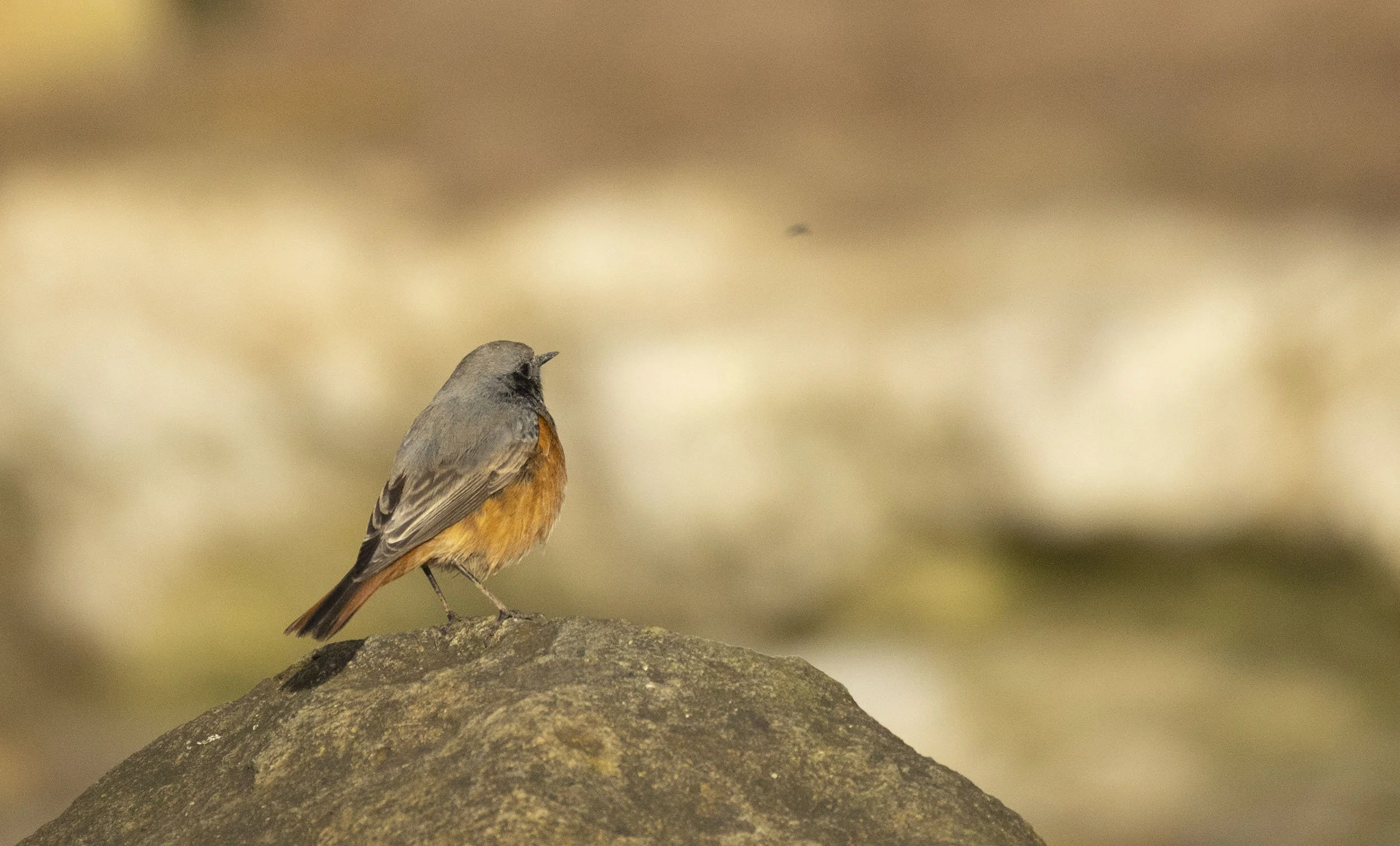
Compare the 78 painting with the real Eastern Black Redstart Filey
We were clearly in good company with DIMW but his female like our bird subsequently failed the test of time. Hindsight is of course a great thing but as more information came to light on the frequency of hybrid breeding between Common and Black Redstarts in Europe identification criteria developed. The Rimac bird failed on several criteria but principally the white wing flash apparently never shown by EBR, the bluish tinge to the upperparts, the paler centre to the belly and pale demarcation between the black and orange breast feathers.
As detailed in the BOURC Review;
The notes and colour painting of the 1978 Lincolnshire bird showed features not associated with any subspecies of Black Redstart, notably a combination of orange underparts and a prominent white wing panel. It too was judged to have been a hybrid.
Subsequently in October 1988 a bird at Ponderosa Donna Nook found by DH, Andrew and Peter Wilson and yours truly was also accepted as an Eastern Black Redstart:
October 21st was a major East coast fall day with our coastal haul totals summarised: Robin 78+, Blackbird 300, Redwing 150, Reed Bunting 40, Ring Ouzel 1, Brambling, Reed Warbler, Goldcrest 350, Lapland Bunting 4, Short-eared Owl, Eastern Lesser Whitethroat 1, Pallas’s Warbler 3, Yellow-browed Warbler 2, Red-breasted Flycatcher 1, Firecrest, Redstart 2, Black Redstart 2 with a third male as below:
Adult male of one of the eastern races feeding around the RAF bungalow at Ponderosa; like male Black Redstart but crown and upperparts pale slaty grey; throat and ear coverts black; upper breast grey with black spotting / mottling; lower breast and belly dark orange feathers tipped paler with grey wash to flanks; rump and outer tail feathers strikingly rich orange; whitish flash in wing formed by edges to secondaries, tertials obvious but not as striking as adult male Black Redstart:
The text from the relevant BBRC Report seemed prophetic but even at this date very little hard facts were available on the identification of Eastern birds.
Black Redstart Phoenicurus ochruros (0, 3, 1)
An individual showing the characters of one of the intergrading southern/eastern populations P. o. ochruros-semirufus-phoenicuroides was recorded as follows:
Lincolnshire Donna Nook, male, showing characters closest to ochruros, 21st October (G. P.Catley, D. Hursthouse, P. Wilson) (plate 332).
(East from southern USSR and Iran) Three other claims remain under consideration; none has been accepted since 1983. These 'eastern' races may open up a whole can of difficult worms . . . Male ochruros can be subtle, to put it mildly, but male phoenicuroides are lovely, eye-catching creatures
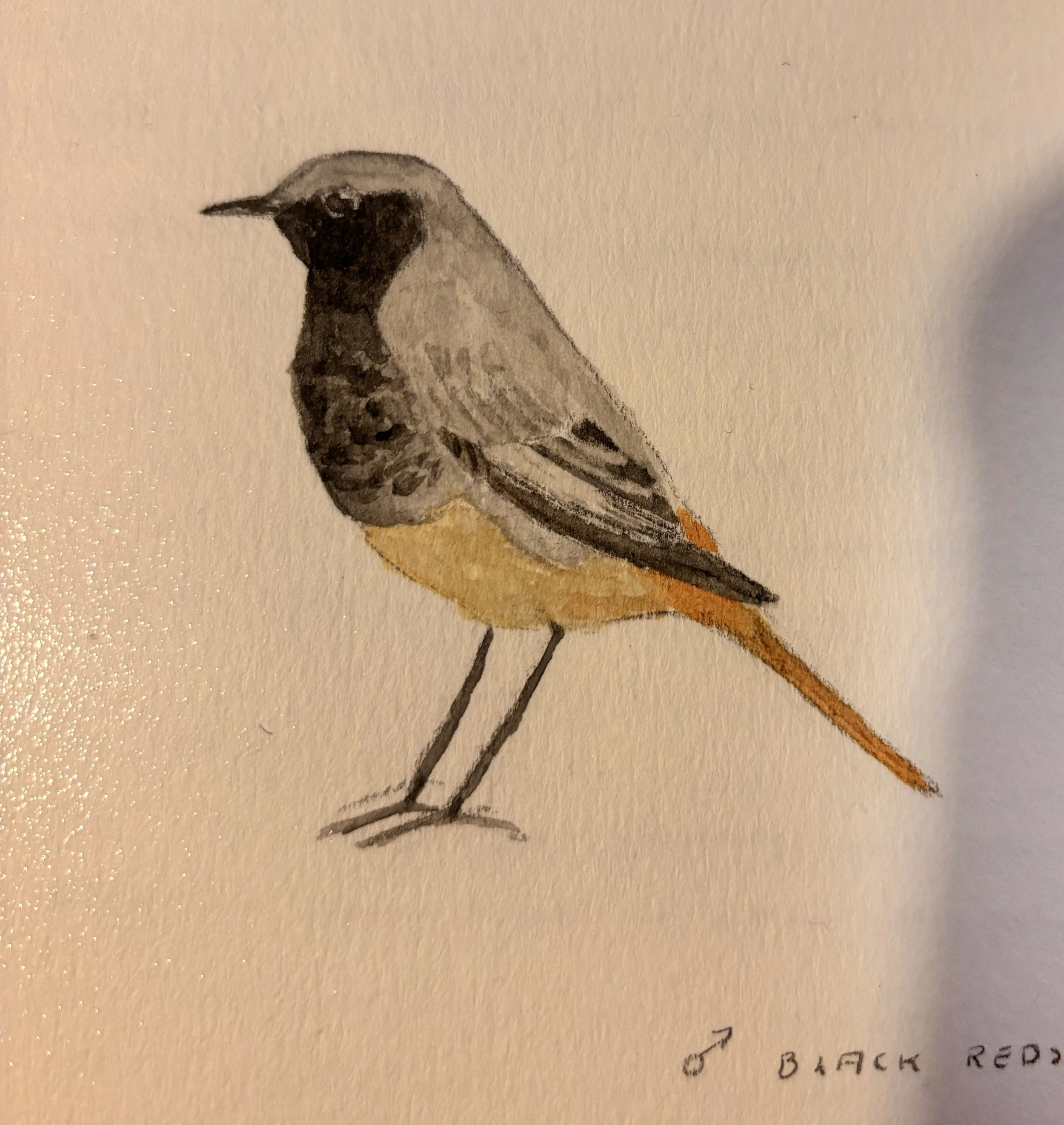
Ten years on and my artwork was almost up to junior school standard - male Donna Nook October 1988 as detailed above
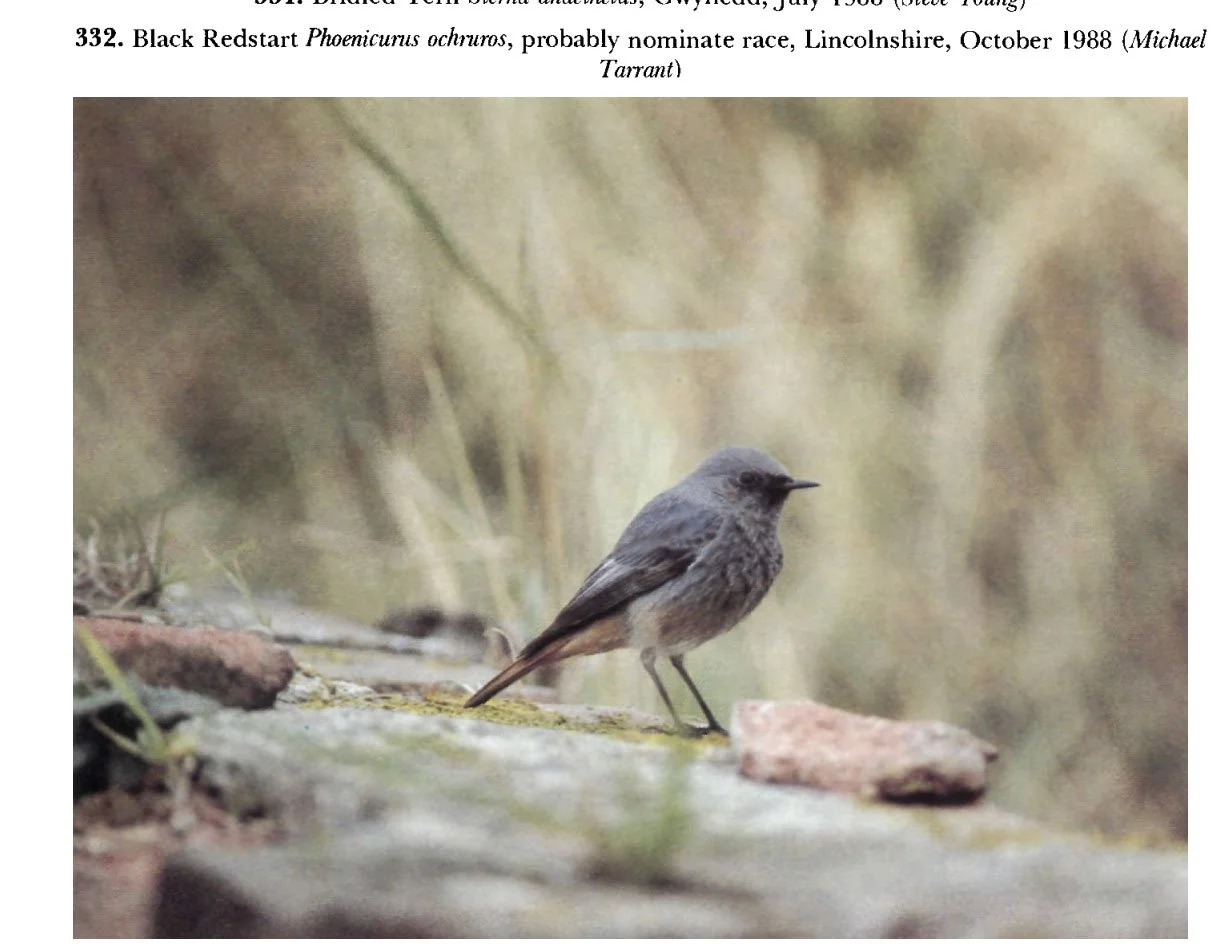
Mike Tarrant’s image of the 1988 Donna Nook bird as published in the BBRC report
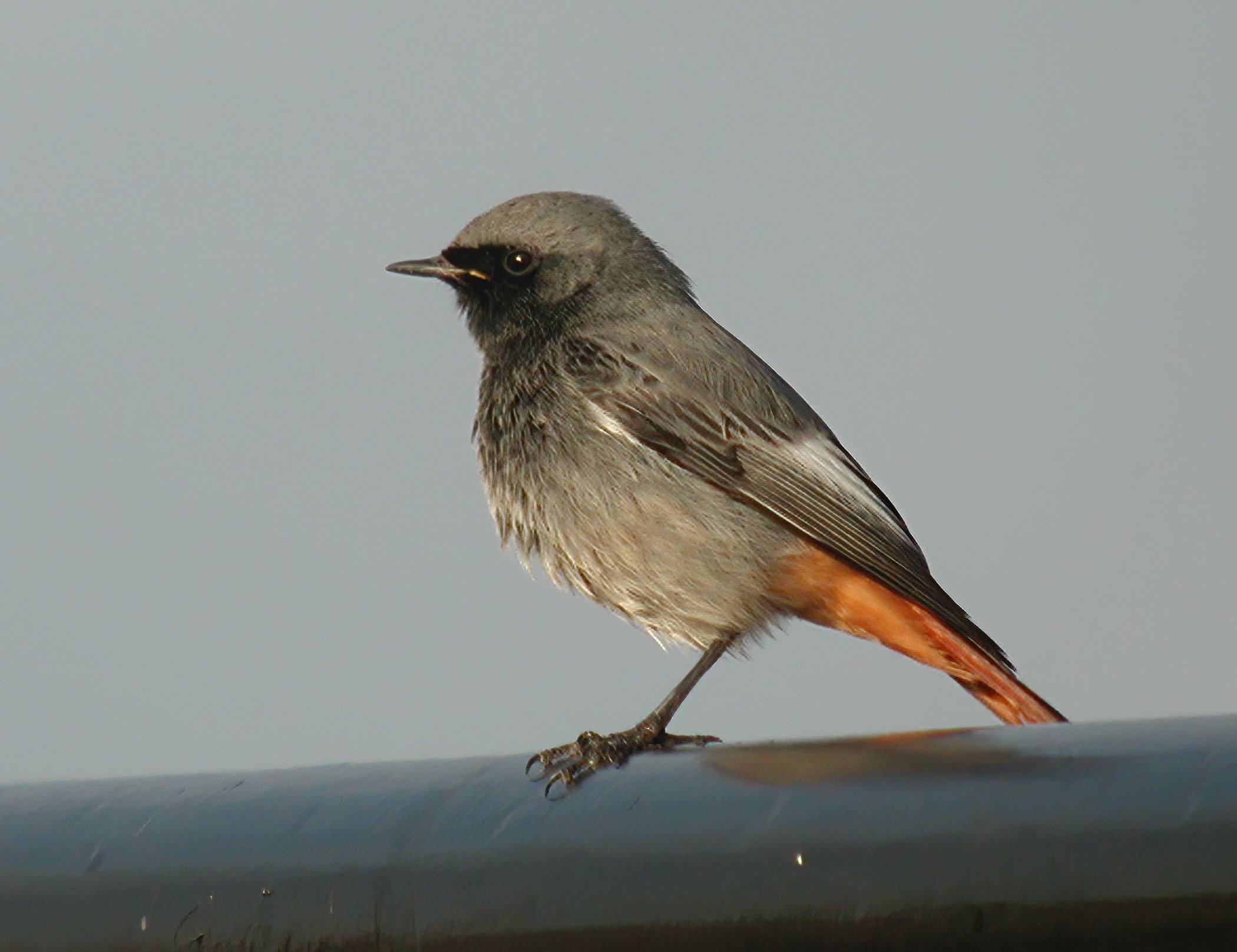
For comparison a fairly typical adult male western gibraltariensis Waters Edge Barton November 24th 2003

Note a bit of orange on the rear flank and undertail but the striking white wing flash November 2003
The later BOURC review 1998 – 1999 spelt out the reason for this bird’s rejection:
The 1988 Lincolnshire bird showed orange in the lower belly, a character of ochruros, but also a prominent pale wing panel, which is not shown by that subspecies. Despite the view of several members that it might indeed be ochruros, it was felt that the possibility of a western bird with restricted orange in the lower belly, either through normal variation or through intergradation with ochruros, could not be excluded. Stoddart April 2016.
In hindsight again this was an orange bellied presumably western Black Redstart or could it have been ochruros? This is one of the areas of Black Redstart identification that remains unsolved and was treated by Martin Garner in this Birding Frontiers blog:
https://birdingfrontiers.wordpress.com/2011/03/24/red-bellied-black-redstarts/
The above blog also contains images of a red-bellied male that was on Lincoln Cathedral from January 21st to March 3rd 2010 – a similar individual to the 1988 Donna Nook bird.
Further useful bits of discussion in this later blog post after the 2011 birds.
https://birdingfrontiers.wordpress.com/2011/11/21/eastern-black-redstart/
Interestingly though all papers state that: Hybrids seem to be genuinely rare during late autumn and early winter, when the numbers of phoenicuroides peak. Photographic evidence should of course allow relevant features to be assessed but we believe that, when a phoenicuroides in late autumn or early winter is identified on plumage alone, the likelihood of misidentification is very small to non-existent. Hence the Rimac bird of 1978 was not in line with typical occurrence patterns.
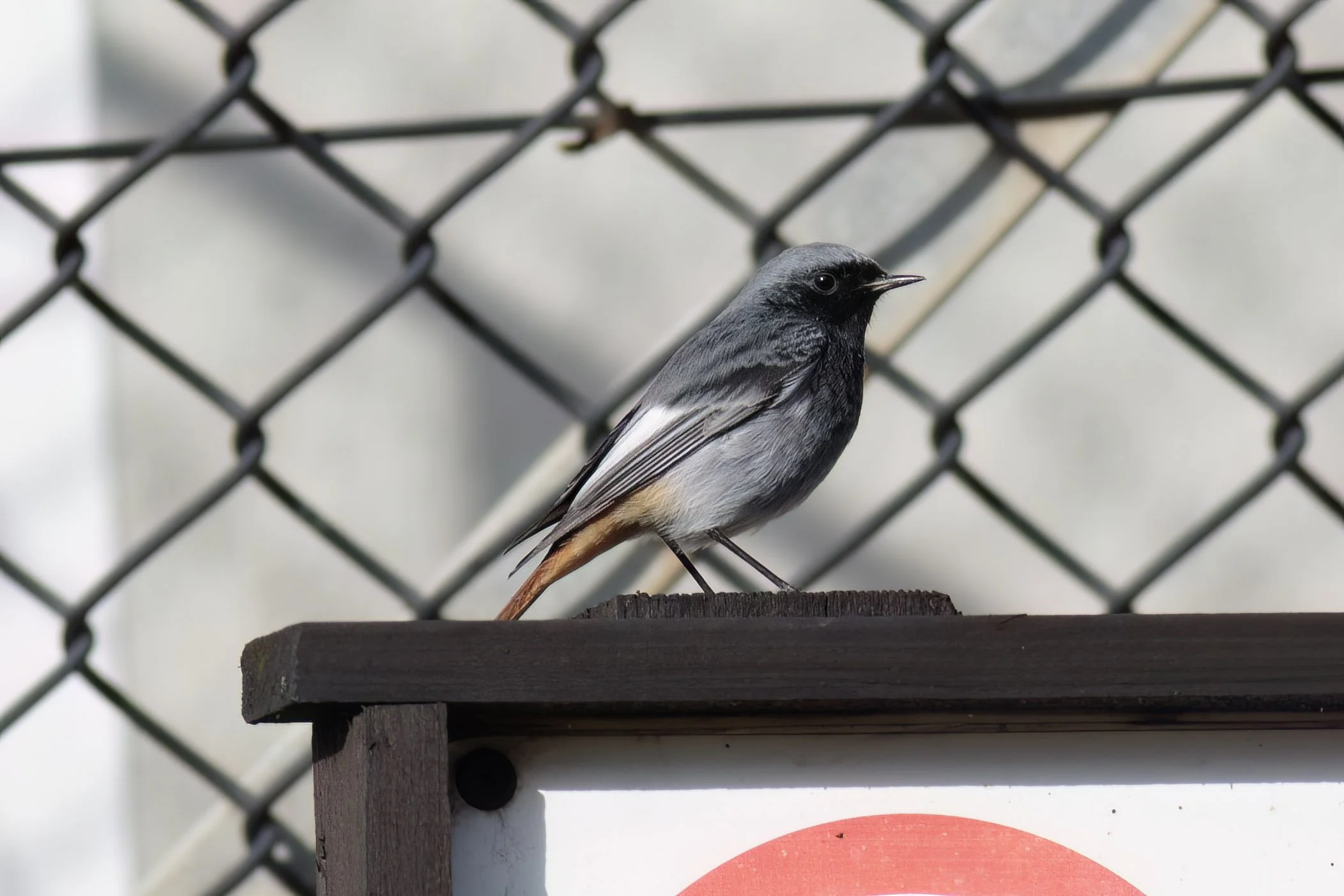
Adult male western gibraltariensis Donna Nook October 2015
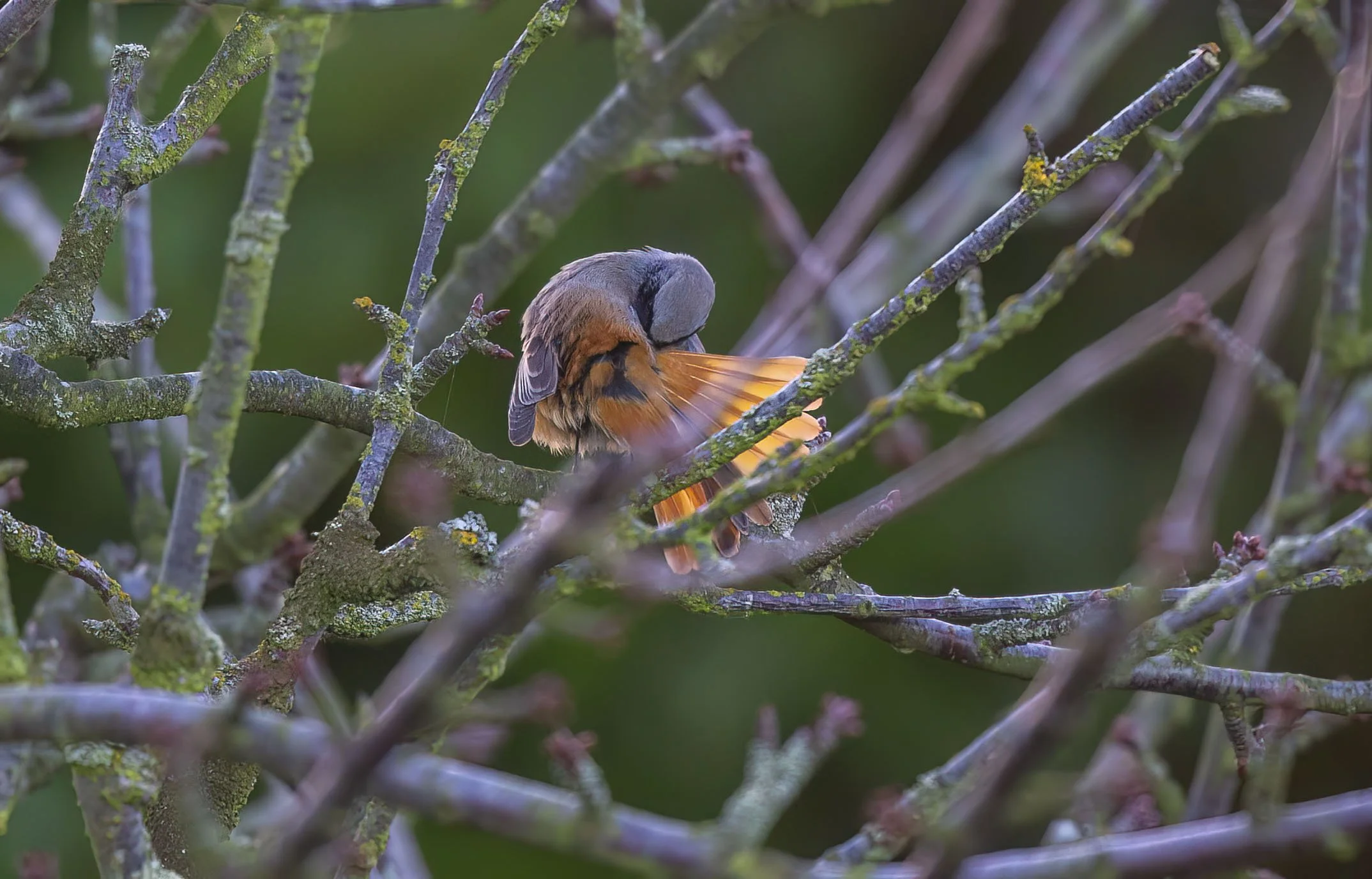
Eastern Black Redstart Scalby North Yorkshire December 2014 only the 5th accepted Bfritish record and my first encounter with one of these stunning eastern vagrants
Eastern Black Redstart is a relatively recent bird in Western Europe with the first accepted record seemingly being as recent as Kent 1981 then 1986 in Sweden and the first well photographed and recorded birds being in the Netherlands and on Guernsey in 2003.
https://www.dutchbirding.nl/journal/pdf/DB_2005_27_3.pdf#page=21
What were considered at the time to be the first British records were two first-winter males in late autumn 2011:
This from the Birding World Article on the birds in Kent and Northumberland in 2011
Occurrence
The form phoenicuroides is a long-distance migrant comparable to other central Asian migrants such as Desert Wheatear and Daurian Isabelline Shrike that reach western Europe regularly in late autumn, so it is perhaps not surprising that these birds have turned up together with the exceptional numbers of these species (and Hume’s Yellow-browed Warbler) that have been recorded in autumn 2011. The males are striking and surely more will be found now that observers know to be on the look out for them in late autumn. Females are always going to be a more tricky prospect and may be overlooked.
Taxonomy
Although BWP (Cramp 1988) lists seven forms of Black Redstart, HBW (Hoyo et al. 2005) recognises just five: gibraltariensis in Europe and northwest Africa, ochruros in Turkey, the Caucasus and northwest Iran, semirufus in Syria, Lebanon and northern Israel, phoenicuroides in south Russia and west Mongolia south to the Tien Shan, south Kazakhstan and northwest Pakistan, and rufiventris from Turkmenistan through the Himalayas to central China. Males of all the eastern forms are quite similar to each other (differing mainly in the darkness of the upperparts and the extent of the black breast), but differ markedly from European birds in that they exhibit extensively rufous-orange underparts. Brazil (2009) states that Eastern Black Redstart may warrant specific status, a conclusion also reached by Steijn (2005) and hinted at by Rasmussen & Anderton (2005), while a genetic study suggesting that Black Redstart originated in central Asia before eventually spreading west to Europe concluded that, from DNA distance values, the Asian populations have been isolated for 1.5 million years (Ertan 2006).
Subsequently the BOURC accepted two earlier records from Dungeness November 1981 and Norfolk November 2003 the latter contemporaneous with the two Dutch and Channel Island birds in the same year.
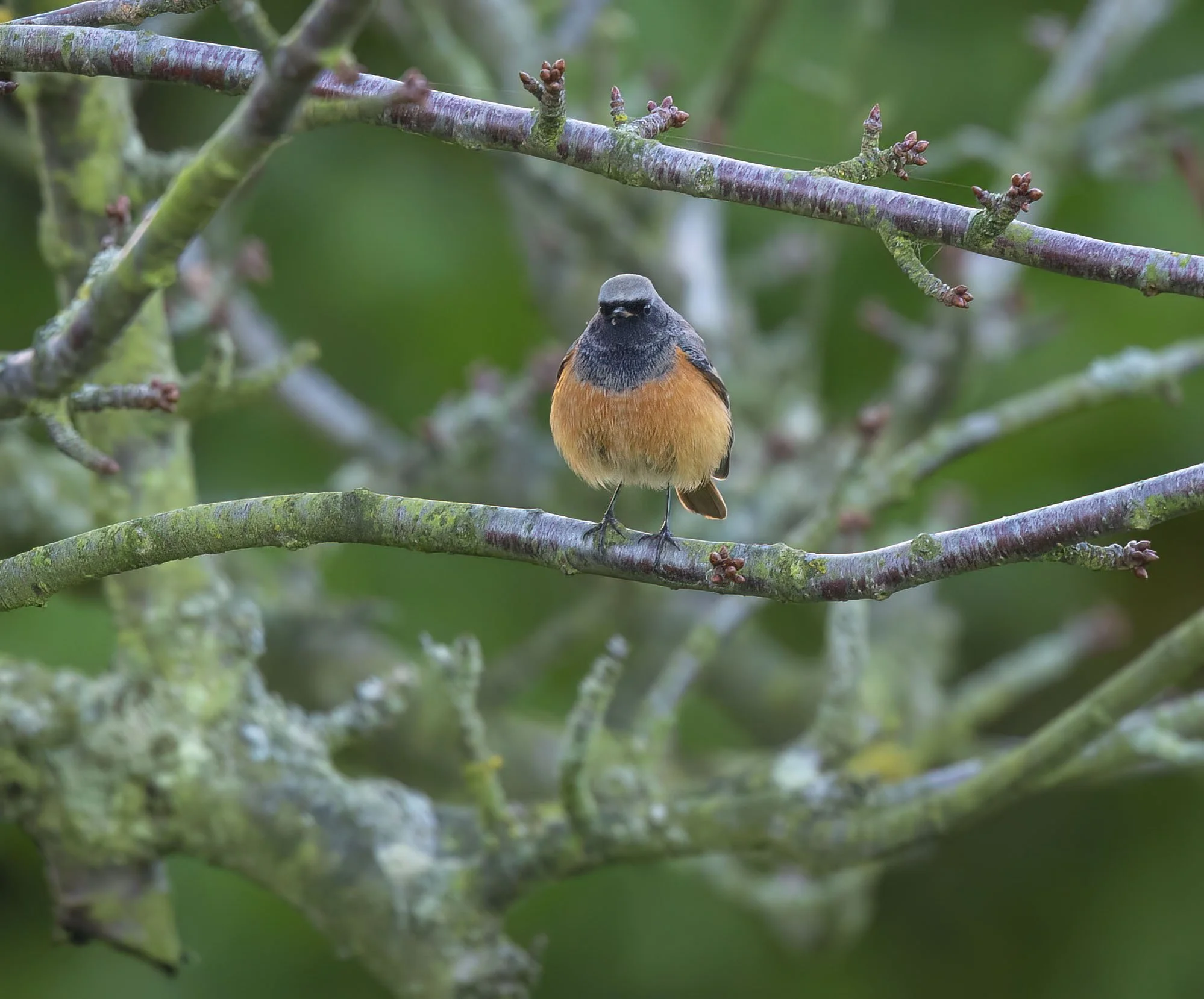
first winter male Eastern Black Redstart Scalby North Yorkshire December 2014 - like the Scarborough bird this individual fed regularly in and from trees as well as on the ground in a housing estate - habitat choice is presumably dictated by food availability
Since 2011 Eastern Black Redstarts, all first-winter males, have continued to occur with increasing frequency in Britain and Western Europe with the vast majority arriving late in the autumn from mid-October to December with the bulk in November. There are now 17 accepted British records with the one or two pending for Yorkshire in 2025. The first Lincolnshire record came from Donna Nook in October 2016 during the magical Asian – Siberian autumn but sadly SL was the lone observer with the bird evading detection by would be county listers. Surely another bird must be on the cards for the county given the East coast bias to the British occurrences hopefully in a more suitable location than the buckthorn of Donna Nook.
https://www.historicalrarebirds.info/u20/eastern-black-redstart
Also worthy of consultation is the impressive gallery of images by Daniele Occhiato with birds from at least three populations shown including phoenicuroides and ochruros https://pbase.com/dophoto/codirossospazzacamino
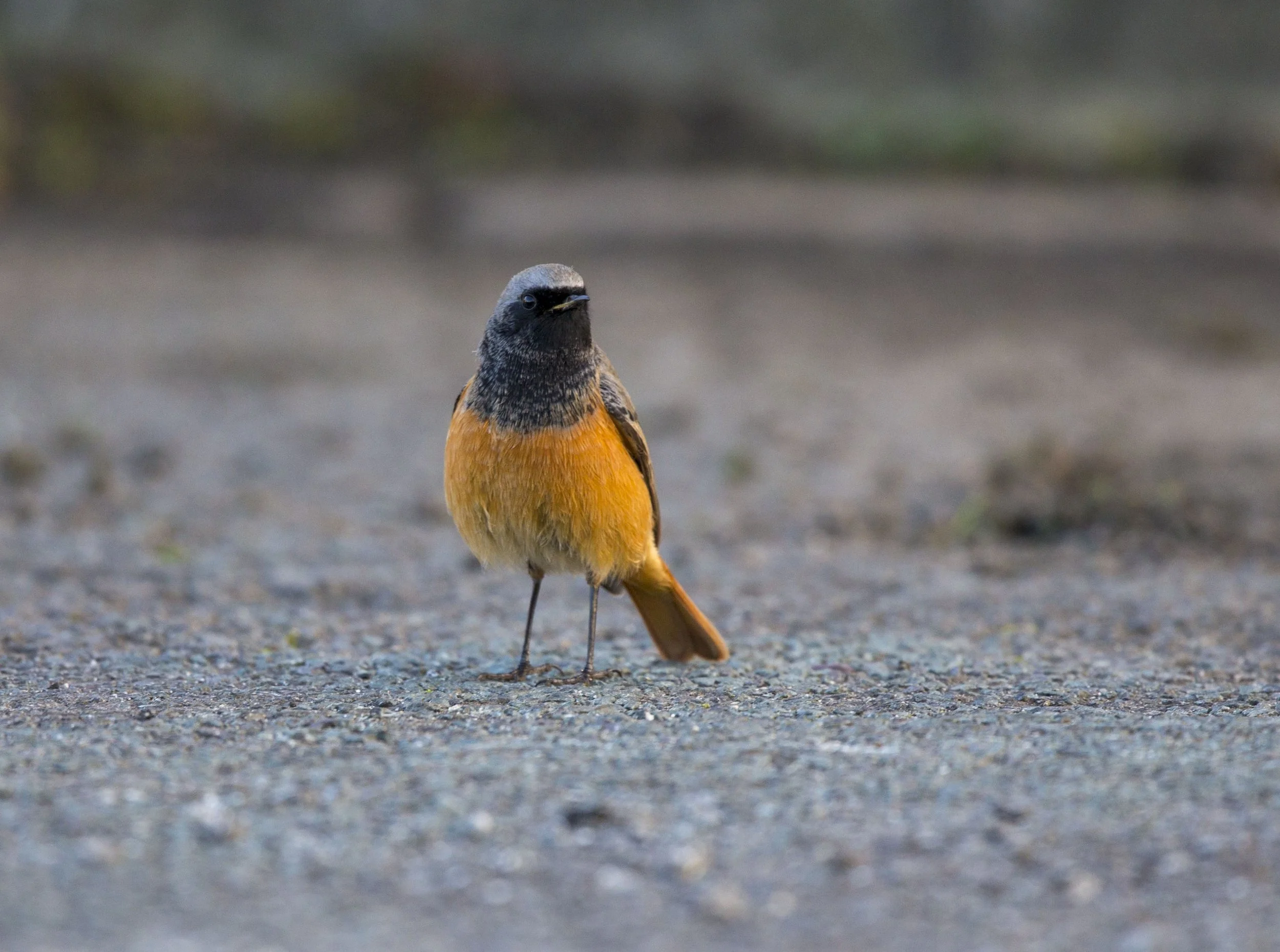
Eastern Black Redstart Scalby December 2014
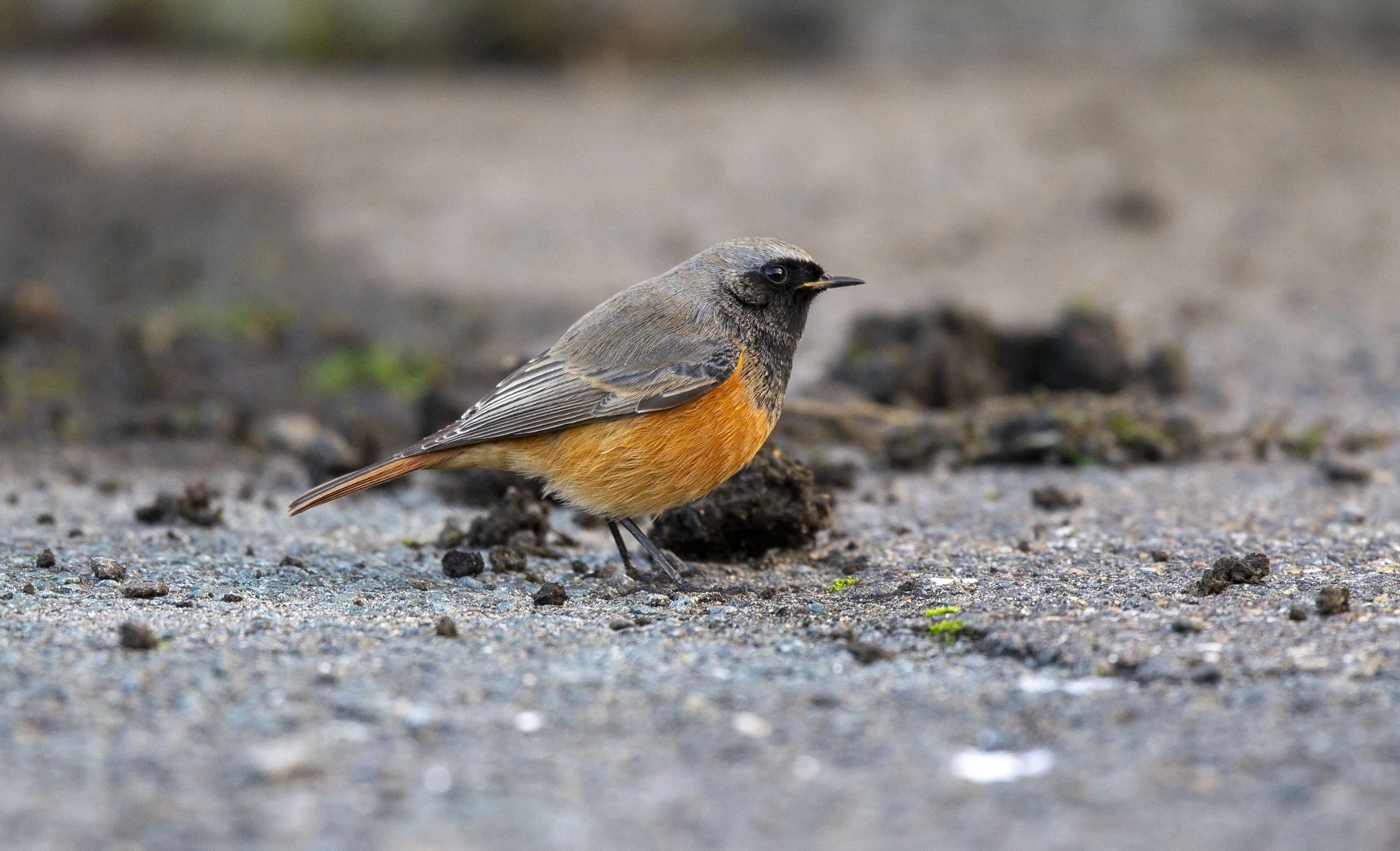
The pale feather tips on the black of this bird had started to wear away revealing a rather blacker bird than many at this time of year - not a ringer but I believe the requisite primary tip spacing is visible here
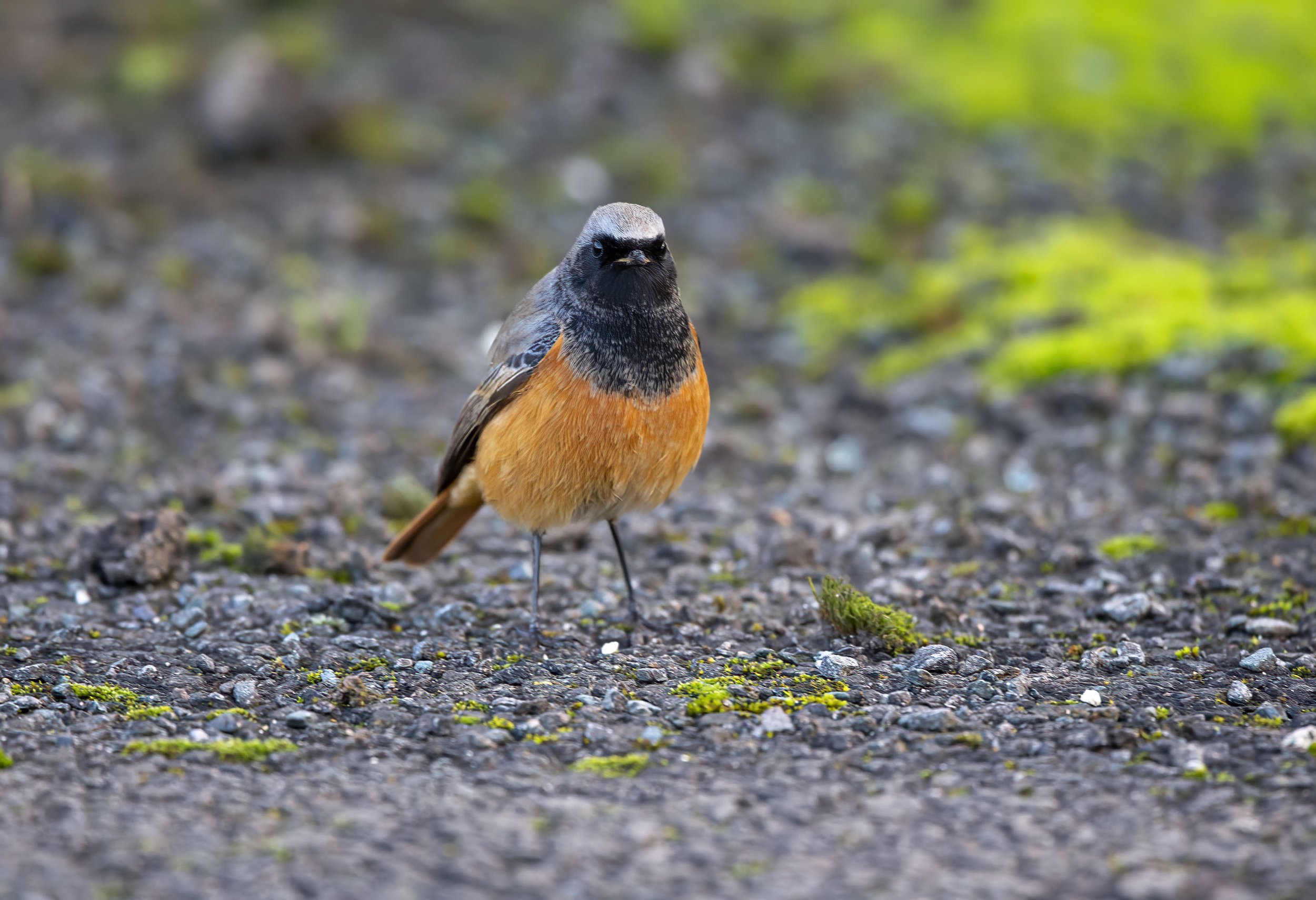
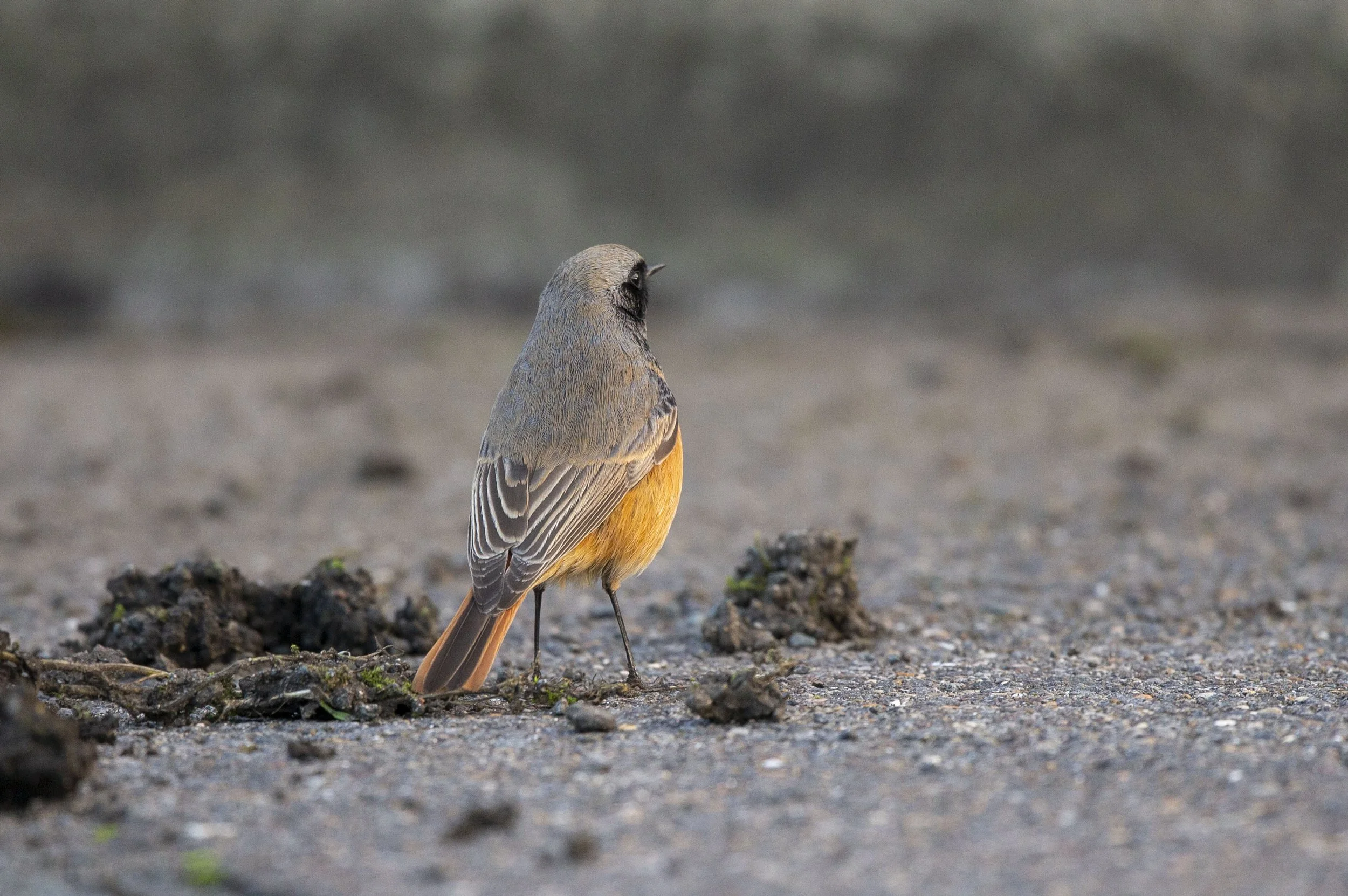
Scalby December 2014
This is from Steijn - a bit more taxonomic stuff to ponder over
Taxonomy
Eastern Black Redstart is a distinctive bird and it is perhaps surprising that is treated as a subspecies of Black Redstart. There are obvious differences in plumage between Eastern Black Redstart and western subspecies of Black Redstart, not only in males but also in female-type plumages. Contrary to the western subspecies P o gibraltariensis, P o phoenicuroides is a long-distance migrant. The breeding and wintering ranges do not overlap with any of the dark-bellied subspecies or with nominate P o ochruros (see figure 1).
To support these differences, DNA studies through microsatellite analysis by Ertan (2002) revealed that P o phoenicuroides and P o rufiventris are ‘either associated together with Hodgon’s Redstart P hodsgoni (a short-distance migrant, resembling P o phoenicuroides, breeding in western China and wintering in the Himalayan foothills) or are seen as divergent taxa’. This means that, using DNA studies through microsatellite analysis, both P o phoenicuroides and P o rufiventris appear to be closer related to Hodgson’s Redstart P hodgsoni than to Western Black Redstart P o gibraltariensis and should therefore be treated as a different species group. Cytochrome-b sequencing revealed genetic differences of up to 3% between P o gibraltariensis and P o phoenicuroides and up to 3.7% between P o gibraltariensis and P o rufiventris. P o phoenicuroides and P hodgsoni differed by 6.1% (Ertan 2002). To compare, for instance, Pied Flycatcher Ficedula hypoleuca and Collared Flycatcher F albicollis differ by 3.0-3.2% (Saetre et al 2001).
It would be interesting to put the characters of Eastern Black Redstart P o phoenicuroides alongside the ‘Guidelines for assigning species rank’ (Helbig et al 2002). This paper states that allopatric taxa (geographically separated taxa, such as P o gibraltariensis and P o phoenicuroides) should be assigned full species rank if ‘they are fully diagnosable in each of several discrete or continuously varying characters related to different functional contexts, eg, structural features (often related to foraging strategy), plumage colours, vocalizations (both often related to mate recognition) or DNA sequences, and the sum of the character differences corresponds to or exceeds the level of divergence seen in related species that coexist in sympatry.’ On basis of the above information, it deserves consideration to treat the red-bellied subspecies of Black Redstart, comprising P o phoenicuroides and P o rufiventris, as a separate species under the name Eastern Black Redstart P phoenicuroides. The taxonomic status of P o ochruros, which is intermediate between Eastern Black Redstart and Western Black Redstart in many aspects, requires further research.
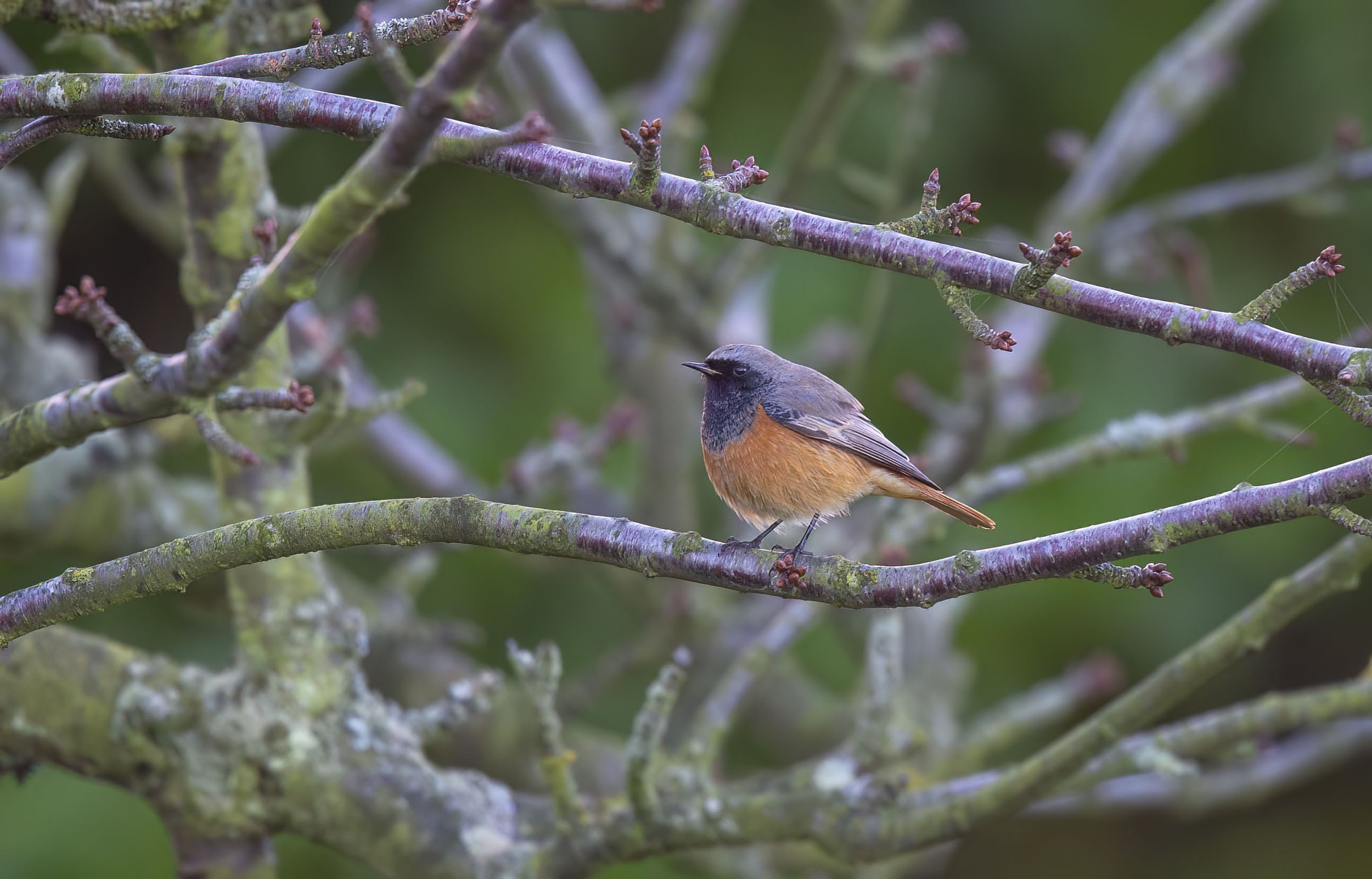
Any late autumn redstart needs a good look even if its feeding in trees - Scalby December 2014
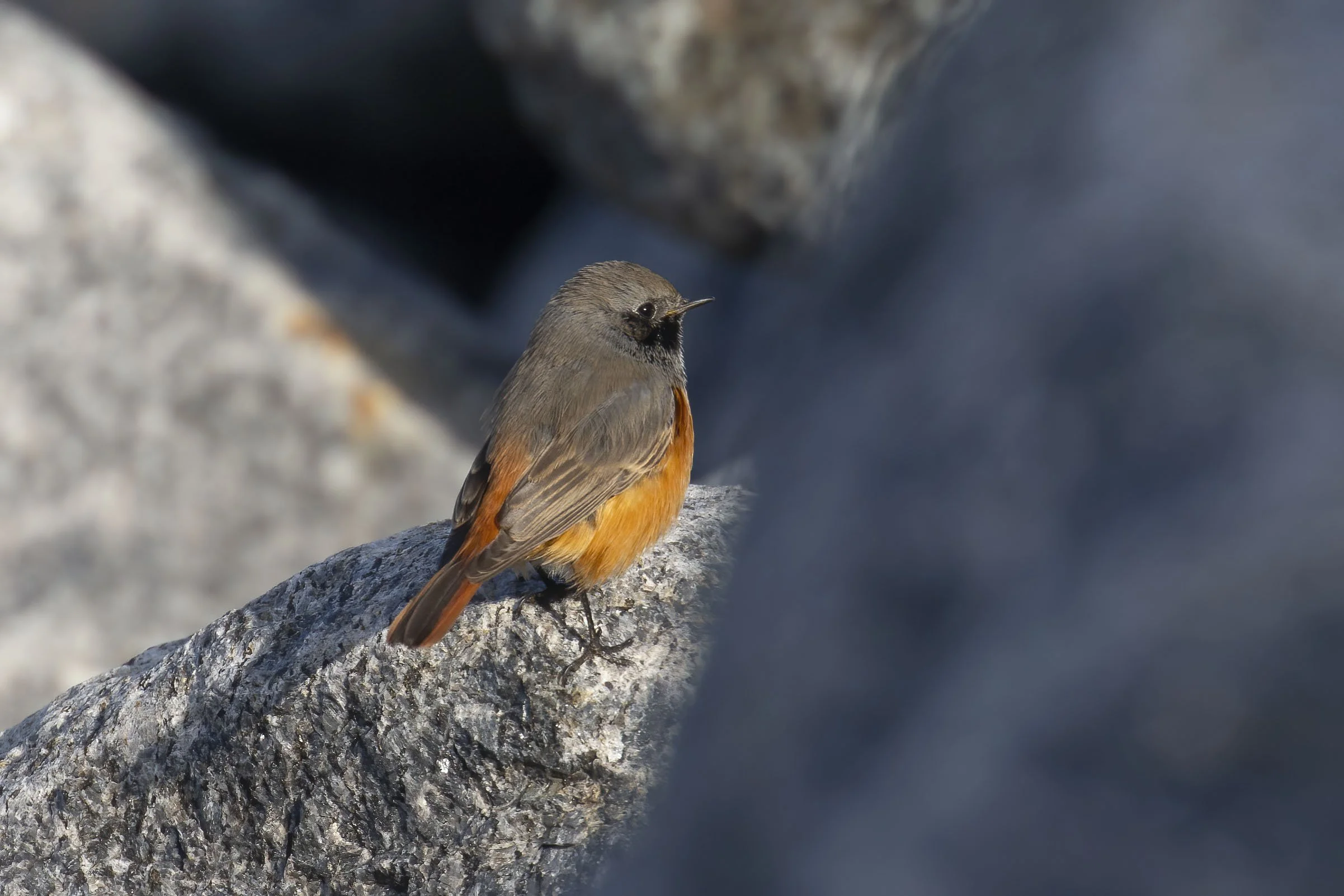
Light makes a big difference to the appearance of Eastern Black Redstarts - the Skinningrove bird October 31st 2016
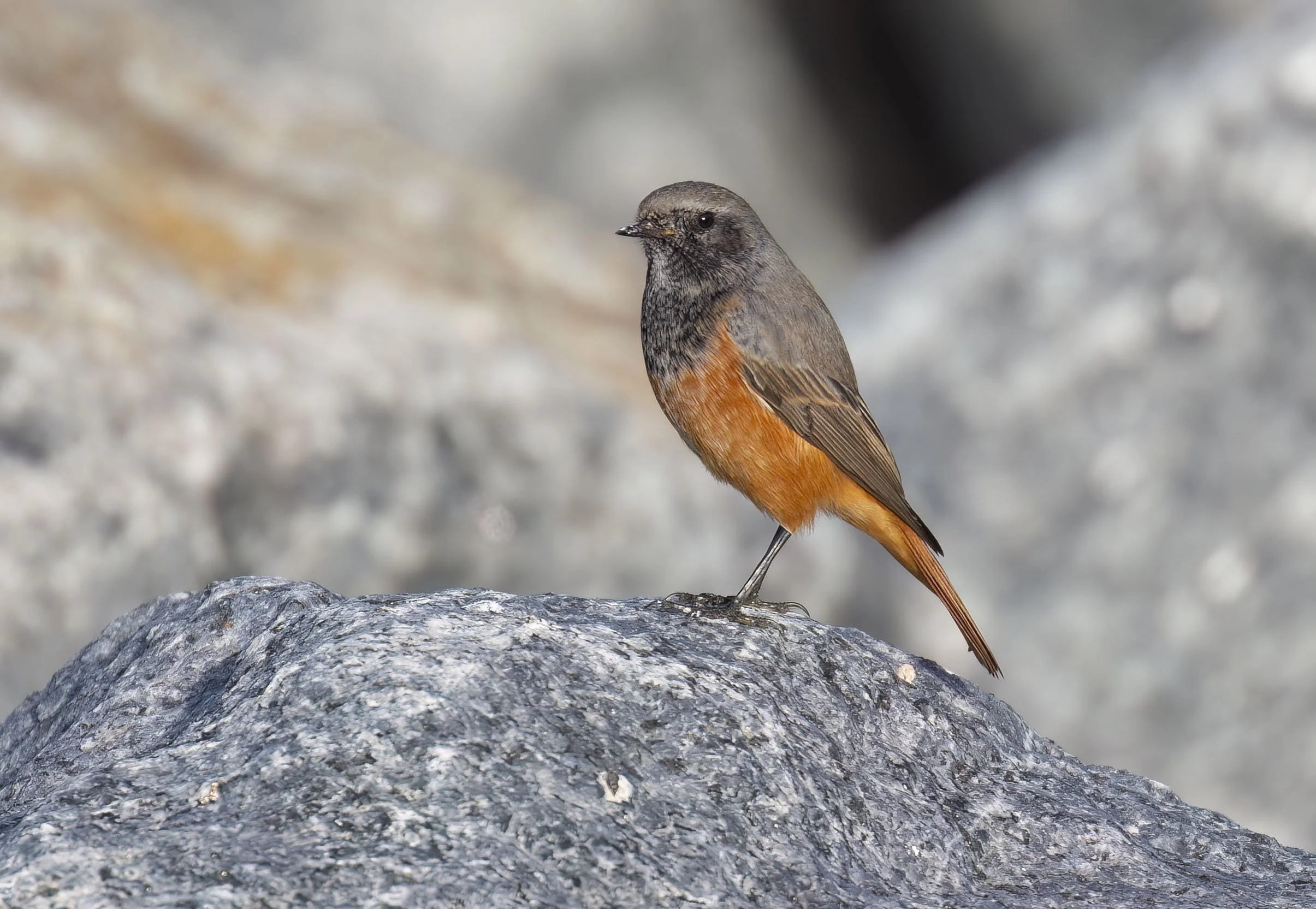
First year male eastern Black Redstart Skinningrove North Yorkshire October 31st 2016 - this bird wintered in the area being last recorded on March 28th 2017
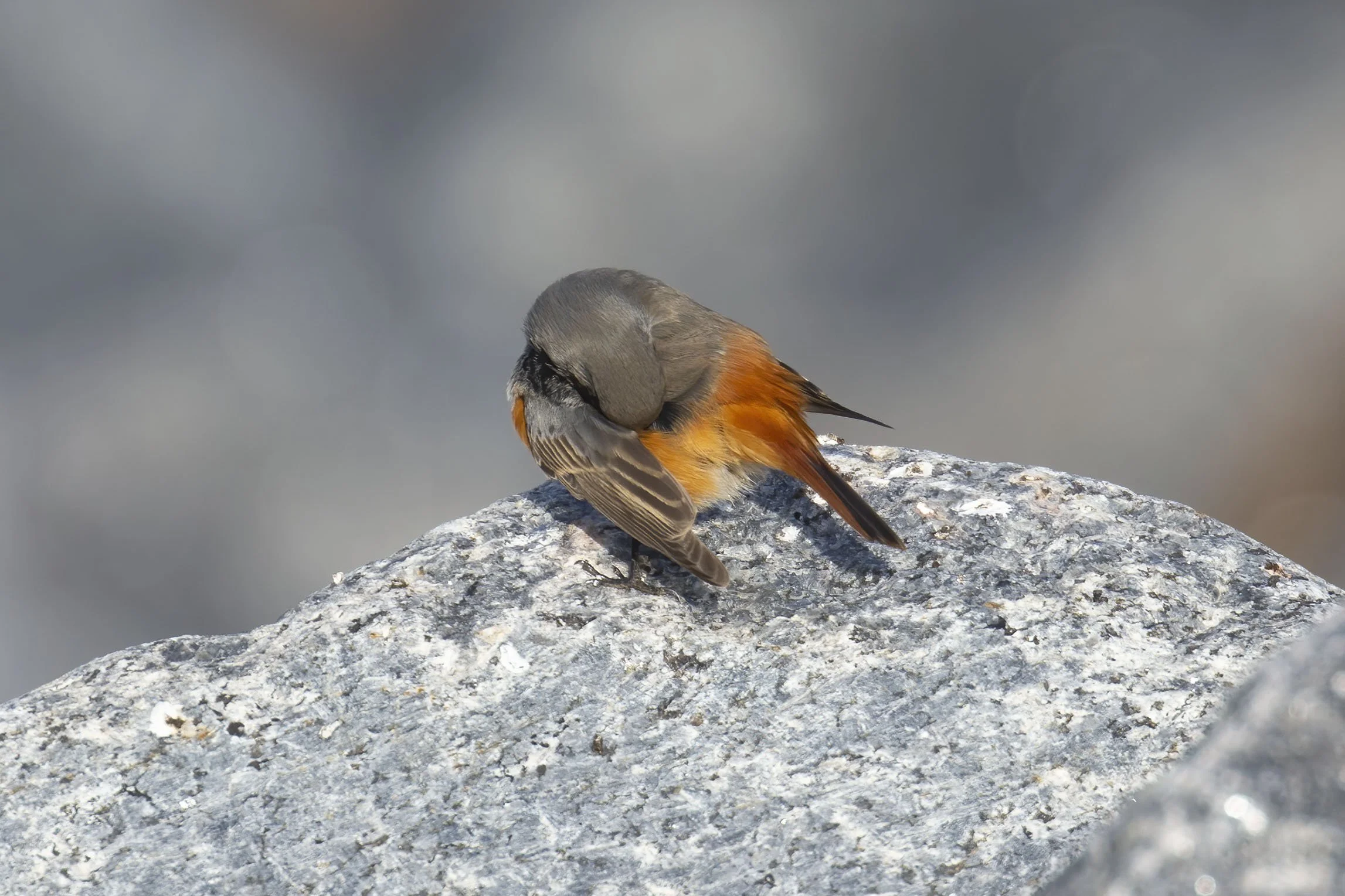
Newly moulted adult type inner greater coverts are often only visible when preening or in good flight photos
Orange underwing coverts are diagnostic if needed
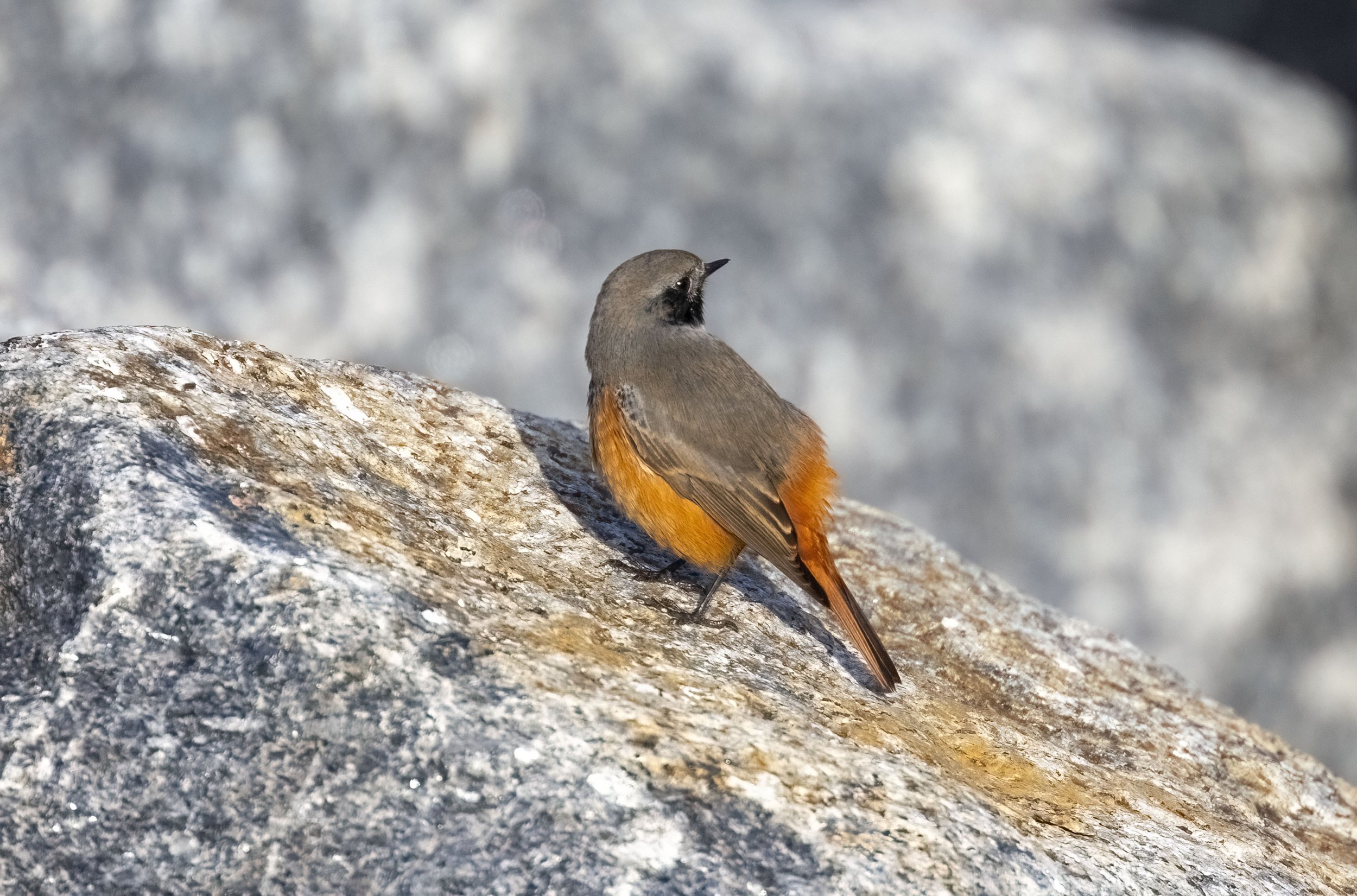
Truly stunning birds when seen well and they often seem to be approachable
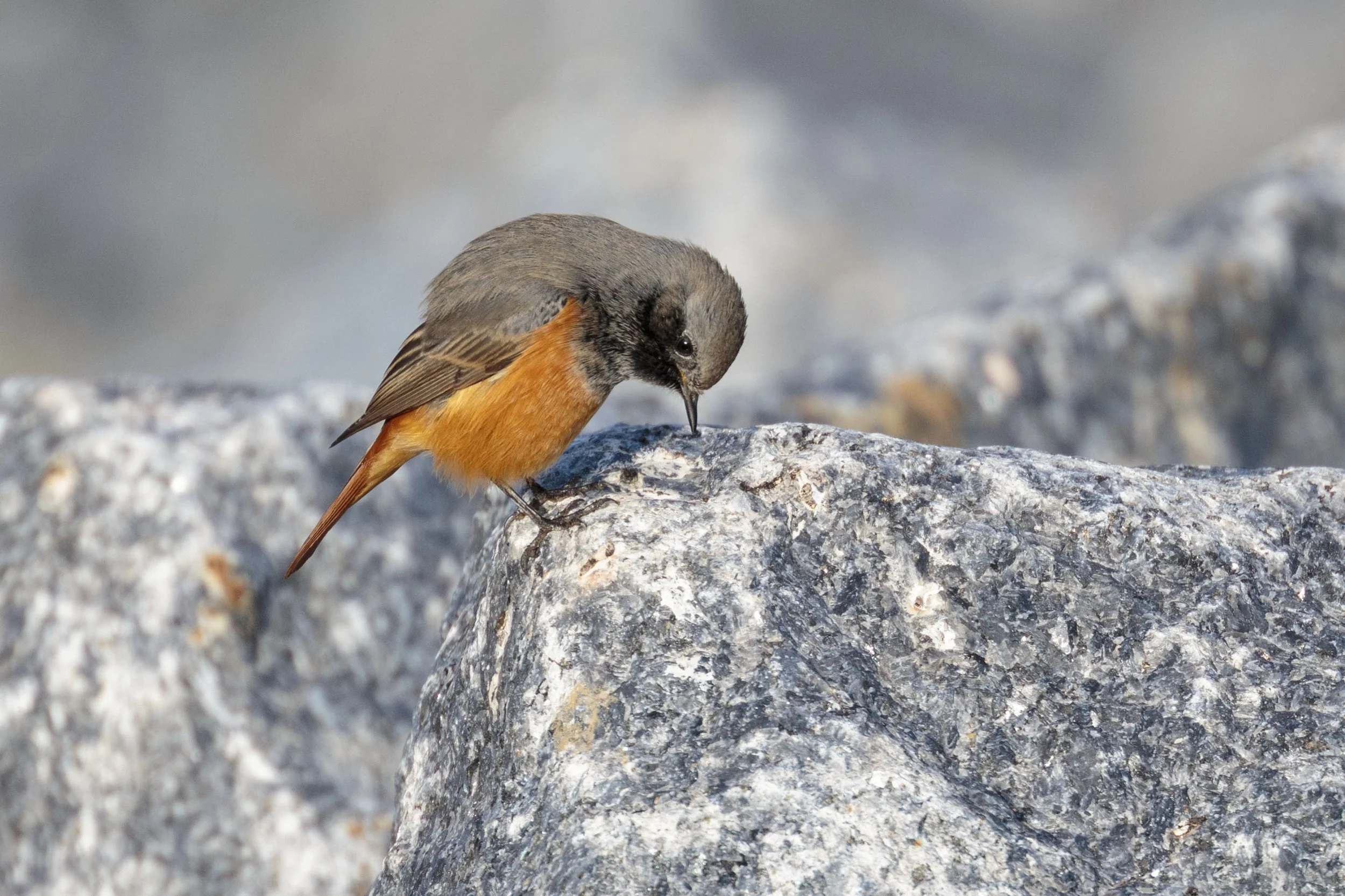
Skinningrove bird again
The latest Bird ID Guide by Nils van Duivendijk has a lot of information including the summary below and some useful images -
Nominate ochruros
Of this taxon from Turkey and the Caucasus have variable orange on the underparts, at most extending to the belly. Nominate ochruros can be regarded as intermediate between western gibraltariensis and the eastern taxa. Sometimes individuals with some orange on the belly are found in western Europe, which resemble ochruros. This is most likely a rare variation within gibraltariensis that resembles the nominate, though hybrid ancestry with Common Redstart cannot be fully excluded. The individual in the image is an obvious male with well-defined moult limit within the greater coverts (inner ones moulted, fresh with grey fringe) and a brown, worn wing, ageing this individual is straightforward. It must be of the so called (paradoxus – type in which males already have adult type body feathers in 1cy. There are clues that the paradoxus / type is much more common towards the east than in the western gibraltariensis. Nominate ochruros can be regarded as an intermediate between western gibraltariensis and Asian taxa.
Eastern Black Redstarts.
Eastern Black Redstart is the name for a group of Asian taxa of Black redstart of which phoenicuroides or murinus have rewashed Europe as a vagrant. Eastern males show several features that differ from the western Black Redstart. In the Middle East Caucasus, the intermediate sub species ochruros and semi-rufus occur. Vagrant Eastern in Europe typically appear from late October onwards, and there are also several winter records.
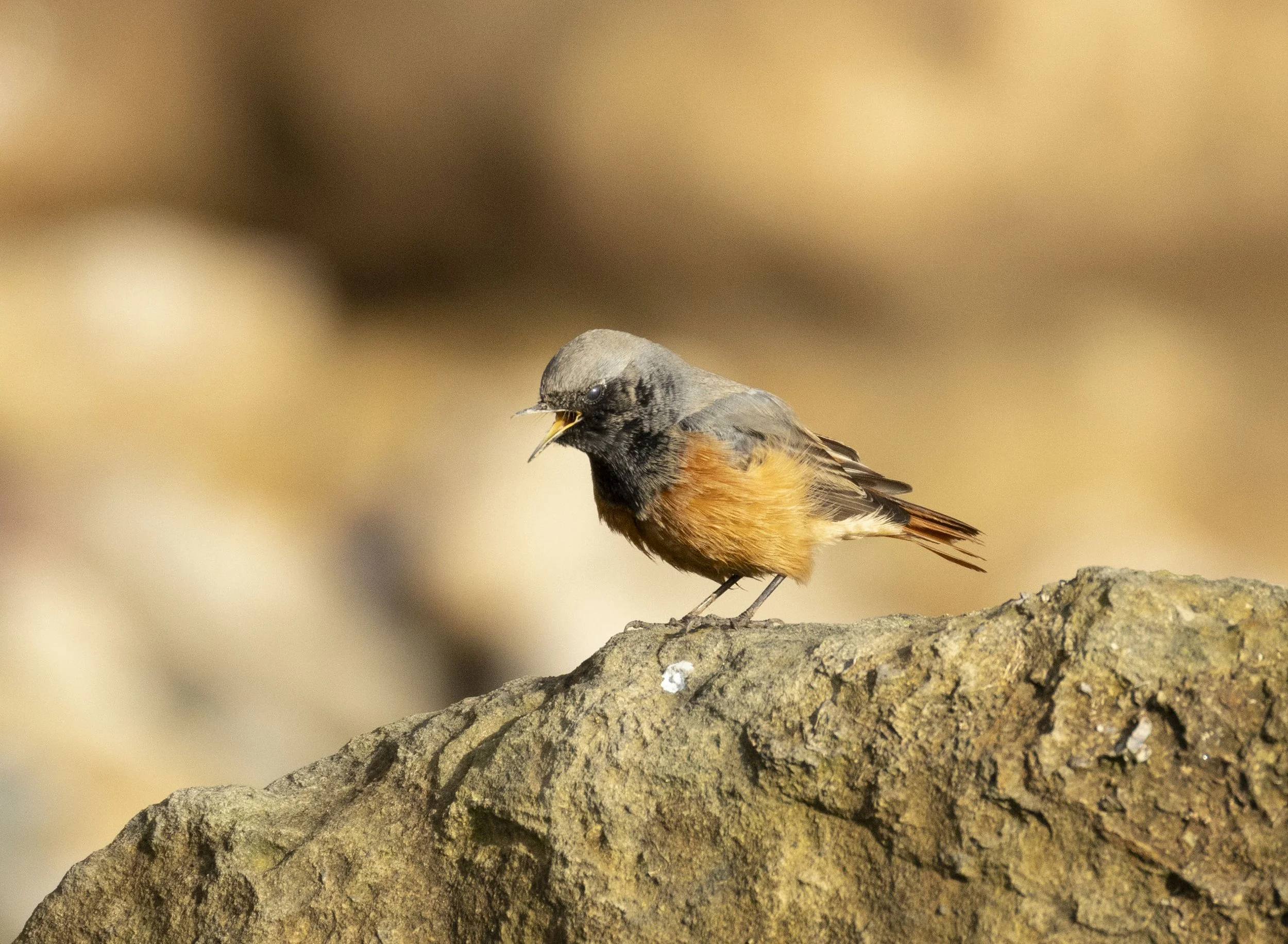
Eastern Black Redstart coughing up a pellet Filey December 2025
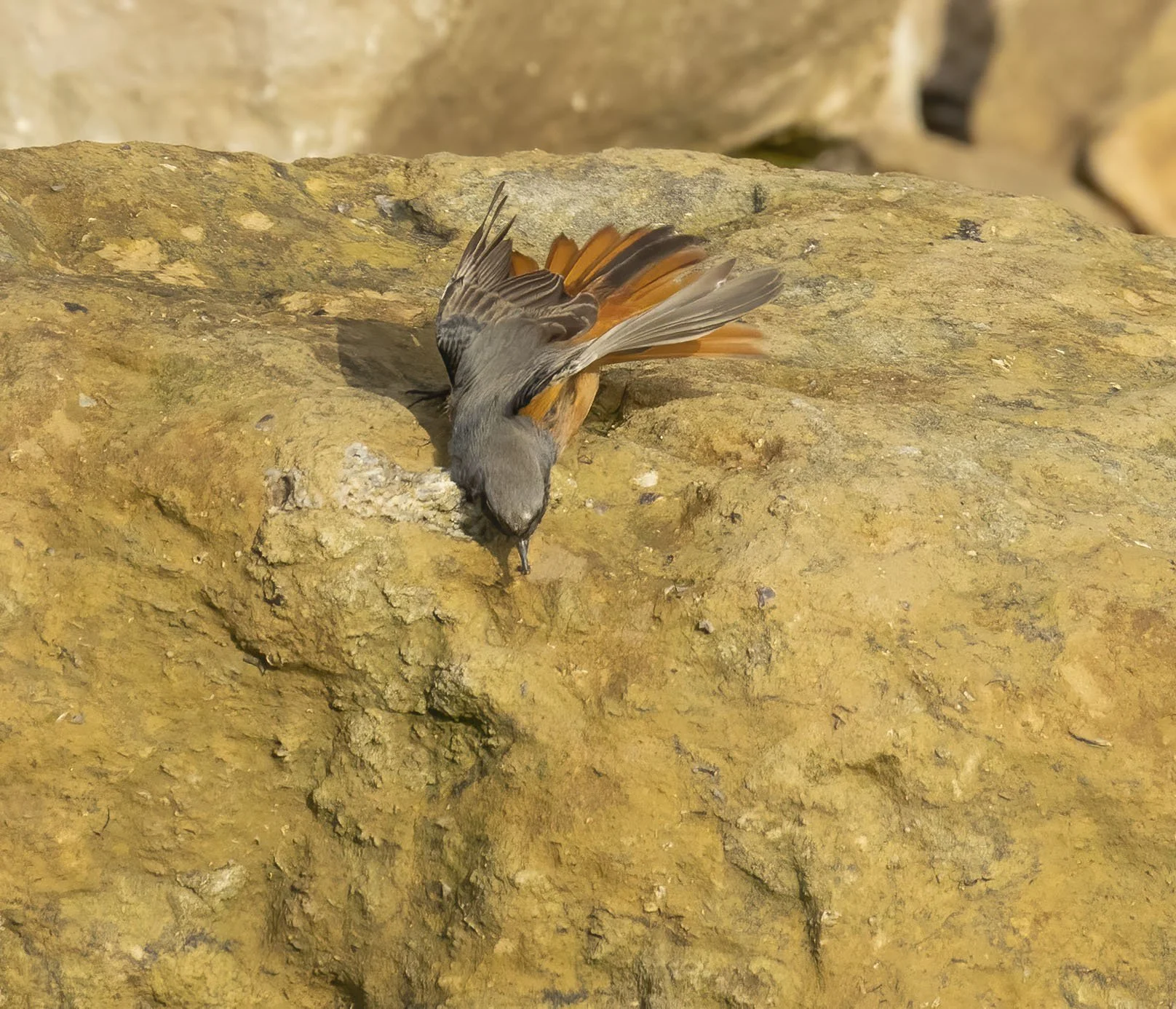
Filey bird catching insects on the rocks at the foot of the cliff
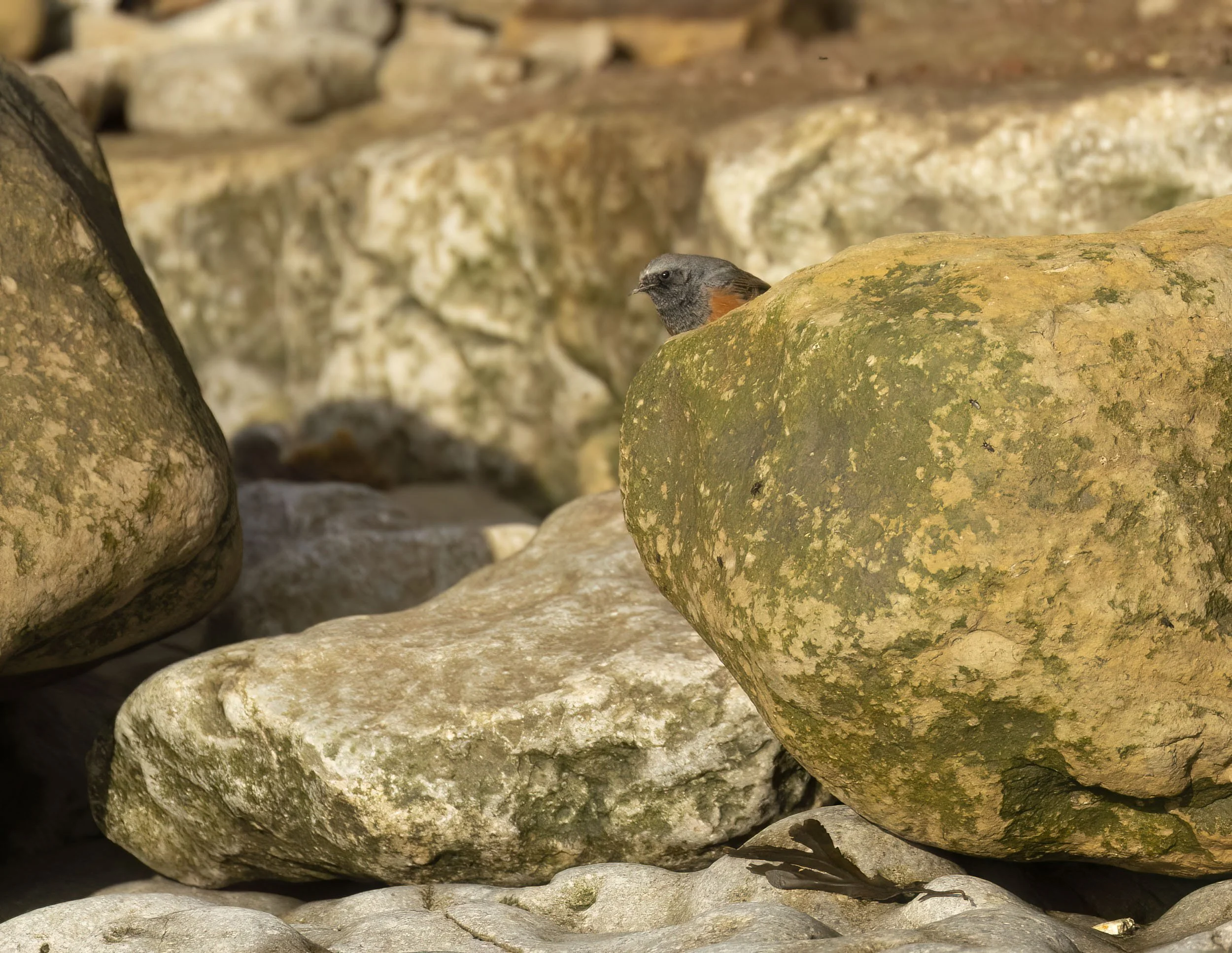
Small birds can disappear amogst a lot of rocks but this bird’s habit of flycatching from the rocks ona sunny day made it easy to relocate
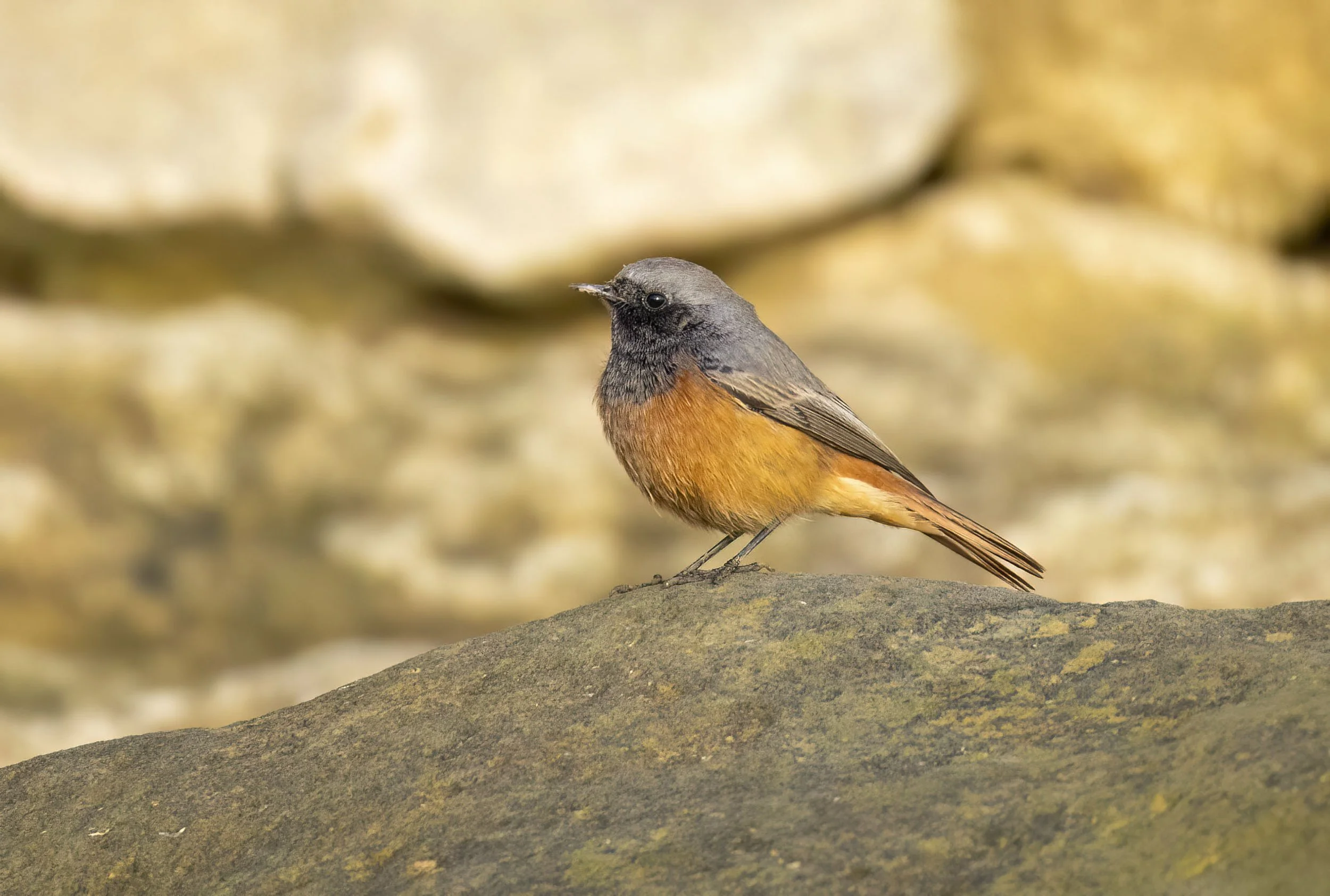
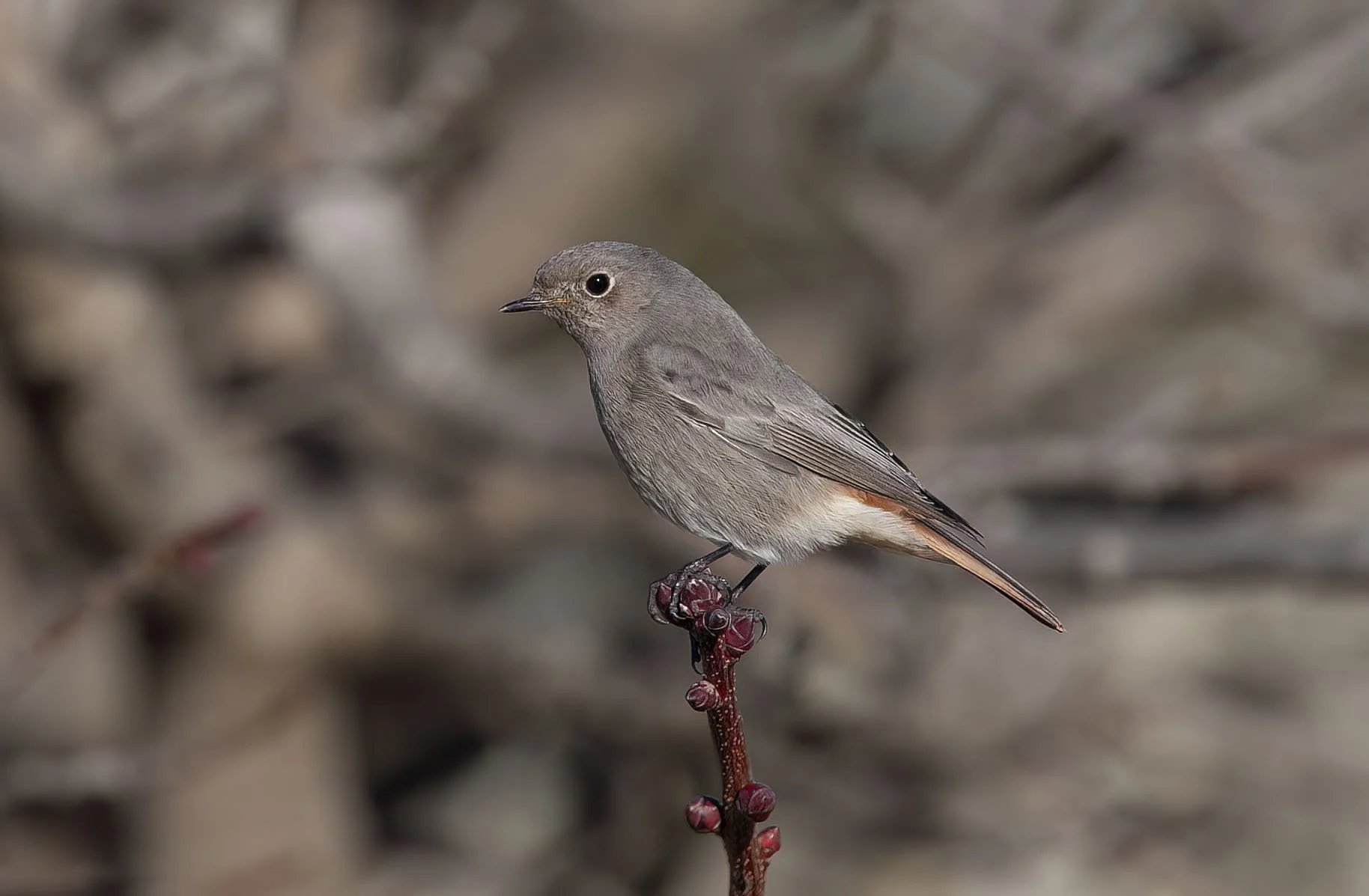
The difference between a winter western Black Redstart and Eastern male is rather obvious - Les Alpilles January 2008 - adult female
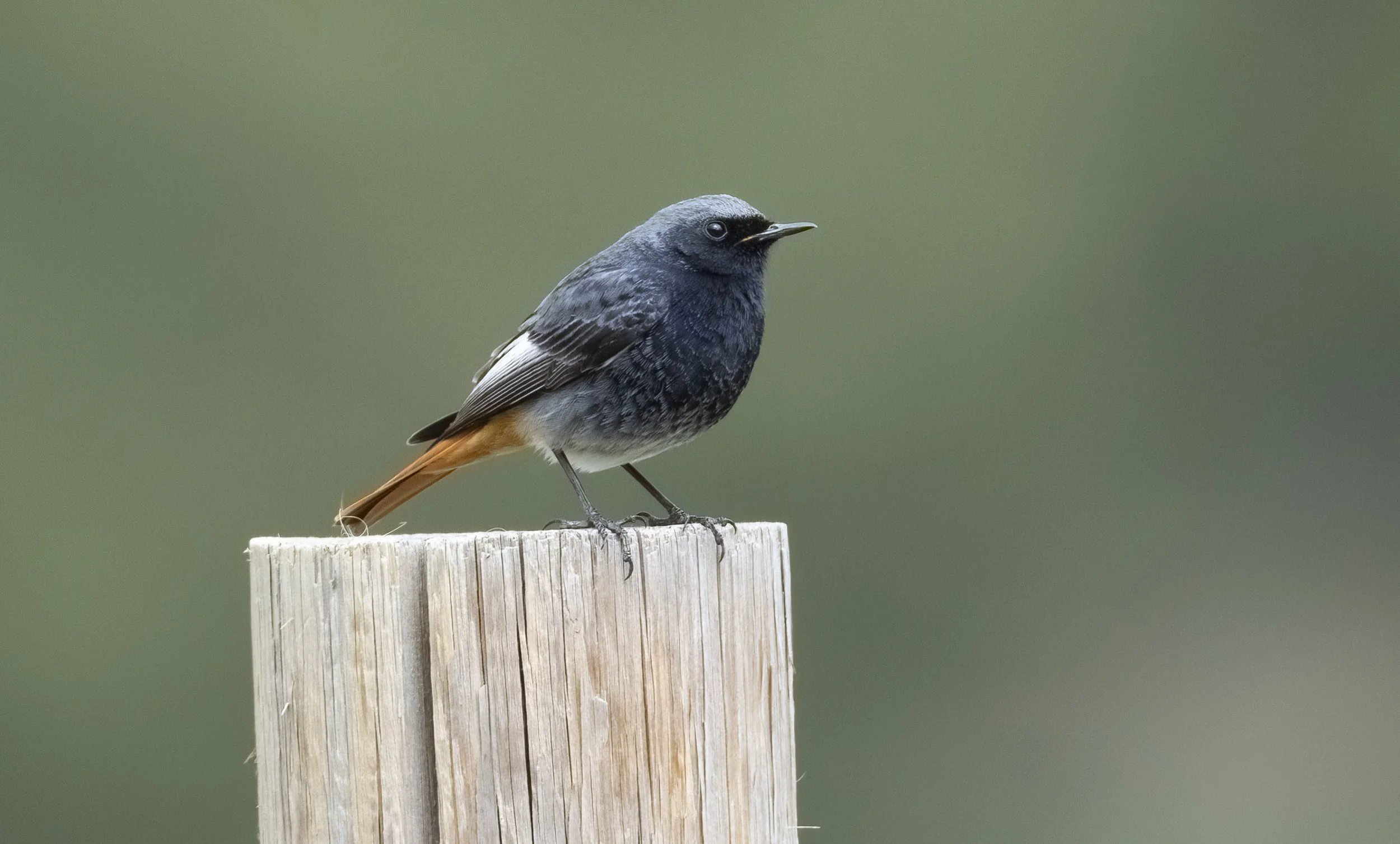
adult male presumed P o aterrimus Sierra de Gredos Spain, April 2012

The Filey bird seemed to have a fairly extensive circuit feeding for long spells along the crevises and cracks inthe clay cliff where it went into holes and presumably where it roosted but also feeding from large bouklders at the foot of the cliff and on occasions it went right up the cliff to the toop of Car Naze
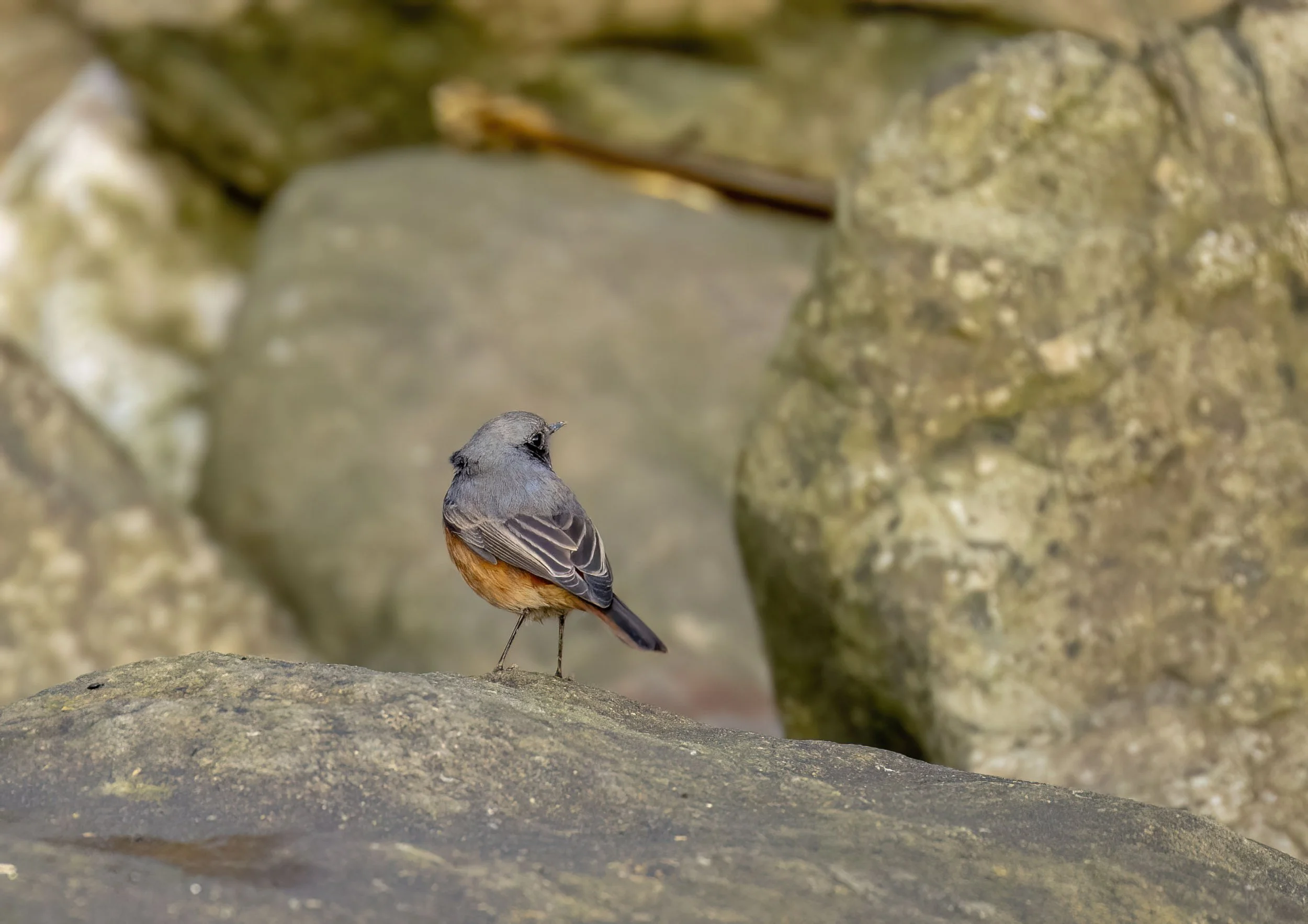
Some of the mantle and scapular feathers appeared to be adult type bluer toned in good light
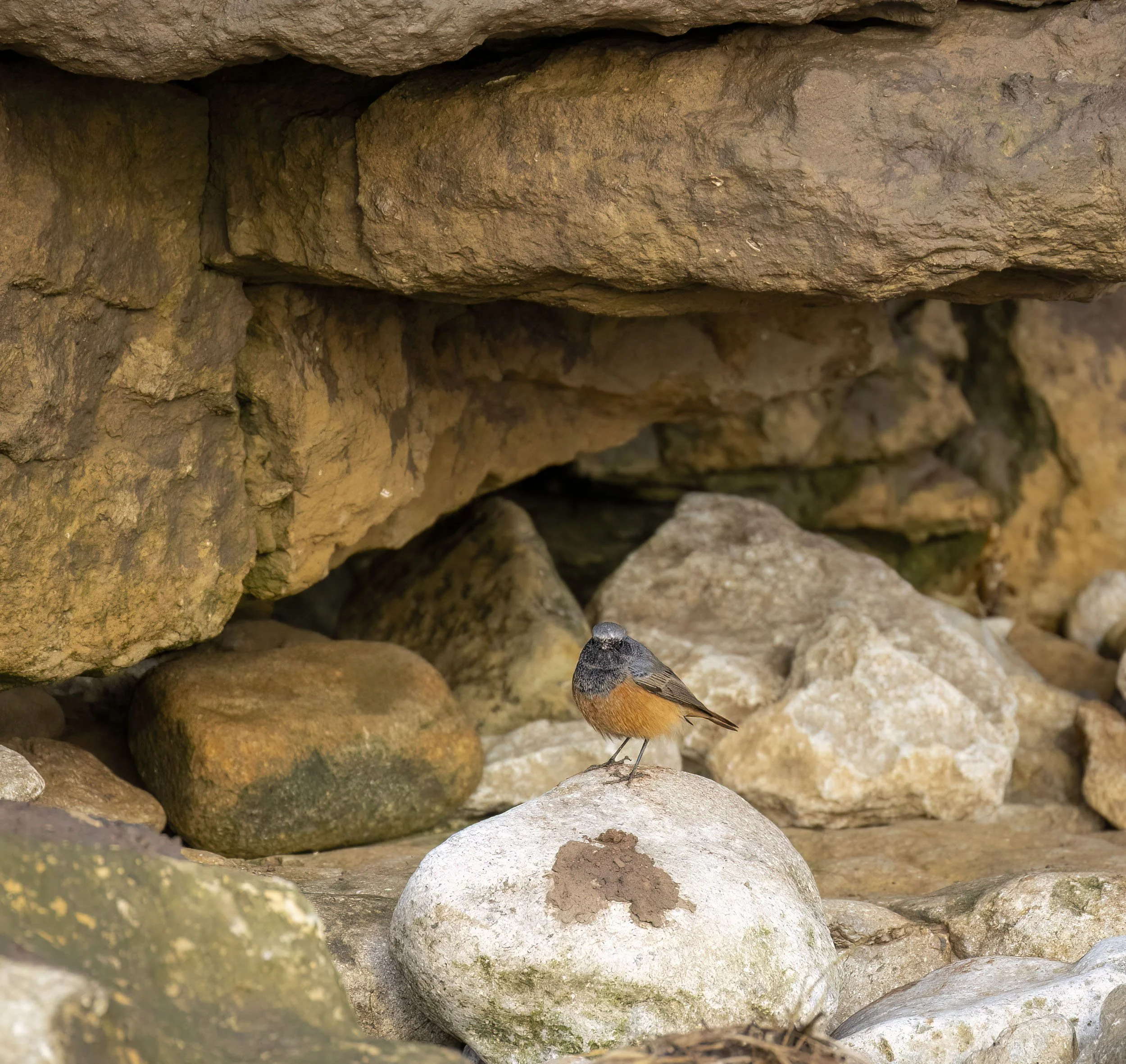
Cloud reduced the intensity of the bird’s colours
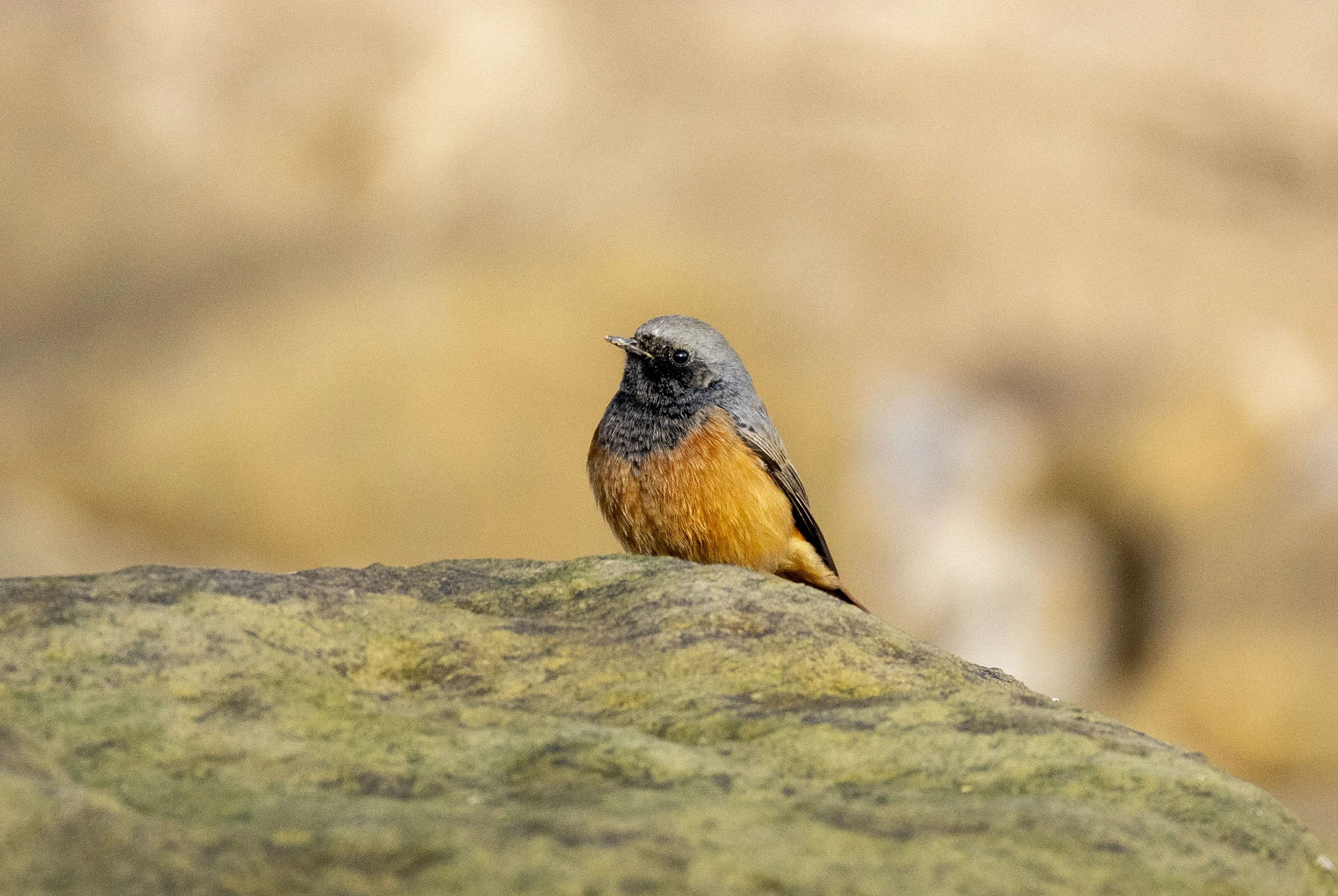
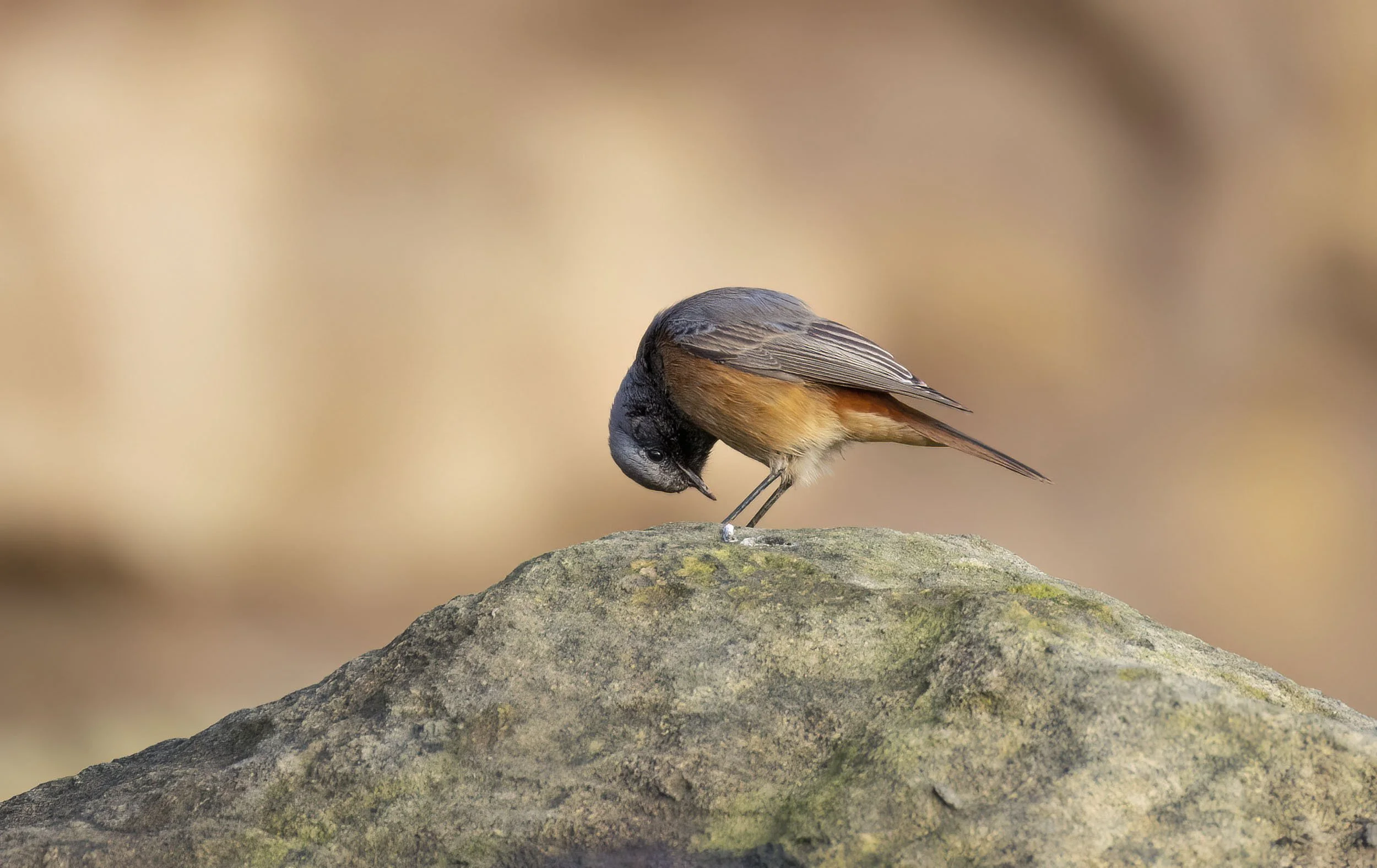
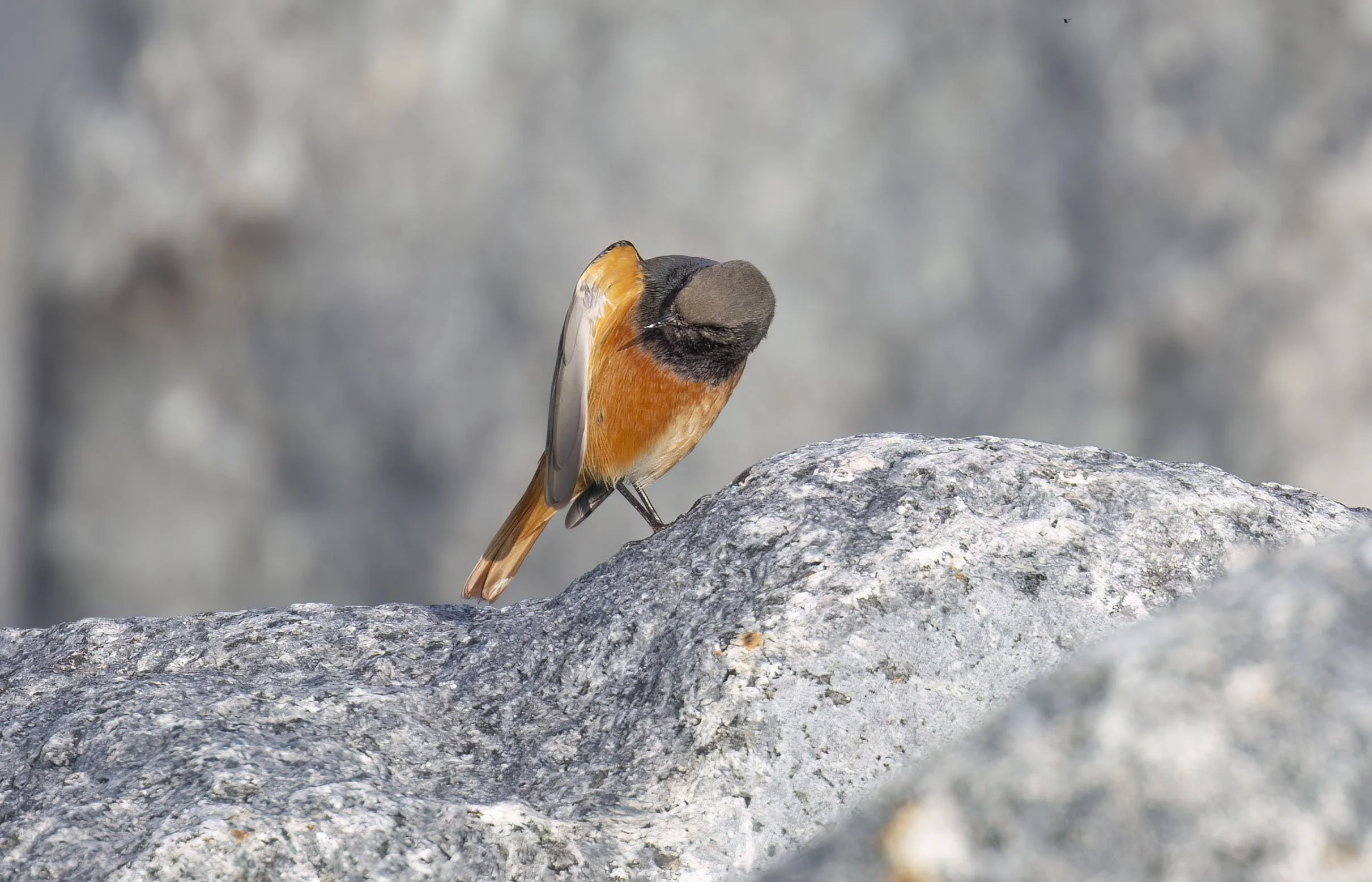
I do not see many Black Redstarts nowadays but noticed this bird often adopted this pose picking at its feet? which was something the Skinningrove also did regularly

It would have been good to have today’s camera gear back in 1978
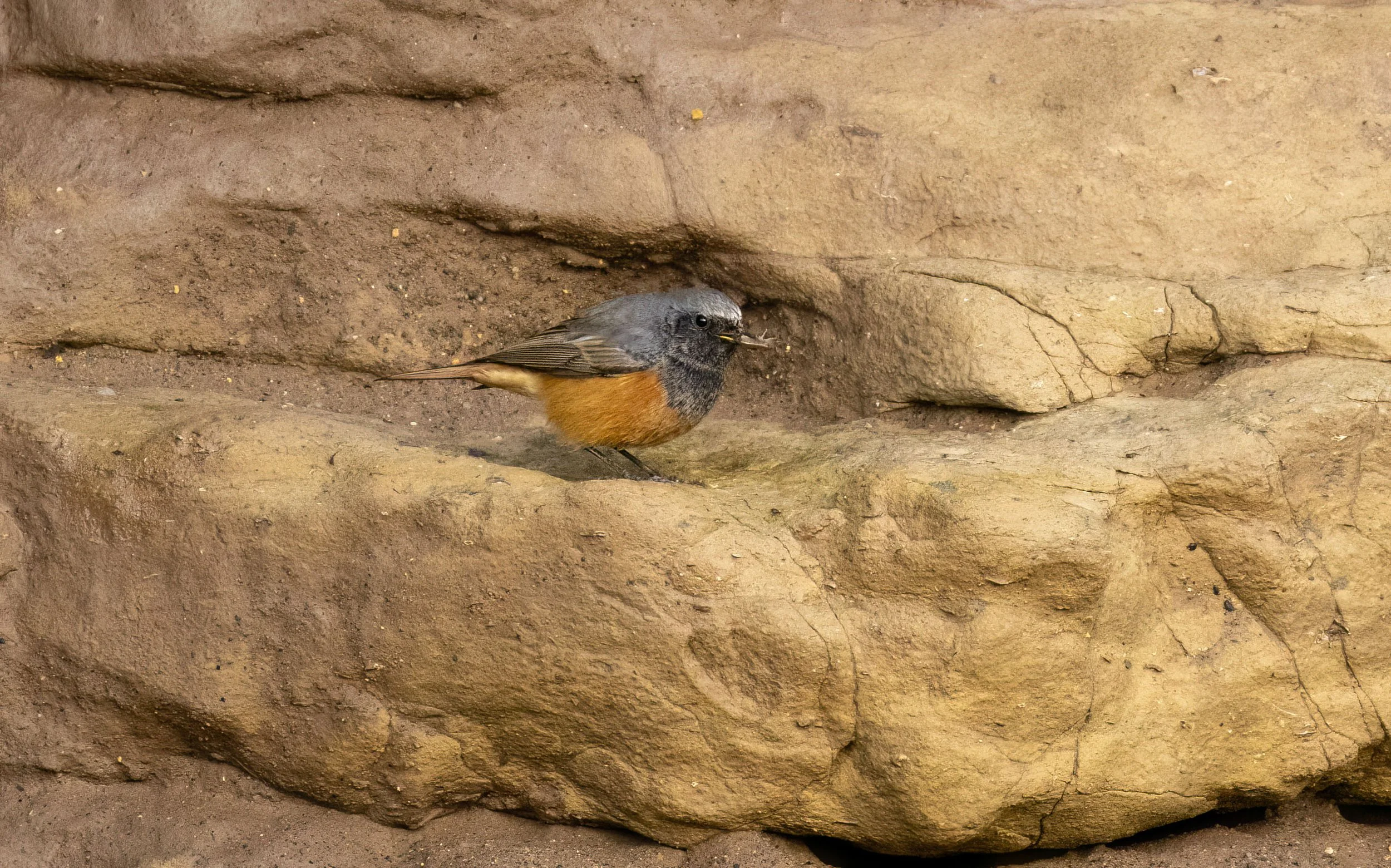
There was certainly no shortage of food in its chosen territory with plenty of flying insects as well as other invertebrates
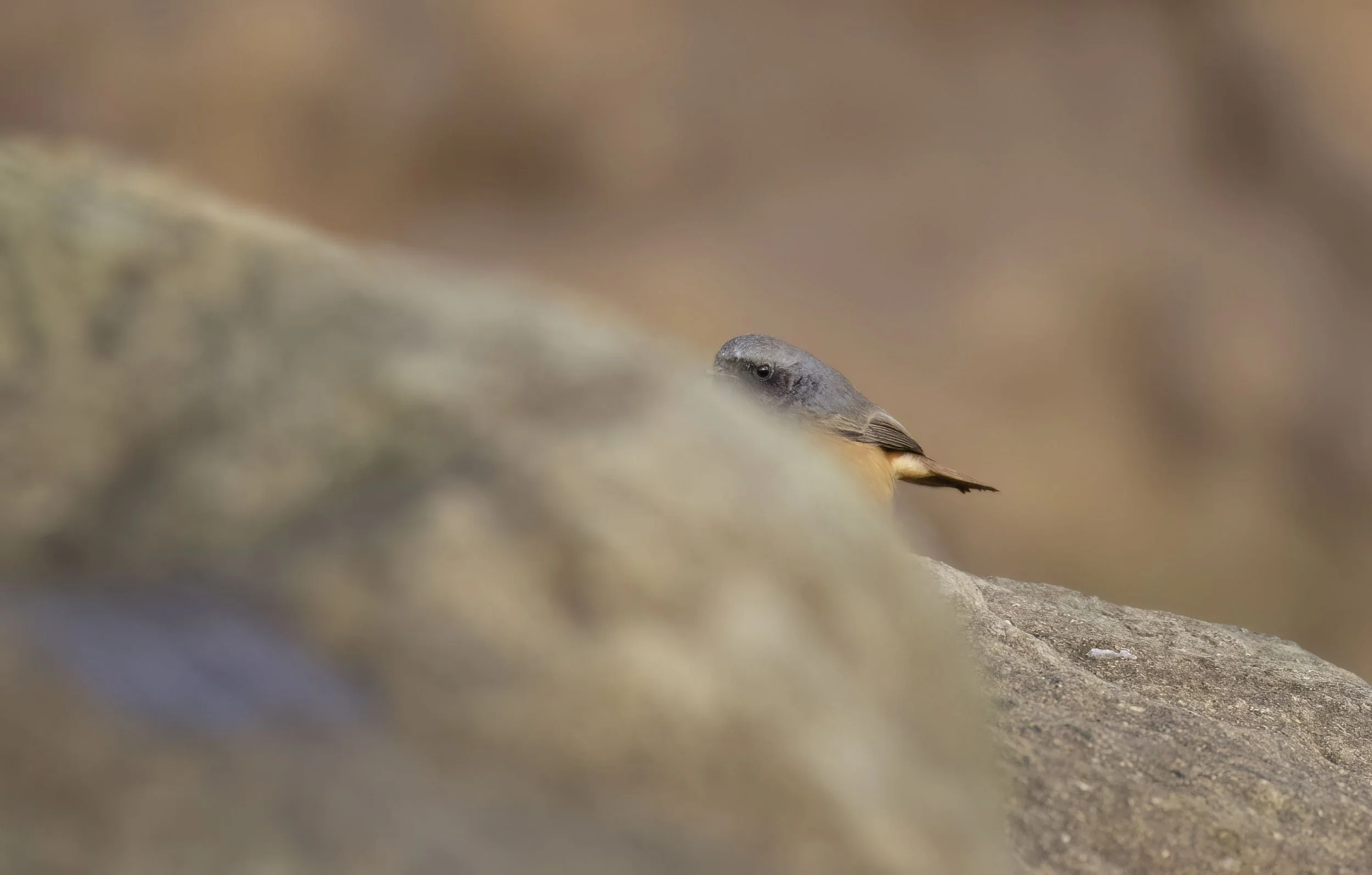
always worth trying something a little different and testing the camera’s AF
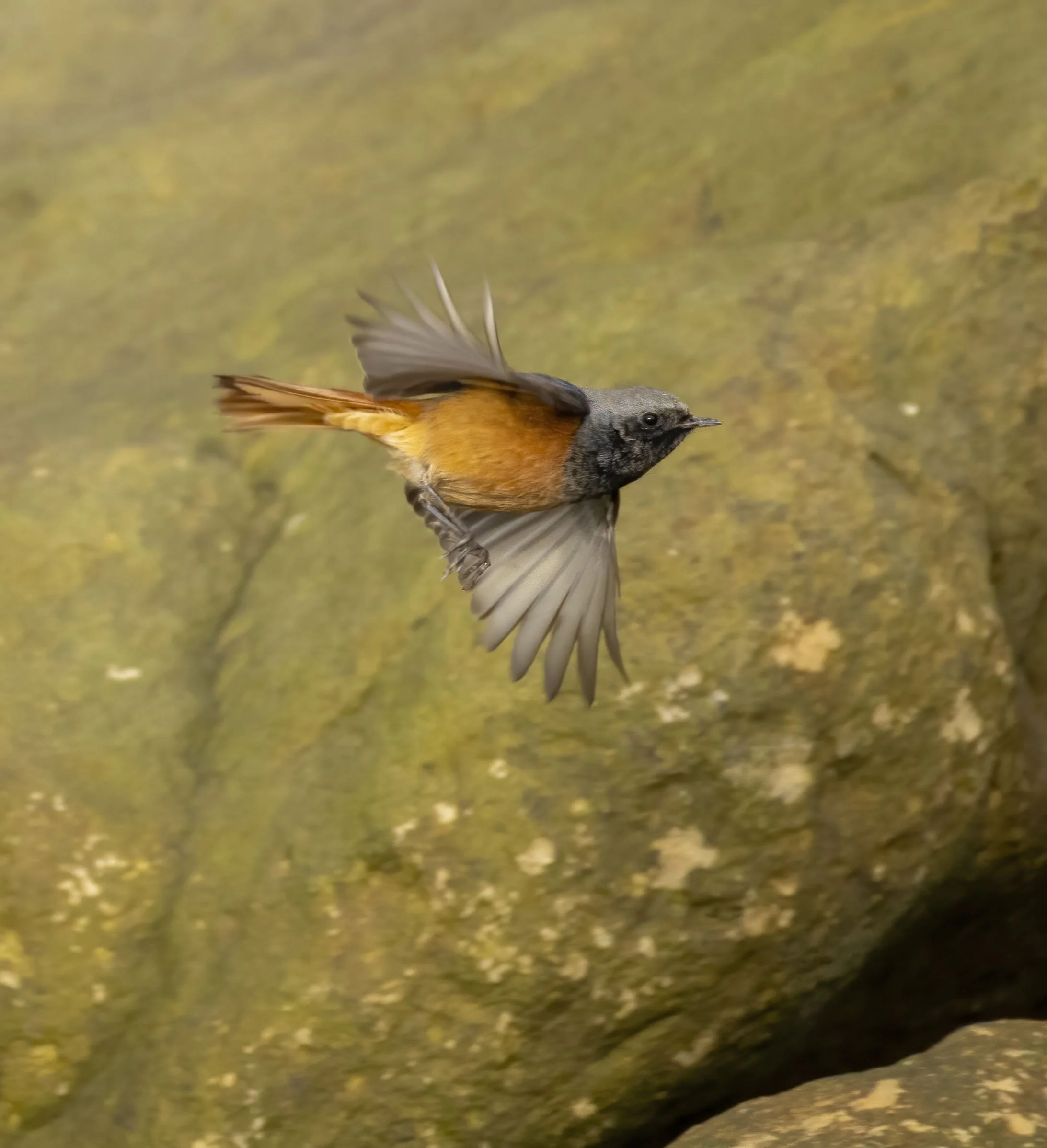
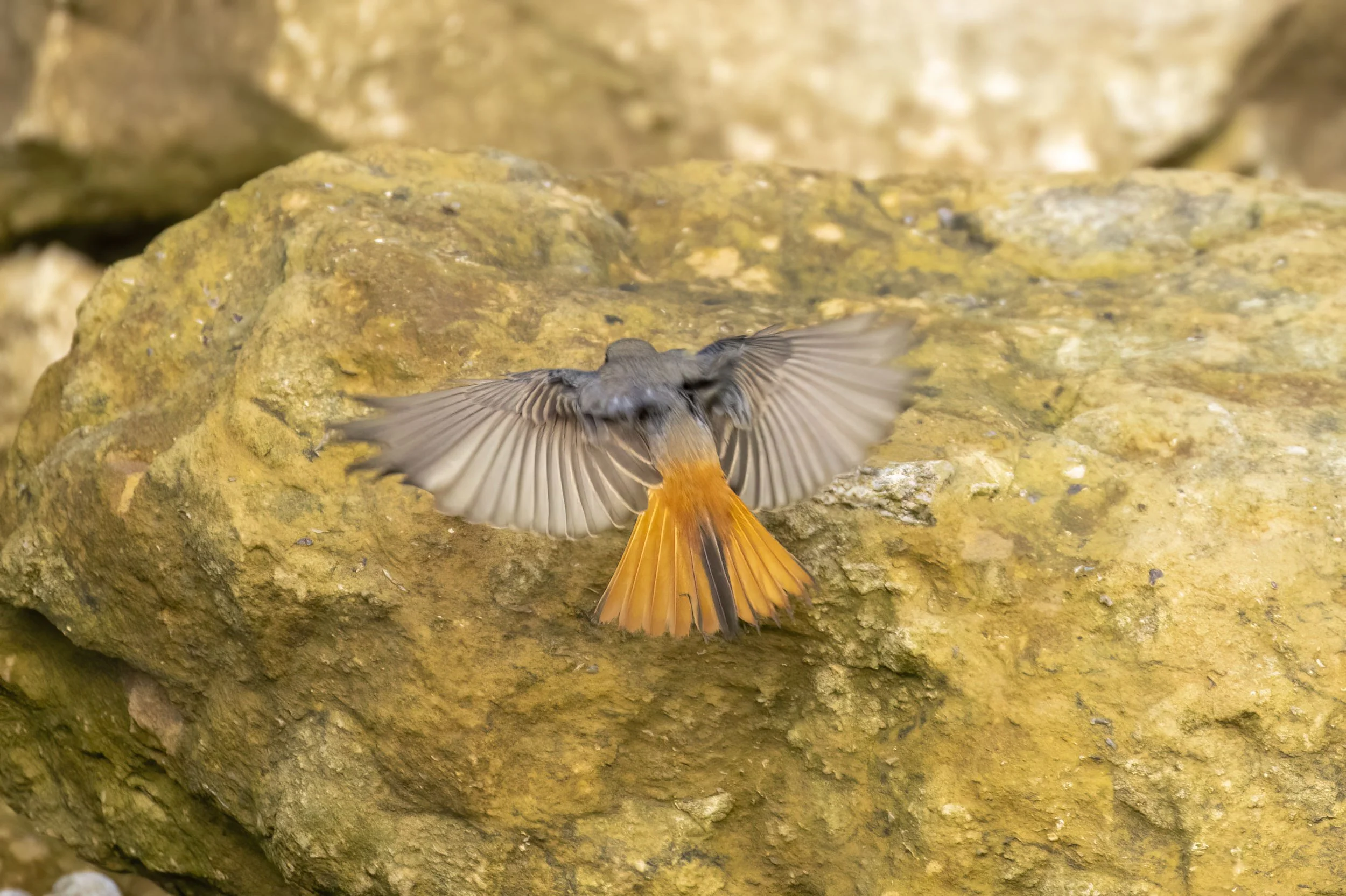
The two innermost greater coverts have been moulted to adult type as have some of the lower scapulars
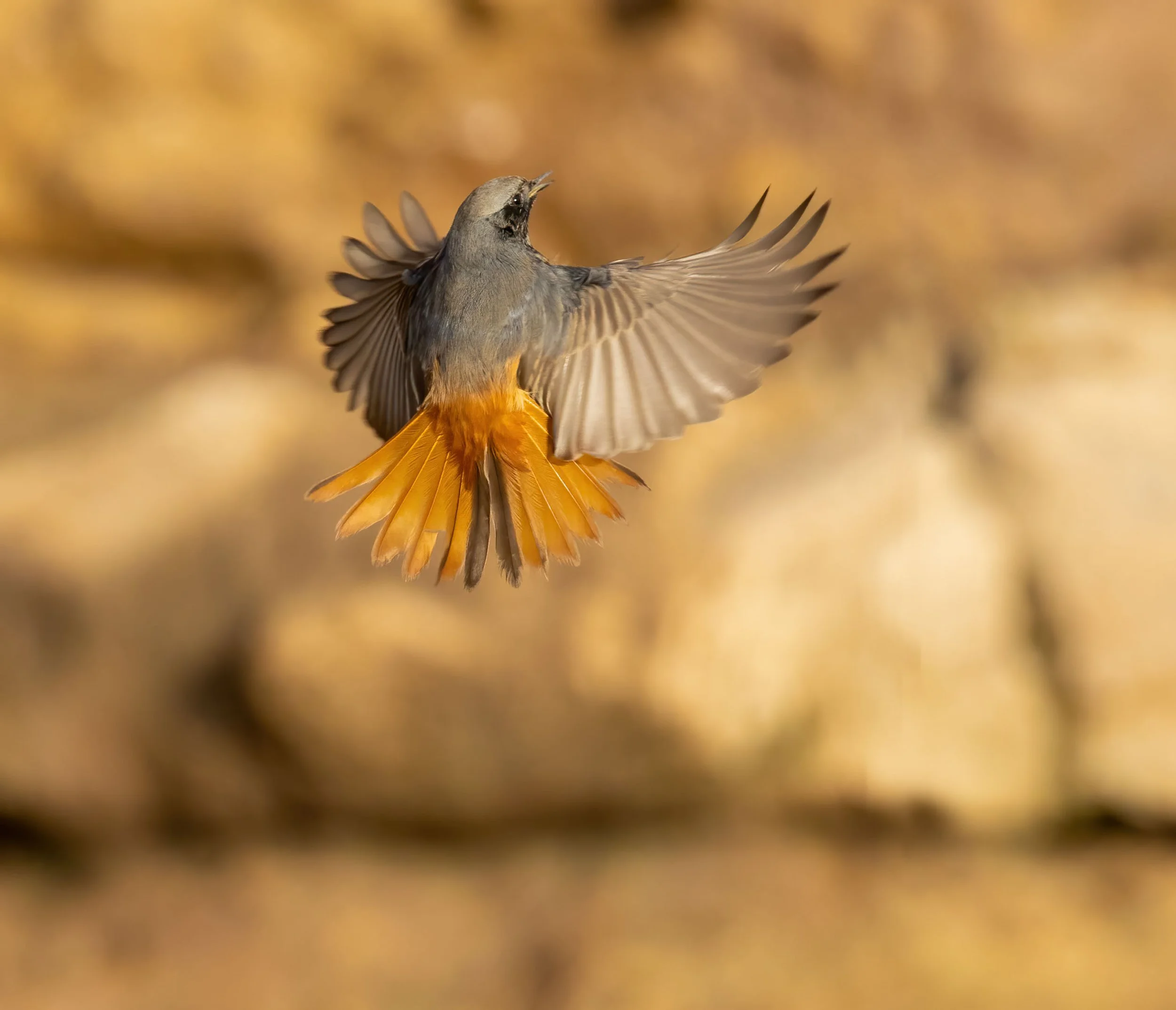
I suppose I could have cloned in the insect it was about to catch and I missed off the top of the picture
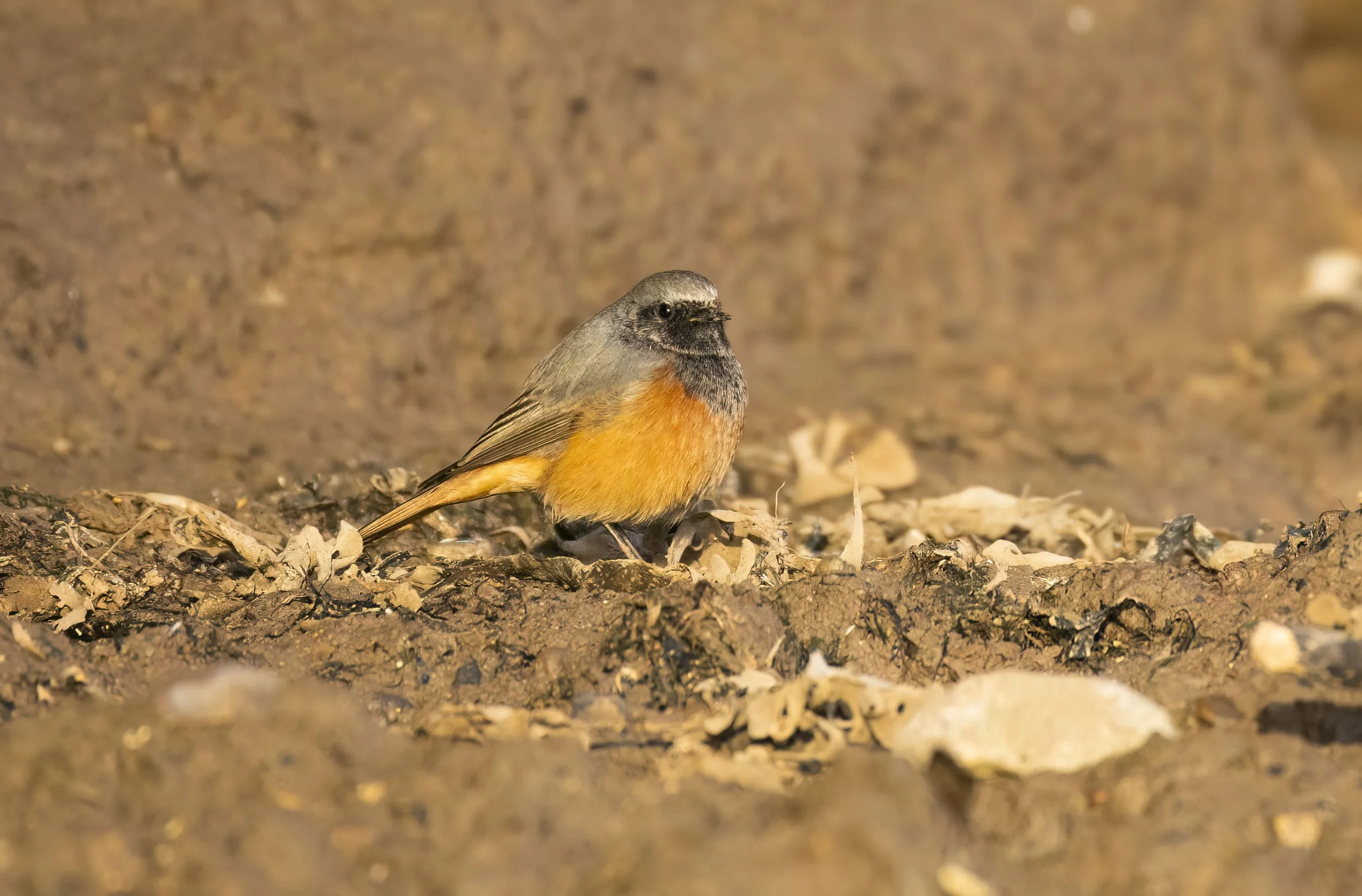
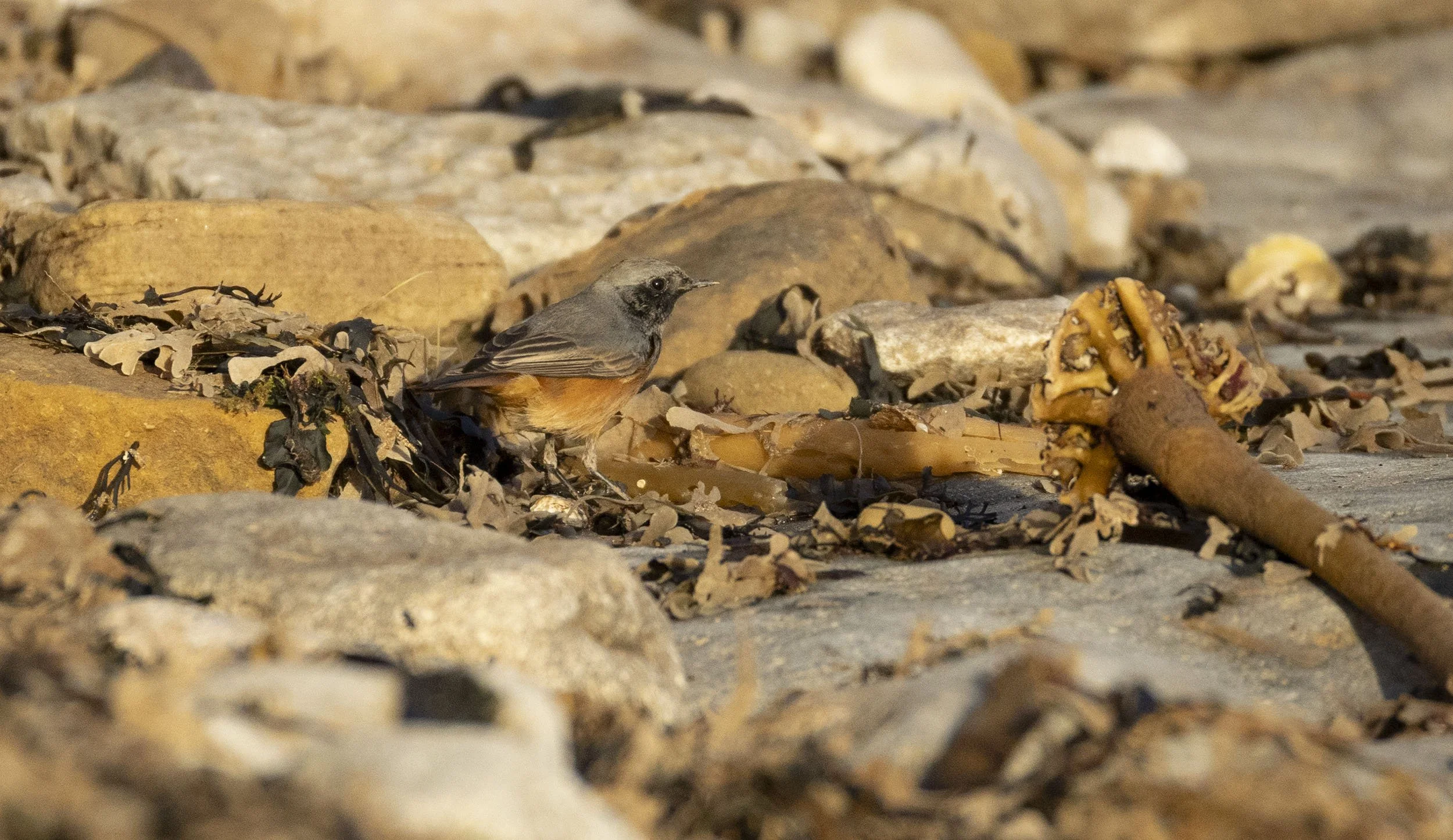
Hunting the tide wrack
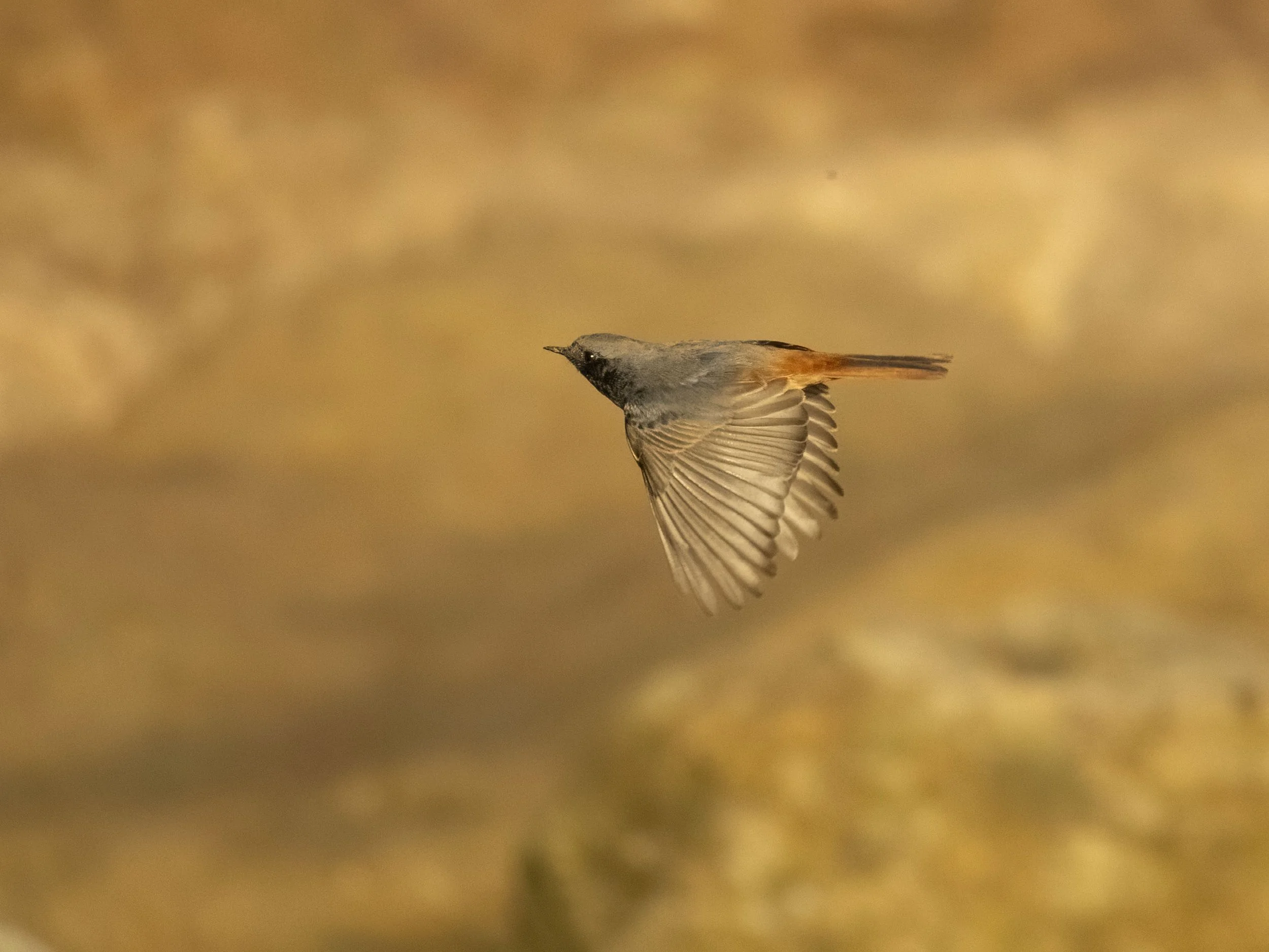
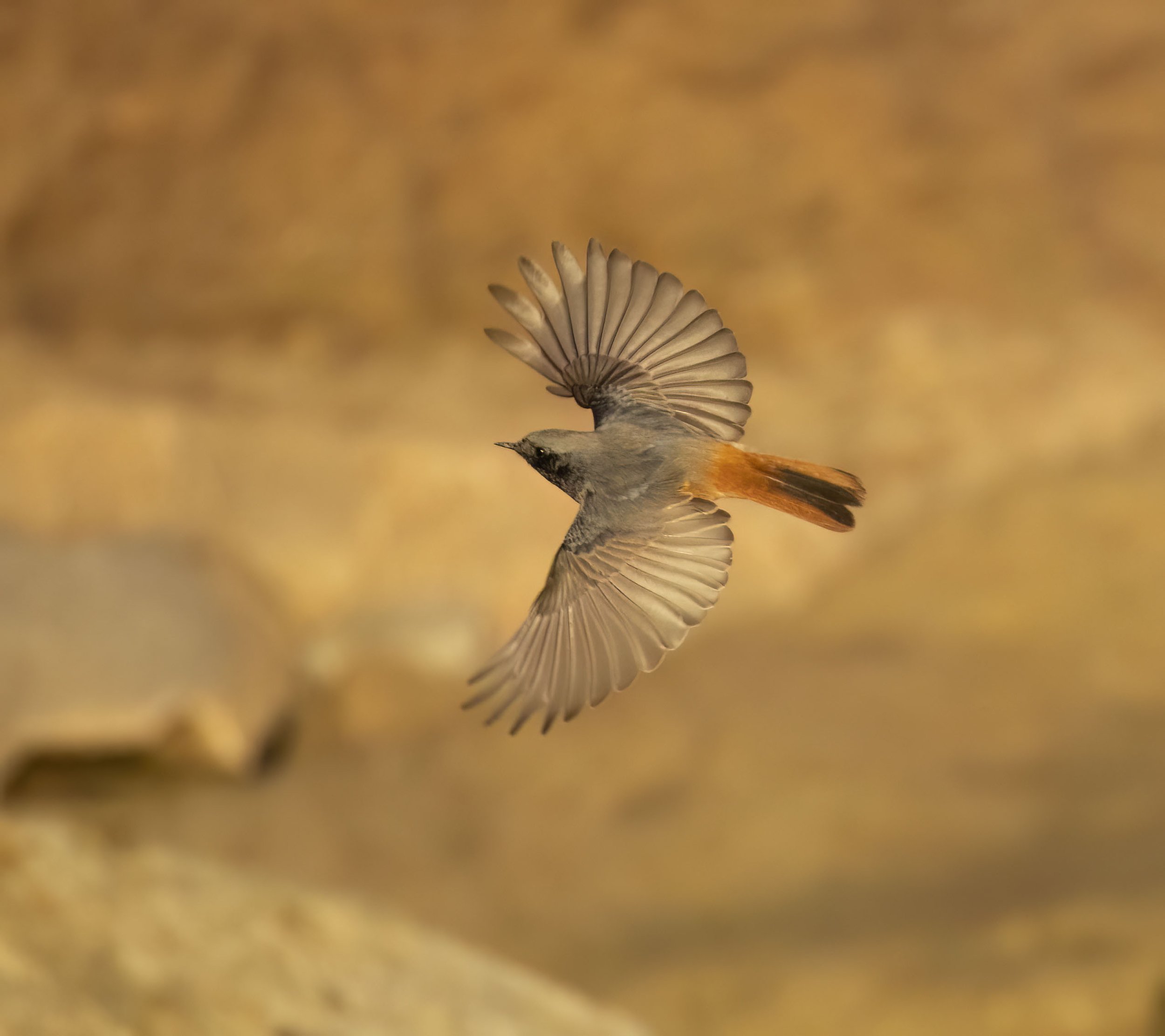
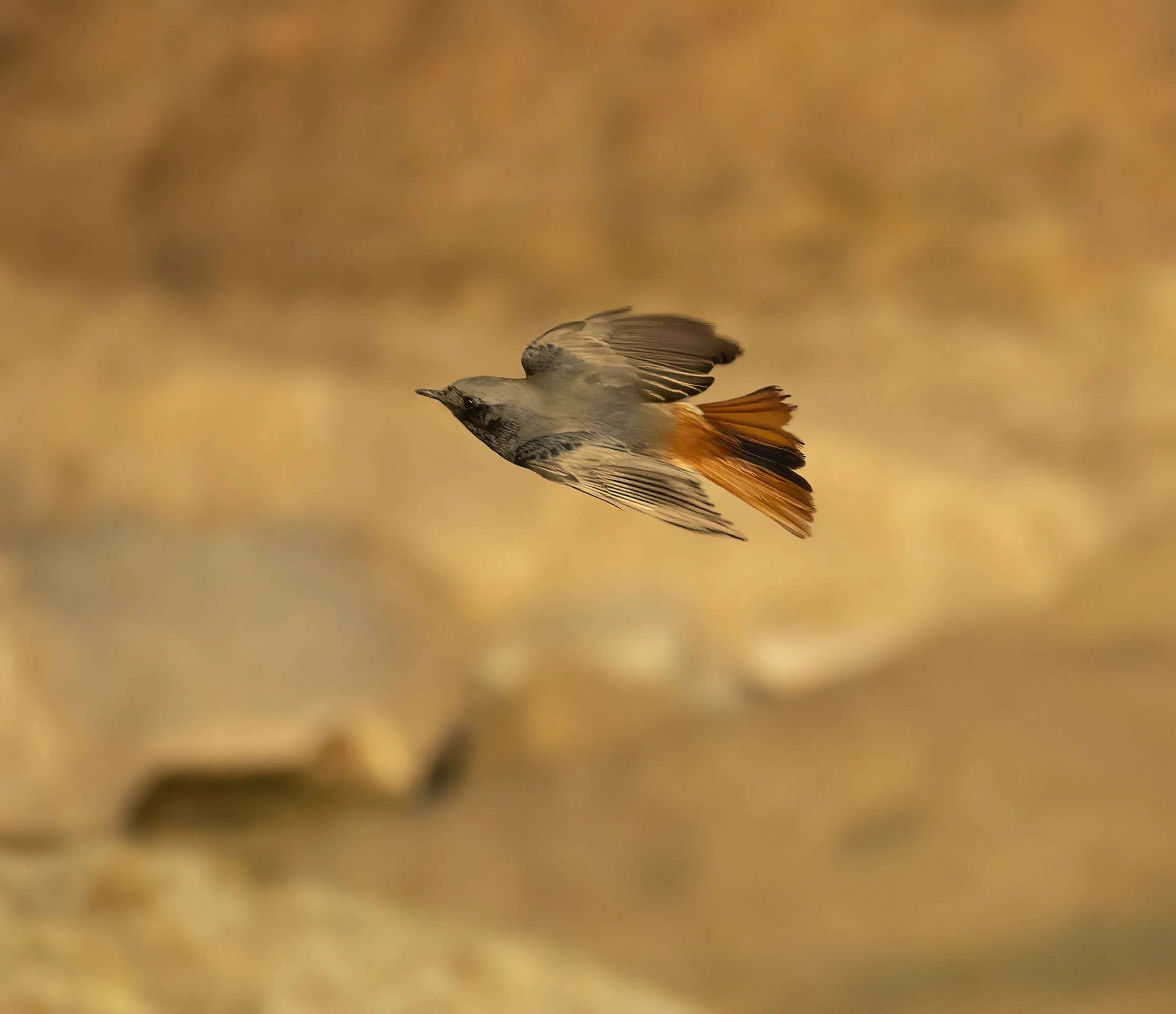
All Filey images taken with the Canon R6II and Canon RF 200-800 lens hand held